
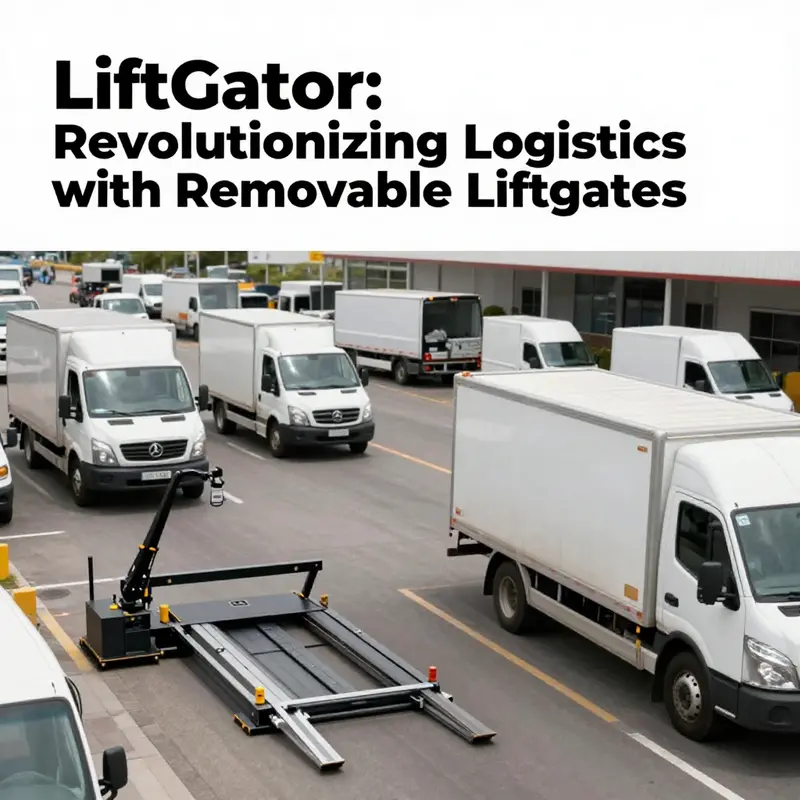
In an ever-evolving market, efficiency and adaptability are key for business owners looking to optimize logistics. LiftGator presents a pioneering approach to material handling with its removable liftgate solutions, designed to alleviate the burdens of traditional fixed systems. This article will explore LiftGator’s impact on operational workflows, technology and design intricacies, modular storage advantages, and its vital role in modern logistics, preparing businesses to meet growing demands effectively and sustainably.
Removable Liftgates and the Logistics Frontier: How a Hitch-Mounted System Is Rewriting Cargo Access
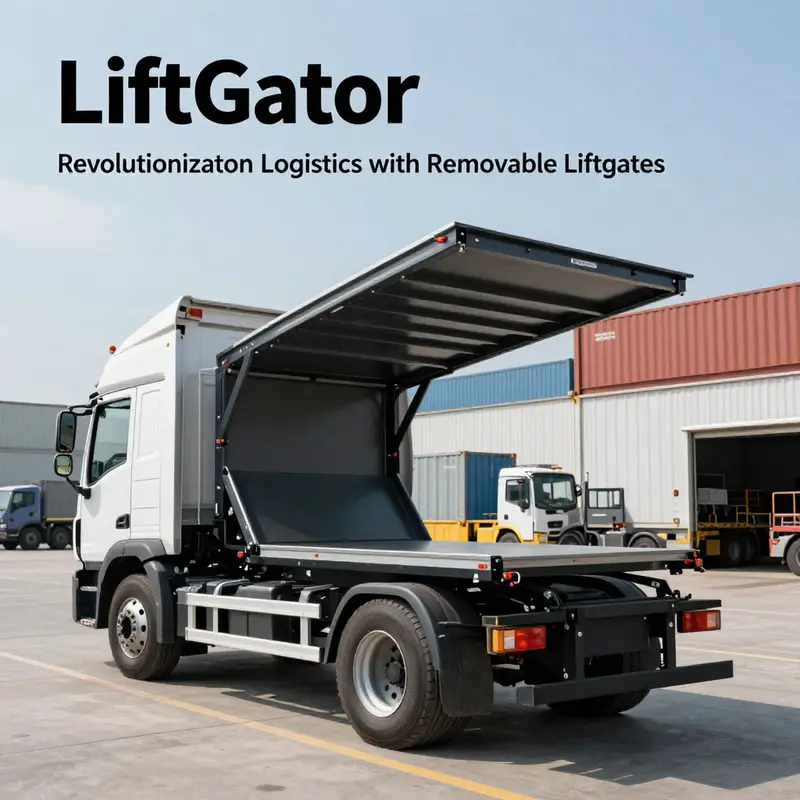
A quiet but far-reaching shift is steadily changing how goods move from truck to door and back again. In fleets large and small, the ability to add or remove a lifting mechanism at a moment’s notice is opening new paths for efficiency, safety, and flexibility. The core idea is simple yet transformative: a removable, hitch-mounted liftgate that can be deployed when needed and stowed away when not. This approach turns the truck bed or trailer into a dynamic loading platform, rather than a fixed, underutilized space. In practical terms, a single system can elevate performance across many dimensions—manpower, time, cargo safety, and overall vehicle utilization. The most compelling stories are not only about lifting heavy objects but about how the capability reshapes workflows, allows for on-demand labor, and reduces barriers to handling diverse loads at varying sites. The broader implication is a logistics environment that can adapt around the cargo, not the other way around. A company behind a leading removable hitch-mounted liftgate has demonstrated how a well-conceived design can redefine the economics and agility of loading and unloading in real-world operations, from urban deliveries to rural job sites. Its work has been recognized at industry levels with a prestigious Innovation Award at The Work Truck Show, underscoring the practical, near-term impact such technology can have on both commercial and personal use cases. The endorsement signals a broader trend: when a loading aid is as quick to deploy as it is simple to operate, it becomes a standard tool rather than a specialty device. Yet the most persuasive aspect of this evolution is not the accolade but the everyday outcomes—faster turn times at docks, reduced manual handling, and a greater ability to adapt to changes in demand without purchasing or retrofitting permanent forklift or dock equipment.
At the heart of this change is a design philosophy built around three core principles: safety, simplicity, and modularity. The liftgate system is engineered to deliver a dependable 1,300 pounds of lifting capacity, a threshold chosen to cover a broad spectrum of common commercial loads while maintaining a lean form factor that integrates cleanly with a variety of trucks and trailers. This capacity figure is complemented by a streamlined control experience—one-button operation that minimizes training time and lowers the barrier to use. Operators can engage the lift, raise or lower loads, and safely complete a cycle with minimal movement around the vehicle. For fleets made up of mixed-vehicle profiles, the same interface remains familiar, reducing the cognitive load when crews switch between equipment or jobs.
The physical footprint of the system reinforces its practical appeal. It is designed to be quickly installed when needed and just as easily removed for storage, freeing the rear cavity of a vehicle for alternative cargo configurations. This flexibility is particularly valuable in urban environments where space is scarce and the nature of the load can pivot from one job to the next within a single shift. The ability to fold and store the mechanism without specialized tools translates into measurable gains in space efficiency—space that can be reclaimed for additional pallets, crates, or even other equipment that would otherwise be forced to share a tight cargo bay. The modular nature of the design not only makes the device adaptable across different vehicle platforms but also simplifies maintenance and upgrades. When new components or improvements become available, upgrading can be accomplished with minimal downtime, preserving fleet reliability and uptime.
A standout feature in this class of systems is the built-in power source. The integrated battery arrangement supports more than twenty lifting cycles per charge, which means a typical workday with multiple lift operations can proceed without frequent recharges. The flexibility in charging options further enhances resilience. Users can recharge from a standard household 110-volt outlet, enabling convenient top-ups at a shop or home base, or they can take advantage of a trailer-mounted charging interface to replenish power during travel. This duality matters for operators who may work across locations without guaranteed access to a dedicated electrical dock, or for those who want to minimize idle time caused by charging downtime. In practice, the system’s energy architecture translates into fewer interruptions in loading sequences and more consistent scheduling, a small but meaningful improvement in a sector where every minute counts.
Beyond raw capacity and power, the usability story of a removable liftgate is anchored in safety and reliability. The one-button control is designed to reduce operator errors and simplify training, but there is more beneath the surface. Safe engagement requires reliable sensing and protective features that prevent accidental deployments or unintended movements. Redundancies in the drive system and careful attention to weight distribution and center of gravity help ensure stable operation, especially when handling unwieldy or irregularly shaped loads. The foldable, stowable design also contributes to safety by minimizing protrusions that could snag on obstacles during transit or when maneuvering tight loading docks. Maintenance routines are streamlined by modular components that can be replaced or upgraded without disassembling the entire system, supporting longer service life and reducing the total cost of ownership. For small businesses and independent operators who are balancing tight margins with the demand for professional-grade equipment, these aspects matter as much as raw performance.
The economic dimension of removable liftgates is often overlooked in discussions that emphasize features and specs. Yet the value proposition rests on labor optimization, faster cycle times, and the ability to repurpose vehicle space to accommodate a broader array of loads. In practice, a fleet can deploy the liftgate only when necessary, eliminating the continuous costs associated with a permanently installed heavy-duty tail lift. The result is a leaner baseline vehicle configuration with the option to scale capacity or functionality as business needs change. In the current climate of lean logistics and just-in-time delivery, that flexibility translates into capital efficiency and a lower barrier to experimentation with different loading strategies. For operators who want to test new routes or service models, the ability to attach a robust yet removable lifting solution can be a catalyst for strategic pivots without wholesale equipment replacement.
This design approach does not exist in isolation. It aligns with broader industry movements toward automated workflows, modular vehicle outfitting, and the pursuit of multi-use tools that reduce the need for specialized staff or heavy, dedicated equipment at every stop. The liftgate’s one-button interface makes it approachable for a wide range of users, from seasoned drivers to new hires who are still learning the art of safe material handling. The result is not only improved throughput but also a lower learning curve for organizations that seek to democratize loading tasks across teams. In a world where the day’s schedule can rearrange itself around traffic, weather, or last-minute client requests, the ability to adapt on the fly is a strategic asset.
The recognition from industry circles—the Innovation Award at a prominent industry show—reflects more than just clever engineering. It signals a growing consensus that the next generation of cargo-handling tools must be designed for rapid deployment, minimal footprint, and seamless integration with existing vehicle systems. In this light, the removable liftgate is less a single product and more a platform for a new loading paradigm: one that treats the vehicle as a modular node in a broader, more fluid logistics network. The implications extend beyond the traditional forklift or dock workflow. As fleets increasingly embrace mixed-mode operations—urban delivery, regional distribution, and on-call service—the ability to reconfigure a vehicle’s rear space quickly becomes a strategic capability, enabling operators to tailor each mission to its specific cargo and destination.
From a user’s perspective, what matters most is how this technology translates into day-to-day realities. Loading and unloading that once required two or more people, or long waits at a dock, can be accomplished with a fraction of the effort. The system’s compact, rugged build stands up to the demands of real-world work sites, where dirt, grime, and variable weather challenge equipment. Operators benefit from predictable cycles, consistent performance, and the peace of mind that comes with a tightly integrated, purpose-built tool. For businesses exploring new service models, the ability to deploy a lift assist only when needed reduces capital risk and enables experimentation with different cargo profiles, routes, or customers without committing to permanent dockside infrastructure.
In the broader ecosystem of vehicle-mounted cargo solutions, the narrative around removable liftgates is part of a larger conversation about accessibility, resilience, and data-driven operations. Fleet managers now increasingly consider how load-handling tools can be part of a connected workflow. Telemetry and maintenance alerts, predictive service, and preventive replacement strategies can be layered onto these systems, turning a mechanical asset into a data-rich node in the logistics chain. The practical upshot is that a relatively small, modular device can become a strategic enabler of reliability and responsiveness in service networks that face dynamic demand and tight timelines. For readers who want to situate this technology within the wider context, a broad review of liftgates and related cargo-handling equipment offers a useful map of how such devices interact with other truck-mounted amenities and how operators can optimize combinations of tools for different use cases. See the liftgates overview for a concise landscape of how these devices fit into the truck ecosystem.
The chapter’s throughline is not about a single innovation but about a shift in how loading capabilities are conceived. When a system can be attached and detached with minimal downtime, when it reduces dependence on specialized labor, and when it preserves space for other critical cargo, it becomes a strategic asset rather than a maintenance item. The practical, measurable gains in efficiency, safety, and adaptability begin to accumulate—turning a clever accessory into a core component of modern logistics. The story is still unfolding, but the trajectory is clear: removable, hitch-mounted liftgate technology is poised to become a standard feature in fleets that must balance speed, flexibility, and cost. As more operators experience the value firsthand and as standards evolve around safety, compatibility, and performance, this category of equipment is likely to proliferate across more vehicle classes and use cases, extending its reach from commercial fleets to individual drivers and craft operators who rely on reliable, repeatable loading solutions.
External resource: https://www.liftgator.com
Flexibility in Motion: How Removable Liftgates Deliver Efficiency and Cost Reduction for Modern Fleets
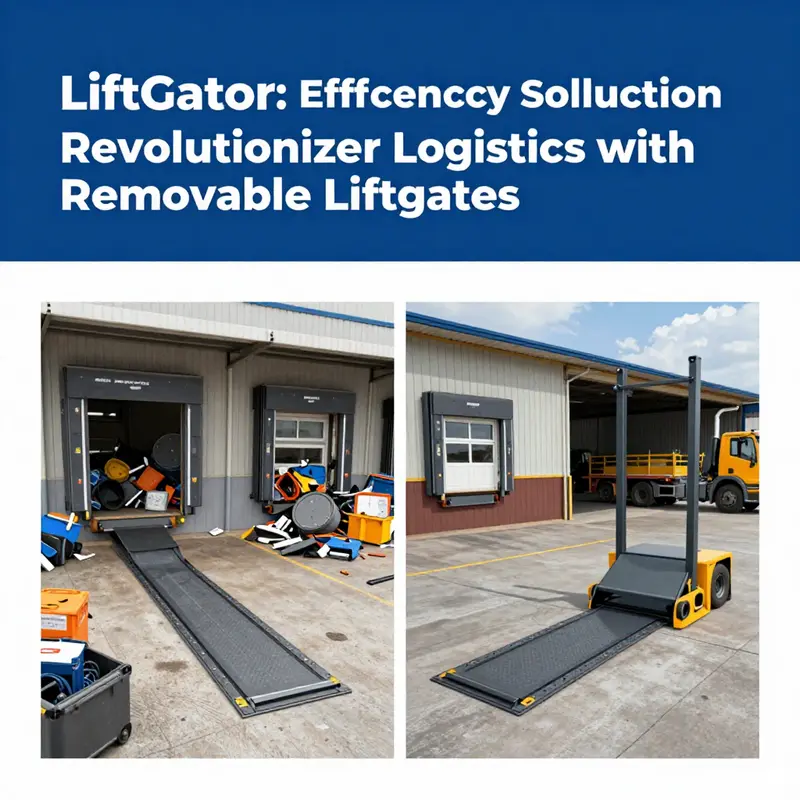
Every fleet manager knows that uptime and adaptability are not luxuries but the core of a sustainable operation. The challenge lies in balancing capital outlay with long-term reliability, especially in environments where loading and unloading heavy goods is a daily requirement. Removable liftgate systems address this imbalance by pairing high payload capability with modularity and ease of use. The result is a fleet that behaves more like a living, adaptable tool than a collection of fixed assets. At the heart of this shift is a design philosophy that prioritizes shared utility over permanent installation. A system that can be moved between vehicles when needed, stored away when not, and deployed with a single button press has the potential to transform how a business approaches loading efficiency and cost control. In a practical sense, the liftgate becomes less of an add-on and more of a strategic asset, one that grows with the fleet rather than forcing an expensive, one-time commitment for each vehicle in use.
The first advantage to highlight is the core capability: a robust capacity that can handle the weight of common commercial loads while remaining portable. In typical operations, the ability to lift hundreds of pounds on demand reduces manual handling, minimizes the risk of injury, and shortens the time spent on each delivery or pickup. When a device can be moved from one van to another without sophisticated tools or specialized installers, the fleet gains a level of flexibility that fixed systems simply cannot offer. This flexibility translates into lower total cost of ownership. Initial capital outlay no longer compounds with the need to purchase multiple fixed units for different vehicles. Instead, one modular system can serve multiple vans and trailers as needs shift across routes, seasons, or business lines. That cross-vehicle transfer is not only economical; it also reduces maintenance costs because the wear and tear of a single, shared device is easier to manage than the maintenance of several permanently installed units.
Beyond the financial calculus, the operational flow gains a new rhythm. Loading docks that once bottlenecked with equipment setup now benefit from streamlined processes. A driver can arm the liftgate with a single action, engage the lift, and move heavy items with controlled precision. The one-button control—designed to be intuitive enough for operators with minimal training—shrinks the learning curve and minimizes the risk of human error during critical loading moments. When the job is done, the liftgate can be removed and tucked away, freeing space inside the cargo area for other loads or for seasonal equipment. The net effect is not just faster loading but also more versatile cargo space. Vehicles are no longer forced into a single loading footprint; instead, the cargo bay remains adaptable to a wider variety of loads and configurations.
Technical robustness underpins these practical gains. A capacity of 1,300 pounds ensures that common pallets, crates, and bulky items can be handled without second thoughts, while the system’s lightweight, modular build keeps the overall vehicle mass manageable. The modular design, with its foldable and stowable elements, resolves a perennial problem about storage when the liftgate is not in use. For fleets that operate in urban cores or multi-stop routes, the ability to deploy a liftgate quickly and then collapse it for storage can reclaim critical rear-cabin or trailer space. In turn, this freed space can widen the range of goods a driver can take in a single trip, reduce the number of trips required, and thereby trim both fuel usage and labor hours. The chain of benefits—improved payload-to-trip ratios, reduced downtime, and better space utilization—adds up to a meaningful lift in overall efficiency.
The human factor is central to realizing these efficiencies. A single-piece, plug-and-play approach lowers the barrier to adoption, enabling a broader range of operators to leverage the liftgate. Training time is short, safety concerns are minimized, and the likelihood of incorrect operation declines. When drivers can manage the device confidently, loading and unloading become routine, predictable tasks rather than ad hoc efforts that disrupt routes. It’s not merely about moving heavy objects; it’s about moving the entire workflow forward—from planning and dispatch to on-site handling and delivery confirmation. The system integrates with the tempo of everyday logistics, aligning mechanical capability with human rhythm rather than forcing people to contort their routines around a fixed piece of equipment.
A critical practical note concerns downtime and maintenance. Fixed liftgates often require specialized technicians for service and more complex installation procedures, which can tie up a vehicle for days or require a dedicated maintenance window. In contrast, a removable system designed for interchange across multiple vehicles spreads maintenance demand more evenly and minimizes the impact of any single unit being out of service. If a fault arises, the modular configuration makes it easier to swap components or move the device to a different vehicle while the problem is resolved, keeping the rest of the fleet moving. The ripple effects touch every facet of operations, from dispatch scheduling to customer window commitments, and eventually to the bottom line. Fleet managers who track total cost of ownership can attribute savings not only to capital expenditure versus depreciation but also to the ongoing reduction in labor hours, downtime, and vehicle idle time that typically accompany fixed installations.
The tangible value of these systems also shows up in the feedback from frontline operators. Consider the perspective of Thomas, a supervisor at a construction-focused company that relies on multiple trucks for day-to-day tasks. He notes that being able to add a liftgate to any of their trucks is invaluable, saving the company time and money. This sentiment echoes across industries where the same vehicle may serve different roles on different days—urban parcel runs, medium-weight deliveries, or site-based material handling. The modular liftgate makes those transitions practical rather than prohibitive. It invites fleet leadership to reimagine routing and loading strategies with a larger degree of flexibility. The same asset can be repurposed in moments when a spare liftgate would have remained idle in the past, thereby increasing asset utilization and reducing the idle capacity that often drags down efficiency metrics.
From a fleet-management lens, the cost story is nuanced and compelling. The upfront investment in a removable system can appear daunting at first glance, especially for smaller operators who must balance competing capital needs. Yet, when one accounts for the cumulative savings—the avoidance of multiple fixed installations, the reduction in maintenance for each vehicle, and the decrease in downtime for loading and unloading—the long-term financial payoff becomes clearer. The modular approach aligns with contemporary fleet strategies that prize adaptability, lean maintenance, and data-informed decision-making. In practice, this means vehicles spend more time in service, routes stay on schedule with fewer delays caused by loading frictions, and the cost of ownership spreads more evenly across the lifetime of the fleet rather than concentrating in the initial year.
For teams exploring these options, a foundational step is to map current loading workflows and identify pain points that a removable liftgate could address. The evaluation should consider not just the immediate cost of the device but the total impact on downtime, labor efficiency, and vehicle utilization. A compact, 1,300-pound capacity system that can be quickly installed or removed may seem like a small device, but its effects can cascade through the organization. If a driver can complete a few minutes earlier at each stop, what does that add up to over a week, a quarter, or a fiscal year? The arithmetic often reveals a compelling business case that goes beyond the obvious safety and ergonomic benefits. It is about unlocking a more responsive, more resilient logistics network—one that can adapt to demand fluctuations, changing routes, and evolving customer expectations without requiring a full-scale fleet overhaul.
As this chapter has explored, the real win is not just in the liftgate itself but in the broader pattern it supports: a fleet that treats loading as a flexible, scalable function rather than a fixed hurdle. The removable, shareable design makes it possible to optimize capital allocation, reduce cycle times, and improve service levels simultaneously. It invites managers to retool their asset strategy around mobility and adaptability, ensuring that every vehicle is equipped to handle a wider range of tasks with fewer constraints. For readers who want to dive deeper into the practicalities, the LiftGator blog offers insights from users who have integrated removable liftgates into diverse fleets, highlighting operational adjustments and real-world savings. See the LiftGator blog for more perspectives on how modular lifting solutions integrate into day-to-day fleet management.https://trucksdiy.com/blog/lift-gator/
For a broader view of the available solutions and their specifications, consider the external resource that documents a leading removable liftgate option and its capabilities in real-world use: VanGator Removable Cargo Van Liftgate VG-GENII, as featured on Upfit Supply. This resource provides additional context on how a portable liftgate can be leveraged across different vehicle platforms and operational scenarios, reinforcing the case for modularity as a strategic asset in modern logistics.
External resource: https://www.upfitsupply.com/products/van-gator-removable-cargo-van-liftgate-vg-genii
LiftGator Unpacked: The Design, Power, and Practicality of a Portable, Shareable Liftgate
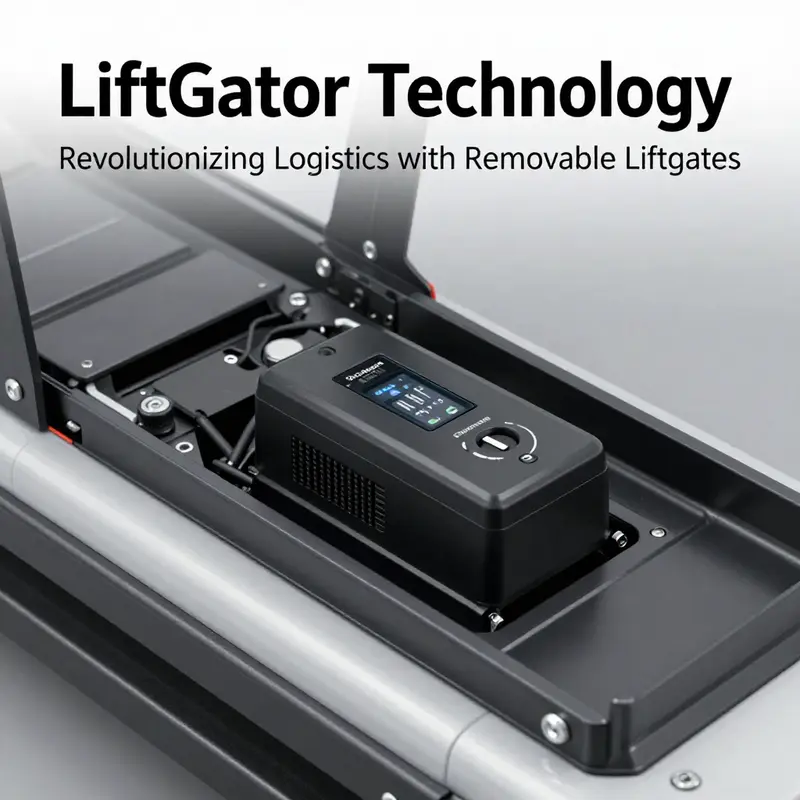
LiftGator represents a shift in how fleets and individual operators think about loading and unloading heavy cargo. At its core, this system is not a fixed appendage to a truck or trailer but a universal, easily installed and removed lift platform. The design philosophy behind LiftGator centers on providing a flexible, on-demand solution that can adapt to a wide range of deck heights, bed widths, and cargo scenarios. This adaptability matters because it aligns with the realities of modern logistics, where space, weight, and turnaround time are persistent constraints. The result is a portable liftgate that can be deployed where and when it is needed, then tucked away when it is not, reclaiming rear cabin space and enabling more versatile cargo configurations on the same vehicle.
One of the most striking design choices is the telescopic sliding gate mechanism. This feature is more than a clever engineering trick; it is the functional heart of how a portable liftgate bridges the gap between the vehicle bed and the ground or another working surface. Rather than relying on the traditional hydraulic tailgates that constrain setup to a fixed position, the telescoping arrangement extends outward and slides smoothly along rails to form a stable ramp. The platform is then supported in a way that creates a predictable, level loading plane, even when the truck sits on uneven ground or when the ground surface is interrupted by pallets, ramps, or curb edges. This mechanism makes the LiftGator feel almost like a modular extension of the vehicle rather than a separate tool. The effect is a smoother workflow, with less manual wrestling over misaligned edges or uncertain gaps, and a greater sense of confidence during each lift cycle. Keeping the operation intuitive is central to its promise; users interact with a straightforward, one-step motion that translates into a few precise, repeatable actions rather than a sequence of adjustments.
Material integrity and precision manufacturing play indispensable roles in sustaining that confidence. The production process leans into advanced techniques such as laser welding and precise laser cutting. These methods enable tight tolerances, clean joints, and robust connections without the excess material waste traditional approaches can generate. In practical terms, laser-based fabrication contributes to a lighter yet sturdy frame, which helps maintain overall payload capability while minimizing the energy needed to move the platform. It also supports cleaner workmanship, which translates into fewer maintenance surprises over time. The combination of precision welding and controlled material removal yields a product that resists deformation under load, resists fatigue across repeated cycles, and retains consistent performance across a variety of weather and work-site conditions. For operators, that means fewer downtimes and more predictable outcomes, even after days or weeks of heavy use.
Beyond the core mechanism and manufacturing choices, the LiftGator’s functionality rests on three pillars: portability, power efficiency, and user-friendliness. The modular and foldable design makes disassembly almost routine, so the unit can be broken down, stored in a compact space, and transported without requiring specialized handling equipment. This is especially advantageous for fleets where storage space is at a premium or where a vehicle might serve multiple roles in a single day. The portability is not merely about a light frame; it is about preserving cargo space and enabling rapid redeployment at multiple job sites. In practical terms, crews can bring the lift to the load rather than dragging loads to the lift, which shortens cycle times and reduces the likelihood of handling injuries and bottlenecks. The power aspect of the package reinforces the same idea from another angle. An integrated rechargeable battery pack powers the lifting process, and a single charge supports more than twenty full lifting cycles. Such efficiency matters on a busy shift, where a vehicle might be called upon to handle back-to-back deliveries.
Charging flexibility further strengthens the system’s suitability for real-world operations. Operators can recharge from a standard household 110V outlet when the vehicle is parked at a depot or shop, or draw supplementary power from the tow vehicle’s electrical system in transit or on-site. This dual-mode charging enables a broader set of use cases, including remote loading scenarios where access to a dedicated power source is limited. A battery-based approach also reduces the complexity of integrating a separate power unit or hydraulic system, which can add maintenance overhead to a fleet. The result is a self-contained loader that aligns with the broader logistics trend toward electrification and streamlining maintenance routines. The battery architecture is designed to support multiple lift cycles without a noticeable drop in performance, which translates into more predictable service levels for drivers and dispatchers alike.
From a manufacturing and durability perspective, the emphasis on robust, precise construction remains central. Laser-based fabrication supports a strong, fatigue-resistant structure that can withstand the daily rigors of loading and unloading heavy goods. The emphasis on precision and modularity also simplifies on-site assembly and disassembly, contributing to shorter downtime when the liftgate is not in use. A modular approach means components can be replaced or upgraded without overhauling the entire system, which is a meaningful advantage for operators who value longevity and low total cost of ownership. In a fleet context, these choices translate into fewer callouts for specialized technicians, less downtime during peak seasons, and more consistent performance across a multivehicle operation.
The conceptual leap offered by this design is the shift from a static, single-purpose device to a versatile, on-demand tool that can adapt to an array of loading environments. A universal liftgate implies compatibility with different truck beds and trailer decks, enabling operators to outfit diverse vehicles with a single, familiar solution. This broad compatibility reduces capital expenditure for fleets that rotate vehicles or frequently reconfigure their loads. It also simplifies training, since operators encounter the same control logic, the same safety protocols, and the same basic operating sequence across different platforms. The one-button control principle reinforces accessibility; a single press initiates the lifting sequence, and a complementary action completes the lowering sequence, with built-in safeguards to help prevent accidental operation or unintended motion. In essence, the LiftGator distills a complex mechanical task into an approachable, manageable operation that even new users can master with minimal training.
The practical implications for logistics are substantial. A portable, easily deployed liftgate accelerates loading and unloading while reducing the reliance on third-party labor for heavy lifting. For small businesses and independent operators, this translates into lower operating costs, reduced insurance exposure, and faster turnarounds on jobs that involve pallets, drums, or other heavy items. The compact storage profile of the modular, foldable design means vehicles can carry additional cargo when the liftgate is not required, enhancing overall fleet utilization. It also means a driver can prepare a vehicle for the next job without spending excessive time on setup or teardown, which matters in an industry where every minute counts. The emphasis on universal compatibility and modularity suggests a future where more fleets adopt a single, standardized method for handling heavy loads, regardless of the exact vehicle type—or the specific layout of the cargo bed.
As readers consider how such a system might integrate into their operations, it helps to connect the practicalities to real-world demonstrations and documentation. For a concise overview of what LiftGator offers and how it sits within the broader conversation about portable loading solutions, you can explore the dedicated LiftGator resource page. liftgator. For those who want to see the concept in action and hear firsthand from users about setup, stability, and performance, a recent demonstration video provides visual confirmation of the design’s effectiveness and the workflow it enables. External resources offer additional context on how portable, on-demand lift platforms fit into evolving fleet strategies and automation trends in logistics, reinforcing why this approach is resonating with operators who prioritize flexibility, efficiency, and safety. See the video linked here for a closer look at the Gen 2 system in operation: https://www.tiktok.com/@liftgator/video/7368249105424847616.
Modular Storage, Maximum Flexibility: Rethinking Vehicle Capacity with a Shared Liftgate
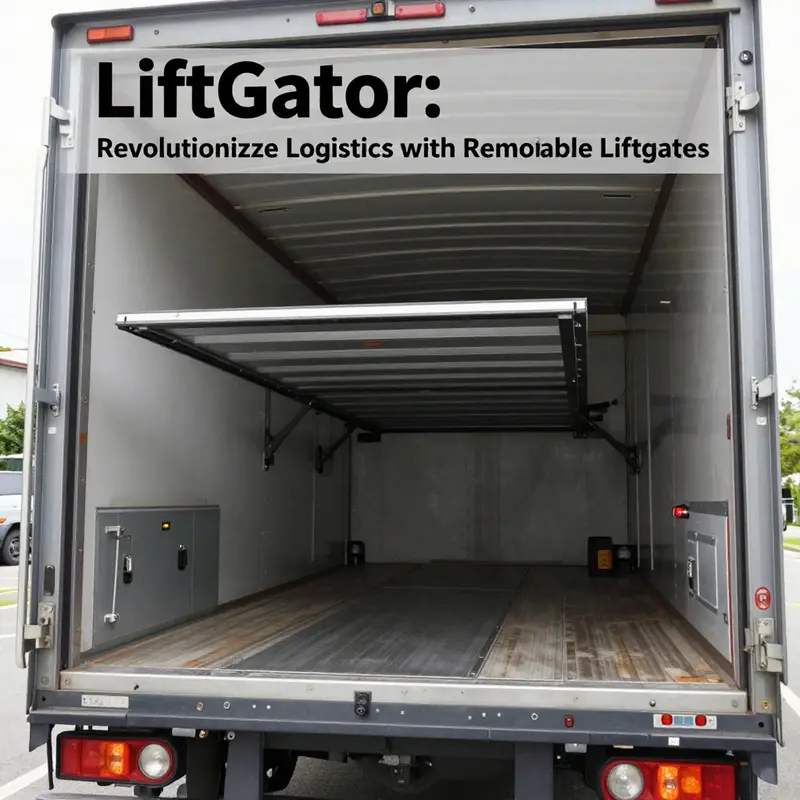
When fleets recalibrate their operations, they often talk about capacity, uptime, and balance between investment and utility. Yet capacity is not only about how much a truck can carry, but how readily a vehicle can reconfigure itself for different tasks. The modular liftgate concept reframes the relationship between a vehicle and its workload. It turns the post-sale, fixed idea of a single-use rear platform into a shared, portable asset that travels with the fleet rather than being welded into a single job. In practice, this means a vehicle can transit between drivers, routes, and seasonal demands without surrendering cargo space or compromising safety. The beauty of the approach lies in its simplicity: no permanent modification is required, the unit can be deployed in minutes, and it collapses down to a compact footprint when not needed. It is a design philosophy as much as a piece of hardware, one that recognizes that modern logistics thrives on adaptability as a primary driver of efficiency.
A closer look at the core attributes reveals why this approach resonates with contemporary fleets. The lifting mechanism is engineered to handle heavy volumes with predictable, repeatable performance. The capacity—well over a ton in practical terms—enables teams to move pallets, crates, or bulk items with minimal manual handling. Yet the system is not about brute force alone. It integrates a well-considered balance of form and function: a restraint system that secures freight, a compact footprint for storage, and a control interface designed for rapid adoption by users with modest training. The result is a tool that disappears into the workflow when it is not needed, preserving the vehicle’s original geometry and preserving the cargo bay for other tasks. For those who want to see a concise summary of how this modular liftgate operates, the liftgator page provides a straightforward overview: liftgator.
The installation and removal process embodies its modular essence. Rather than a permanent, shop-bound retrofit, the system anchors to existing mounting points with quick-release mechanisms. A trained operator can deploy the liftgate in a matter of minutes, connect power, and be ready to raise and lower heavy loads with a single button. When the day’s demands shift, the operator can retract the unit, fold it into a compact pack, and slide it away into a storage nook or a dedicated cabinet. The modular package not only reduces downtime between tasks; it also liberates the vehicle from being locked into a particular use case. In urban delivery or mixed-load environments, that freedom translates into a striking gain in vehicle utility. The driver who starts the day with a full pallet of boxes can end the shift with the same vehicle carrying long, irregular items or bulk general cargo without ever needing to swap trucks. The same principle applies across a fleet: vehicles can be shared among teams who require different configurations at different times, all without requiring each vehicle to carry the cost of a permanent, heavy-duty modification.
From a fleet-management perspective, the economics hinge on a trade-off that is often overlooked in traditional capital budgeting. The per-unit cost of a modular liftgate is higher than that of fixed, permanent systems. Yet the long-term value is realized in adaptability, uptime, and space optimization. When a vehicle can be re-tasked for multiple lines of business, the marginal cost of carrying the device is offset by throughput gains, faster job turnaround, and reduced risk of damage to goods caused by forced improvisation. In practice, this translates into shorter loading windows, fewer trips, and a reduction in the need for specialized personnel or equipment on every job. For a fleet that rotates drivers and routes, the ability to swap loads without swapping vehicles becomes a real competitive advantage. It is a mindset that aligns with lean logistics: not more gear, but more usable vehicle capability per mile.
Storage efficiency is not an afterthought either. The liftgate’s folding, collapsible geometry means it does not permanently encroach on the cargo space when it is not in use. In a world where space is money, this matters. The operator can keep the rear area clear for bulky but irregular loads, while the same vehicle can be pressed into service for a high-density parcel run at the next shift. This fluidity is particularly valuable for fleets that pursue multi-stop delivery strategies or mixed-use operations such as construction, landscaping, or retail service calls. The liftgate becomes a flexible extension of the vehicle’s interior, not a fixed obstacle. It enables a spectrum of loading strategies—from tightly stacked pallets to loose, awkward items—without forcing compromises in how goods are organized, secured, or transported.
Power and reliability underpin the practical appeal of a modular liftgate. A built-in battery system supports multiple lift cycles per charge, which means a full shift of operation or several job cycles can occur without recharge interruption. The charging options amplify utility: in some configurations, the unit can be charged from a standard household outlet, while in others it can leverage the vehicle’s own electrical interface for topping up during downtime between routes. This flexibility ensures that the system remains functional in a wide range of settings, from a traditional warehouse-to-truck transfer to remote locations where access to power is limited. Such autonomy matters; it reduces the dependence on a dedicated charging schedule and makes the equipment resilient to the contingencies of real-world logistics.
Safety, as always, sits at the heart of any handling system. The one-button operation strips away complexity that can lead to user error, while the built-in safeguards prevent unintended movements or improper loads. The aerodynamics of the design, the precise control of lift speed, and the tuned rate of descent help minimize jostling of goods and reduce the risk of cargo damage. Operators do not need to be engineers to use the system; simple, predictable controls mean a broad spectrum of workers can use it with confidence after a short familiarization. In environments where multiple drivers share a single vehicle, this uniformity is a decisive advantage: everyone uses the same, straightforward interface, which shortens training time and lowers the chance of loading mistakes.
The modular approach also invites a broader conversation about how a vehicle’s footprint can be reimagined through accessory ecosystems. With a shared liftgate in place, a vehicle can be paired with complementary modular add-ons—toolboxes, racks, or secure storage systems—that enhance efficiency without sacrificing cargo space. The same underlying philosophy applies: items are designed to be added and removed as needed, without making permanent changes to the vehicle’s structure. This coherence between transport and gear reduces the friction that often accompanies on-demand tasks. The effect is akin to a modular toolkit for the back of a truck, where each piece can be engaged or stowed away without disrupting the core vehicle architecture. As the industry shifts toward multi-use assets, the value of such modular thinking becomes increasingly clear.
Beyond the immediate operational benefits, the modular liftgate aligns with broader trends in sustainable logistics. Fewer permanent modifications mean fewer long-lived parts that must be discarded or depreciated at the end of a vehicle’s life. The ability to reuse the same liftgate across multiple vehicles reduces the environmental footprint of fleet upgrades. It also simplifies maintenance planning: a centralized upkeep schedule for one modular component is easier to manage than coordinating several bespoke, permanently installed systems across a fleet. In a market where uptime and reliability trump the initial sticker price, modularity offers a path to smarter asset utilization rather than simply larger fleets.
For readers who want to explore how this concept fits into a broader loading ecosystem, the modular liftgate is a natural focal point. It connects to a family of accessories that emphasize flexibility, lightness, and ease of use. The narrative around modular storage becomes a coherent strategy for optimizing vehicle versatility, extending the useful life of existing assets, and delivering value across shifting demand. In discussions about fleet optimization, it is no longer enough to maximize a single metric like payload. The real win comes from expanding what a vehicle can be asked to do, and doing it with minimal friction and maximum reliability. This is where the concept transcends a single piece of equipment and becomes a guiding principle for the design of future-ready fleets.
External resource: For additional context on lifting and securing heavy loads in pickup configurations, consider the external guide at https://www.carinterior.com/pickup-truck-lift-gate-guide. As you plan a move toward modular loading solutions, keeping a pulse on best practices for safe loading, securing, and transport will help integrate new capabilities smoothly into daily operations. The journey toward greater vehicle flexibility is as much about how teams work together as it is about the hardware they use. With the right combination of modular components, clear training, and a willingness to reimagine what a truck can do, fleets can unlock new levels of efficiency without sacrificing reliability.
Flexible Liftgates, Smarter Workflows: LiftGator at the Frontier of Automated, Sustainable Logistics
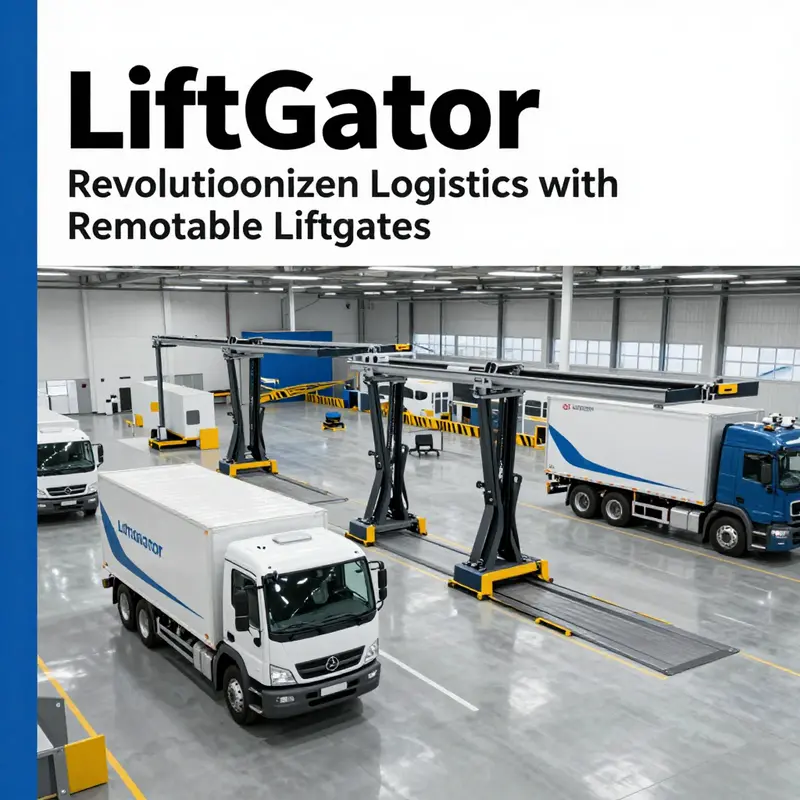
Across modern logistics, throughput, reliability, and sustainability are intertwined obligations. A modular, removable liftgate enables smarter cargo handling, smarter routing, and smarter asset utilization. The LiftGator concept centers on a foldable, quick-deploy unit that can lift roughly 1,300 pounds with an intentionally simple interface and rapid installation that avoids permanent modifications. When not in use, it folds away to reclaim space and maintain vehicle versatility for a wide range of missions. This shift from fixed, specialized equipment to flexible, shared capability belongs to a broader transformation in logistics design. It is a change that affects how fleets are sourced, how routes are planned, and how operators think about energy, time, and safety at every touchpoint of the supply chain.
At its core, the appeal of a removable liftgate is strength, control, and ease of use. A unit with energy autonomy—capable of twenty or more lift cycles per charge—reduces dependence on fixed charging infrastructure and supports multi-stop routes and remote loading zones. Recharging can occur from a standard household outlet or through the trailer’s power interface, expanding viable operating environments and lowering barriers to adoption for small and mid-sized operators. Safety and consistency are built in through a straightforward control schema and smooth lifting motion, with integrated safeguards to protect workers and cargo. The modular design also optimizes storage and asset utilization, enabling a fleet to respond to changing job profiles in minutes rather than hours.
Across the automation spectrum, LiftGator can integrate with digital twins, real-time cargo tracking, and safety systems to choreograph loading tasks with precision. When connected, status, battery level, and duty cycle feed a shared dashboard that helps supervisors optimize schedules, prevent bottlenecks, and anticipate maintenance needs before failures occur. This interoperability supports data-driven decisions, reduces idle time, and improves cycle times, while maintaining a strong focus on safety and environmental performance.
For practitioners, the practical pathway to adoption is clear: define use cases and weight ranges, establish mounting and removal procedures, and implement monitoring and maintenance plans. A modular lift system should be designed to travel across fleets, dock in adaptive ways, and integrate with automation platforms that bring visibility, control, and optimization to every cargo-handling step. The result is a flexible interface between vehicle, warehouse, and logistics network that delivers safer handling, higher throughput, and a smaller environmental footprint.
Final thoughts
LiftGator stands at the forefront of lifting technology, providing businesses with the means to streamline their logistics and improve overall operational performance. With removable liftgates that offer flexibility, efficiency, and sustainability, companies can reduce reliance on manual labor and embrace innovative solutions. As the demand for faster, more effective logistics solutions continues to grow, LiftGator’s products symbolize the future of operational excellence.