
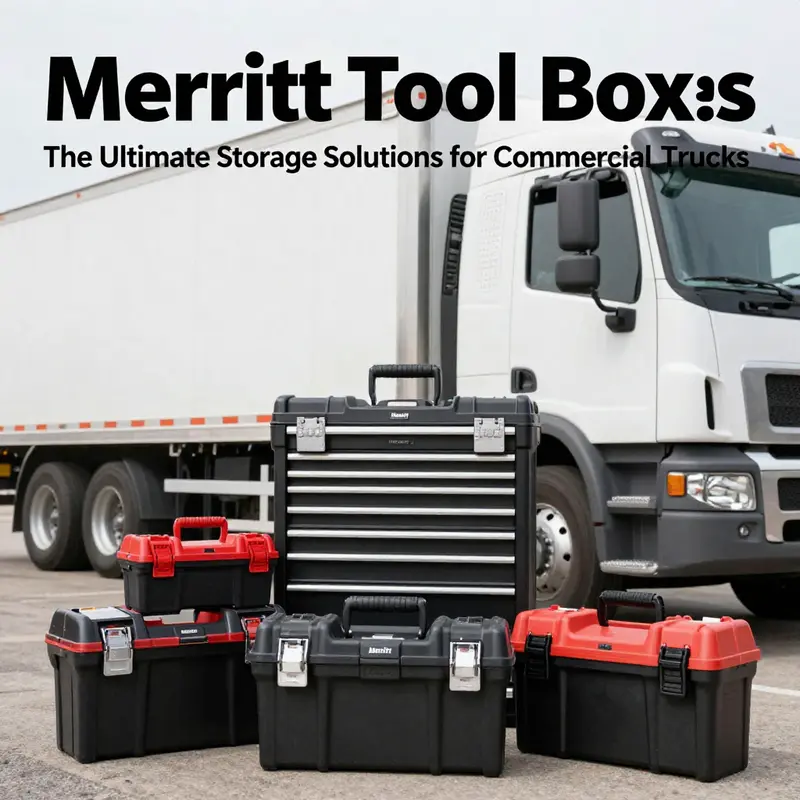
For business owners operating in the demanding world of commercial trucking, the choice of equipment can greatly impact efficiency and productivity. One essential component that enhances both functionality and security is tool storage. Merritt tool boxes have emerged as a popular choice among commercial truck drivers and fleet operators due to their remarkable durability and innovative design. This article delves into the unmatched attributes of Merritt tool boxes, beginning with the durability and design that make them stand out in the market. We will then explore the advanced features and technical specifications that contribute to their reliable performance. Lastly, the article highlights the significant impact Merritt tool boxes have on the commercial trucking market, underscoring their value to business owners seeking effective solutions for tool safety and accessibility.
Fortress on the Road: Durability and Precision Design in Merritt Tool Boxes
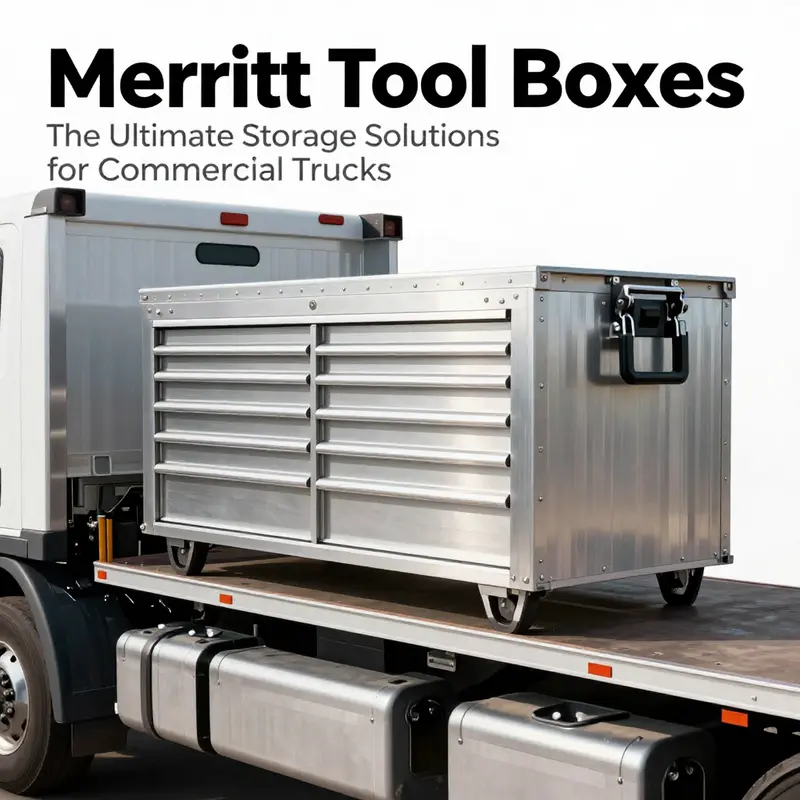
Tool boxes built for professional fleets are more than mere storage. They are portable workstations that must survive the worst conditions the road can throw at them: pounding vibrations, wide temperature swings, salt spray, rain, dust, and the constant abrade of daily use. In this context, the tool box lineup that has earned a solid reputation among maintenance crews and operators thrives because it treats durability and design as a single, inseparable discipline. The architecture of these boxes begins with the choice of materials and the way their most critical joints are reinforced. Heavy-duty steel frames, thick-walled bodies, and reinforced corners aren’t just about heft; they’re about distributing impact forces and preventing fretting at stress points, where fatigue tends to show first. It’s one thing to endure a bump; it’s another to do so repeatedly without warping a lid, loosening a hinge, or compromising a weather seal. The result is a toolbox that acts like a mobile workshop cabinet rather than a fragile chest strapped to a frame. The science behind this reliability becomes especially apparent when one considers the long, unglamorous demands of roadside maintenance, where a drawer jam or a delayed tool retrieval can translate into wasted time and costly delays. In such contexts, the design ethos—sturdy, predictable, and easy to service—translates into tangible value for fleets and technicians alike. The core principle is simple: create a box that can be trusted to protect what’s inside, regardless of the weather, the load, or the road’s mood, and do so with a level of ease that minimizes downtime. The practical payoff is clear to anyone who has spent a long shift chasing lost wrenches or bent screwdrivers. A robust build keeps tools dry, organized, and accessible, which in turn reduces search time and the risk of misplaced equipment. For operators with a fleet-wide view of cost and downtime, this reliability compounds into meaningful efficiency over the equipment’s entire service life. The best boxes in this segment are designed for universal mounting behind the cab, a configuration that keeps the tool stash within arm’s reach while preserving cargo space for larger loads. This behind-the-cab positioning is not arbitrary; it’s a deliberate choice that recognizes the realities of daily truck duties. When a toolbox is mounted behind the cab on the passenger side, it creates a predictable geometry for tool access, reduces the need for long, awkward reaches, and aligns with the truck’s center of gravity to minimize any changes in handling caused by added weight at the sides. The integration aspect extends beyond mounting compatibility. These tool boxes are crafted to play well with other equipment commonly found on heavy-duty rigs, from racks that hold hoses and cables to compartments that cradle fasteners, all while maintaining a coherent external silhouette that does not intrude on the truck’s aerodynamics or sideline the operator’s daily workflow. A key design nuance, often subtle to the eye, centers on the interface where metal meets metal and weather meets working gear. In the most enduring designs, gaps between the lid, weather seals, and the body are controlled with exquisite precision. The seals themselves are not mere strips of rubber; they are engineered to accommodate the realities of field conditions—expansion and contraction with temperature, resistance to ultraviolet degradation, and the capacity to maintain a dry interior even when the box faces driving rain or spray from passing traffic. The lids must close with assurance, like a safe door, every time the operator needs access. That requirement has a practical implication: the fit of the lids cannot be sloppy, because even a small misalignment can invite moisture and dust into the interior. The effect, over time, is not simply nuisance; it can erode the useful life of tools and reduce the reliability of fasteners and components that depend on a clean, dry environment. In seeking to prevent this, designers opt for tight tolerances and durable hinge systems that resist corrosion from road salt and humidity. A well-executed hinge not only supports smooth operation; it preserves alignment for years. It’s a small detail, but it compounds into a big advantage after months of daily use. A particularly telling design philosophy behind these boxes is the way interior space is organized. Rather than presenting a single, bare cavity, the interior is modular and adaptable, enabling technicians to tailor storage to the specific jobs they face. The internal arrangement can be stepped and segmented, with drawers or trays that glide smoothly and lock securely into place, making it easy to partition sockets, wrenches, and fasteners without letting one item intrude on another. When the interior can be reconfigured, a technician can curate a set of tools for a particular job without sacrificing accessibility for the next one. This adaptability also translates into simpler maintenance. If a drawer becomes stiff or a caster starts to drag, serviceability is kept straightforward by design. The goal is not to create a perfect tool box in theory but to preserve a usable one in the field—one that remains a reliable ally through long projects, seasonal shifts, and the rigors of daily haulage. In terms of material choices, the spectrum extends beyond steel. Some configurations pair steel frames with aluminum doors or panels, balancing strength with weight and corrosion resistance. The presence of aluminum in certain assemblies is not a vanity feature; it reflects a thoughtful approach to reducing overall mass without compromising structural integrity. Yet, even when lighter materials appear, the design preserves a protective strategy: a dielectric plate or similar barrier integrated into the assembly to prevent galvanic corrosion when dissimilar metals meet. This is not just a clever trick; it is a practical solution to a pervasive problem in outdoor equipment: the unintended chemical reaction that occurs when two metals are forced to live in close proximity in a moist, salty, and variable environment. By inserting a dielectric barrier, the design prevents the flow of electric current between materials, thereby curbing corrosion that would otherwise compromise joints, fasteners, and seals. It’s the sort of thoughtful steel-and-plastic engineering that quietly extends a tool box’s life, even under the relentless exposure encountered on highways and construction sites. The combination of durability and design is best understood as a disciplined integration of features rather than a single standout attribute. The locking system, for instance, is not an afterthought but part of the core architecture. A robust lock adds a second layer of protection for high-value tools, while still allowing quick access for the user who must retrieve a wrench in a hurry. The security approach often emphasizes rust resistance as a parallel track to lock reliability. The outer coatings are crafted to resist weathering and chemical exposure, ensuring that the metal beneath remains protected and that the lid remains easy to operate without jamming. This dual emphasis on security and longevity makes these tool boxes well-suited to the realities of fleet operations where tools are shared among crews and subject to frequent use. Beyond the sturdy build and locking features, the practicalities of daily work drive the refinement of these boxes. The ability to move the box when needed—via rolling configurations or portable handles—offers an unexpected but invaluable advantage. For some applications, rolling functionality enables technicians to reposition their workspace without unloading the entire contents, reducing downtime and supporting more efficient workflows. In other contexts, a stationary configuration might be preferable for stability and security when a vehicle is parked on uneven ground or during long-term field assignments. The design language thus accommodates both mobility and stillness, allowing fleets to tailor tool box usage to mission requirements. This breadth of configurations—ranging from compact, single-tire-friendly units to larger, multi-drawer systems—ensures a fit for nearly every job profile. The ability to select a toolbox that integrates cleanly with existing fleet hardware—mounting points, frame dimensions, and access paths—simplifies installation and reduces the total cost of ownership. For operators who manage multiple vehicles, the consistency of mounting geometry across the lineup is a notable convenience. It preserves a predictable service routine and minimizes the learning curve for maintenance staff, who can move between units without retooling. The end result is a durable, design-forward toolbox that stays faithful to its promise through weather, vibration, and time. It protects tools, supports quick access, and remains resilient in environments that would challenge lesser systems. The practical value of this approach shows up in the field as fewer service incidents, faster tool retrieval, and longer service life for the tools entrusted to the box. It’s a quiet testament to the way well-considered design, material science, and manufacturing discipline intersect in a functional product that fleet managers rely on every shift. For readers who want to connect this discussion to real-world examples, a quick reference point can be found in the broader conversation about Merritt tool boxes and their positioning within professional fleets. The lineup is frequently highlighted for its emphasis on durability, ease of installation, and material quality, all of which contribute to long-term reliability and reduced maintenance costs. For a concise overview of how this family of tool boxes fits into the larger ecosystem of truck equipment, you can explore related coverage and insights on Merritt truck boxes. Merritt truck boxes. This link offers a snapshot of the range, the design principles that shape the lineup, and the practical considerations that fleets weigh when selecting a storage solution for the shop floor and the highway alike. While the specifics of each configuration may vary, the underlying philosophy remains consistent: durability and thoughtful design go hand in hand to deliver a product that not only stores tools but also protects them, speeds their use, and survives the road. The dialogue about tool box design thus mirrors a broader conversation about reliability in heavy-duty equipment. It’s not only about surviving a rainstorm or a pothole; it’s about sustaining a dependable toolkit that technicians can trust when every minute counts. In the end, what distinguishes these boxes is less about a single feature than about the sum of many small, intentional decisions: the choice of robust materials, the reinforcement of joints, the precision of lid fits, the resilience of weather seals, the assurance of secure locking, and the flexibility of interior layouts. It is this integrated approach that makes them an enduring choice for professionals who demand steady performance across a fleet’s lifetime. External resource: https://www.merritttool.com/products/
Behind the Cab and Beyond: The Durable, Access-Driven Design of Merritt Tool Boxes for Heavy-Duty Fleets
In the world of commercial trucking, tool boxes are more than metal housings; they are compact, purpose-built working spaces that endure the rigors of long-haul road life. A well-conceived tool box does more than hold wrenches and ratchets; it protects valuable equipment, facilitates rapid service, and resists the pounding of weather, salt spray, and constant vibration. Among the brands that have earned familiarity with fleet operators for these exact reasons, the range that carries the Merritt name is often cited as a benchmark for durability, secure storage, and thoughtful design. The essence of Merritt’s approach lies in balancing rugged exterior with intelligent interior layouts, all while keeping installation practical for busy maintenance bays and on-the-road service stops. Fleet managers recognize that a box that stays put, stays dry, and stays accessible can shave minutes from every service call and hours from a vehicle’s downtime. The user experience, in this case, is as critical as the raw materials or the coating that guards against the elements. A well-planned box compresses the distance between tool and technician, a seemingly small detail that yields big dividends when the job is urgent and the weather is unforgiving.
What follows is a reflection on the core design philosophy that animates Merritt tool boxes and the practical specifications that translate that philosophy into reliable field performance. The discussion takes a holistic view: from materials selection and corrosion resistance to access mechanisms, mounting conventions, and the broader ecosystem of service and maintenance that keeps these boxes functional across thousands of miles. At the center of this narrative is a simple truth: durability is a system attribute. It is not a single feature but an ensemble of choices—materials, geometry, seams, and mounting options—that determine how well a box survives heat and cold, jostling, moisture intrusion, and the daily wear of tools being slipped in and out. In a fleet context, that systemic resilience is inseparable from the fast, predictable access that technicians require when time is of the essence. A box should invite use rather than impede it, inviting the user to grab the right tool from the right place with one confident motion rather than rummaging through a cluttered interior.
One of the most salient elements of Merritt’s design approach is the emphasis on corrosion resistance and longevity. Aluminum, as a primary construction material, offers a favorable balance of light weight and strength, as well as robust resistance to the kind of exposure that trucks routinely endure: wind-driven rain, road salt, and temperature cycling that can stress metal over time. Beyond the shell, designers recognize that galvanic corrosion can arise when aluminum interfaces with other metals in the presence of moisture. A dielectric plate or similar insulating feature is employed to interrupt dissimilar-metal contact, reducing the risk of galvanic attack and preserving the box’s integrity through seasons of exposure. In practice, this translates into a product that remains stationary in its mounting, does not become brittle after repeated freeze-thaw cycles, and maintains a clean, corrosion-free appearance even after years in the field. The result is more than aesthetics; it is predictable performance under conditions that would test inferior materials.
The geometry of these boxes further reinforces their field-readiness. A compact footprint, with dimensions tuned to accommodate a broad range of tool inventories, enables mounting behind the cab on the passenger side—a configuration favored for its balance of accessibility and vehicle clearance. Such placement keeps tools within arm’s reach of the technician while preserving the cargo space in the bed for bulky equipment or materials. A sloped, top-opening door is another recurring feature that is both practical and efficient. When a technician stoops at the truck’s rear or the box’s edge, the angled door guides the hand toward the interior without obstructing the user’s line of sight. The result is a natural, almost intuitive motion that reduces fumbling, minimizes the risk of dropping tools, and quickens the retrieval of the item needed to complete a repair. Small but cumulative improvements like this, when deployed repeatedly across a fleet, translate into measurable gains in productivity and safety.
The practical advantages of a sloped top-opening design extend beyond speed. In environments where rain, snow, or dust is common—conditions drivers encounter across the country—the top-opening door provides protection for the contents during open-air retrieval. The angle reduces the odds that tools will slide back out or become misaligned as the door is opened against the vehicle’s body. In addition, a well-designed opening mechanism delivers a crisp, controlled action that can be repeated under gloves or in poor lighting, a common scenario in maintenance yards or late-night calls. The experience of service technicians matters because it shapes how consistently tools are returned to their designated slots, which, in turn, reduces the misplacement of items and the needless purchase of duplicates. In fleets where inventory management is as vital as tool retention, such reliability is not a luxury but a necessity.
The installation story is equally important. A universal mounting concept—designed to fit a broad spectrum of vehicle configurations and to simplify installation for repair shops and in-house facilities—speaks to a pragmatic philosophy: make the box fit the vehicle and the workflow, not vice versa. When a unit can be mounted behind the cab on the passenger side, it aligns with the operator’s daily routes and maintenance routines. It also leaves space on the driver’s side for other essential equipment, such as a fuel-tank arrangement, a ladder rack, or a door-access cabin tool caddy in some configurations. The ability to integrate with an existing security framework—either through a keyed lock, a cam-locked system, or an electronic access solution—further enhances the box’s value. Some designs emphasize quick, grab-and-go access, while others lean into a more secure, multi-point lock approach. In fleets that operate around the clock, the trade-off between speed and security is constantly negotiated, and the best boxes offer a balanced path that does not force operators to sacrifice protection for convenience.
From the perspective of fleet procurement, the availability of these tool boxes through major commercial distributors is a meaningful signal. Genuine parts and a reliable service network matter when a fleet needs a replacement lid, a gasket, or a clip that has worn out after years of exposure. The ecosystem around a component can influence total cost of ownership as much as the component’s own price tag. When a purchase is backed by a network that can ensure availability of parts, a consistent warranty, and prompt after-sales support, operators gain a layer of reassurance that the initial savings may accrue as improved uptime and reduced downtime on the road. In practice, this means that a well-chosen box from a trusted supplier minimizes the logistical friction that can otherwise slow a maintenance operation. It also supports fleet standardization, enabling maintenance teams to stock a common set of parts across multiple units and vehicle types, simplifying the training process for technicians who service a mixed fleet.
The capacity and balance of a Merritt tool box—how much it can hold without becoming unwieldy—reflect thoughtful interior planning. The interior space must accommodate a diverse range of hand tools, wrenches, sockets, and small power-tool kits, while preserving a straightforward layout that makes organization intuitive. The interior is typically configured to support easy segregation of tools by function or by job scope, with the option to install dividers, trays, or liners that further optimize retrieval and return. A box that prioritizes organization helps reduce job one in an urgent repair scenario: the mechanic knows exactly where the right tool is, and the chance of leaving essential items behind decreases. The outcome is not just time saved; it is the confidence that the right tool will be at hand when a repair window is narrow and the pressure is on. The simple relationships between form, function, and routine maintenance become clear when technicians describe how a well-organized interior translates into fewer misplaced items and faster repairs.
In the broader context of fleet operations, these tool boxes relate to a continuous feedback loop between how tools are stored and how jobs are executed. A durable shell fights corrosion and abuse; an accessible, thoughtful door and opening mechanism reduces friction during tool retrieval; a mounting scheme supports quick installation and stable operation; and a well-structured interior layout supports rapid execution of tasks. Together, these elements create an object that behaves like an extension of the technician’s own hands. The benefits cascade into reduced maintenance cycle times, lower risk of tool loss, and improved overall reliability of the service program. For fleet operators who measure performance in hours saved per month and tools recovered per week, the value of such a design becomes obvious not only in uptime but in the quality of on-the-job service that drivers and technicians deliver to customers every day.
A final note on the knowledge framework that accompanies physical storage solutions. While boxes secure tools, engineers and technicians rely on a parallel set of resources to design, specify, and validate the larger systems in which these tools operate. In the research landscape that informs contemporary tool-box design, references to analytical toolkits remind us that physical components and digital analysis share a common goal: predictable, reliable performance. Software toolkits designed for system design and analysis provide the language for evaluating requirements, tolerances, and integration with other equipment. While these tools live in a different domain, they echo the same discipline—clear specifications, reproducible results, and robust documentation—that governs hardware design. For readers who want to explore the software side of engineering, resources such as the LTE Toolbox offer a window into how professionals model and analyze complex systems to ensure their components will perform within stringent constraints. Access to well-structured documentation, example workflows, and expert guidance helps tooled-up teams translate practical storage choices into cohesive, reliable, and scalable fleet solutions. For readers seeking additional context on the software side of engineering and the kinds of documentation that support rigorous design work, the LTE Toolbox official documentation provides a comprehensive portal to system design and analysis resources.
To learn more about Merritt’s approach to tool storage and its broader product family, readers can explore a dedicated overview that collects practical insights, installation considerations, and field-tested best practices. This broader perspective situates tool boxes not as isolated hardware items but as part of a larger, disciplined workflow that fleets rely on for dependable maintenance and efficient operations. For those who want a concise primer on Merritt’s philosophy and its practical implications for fleet maintenance, a well-turnished introduction can bridge the gap between the shop floor and the open highway. For readers who wish to see how these solutions are discussed within the broader community, a trade-oriented overview highlights how professionals evaluate, compare, and select tool storage across different vehicle platforms. The conversation around storage is not simply about what a box can hold; it is about how its design aligns with the rhythm of a fleet’s days, the pace of a repair cycle, and the recurring need to keep tools secure, accessible, and protected from the elements.
For readers who want to dive deeper into Merritt’s approach to tool boxes and related aluminum products, a dedicated resource on Merritt’s tool-box line provides a gateway to more detailed case studies and practical considerations. The linked overview offers a digestible entry point into how fleets choose, install, and maintain these solutions across varying operating conditions. It adds a layer of practical context to the technical and design-focused discussion above, helping readers connect the dots between material choice, mounting strategy, and real-world outcomes on the road. As with any long-term equipment investment, the strongest value proposition emerges when design intent, field performance, and after-sales support work in concert to sustain uptime and productivity across a fleet’s lifetime.
External resource for readers who want to extend their technical horizons: LTE Toolbox Documentation.
Behind the Cab, Frontline Reliability: The Market Influence of Merritt Aluminum Tool Boxes in Modern Trucking
When fleet managers forecast the life cycle of a truck, the line items that seem small – like tool storage – are often the decisive variables between downtime and on-time delivery. In the heavy-duty segment, the tool box sits at the juncture of durability, accessibility, and workflow efficiency. It is not merely a storage bin but a functional extension of the vehicle’s daily operations. Tool boxes designed for commercial fleets must endure the harsh realities of highway speeds, variable weather, and the constant churn of doors, latches, and seals that face repeated use. They must also integrate with the vehicle’s geometry – mounted behind the cab, on the passenger side, or in other strategic locations – so that tools are within arm’s reach for the driver, yet secure from theft, moisture, and road debris. In these respects, the market has gravitated toward aluminum construction and thoughtful engineering that prioritizes long-term reliability over short-term appeal. The impact of that shift on commercial trucking is not only about product performance but also about the operational economics that fleets depend on every day. A toolbox that resists corrosion, handles the vibration of long hauls, and installs with minimal disruption becomes a multiplier for efficiency. It reduces the friction between anticipation and action, turning a toolbox into a dependable ally in a driver’s routine rather than a recurring maintenance concern.
From a material science perspective, aluminum offers a practical balance of strength, weight, and corrosion resistance that aligns with the demands of outdoor, road-worn environments. A dielectrically insulated plate within the enclosure helps prevent galvanic corrosion when metals of different electrochemical potential coexist in proximity. In practical terms, that feature extends the toolbox’s life, slows the onset of wear, and reduces the need for frequent replacements – an important consideration for fleets budgeting for asset lifecycle costs.
The behind-the-cab mounting concept remains a core driver of how fleets evaluate tool storage. A universal mounting approach addresses the reality that trucks in a fleet often come from different OEM configurations and vintages, yet share the same workflow requirements. A tool box that can be mounted behind the cab on the passenger side without bespoke fabrication simplifies both installation and future swaps. It allows a fleet to standardize on a single storage platform across multiple vehicle types, reducing the learning curve for drivers and the time technicians spend on fitment. The practical benefits extend to daily operations: with tools, wrenches, cords, and diagnostic devices neatly organized in a weather-tight enclosure, a driver spends less time searching and more time completing tasks. The result is a smoother shift pattern, fewer delays on the road, and the capacity to respond to unexpected maintenance needs without diverting to a shop visit. In scenes like this, the toolbox becomes more than metal and hinge; it becomes a small but crucial node in the vehicle’s value chain.
From an industry perspective, the market impact of these tool boxes on commercial trucking goes beyond individual fleets. The aftermarkets that serve heavy-duty trucks rely on a steady cadence of durable, high-performing components that can be integrated into diverse vehicle configurations. A toolbox that emphasizes universal fitment and durability helps manufacturers and fleet operators alike to decouple storage decisions from bespoke engineering projects. In an ecosystem where downtime directly translates to lost revenue, a robust toolbox reduces the risk that a driver’s productivity is compromised by poorly organized contents or weather-exposed gear. The effect is felt in maintenance schedules, in the turnover of spare parts inventory, and in the ease with which a fleet can reconfigure its trucks to accommodate new tool assortments, emergency equipment, or diagnostic devices. The market thus rewards designs that are resilient, easy to install, and capable of withstanding the rough rhythm of long-haul life.
A broader view of market dynamics reveals how distribution and availability shape adoption. In North America’s heavy-duty truck aftermarket, a toolbox line gains traction not solely on its technical merits but on the strength of the network that can deliver it, support it, and service it across a wide geographic footprint. Fleets operate with lean support structures; they rely on distributors and service partners who can supply genuine parts, provide documentation for installations, and back up maintenance with quick access to replacements. A well-positioned toolbox line, in this sense, becomes part of a trusted procurement channel, reducing the lead times that can otherwise stall a maintenance plan. The result is a smoother supply chain, with fleets more confident in keeping vehicles up and running rather than waiting weeks for specialized components. The reliability that comes from strong distribution translates into higher utilization of the workforce, better adherence to delivery windows, and more efficient fuel and maintenance planning. These factors are not abstract; they portend measurable differences in fuel burn, overtime costs, and the ability to sustain service levels during peak seasons.
From the driver’s perspective, organization and accessibility are not cosmetic features; they affect the tempo of a workday. A driver who can quickly locate a needed tool whether it is a torque wrench, a spare fuse, or a diagnostic lead spends less time wrestling with equipment and more time on the job at hand. The immediate experience of using a well-designed aluminum toolbox, especially one that emphasizes secure sealing and robust hinges, reinforces safety as a daily practice. When tools are safely stowed and protected from the elements, the likelihood of tools becoming projectiles during sudden stops or rough road segments decreases. Security strategies, meanwhile, intersect with this daily routine. Some configurations favor rapid access to frequently used tools, paired with integration into broader fleet security approaches, to balance the tension between accessibility and theft prevention. This balance is not a theoretical concern; it is embedded in the design language of modern tool boxes that aim to deliver both reliability and peace of mind to drivers who rely on consistent, on-time performance.
The market’s evolution toward these features also reflects a shift in customer priorities. Fleet operators increasingly value reliability, safety, and cost-effectiveness in tandem. A toolbox that resists corrosion, tolerates vibration, and installs with minimal customization aligns with these priorities by reducing downtime and maintenance labor. In practice, that means fewer service calls, lower exchange rates for damaged parts, and easier training for technicians who support a mixed fleet of trucks. A durable, well-designed toolbox also supports better insurance positioning, as lower expected maintenance reduces risk exposure and helps fleets maintain favorable terms. At the same time, operators appreciate that quality components minimize the frequency of mid-route equipment failures. When tools are secure, drivers feel more secure, which improves focus and reduces the chance of errors in urgent roadside repairs. All of these factors create a composite effect: the toolbox becomes a reliability anchor around which fleet maintenance planning can be organized, a cornerstone in a preventive strategy that keeps vehicles on the road rather than parked in a shop.
In these dynamics, the brand and its connected ecosystem matter. The toolbox is not an isolated purchase; it is part of a larger conversation about how to keep a fleet moving with predictable costs and manageable risk. The value proposition rests on a combination of material quality, engineering finesse, and a support network capable of delivering parts, advice, and service wherever the fleet operates. The narrative that emerges is one of rational choice: operators select steel-free, corrosion-resistant aluminum options that are lightweight enough to counterbalance payload considerations while being sturdy enough to survive years of exposure to the elements and the bumps of gravel roads. Installers appreciate the straightforward, universal-fit approach that reduces time on the lift and accelerates installation or replacement. Drivers appreciate easy access and secure storage that minimizes the cognitive load on a long day of driving.
What makes this topic especially relevant to the broader article on Merritt tool boxes is how the design philosophy translates into real-world outcomes. The reliability of an aluminum toolbox, paired with an effective mounting framework and protective features like dielectric plates, creates a durable, low-maintenance storage solution that fleets can confidently deploy across a range of vehicle types. The approach signals a broader commitment to practical innovation that supports the daily rituals of trucking—fueling schedules, maintenance cycles, and the steady cadence of cargo delivery. For readers who want to see how these design principles appear in practice, a concise overview of the Merritt toolbox family provides a useful reference point. This overview emphasizes ease of installation, material choice, and the balance between protection and accessibility, which together underpin the toolbox’s overall performance in the field. If you want to explore a compact summary that ties together durability, universal fitment, and fleet reliability, you can read the Merritt tool box overview here: https://trucksdiy.com/blog/merritt-tool-box/.
Beyond the immediate utility, the market impact also shapes how fleets plan for the long term. The growth of durable aluminum toolboxes has encouraged OEMs and aftermarket suppliers alike to integrate similar approaches into their own product lines, promoting a standard of ruggedness that benefits the entire ecosystem of truck equipment. With a focus on protecting tools, reducing downtime, and enabling straightforward installation, these toolboxes set a baseline for performance in mobile storage solutions. The result is a more predictable operating environment for fleets, with fewer surprises and better alignment between tool management practices and maintenance schedules. In turn, that predictability translates into better budgeting, more accurate fleet utilization metrics, and a smoother path toward modernization as fleets upgrade or replace aging components with compatible storage systems that share the same design creed.
As the chapter closes on the market perspective, circle back to the overarching theme of reliability, accessibility, and efficiency. The toolbox—the humble yet indispensable companion to the driver and vehicle—acts as a lever that influences many downstream variables: maintenance costs, downtime, and even driver satisfaction. By choosing a storage solution that combines aluminum durability, corrosion resistance, and universal mounting flexibility, fleets invest in a capability that scales with growth and weather, a capability that remains dependable whether the route is a cross-country haul or a regional distribution run. The practical value of such a choice is tangible, and its influence on the economics of trucking is felt across maintenance planning, procurement decisions, and the daily cadence of a driver’s work life. For readers interested in more detailed discussions about Merritt tool boxes, a dedicated overview that ties together design choices and field performance can be found at this internal resource. It offers a focused lens on the materials, fitment, and engineering that underpin the modern toolbox’s impact on fleets: https://trucksdiy.com/blog/merritt-tool-box/.
External references that illustrate market visibility and real-world listings can be found here: https://www.ebay.com/itm/284991917457.
Final thoughts
Merritt tool boxes exemplify what it means to combine durability, innovative design, and essential features for business owners engaged in the commercial trucking industry. Their robust construction ensures that tools and equipment are secured against harsh environmental conditions, ultimately contributing to increased productivity and reduced downtime. By prioritizing both security and accessibility, Merritt tool boxes have carved out a significant niche in the market, affirming their reputation as a trusted solution tailored for professionals. As you contemplate the right storage solutions for your trucking operations, consider the enduring value and market credibility of Merritt tool boxes.