
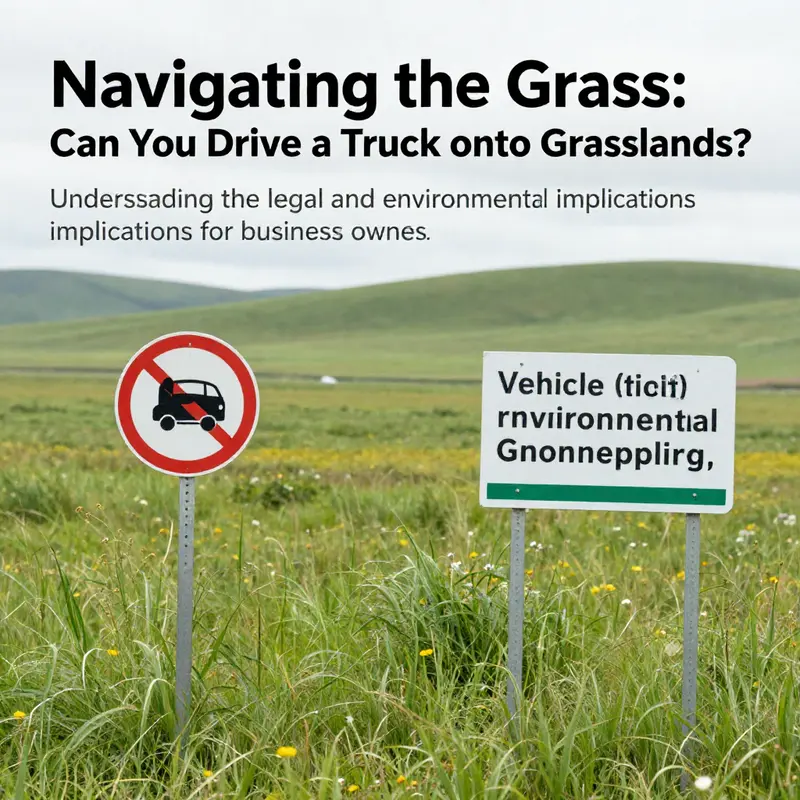
The question of whether trucks can be driven onto grass is not just a matter of convenience but also one of legal compliance and environmental stewardship. For business owners, especially those operating close to natural landscapes or grasslands, the implications of driving onto these terrains can be far-reaching. This article delves into the legal ramifications, environmental impacts, and regulatory frameworks surrounding this issue. Subsequent sections will highlight specific scenarios where such actions may be permissible under strict regulations, allowing businesses to navigate this sensitive area with knowledge and care.
Steering Clear of Grass: Legal Boundaries, Ecological Stewardship, and the Realities of Truck Traffic on Grass
The question, simple in form yet complex in consequence, asks whether a truck may be driven onto grass. In most places the answer is no. The ground under a truck’s tires is rarely treated as a legal analogue to a road or parking lot. Grass, whether in a public park, a protected meadow, or a private field, is part of an ecosystem that supports soil integrity, water cycles, and a spectrum of plant and animal life. When a heavy vehicle presses down, it does more than leave a temporary mark. It alters the soil structure, compacts root zones, breaks stems, and disrupts the microhabitats that living organisms rely on. This is why the law, at many levels, treats grass as something to be protected rather than a surface to be used for arbitrary traffic. The ground underfoot becomes a site of potential harm and legal risk. The broader implications extend beyond the immediate moment of project or errand; they reverberate through environmental policy, land management, and the trust we place in public spaces to function for everyone, not just motorized convenience.
To understand where trucks may and may not go, it helps to begin with the principle that access is typically restricted to designated routes. Roads, paved paths, and authorized parking areas exist to manage the footprint of human movement. When a jurisdiction speaks of grasslands, meadows, or wetlands, those terms signal places that have been recognized for their ecological value or public benefit. They require special care because their vulnerability is measured not only in the moment of a vehicle’s presence but in the lasting consequences for soil stability, vegetation regrowth, and habitat continuity. In many regulatory frameworks around the world, including those now being refined in response to growing environmental awareness, off-road or off-designated-route driving is treated as a non-essential use that can trigger penalties. This is not an argument about anti-munition of freedom or about the inconvenience of a scenic detour; it is an argument about stewardship, safety, and the legitimate expectations of other road users and neighboring communities.
Legal implications are not abstract. They manifest as timely notices and enforceable rules that define what “authorized” means. In some systems, driving a truck onto grass at all is a violation of local ordinances or environmental protection statutes. Trespass concerns emerge when the grass is private property or protected land, and the consequences can range from civil liability to criminal charges, depending on the jurisdiction and the extent of harm caused. Consider, for instance, how public spaces such as parks or medians are regulated for the common good. A large vehicle can cause more than immediate damage; it can lead to longer-term maintenance costs and disruptions to public use. Authorities have a vested interest in deterring such incursions to prevent erosion, preserve turf, and maintain the safety and accessibility of shared spaces. The penalties are not mere fines; in some cases they include restoration obligations, fines commensurate with damage, and, in severe instances, charges that reflect the seriousness of ecological harm and public disruption.
The ecological rationale behind these rules rests on more than sentiment. Grasslands are among the most delicate and slowly recovering habitats in many regions. A truck’s weight compacts the soil, reducing pore space and hindering water infiltration. Elastic grasses that normally bend with the wind may sustain cracking and tearing, creating roughened surfaces that are slow to heal. Recovered vegetation in a flattened zone often takes seasons to return to full health, and the regrowth can be uneven, leaving bare patches that invite further erosion or weed invasion. In wetlands or marshes, the consequences can be even starker: soil compaction damages the delicate hydrological balance that supports water purification, flood mitigation, and the survival of amphibians, birds, and insect communities. The cumulative impact is not just a single depressed patch; it is a weakening of resilience that affects the land’s capacity to deliver ecosystem services during dry spells, heavy rains, or shifting climate conditions. When policy-makers frame grasslands in terms of ecosystem services—soil formation, carbon storage, biodiversity—the prohibition on off-designation vehicle traffic reads as a practical act of maintenance rather than a punitive impulse.
Enforcement narratives help illuminate how these rules function in daily life. Across regions with robust grassland protections, enforcement agencies monitor and respond to violations with a spectrum of strategies. Some cases are straightforward: a driver on private land without permission or a park visitor leaving a road to drive across a turf area triggers trespass and environmental breach concerns. In more regulated zones, authorities emphasize restoration costs—a driver may be assessed the financial burden of reestablishing damaged turf, stabilizing soils, and replanting native vegetation. The legal calculus extends to responsibility for cleanup if any fuel, oil, or other contaminants are spilled during the episode. Even when authorities pursue only civil remedies, the reputational impact on a business can be consequential, given that fleet operators are judged by their compliance culture as much as by the fleet’s speed, payload, or efficiency.
Recent enforcement narratives in several jurisdictions illustrate the seriousness with which grass protection is treated when the harm is avoidable. A report from Xinjiang in May 2024 described an investigation into a rented pickup truck driver who engaged in drifting on natural grassland without permission, an episode that highlighted the environmental harm and the legal exposure that follows. In April 2025, multiple drivers were penalized for operating SUVs on green belts within a wetland park, a setting that underscores how the same act can threaten not only vegetation but water quality and riverbank stability. These incidents, while localized, reflect a broader pattern in which authorities are widening their focus on vehicle movements that cross into protected or sensitive lands. The underlying rationale is not punitive excess but a careful calculation that seeks to prevent harm to fragile ecosystems, preserve public access, and maintain the integrity of landscapes that have cultural, ecological, or hydrological significance.
Against this regulatory backdrop, a contemporary policy signal has emerged: in many jurisdictions, a comprehensive approach is taking shape through explicit prohibitions and the creation of clearly marked corridors. For instance, dedicated routes for agricultural work on private land or for specific maintenance tasks in public lands may be established where access is permitted under strict conditions. These allowances are not open-ended exemptions but carefully bounded permissions that require clear authorization, defined purposes, and often a finite duration. They may also require adherence to fire-prevention rules, restrictions on carrying ignition sources, and proactive measures to minimize disturbance to wildlife and soils. The underlying philosophy is straightforward: access is a privilege that comes with responsibility, and safeguarding grasslands demands that we distinguish between legitimate business, essential maintenance, and recreational impulse.
For those who must navigate landscapes where grass and soil are at stake, practical guidance can help align operations with the law and with ecological stewardship. A central step is route planning that prioritizes designated pathways and avoids non-designated turf. This is not merely a regulatory compliance exercise; it is a risk-management discipline that protects drivers from legal consequences, protects assets from unnecessary damage, and protects communities from the downstream costs of restoration or litigation. In rural and agricultural settings, where private land exists adjacent to public rights of way, obtaining explicit permission for any off-road activity is essential. Documentation—permits, written permissions, and a clear statement of purpose—forms the backbone of a defensible operation. In the event that a route must traverse near grasslands for a critical mission, coordination with landowners, park managers, or local authorities can establish a controlled window of access that minimizes impact and clarifies accountability.
The broader lesson for drivers, fleet operators, and land managers is that legality and ethics are not optional add-ons. They are integral to the ongoing health of public spaces and to the reliability of transport systems. A vehicle that must operate near grasslands should do so with deliberate care, clear authorization, and a plan that minimizes ecological disruption. The same is true for private agricultural operations, where access might be essential but must be managed with explicit consent and agreed-upon boundaries. If there is any practical takeaway for readers scanning these pages, it is this: the legality of driving a truck onto grass is less about a universal ban and more about the context of use. It is about whether access is authorized, whether the land is protected, and whether actions will cause avoidable harm. It is also about recognizing the legitimate purposes that require access when they exist, such as private agricultural work on land owned or leased with permission. Even then, those activities should be conducted with best practices that minimize soil disruption and protect vegetation. For readers seeking practical advice on how to align vehicle use with regulatory and ecological expectations, there are resources and communities that champion responsible land stewardship. And for those who need quick guidance on gear and accessories relevant to compliant operation and safe transport near grasslands, consider exploring the broader ecosystem of vehicle equipment and related resources that can help keep operations efficient while staying within legal and ethical bounds. For drivers seeking practical gear to comply with regulations, see truck accessories at https://trucksdiy.com/blog/accessories/.
In closing, the road is not always the only path forward. Some places demand that our journeys respect the ground we travel on, not merely the speed at which we traverse it. The legal frame surrounding driving onto grass exists to protect soil, water, wildlife, and the public’s shared spaces. It also reflects a public recognition that our roads extend into landscapes that are more than aesthetic backdrops; they are living systems with rules that help them endure for future generations. As the global conversation about land use grows louder, the call to balance mobility with ecological integrity becomes clearer. The responsibility lies with drivers, fleets, land managers, and policymakers alike to translate this understanding into everyday practice. Where the law permits, it will be through clear authorization and disciplined execution. Where the law prohibits, it will be through firm adherence to designated routes and respect for the broader commons that grasslands safeguard. The dialogue continues across communities and borders, and the next chapter will examine how different jurisdictions reconcile competing needs—when speed, convenience, and ecological protection must coexist under the same legal canopy. For broader regulatory guidance, see the U.S. Department of Transportation.
When Trucks Meet Turf: How Driving onto Grass Degrades Land, Wildlife, and Water
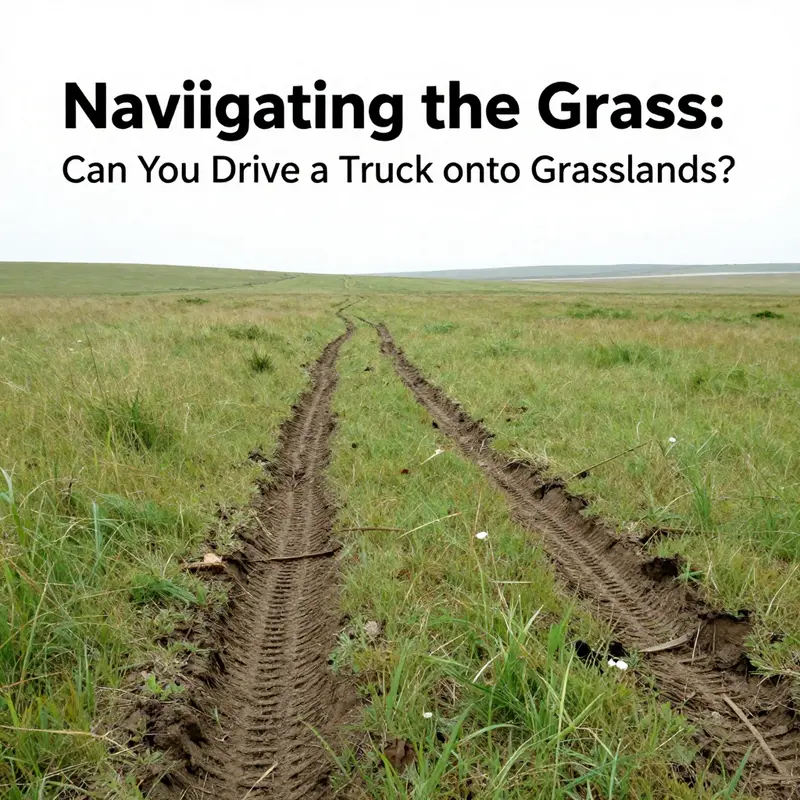
When trucks leave the road and enter green spaces, the damage starts at the surface and ripples outward. Heavy wheels compress soil, crush vegetation, and tear habitat into fragments. Over time, those local injuries grow into landscape-scale problems. This chapter describes the environmental mechanics of that harm, the cascading ecological consequences, and practical ways to reduce damage without relying on driving across grass.
The most immediate harm is soil compaction. A single heavy axle concentrates thousands of pounds over a small patch of earth. Soil naturally contains air spaces that hold water and oxygen. Plant roots and soil organisms depend on those pores. When weight from truck tires compresses the ground, pore space shrinks. Water infiltrates more slowly. Oxygen availability drops. Roots struggle to grow. Microbial and invertebrate communities decline. Compaction does not reverse quickly. Even after vegetation regrows, the underlying density can persist for years. That locked, compacted layer limits nutrients and reduces the soil’s ability to absorb rainfall. In turn, standing water can form after storms, stressing plants and enabling disease.
Vegetation destruction follows compaction but also occurs from direct crushing. Grasses and forbs tolerate some grazing and light trampling. They do not withstand repeated passes by heavy vehicles. Tires slice through stems and leaves, uproot plants, and break root systems. The loss of vegetation removes protective cover that holds soil in place. Seedlings lose shelter from temperature swings and predators. Plant communities shift toward opportunistic species that tolerate disturbance. Those species often offer fewer ecological benefits than the native plants they replace. Even small lawns and park turfs suffer visible bald patches that can expand if vehicles continue to use the same routes.
Erosion becomes the next phase of degradation. Ruts and compacted tracks act like miniature channels. When rain falls, water runs along the path of least resistance. Runoff gains speed in tire-created grooves. That fast water shears topsoil and transports sediments downslope. Sediment loads clog streams, ponds, and wetlands. Aquatic plants struggle under reduced light. Fish and amphibians suffer when spawning grounds fill with silt. Nutrient-laden sediments can also carry fertilizers or contaminants from lawns into water bodies, stimulating algal blooms and reducing oxygen levels. A single season of recurring off-road use on sensitive slopes or riparian zones can dramatically increase sediment export from a site.
Beyond physical changes, the ecological web shifts. Grasslands and meadows support a wide range of insects, ground-nesting birds, small mammals, and soil organisms. These species use intact plant cover for food, nesting, and shelter. When trucks fragment habitat, those animals either abandon the area or face higher predation and mortality. Ground-nesting birds are particularly vulnerable; a single vehicle path can crush nests or make known nesting sites visible to predators. Pollinator populations decline as floral resources shrink and soil-nesting bees lose nesting substrates. As species disappear, plant-pollinator networks fray, reducing seed production and further limiting plant community recovery.
Wetlands and riparian grasslands are especially fragile. Wet soils cushion heavy loads poorly, so tires sink deeper and cause wider ruts. Wetland vegetation often includes long-lived species with slow recovery rates. Disturbance in these zones can alter hydrology by changing water pathways or compacting surfaces that normally absorb floodwaters. That change increases downstream flooding risk and removes the water filtration services wetlands provide. Roadless driving in wetlands also risks fuel, oil, or other contaminants entering waterways directly, where they spread quickly and harm aquatic life.
The cumulative nature of these impacts matters. A single incident may leave temporary visible damage. Multiple events transform a site. Repeated driving compacts deeper soil horizons, widens vehicle tracks, and prevents re-establishment of native plants. In places with seasonal rains or freeze-thaw cycles, damage intensifies. Freeze-thaw weakens soil structure, and passing vehicles exacerbate the breakdown. Likewise, heavy rainfall after disturbance mobilizes large amounts of soil and organic matter. Over years, neighborhoods of compacted and eroded ground expand into networks of degraded corridors. Those corridors act like highways for invasive plant species. Disturbance-tolerant invasives quickly colonize exposed soil, outcompete natives, and lock the site into a lower-value ecological state.
Human activities magnify these environmental losses. Driving a truck onto grass for convenience—parking on a lawn for an event or taking a shortcut across a greenbelt—may appear harmless. Yet an engine leak, a spilled load, or a bit of construction debris left behind can compound the problem. Fire risk can also increase. In dry seasons, a hot exhaust system or a stray ember carried on a tire could ignite dry vegetation. In managed grasslands, rules often prohibit vehicles that carry potential ignition sources. Those rules reflect real fire safety concerns as much as ecological protection.
Legal responsibilities and restoration costs turn environmental harm into financial consequences. Where laws protect grasslands, wetlands, or parklands, those who damage them can face fines and be required to pay for restoration. Restoration is rarely simple. Restoring compacted soils often requires mechanical aeration, organic amendments, or complete removal and replacement of the topsoil. Replanting must account for soil suitability and the presence of invasive species. In some cases, restoration requires long-term monitoring and multiple planting cycles. The total time and cost frequently exceed what a short drive across a lawn might have saved in time.
Mitigation and prevention start with avoiding the need to drive on grass. Designated paths, paved service roads, and reinforced access points control where vehicles can go. Limiting vehicle access to those routes protects the broader landscape. When vehicle access is necessary for maintenance, construction, or emergency response, planning reduces damage. Use the lightest suitable vehicle. Travel only when soils are dry or frozen to limit rutting. Choose routes that avoid slopes, riparian buffers, and wet patches. Installing temporary padded access, such as timber mats or manufactured trackways, spreads weight and reduces compaction. These measures protect soils while allowing needed operations.
Operational choices make a difference. Unloading tools and materials at the edge of a green zone keeps vehicles off the grass. Where offloading is necessary, using a lift system at the vehicle edge can eliminate the need to enter turf. For example, using truck bed lift gates to transfer equipment and supplies at the boundary reduces trips across soft ground and concentrates heavy actions on reinforced surfaces. Staging and planning deliveries for suitable weather windows also matters. Scheduled work in dry seasons or on frozen ground limits soil displacement compared with spring thaw or heavy rain.
Restoration after damage requires a careful approach. First, stop the ongoing harm by blocking vehicle access and stabilizing exposed soils. Short-term erosion control can combine straw mulch, geotextiles, and silt fences to trap sediment until vegetation returns. Next, assess compaction levels. Mechanical aeration, ripping, or subsoiling can break compacted layers, permitting roots to penetrate. Adding organic matter improves structure and water-holding capacity. Replanting should use appropriate native species that match local conditions. Seed mixes with diverse grasses and forbs rebuild habitat complexity and support pollinators and other wildlife. Finally, monitor recovery. Restoration often needs adaptive management, including follow-up invasive species control and re-seeding where initial attempts fail.
Education and signage help prevent future incidents. Clear messages at park entrances and along greenways explain why vehicles are restricted. Visitors who understand the ecological consequences are more likely to comply. For private property, simple rules and visible parking areas reduce temptation to drive on lawn areas. Municipalities and land managers can design parking and staging areas to meet user needs while safeguarding greenspace.
Decisions about vehicle access also intersect with broader planning choices. Urban designers and landscape architects can reduce conflicts by placing delivery zones and service entrances at hard-surface points. Event planners can specify delivery protocols that avoid grass. Emergency planners can map routes that minimize ecological risk while maintaining response times. These design solutions remove the dilemma of convenience versus protection.
When weighing short-term convenience against long-term value, consider the services grasslands provide. Healthy turf, meadows, and wetlands stabilize soil, filter water, sequester carbon, and offer habitat. Once those services decline, communities face greater costs for stormwater management, habitat restoration, and reduced recreational quality. Respecting designated roads, parking lots, and service areas preserves these benefits.
Avoiding off-road driving also aligns with legal obligations in many regions. Laws and orders increasingly restrict vehicle entry into grasslands, wetland buffers, and protected meadows. Penalties range from fines to mandated restoration. Beyond legal risk, reputational costs can follow publicized damage to valued green spaces. Organizations and individuals who plan and act to protect grasslands avoid those costs.
The link between a truck’s tires and long-term landscape health is direct. A few strategic choices prevent most damage. Use existing paved approaches. Stage equipment at the edge. Use lift gates or temporary mats when necessary. Choose timing and routes carefully. When damage occurs, prioritize swift stabilization and professional restoration. Those actions preserve ecological function and avoid escalating costs.
For additional technical background on how transportation contributes to air and water impacts, and how vehicle use interacts with environmental systems, see this resource from the U.S. Environmental Protection Agency: https://www.epa.gov/air-quality/air-pollution-transportation-sector
For a practical option to minimize the need to drive across turf when unloading or loading, consider using truck bed lift gates to transfer loads at the vehicle edge. This reduces trips across grass and concentrates heavy activity on reinforced surfaces. (Internal resource: https://trucksdiy.com/blog/truck-bed-lift-gate/)
Driving Trucks Onto Grass: Laws, Limits, and Practical Compliance
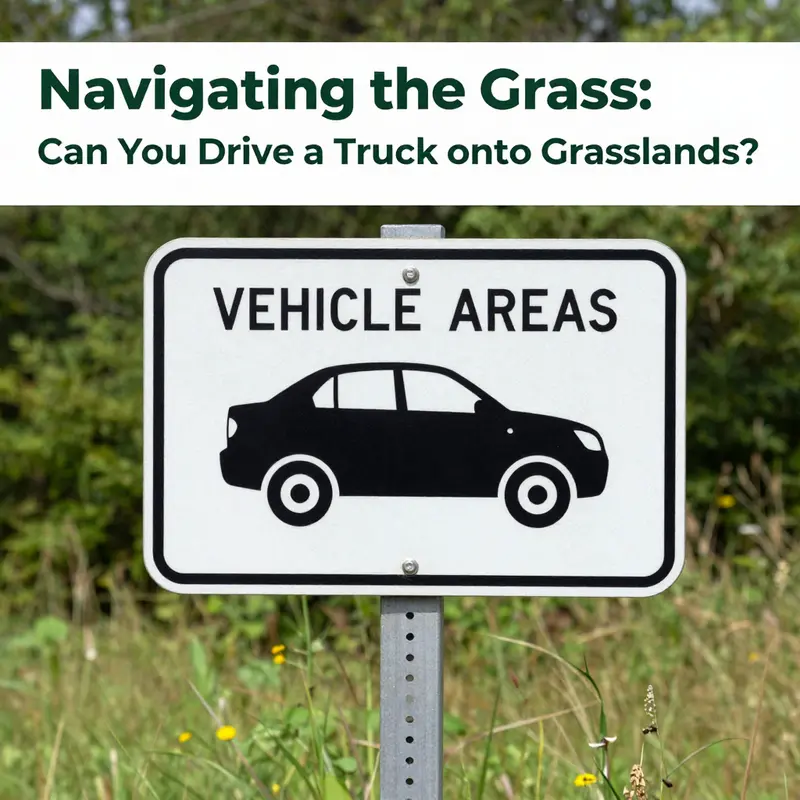
The rules that govern whether you can drive a truck onto grass are rooted in more than convenience. They reflect long-standing concerns about soil stability, water systems, plant communities, and wildlife. Across jurisdictions, regulators balance public access, agricultural needs, and commercial operations against the risk of irreversible ecological damage. That balance shapes clear restrictions in many places and narrow, well-documented exceptions in others. Understanding the regulatory framework helps drivers, fleet managers, and landowners avoid fines, legal liability, and harm to fragile environments.
Most regulations start from one simple premise: grasslands, meadows, wetlands, and green belts are not general-purpose roadways. Driving heavy vehicles onto these surfaces compacts soil, severs plant roots, and alters water infiltration. Repeated vehicle passages can trigger erosion, create ruts that channel water, and open paths for invasive species. Where species depend on undisturbed ground for nesting or feeding, vehicle impacts may reduce biodiversity. For that reason, laws frequently prohibit off-road driving in non-designated areas. The prohibition is not arbitrary. It is a preventive measure supported by ecological science and long-term land stewardship goals.
Jurisdictional approaches vary, but common elements appear worldwide. Regulators define the scope of protected areas, set permitted routes, and establish authorizations for exceptions. In many countries, national law gives land managers the authority to restrict vehicle access on public lands. Local ordinances often apply similar limits on urban green belts and conservation zones. Enforcement can fall to park rangers, forestry services, police, or environmental agencies. The result is a layered system: national statutes set broad rules, regional regulations refine them for local ecosystems, and site-specific rules implement day-to-day controls.
Examples illustrate how that layered approach works. On some national public lands, agencies strictly map and designate roads and trails where vehicles may travel. These maps aim to concentrate use on robust routes that tolerate repeated loading. Sensitive ecosystems are closed entirely. In other systems, public access laws may allow people onto open land for recreation, but landowners and conservation bodies retain authority to restrict motorized access to protect habitat or private operations. This mix of public rights and protective restrictions means the legal permission to drive is often conditional and situational, not absolute.
Regulations also spell out permitted uses. Agricultural work, emergency response, approved construction or restoration projects, and regulated grazing operations often receive explicit exemptions. Those exemptions are typically narrow and require documentation, permits, or prior authorization. For example, a landowner performing legitimate haying or seeding operations might be allowed to use farm vehicles on designated parcels. Similarly, authorized maintenance crews may access turf for infrastructure repairs. However, recreational driving, stunts, or using grasslands as informal parking is usually banned unless special permission is granted.
Penalties for violating vehicle-use rules vary with jurisdiction and with the severity of the damage. Monetary fines are the most common consequence. In many places, fines scale with the extent of the harm and the type of vehicle. Additional liability may include the cost of ecological restoration and civil damages. Where reckless or intentional conduct causes significant environmental injury, criminal charges can arise. These deterrents aim to stop careless behavior and shift the cost of restoration to the actor responsible for the harm.
Regulatory frameworks also prescribe operational controls. Signage and clearly marked access points communicate permitted routes. Seasonal closures protect soils and breeding seasons. Speed limits reduce dust and prevent wildlife collisions. Some policies require vehicles to carry tools for immediate site protection, like mats for crossing sensitive areas, and to avoid bringing fire sources into dry grasslands. In many forest and grassland zones, strict fire-prevention orders control drivers as well as pedestrians, limiting activities that could spark wildfires.
Practical compliance often requires proactive steps. Before any off-road operation, confirm land status and permissions. Public agencies typically publish maps of authorized routes and seasonal restrictions. Where private land is involved, written permission from the landowner is essential. Permits can stipulate timing, vehicle type, and mitigation measures. For businesses, keeping permits and proof of authorization in the vehicle reduces the risk of immediate penalties during inspections.
Modern tools make compliance easier. Many agencies provide digital maps, downloadable route lists, and GPS overlays that show authorized roads and restricted areas. Fleet managers can use geofencing to prevent a truck from leaving approved routes. This reduces accidental incursions and simplifies record-keeping for audits. Technology also helps enforce regulations: agencies increasingly rely on aerial imagery, trail cameras, and community reporting to detect unauthorized vehicle use.
Enforcement strategies reflect resource realities. In some remote areas, on-site patrols are limited. Regulators therefore prioritize education, signage, and partnerships with local communities. In other places, officers conduct proactive patrols and use evidence from social media and satellite images to investigate suspected offenses. When enforcement leads to penalties, agencies often publicize cases to deter similar behavior and to communicate the importance of protecting sensitive ground.
Insurance and liability deserve attention. Standard commercial vehicle insurance may not cover damage caused by unauthorized off-road driving in protected areas. Insurers often exclude coverage for activities that violate law or policy conditions. Operators should review policy language and consult legal counsel when planning legitimate off-road work. When a permitted activity is planned, documenting authorizations and mitigation steps helps position a business to defend against claims and to satisfy insurers.
For property owners and contractors, protective practices reduce both environmental impact and regulatory risk. Use designated access points and durable surfaces such as reinforced crossings for frequent vehicle passages. Schedule heavy work during seasons when soils are dry and more able to bear loads. Use track-building mats, low-pressure tires, or temporary roadways that distribute weight and prevent rutting. After work, implement restoration steps such as regrading, reseeding native vegetation, and erosion control, when required by permit conditions. These actions lower the chance of complaints and align operations with statutory obligations.
When drivers encounter ambiguous situations, the safest course is to stop and verify. Do not assume that a patch of resilient-looking turf is legally accessible. Brief conversations with land managers or a quick check of official maps can prevent costly mistakes. Training drivers to recognize signage and to consult route data reduces accidental infractions. For fleets operating regularly near protected areas, maintain a compliance checklist, keep written permissions on file, and require route confirmation before dispatch.
Cross-border differences matter. What is permitted in one country or province may be unlawful elsewhere. Even within a single country, rules can vary dramatically by land designation. Conservation reserves, wetland buffers, parklands, and agricultural easements each carry distinct restrictions. Where operations cross jurisdictions, plan for the strictest applicable standard and obtain necessary permits in every area of operation.
Restoration obligations can be significant. When vehicle use damages vegetation or alters hydrology, regulators often require remedial work. Restoration may involve soil stabilization, replanting native species, and long-term monitoring. Costs can be substantial, especially when specialist contractors are required. This potential expense is a central reason authorities emphasize prevention over post-hoc mitigation.
Public awareness campaigns and signage play preventive roles. Clear information at trailheads and public portals explains where vehicles are allowed. Educational outreach highlights the ecological reasons behind restrictions and encourages voluntary compliance. In many places, community reporting helps detect violations. People who care about local landscapes often become key allies in enforcement and stewardship.
Regulatory frameworks continue to evolve. As science refines our understanding of ecosystem vulnerability, policymakers update restrictions and adjust permitted uses. Climate change, shifting land use, and recreational pressures prompt new rules. Staying current requires checking official resources before every operation. For authoritative guidance on permitted routes and legal obligations, consult the responsible land management agency for the area where you intend to operate.
If you need to equip a truck for legitimate, permitted work on grass or in sensitive areas, consider accessories that reduce impact. Low-pressure tires, spreader mats, and cargo systems that improve weight distribution help. For information on load-handling accessories that support safer, authorized field work, see roof racks for trucks.
For specific federal guidelines on off-highway vehicle use and designations in the United States, agency resources provide detailed rules, safety standards, and maps of permitted routes. These resources clarify where vehicle use is lawful and how to comply with environmental protections: https://www.blm.gov/programs/recreation/off-highway-vehicle-regulations
When It’s Allowed: Practical and Legal Scenarios for Driving Trucks onto Grass
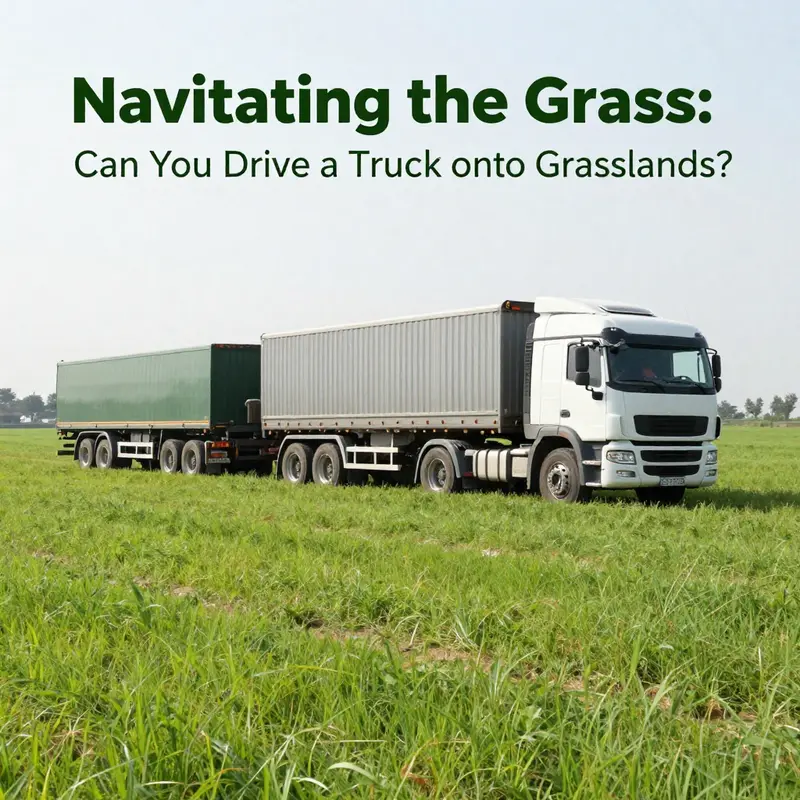
Driving a truck onto grass is a decision that combines legal constraints, environmental responsibility, and practical need. Across most jurisdictions, and particularly in protected natural areas, the default rule is simple: do not drive off designated roads onto grass. Yet there are clear, accepted exceptions. This chapter walks through those permissible situations and explains how to act when they arise. It connects legal boundaries, immediate safety concerns, and long-term stewardship into one pragmatic narrative.
Emergency circumstances are the clearest, and often the only, immediate justification for leaving the road. If a vehicle is disabled, sliding on ice, or at risk in traffic, moving onto grass to reach a safer location can be the safest choice. In these moments, priority is life and limb. Use hazard lights, avoid high‑speed maneuvers, and stop as soon as safe. Document the event with photos and notes when possible. That record will help if you need to show you acted out of necessity when officials later review the incident.
Agricultural and forestry work is another widely accepted reason to operate trucks on grass. Farmers, ranchers, and forestry crews move feed, equipment, and harvested materials across fields and pastures as part of daily operations. These movements are legitimate when they occur on private land, within designated access tracks, or under specific authorizations. Even here, care matters. Repeated, heavy passes over the same route cause soil compaction and root damage. Plan routes to spread load, use existing wheel tracks, and avoid wet ground. When operations are temporary, mark access paths and rehabilitate them when work ends.
Construction and land development also create legitimate contexts for driving on grassy terrain. Building sites commonly require temporary access roads that cross lawns or open fields. When properly permitted, trucks use these temporary routes to bring in materials and machinery. Responsible site managers minimize the area disturbed, use geotextiles or temporary mats where possible, and restore the surface after construction is complete. If you work on these sites, confirm that access plans and environmental protections are in place before entering non‑paved ground.
Governmental and military operations form a further category of permitted use. Emergency services, disaster relief teams, infrastructure inspectors, and authorized military units may need to traverse grasslands. These activities are generally regulated by agencies with the authority to issue access and to set limits to protect sensitive habitats. When performing such duties, crews should follow operational protocols that reduce ecological harm and provide clear records of actions taken.
Routine agricultural routines, such as moving livestock, checking fences, and delivering feed, are normal reasons for trucks to enter grass. These actions are typically accepted on private farms and ranches. However, even routine tasks deserve planning. Use low‑impact driving techniques, avoid trampling young shoots, and schedule heavier vehicle movements during drier conditions to reduce compaction. When possible, coordinate with neighbors and land managers to use existing lanes and avoid boundary disputes.
Permits and explicit authorization are central to lawful access. In many regions, protected grasslands, wetlands, and meadow reserves prohibit vehicle entry except by permit. These permits are granted for specific, justified reasons: scientific research, restoration work, approved grazing, or infrastructure maintenance. If your activity requires entering protected land, apply for permission well in advance. Permit conditions often specify routes, timing, vehicle weight limits, and obligations to repair damage. Complying with those rules protects you legally and supports conservation goals.
Understanding legal exposure is essential. Driving where prohibited can lead to administrative fines, civil liability for restoration costs, and, in severe cases, criminal charges. Laws often consider intent, the extent of damage, and whether rules were knowingly broken. If you must enter grass in an emergency, document the situation. If you seek permission, retain correspondence and permits. If damage occurs, report it promptly to the relevant authority and cooperate in remediation. Transparent behavior reduces legal risk and aids landscape recovery.
Minimizing ecological impact should guide every permissible action. Heavy vehicles crush vegetation and compact soil, altering water infiltration and root growth. These effects can persist for years, reduce habitat value, and increase erosion. To minimize harm, avoid sensitive areas like wetlands, riverbanks, dune systems, and areas with rare plants. Stick to dry ground and existing tracks. Limit the number of passes and the turning radius to reduce rutting. Where possible, use lighter vehicles or trailers to spread weight more evenly.
Practical driving techniques matter. Reduce tire pressure slightly to increase contact area and reduce ground pressure. Accelerate and decelerate gently to avoid spinning tires and creating gouges. Use four‑wheel drive carefully; locked differentials can bind and widen ruts. Plan maneuvers to avoid sharp turns that widen tracks. When stopping, choose firm ground and avoid soft depressions that can trap axles. After moving a vehicle, inspect the path and, if required, smooth ruts to aid natural recovery.
Communicate and coordinate. If you operate on someone else’s land, seek permission before entering. Discuss timing, routes, and expectations for minimizing damage. On public land, check with managing agencies to learn about seasonal restrictions and protected zones. For organized work, ensure every driver understands the environmental rules and the legal limits. Simple coordination prevents accidental trespass and avoids unnecessary damage.
Insurance and liability are practical considerations often overlooked. Standard vehicle insurance may not cover damage caused while driving off designated roads or in prohibited zones. If your work regularly requires off‑road use, confirm that policies include that activity. When working under contract, clarify who bears restoration costs if the vehicle damages land. For emergency responders, institutional policies generally define liability and reimbursement for restorative measures.
When damage occurs, good practice is swift remediation and reporting. Repairing ruts, re‑seeding disturbed soil, and stabilizing banks help ecosystems recover. Report incidents to landowners or managing authorities. If the event was unavoidable, gather evidence to support your explanation. If it resulted from negligence, accept responsibility and work to fund proper restoration. Quick, honest action often reduces legal exposure and helps preserve community trust.
Training and planning reduce both risk and impact. Drivers should receive guidance on recognizing sensitive habitats and understanding vehicle effects on soil. Before entering grassy terrain, scouts can inspect routes and flag firm passage lanes. For repeated work, consider constructing reinforced access roads or installing temporary ground protection. Investing in these measures often costs less than repeated repair or regulatory fines.
Finally, respect the principle that permission matters. Private landowners, park managers, and conservation agencies set access rules to balance human needs and ecological integrity. Even when an activity seems harmless, the cumulative effects of many vehicles can be profound. When permission is required or when a landscape is fragile, always assume that authorization is needed. Acting within that framework preserves both the land and your ability to use it responsibly in the future.
For readers looking to adapt their trucks for responsible off‑road access, consider vehicle accessories that support safe, low‑impact travel. Resources on modifications and mounting systems can help you prepare for legitimate fieldwork while minimizing harm to grasslands. See guidance on roof racks and related accessories for practical ideas and mounting options.
External visual examples can clarify how heavy vehicles interact with grassy terrain. For practical images and inspiration of trucks operating in such environments, consult this board: https://www.pinterest.com/pin/607981776794532258/.
Understanding when it is permissible to drive onto grass means balancing immediate needs with long‑term stewardship. Emergencies, agriculture, construction, government missions, and permitted work are valid reasons. Yet each situation carries duties: plan, document, minimize damage, and obtain authorization when required. That approach keeps people safe and landscapes resilient, preserving access for future use without sacrificing the natural systems we depend on.
Final thoughts
In summary, driving a truck onto grass is fraught with legal challenges and potential environmental consequences. Business owners must adhere to strict regulations that aim to protect these vital ecosystems while navigating their operation strategies. By understanding the legal implications and recognizing permissible scenarios, businesses can make informed decisions that align with both their operational needs and the conservation of natural landscapes.