
Importing European trucks into the United States is a complex endeavor filled with regulatory obstacles, economic concerns, and practical challenges. Business owners who are eager to enhance their fleets with European innovation must navigate U.S. safety, emissions standards, and trade policies designed to regulate foreign vehicle imports. Understanding these intricacies is essential for making informed decisions regarding sourcing your next truck. This guide will dissect the critical components that influence importation: from federal regulations to economic implications, trade policies, practical challenges, and eligibility criteria. Each chapter contributes to a holistic understanding of the import process, allowing you to adapt your business strategies for successful truck integration.
Crossing the Atlantic Gears: How Federal Rules Shape the Road for European Trucks Entering the United States
Bringing European trucks onto U.S. highways is rarely a straight line from port to pavement. The romance of European design—the efficiency, the driving dynamics, the promise of newer technology—collides with a dense regulatory gauntlet meant to protect motorists, the environment, and domestic industry. This chapter weaves a cohesive narrative about what it takes to import European trucks into the United States, not as a thought experiment but as a practical journey through federal standards, tariffs, exemptions, and the stubborn realities of maintenance and support. The road map begins with the federal backdrop: how the United States determines whether a foreign truck can legally roll on American roads, and what that means for the total cost of ownership even before a single mile is logged. The aim is not to dissuade but to illuminate the real constraints and the narrow paths that sometimes exist for the import of European-built trucks. In this landscape, the meaning of compliance is not abstract; it translates into engineering changes, exhaustive testing, and often significant financial risk. A central reality emerges clearly: most European trucks are designed to meet European safety and emissions paradigms, not U.S. ones. The U.S. regulatory system demands that vehicles meet FMVSS—Federal Motor Vehicle Safety Standards—which cover crashworthiness, lighting, braking, seat belts, and myriad other features. It also requires emissions conformity to EPA standards. Taken together, these standards create a moving target for European designs, which are harmonized to EU specifications rather than to U.S. test cycles. The result is either a costly retrofit or a decision that the vehicle will never comply in its original form. In many cases, European cab and chassis configurations are built around different assumptions about frontal protection, seating positions, and even control layouts. The consequence is more than cosmetic. If a truck cannot pass FMVSS or EPA tests without extensive reengineering, it becomes impractical as a mass-market import. The regulatory hurdle is not merely about passing a test once; it is about sustaining compliance across a lifecycle that includes inspections, registrations, and potential recalls. A practical consequence of this friction is that some imports are shunted into niche uses—for example, displays, research fleets, or law-specific demonstrations—where the strictest regulatory expectations are relaxed or managed under special programs. Yet even those pathways require careful navigation of the NHTSA and EPA frameworks, plus the import-administration rules that govern entry into U.S. commerce. The right-hand-drive orientation common in European commercial vehicles compounds the challenge. U.S. roads are predominantly left-hand drive for general use, and the legal framework does not routinely permit RHD operation for standard commercial service. Converting to left-hand drive is not a simple cosmetic alteration. It can entail steering column changes, pedal repositioning, dashboard reconfiguration, and an array of system recalibrations that touch electronics, braking, and safety interlocks. In many cases, such conversion work hinges on whether it is permissible under regulatory interpretation and whether the cost and risk of modification can be justified. The financial calculus grows heavier when one adds another layer: the import tariff environment that shapes the economics of European trucks entering the United States. Since August 1, 2025, a 15% tariff has been imposed under the 2025 EU Auto Trade Agreement, applying to imported automobiles and automotive products from the EU, including medium and heavy-duty trucks. This tariff is a real and immediate price augmenter, rippling through the purchase price, insurance assessments, and the feasibility math of retrofitting a vehicle to U.S. standards. The tariff is not a standalone barrier; it compounds the cost of compliance, testing, and any necessary conversions. While the tariff landscape can shift with new policy pronouncements, the recent 2025 framework illustrates how geopolitics and trade policy become part of the vehicle’s financial profile. Earlier discussions about a 25% tariff proposed on heavier trucks reflect a climate of policy volatility. Those proposals—whether they come into effect or remain aspirational—underscore the need to plan for scenarios that may alter the total cost of ownership and the timeline for market entry. The practical impact of tariffs is straightforward: they raise unit costs, discourage some import scenarios, and tilt the decision toward more limited, highly strategic applications rather than broad-market adoption. Beyond safety, emissions, and tariff concerns lies the nuanced world of eligibility and exemptions. The most famous exemption is the 25-year rule. Vehicles manufactured more than 25 years before the current model year can be imported with far fewer FMVSS hurdles, essentially exempting them from many U.S. safety standards. This rule creates a tempting but narrow corridor for older European trucks to enter the U.S. market, typically for display, export, or limited resale purposes. It is a reminder that time can become a regulatory ally, transforming a seemingly impossible import into a feasible, albeit narrow, opportunity. For trucks still within the 25-year window, there are distinct pathways and conditions that may apply under NHTSA and CBP oversight. Used trucks that are part of commercial fleets or destined for resale may qualify under certain exemptions, but the path remains highly regulated, and the need for NHTSA certification remains a pivotal gatekeeper. The practical challenges extend beyond compliance paperwork and tests. Conversion work for right-to-left orientation remains a significant upfront cost, often compounded by questions about whether reconfiguration is permissible or economically viable in the long run. Service networks and parts availability pose another real test for potential importers. European brands often rely on dealer and repair ecosystems that are robust in Europe but thin in the United States. This creates a risk of prolonged downtime, higher maintenance costs, and challenges securing genuine parts, diagnostic tools, and trained technicians who understand the specifics of European engineering. Insurance and registration are not neutral; they respond to the perceived risk profile of a non-native product, the vehicle’s compliance status, and the availability of an importer with the required regulatory credentials. Insurers assess the likelihood of recalls, warranty coverage, and potential liabilities, while state registries scrutinize conformity with inspection regimes, safety equipment configurations, and vehicle identification processes. The combination of regulatory requirements and practical realities yields a sobering conclusion for most prospective importers: if a European truck is intended for regular commercial use in the United States, the project becomes a high-cost, high-complexity undertaking with uncertain returns. There are, however, pathways that deserve explicit mention for completeness. For older trucks, the 25-year rule can unlock a window where FMVSS compliance is not mandatory for import. For vehicles used in specialized contexts—such as research, exhibition, or private collection display—the regulatory demands may be navigable with careful programmatic structuring. Still, even in these cases, alignment with NHTSA certification processes remains essential, and the importer must be a licensed Customs and Border Protection (CBP) participant. For prospective importers who want to pursue this route with a sense of realism, the first step is to assemble a clear compliance plan that maps each European design element to its U.S. regulatory counterpart, identifying any necessary modifications and validating their regulatory permissibility. It is not enough to assume that a given model can be made compliant with a few tweaks. The safety-critical nature of FMVSS and the environmental stakes of EPA standards require meticulous documentation, exhaustive testing, and the involvement of qualified engineers who understand both EU and U.S. regulatory ecosystems. In this frame, a practical resource often becomes invaluable. A comprehensive approach can be supported by supplier and maintenance infrastructures that are aligned with U.S. service expectations, even if the original design is European. A useful reference point—informational rather than promotional—can be found in specialized content hubs that organize parts, tools, and maintenance knowledge for truck enthusiasts and fleets alike. For instance, a dedicated hub that curates truck-related components provides access to parts catalogs, installation guides, and troubleshooting resources that can help bridge the service gap when importing European trucks. This resource can be explored here: truckbox. While it cannot replace formal compliance testing and regulatory certification, it can serve as a practical touchstone for understanding the kinds of maintenance needs and component compatibility questions that arise when Europe meets the Gulf Coast, the Great Plains, or any other U.S. terrain. In the end, the import question is not only about whether the vehicle can meet FMVSS or EPA standards. It is about whether the total cost of achieving and maintaining compliance aligns with the vehicle’s utility, the buyer’s risk tolerance, and the intended use case. The regulatory calculus is not static; it shifts with new interpretations, updated standards, and evolving trade policy. The 2025 EU Auto Trade Agreement, formalized in September of that year, crystallized a framework that policymakers believe balances these tensions. For readers who want to trace the legal scaffolding in depth, the official document provides the authoritative articulation of classifications, exemptions, and procedures. See the 2025 EU Auto Trade Agreement Announcement for the precise language and the regulatory context that underpins these decisions. External resource: official document. The bottom line remains consistent: import pragmatism, not import bravado. If a European truck is envisioned as a regular commercial asset, the regulatory, tariff, and logistical costs must be weighed against the revenue potential, reliability of service, and the availability of parts and expertise in the United States. For most buyers, that balance leans toward alternative strategies—new design solutions within the U.S. regulatory framework, or carefully chosen older models that comfortably ride the edge of the 25-year rule. The chapter that follows will build on this foundation, linking these regulatory insights to broader market trends, fleet-management considerations, and the strategic decisions that fleets, dealers, and individual buyers must make when contemplating an import plan. In the broader arc of the article, understanding the federal gatekeepers—FMVSS, EPA, RHD versus LHD realities, and the tariff climate—helps readers grasp why imports are not simply about cost but about feasibility, risk, and timing. By anchoring the discussion in regulatory logic, the reader gains a practical lens for evaluating whether a European truck belongs in a U.S. truck yard, a showroom, or a museum—where it can best serve its mission while respecting the rules that govern all road-going machines in the United States.
null
null
When Europe Meets the American Road: The Policy Puzzle and Practical Hurdles of Importing European Trucks to the USA
The dream of importing European trucks into the United States is appealing in theory and risky in practice, a project that sounds simple on a brochure but unfolds as a complex negotiation between rules, markets, and real-world costs. At its core lies a straightforward question: can a vehicle built for European roads and regulatory climates be legally and economically allowed onto American highways? The answer is nuanced. It is technically possible in some cases, yet the pathway is crowded with regulatory checkpoints, technical retooling, and financial frictions that can overwhelm even substantial budgets. To understand what it takes, one must first watch the moving parts of federal safety and emissions regimes. In the United States, every vehicle crossing the border into commerce must align with the National Highway Traffic Safety Administration’s FMVSS, a suite of standards that governs crashworthiness, lighting, brakes, seat belts, and many other design elements. European trucks typically conform to EU safety expectations and the more stringent or differently interpreted EU-wide rules that optimize for a continental marketplace, not a single nation, and this divergence is where the first and most stubborn hurdle appears. Even when a European model is technically compliant on paper with emissions rules, the EPA’s environmental standards add another layer of scrutiny. Trucks are subject to rigorous testing to prove they meet U.S. emissions limits, and this can force costly modifications or even disqualify certain engines or aftertreatment configurations used in Europe. The situation is further complicated by the physical layout of European rigs. The majority of European heavy trucks are right-hand drive, a configuration that does not fit U.S. road usage patterns. Left-hand drive is not merely a preference; it is a legal baseline for most heavy vehicles on American highways. Converting a vehicle from right-hand to left-hand drive is not a straightforward cosmetic swap. It involves substantial engineering, structural modifications, and a cascade of safety verifications. In many cases, such conversions can drive costs beyond the value of the truck itself, and some conversions may push the vehicle outside the scope of what U.S. law permits. The regulatory mosaic does not end with safety and emissions. A major economic factor that has entered the landscape in recent years is the tariff policy that could dramatically alter the calculus of importing European trucks. As of late 2025 and into 2026, a 25 percent tariff has been proposed on medium- and heavy-duty trucks imported into the United States. The proposal, tied to a broader policy initiative from the executive branch, aims to affect all foreign-made trucks and would be applied at the border. The practical effect would be to raise the landed cost of European machines, potentially by tens of thousands of dollars per unit depending on the truck class and configuration. This is not merely a price bump; it reshapes the entire business model of import, distribution, and potential resale in a market that already faces intense domestic competition and a dense web of local compliance costs. The policy landscape described in contemporary reporting underscores how fragile the viability of importing European trucks can be, especially for buyers who are not pursuing a niche or experimental use. The political dimension matters because it can shift the odds of success overnight. While the 25 percent tariff is described in sources as a proposal rather than an enacted tariff, the signal it sends to buyers and importers is clear: the U.S. market is adjusting its cost structure in ways that favor domestic or regionally manufactured products, or heavily modified imports that can demonstrate a strong value proposition in spite of added costs. The potential tariff, if enacted, does not operate in isolation. It interacts with a still-developing ecosystem of exemptions, incentives, and regulatory interpretations that can create a moving target for anyone considering such an import. For example, there are scenarios in which older vehicles—specifically those manufactured more than 25 years ago—can bypass some FMVSS requirements under the so-called 25-year rule. This exemption makes vintage European trucks more legally tractable for collectors, display purposes, or certain restricted uses. But it is a narrow exception that does not help most commercial operators who rely on modern fleet uptime, reliability, and service networks. The import path for otherwise contemporary European trucks also hinges on eligibility criteria and exemptions that recognize the realities of fleet operations. Used trucks, especially those that are part of a commercial fleet or are exported for resale, may be eligible under defined conditions, yet they still require NHTSA certification and must navigate the interplay of federal and state requirements. In practice, the costs of compliance extend well beyond the price tag of the vehicle itself. Conversion costs, once the basic threshold of right-hand drive to left-hand drive discussion is acknowledged, can be accompanied by substantial retrofits to lighting, instrument clusters, mirrors, and control layouts. The question of whether a conversion remains legally permissible or technically viable is not always clear-cut; some regulatory interpretations limit what can be altered or require re-certification after each meaningful modification. Then there is the practical question of support infrastructure. European trucks, with their own design language, parts catalogs, and maintenance routines, operate in a market where U.S. dealerships and service centers often lack in-depth familiarity with the machinery. The result can be longer downtimes, higher maintenance costs, and the risk of finding qualified technicians who can diagnose and repair correctly. Insurance and registration present additional layers of cautious scrutiny. Insurance underwriters may worry about compliance gaps, import provenance, and the ability to guarantee repairs or replacements. State departments of motor vehicles may require extra documentation, inspections, or proof of conformity that can stretch the process and raise administrative costs. The story of trading a European truck for a U.S. road-ready operation is as much about ongoing risk management as it is about a one-time import event. The broader research landscape paints a picture of a policy environment that does not yet show a direct, targeted trade barrier against European trucks. The documents reviewed focus more on imports from nearby regions or on components and off-road categories rather than on full-sized European heavy trucks. But the absence of a dedicated policy does not translate into easy access. The real obstacle is the combination of costs, standards, and practical feasibility. Even without a formal tariff, the cost of bringing a European truck into full compliance, and the chance that it will struggle to compete on total cost of ownership against domestically produced or regionally sourced alternatives, can be prohibitive for regular commercial use. For those who still want to pursue the idea, a careful, staged approach is essential. Begin with a candid cost-benefit assessment that accounts for the base vehicle price, anticipated conversion work, potential re-certification, and a realistic projection of uptime and maintenance. Engage with an importer licensed by Customs and Border Protection to navigate the legal requirements, coordinate with the NHTSA and EPA as needed, and understand how state-level registrations will be handled. It may also be prudent to audit the market for aftermarket infrastructure—parts supply, service networks, and training—that would support European trucks once they arrive. A practical step is to map a path through the “accessories” and upgrade ecosystem that could help with compliance, visibility, and operator ergonomics. For instance, a broad range of aftermarket components and upgrades can be found in the Accessories section of related automotive literature, where readers can explore compatible upgrades and support infrastructure. Accessories can provide a sense of how to plan for a globally sourced vehicle’s needs without diving into speculative or brand-specific claims. If a project advances, one should keep a close eye on policy developments. The tariff discussion continues to evolve, and a decision by lawmakers could dramatically tilt the risk-reward balance for all importers. The practical path remains narrow: vintage or specialized-use scenarios, or highly leveraged projects with a robust and resilient support plan. The absence of a broad, explicit policy targeting European trucks is not a permit to proceed lightly. It is, instead, a reminder that importing such equipment requires a disciplined assessment of legal compliance, engineering feasibility, and total cost of ownership, all framed within a shifting political economy.
In summary, the route to importing European trucks into the United States is not closed, but it is far from a straightforward cross-border shopping exercise. The regulatory terrain is precise and unforgiving, the economics can tilt against conventional business models, and the practical realities of maintenance and support can erode any perceived advantages. The most prudent path for any serious contender is to treat the venture as a multi-year project that accounts for regulatory diligence, engineering feasibility, and resilient economic planning, while staying attuned to policy signals and market dynamics that could alter the calculus at any moment. For those who remain curious or committed, the best source of current guidance remains the U.S. Department of Transportation’s NHTSA framework, supplemented by licensed CBP importers who can shepherd the case through the necessary certifications and inspections. External Policy Insight: https://www.washingtonpost.com/business/2025/10/07/trump-trucks-tariff-imports/
From Europe to the Open Road: The Regulatory and Economic Realities of Importing European Trucks into the USA
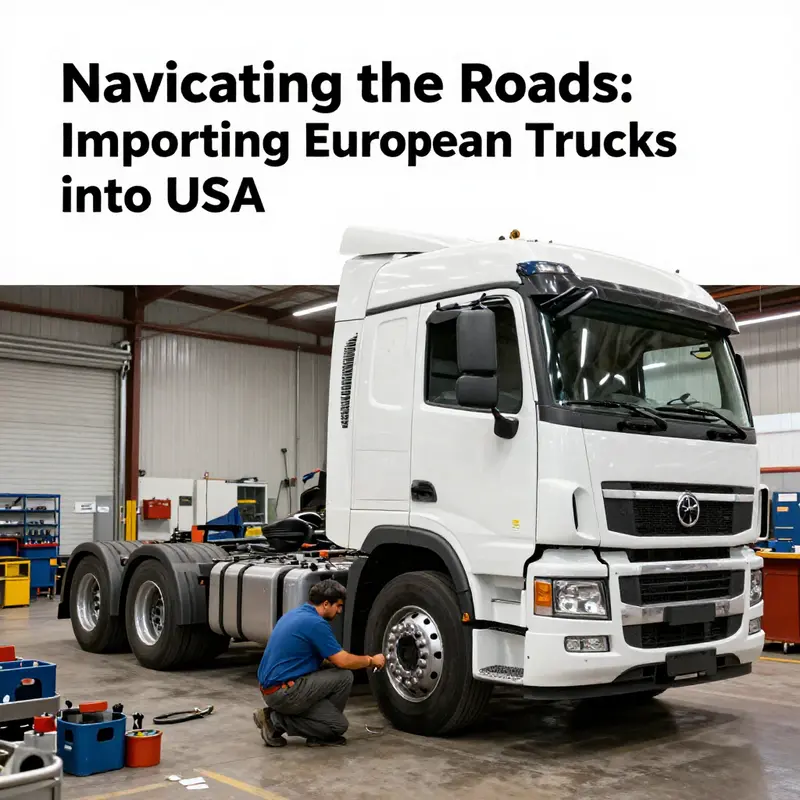
When a mid-size fleet manager considers expanding with European trucks in the US, the appeal is clear but the road is not straightforward. European cabins may offer comfort, fuel efficiency, and advanced aerodynamics, but importing involves a maze of safety, emissions, and logistics that can turn a tempting opportunity into a costly misstep.
The core hurdle is FMVSS compliance. The US rules are written for US designs and testing regimes, while European trucks follow ECE standards. Differences in lighting, braking, seat configurations, and crash requirements often require rework and formal certification, not a simple import.
Emissions are another gate. EPA testing and certification are stringent, and Euro 6 engines may need redesign or aftertreatment to meet US Tier 4 or EPA 2027. Tuning engines to pass tests can be expensive and may affect warranties and long-term reliability.
Right-hand drive is a practical dealbreaker in most markets. Converting to left-hand drive is expensive, sometimes impractical, and can undermine warranty coverage and maintenance planning, making many imports nonviable for standard fleets.
Tariffs and policy risk add another layer. A hypothetical tariff on imported trucks would raise landed costs and complicate parts and service networks. In late 2025, discussions hinted at 25% tariffs; whether implemented, timing and scope could shift, but the signal favors domestic or certified imports with established US support.
There are narrow paths for special cases, such as display or demonstration fleets, or 25-year-old trucks that can bypass many FMVSS hurdles. Even then, clear compliance plans and access to authorized routes through CBP and NHTSA are essential.
As an alternative, many operators choose to mimic European performance within US constraints: select models already certified for US standards and add European-inspired design elements, telematics, or fuel-saving features. This approach preserves regulatory alignment while still delivering some of the perceived benefits of European engineering. Official guidance from the DOT, EPA, and CBP should be reviewed, and consulting an authorized importer is advised. See the NHTSA Importers and Distributors resource: https://www.nhtsa.gov/vehicle-manufacturers/importers-and-distributors.
Ultimately, the decision rests on life-cycle cost analysis and risk tolerance. The US market rewards predictability and a robust service network, so for most fleets direct import is unlikely to be economical except in rare, tightly managed programs.
Importing European Trucks into the United States: Eligibility, Hurdles, and Practical Realities
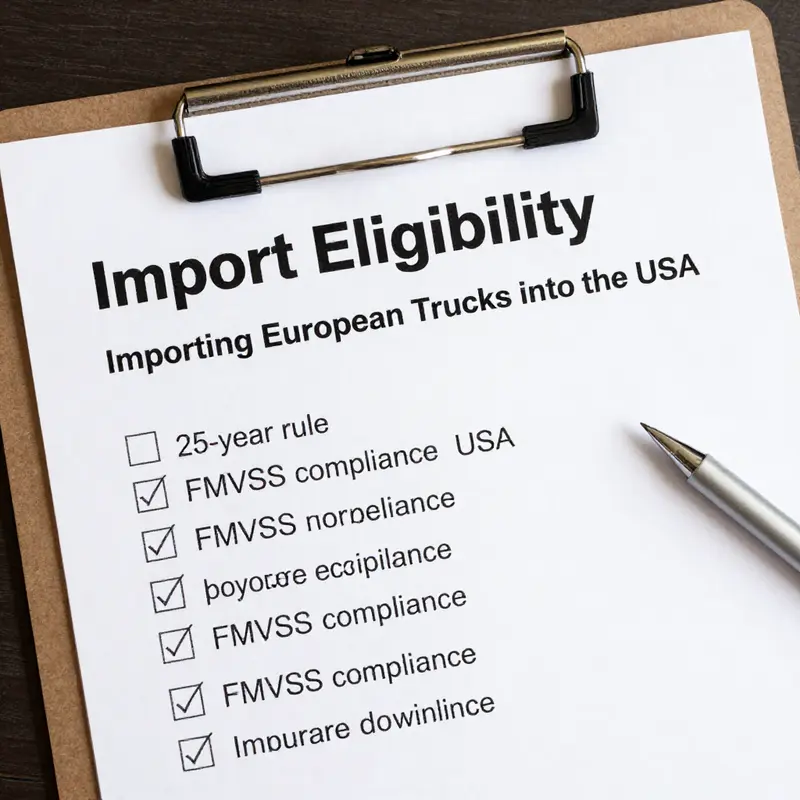
Importing a European truck into the United States involves navigating federal safety and environmental standards, cost implications, and market realities. The key gatekeepers are the NHTSA and the EPA, and the applicability of FMVSS and EPA emissions rules depends on the vehicle’s age and market designation. Vehicles 25 years old or older often qualify for a more permissive pathway, though they may still require documentation and limited modifications. For younger models, substantial compliance work, engineering validation, and potential vehicle modifications are usually necessary, often making the import impractical for typical buyers. This chapter outlines the eligibility framework, the practical hurdles, and the strategic options available to importers.
Final thoughts
In summary, importing European trucks into the USA is fraught with challenges that require a thorough understanding of federal regulations, economic implications, and practical realities. By navigating these complexities, business owners can better position themselves to take advantage of the unique benefits these trucks may offer. With evolving trade policies and rigorous compliance requirements, it’s crucial to stay informed and prepared. Ultimately, the journey of importing European trucks can be rewarding, but it demands careful planning and consideration for successful implementation.