

For business owners looking to enhance brand visibility, wrapping a truck can be a powerful marketing tool. This process transforms your vehicle into a moving billboard, but understanding the costs involved is crucial. Different factors, from the size of the truck to the complexity of the design, play a pivotal role in determining the total investment. In this exploration, we will delve into three critical areas: the cost analysis based on truck size, the impact of material selection, and how design complexity influences pricing. By examining these elements, you can make informed decisions on truck wrapping that align with your business goals.
Sizing the Wrap: How Vehicle Size Shapes the Price of Truck Wraps

The price you’ll pay to wrap a truck isn’t a fixed number set in motion by a single factor. It’s a moving equation where size, material, design, and labor all play crucial roles. If you imagine wrapping as a kind of exterior insurance for branding, protection, and visibility, the size of the vehicle becomes the dominant driver of cost. The lightest, smallest trucks carry the least risk for a shop in terms of material waste and labor hours, while the largest, heavy-duty haulers push the boundaries of what a wrap job can require. In practice, this means that the cost you see on the estimate sheet will bounce within broad bands, depending on where your truck sits on the size spectrum and how much you want the wrapping to endure. An easy starting point is to acknowledge the commonly cited ranges across sources: light-duty and mid-size trucks often start in the low thousands, while full-size and larger configurations climb into the thousands with a wide margin for complexity. The most expensive categories are reserved for large commercial and heavy-duty vehicles, where the sheer surface area and the intricacy of the design can push totals well into multiple tens of thousands in rare cases. When a business owner or fleet manager asks how much to wrap a truck, they are in effect asking not just about a sticker but about a durable, high-visibility asset. The answer, distilled, is that the size of the truck is the baseline; the rest is what you add or subtract on top to tailor the effect, durability, and ROI you expect from the wrap.
To make this concrete, consider the common size categories and the price ranges that recurrently surface in industry discussions. For light-duty trucks, which include most full-sized pickups and small work vehicles, quotes often fall within a wide bracket. Some guides and practitioners report ranges around the low thousands for basic, straightforward full-body wraps that use standard vinyl and simpler color schemes. Others, leaning on different pricing structures or longer install times, place light-duty wraps in the $1,500 to $3,500 range. This spread is more than a quirk of quoting; it reflects the reality that even within a single vehicle class, the specifics matter deeply—what is being wrapped, how complex the design is, how much surface is covered, and how the shop prices its labor and warranty.
What complicates the picture is the way size interacts with the next engines of cost: the film itself and the process of installing it. On a typical pickup, the surface area is enough to require careful digital design, precise cutting, and meticulous surface preparation. The vinyl film itself is not a one-size-fits-all commodity; premium or high-performance films carry higher price tags but deliver longer lifespans and better resistance to fading, cracking, and UV damage. The premium choice might stretch the project into a longer-lasting finish, with a 5- to 7-year or longer horizon, but the initial outlay will be higher. If you opt for a standard vinyl with a shorter expected life, your cost comes down, but you trade away some of that durability and color fidelity under sun and weather exposure. The depth of the color, the ability to reproduce detailed logos or full-color art, and the scale of the design all push the price upward because they demand more material and more labor hours to execute cleanly.
Increasing the truck size nudges the price up in a predictable way: bigger bodies mean more surface area and more seams to wrap, which translates into additional film and more labor. Medium-duty trucks like box trucks or cargo vans usually command higher bids than light-duty pickups, simply because the wrap has to cover more panels and conform to more complex shapes. The quoted ranges for these larger chassis typically fall in the mid-to-high thousands, commonly between $2,500 and $5,000, with many professional installations landing closer to the upper end when design complexity or color graphics are involved. In this sense, a simple color that covers a box truck can be less expensive than a full-graphic, brand-driven design on the same vehicle if the latter requires precise color matching, multiple prints, or a wrap that must align with existing logos and text across many panels.
When the category shifts toward heavy-duty or commercial-scale fleets—box trucks, large cargo vans, and vehicles that resemble a small delivery fleet—the price jumps again, sometimes dramatically. These vehicles may exceed the five-figure threshold in the most exacting scenarios, though a more typical range sits above ten thousand dollars. The leap is not merely about size; it’s about the scale of the operation: entire panels or nearly all surfaces are wrapped, the graphics are often complex or fully custom, and the installation time lengthens as technicians battle larger geometry, hard-to-wrap edges, and the need for perfect adhesion across curved surfaces. Such jobs may include complete panel coverage, color-matching across all doors and hoods, and meticulous surface preparation to ensure longevity under constant use and exposure to the elements.
In the real world, the final number you receive is a composite of factors that all hinge in some way on the size of the vehicle. Material quality is a major plank of the budget. A high-quality vinyl film, selected for longevity and resistance to weathering, costs more per square foot, and larger vehicles demand significantly more square footage. The design’s complexity plays a parallel role. A simple, solid color is the least expensive approach because it minimizes printing and production time. When the design requires detailed logos, photographic artwork, or full-color digital prints, the price climbs because design work is priced in hard hours of labor plus the cost of high-resolution printing. The installation itself becomes a price driver as well; larger vehicles require more time on the lift or hoist, more handling of the film across long surfaces, and more opportunity for error during corner wraps, window areas, and door seams. Labor rates vary by region, with urban markets typically charging more due to overhead, staffing, and the higher cost of living. Finally, additional services—removing an old wrap, performing thorough surface preparation, or including a warranty for materials and workmanship—add layers to the price that are particularly noticeable on larger vehicles where the margin for error and the potential for adhesion failures are greater.
To put this into a practical frame, a typical light-duty pickup wraps in the neighborhood of a few thousand dollars when the project is straightforward. While some quick references suggest a broader range for light-duty work, many shops present a clearer benchmark: for a quality wrap on a standard pickup with a solid color or modest design, expect roughly $2,500 to $3,500. If the design involves more graphic work or if the installer emphasizes a longer warranty and higher-grade materials, the final figure can rise toward the upper end—or beyond—into the $4,000 to $6,000 band, especially when the design covers the entire vehicle and includes door jambs and hidden panels that demand precise alignment. For a larger box truck or cargo van, the price moves upward. A medium-duty vehicle with custom graphics might land around $4,000 to $5,000, while a more elaborate wrap across the entire exterior could push near $7,000 or more, depending on the intricacy and material choice. If you’re dealing with truly heavy-duty or commercial-scale trucks, it’s not unusual for the quote to read well into the ten-thousand-dollar territory, particularly if the wrap is full-coverage across all panels, includes specialized finishes, or demands exceptional durability for a fleet on the road every day.
This price geography aligns with industry references that group trucks by size and declare the following as common thresholds: standard full-size pickups typically land in a $3,000 to $6,000 range, larger trucks in the $4,000 to $8,000 band, and heavy-duty commercial vehicles often exceeding $10,000. The overlap between sources is not a contradiction but a reflection of the same truth viewed through different lenses: the size of the vehicle sets the baseline, but the rest—design, material, and labor—decides how far the price goes from that baseline.
From a buyer’s perspective, one practical way to reason about these figures is to think about the wrap as a long-term asset. A wrap that costs more upfront can deliver more value over time through superior durability, better color fidelity, and longer life in sunlight and weather. If your goal is to maintain a sharp, brand-consistent appearance for five to seven years, investing in premium vinyl, meticulous installation, and a robust warranty can make economic sense, particularly for a fleet where branding and uniformity matter. On the other hand, if the wrap is a short-term marketing experiment or a seasonal vehicle use case, a standard vinyl and a shorter design could provide adequate durability without tying up capital in a long horizon.
Choosing the right balance of cost and durability often comes down to the specific use case of the truck, the environment it operates in, and the expected wear-and-tear. A vehicle that travels long distances daily, exposed to sun, salt, or abrasive environments, should realistically factor in the durability premium. Conversely, a city work truck used for six months a year, with a wrap intended to showcase a campaign and then come off, may justify a more modest approach. In either scenario, securing multiple quotes is essential. A reliable shop will measure the vehicle thoroughly, discuss the scope of coverage (full wrap versus partial wrap, including or excluding windows), and provide a transparent breakdown of materials, design time, and installation labor. The importance of surface preparation cannot be overstated. A clean, well-prepared surface is critical for adhesion and longevity. Skipping prep or rushing the install is a temptation in a tight deadline, but it weakens the wrap and shortens its life, potentially eroding the return on investment that the wrap is supposed to deliver.
To illustrate how one might navigate these decisions, think of a few scenarios that align with the size considerations discussed. Scenario A involves a standard full-size pickup. You opt for a solid, bold color that aligns with your branding, with a straightforward logo treatment along the doors and minor accent graphics along the sides. The volume of material is moderate, the print area is manageable, and the labor time stays within a typical day or two. This kind of job often lands in the mid-range of the light-to-mid-range band, perhaps around $2,500 to $4,000 if you choose a standard vinyl with a reasonable warranty. Scenario B scales up the complexity. The same pickup receives full-color graphics, high-resolution photographic panels across multiple sections, and a meticulous color-match across edges and door jambs. The design requires precise alignment, more printing, and more meticulous installation work. In this case, the price moves toward the upper end of the light-duty range or into the mid-range of the larger category—roughly $4,000 to $6,000. Scenario C involves a larger, heavier box truck with full panel coverage and detailed branding across all sides, including the underside of the hood and the back doors. Complexity increases, as does the labor hour requirement and the film consumption. The price here often sits in the $6,000 to $10,000 zone, and in some cases can exceed that when a premium film and added services are included. Scenario D, at the far end of the spectrum, features a heavy-duty commercial vehicle with full coverage and multiple surfaces that must be wrapped with extreme care to avoid seams and misalignment. The install time lengthens and the risk of issues grows with the vehicle’s size. The price in such cases typically exceeds $10,000 and can climb further depending on the design’s intricacy and the durability requirements chosen by the fleet operator.
These examples underscore a practical approach to budgeting: treat the vehicle’s size as the anchor, then add the cost of design, materials, and labor as separate lines for clarity. When you request quotes, ask for a line-by-line breakdown and a full explanation of what is included in the warranty. A robust warranty, covering both material defects and workmanship, is especially valuable for larger vehicles where the risk of edges peeling or panels not adhering cleanly is higher due to the extended exposure and the complexity of the wrap. A good installer will also discuss maintenance, such as how to wash, dry, and protect the wrap in the first weeks after installation, because early care can influence the wrap’s longevity. They should also provide guidance on whether removal will be straightforward at the end of the wrap’s life and whether any surface repainting is required before re-wrapping in the future.
Another dimension worth considering is the return on investment beyond the aesthetic or protective value. A well-executed wrap can transform a vehicle into a moving billboard with high recall, especially when the design is bold, legible, and contextual to the driver’s destination or market. In retail, logistics, or service industries, a wrap can generate increased brand exposure, improved perception of professionalism, and even enhanced safety by improving vehicle visibility in traffic. The price, then, becomes part of a larger calculus: how much exposure, engagement, and perceived credibility does the wrap generate for the brand, and how long will those benefits persist given the vehicle’s usage pattern and the wrap’s durability? If the wrap lasts five to seven years, the annual cost of ownership—when averaged over that period—might appear more reasonable, particularly if the vehicle remains in service without major repainting during that time.
The decision to move forward with a wrap also benefits from an understanding of regional dynamics. Labor rates differ by geography, with some regions pricing their installation services higher due to local overhead and demand. In areas with higher living costs, the total quoted price for the same vehicle and design can reflect a higher labor component. Conversely, in smaller towns or regions with lower overhead, you might receive a more favorable price for similar work. The material choice likewise interacts with regional climate: climates with intense sun exposure or heavy UV would tempt a longer-lasting film and perhaps more robust protective features, which can push the initial cost higher but improve the wrap’s long-term performance. In this sense, the price of size is not merely the size itself but the strategic choices that accompany it—how long you intend to keep the wrap, how aggressively you want to invest in durability, and how visible you want the branding to be from every angle of a moving vehicle.
As you navigate the decision, remember that the most reliable route to a fair price is a comparative approach. Gather quotes from multiple professional installers to evaluate how they price the same work. Look for consistency: are all bidders quoting by square foot, by panel count, or by a fixed project price? Are potential additional costs clearly identified, such as removal of an old wrap or surface preparation tasks? A consistent framework across several bids helps you identify bidders who understand the full scope and avoid surprises when the work begins. It’s also worth asking about the production chain: the time from design to print to install, whether the shop can accommodate your schedule, and how their process handles unusual shapes on complex truck cab segments or underbody areas. A well-run wrap job will show a balanced flow of design work, printing, and hands-on installation time, with a transparent plan that reduces the risk of last-minute price changes.
Finally, it’s important to connect the size-driven cost discussion to one practical resource you can consult when you’re mapping out a plan. If you want a broader perspective that frames wrap costs as part of a larger ecosystem of vehicle branding and protective coatings, you can explore external industry references that discuss wrap costs across vehicle classes and materials. This can help you calibrate expectations and avoid over-investing in a wrap when your vehicle’s usage or design needs are more modest. In practice, the most successful projects blend a prudent budget with a durable design and a thoughtful installation approach, recognizing that size sets the baseline while the rest of the package defines the value you gain from your wrapped truck. For readers who want a quick, practical touchpoint on cost ranges by vehicle size, see the guide on truck boxes for an accessible snapshot of how size and coverage translate into price in real-world scenarios. truck boxes
External reference: For a broader external resource that outlines typical wrap costs and how factors like design and material influence price, see https://www.autoblog.com/vehicle-wrap-cost. This external reference offers a complementary view to the chapter’s focus on size-driven pricing, helping readers anchor their expectations in industry-wide patterns and practical budgeting considerations.
Material Selection as the Hidden Engine Behind How Much to Wrap a Truck

When you start budgeting for a truck wrap, the obvious questions usually orbit around surface area, color choices, and the complexity of the graphics. Yet the most consequential factor shaping the final price sits quietly in the background: the material you choose to wrap with. Material selection acts as a hidden engine that drives cost, durability, appearance, and even the ease with which a wrap can be installed and later removed. Understanding how different materials behave helps you translate an abstract price range into a concrete, dependable budget that matches your priorities—whether you’re outfitting a light-duty pickup for branding, a mid-size box truck for fleet visibility, or a heavy-duty workhorse with tough, long-lasting graphics. In this sense, material choice is not merely a line item; it is a strategic lever that determines the overall value you receive from a wrap and the time horizon over which that value pays off. The cost to wrap a truck is not a single number but a spectrum shaped by the material’s properties, the installation reality, and the long-term performance you expect from the investment.
To start with the most practical lens, consider the most common material tier: standard vinyls, which cover a wide range of applications and price points. PVC-based wraps, for instance, sit at the front of the price curve in many markets. A practical entry-level option can run roughly between three and eleven dollars per square meter, depending on the precise formulation, thickness, and finish. When translated to a total project, that lower-cost material can produce immediate savings on the invoice, especially on smaller or more straightforward fleets. For budget-conscious operators, the allure is clear: a lower upfront outlay and a straightforward installation process. The downside is that conventional PVC vinyls typically offer less resistance to long-term wear. They can show more rapid fading, cracking, or edge lifting when exposed to sun, heat, and road spray over several years. In other words, the asset life of the wrap—how many miles it will look fresh before a replacement becomes prudent—shortens compared with premium options. This is a central tension you’ll feel when comparing quotes: you may sign for a lower initial number, only to face earlier replacement or more frequent maintenance.
Yet the story does not end with the cheapest option. The high-value trajectory for vehicle wraps moves through the realm of premium vinyls, specialized polyurethanes, and even metal foil composites. These materials are engineered for enhanced durability: superior scratch resistance, enhanced weather resistance, and better resistance to UV fading. They can preserve color integrity and gloss for five to seven years or longer, depending on environmental exposure and how well the vehicle is maintained. The trade-off is clear in the numbers: the material cost per square meter rises, sometimes by a multiple, and the installation may demand even more meticulous prep and higher skill from the installer to achieve flawless adhesion and edge sealing. The result is a longer service life and fewer early signs of wear, which, over the life of a fleet, can produce meaningful savings when you account for replacement cycles, downtime, and rebranding readiness.
The decision matrix expands further when you layer in the design complexity. A simple solid color wrap typically costs less in material and installation time than a wrap featuring intricate artwork, full-color digital prints, or custom branding elements. A straightforward color block that reads as a single, cohesive field is forgiving of minor surface imperfections and easier to align across the contours of a cab and bed. In contrast, a complex graphic with fine details, gradients, or photographic imagery demands tighter tolerances. It increases the probability of misregistration during installation, requires more material for precise trimming, and can stress the wrapping film in high-wear areas if the surface geometry is unusual. In short, each notch of design increases the material waste risk and the labor footprint, which cumulatively nudges the total cost higher. When planning a trip through quotes, you’ll often see the material tier and the design complexity reflected in separate line items; it’s important to read them as part of a single, coherent plan rather than as separate, unrelated charges.
Cost, however, does not hinge solely on the material itself. The installation process is a major determinant of the final ticket price, and material choice frequently dictates the installation’s duration and difficulty. A seasoned installer can apply a premium vinyl or a PU-based wrap with a high guarantee of longevity, but the craft required to fit panels around the curves, recesses, and edges of a truck’s cab, doors, and bed is non-trivial. For larger vehicles, where the surface area multiplies, the hands-on time and skill needed to ensure seamless adhesion, uniform tension, and clean edge seals rise sharply. In many regions with a higher cost of living, labor rates contribute a disproportionately large share of the total. This means the same material might cost more to install in one city than another, and the premium for a complicated cab-and-bed wrap may escalate quickly once professional labor hours are tallied alongside the material cost.
Then there are the ancillary steps that can influence the bottom line, regardless of whether you choose PVC, premium vinyl, or something more exotic. Surface preparation cannot be overstated: cleaning, removing old coatings, and possibly smoothing out paint defects are instrumental to adhesion. If the surface is not properly prepared, even the best material can fail early or require rework, which translates into additional labor and material costs that erode the initial savings promised by the lower-priced options. If you’re replacing an existing wrap, removal costs are another factor. Some installers offer removal as part of a bundled service, while others bill separately. The same is true for protective finishes or edge sealants intended to fend off moisture, debris, and UV exposure. These finishing touches, while they add to the ticket, contribute to the wrap’s performance and longevity and can influence long-term maintenance costs.
An honest appraisal of material choice also recognizes the uncertainties that accompany performance data. Different processing techniques, surface prep methods, and application environments can yield variable outcomes even when the same material is used. The literature on material selection emphasizes that properties such as durability, weight, and resistance are not always directly comparable across options, because the units of measure and testing conditions differ. In the wrap world, that means a material that performs exceptionally well under one set of conditions might not perform as well under another. The practical takeaway for truck owners is to pursue a balanced, multi-criteria evaluation rather than chasing the absolute best spec in a single category. Cost, weight, ease of installation, and expected service life must be weighed together to estimate true value over the vehicle’s life.
To translate these ideas into a budgeting mindset, think of material selection as the anchor around which the rest of the decision framework orbits. The baseline to anchor your expectations is the typical price ranges for different truck classes. For a lightweight, single-vehicle wrap on a standard light-duty truck, a reasonable ballpark is in the range of roughly $1,500 to $3,500, assuming a standard design and a competent installer. If you move into medium-duty territory—think box trucks or cargo vans with larger surface areas—the cost can climb to about $2,500 to $5,000. The most substantial expense tends to be heavy-duty trucks, where the sheer area and the demanding contours of the cab and chassis push prices to the $4,000 to $6,000 spectrum, and sometimes higher with premium materials and elaborate graphics. These ranges, of course, assume professional installation and proper surface preparation. Material selection can nudge these numbers up or down by a substantial margin, sometimes totaling a difference of several hundred dollars in a mid-size scenario or tipping the scale by thousands in a heavy-duty case where the return on durability becomes more pronounced.
When you talk through a quote, one practical approach is to map your priorities to the material characteristics that matter most for you. If you value color fidelity and long-term durability under harsh sun, a premium vinyl or a PU-based option could be more economical in the long run, despite higher upfront costs. If you’re testing a market or operating a short-term fleet, a standard PVC wrap might be the rational choice, provided you are aware of its shorter life cycle and more frequent maintenance needs. In either path, you’ll likely encounter a portfolio of related decisions: whether to invest in a full-body wrap or limit the coverage to branding on doors and the tailgate, whether to wrap the window areas or keep them transparent for daylight and visibility, and how to budget for removal and rewrapping when branding updates arrive. Each of these choices interacts with material type to shape the final number you’ll sign for.
This is where the practical art of budgeting comes into play. A key habit is to request quotes that itemize the material type and its anticipated lifespan alongside the labor estimate. Ask for the expected change in resale or branding value over the chosen service life, if available. Speak with the installer about the expected performance of each option in your climate—extremely hot, humid environments or regions with heavy road salt can accelerate wear and affect cost more than you might expect. If you’re a fleet manager, you’ll want to align material decisions with anticipated turnover, maintenance cycles, and the fleet’s overall branding strategy. If you’re a single vehicle owner, you’ll want to connect the material choice with personal use patterns, storage conditions, and the likelihood of future rebranding. These considerations are often easier to quantify when you visualize the wrap as a long-term asset rather than a one-off cosmetic project.
As a practical step in this decision journey, many operators consult the broader ecosystem of vehicle customization resources to understand what others have learned about installation realities, durability expectations, and the hidden costs of maintenance. A convenient way to frame that inquiry is to consider the ancillary components that surround the wrap itself. For example, the finishing touches—edge sealing, seam management, and protective topcoats—can significantly affect both the appearance and longevity of the wrap. They also influence the maintenance schedule and, in some cases, the warranty terms offered by installers. For readers who want to explore these kinds of practical add-ons, the Accessories page offers a compact overview of related accessories, tools, and attachments that commonly accompany a wrap project and may impact the total cost. Accessories page
Beyond the immediate budget, there is a broader optimization problem. The choice of material, while central, is entwined with other design decisions and logistical realities. For example, the surface you wrap must be properly prepped—a step that becomes more critical with performance-oriented materials that demand pristine adhesion conditions. The more demanding the material, the more meticulous the surface prep needs to be, which translates into higher labor hours and, consequently, higher prices. In such cases, the installation plan should allocate adequate time for careful cleaning, degreasing, and potentially sanding or smoothing of prior coatings. If these tasks are rushed or performed superficially, the risk of premature failure or peel can rise, undermining the long-term value of the material choice. The balance between upfront material cost and the necessary preparation is a recurrent theme across all truck-wrapping projects.
The complexity of the decision also grows when considering future maintenance. A wrap that lasts five to seven years with minimal repair costs might still require periodic checks, especially at panel seams and edges. A material with excellent scratch resistance but difficult removability can complicate future updates or color changes. The trade-offs may become more nuanced if you anticipate frequent branding changes or if you plan to upsell the vehicle with different corporate colors across a fleet. In these scenarios, the installer’s guidance about removal-friendly options and the availability of warranty on both materials and workmanship gain practical importance. A transparent discussion about warranty terms helps ensure you are comparing apples to apples—one option may include a robust warranty that covers both material defects and installation workmanship, while another may offer only limited coverage. Those differences can tip the balance toward one material choice, particularly when the fleet’s schedule or the owner’s risk tolerance is tight.
A critical dimension of this material-focused budgeting is weight and its indirect effects on the project. While a typical wrap is light relative to the vehicle’s structure, some high-performance films add noticeable weight and may influence the torque requirements of certain trims or the handling of nuanced shapes. The impact on fuel efficiency is often negligible in the short term but can accumulate across a fleet over years of operation. In practice, this is seldom a primary driver of cost, but it becomes part of the broader value proposition when choosing between materials. If your operation places premium emphasis on environmental stewardship or fuel economy, you may find that the weight and durability trade-offs of premium materials align with your broader sustainability targets, adding a layer of strategic justification to the financial calculus.
A final practical note concerns the relationship between design complexity and material. It is tempting to assume a higher price is purely tied to the surface print or color depth. Yet much of the variability originates in the interplay between the graphic complexity and the material’s adaptability to the vehicle’s geometry. Intricate graphics often demand more precise alignment and more careful trimming around features like door handles, mirrors, and light clusters. The more the graphic is challenged by the vehicle’s contours, the greater the risk of misalignment or edge peeling, which can escalate both material waste and labor costs. In other words, if a design theme requires extensive color blending, fine gradients, or photographic fidelity across all panels, you should anticipate a proportionally higher investment not only in material but also in the specialist labor needed to realize the vision. This is not a critique of complexity for its own sake; it is a practical reminder that the aesthetic ambition of the wrap must be aligned with the material’s capabilities and the installer’s proficiency to avoid expensive rework.
If there is a cautionary takeaway from this material-focused analysis, it is that the most economical path is rarely the most straightforward. A savvy budgeting approach recognizes that the material choice will cascade through every phase of the project—from pre-wrapping surface prep to final inspection, from installation time to potential post-installation touch-ups. The best practice is to create a planning envelope that includes a few material scenarios—budget, mid-range, and premium—and then map these against your fleet’s use profile, lifecycle expectations, climate exposure, and branding strategy. In this way, you are not merely choosing a film; you are selecting a performance envelope that determines how much to wrap a truck in both the short term and the long term. For readers who want to explore related considerations around accessory decisions and how they accompany a wrap project, the Accessories page offers additional context and practical ideas that can affect the ultimate cost and outcome. Accessories page
In sum, material selection is the fulcrum of cost decisions in truck wrapping. PVC provides a low upfront price but often a shorter life; premium vinyl, PU, and metal foils deliver durability and color fidelity at a higher price and with longer service intervals. The design’s complexity, the surface’s condition, and the installation environment all magnify or mitigate these material effects. The optimal choice depends on your goals: whether you prize rapid branding, long-term resilience, fleet standardization, or a blend of these factors. The best forecasts come from a careful analysis of the long-term value each material offers, not just the sticker price today. And while the raw numbers matter, so do the qualitative aspects—the film’s resilience to sun, salt, heat, and the vehicle’s daily realities. If you can forecast these patterns with a clear view of your needs and constraints, you will come away with a cost estimate that feels earned and justified, rather than speculative and uncertain.
External resources can deepen this understanding and help ground your planning in a broader materials science perspective. For a more formal treatment of material selection theory, see the overview of the material selection problem in engineering literature, which discusses multi-objective evaluation, trade-offs, and the complexities of comparing different materials across contexts. Material Selection Problem – ScienceDirect Topics
From Canvas to Cash: Reading Design Complexity and Pricing for Truck Wraps in Custom Graphics
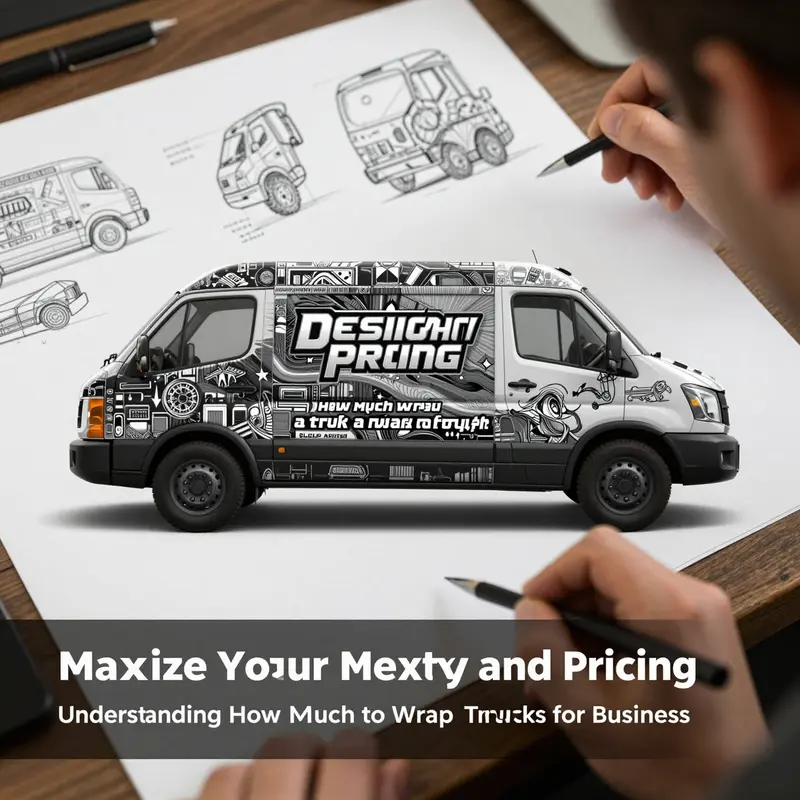
The decision to wrap a truck goes far beyond choosing color and a logo. It is a study in translateable design—how a two-dimensional graphic rides the curved, three-dimensional surface of a vehicle, how it stands up to weather and wear, and how all of that translates into a price tag. When a fleet or an individual owner starts sizing up a wrap, the first concerns are usually the sticker price and the promised longevity. Yet the most influential factor shaping the bottom line is design complexity. A simple, solid color can be quick to execute, while a wrap that attempts to carry a full branding campaign—multiple colors, gradients, photo-real imagery, and intricate shapes—requires more time, more skill, and more careful alignment. In short, design complexity functions as the invisible engine of pricing, pulling the numbers in directions that reflect not only what the wrap looks like, but how it is conceived, prepared, and applied to a moving piece of equipment that must perform every day on the road.
For anyone planning a truck wrap, this idea matters immediately. It guides how an idea becomes a billable project. It helps a buyer calibrate expectations and choose between competing quotes. And it frames how the wrap fits into a broader branding strategy, where the ultimate goal is not only to protect and decorate the vehicle, but to convey a message with clarity and authority across miles of driving and countless impressions. The cost, then, is not merely a function of material and labor; it is a reflection of design ambition, vehicle geometry, and the professional discipline required to deliver a finished piece that will endure the road as long as the business needs it to.
To understand this, it helps to contrast the design and pricing trajectory across the common scales of vehicle wraps. A light-duty pickup, the most ubiquitous canvas in the commercial world, often serves as a baseline. When the goal is a clean, durable presentation with a straightforward identity, the wrap typically sits in a budget-friendly corridor, where solid colors or minimal patterns reduce both the design time and the required precision during installation. It is here that many shops can offer quick turnarounds and predictable outcomes, translating into costs in a practical range that makes sense for small fleets or one-off branding experiments. That baseline still embodies a real-world constraint: even a simple wrap requires a clean preparation, a correctly calibrated surface, and meticulous application by trained professionals. The result is a reliable, cohesive look that protects paint and communicates a presence without demanding a large premium for artistry.
As the trucks scale up in size and service, the economics shift in predictable ways. Medium-duty vehicles—box trucks, larger cargo vans, service fleets with larger silhouettes—move the pricing needle higher, not simply because more vinyl is required, but because the surface geometry becomes more complex. The cabs, doors, and cargo areas present more edges, curves, and potential trouble spots. A wrap that covers the entire surface area on a box truck demands careful planning to avoid misalignment at the joints and to ensure consistent color and finish across panels. In practice, this means more design time, more sampling of colors and textures, and more hours of skilled labor to wrap each contour smoothly. The price range widens accordingly, with typical full-coverage projects in the mid-range of overall wrap budgets, while partial wraps—graphics on doors, panels, or hoods—offer more budget-friendly configurations but with their own design constraints and edge maintenance considerations.
At the upper end of the spectrum lie heavy-duty trucks, long-distance workhorses that pull a fleet’s visual identity across highways and through harsh weather. The sheer volume of accessible surface area multiplies both material consumption and labor. But beyond that, these vehicles demand design precision that can elevate the wrap from a decorative accessory to a critical marketing channel. The scale encourages more sophisticated artwork, higher resolution imagery, and careful color management to maintain brand consistency across a fleet where every mile serves as a moving billboard. Complexity in design here becomes a gateway to stronger brand recognition, yet it exacts a premium price as a natural consequence of the added artistry and the longer installation window. The relationship between size, complexity, and price is not merely linear; it is multiplicative in many cases, especially when teams must maintain strict color standards, precise edge handling, and durable protective coatings for the long haul.
Within this continuum, the role of the design itself cannot be overstated. Simple designs—ranging from unadorned colors to minimal patterns—concentrate the cost on the basics: material length, the labor to lay the vinyl with even tension, and the time to ensure clean seams and proper edge sealing. Complexity, by contrast, expands the design phase into several distinct stages: concept development, client approvals, mockups, revisions, and final proofs. Each phase adds time and, therefore, cost. More colors and gradients translate into more print-ready artwork, more weeding of intricate vinyl cuts, and more careful laminate or protective clear coats to preserve vibrancy and prevent fading. The consequence is that simple designs are rarely the cheapest possible option; they are simply the fastest to execute, which can yield a quicker return on investment in terms of branding presence per day on the road.
Equally important is the level of customization a client wants. A true brand identity brought to a vehicle wrap often requires a bespoke visual system: a logo that must be reproduced with precise color calibration, brand typography that needs consistent tracking and spacing, and background textures or patterns that demand seamless tiling across multiple panels. Customization also encompasses licensing considerations if the artwork includes photographic imagery or proprietary graphics. Each layer of customization introduces additional checks: ensuring the artwork is scalable and printable at the sizes needed for the cab, doors, and cargo surfaces; guaranteeing color accuracy across printers and vinyl; and validating that the final result aligns with the client’s brand guidelines. All these steps, though critical, add to the timeline and the price tag, sometimes significantly so, especially for fleets adopting a unified, vehicle-wide branding system.
The physical dimensions of the truck—its length, height, and the number of distinct surfaces to cover—play a decisive role in how a wrap is priced. A full-coverage job that blankets the entire exterior is not simply more vinyl; it requires more meticulous rounding of edges along wheel wells, mirrors, door handles, vent grilles, and other protrusions. Each of these features complicates the design, the layout, and the installation sequence. Experienced installers will tell you that the more complex the geometry, the more opportunities for misalignment if proper film stretch and heat management are not applied. This is why labor quality matters as much as material choice. A highly skilled installer who can predict how vinyl will react when stretched around a curved surface, who knows how to avoid overstretching on delicate sections, and who can pre-heat and post-heat to maintain adhesion, commands higher rates because the risk of a flawed finish is lower and the speed of execution is more predictable. How much you pay for the wrap often tracks with how tightly you want to control this risk and how much you value a flawless finish that remains visually consistent over years of exposure to sun, rain, and road debris.
Material choice sits alongside design in shaping the price. Vinyl is the common workhorse material for wraps, with variations in thickness, color range, gloss level, and durability. Standard vinyl provides a solid balance of cost and performance, suitable for short- to mid-term campaigns and light-to-moderate exposure. Premium or high-performance vinyl, on the other hand, is engineered to resist fading, cracking, and UV damage for longer lifespans. It tends to come with stronger warranties and better resistance to the harsh chemical environment that commercial fleets encounter. The advantage of premium vinyl is not only longevity but more consistent color retention across panels and years of service. For businesses investing in a wrap as a branding tool, choosing premium vinyl can translate into longer intervals between replacements and lower total cost of ownership over the medium term, even if the upfront price is higher.
Beyond the materials themselves, a wrap project includes ancillary services that can push the price upward but also dramatically improve the outcome. Removing an old wrap when a client is updating branding adds to the cost, but it is often essential to avoid adhesive residue or damage to partially exposed paint. Surface preparation to ensure proper adhesion—cleaning, degreasing, and sometimes priming—is a crucial step that affects durability and the smoothness of the final surface. When a wrap is intended to be long-lasting or when a vehicle will be heavily utilized on the road, the preparation phase is not optional; it becomes a foundational investment in the wrap’s performance. Warranties are another factor. Some installers include warranties on materials and workmanship, and these warranties are frequently bundled with the price. The value of a warranty lies not just in a promise of replacement; it embodies confidence in the installation’s durability and in the installer’s ability to stand behind the finished product should any unforeseen issues arise during the wrap’s life.
All of these layers—design complexity, vehicle geometry, labor quality, material performance, and post-installation care—combine to form the final price picture. For a typical light-duty truck aiming for quality, a complete wrap might settle into a practical range that reflects a careful balance of design ambition and execution efficiency. For more ambitious branding—full coverage with detailed artwork and high-resolution imagery—the numbers expand, as each incremental improvement in design and finish requires corresponding investments in time and skilled labor. The industry recognizes this relationship between complexity and cost, and the educated buyer does too: the more you want for your wrap’s look, protection, and brand impact, the more you should expect to invest in the design and installation process.
In terms of budgeting, the rule of thumb is to begin with the design brief as a cost driver rather than treating design as a separate, optional add-on. It is realistic to consider a baseline when evaluating quotes that distinguishes between the “cost of the vinyl and basic installation” and the “cost of design time and branding work.” The first component covers the material and labor to apply a wrap that adheres well and lasts. The second—design complexity—truly defines how much the project will deviate from the baseline. Clients who come with a finely tuned brand guide, ready-to-print artwork, and a minimal color palette usually enjoy a smoother path to a predictable quote. Those who come with exploratory graphics, multiple iterations, or a need for custom typography should expect a longer design phase and, consequently, a higher price ceiling. The relationship is intuitive: more design iterations and more complex artwork require more drafting, more color management, and more precision during printing and cutting, all of which accumulate into the final price.
For businesses focused on branding impact, this financial logic translates into strategic decisions. A highly visible, multi-color, high-contrast graphic identity has the potential to elevate perceived professionalism, improve recall, and communicate key values at a glance—from reliability and safety to speed and capability. When a wrap functions as a first impression, it’s not merely a matter of cost per mile but a question of how many miles the investment will justify in terms of enhanced recognition and customer engagement. In these scenarios, it is customary to invest in a robust, well-designed concept even if it pushes the initial quote higher. The payoff often emerges through increased lead generation, stronger consumer trust, and a more cohesive fleet appearance that aligns with a company’s broader marketing channels.
The practical approach for a buyer remains clear: gather multiple quotes to compare not just the bottom line but the quality of the plan. Ask installers to break down the estimate into design time, material cost, and labor, and push for an explanation of any add-ons such as old wrap removal or surface prep. Request samples and references to assess the fidelity of color matching and edge handling. A well-documented proposal should include color proofs, panel layouts, and a clear timetable that accounts for printing, lamination, and the actual wrap application. It is also wise to request a color-management plan that explains how the chosen hues will reproduce across panels and under different lighting conditions, so the final result remains compelling whether the truck is in bright sun or shaded street canyons. In doing so, buyers protect themselves against misaligned expectations and reduce the risk of surprises during installation.
As a practical moral for the process, always consider the wrap as part of a larger branding ecosystem. The final look should be coherent with other marketing materials and signage, from business cards to digital banners. The vehicle wrap should reinforce, not confuse, the brand story. When the design speaks with one voice across a fleet, the cumulative effect on visibility and credibility multiplies, often delivering more value over time than a minimal, budget-limited solution. The decision to lean into complexity, or to hold the line with a simpler approach, becomes a strategic choice, not merely a technical one. In this sense, pricing is the language through which the business articulates its commitment to quality, consistency, and long-term impact.
For readers who want practical guidance on where to begin, consider starting with a clear design brief that outlines the essential elements: the primary color palette, the type of branding you want to emphasize, and the surfaces that require the most attention. A well-crafted brief reduces back-and-forth and helps installers produce accurate quotes, while still allowing room for creative exploration if you choose to pursue a more ambitious look. If you are curious about how design and accessory considerations intersect with wraps, you might explore our broader guide to truck accessories, which can illuminate how a wrapped surface integrates with hardware and add-ons on the vehicle. Accessories can be a natural landing point to think about complementary elements without derailing the wrap discussion.
The overarching message is simple but powerful: value in a truck wrap is not a single price tag but a package that encompasses design originality, material performance, installation precision, and post-install care. The more a client values long-term durability, brand clarity, and fleet uniformity, the more inclination there is to invest in higher-quality materials and a more deliberate design process. Conversely, when the goal is a cost-conscious experiment or a short-term promotional run, a simpler design with standard vinyl and efficient installation can deliver a credible result without stretching the budget too far. Either path is valid, as long as the expectations are aligned with the reality of what design complexity entails and how that complexity drives the numbers.
In the end, the decision about how much to wrap a truck in custom graphics is a conversation between vision, surface, and the predictable discipline of professional wrapping. It is a negotiation among design ambition, material science, and human skill, all anchored by a budget, a timeline, and a return on investment that makes sense for the business. The most informed buyers approach the process with a framing that acknowledges that the most striking, durable, and effective wraps are not free; they are earned through careful planning, meticulous execution, and a commitment to presenting a brand with consistency and strength on every mile of road. The result is a wrap that not only looks good but performs as a durable, high-visibility platform for communication, turning highway miles into measurable brand value.
External resource: https://www.tsautop.com/products/tsautop-marble-custom-design-car-vinyl-wrap-vehicle-wraps
Final thoughts
Understanding the costs associated with wrapping a truck is essential for business owners aiming to leverage this powerful marketing strategy. By recognizing how size, material choices, and design complexity influence the overall price, you can better prepare for your investment. Whether opting for a simple wrap or a more intricate design, the right choices will enhance your brand’s visibility while ensuring that your truck serves as an effective advertisement. Ultimately, careful consideration and planning can lead to a successful truck wrapping project that resonates with your target audience and contributes positively to your business.