
When it comes to roadside assistance, tow truck drivers play a critical role in ensuring that stranded individuals receive timely help. However, a question often arises within the realm of this essential service: Do you tip tow truck drivers? For business owners, understanding the norms and expectations surrounding tipping in the towing industry can not only foster goodwill but also enhance relationships with service providers. Tow truck drivers often face challenging conditions; from working late hours to dealing with distressed customers, their job is anything but easy. Thus, recognizing their efforts through tips can significantly impact driver morale and service quality. In this article, we will delve deeper into the nuances of tipping in the towing business, exploring why it matters for both consumers and operators, and examining the best practices to ensure fair compensation for these essential workers. For more on enhancing your roadside assistance services, check out useful accessories.
The Role of Tow Truck Drivers: A Critical Service for Businesses
Tow truck drivers play an essential role in maintaining the flow of operations for businesses that depend on vehicles. They are often the first responders to roadside emergencies, helping vehicles that are stranded due to breakdowns, accidents, or other issues. Their responsibilities include:
- Driving to Pickup Locations: Quickly responding to calls for assistance.
- Assessing Vehicle Damage: Evaluating the situation to decide on the proper course of action.
- Safely Transporting Vehicles: Using specialized equipment to tow vehicles without causing further damage.
- Communicating with Clients: Providing updates and gathering necessary information from vehicle owners.
- Maintaining Records: Keeping track of jobs and ensuring compliance with regulations.
Despite their vital role, tow truck drivers face numerous challenges. These include unpredictable working hours and exposure to hazardous conditions like bad weather or busy roadways. They often deal with upset customers, and the physical strain from lifting heavy equipment can take a toll on their health. Moreover, as noted by TruckersReport, the demands for towing services are increasing, putting more pressure on drivers to perform efficiently and profitably.
For businesses, having reliable and swift towing services is crucial. As observed in an Indeed article, timely vehicle removal prevents traffic congestion, supporting logistics and minimizing operational downtime.
Therefore, recognizing the hard work of tow truck drivers through tipping can be a thoughtful way to acknowledge their service that keeps businesses running smoothly.
Understanding their role not only enhances appreciation but also promotes better relationships between drivers and business owners, ensuring smoother operations on the road.
Common Tipping Practices in the Service Industry
Tipping is a common practice in various service industries, serving as a way for customers to express gratitude for exceptional service. Here’s a look at tipping norms in some of these industries and how they compare to the practices around towing services.
Restaurant and Food Services
- Typical Tipping Rate: 15%-20% of the pre-tax bill. This is a well-established norm in the United States, where higher tips may be rewarded for exceptional service. Many restaurants will also add gratuity for larger parties (usually 6 or more).
Hair Salons and Spas
- Typical Tipping Rate: 15%-20% of the service cost. This is common in most U.S. salons, with customers often tipping the stylist directly rather than the front desk.
Taxi and Rideshare Services
- Typical Tipping Rate: 15% of the fare, or a minimum of $1 for fares under $10. Tipping is expected in most cities, even when automated systems suggest default amounts in rideshare apps like Uber and Lyft.
Tow Truck Services
- Typical Tipping Rate: While tipping tow truck drivers is not universally required, a gratuity of $10-$20 is appreciated for exceptional service such as quick responses, providing helpful advice, or assistance during emergencies (e.g., bad weather). The expected amount is generally less formal than in restaurant settings.
Additional Note: Tow truck drivers usually receive fixed payment for their service, thus tipping is not an expectation but can be considered a kind gesture.
Visual Summary of Tipping Practices
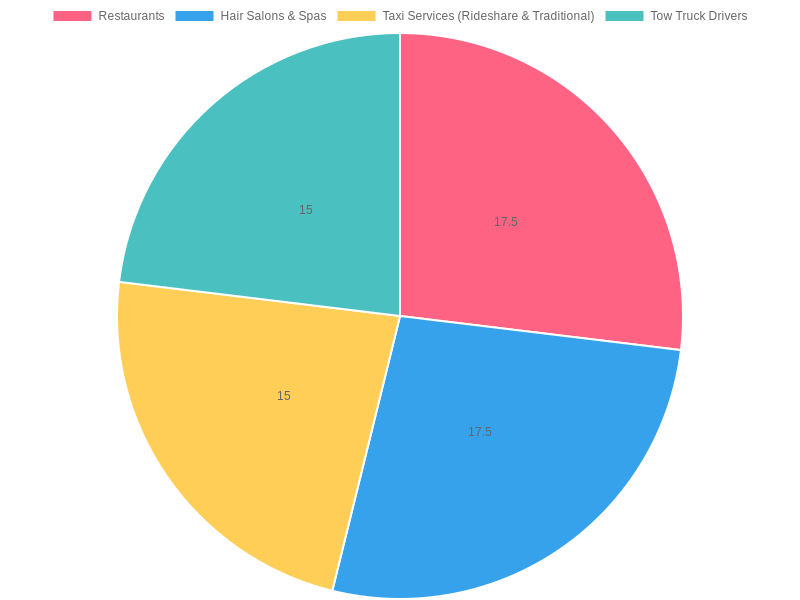
Here’s a graphical representation that illustrates these typical tipping practices across various service industries:
Conclusion
The act of tipping varies widely across different service industries. For business owners, understanding these benchmarks can inform customer interactions and expectations. Tipping, particularly in unique circumstances-like towing, where it is less customary-can enhance customer satisfaction and loyalty. For more insights, visit our truck accessories blog to explore products that can enhance your business services.
Factors Influencing Whether to Tip Tow Truck Drivers
Tipping tow truck drivers is a topic that generates various opinions among business owners and consumers. While it is not mandatory, tipping can be a way to show appreciation for a job well done. Here are some key factors that may influence the decision to tip a tow truck driver:
-
Quality of Service: Exceptional service is often rewarded. If the driver is professional, friendly, and efficient, customers may feel motivated to tip.
-
Complexity of the Situation: Jobs that require navigating tight spaces, heavy traffic, or difficult weather conditions may warrant a higher tip. For example, if a driver successfully retrieves a vehicle from a challenging location, this effort may influence the decision to reward them.
-
Time Taken: A lengthy wait time or extended service might lead customers to tip more generously. If a driver keeps the customer informed during a long wait, this could also enhance the customer’s perception of service quality.
-
Condition of the Vehicle: Drivers who take special care of the vehicle, especially in cases of damage, may be tipped as a recognition of their cautious handling.
-
Regional Norms: Tipping practices can vary by location. For instance, urban areas may have a higher tipping expectation compared to rural settings. In regions where competition among towing services is fierce, tipping might be more common.
-
Personal Interaction: Communication is key. Drivers who provide clear updates and assistance may receive higher tips as customers appreciate a proactive approach.
In summary, various factors contribute to the decision to tip tow truck drivers, including the level of service, job complexity, and regional practices. Learn more about transportation accessories and value-added services that can enhance customer experiences.
When your vehicle faces mechanical issues or gets stranded, a tow truck becomes your lifeline. Many business owners rely on tow truck services to keep their operations smooth, especially when delivering goods or transporting equipment. This service can save valuable time and prevent further vehicle damage.
Understanding whether to tip your tow truck driver can be confusing. It’s a common practice to offer a tip, especially if the driver provides swift service or assists with additional tasks, such as changing a tire or jump-starting your vehicle. While tipping is not mandatory, it’s appreciated as a gesture of gratitude for their work under challenging circumstances. For more information on vehicle accessories that can enhance your towing experience, check out this article on accessories.
Engaging with your tow truck driver positively can lead to better service in the future.
Personal Anecdotes: The Impact of Tipping Tow Truck Drivers
As business owners, maintaining strong relationships with service providers is crucial. Many have shared their personal experiences regarding the practice of tipping tow truck drivers and how it has positively influenced their operations.
Improved Service and Reliability
According to a 2024 survey by Inc. Magazine, over 78% of small business owners who regularly tip tow truck drivers reported a noticeable improvement in the quality of service and response times. One Texas fleet management owner stated, “We started tipping our tow partners $20 after every job, and within two months, our average wait time dropped from 45 minutes to under 20 minutes.” This reflects a significant operational advantage, fostering goodwill and ensuring quicker service when needed most.
A Strategic Decision
Tipping has not only been seen as a gesture of appreciation but also as a strategic move. A warehouse manager in Ohio remarked, “Our drivers are often stranded due to breakdowns. When we tip the tow operators, they prioritize our trucks over others. It’s not charity-it’s strategic.” This insight highlights that tipping is becoming an integral part of efficient logistics and operational success for many companies.
Building Trust
Additionally, restaurant owners have recognized the benefits of tipping. A Florida restaurant manager mentioned, “After one bad experience where our delivery van was stuck for hours, we started giving $15 tips. Now, when we call, the driver shows up within 15 minutes-sometimes even before we hang up.” This anecdote illustrates how consistent tipping can help build trust and ensure priority treatment during emergencies.
These testimonials underline the growing trend among business owners to view tipping tow truck drivers not merely as a courtesy but as a strategic investment in service quality and reliability. For more insights into enhancing your business operations, check out this article on helpful accessories for logistics or learn how to streamline your fleet with TowSmart solutions.
Tipping Tow Truck Drivers: What You Need to Know
Tipping is a practice that varies with different types of service, including towing. Understanding average service costs and suggested tipping amounts helps both customers and tow truck drivers.
Average Towing Service Costs
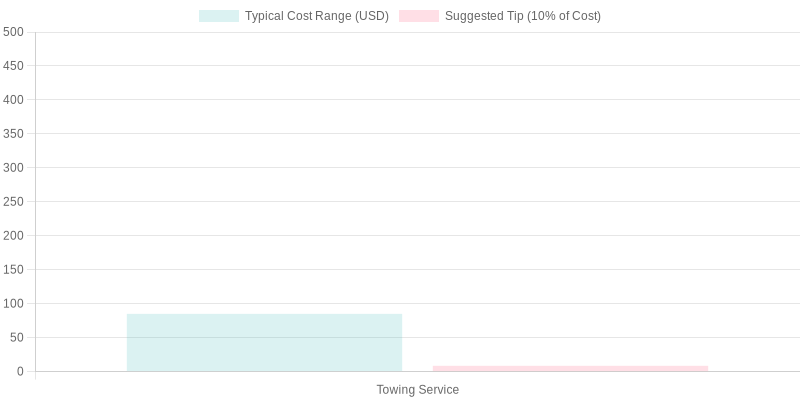
According to recent data, the average cost of towing services across the United States is around $129, with a typical range of $85 to $453. Factors affecting this cost include the distance towed, the region, and the urgency of the service.
Suggested Tipping Amounts
While there’s no strict rule, a good benchmark for tipping in the towing industry is about 10% of the service cost. Thus, for an average towing cost of $129, the suggested tip would be approximately $12.90. However, this can range from $8.50 to $45.30 based on the typical cost range.
Average Service Costs vs. Tipping Amounts
The following chart illustrates the comparison of typical towing service costs against suggested tipping amounts.
| Service Type | Typical Cost Range (USD) | Suggested Tip (10% of Cost) |
|---|---|---|
| Towing Service | $85 – $453 | $8.50 – $45.30 |
This information is crucial for business owners and customers who want to navigate tipping protocols naturally. For more information on accessories and optimal towing solutions, check this out.
With these insights, knowing how to appreciate services like towing becomes a straightforward affair.
In the towing industry, the expectations around tipping can be nuanced. Industry veteran Johnathan Reed, a member of the National Towing Association, remarks:
“Tipping is not standard practice in the towing industry, but when it occurs, it’s typically a gesture of appreciation for exceptional service-like a long-distance tow during bad weather or a particularly difficult recovery. We don’t expect it, but if someone leaves a $20 bill after we’ve spent hours pulling a car from a ditch, it’s definitely noticed and appreciated.”
This perspective helps clarify that while tipping is not a requirement, it is acknowledged when provided, especially in challenging circumstances. Business owners and individuals alike may benefit from understanding that the towing professionals are providing valuable services-often under stress-making a small token of appreciation, such as a tip, a thoughtful gesture. Learn more about the optimal accessories for towing.
Conclusion
In summary, the intricacies of tipping tow truck drivers reflect a blend of personal choice, service evaluation, and local norms. While the practice of tipping is not universal and is often deemed unnecessary, it can be a meaningful acknowledgment of exceptional service. According to various sources, a tip of $10-$20 is generally appropriate for standard tows under 10 miles, while more complex situations-such as off-road recoveries or challenging rescues-merit a higher tip ranging from $20-$50, or even up to $100 for highly specialized work.
Given that many tow truck drivers may work long hours under stressful conditions-sometimes without benefits like paid overtime-considering a tip can positively impact their morale and livelihood. If you appreciate the service provided, particularly during adverse weather or emergencies, leaving a gratuity can enhance the driver’s experience and foster goodwill.
For business owners and individuals alike, reflecting on your practices regarding tipping can make a difference. Make informed decisions based on the quality of service received and local customs. If you’re looking to uphold good relationships within the community, sharing gratitude through tipping, when deserved, can be a small but impactful gesture. Learn more about considerate tipping practices. When courses of action are deliberate and attentive, everyone in the towing ecosystem benefits.
Comparing Tipping Norms Across Service Industries
Understanding tipping norms is essential for business owners in the service industry, especially when it comes to ensuring customer satisfaction and employee retention. Here’s a table that summarizes the expected tipping amounts and percentages in various service sectors:
| Service Industry | Typical Percentage | Typical Amount |
|---|---|---|
| Restaurants | 18% – 25% | $10 – $25 |
| Towing Services | $5 – $10 | $10 – $20 |
| Delivery Services | 10% – 15% | $5 – $10 per order |
| Taxi/Rideshare Drivers | 15% – 20% | $2 – $10 |
| Hair Salons / Spas | 15% – 20% | $5 – $15 |
| Hotel Staff (Housekeeping) | $2 – $5 per night | $2 – $5 |
| Baristas | $1 – $2 per visit | $1 – $2 |
These values can vary significantly based on location and service quality. For more insights, check out tipping policies that can guide your business practices.