
Concrete is the backbone of modern construction, serving as a fundamental material for roads, bridges, buildings, and more. For business owners in the construction and renovation sectors, understanding precise quantities, such as how many yards in a truck of concrete, is critical for streamlining project planning and managing budgets effectively. The right amount of concrete ensures that projects stay on schedule and within financial limits, avoiding wastage and minimizing costs. Accurate calculations help in making informed purchasing decisions, maintaining project timelines, and enhancing profitability. Whether you’re pouring foundations or constructing elaborate structures, knowing the specifics about concrete delivery, including load capacities of concrete trucks, directly influences the success of your endeavors. Therefore, mastering yard measurements not only supports operational efficiency but also contributes significantly to the overall quality and durability of construction projects. Learn more about construction accessories to enhance your projects further!
Another aspect of managing concrete deliveries is understanding how trucks are equipped to handle these loads. Familiarizing yourself with all the details around concrete transportation can further augment your overall project management strategy. Explore how various liftgate options can enhance logistics in your concrete delivery to ensure that you have the right tools for the job.
Understanding Concrete Truck Sizes and Their Importance for Business Owners
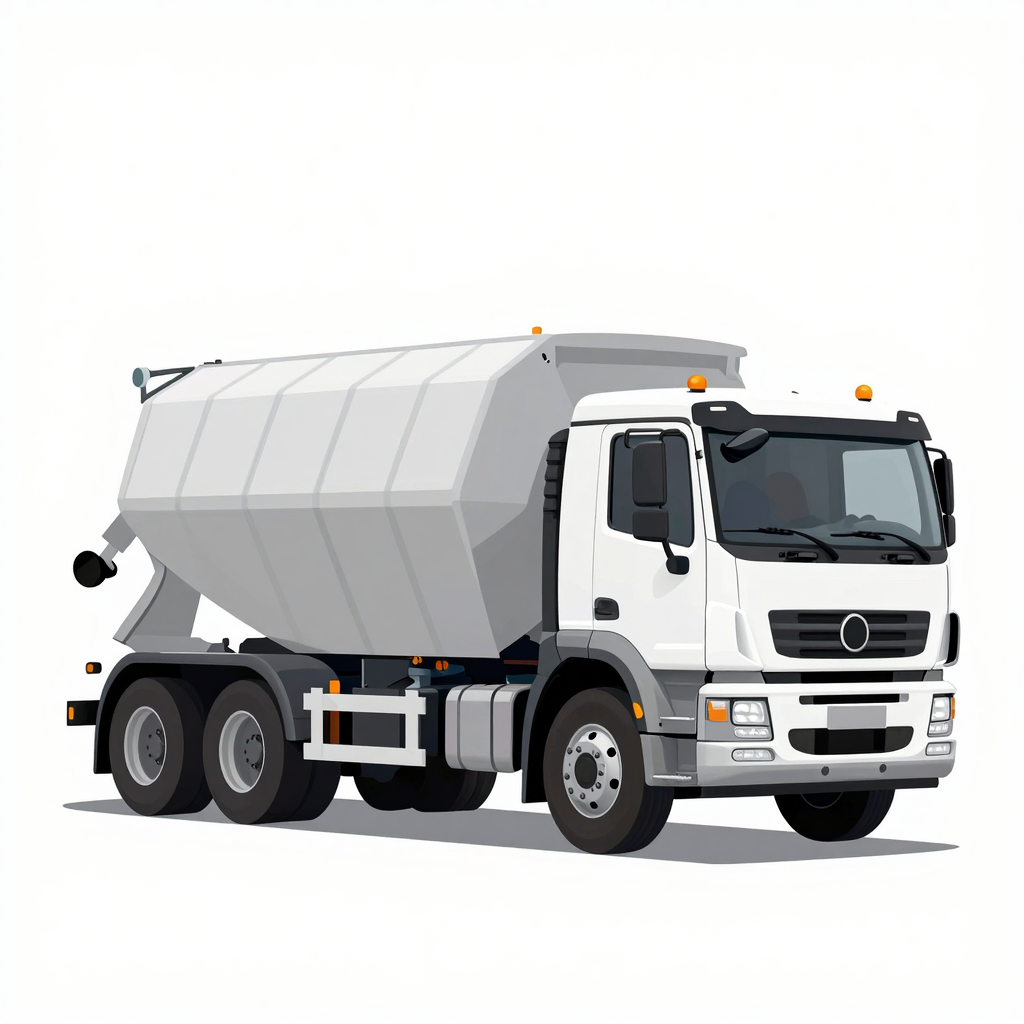
Concrete trucks come in various sizes and capacities, each designed for specific construction needs. Understanding these dimensions is crucial for business owners in the construction industry, as it directly influences project efficiency and cost.
Standard Capacities of Concrete Trucks
Typical concrete truck sizes range from 6 to 18 cubic meters (m³). The most common options include:
| Capacity (m³) | Typical Uses |
|---|---|
| 6 m³ | Urban construction, small to medium-sized residential projects, local infrastructure work (e.g., sidewalks, driveways), and short-distance transport. Ideal for tight city spaces due to its compact size. |
| 8 m³ | Medium-scale urban and suburban construction, commercial buildings, road repairs, and moderate-sized civil engineering projects. Offers better efficiency than smaller models while maintaining maneuverability in urban areas. |
| 10 m³ | Large-scale urban construction, high-rise building foundations, major road and bridge projects, and long-distance concrete delivery. Commonly used in metropolitan areas where high productivity is needed without excessive size. |
| 12 m³ | Heavy-duty infrastructure projects such as highways, dams, tunnels, and large public works. Suitable for both urban and semi-rural applications requiring high-capacity transport over moderate distances. |
| 15 m³ | Major industrial and large-scale construction projects including power plants, airports, large commercial complexes, and extensive foundation works. Often used for long-distance transport due to high output and fuel efficiency per load. |
| 18 m³ | Mega-projects such as large dams, massive bridges, high-speed rail systems, and large-scale mining or quarry developments. Typically deployed in remote or rural locations where bulk material delivery is essential and frequent trips are cost-effective. |
These capacities cater to diverse construction requirements, allowing business owners to choose the most efficient option based on the nature of their projects. Larger trucks, while offering higher volume, may face restrictions in narrow urban streets, making smaller models more practical despite lower outputs per trip.
Why Size Matters for Business Owners
Selecting the right concrete truck size impacts both cost and efficiency. A truck that is too small can lead to more trips, increasing labor and fuel costs. Conversely, a truck that is too large may not only incur unnecessary expenses but also complicate logistics in urban environments. Understanding concrete capacity enables businesses to optimize their fleet for specific job requirements, ensuring that they can meet project demands without overspending or wasting resources.
For more insights into enhancing your construction operations, check out our guides on essential truck accessories and improving your transport methods.
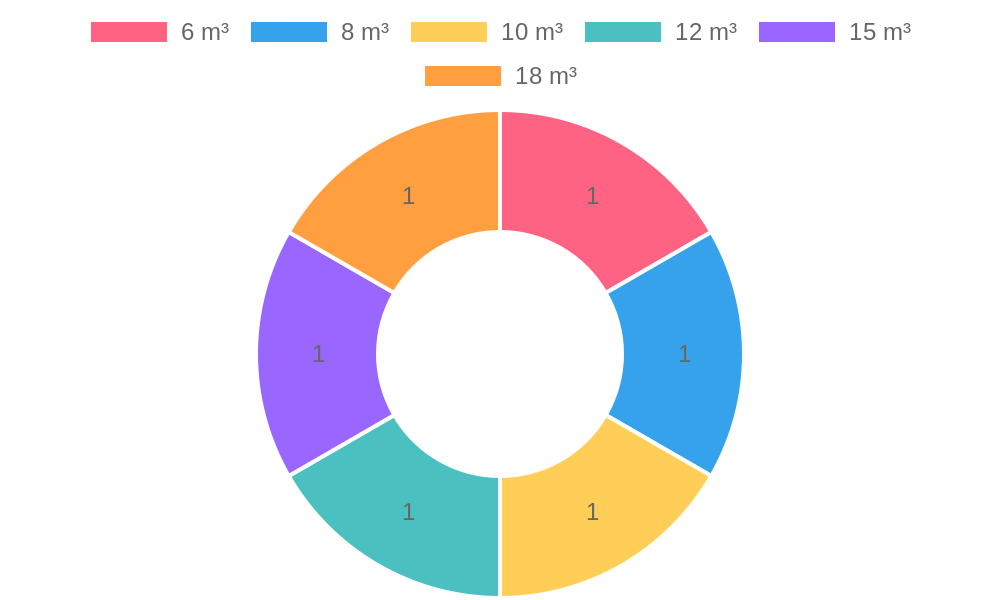
This visual representation summarizes the standard sizes and typical applications for various concrete truck capacities, illustrating how each is utilized in the real world.
Comparing Concrete Truck Sizes and Capacities
When it comes to selecting the right concrete truck for your project, understanding the capacities and features of various truck sizes is essential. Below is a comparison of different concrete truck sizes, detailing their typical volume, usable capacity, dimensions, and notable characteristics.
| Capacity (Cubic Meters) | Usable Capacity (Cubic Meters) | Typical Dimensions (Length × Width × Height) | Notable Characteristics |
|---|---|---|---|
| 5 m³ | ~4.8 – 5.0 m³ | ~7,300 mm × 2,496 mm × 3,100 mm | Commonly used for smaller projects; often features a 4×2 drive mode; suitable for urban areas with tighter access. |
| 8 m³ | ~7.8 – 8.0 m³ | ~8,000 mm × 2,496 mm × 3,400 mm | Offers a balance between mobility and load; frequently equipped with a 6×4 drive mode; common in mid-sized construction sites. |
| 10 m³ | ~9.5 – 10.0 m³ | ~9,040 mm × 2,496 mm × 3,850 mm | The most common size for large-scale projects; typically features a 6×4 or 8×4 drive mode; robust chassis designed for heavy loads; includes advanced safety systems and hydraulic drum operation. |
| 12 m³ | ~11.5 – 12.0 m³ | ~9,335 mm × 2,496 mm × 3,980 mm | High-capacity model for major infrastructure work; usually powered by a diesel engine with high horsepower (300-400hp); equipped with air suspension seats and advanced monitoring systems. |
| 18 m³ | ~17.5 – 18.0 m³ | ~10,000 mm × 2,500 mm × 4,100 mm | Large-scale industrial and highway projects; features a heavy-duty 8×4 chassis; designed for long-distance transport; often includes GPS tracking and onboard computer systems for delivery monitoring. |
For more detailed aspects about concrete truck specifications, their sizes, and capacities, you can learn more about accessories that enhance productivity.
Additionally, you might want to explore various options for truck modifications that can enhance your vehicle’s capabilities and efficiency.
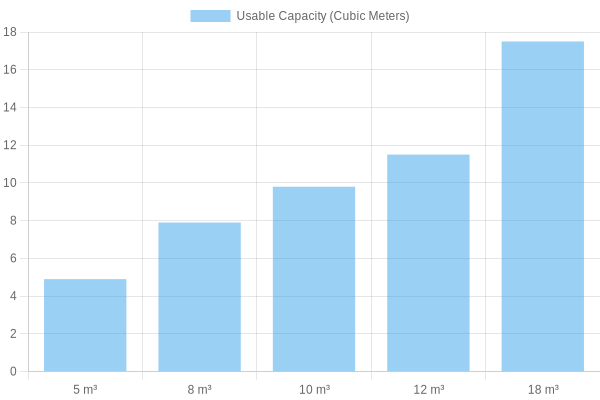
This chart illustrates the usable capacity of various concrete mixer trucks, providing a visual understanding of how each size stacks up in practical terms.
Understanding these differences can help business owners make informed decisions regarding concrete truck purchases or rentals for upcoming projects.
How to Calculate Yards of Concrete Needed for Your Project
Calculating the amount of concrete needed for your project is crucial for efficient planning and budgeting. As a business owner, understanding this calculation can significantly impact the success of your construction projects. Here’s a step-by-step guide on how to determine the yards of concrete you’ll need.
Step 1: Understand Concrete Volume Measurement
Concrete is typically measured in cubic yards. One cubic yard of concrete is equivalent to the volume of a cube that is one yard long, one yard wide, and one yard deep. To visualize this, consider that:
- 1 cubic yard = 27 cubic feet
- Formula: Cubic Yards = Length (ft) x Width (ft) x Height (ft) / 27
Step 2: Measure Your Area
For the calculation, you will need to measure the dimensions of the area where you will pour the concrete. Here are common shapes you might encounter:
- Rectangular: Measure the length and width, then multiply these numbers.
- Circular: Measure the diameter and use the formula: Area (Square Feet) = π x (Radius)^2
Let’s break down the example for each:
-
### Rectangular Example
-
Length: 10 ft, Width: 5 ft, Depth: 0.5 ft
-
Total Volume = 10 x 5 x 0.5 = 25 cubic feet
-
Cubic Yards = 25 / 27 = 0.93 cubic yards
-
### Circular Example
-
Diameter: 4 ft, Radius: 2 ft
-
Area = π x (2^2) = 3.14 x 4 = 12.56 square feet
-
If the depth is 0.5 ft, the total volume = 12.56 x 0.5 = 6.28 cubic feet
-
Cubic Yards = 6.28 / 27 = 0.23 cubic yards
Step 3: Account for Wastage and Variability
Concrete can be messy. It’s advisable to order more concrete than your calculation suggests to account for spillage, settling, or miscalculations. A good rule of thumb is to add an additional 10% to your total volume.
Step 4: Know Your Truck’s Capacity
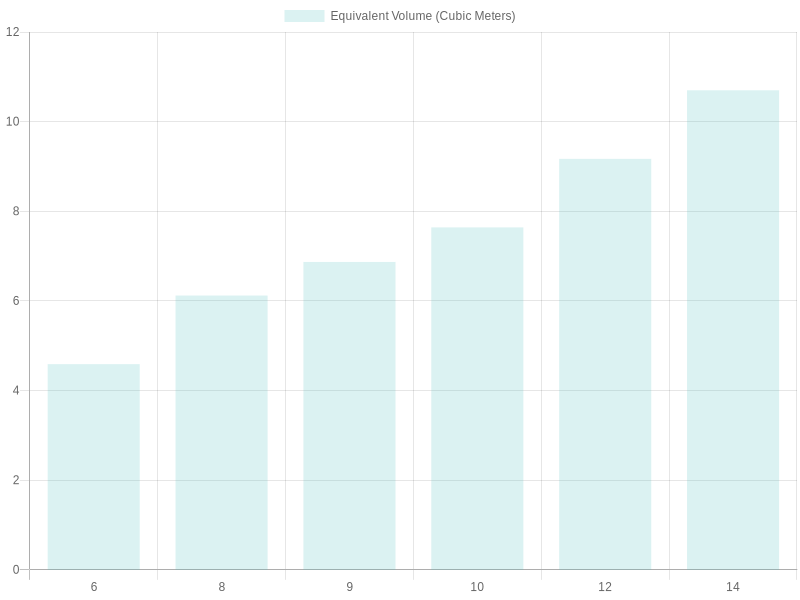
Concrete trucks come in various sizes, typically holding between 6 to 14 cubic yards. Most commonly, they can carry about 8 to 10 cubic yards. Here’s a breakdown:
| Capacity (Cubic Yards) | Equivalent Volume (Cubic Meters) |
|---|---|
| 6 | 4.59 |
| 8 | 6.12 |
| 9 | 6.87 |
| 10 | 7.64 |
| 12 | 9.17 |
| 14 | 10.70 |
Conclusion: Ready to Calculate?
Now that you have a better understanding of how to calculate the yards of concrete needed for your project, you can apply this knowledge effectively. This will not only streamline your operations but also ensure that you stay on budget. For more tips and advice on managing your truck and concrete projects, visit trucksDIY.com and check out our wide range of accessories that can aid in your concrete deliveries.
Call to Action
Don’t let concrete calculations hold you back! Start planning your project today with confidence using our guidelines. Need help or equipment? Explore our resources and tools at trucksDIY.com to make your concrete pouring experience a breeze!
Factors Affecting Concrete Pricing
Understanding the various factors that influence concrete pricing is crucial for business owners looking to make informed purchasing decisions. Here’s a comprehensive list of the key concrete pricing factors that you should consider:
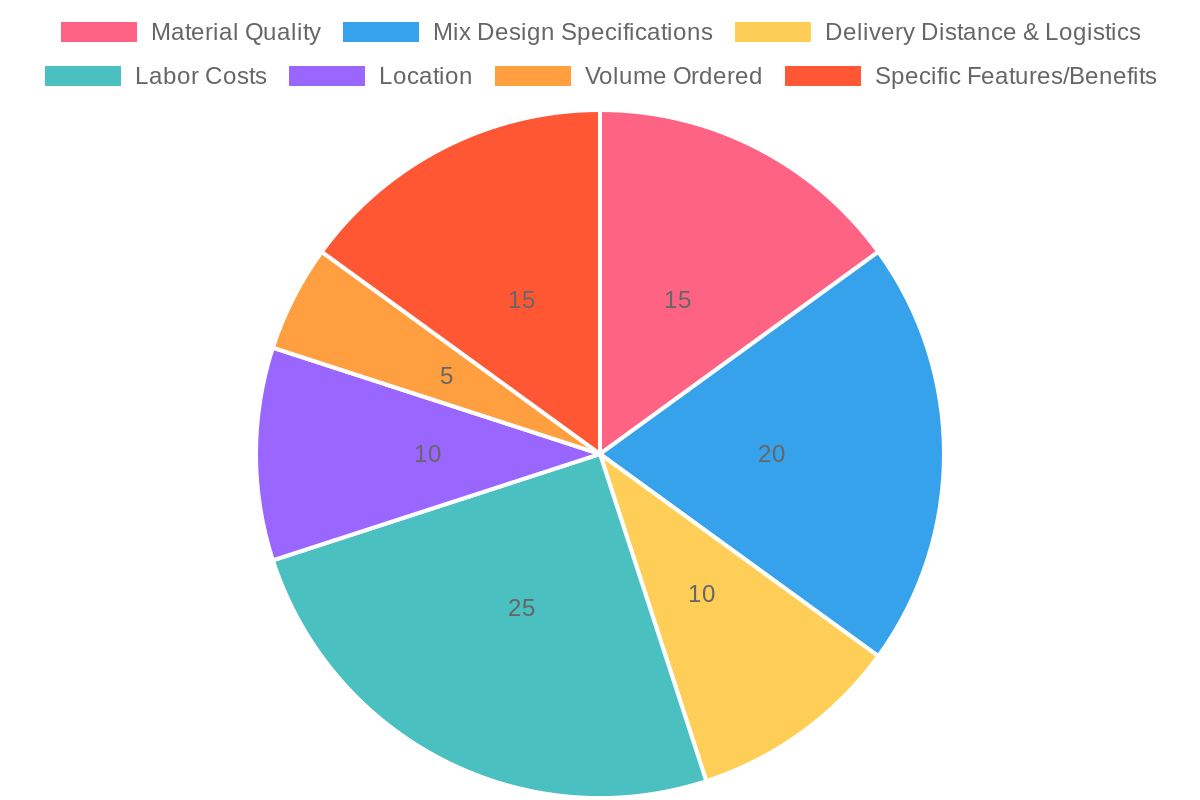
- Material Quality: The quality of cement and type of aggregates directly affect the price. Higher-grade materials are more expensive.
- Mix Design Specifications: Complex designs, such as those requiring high strength or additional features like fiber reinforcement, increase costs due to additional materials and processing.
- Delivery Distance & Logistics: Costs increase with distance from the supplier. Remote locations often incur higher delivery fees.
- Labor Costs: Local labor rates and the complexity of the installation process impact overall pricing.
- Location: Urban areas typically have higher costs due to demand, supply chain complexities, and regulatory requirements.
- Volume Ordered: Larger concrete orders usually benefit from bulk pricing, lowering the unit cost.
- Specific Features/Benefits: Innovations like recycled materials, special durability features, and certifications (e.g., green building certifications) may add a premium.
Understanding these factors can help ensure you get the best price for your concrete needs. Additionally, consider accessing our resources on trucks that can help you transport concrete and how to maximize your truck’s utility.
Visual Representation of Concrete Pricing Factors
The pie chart above illustrates the distribution of various factors affecting concrete pricing, providing a clearer view of their relative impacts.
Common Misconceptions About Concrete Yards
Concrete yards are a vital consideration for business owners in the construction and landscaping industries. However, several misconceptions persist regarding the amount of concrete that can be delivered in a truck, leading to confusion and potential operational inefficiencies. Here, we clarify some of the most common misunderstandings.
Misconception 1: Trucks Can Carry More Than Their Rated Capacity
Many believe that concrete trucks can exceed their rated capacities without consequences. In reality, overloading can lead to serious safety risks and structural damage to both the truck and the concrete mix. Each truck is designed to carry a specific amount of concrete-usually around 10 cubic yards-based on its axle count and weight limits. Overloading not only endangers the crew but also compromises the quality of the concrete.
Misconception 2: Concrete Sets Immediately Once the Drum Stops
Another widespread myth is that concrete will set as soon as the drum stops rotating. While the mixing action prevents premature setting, if the drum remains still for an extended period (typically longer than 90 minutes), the concrete can harden, leading to spoilage. This necessitates a timely delivery to ensure the integrity of the concrete mix.
Misconception 3: It’s Possible to Order a Partial Load
Some business owners mistakenly believe they can request small increments of concrete, such as half or a quarter yard. Unfortunately, most suppliers deliver in whole-yard increments; any leftover concrete is usually discarded, leading to wasted resources. Understanding standard delivery practices is crucial for optimizing concrete use and reducing costs.
Misconception 4: All Trucks Have the Same Capacity
Not all concrete trucks are the same size. Their capacities vary based on the manufacturer and design, meaning that assumptions about volume can lead to inaccuracies in estimating needs. For instance, while a standard truck typically holds about 10 cubic yards, variations exist based on different truck configurations.
In conclusion, understanding these misconceptions is essential for effective planning and execution in concrete-related projects. For more information on concrete delivery processes, you can learn more about concrete delivery and check out concrete pouring facts. To visualize these misconceptions and their impacts further, refer to the following chart and infographic below.
“A clear understanding of concrete quantities and costs is fundamental to sound business strategy. Precise cost accounting parallels strategic decision-making, enabling businesses to identify inefficiencies, set accurate pricing, and make informed investment decisions. Those who fail to track real-world quantities risk decisions based on assumptions, potentially leading to poor profitability and growth.”
- Harvard Business Review, The Importance of Understanding Concrete Quantities and Costs in Financial Decision-Making
Understanding concrete quantities and costs is critical for business owners, particularly in industries where concrete plays a significant role. The expert opinion from the Harvard Business Review emphasizes that a thorough grasp of these factors not only aids in effective budgeting but also positions companies for strategic success in a competitive market.
In conclusion, understanding the capacity of concrete trucks, typically ranging from 8 to 12 cubic yards, is crucial for effective business planning in the construction and landscaping industries. The most commonly utilized truck holds about 10 cubic yards, making it an essential factor in project management, budgeting, and scheduling deliveries. Accurate calculations of the concrete required not only help avoid costly delays from under-ordering but also minimize waste from over-ordering. By grasping these measurements, business owners can streamline their operations and avoid unforeseen logistical issues. This knowledge empowers you to make better-informed decisions that will enhance your efficiency and profitability.
If you’re looking to expand your services or need personalized solutions for your pizza truck, I encourage you to visit truckpizza.net today. Their expertise in creating customized food truck solutions will set you apart in a competitive market. Don’t miss out on the opportunity to elevate your business!