
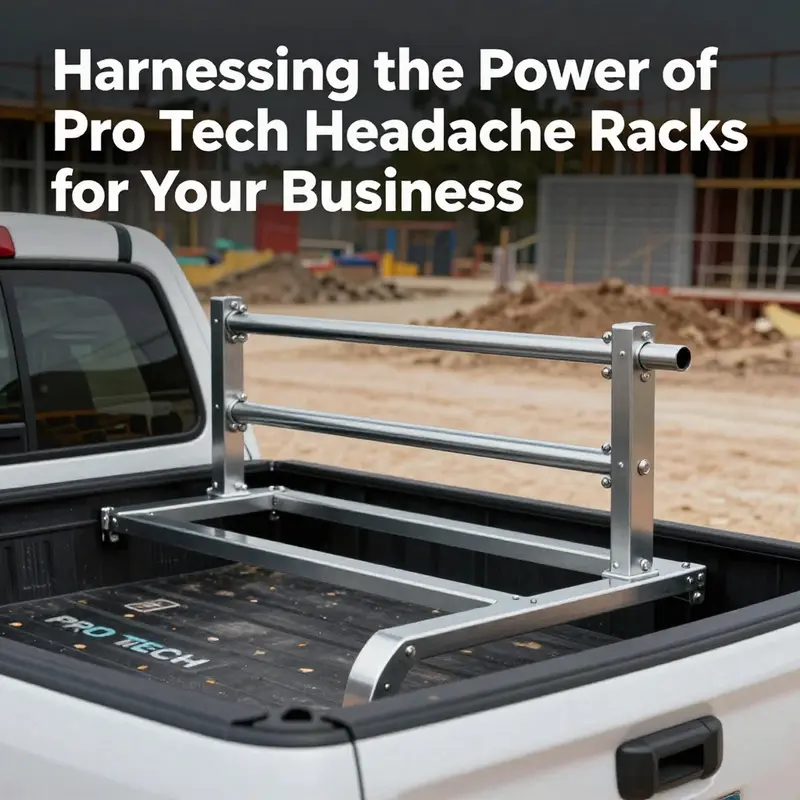
For business owners who rely on trucks in demanding environments, the importance of reliable accessories cannot be overstated. Pro Tech headache racks offer unparalleled durability and functionality, making them an exceptional investment. This article explores their robust construction, extensive versatility, and numerous safety features, which collectively enhance the utility of your pickup truck. By understanding these essential aspects, businesses can make informed choices to optimize their fleet’s performance and ensure the safety of their personnel on the road.
Built to Withstand the Trail: Durability and Construction of High-Strength Headache Racks
The rear window of a pickup cab is rarely the most prominent feature of a vehicle, yet when the route between trailhead and worksite grows rough, that expanse of glass becomes a critical line of defense. A headache rack is not simply a cosmetic addition; it is a purpose-built shield and a versatile platform for carrying the tools that professionals and enthusiasts rely on in demanding environments. Its durability is not an accessory detail but the core of its value. When a rack is conceived with the realities of off-road travel, remote deployments, and high-demand service in mind, every weld, every joint, and every tube becomes a piece of a larger system designed to endure. The emphasis is on resilience: resilience to impact from flying debris, resilience to corrosion in harsh climates, and resilience to the relentless jiggle and vibration produced by rough terrain and long hours on the road. In this light, a modern headache rack emerges as a blend of rugged engineering and practical design, a structure that not only protects a truck’s cab but also extends its capability through thoughtful integration with storage and accessory systems.
Material choice anchors the story of durability. In their most robust forms, headache racks are built from high-strength steel or reinforced aluminum alloys. The steel variants typically rely on hollow-section members that strike a balance between weight and stiffness, offering a robust frame that resists bending even when loaded with heavy gear. Powder coating completes the package, delivering a hard, protective shell that stands up to moisture, salt, dust, and the occasional encounter with trail obstacles. Aluminum options, while lighter, are engineered to deliver comparable rigidity through carefully engineered profiles and gusseting, with corrosion resistance built into the alloy itself and the surface treatment that guards against weathering. The choice between steel and aluminum often comes down to a vehicle’s intended use, payload considerations, and the operator’s willingness to trade a bit of weight for maximum rigidity, or vice versa. The durability narrative thus begins with material science, but it moves quickly into the way those materials are shaped and joined to form a coherent whole.
The securing of components through precise welding is a cornerstone of enduring performance. High-strength joints are the backbone of any load-bearing framework, and headache racks are no exception. Precision welding ensures that the seams tightly fuse tubes and plates, creating continuous, predictable load paths from the rack to the vehicle chassis and down to the mounting points. Good welding practices mitigate hotspots that could become fatigue points over time, particularly in off-road conditions where vibrations are not just occasional but routine. The durability map expands here to include stress-relief techniques. Welds are often blended and reinforced at critical corners, and designers incorporate radii and fillets that reduce stress concentration. This allows the rack to endure the repeated shocks and flexing that come with traversing rocky trails or charging into uneven terrain during remote deployments. Stress-relief work, while invisible to the eye at first glance, is a quiet but essential contributor to longevity, extending the life of the rack and reducing the likelihood of micro-fractures that could accumulate over years of service.
Another integral facet of durability centers on the modular design ethos. Rather than a monolithic, inseparable shell, many headache rack systems embrace bolt-on components and modular assemblies. A modular approach offers a practical road to longevity: if a section is damaged, it can be replaced without the need to overhaul the entire structure. This is a meaningful advantage when the rack must stay in service during repairs or field operations. Bolted connections are chosen not only for ease of assembly but for controlled, repeatable torque and predictable clamping behavior. When properly tightened and maintained, bolts distribute loads evenly, preventing localized overstress that might otherwise propagate through a welded joint. The modularity also feeds into a longer product life, allowing owners to upgrade or swap in new accessories as needs evolve, without discarding the core rack that has already proven its worth on countless trails and work sites. In the world of rugged equipment, this combination of modularity and robust joining methods is a practical expression of durability, turning a basic protective shell into a long-lived platform.
The protective capabilities of a high-strength rack reach beyond mere impact resistance. The design goal is to shield the cab from debris that can strike vehicles at speed or during off-road excursions when loose rock and vegetation become airborne. Engineers consider the rack’s silhouette, height, and rearward projection to balance protection with visibility. A well-designed rack does not obstruct rearward vision or trap debris against glass; rather, it forms a forgiving shield that deflects and distributes impact away from the passenger compartment. The profile of the rack also matters for aerodynamics and fuel efficiency in real-world driving. While some light-weight or minimalist models prioritize streamlining, serious-duty racks embrace a geometry that maximizes rigidity and impact protection while still accommodating practical needs like mounting work lights, antennas, or other accessories. In extreme environments, protection is not merely about preventing a single strike; it is about maintaining a clear line of sight during night operations, ensuring that crews can navigate, communicate, and respond with confidence.
Durability is inseparably linked to functional integration. The most resilient racks do not merely offer a shield; they present a platform for a field-ready toolkit. Many models incorporate modular storage options and mounting points that allow operators to carry essential gear without compromising the rack’s structural integrity. The bolt-on philosophy again comes into play here, enabling a straightforward path to replace damaged storage modules or reconfigure a system as operations shift. The ability to swap out a toolbox, add a new lighting package, or rehome a spare tire carrier without cutting or welding introduces a kind of resilience that extends beyond the frame itself. It keeps the system adaptable, which is crucial in changing work environments. The rack becomes not just a protective element but a portable, modular worksite. It is the difference between a truck that can endure a rough trail and one that can thrive under the demands of a remote mission, a rescue operation, or a long-haul expedition.
From a maintenance perspective, durability has a practical dimension that operators cannot overlook. Regular inspection is essential, particularly for welds, mounting brackets, and bolts that feel the full brunt of vibrations and shifting loads. The inspection routine is straightforward: look for signs of corrosion, cracks, or loosened fasteners, and address them promptly. Repainting or re-coating worn surfaces is part of the maintenance cycle, not a sign of neglect. The coatings chosen for these racks are designed to resist abrasion and chemical exposure, and maintenance intervals are typically tied to the operating environment. In dusty, salty, or humid climates, more frequent checks become a necessary habit. In harsher climates, a rack can accumulate micro-damage that, if left unchecked, could escalate into more serious problems over time. The durability narrative thus extends from the workshop to the field: the best racks empower their owners to complete missions with fewer interruptions and fewer unplanned repairs.
When people think about the long-term value of a headache rack, they often focus on compatibility with tools and accessories. A durable rack is more than a box on the back; it is a structured platform that integrates with other components of the vehicle’s ecosystem. This means it should be able to bear the weight of heavy tools without deforming, while also offering reliable attachment points for lighting, winching accessories, and storage modules. The strength of the rack translates into a stable base for a toolbox and a secure anchor for cables and ropes. In practical terms, that means fewer vibrations transmitted into mounted equipment, less wear on mounting hardware, and a reduced risk of accidental detachment during bumpy rides. The result is a system that supports safer operations, faster response times, and longer service life—an important consideration for crews operating in remote regions where a breakdown or a delayed repair is not merely inconvenient but costly.
The story of durability would be incomplete without acknowledging the balance that manufacturers must strike between protection, weight, and usability. Heavy, overly rigid frameworks can impede accessibility or complicate installation, while lighter systems may sacrifice necessary stiffness. The best designs achieve a harmonious balance: a robust load path that resists buckling and fatigue, combined with thoughtful geometry that preserves bed clearance, tailgate accessibility, and passenger space in meaningful ways. The symmetrical strength typically comes from a grid-like arrangement of tubes or channels that work together to distribute loads; the protective face stays vigilant without becoming aggressive to the point of impractical weight. This equilibrium—a deliberate blend of stiffness, protection, and modular expandability—defines the durability of modern headache racks and explains why they have become standard equipment in demanding work environments.
As the chapter closes on durability and construction, it is worth emphasizing the test bed that validates these design choices. Real-world use—tough trails, long stretches of highway under load, and the unpredictable demands of emergency response—acts as the ultimate proving ground. The racks that endure this testing process over many seasons and across diverse climates earn the trust of operators who rely on them every day. The capacity to resist impact, to endure corrosion, to maintain structural integrity under vibration, and to remain modular enough to evolve with changing needs are not theoretical ideals; they are the practical hallmarks of a system built to perform when it matters most. In this light, the durability and construction narrative is not a dry accounting of materials and welds but a narrative of reliability, a commitment to keeping a vehicle ready for action, no matter the trail or the task.
For readers who want to explore the broader ecosystem of protective and storage solutions that can complement a high-strength headache rack, there are broader considerations about how racks interact with their surroundings. Storage modules, tool boxes, and accessory mounting systems can be integrated in ways that preserve both protection and access. The relationship between the rack and these elements matters: the goal is a coherent arrangement that maximizes utility while minimizing weight and potential interference with operation. A well-considered system maintains center of gravity, ensures clear lines of sight, and keeps the vehicle responsive even with heavy gear attached. These considerations are part of the durability conversation because they affect how loads are carried, how vibrations are managed, and how long the system will remain viable in the field. In short, durable construction is not just about withstanding external forces; it is about supporting sustained performance in demanding work and adventure scenarios.
For readers interested in a practical look at how storage and protective components can work together with a rack, one can examine the broader ecosystem of compatible modules and cases. These discussions offer a sense of how modular design translates into real-world resilience: the ability to swap out a damaged box, reconfigure for a new mission, or upgrade to a larger spare-tire carrier without sacrificing structural integrity. In conversation with the durability narrative, this modular flexibility reinforces a central takeaway: durability in today’s headache racks is as much about how a system can adapt as it is about how it resists impact. The best designs keep to a straightforward principle—protect, support, and adapt—so that the vehicle remains capable wherever the road leads. Readers seeking more on related storage options can explore resources on compatibility and modular configurations, such as those discussed in protech-boxes, which illustrate how storage solutions can be integrated into a durable framework while preserving the rack’s protective purpose.
External resources provide precise specifications and load ratings that contextualize what durability translates to in practice. For those who want to verify the engineering details and official performance criteria, the manufacturers’ documentation offers a precise, technical look at material specifications, thicknesses, welding standards, and permissible loads. This information supports a grounded understanding of how durability translates into real-world performance and is a helpful companion for anyone planning a comprehensive upgrade that includes a protective rack and related accessories. The official specifications explain how the frame, cross-members, and mounting brackets are rated to handle particular weights and configurations, and they help buyers compare options with a clear sense of the safety margins involved. Readers who crave a deeper dive into the exact material grades, coating systems, and tested load capacities will find that documentation to be a useful reference as they design a setup that matches their work and travel demands.
In sum, durability in headache rack design is a layered discipline that brings together material science, precise fabrication, and a modular approach to future upgrades. It is the combination of steel or aluminum strength, disciplined welding and stress-relief strategies, and a flexible, bolt-on architecture that gives these racks their long-term value. When a system is built with those elements in mind, operators gain more than protection; they gain a reliable platform for carrying the gear that matters, a foundation for efficiency in rugged settings, and the confidence to push farther from the beaten path without sacrificing safety or performance. The result is a durable, adaptable, field-ready solution that stands up to the demands of harsh climates, remote worksites, and high-speed, high-stakes driving alike. For readers who want to see how these principles translate into real-world storage and utility, exploring the related storage modules can provide a practical complement to the durability discussion, offering concrete examples of how a modular approach preserves the rack’s protective role while expanding its usefulness. You can learn more about these modules at protech-boxes, which illustrates how storage and protection can be integrated in a way that maintains the rack’s integrity on every mile of road.
External resource for specifications and load ratings: https://www.protechproducts.com/products/headache-racks
Internal link for storage modules and compatibility: protech-boxes
Versatility Reimagined: How Bed-Mount Headache Racks Multiply a Truck’s Utility

The bed behind a pickup has long been a space of possibility rather than a simple cargo hold. When a protective framework rises from the rail, wraps around the cab, and anchors itself with a confident, almost architectural stance, that space begins to tell a new story. Headache racks, in their most compelling iterations, do more than shield the cab from shifting debris or off-road junk. They become a working platform, a modular backbone, and a strategic extension of a truck’s natural capabilities. In the broad landscape of heavy-duty gear meant for the tough jobs and the rough roads, these racks stand out not merely for their strength but for the way they redefine what a pickup can carry, how safely it can do so, and how efficiently it can operate in distant, demanding environments.
At the core of their appeal lies a blend of innovative design and practical adaptability. The most striking feature of modern headache racks is not simply the barrier they form but the way the form invites function. A well-executed rack integrates with the truck bed so completely that it feels like a natural continuation of the vehicle’s frame rather than an add-on. The rear-mount configuration, often reinforced by a goalpost-like structure, slips into the bed’s rear mounting holes with precision. This alignment creates a secure, stable platform capable of supporting significant weight while preserving full access to the bed and its custom arrangements. The result is a system that behaves as if it grew from the truck itself, not something strapped onto the surface. It is this sense of engineering harmony that elevates headache racks from mere protection to a robust work platform.
In the field, where pace and reliability determine outcomes, the ability to transport long items—lumber, pipes, or bulky tools—without sacrificing safety or access is a game changer. The right rack makes it feasible to rack up materials without resorting to awkward, precarious balancing acts that can end badly when a corner or a gust shifts a load. The rack becomes a natural home for bulky cargo through simple, purposeful design features. Some configurations offer specialized attachments, such as lumber ears or elongated grip points, that lock long stock in place and prevent shifting during transit. The impact of such features is not merely convenience; it is a clear upgrade in safety and efficiency that translates into time saved on the job site and less risk when navigating uneven trails or remote access roads.
Durability remains a central claim, and rightly so. In rugged environments, equipment must endure exposure to the elements, vibration from rough terrain, and the occasional accidental strike against a rock or branch. The best headache racks respond to this reality with construction that balances stiffness and resilience. The use of high-strength steel or aluminum alloys provides a measurable advantage in weight management and fatigue resistance, ensuring the rack can take on season after season of use without significant performance degradation. This durability breathes new life into the entire vehicle system, allowing the truck to shoulder loads that would otherwise require a second vehicle or a trailer. In practice, this translates to a more versatile tool for contractors, emergency responders, and outdoor enthusiasts who routinely push a truck to its practical limits.
The utility story is not complete without considering how the rack integrates with the rest of the hauling ecosystem. Many models are designed with modularity in mind, a deliberate choice that acknowledges the varied needs of different crews and jobs. A rack might come with or accept a toolbox, a mechanism for mounting lighting, or a platform for attaching a spare tire. The value of such modularity becomes apparent when a crew shifts from one assignment to another. One week, the truck might serve as a site-ready utility rig with compact tool storage and lighting for late-day inspections. The next, it becomes a mobile supply hub for a longer, more remote job, with extra space for tools, cords, and specialty hardware. The ease with which these accessories can be swapped or added reduces downtime and expands the vehicle’s operational envelope.
In practical terms, this adaptability often appears in two complementary forms: integrated storage and accessory compatibility. Integrated storage refers to built-in compartments and mounts that keep essential items secure and organized behind the cab. The goal is to keep tools, cords, or hardware out of the cab—where their movement could become a distraction or a hazard—while still keeping them easily accessible when needed. The higher practicality of integrated storage lies in its predictability: you know where things belong, you know they’ll stay put, and you know you won’t lose time rummaging through a pile of equipment in the middle of a job. Accessory compatibility, on the other hand, is the door that lets a rack flex with a changing set of conditions. Lights for night work, winch lines for loading, spare fuel cans, or even a compact ladder can all find a home along or above the bed, secured to the rack in a way that respects both safety and efficiency. The result is a vehicle that adapts to a workday’s rhythm rather than forcing the crew to bend the workflow around a rigid tool layout.
Aesthetic integration is more than aesthetics in this context. A well-chosen rack contributes to a coordinated, professional appearance that echoes the seriousness of the work being done. Lines are clean, finishes are durable, and the overall silhouette of the truck remains coherent with the bed and cab. When a crew arrives on site with a truck that looks prepared and capable, that appearance can influence perceptions of reliability and competence. The rack, in this sense, becomes more than a functional device; it is a visual cue that communicates readiness and professionalism without a single word.
The practical benefits ripple into safety not just on the job site but on night drives and harsh weather commutes. Exposed cargo can become a hazard if unsecured or unprotected, especially when road conditions deteriorate or lighting is poor. A sturdy headache rack provides a shield for the cab, reducing the likelihood that loose items or debris will intrude into the cabin during transit. This protective role complements the ergonomic benefits of a transformer-like utility setup. When workers carry heavy equipment into remote job sites, the reassurance that a carefully designed rack offers—support for long loads, secure mounting points, and the possibility to add lighting for visibility—becomes a core part of their decision-making process for choosing a particular trucksystem. The rack’s protective barrier is not about fear or caution alone; it is about enabling a more confident, steady workflow where operators can focus on the task at hand rather than worrying about stray debris or shifting loads.
Beyond the immediate job sites, the versatility of these racks has meaningful implications for how crews plan their operations. In remote regions where road quality can vary and weather can shift by the hour, the ability to adapt quickly becomes a form of risk reduction. A lumber rack that accommodates long items reduces the number of separate trips needed to move materials, ensuring that the crew can proceed with a single, streamlined plan. A ladder rack option can provide a safe way to transport tall equipment while keeping sight lines clear and weight well distributed. The same modular logic extends to the small, but critical, accessories that keep a job moving—lighting that turns dark corridors into well-illuminated workspaces, tool storage that keeps blades and fasteners within easy reach, and branding elements that help convey a professional identity on site.
From a workflow perspective, the headlining value of a bed-mount rack is the way it reduces friction across the lifecycle of a project. It starts with loading: a secure, stable mounting framework that holds loads flat and balanced reduces the chance of material slippage during transport. It continues with transit: improved aerodynamics and weight distribution help the vehicle maintain handling characteristics even when heavily loaded. It reaches a practical crescendo at the site: easy access to tools and long items, better organization in a crowded workspace, and a safer, more efficient means to manage the daily rhythms of demanding work. The cumulative effect is a vehicle that doesn’t just move from point A to point B; it moves with intent and capability.
The evolving market for these racks reflects the broader demand for equipment that can act as a scalable solution. Workforces that rely on trucks to perform in the most demanding environments do not want to buy a different solution for every job. They want one platform that can grow with them. Headache racks that can host different configurations—whether a compact toolbox, a prison of clamps for securing pipes, or a ladder rack that doubles as a support for insulation materials—become the backbone of a flexible, resilient tool kit. In this sense, the rack is less a single purpose accessory and more a strategic capability, a platform that extends the utility of a single vehicle across a spectrum of tasks.
To push the utility further, many crews look for compatibility with additional cargo-management solutions, including integrated storage options or compatible aftermarket hardware. The language of compatibility is the language of efficiency. It means less time spent planning how to move materials and more time delivering results. It also means fewer trips and less strain on the vehicle, which matters for fuel efficiency and maintenance over the long term. As with any modular system, the value lies not just in what comes standard but in what can be added later as needs evolve. A truck that starts with a basic rack and later expands with LED lighting, a dedicated toolbox, or a secure ladder rack is, in practice, a vehicle that grows with the organization’s ambitions without forcing a costly remodel or a wholesale replacement.
For builders, responders, and outdoor professionals alike, the life of a pickup is defined by the balance between protection and practicality. A well-conceived headache rack achieves that balance by acting as both guardian and workbench. It preserves the cab’s interior from harsh conditions and project debris while delivering a stable, expandable platform for long loads, tools, and accessories. The best designs keep the line between form and function intentionally porous, inviting users to customize without sacrificing stability or safety. They are engineered not merely to endure but to enable, not merely to brace but to streamline. This is the essence of versatility: the ability to adapt the vehicle to a shifting world of tasks, terrains, and weather without compromising reliability.
As with any piece of work-ready equipment, the proof lives in the field. When crews set out to finish a project in a remote or challenging environment, their choice of rack can influence the tempo, rhythm, and even safety of the operation. A rack that integrates with the bed and cab in a way that respects the truck’s geometry becomes a trusted partner, a fixture that supports long hours and rough days just as a good tool should. It is easy to imagine the day-to-day workflow where items are loaded quickly into secure compartments, where lightweight cords and heavy tools stay organized instead of becoming an obstacle, and where a long piece of lumber sits upright without dangerous improvisation. The cumulative experience of such a system is a quiet confidence: the work can progress smoothly because the rack is designed to adapt, carry, and protect, all at once.
For readers exploring the practicalities of outfitting a truck for professional use, the emphasis should be on the rack’s ability to unify multiple needs into a single, cohesive platform. The right design is not just about carrying capacity; it is about minimizing the cognitive load required to manage a complex set of tasks. It should simplify the habit of loading, improve the speed of unloading, and maintain a consistent level of security whether you are A to B on a paved highway or B to remote field site in uncertain weather. In that sense, versatility becomes a strategic asset. It is the difference between a truck that is good at moving tools and a truck that is reliably ready to mobilize a crew at a moment’s notice.
With that perspective, the choice of a headache rack becomes a decision about workflow design as much as it is about hardware. A rack that offers sturdy weight-bearing capacity, clever storage options, and reliable integration with ladders, lights, and tool storage will harmonize with how a team actually works. It will reflect a discipline of preparedness: the belief that an investment in better equipment yields dividends in safety, speed, and precision. The narrative of the rack, therefore, moves beyond metal and mounts to the realm of operational philosophy—an acknowledgment that the vehicle is a tool, and the rack is its most practical upgrade.
In closing, the versatility and utility embedded in bed-mounted headache racks translate into tangible outcomes: fewer trips, safer transport of long or heavy items, better organization for frequently used tools, and a cab that remains protected in the most demanding conditions. This synthesis of durability, adaptability, and ergonomic design explains why such racks have become a staple for professionals who rely on their trucks to perform as hard-working, mobile workshops. The right rack does not just protect the cab; it expands the truck’s capabilities and amplifies the efficiency of every mile traveled, every job completed, and every late-night return to base after a day spent in the elements. And when the job requires something beyond the ordinary, the rack’s modular, integrated approach makes it an essential platform to grow into rather than a fixed constraint to endure.
For those who want to explore specific storage and mounting options that can complement a bed-mounted rack—such as dedicated cargo boxes and accessory mounts—consider looking at the broader range of storage solutions designed for trucks. A practical path is to evaluate how a compact cargo box can nestle behind the cab and within the rack’s framework, providing quick access to fasteners, clamps, and small tools without encroaching on the primary cargo space. This approach keeps the bed open for longer items and longer trips, maintaining a balance between daily usability and long-term utility. When you are ready to tailor the system further, a reliable truck box solution offers predictable organization that complements the rack’s protective and supportive role, creating a unified, professional setup that aligns with the demands of real-world work and adventure.
To learn more about how these systems come together and to explore specific configurations and add-ons, you can reference related resources that discuss practical integration approaches and the broader ecosystem of truck storage solutions. Truck owners often find it helpful to study case examples and installation guides that walk through mounting steps, load-testing procedures, and maintenance considerations. By examining these practical details, you gain a clearer sense of how a seemingly simple rack can become a cornerstone of a truck’s daily operations—one that makes the vehicle more capable, safer, and easier to live with on long, demanding journeys. As the landscape of work trucks continues to evolve, the rack behind the cab remains a compelling reminder that form and function can, and should, work together to extend both a vehicle’s life and a crew’s capacity. And because every job is a new puzzle, the ability to adapt quickly to different cargo shapes, sizes, and access needs will always be at the heart of the most successful mobile workflows.
For further details on performance and technical specifications, refer to the official product guide: https://www.protechproducts.com/products/aluminum-headache-rack-ladder-rack-rear
Internal resource: If you’re looking to pair headache-rack functionality with versatile cargo storage, consider the broader ecosystem of storage solutions in the truck storage category. A practical example is a dedicated cargo box that can be integrated with the rack to keep fasteners, clamps, and tools organized, reducing search time on the job and streamlining the workflow. For a concise overview of such storage options, see the Truck Box resource: Truck Box.
Behind the Cab: Safety Features and High-Performance Design of Modern Headache Racks

A headache rack is more than a shield for the cab behind the driver. It is a compact, purpose-built system that blends protection, visibility, and utility into a single structure that endures the harsh realities of off-road travel, remote work, and high-pressure response missions. In crowded urban environments or the backcountry where cargo can shift and debris can travel at highway speeds, the need for a robust, thoughtfully designed rear-cabin guard becomes clear. The best racks do more than block flight; they channel stresses around a vehicle’s chassis geometry, distribute loads to minimize cab distortion, and provide a platform for tools, lighting, and power solutions that extend a vehicle’s practical capability in ways that a standard pickup bed alone cannot. This chapter examines how modern headache racks achieve that blend of safety and performance, why certain design choices matter in real-world use, and how the module-style approach to construction makes these racks adaptable to a wide range of jobs and journeys without sacrificing drivability or reliability over time.
Fundamentally, a headache rack is a reinforced barrier mounted just behind the cab, intended to prevent shifting cargo from punching through the rear window and injuring occupants or damaging critical components. In rugged terrain, a loose tool box or spare tire can become a projectile in a sudden halt or a rough washboard section. A well-engineered rack absorbs the brunt of those forces through a frame that resists bending, buckling, or torsional twist. The materials chosen for these systems—high-strength steel that is powder-coated for corrosion resistance, or lightweight aluminum alloys that combine stiffness with reduced unsprung weight—reflect a deliberate trade-off between durability and performance. The coating on steel frames is not cosmetic; it is the first line of defense against salt spray, mud, and humidity that would otherwise corrode joints and fasteners after days of exposure. Aluminum variants trade some rigidity for lighter weight, which can translate into lower stress on mounting points and slightly better fuel economy when the rack sits atop a long highway haul. Either path must prove its mettle in the face of real-world weather, trailing dust, and ceaseless vibration.
A core aspect of safety is deformation control. The reinforced frame design is not merely about holding a panel in place; it is about guiding deflection under load so that energy is absorbed in predictable ways rather than concentrating at a single weak point. A well-engineered rack spreads impact and load across a broader surface, reducing the risk of rear-window damage, which is not simply a matter of keeping glass intact. The cab area houses the terminations of several critical systems—rear lighting, wiring harnesses, and in many setups, the cargo management interface that connects to winches or auxiliary power. By building the rack to maintain a consistent geometry, technicians can expect fewer misalignments after a bumpy mile, and drivers benefit from a cab that feels similarly solid, even when the road beneath them is far from smooth. The safety performance in this context is not a cosmetic badge; it translates into fewer accidental cab intrusions, more controlled stops, and a measurable reduction in the risk of debris-induced injury.
The structural backbone of these racks also supports an expanding ecosystem of accessories that magnify functionality without compromising safety. Integrated tool boxes, modular mounting points for LED light bars, winches, and spare-tire carriers are not afterthought add-ons; they are part of a coherent design language that prioritizes secure attachment, weather resistance, and ease of use. The modular approach makes it feasible to tailor a rack to an operator’s exact needs, whether the mission is remote-field surveys, search-and-rescue operations, or weekend expeditions that push a truck into environments where there is little room for improvisation. A well-planned system does not just sit on the back of a pickup; it actively contributes to the vehicle’s capability by turning bulk into organization and potential danger into opportunity. The integrated toolbox, for instance, is more than storage. It provides a secure, weatherproof home for hand tools, fasteners, and critical repair gear, ensuring that essential items are protected from the elements and from shifting during dynamic motion. A single, robust mounting rail system can host winches, light bars, and even solar panels, enabling on-the-go power solutions that keep communications gear, work lights, and charging ports within easy reach of the operator.
From a performance standpoint, the aerodynamic footprint of a headache rack matters. The open, grid-like metalwork often used on certain rack designs is not chosen solely for airflow. It represents a deliberate compromise between obstructing debris and preserving rearward visibility. A fully solid panel offers maximum protection against small projectiles and carries a clean, uninterrupted surface that can feel more “industrial” to cabin occupants. Yet solid panels tend to increase drag, raise wind noise at highway speeds, and obscure the rear window more than a mesh or lattice design. The open-grid variants deliver superior ventilation, a cooler airflow around the cab, and improved perception of what lies immediately behind the vehicle. They reduce weight and often help in maintaining a balance between safety and driver awareness, a factor that is especially important for night driving when glare and wind noise can degrade situational perception. The practical implication is straightforward: drivers retain more awareness of obstructions and wildlife on the horizon while the rack continues to stop larger, more dangerous intrusions from ever contacting the glass.
The performance story deepens when illumination becomes part of the equation. A modern headache rack frequently functions as a lighting backbone, with integrated mounting points for LED light bars and auxiliary headlights. Night operations—whether on remote highways, forested backroads, or search-and-rescue corridors—rely on bright, dependable illumination that won’t fail under vibration, rain, or salt spray. The rack’s mounting framework distributes that load across the frame, helping to avoid localized stress at single attachment points that could crack or loosen over time. In practical terms, the rider experiences a more even distribution of weight between the rack and the cab, lowering the likelihood of rattles and loosening of fasteners that can plague less thoughtfully designed structures after miles of rough terrain. When a system is designed with this kind of forward-facing versatility, it becomes less a static guard and more a dynamic platform that empowers broader mission profiles.
Beyond protection and light, a truly adaptable rack acknowledges the needs of professionals who depend on gear performance in extreme conditions. In addition to toolboxes and lighting, many racks support GET-IT done right with spares and power solutions: spare-tire mounts that keep a tire accessible yet out of the windstream, weatherproof storage for winch lines, and even small solar panels that trickle-charge auxiliary batteries for radios or cameras. This modularity reduces the need for multiple, separate accessory mounts that would otherwise compromise aerodynamics or add installation complexity. It also means technicians can swap or upgrade components as mission requirements shift, rather than purchasing a new rack with every change in toolset. The ability to reconfigure the system without disassembly speaks to a larger design philosophy: equipment should adapt to the job, not the other way around.
A critical but often overlooked aspect of performance is maintenance reality. Salt, mud, and humidity do not disappear on a whim; they become a routine part of life for anyone who spends time in remote or off-road settings. Corrosion resistance must be baked into the rack from the outset, not added as a second thought. Powder coatings and anodization should be selected with a view toward long-term exposure, including frequent wash-downs after a muddy expedition or a salt-spray coastal run. Fasteners, too, deserve attention. Stainless-steel or treated hardware helps prevent galling and loosening, which can lead to loosened components and unwanted movement that compounds wear. The end-user experience then shifts from “fix it later” to “maintain it now,” a subtle but meaningful difference when every mile counts and downtime translates to lost work or opportunity.
The testing process behind these systems further defines their real-world reliability. Rigorously applied stress tests simulate the kinds of loads a rack will encounter during abrupt braking, aggressive cornering, or rough landings from a drop-back in terrain. Impact testing assesses how the structure behaves when a shifting tool box or a load in the bed unexpectedly contacts the rack. The resulting data give engineers confidence that the rack’s geometry and materials behave predictably under duress. The designs that emerge from this testing not only withstand the harshest conditions but also maintain the driver’s line of sight and situational awareness. Open-grid configurations, for instance, are often designed to preserve a clear rear view while still blocking large debris, a deliberate trade-off that highlights the nuanced thinking behind modern rack engineering.
To translate these design choices into practical decisions for the field, consider how a rack’s protective value scales with the mission profile. A hunter who treks through brush and erratic terrain will appreciate a rack that blocks debris while allowing fast access to a toolbox and a spare tire. A service technician rolling between remote job sites needs a system that holds a winch line securely, powers lights reliably, and resists corrosion after a winter wash-down. An emergency responder operating at night must have maximum lighting reach without compromising visibility through the rear window. In each case, the protective element—the barrier between the cargo and the occupants—must be complemented by a suite of supporting features that enable safer operations and more efficient work. The rack becomes a critical component in the vehicle’s overall performance envelope, not an afterthought appended to the back of the cab.
The narrative of safety and performance also circles back to the human element: the operator who installs and uses the rack. Ease of installation reduces the likelihood of improper mounting, which, in turn, reduces the risk of sudden failures. A modular, well-fit system minimizes the number of tools required for assembly and allows for adjustment with simple hand turns rather than specialized equipment. Maintenance intervals become predictable rather than reactive, and the operator gains confidence knowing that critical components will behave consistently mile after mile. The relationship between design intent and user experience is apparent in virtually every successful headache rack, where the frame, the finish, the attach points, and the accessory options all work in concert to keep people safe and productive on difficult jobs and challenging trails.
In sum, modern headache racks represent a synthesis of safety engineering and practical utility. They are built to withstand the rigors of off-road travel, yet they are not so rigid that they shrug off the need for adaptability. They are designed to minimize drag and noise while maximizing rear visibility where it counts. They are engineered to distribute loads, protect against cargo-related impacts, and support a growing ecosystem of add-ons that extend a vehicle’s capability without compromising its core safety posture. For operators who demand reliability in unpredictable environments, this combination of protective strength, performance-minded aerodynamics, and modular versatility is not optional—it is essential. The rack becomes a trustworthy partner in the work, the trail, and the response, a steadfast guardian behind the cab that lets the driver stay focused on the road ahead and the challenges that lie beyond it.
For readers seeking concrete examples of how this philosophy translates into practical configurations, consider the toolbox integration option that demonstrates how a headache rack can become a compact, weatherproof command center on wheels. This approach illustrates the balance between safety and convenience and shows how small, well-planned details contribute to a larger, reliable system. Tools stay dry and organized, the route to the next site remains clear, and the driver can operate with confidence, knowing the equipment is secured, accessible, and built to endure.
To explore a concrete case study of how such integrations are implemented in real-world builds, one can examine additional resources on toolbox and accessory integration and see how a modular head‑rack platform accommodates changes over time. protech-toolbox provides a gateway to practical configurations and installation considerations that help translate design principles into hands-on setups. This kind of reference helps practitioners and enthusiasts alike understand how to tailor a protective system to their specific mission profile while maintaining a focus on safety, reliability, and efficiency. The takeaway is clear: a well-designed headache rack is not a single component but a strategic part of a vehicle’s protective and operational ecosystem, one that evolves with the user’s needs and continues to perform when it matters most.
As the chapter closes on safety and performance, the larger narrative remains in sight: the protective capability and the practical utility of these racks are inseparable. Their value emerges from the careful integration of strong materials, thoughtful geometry, and modular add-ons that together enable safer, more capable work and recreation. The best designs respect the realities of the road and the trail, acknowledge the importance of rear visibility, and recognize that durable protection can coexist with efficient workflows and reliable power options. In this light, the headache rack is not merely a rear barrier but a strategic multiplier—one that makes demanding jobs feasible, nighttime operations safer, and long journeys more manageable, mile after mile. External testing data and specifications from the manufacturer offer a window into the rigorous engineering behind these systems, underscoring the commitment to performance and safety that professionals rely on when they push vehicles to their limits.
External resource for safety testing and specifications: https://www.protechproducts.com/products/headache-racks
Final thoughts
Investing in Pro Tech headache racks not only elevates the durability and functionality of your fleet but also plays a crucial role in enhancing safety during operations. By incorporating these robust accessories, business owners can enhance their vehicles’ operational capacity, ensuring that their trucks are equipped to handle the toughest challenges. The versatility of the racks allows for various configurations and added utilities, making them suitable for any professional purpose. Equip your truck with Pro Tech headache racks and experience the difference they bring.