

For business owners who rely on trucks for their operations, efficient tool storage is vital. ProTech® truck tool boxes offer a durable, secure solution tailored to various needs. This article delves into the core features and variants of ProTech products, installation options, security features, and their market relevance, providing insights crucial for making an informed purchase decision.
Truck Toolbox Systems: Core Features and Variants for Professional-Grade Tool Organization
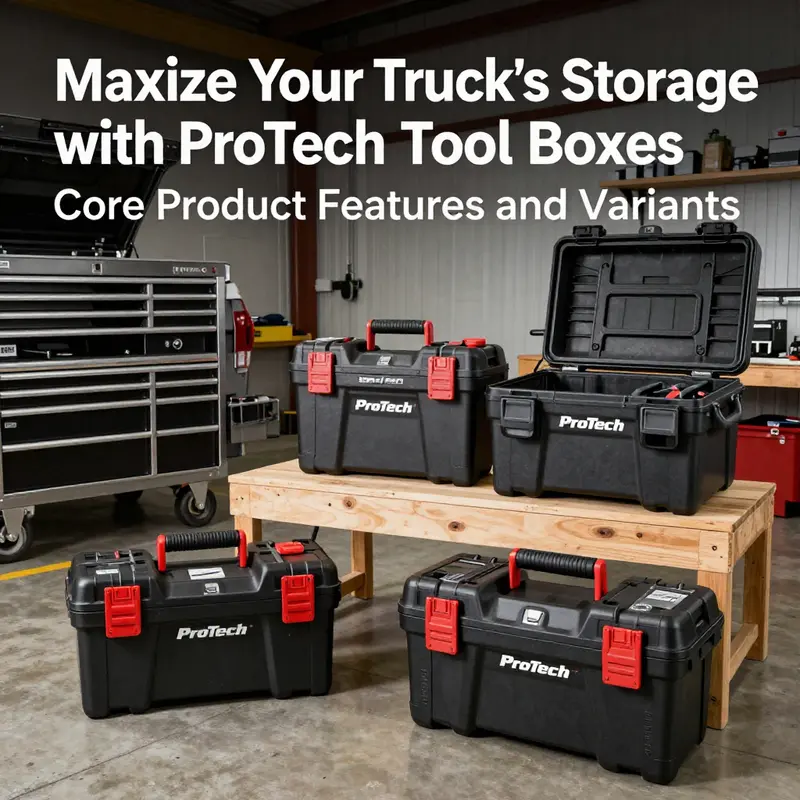
A toolbox on the back of a pickup is more than a container. It is a compact workshop that travels, a safeguard against rust and rain, and a meticulous organizer that keeps a craftsman’s day efficient rather than cluttered. In the realm of professional trucking and field service, the right toolbox does more than store tools; it preserves the reliability of the entire operation. The core philosophy behind a robust toolbox system is simple: prioritize durability, seal against the elements, and offer a secure yet adaptable interface with the vehicle that carries it. When this philosophy is translated into a lineup of products designed for different bed lengths, mounting options, and work rhythms, the result is a family of solutions that can be fine-tuned to fit almost any truck, any trade, and any weather window. The emphasis is not merely on capacity but on how a well-chosen system integrates with the vehicle, the gear, and the daily choreography of a job site. This narrative about core features and variants moves beyond a single model and into the practical language of field performance, where resilience and access determine how quickly a crew can respond to a repair, a delivery, or a service call.
The first pillar of a dependable toolbox system is its construction. A constant in the professional toolbox is a body built to withstand harsh conditions—the kind of environment that includes rain, dust, rough handling, and the occasional bump from heavy equipment. Materials are selected not only for strength but also for longevity. Powder-coated steel and aircraft-grade aluminum are common choices, with coatings designed to resist corrosion and the wear of long-term exposure. This choice matters because a toolbox is not something you replace every season; it is a long-term partner in the fleet. The surface must resist the kind of abrasion that comes from sliding tools in and out, while the interior deserves attention to surface finish to prevent snagging sharp edges or tearing tool wraps. The best designs balance heft with manageability, providing enough mass to feel sturdy yet not so heavy that installation or routine maintenance becomes a separate job. The result is a structure that remains trustworthy after years of rain storms, road grit, and the daily shuffle of metal tools and accessories.
Equally essential is the lid and its seal. A gasketed or gasket-like lid is not a luxury but a necessity when the toolbox sits on an open truck bed or under a canopy that must withstand driving rain and blowing dust. A watertight seal is a shield against moisture that can corrode tools or ruin sensitive components. It also serves as a line of defense against dust that can infiltrate compartments and complicate organization. In practical terms, a good seal translates into fewer rust spots on wrenches and fewer instances of moisture collecting in the box after a downpour. A well-executed seal is designed to accommodate repeated opening and closing throughout a busy day while maintaining its barrier properties across seasons. The design philosophy here is understated elegance: keep the tools dry with minimal effort, so the workday can begin with confidence rather than a ritual of drying out gear.
Security is another non-negotiable pillar. A durable lock mechanism—often a streamlined T-lock or a similarly reliable system—serves as a deterrent to theft and provides peace of mind when a crew needs to leave the vehicle unattended in varied environments. The essence of a secure locking system lies not only in a strong latch but in predictable operation. Keys are pre-cut for quick, reliable use, and the lock interface is designed to resist corrosion and grime that can degrade performance over time. Security in this context is both practical and strategic: it protects the investment in tools and, by extension, the weathered reliability of the service that depends on those tools. A thoughtful locking design reduces the friction of daily work, allowing a technician to lock up quickly and recover a sense of control after a long shift.
The third cornerstone is the toolbox’s integration with the vehicle. A seamless, flush-mount appearance helps preserve the vehicle’s intended geometry while minimizing protrusions that could snag on loading ramps, overhanging limbs, or nearby equipment. The flush profile is not merely an aesthetic preference; it is a functional choice that reduces wind resistance slightly, minimizes exposure to the elements, and promotes safer handling during bed operations. In-bed configurations, side-mounted options, and even wheel-well variants offer adaptable mounting paths that align with a user’s workflow. Each option is designed to preserve cargo space when needed, while still providing rapid side access or top-load access for tools and small parts. The integration philosophy emphasizes a low profile that maintains the truck’s utility for its primary haul, alongside a secure, weather-tough workspace for the daily needs of a tradesperson.
Beyond these core attributes, the toolbox system offers a suite of variants that speak to different work patterns and vehicle realities. For some crews, a single-box configuration suffices for standard tool inventories and a limited set of accessories. For others, the job requires more extensive storage, multiple compartments, and a more elaborate organizational scheme. In practice, manufacturers design variants to accommodate bed-length differences and mounting styles, ensuring that a given truck makes the most of its available space without forcing a compromise on accessibility. A single-box setup can be highly efficient when the operator prioritizes access to the most frequently used tools and keeps a lean kit for simple jobs. When the workload expands, a dual-box arrangement brings increased storage capacity and enables more nuanced organization, with separate sections for wrenches, sockets, fasteners, and specialized fittings. The dual-box design often includes integrated drawers or modular compartments that can be reconfigured to match the day’s tasks, enabling fast retrieval without sacrificing space elsewhere in the bed.
The spectrum of variants extends further with options tailored to bed length and specific mounting contexts. Some designs are crafted to work with in-bed spaces that must not encroach on cargo height, preserving a flat bottom that can accommodate tarps, pallets, or bulky loads without sacrificing tool access. Others emphasize side-mounted installations that exploit the outer edges of the truck’s bed for spacious, easy reach from the curb or the path of an open tailgate. Wheel-well configurations present another practical solution, enabling the user to take advantage of the often underutilized curvature of the fender area. Each variant is engineered to deliver a predictable user experience: consistent lid closure, reliable weather protection, and straightforward tool retrieval, all while maintaining the vehicle’s exterior lines and overall balance.
Within these variants, additional upgrades can further tailor the toolbox to the job. Integrated drawer systems can compartmentalize small items and fasteners, turning the toolbox into a compact workshop on wheels. Optional upgrades may include built-in LED lighting to illuminate the contents in low-light conditions, adjustable mounting brackets to adapt to different bed configurations, and compatibility with bed liners that protect both the truck and the toolbox from damage. The modular approach matters because it acknowledges that the workday is rarely static. A foreman may require an adaptable system that scales from a lean crew performing quick service calls to a larger team tackling complex installations. The toolbox lineup thus embodies a philosophy of modularity, where the same foundational system can morph into a tailored solution for various trades and vehicles without sacrificing the integrity of the core design.
In practice, choosing the right variant becomes a matter of aligning workload, vehicle footprint, and logistics. A company that runs a fleet of service vans may prefer a compact, in-bed design that preserves cargo space while still allowing rapid access to essential tools. A contractor who travels between multiple sites with heavier equipment might opt for a side-mounted or wheel-well configuration that maximizes capacity and reduces the chance of tool loss during rough road conditions. Internal organization, such as drawers and dividers, supports efficient workflow by letting workers categorize tools by project or task. When combined with a secure locking system, the result is a streamlined routine: tools are protected, organized, and accessible when the job demands immediate attention.
In the broader picture, the toolbox family is designed to be a reliable partner in the day-to-day life of professionals who depend on their tools to deliver results. The emphasis on durability, weather sealing, security, and seamless vehicle integration translates into tangible benefits on the ground. Tools stay cleaner and more organized, which reduces search time and minimizes the risk of damage during transport. The seal keeps moisture out, so rust and corrosion are less likely to destroy important components. The lock protects valuable inventories while enabling quick lockup at the end of a shift. And the wide array of mounting options ensures that the toolbox can fit a wide array of truck beds and cargo configurations without forcing tradeoffs that would slow operations or compromise safety.
For readers who want to explore variants and configurations more deeply, a careful reading of product guides and case studies can illuminate how different setups perform under real-world conditions. When looking for guidance, it is helpful to consider not only the total tool count but how the layout affects daily tasks. An organized drawer system can save minutes every day, and those minutes add up across weeks and months. The right combination of material choice, sealing, locking, and mounting can reduce maintenance time and extend the life of both tools and the vehicle itself. The narrative is not merely about having a box; it is about selecting a system that becomes an integrated, almost invisible part of a working routine, enabling professionals to focus on the job rather than the storage apparatus.
To gain a broader sense of the toolbox landscape and how these principles translate across different brands and models, readers can consult internal resources that discuss the ProTech toolbox family more directly. For a concise guide to the toolbox family and its practical implications, see the ProTech toolboxes resource page. This material helps connect the principles outlined here to concrete product configurations and user experiences, reinforcing how core design choices shape daily performance. The discussion naturally extends into the topic of how to balance capacity with accessibility and how to negotiate the tradeoffs that come with different bed layouts and work styles. As the chapter moves forward in the broader article, it becomes clear that the core features—durable construction, weather resistance, secure access, and thoughtful vehicle integration—are the heart of any toolbox system that earns the trust of professional crews on the road and at the site.
When planning a toolbox purchase, it is also valuable to consider the ecosystem surrounding the main unit. Accessories and compatible bed protection can amplify the base system, providing additional layers of defense against wear and tear while preserving the ease of access and organization that professionals rely on. LED lighting, for instance, is not simply a luxury; it directly enhances the usability of tool storage in dim conditions, enabling workers to locate necessary items without fumbling in the dark. Adjustable mounting brackets can adapt a toolbox to a range of bed profiles, ensuring a stable installation that resists shifting during transit. The right combination of components can thus transform a simple storage box into a capable, responsive workshop that travels with the crew rather than dragging them down.
For readers seeking practical checkpoints, the internal resources offer guidance on how to assess fit for a given vehicle, measure bed dimensions, and anticipate the day-to-day demands of a specific trade. They also help illuminate the differences between configurations designed for maximum capacity and those optimized for rapid access to the most frequently used tools. In short, the workflow becomes clearer: identify the required volume, evaluate the door and lid geometry for ease of use, verify that the seal and lock meet the security and weather-resistance needs, and then ensure that the mounting approach preserves cargo capacity and vehicle handling. The result is a toolbox system that not only stores tools but also reinforces the reliability of the entire service operation.
For those who want to bridge the gap between theory and practice, an approachable starting point is to explore the toolbox family through the internal resource hub. The hub consolidates practical insights about configurations, use-case demonstrations, and maintenance tips, providing a bridge from design principles to everyday execution. It is worth noting that while the details of each variant can be highly specific, the underlying principles remain consistent: protect, organize, secure, and integrate. The more closely a buyer aligns these principles with the actual workflow—the cadence of tool usage, the pattern of site visits, and the typical cargo load—the more likely they are to secure a solution that feels tailor-made rather than off-the-shelf. The resulting investment pays dividends in uptime, efficiency, and peace of mind for crews that depend on dependable storage every workday.
In sum, a robust toolbox system for a truck is defined by a balance of four pillars: durability in harsh environments, a weather-tight seal, a secure locking mechanism, and a seamless interface with the vehicle. Variants cater to different bed lengths and mounting preferences, while optional upgrades and modular drawers offer granular organization to match diverse workloads. The synergy of these elements yields a storage solution that not only holds tools but also enhances productivity by reducing retrieval time, preserving tool integrity, and simplifying maintenance. As the broader article continues to unfold, this chapter’s core message remains clear: the right toolbox is not a luxury accessory, but an essential infrastructure for modern professionals who must rely on their tools, their vehicle, and their own efficiency to keep the job moving forward.
Internal resources illuminate the practical paths to implementing these principles in real-world fleets and individual trucks. For readers seeking a concise, navigable overview of the toolbox family and its practical implications, an accessible resource is available here: ProTech toolboxes. This internal guide helps connect the design logic described above with concrete configurations and user experiences, providing a useful bridge between concept and application. External references can further enrich understanding of the broader market and technical standards governing toolboxes, including official product catalogs and specifications. For a broader catalog and specification sheet, the official product page provides authoritative detail and context: https://www.protechproducts.com/truck-tool-boxes
Securing the Gear: Installation Styles and Compatibility of ProTech Truck Tool Boxes
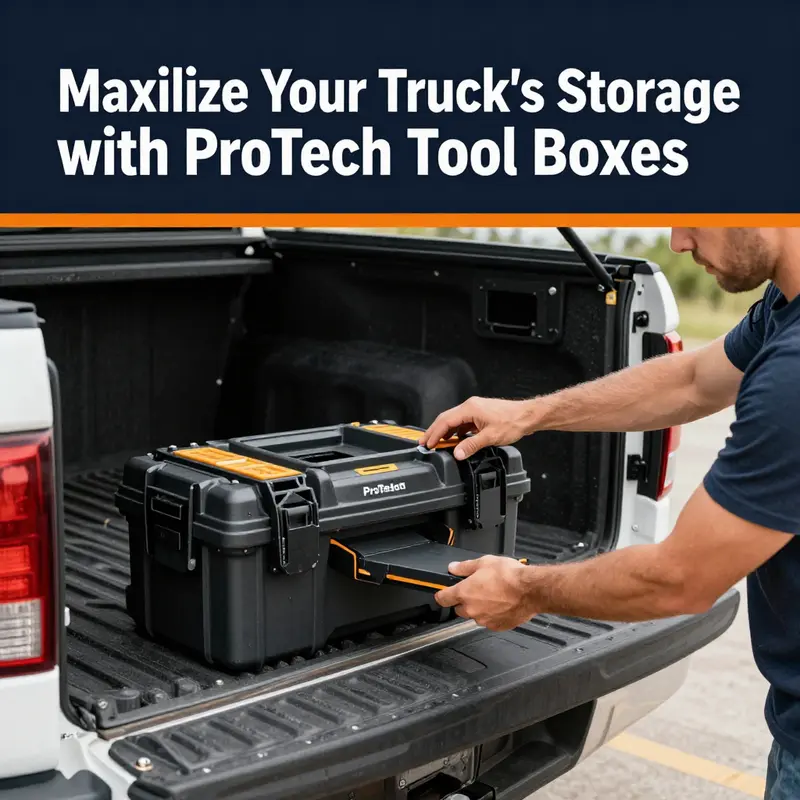
Tools clatter, crews move, and the shape of a fleet’s daily rhythm often hinges on the quiet steel box bolted to the bed. A toolbox is more than storage; it is a staging area for the day’s work, a shield against weather, dust, and theft, and a disciplined organizer that translates chaos into workflow. In the world of professional trucks, the installation type of the toolbox is not cosmetic; it determines accessibility, payload integrity, and even the subtle dynamics of fuel efficiency through weight distribution and balance on rough roads. This chapter explores how a leading toolbox line approaches installation types and compatibility, with a focus on practical realities faced by contractors, fleet operators, and independent tradespeople who rely on reliable gear on every job site. The discussion moves beyond aesthetics toward the way fit, function, and durability converge to shape a toolbox’s real-world value.
From the flush-with-the-bed “in-bed” style to side-mounted units tucked along the truck’s seam, and the wheel-well configurations that nestle into the curved corners, each approach is a design response to a distinct set of priorities. In-bed boxes deliver a seamless, unobstructed cargo floor. They are built to nestle into the bed interior, often with a slim profile and a robust seal that functions as a weather curtain when the lid closes. The seal uses dense foam or neoprene strips that compress to close gaps, resisting rain, wind, and dust that would otherwise migrate into the treasure trove of wrenches, sockets, and fasteners. Their mounting commonly relies on bolts fixed to the bed floor or frame rails, with some premium constructions relying on welds to secure rigidity on highways and job sites where vibration can be brutal. The philosophy behind in-bed designs is to preserve as much bed space as possible for payload while offering quick, lateral access to tools. They also tend to pair well with tonneau covers, because their low profile does not loom above the bed rails and interfere with cover operation when the bed is closed.
Side-mounted tools, by contrast, anchor to the vehicle’s body on one or both sides, frequently behind the cab or along the outer corners of the bed. These units celebrate accessibility; tools can be retrieved from the curb without navigating into the bed. But this convenience requires precise alignment with door seams, hinges, and fender contours to avoid interference during travel or when the tailgate is open. Side-mount configurations demand careful clearance planning for exhaust routing, running boards, or any aftermarket accessories that encroach on the bed’s sides. Their latching mechanisms are typically lockable and designed to seal against the weather, with rugged hinges that resist corrosion and fatigue from daily use. The geometry of side-mounted boxes must account for body lines and bed rail spacing, and many designs offer adjustable mounting points to accommodate different vehicle footprints. In fleets where frequent tool swapping is necessary or where the truck routinely backs into tight spaces, side-mounted boxes can offer a pragmatic balance between quick access and security.
Wheel-well boxes occupy a distinct niche by exploiting space around the wheel well to maximize storage without encroaching on the bed’s core payload area. These configurations are especially advantageous when payload space is critical, or when a driver wants to preserve a clear, flat surface for larger items that might otherwise get blocked by a deeper toolbox. Wheel-well designs demand meticulous measurement; the lid geometry must clear suspension components, brake lines, and the curve of the wheel itself. They often employ contoured lids and spare seals to maintain weather resistance despite the curved geometry. The result can be a generous storage volume that doesn’t compromise ground clearance or the ability to load bulky gear. In practice, wheel-well boxes excel on fleets that require a blend of capacity and maneuverability—where tools are plentiful but the bed must stay adaptable for long-haul cargo or bulky equipment.
Compatibility is the other side of the installation coin. The choice of installation type is meaningful only when it aligns with bed dimensions, tailgate behavior, and the presence of aftermarket accessories. The internal width and height of a pickup bed can vary by model year, trim level, and after-market modifications, so a toolbox advertised as fitting a generic bed must still be verified against the actual vehicle. The ideal toolbox accommodates standard bed structures while offering a mounting scheme that aligns with common hole patterns on the bed floor or sidewalls. This universality is what makes a toolbox attractive to fleet managers who need to swap equipment between different trucks without reconfiguring every mounting point. Yet real-world fleets know that a universal fit is rarely universal in practice; a few inches here or there can determine whether a lid clears a tonneau cover or whether a lid’s edge will strike a tailgate, especially when the box is fully loaded and subjected to dynamic road conditions.
The exact dimensions of the box itself matter as much as its mounting approach. In-bed designs, for example, often balance length and height to preserve bed floor space. A 63-inch-long aluminum in-bed toolbox, commonly cited in the industry, demonstrates how a compact footprint can still deliver substantial tool capacity, while its tight lid seal protects contents from rain and dust during longer trips. The lid’s geometry and its sealing strip are engineered to prevent moisture ingress at the top edge and around the latch, where rain tends to find its way inside. Those sealing details prove their worth when a vehicle transitions from a dry open field to a rainy street, or from a dust-lilled desert road to a shaded, damp loading dock. The materials chosen—often aluminum for durability and corrosion resistance—also shape compatibility. Aluminum boxes tend to be lighter than steel, reducing the impact on payload and fuel economy while still offering robust security. The trade-offs may include differences in dent resistance or color matching with the truck’s finish, but modern aluminum designs are engineered to resist everyday shop wear and to maintain a clean, professional appearance across a long service life.
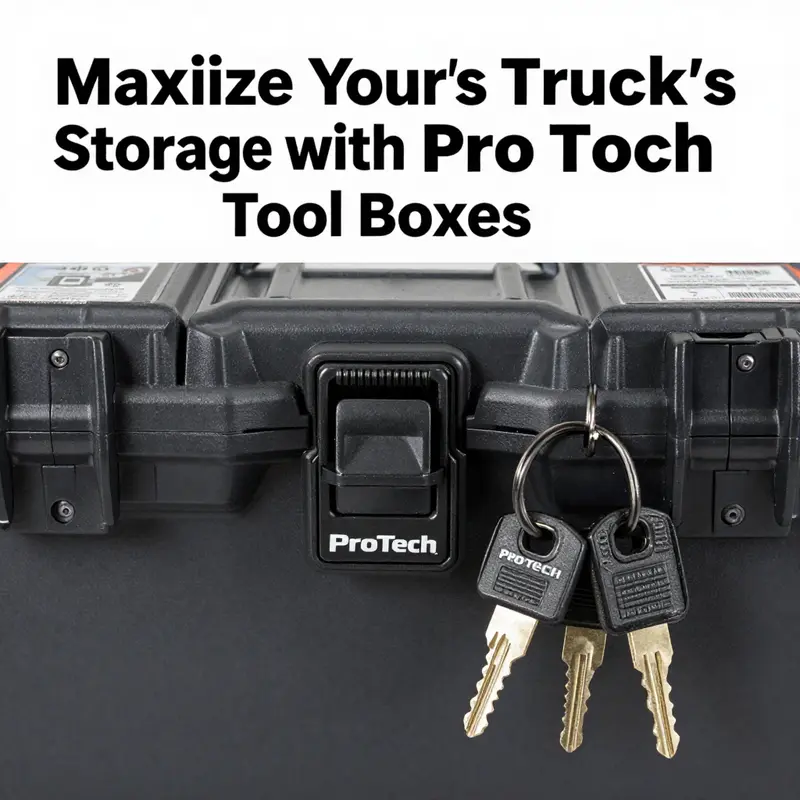
Security is inseparable from compatibility and installation. A toolbox can be engineered with multiple locking options, from keyed cam latches to integrated cylinder locks that resist corrosion and pick attempts. A common accessory kit includes a pair of keyed replacements, such as pre-cut keys that fit particular lock cylinders. The idea is to minimize downtime when keys are misplaced or damaged, ensuring that a crew can secure their gear quickly at the end of a shift or during a mid-day break. The compatibility between the lock system and the box’s geometry matters; a misaligned lock or a stiff latch can become a daily bottleneck. When a lock is well designed to function with the door geometry and with the chosen mounting hardware, maintenance becomes straightforward and predictable. The security conversation is not purely about deterrence; it’s about preserving the integrity of tools and reducing the friction of daily operations.
As a practical matter, installation type and compatibility determine how a toolbox will age with the vehicle. Panels, brackets, and mounting feet must resist road salt, moisture, and the constant vibration of heavy-duty use. Stainless or coated fasteners protect against corrosion, while seals should maintain elasticity after years of temperature cycling. The chassis and bed geometry should be considered in tandem with the toolbox’s weight and center of gravity to avoid any tendency for the box to loosen or rattle during long hauls. These considerations become even more important when a company runs a mixed fleet that includes different makes and models. A well-designed toolbox system anticipates the need to switch between vehicles, reusing mounting patterns where possible and providing a consistent user experience across the fleet. This capacity to adapt preserves both safety and productivity, ensuring that the toolbox remains a trusted ally rather than a recurring source of downtime.
To illustrate how installation type and compatibility translate into everyday performance, imagine a mid-sized service fleet that runs a route through varied terrain and seasons. The drivers rely on a mix of in-bed boxes for the bulk of tools and a compact side-mount unit to handle longer tools—screwdrivers, torque wrenches, and similarly elongated items that can slip into narrow spaces near the cab. The service manager’s objective is to minimize truck downtime while maximizing tool security and bed usability. When a toolbox is misfit or misaligned, vibrations can loosen fasteners, lids can rub against rails, and seals can suffer, letting moisture creep in. In contrast, a well-integrated toolbox with robust locking systems, properly engineered seals, and correct mounting geometry becomes a dependable partner in daily operations. The toolbox reduces rummaging time, keeps tools dry and secure, and leaves more room for payload and equipment that must move with the crew’s day. The efficiency of this arrangement can ripple outward—reducing maintenance calls, simplifying inventory management, and supporting a faster turnover of vehicles at the end of each shift.
For readers who want to explore the broader ecosystem of toolbox design and installation options, a dedicated resource outlines the critical considerations of integrating these systems with truck bodies. This discussion is not merely about choosing a box; it is about choosing a system that interacts with the truck’s chassis, bed structure, and external accessories in a coherent, predictable way. The emphasis is on the operability of the whole vehicle—how a toolbox helps crew members locate the right tool quickly, how the lid seals against weather, and how the mounting hardware withstands the day’s vibrations without loosening. The chapter’s argument remains clear: installation type and compatibility are not boutique concerns; they are central to safety, productivity, and total cost of ownership in real field conditions. For readers seeking a concise point of reference on installation considerations, a concise overview is available on the toolbox provider’s broader resources, which delves into installation philosophy and compatibility with different bed configurations. ProTech Boxes offers a lens into how these constraints shape product design and field performance. https://trucksdiy.com/blog/protech-boxes/.
Beyond the technical specifics, the narrative here underscores a practical truth: a toolbox is most valuable when it behaves as an extension of the vehicle rather than an accessory grafted onto it. The best solutions respect the rhythm of a driver’s day—fast access to the right tool, secure storage during long hauls, and weather protection no matter where a job site takes the crew. When installation is planned with an eye toward the truck’s geometry, the bed’s usage profile, and the fleet’s maintenance routines, the toolbox ceases to be an isolated object and becomes a trusted partner in getting the job done efficiently.
For those who wish to ground their understanding in a concrete example of a replacement-key scenario, one widely referenced product page demonstrates how replacement keys are paired with specific toolbox models. This practical detail matters in fleet management because it reduces downtime when keys are lost or damaged, ensuring that a crew can secure its gear and depart on schedule. The compatibility between key systems and the toolbox model is a small but essential part of the broader system that makes tool organization work on the road. External resource: https://www.amazon.com/ProTech-P220-Truck-Bed-Toolbox-Replacement/dp/B07Z4W6KX3
null
null
ProTech Tool Boxes in Motion: Market Relevance, Real-World Rigor, and the Craft of Organized Tool Storage
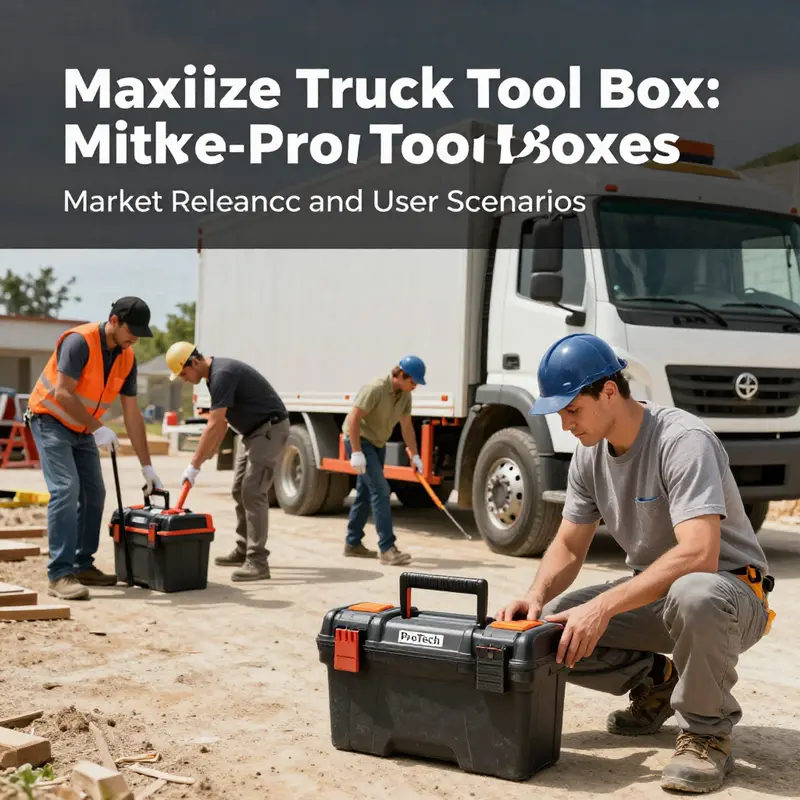
In the world of professional trucking and fleet maintenance, the toolbox is more than a compartment for loose hardware. It is a keystone of reliability, a steadying force for productivity, and a visible mark of a vehicle that is ready for the road and the job site alike. The market for truck tool boxes has evolved beyond basic metal boxes to a sophisticated ecosystem of products engineered to meet the demands of rugged environments, tight schedules, and the expectations of fleet managers who prize consistency across dozens or hundreds of vehicles. Within this landscape, ProTech has established itself as a significant player, building a reputation not only for durable metal and precise sealing but for a design philosophy that anticipates how tools are used, accessed, and protected on a daily basis. The narrative around ProTech is not just about what the boxes hold, but about how the boxes protect those tools, how they fit into the workflow of a truck, and how a brand’s choices ripple through construction sites, landscaping crews, service fleets, and independent tradespeople who rely on reliable storage to keep their businesses moving.
Market dynamics in North America show ProTech competing at the upper tier of the truck tool box segment, sitting among well-known brands that have become shorthand for rugged security and weather resistance. The focus on aluminum and steel tools boxes reflects a broader industry trend toward materials that pair light weight with strength, corrosion resistance with durability, and modularity with fast installation. This blend of properties matters because a toolbox on a truck bed performs three core tasks in parallel: it must secure tools against theft, keep moisture and dust out of working spaces, and remain accessible in ways that do not impede daily workflow. The balance among these factors often defines a toolbox’s practical value on the road and at the job site. In market analyses from 2025, ProTech positions itself as a top-tier brand in the United States, particularly within the segments of side-mount and crossover tool boxes. The brand’s visibility is reinforced by a reputation for robust construction, integrated sealing, and secure locking options that help agencies and contractors protect costly tools in remote or exposed locations. The emphasis on durability is not merely about surviving rain and mud. It is about withstanding the vibrations of daily use, the loading and unloading cycles of tools ranging from compact hand sets to longer power tool kits, and the occasional impact that accompanies a busy workday in rough terrain or on uneven surfaces.
The market environment around tool boxes is continually shifting as fleets grow more standardized and as the demand for lightweight, corrosion-resistant solutions increases. Aluminum tool boxes have grown in popularity as a response to both weight constraints and environmental exposure. The practical upshot is that fleets can carry similar tool loads with less total chassis weight, which translates into better fuel efficiency and lower operating costs. But aluminum must be paired with design features that preserve integrity under weather exposure and daily wear. The most enduring designs couple tight, weather-sealing gaskets with robust latching systems and secure keying options. In this regard, ProTech’s approach—emphasizing weather resistance, secure locking, and compatibility with a range of bed configurations—aligns well with the needs of diverse users in construction, maintenance, and logistics. Their product ecosystem spans in-bed, side-mount, and wheel-well configurations, allowing operators to choose a layout that preserves cargo space while delivering quick, reliable access to tools. When a vehicle is parked with a tonneau cover or other bed-covering equipment, the ability to retrieve essential items without crawling under covers becomes a practical advantage. These installation options—whether a compact bed-mounted unit tucked into the cargo space, a wide side-mount that uses the vehicle’s flank as a secure home base, or a wheel-well solution that negotiates the rigid geometry of the wheel arch—demonstrate an understanding that the truck is a working tool in its own right, not just a means of transport. The market’s mature players compete on a shared vocabulary: rugged construction, weather sealing, theft deterrence, and the ability to install quickly and reliably across a broad range of makes and models.
In exploring market relevance, it is helpful to think about how professional users frame their toolbox choices. A construction foreman evaluating a toolbox on a pickup, for example, weighs not just capacity but ease of access between rounds of site work. A landscape contractor who hauls a long line of cables, solar power equipment, or pruning gear needs a box that remains organized and accessible as the truck roams between job sites. A municipal maintenance technician, who parks in sometimes remote areas, looks for a secure, tamper-resistant enclosure that can guard delicate diagnostic tools while still allowing rapid access when the vehicle becomes a mobile workshop. In each case, the toolbox serves as a portable office—an extension of the technician’s toolbox of tools—so the design must blend three attributes: durability against the elements, security against theft, and ergonomic access that minimizes time spent digging through a crowded truck bed.
To a reader surveying the market, ProTech’s presence is not simply about individual product lines; it is about a system of solutions. The brand’s emphasis on aluminum and steel tool boxes with weather resistance and secure locking aligns with the expectations of fleet operators who demand predictable service life and predictable maintenance costs. It also resonates with independent tradespeople and DIY enthusiasts who seek a professional appearance along with practical performance. The story of ProTech is, in part, a story of standardization. A fleet that standardizes on a common toolbox across all vehicles gains unlocks in operational efficiency: uniform locking mechanisms simplify security protocols, shared spare parts reduce downtime, and a unified aesthetic strengthens brand identity across an entire fleet. Such standardization is a quiet enabler of smoother logistics, better inventory control, and clearer asset management. The practical implications ripple outward: maintenance teams can train less on each model because the basics—how the lid seals, where the latch is, and how to operate the lock—are consistent across the fleet. Dispatch teams can coordinate access and schedule tool checks with fewer surprises. In a sector where downtime is costly and tools are sometimes the difference between a job on time and a job delayed, the value of consistent storage becomes a measurable competitive advantage.
A useful way to understand ProTech’s strategic position is to consider the balance between form and function. The company’s product architecture often places weight where it matters most: in the lid, the latch, and the seal. The lids are designed to close with a reassuring snap that signals a seal has engaged, while the body materials—aluminum for lighter weight and steel for maximum rigidity—offer a trade-off between weight savings and maximum dent and impact resistance. The sealing strategy typically relies on neoprene or similar weather-sealing gaskets that create a barrier against rain, dust, and road spray. These features matter most when a toolbox is left in place for days on end, exposed to sun, heat, cold, and the spray from passing vehicles. The locking mechanism becomes a line of defense against theft and tampering, a critical consideration for work vehicles parked at remote sites or on city streets after hours. The fact that a toolbox can be quickly locked and unlocked with pre-cut keys enhances user convenience, a subtle yet meaningful detail in fast-paced work environments where every minute counts.
From a product-portfolio perspective, the market narrative also rewards adaptability. Builders and fleet operators often need tool boxes that can coexist with other cargo-management systems, whether that means compatibility with tonneau covers, ladder racks, or roof-mounted storage. ProTech’s emphasis on installation versatility—side-mounts that hug the vehicle’s profile, bed-mounted boxes that sit flush with the cargo area, and wheel-well variants that maximize interior space—speaks to a practical design philosophy. The result is a toolbox family that can be mixed and matched with other equipment to suit a given job site or a particular truck model. This interoperability is particularly valuable to businesses that don’t want to be locked into a single configuration or brand ecosystem. It allows for a modular approach to vehicle outfitting, where upgrades or changes in fleet composition can be absorbed without a complete retooling of storage solutions.
The customer landscape that drives this market also includes decision-makers who value durability and predictable performance over flashy features. Construction foremen, utility technicians, landscape managers, and small fleet operators all benefit from a common thread: a toolbox that keeps tools dry, secure, and accessible through the rough and routine of daily work. The reliability of a well-designed toolbox translates into lower risk of tool loss, less time spent searching for missing items, and fewer damaged tools due to moisture or exposure. In the long run, these benefits affect job costs, scheduling, and workforce morale. The confluence of credible performance data, customer testimonials, and industry reports positions ProTech as a credible option for buyers who require a proven, professional-grade storage solution.
For readers who want to connect this narrative with concrete product descriptions while preserving a broader view of the market, there is a concise overview that emphasizes the essential architecture of ProTech’s toolbox line. It provides a grounded snapshot of the installation options, materials, and locking systems that today’s professional buyers expect. If you’re curious about the full breadth of the offering and how a specific model lines up with your truck and workflow, you can consult a dedicated overview page that distills the product lineage into approachable guidance. ProTech toolbox overview. This resource helps bridge the gap between market strategy and practical selection, offering context for how the brand’s design language translates into real-world performance across different job sites and fleet configurations.
Beyond the product sheets and sales narratives, a market-facing perspective reveals another layer: the role of distribution and partnerships in meeting customer needs. A brand’s ability to reach contractors, fleet managers, and individual tradespeople is shaped by a network that can deliver parts, answer questions about fitting and installation, and provide after-sales support. In a market where downtime directly equates to lost revenue, the assurance that a toolbox will be available for purchase, compatible with widely used truck models, and backed by responsive support becomes a practical selling point. This is not only about the box itself but about the ecosystem that surrounds it: the whether, when, and how of getting the right accessories, replacement components, and service when needed. The synergy between product design and the support structure around it forms a feedback loop that strengthens customer loyalty and drives repeat-business for the brand and its partners.
From a forward-looking perspective, the trajectory of the truck tool box market appears to align with broader industry trends toward lighter materials, corrosion resistance, and smarter security features. The growth forecast, with a CAGR in the vicinity of 9 percent across the medium term, points to ongoing demand for high-performance storage that can withstand industrial environments. This expansion is not merely about more boxes being sold; it is about more effective tool storage becoming a standard part of vehicle outfitting for professional crews. The practical implication for users is straightforward: as the market expands, product availability improves, warranty and service networks become more robust, and price competition tends to push both features and value higher. For fleet operators, this translates into the ability to standardize across vehicles, streamline maintenance, and simplify asset management, all of which contribute to a more predictable, efficient operation.
In sum, ProTech’s market relevance rests on a blend of durability, functional versatility, and an understanding of how real users interact with truck storage every day. The brand’s approach to material selection, weather sealing, lock security, and installation compatibility reflects a broader industry shift toward professional-grade, reliable tools-on-the-go. The end-user perspective—construction foreman, landscaper, utility technician, fleet manager, or independent tradesperson—finds value in a toolbox that supports a smooth workflow, protects precious tools, and withstands the rigors of daily service. As the market grows and diversifies, the brand’s capacity to deliver consistent performance across a range of configurations becomes a differentiator. It is not merely about owning a box; it is about owning the confidence that tools stay dry, secure, and ready to perform when the next job site calls.
External reference for further industry context: https://www.marketsandmarkets.com/Market-Reports/truck-tool-boxes-market-37842326.html
Final thoughts
ProTech truck tool boxes stand out in the market for their robust design, diverse range, and security features. They cater to business owners who demand reliable storage solutions. By understanding the various options and functionalities, business owners can make informed choices that enhance their operational efficiency. Secure your tools and streamline your workflow with ProTech.