

The arrival of Tesla’s Cybertruck marks a pivotal moment in the automotive industry, especially for market-savvy business owners. This innovative electric truck is not merely a vehicle but a groundbreaking solution reshaping traditional business practices. Its robust design, advanced technological features, and significant economic implications position it as a vital asset for enterprises aiming to adapt to evolving market demands. Each chapter delves into distinct facets of the Cybertruck, from its technological innovations to its environmental impact, highlighting its relevance in today’s business landscape and the unique opportunities it presents for business owners looking to stay ahead of the curve.
Beyond the Exoskeleton: The Technological Edge of Cybertruck Co and the Rise of Electric Pickup Innovation
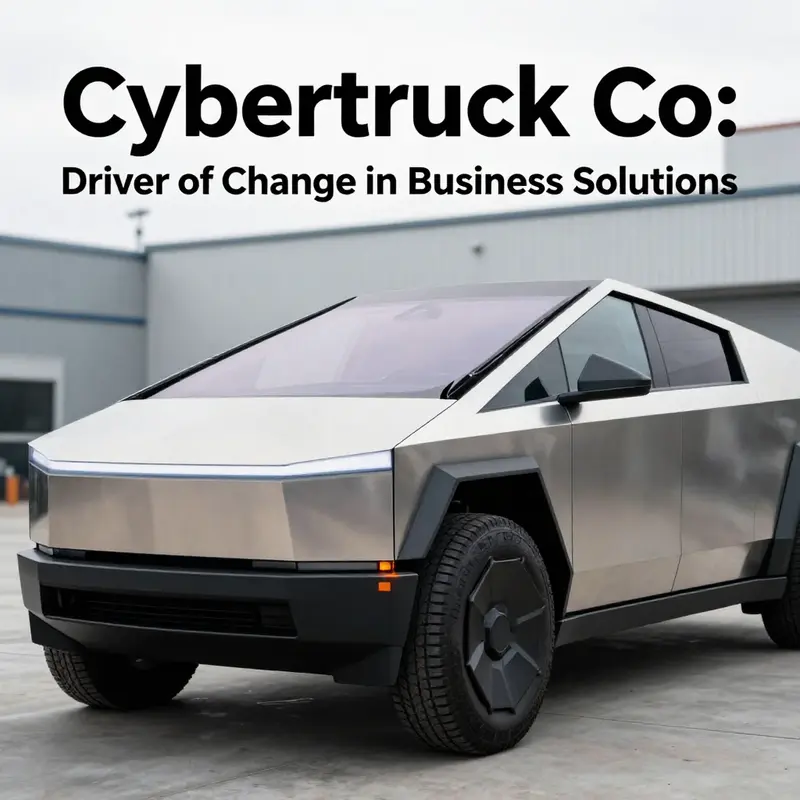
The term Cybertruck Co signals more than a model line; it marks a shift in how a vehicle can fuse raw durability with digital sophistication. As the market for rugged light-duty workhorses evolves, the technologies embedded in this exoskeletal design reveal a new paradigm for what a pickup can be when durability and software-defined capability converge. Central to this evolution is the way the design team treats material, structure, and systems not as separate silos but as an integrated architecture. The official materials and specifications from the Chinese market underscore a philosophy of resilience: a body built from ultra-hard 30X cold-rolled stainless steel and a glass system designed to resist impacts that would normally threaten a truck’s load-bearing confidence. Armor Glass, layered and resilient, is not merely a window but a part of the vehicle’s protective envelope, engineered to withstand impacts at substantial speeds and hail that can eclipse ordinary weather events. This approach signals a broader shift in expectations for pickup reliability, and it invites a new standard for how a vehicle should behave in the rough work environments where these machines often spend their lives.
Beyond the visual impact of its angular silhouette lies a more consequential truth: materials and form are matched to a propulsion and control strategy that seeks to redefine capability for a wide range of users. The exoskeleton is not a stylistic choice alone; it is a deliberate decision to minimize maintenance while maximizing uptime. The protective shell works in concert with a drivetrain designed to deliver swift, sure-footed performance. The Tri-Motor all-wheel-drive variant, for instance, can accelerate from a standstill to legal highway speeds in well under three seconds, a figure that places it among the quickest production trucks ever built. That speed is not just about bragging rights; it translates into practical advantages in job sites where time is money and where getting around construction zones, rough terrain, or crowded staging areas demands nimble control. The associated range, pegged near 523 kilometers on a full charge in favorable conditions, broadens the vehicle’s usability for longer shifts and distant work sites, reducing the frequency of charging stops. And when towing becomes a requirement, the capability to move heavy trailers without sacrificing performance reinforces the line’s versatility in industrial settings.
At the same time, Tesla’s battery and drive-unit reliability become more than marketing assurances; they anchor a warranty profile that emphasizes long-term protection. An eight-year or 150,000-mile coverage on the battery and drive system sends a strong signal about durability and confidence in the powertrain. Such guarantees matter in the calculus of fleet purchases, where total cost of ownership and predictable maintenance dominate procurement decisions. The interplay between protection, propulsion, and software updates is what gives this vehicle a distinctive advantage over traditional pickups that depend more on conservative engineering choices and incremental improvements.
The charging experience, often a critical variable for fleet managers and individual buyers alike, is another area where the technology demonstrates forward-thinking discipline. High-speed charging capabilities enable rapid range recovery, with notable gains in minutes rather than hours. A short stop for a quick top-up can yield tens or hundreds of miles depending on the state of charge, effectively shrinking downtime and keeping work schedules intact. This efficiency matters most in rural or remote deployment scenarios where access to outlets is limited, and downtime translates to idle equipment or delayed job completion. In this sense, the charging network becomes as much a part of the vehicle’s capability as its towing or payload numbers.
Inside the cabin, the experience is shaped by a deliberate blend of minimalism and high-tech utility. The interior layout is described as a modern theater on wheels, a setting that accommodates a large central touchscreen for vehicle controls, information, and entertainment. The acoustic treatment inside, aided by advanced glazing, creates a quiet environment that contrasts with the rough and noisy conditions often encountered on job sites. This quietness is not a luxury but a functional benefit; it helps drivers stay focused, reduces fatigue over long shifts, and makes complex planning and navigation tasks easier to manage while on the move.
The software backbone is another pillar of the vehicle’s capability. Over-the-air updates ensure that the system evolves after purchase, introducing new features, refining existing functions, and improving safety and efficiency without requiring a dealership visit. In a work-leaning context, OTA updates reduce downtime and keep the vehicle aligned with evolving standards for driver-assistance systems and energy management. The inclusion of features designed to protect cargo further enhances operational reliability. The vault-style bed cover adds an extra layer of security and protection against the elements, ensuring that tools and materials stay secure when the truck is parked in a public or less controlled environment.
On the safety front, the vehicle has earned a five-star overall safety rating, a testament to its structural integrity and advanced driver-assistance systems. This is especially meaningful in the context of a vehicle meant to perform in demanding environments, where protective design and automated safety features help reduce risk for drivers and bystanders alike. The combination of a robust chassis, integrated safety systems, and comprehensive warranty coverage speaks to a philosophy that values long-term reliability as much as momentary capability.
The market context in which these innovations unfold adds another layer to the story. While the design language and specifications have global appeal, the attention to a specific market—China—suggests an adaptive strategy that resonates with local regulatory environments and consumer expectations. The official presence on a regional Tesla site signals an earnest attempt to communicate reliability and capability within a market known for its reimagined consumer electronics and a growing appetite for high-end electric trucks. In this context, the vehicle’s capability to operate in diverse weather and terrain conditions, coupled with a sophisticated software stack, positions it as a compelling alternative to conventional pickups that rely primarily on mechanical robustness rather than integrated digital intelligence.
For readers seeking a tangible sense of how these features translate into real-world utility, consider the modular approach to configuration that accompanies the Cybertruck Co. A feature widely discussed in industry circles is the modular roof rack system, designed to extend the vehicle’s functionality beyond its base configuration. The concept embodies a broader design philosophy: the vehicle is not a single-use tool but a platform upon which operators can tailor capabilities to specific tasks. A deeper dive into the modular roof rack frame and its integration with the vehicle’s existing systems reveals how ancillary components can complement core strengths—carrying equipment, expanding cargo versatility, and enabling rapid adaptation to changing job requirements. For a more detailed exploration, see Cybertruck co: Tesla Cybertruck 24 Modular Utility Roof Rack Frame. This kind of modular thinking illustrates how a vehicle can evolve with a user’s needs, rather than requiring a wholesale replacement when requirements shift.
The narrative around these capabilities is not just about raw numbers. It is about how an integrated system approach translates into real-world outcomes: less downtime, more uptime, safer operations, and a vehicle that can adapt as needs change. In markets where the pace of adoption for new energy platforms is accelerating, such a convergence of durability, efficiency, and software-based capability is a meaningful differentiator. The design ethos emphasizes that the vehicle’s body, powertrain, energy system, and intelligent controls are not separate gears but parts of a single orchestra. When that harmony is achieved, the result is a machine that can meet diverse demands—construction sites that demand reliability in the face of dust and vibration, fleet operations that require predictable maintenance costs, and remote deployments where charging opportunities must be maximized and scheduled with precision.
The story of Cybertruck Co, as reflected in its technical core and market approach, is not merely about introducing another pickup. It is about expanding what a pickup can be: a safeguarded cargo platform, a mobile command center, and an extension of a company’s digital ecosystem. It invites operators to rethink workflows, to plan around a vehicle that can endure and evolve. The user experience is designed to be intuitive enough to reduce training time while being rich enough to support advanced driver-assistance features that, over time, may approach a level of autonomy aligned with real-world needs. In other words, the vehicle’s innovations are not isolated novelties; they are stepping stones to a broader transformation in how people think about transportation, work, and efficiency in the modern economy.
As this narrative continues to unfold across global markets, including the Chinese market where the vehicle’s official materials have been highlighted, the underlying message remains clear: durability and intelligence are not competing forces but complementary strengths. The exoskeleton, powertrain, and software stack together create a system that can perform demanding tasks with a degree of reliability and predictability that is increasingly essential in a world where the pace of work never stops. In this light, Cybertruck Co stands not only as a product but as a signal—an indication that the next era of work-ready electric mobility will be defined by modularity, software-driven improvements, and a design philosophy that treats the vehicle as a resilient platform rather than a single-purpose tool. The result is a vehicle that can not only perform today but adapt to tomorrow’s needs with minimal disruption and maximal uptime.
External resources offer a broader lens on how the platform is evolving. For those seeking official specifications and current availability, the primary reference remains the global manufacturer’s page. This external resource provides the most up-to-date details on performance, range, charging, and safety, ensuring readers can track changes as technology and policy continue to shape the landscape of electric pickup utility. https://www.tesla.com/cybertruck
null
null
Geopolitics in the Forge: How Trade, Policy, and Supply Chains Shape the Cybertruck’s Global Path
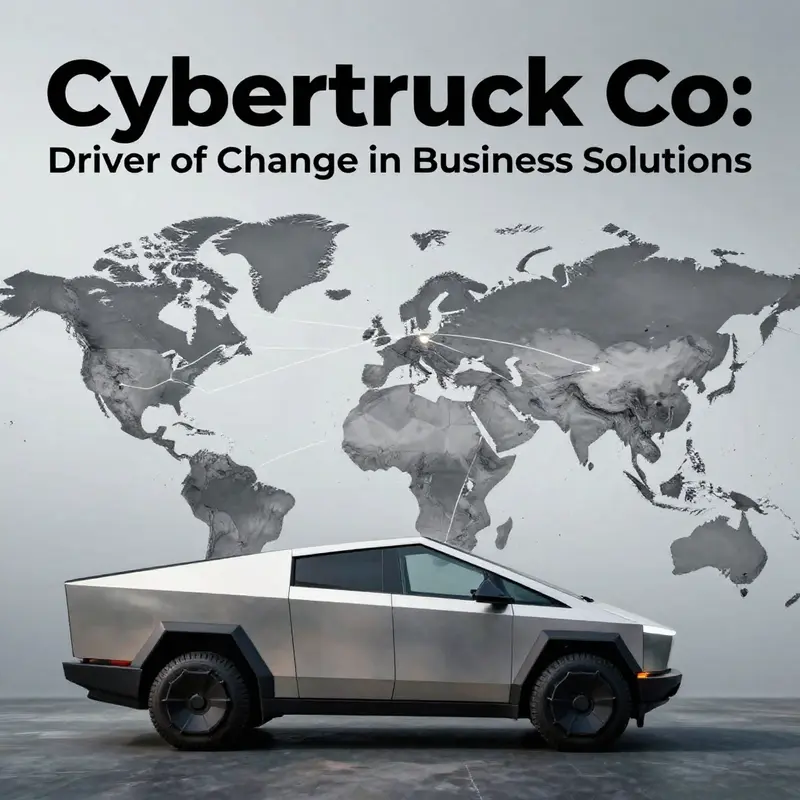
The story of this flagship electric pickup is inseparable from the hedging of power in a world where policy, markets, and technology move in concert and conflict. The Cybertruck, in this framing, is less a single vehicle than a litmus test for how modern manufacturing negotiates a landscape of tariffs, incentives, and rivalries that stretch from the halls of Congress to the factories of Asia. It becomes clear that the vehicle’s trajectory is as much a consequence of geopolitics as it is of engineering. The core dynamics—trade policy, supply chain security, and technological competition—shape not only where the vehicle is produced and how it is priced but also which markets receive it first and with what expectations for long-term reliability. In this light, the vehicle’s surface design and payload figures appear almost incidental beside the broader currents of national strategy that decide who can access critical inputs, who can safeguard their data, and how regionalization pipelines materials and labor back into domestic economies.
A keystone in this geopolitics-centered view is the structural pull of the U.S. Inflation Reduction Act, a policy instrument that reorients incentives toward North American production and recycled or domestically sourced materials. The Act does more than offer a tax credit; it signals a recalibration of the economics of scale for high-end EVs. For a production line anchored in Texas, the implications are concrete: assembly remains anchored in North America, but the supply chain is expected to draw fewer materials from distant producers, and more from nearby mills and recyclers. That shift, in turn, stresses the resilience of the broader network that underpins the vehicle. Critical minerals such as lithium, nickel, and cobalt—inputs that power modern traction systems—are often located in geopolitically sensitive regions. The degree to which those inputs can be reliably secured within a North American framework becomes a question of national security, supplier diversification, and the ability to weather export controls or embargoes that may accompany bigger strategic flashpoints. In this sense, the Cybertruck’s path to a broad market is as much about building redundancy into supply chains as it is about refining the vehicle’s technologies. A careful reading of the official narrative from the manufacturer’s regional pages underscores the emphasis on durability and performance, yet the practical reality remains that policy levers will define which suppliers are permissible, which routes are funded, and how quickly the line can scale without sacrificing quality.
The United States’ ongoing competition with China has reframed the calculus of market entry and expansion. Chinese manufacturers have developed capabilities across the EV stack, from battery cells to software systems, and they have pursued aggressive globalization strategies that place pressure on Western incumbents to innovate not only in products but in governance. This dynamic feeds concerns about data sovereignty and cyber security, especially given the integration of AI-driven software that governs autonomous features. The result is a hybrid competitive environment where a brand with iconic styling and advanced software must demonstrate trust in national security terms to policymakers, while simultaneously leveraging its engineering reputation to win over consumers in jurisdictions wary of dependency on foreign suppliers. The tension is not simply about price; it is about access to markets under rules that increasingly enshrine data governance and critical infrastructure protections. For a product that relies on sophisticated software to deliver features like autonomous driving, the geopolitics of data become a material constraint, shaping not only where the vehicle is sold but how its software is updated, how information is stored, and who can access performance data from road networks and fleet services.
Tariff policy adds another layer of complexity. Even if a given administration negotiates temporary suspensions in the tariff regime, the prospect of renewed barriers on imported components or finished vehicles remains a constant source of risk. Batteries and microchips, often sourced from across Asia, sit at the center of these frictions. A renewed tariff regime could push up a base price and complicate the economics of scaling sales in both domestic and international markets. While analysts have argued that the current price point for this class of vehicle may cushion demand in the short term, the longer horizon presents a different picture. If costs from tariff-induced inputs accumulate, the affordability proposition—already a sensitive variable in the premium segment of the market—could be pressured. Beyond price, tariffs influence supply chain choreography: they alter supplier selection, encourage nearshoring, or spur investments in regionalized processing capabilities. The net effect is to tilt where and how the vehicle is built, which, in turn, shapes labor markets, capital allocation, and regional competitive dynamics.
The financial dimension of geopolitics cannot be separated from operational reality. Market sentiment and policy forecasts interact to shape capital costs and risk premia for automotive tech ventures with global footprints. A 2025 study on rare-earth inputs—highlighted in a broader literature on geopolitical and financial risk—illustrates how political flashpoints translate into price volatility and production delays when suppliers are concentrated in a few strategic regions. The same logic applies to the Cybertruck’s supply chain: any friction in the flow of rare earths, battery materials, or semiconductors reverberates through price, delivery timelines, and ultimately the ability to meet demand. In such a climate, investors demand clarity on how a company will diversify risk, maintain redundancy, and safeguard critical data. The interplay between cyber threats, supply chain disruptions, and regulatory uncertainty adds a premium to the cost of capital, nudging companies toward regional alliances, domestic production expansions, and more robust contingency planning. The result is a market where policy clarity and geopolitical stability are almost as valuable as the product’s performance metrics themselves.
Beyond the IRA and tariff calculus lies a broader shift in global trade patterns. The economic geography of the near future is likely to tilt toward regionalization, with supply chains reconstituted to emphasize proximity and alignment of values among trading partners. The European Central Bank’s observations about the contracting elasticity of distant trade echo in the automotive sector, where regionalized production and supplier clustering can reduce exposure to cross-border disruptions. In practice, this means more emphasis on manufacturing footprints in North America and adjacent markets, including partnerships with suppliers in Canada and Mexico. The practical implications are multifold: closer proximity to end markets shortens lead times, improves quality control, and reduces exposure to currency volatility. It also creates new opportunities for collaboration between automotive engineering ecosystems and regional tech clusters, deepening the integration of manufacturing with software development, sensor technology, and vehicle connectivity. A contemporaneous example from policy circles—though focused on a different sector—illustrates how bilateral trade pacts can ripple through industry-specific supply chains, enabling new pathways for components or finished goods that complement the core production runs of high-end vehicles. These shifts collectively suggest a future where the Cybertruck’s global footprint is guided not only by consumer demand but by the practical realities of regional investment, supplier networks, and policy alignments that incentivize nearshore production in favorable political climates.
All of this points to a vehicle whose market success will hinge as much on the geostrategic environment as on the factory floor. The governance of data, the security of supply chains, and the resilience of regional ecosystems will determine how quickly and how broadly the vehicle can scale. In this sense, the Cybertruck’s story becomes a case study in industrial strategy: a testbed for how a leading-edge product can navigate a web of incentives and constraints, how firms build trust with regulators while maintaining commercial agility, and how national priorities shape the pace and topology of global manufacturing. The dynamic is not static, and no single policy or market will determine the outcome. Instead, a mosaic of incentives, protections, and competitive pressures will gradually sculpt the vehicle’s fate across markets. For readers seeking a concrete example of these ideas in action, one can explore related discussions on how modular, utility-focused components and accessories sit within the broader ecosystem of the Cybertruck and its aligned ecosystem—such as this detailed examination of roof-rack and frame configurations, which reflects the ongoing interplay between engineering design and regional supply considerations. Cybertruck Co Tesla Cybertruck 24 Modular Utility Roof Rack Frame.
In the broader arc of policy and technology, the path of this vehicle is inseparable from the AI, data governance, and cyber strategies that will define the next era of automotive progress. The global market is evolving toward a more regional, rule-bound, and security-conscious configuration. As supply chains reconfigure and new alliance patterns emerge, the vehicle’s appeal will increasingly rest on the speed with which producers can adapt to policy shifts, secure critical inputs, and deliver advanced software capabilities that earn trust across administrations and consumer bases. It is a demanding standard, but it is also a transparent one: the success of this product in a geopolitically charged era will be measured not only by its performance on the road but by the coherence of the network that makes its performance possible. The chapter on this topic would be incomplete without acknowledging the broader scholarship that frames geopolitics as an everyday business factor—an insight reinforced by thoughtful analyses that describe how policy and risk shape corporate decision-making in the contemporary era. The synthesis of policy impetus, market dynamics, and technological ambition remains central to understanding the export trajectory, pricing, and ultimately the social and economic footprint of a vehicle that has already become more than a machine in motion; it is a symbol of how nations attempt to fuse innovation with strategic resilience in a world where power, policy, and profit are in constant negotiation.
External reading to situate these dynamics in a wider context can be found in The Economist, which surveys how geopolitics is distorting corporate decision-making and shaping investment in technology and manufacturing across borders. This perspective helps frame the Cybertruck’s path as part of a larger narrative about industrial strategy, the risks of decoupling, and the race to secure strategic inputs in a turbulent global economy. https://www.economist.com/international/2025/03/12/geopolitics-is-distorting-corporate-decision-making
Environmental Considerations of Cybertruck Co: Sustainability and Eco-friendliness
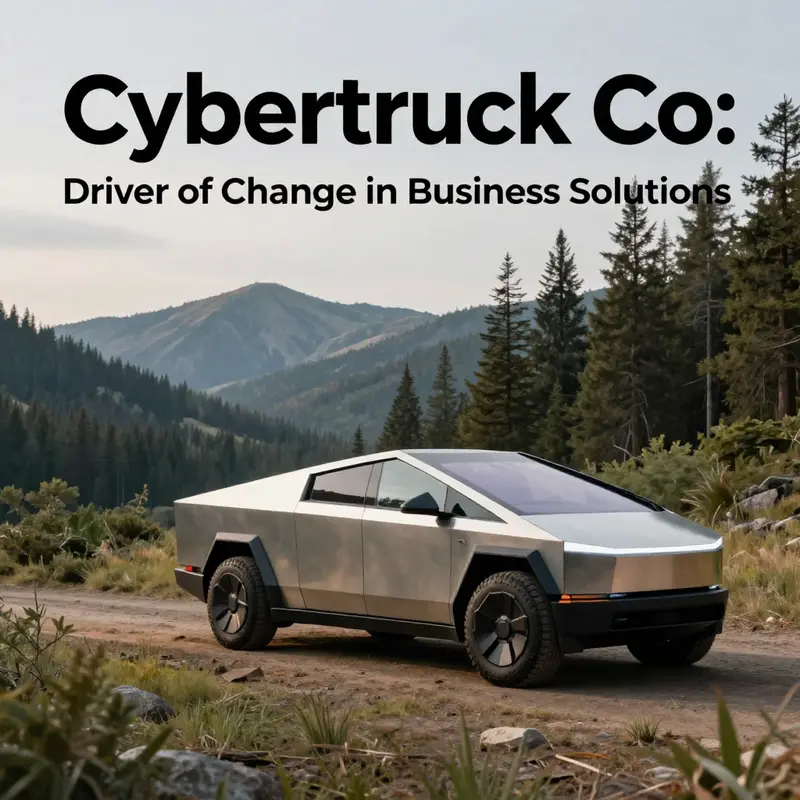
Environmental considerations around a high-tech electric pickup reveal that sustainability is more than a drivetrain specification. It is a lifecycle story that threads through design, manufacturing, operation, and end of life. The concept’s appeal rests on zero tailpipe emissions and the promise of fewer lifecycle emissions than traditional pickups at the point of use, but the full environmental balance must account for the energy that charges it, the materials that enable its performance, and what happens when it reaches retirement. The vehicle’s stainless-steel exoskeleton and armored glass are deliberate choices for durability. But durability raises questions about end-of-life disassembly, material recovery, and the energy required to recycle complex components. Taken together, these factors illuminate a system-wide view of sustainability, where decisions at each stage shape whether electrification delivers a cleaner footprint in practice rather than in theory. This chapter surveys those dimensions with a view toward practical outcomes for both fleets and households.
Zer tailpipe emissions are most valuable where people live and work close together. In urban environments, eliminating exhaust at the source can meaningfully improve air quality and public health. Yet emission accounting must include the electricity used to charge, the copper and minerals mined for batteries, and the energy required to manufacture and assemble the vehicle. Lifecycle analyses generally show lower emissions for electric options than for gasoline-powered alternatives, even when the grid is not fully clean. The magnitude of the advantage depends on how electricity is produced locally. A region powered mainly by fossil fuels will see a smaller margin, while a cleaner grid expands it. This reality ties the question of sustainability to electricity policy, grid decarbonization, and consumer behavior around charging. It also argues for aligning vehicle design with the electricity system it will rely on, both today and in the decades ahead.
Charging patterns matter as much as efficiency. A pickup used for work may spend long hours in service, with charging occurring at sites ranging from home garages to remote job sites. When charging sources include on-site solar or wind, the emissions associated with operation fall further. The broader implication is that a vehicle’s environmental performance is inseparable from energy infrastructure and land-use planning. If a fleet can integrate renewables or participate in supportive programs, the net benefit grows. Conversely, if charging relies heavily on fossil-powered grids, the environmental case weakens, even as the vehicle eliminates tailpipe pollutants. The takeaway is not that electrification is a guaranteed win in every context, but that the balance improves with cleaner energy and smarter charging.
Battery manufacture is the other cornerstone of the lifecycle. Extracting and refining minerals can affect ecosystems, water resources, and local communities. The industry’s direction toward higher energy density with lower material intensity holds promise, but it demands robust ethics and governance across supply chains. Innovations in manufacturing aim to reduce energy use, cut waste, and improve safety. At the same time, closed-loop recycling concepts are expanding, offering pathways to reclaim valuable materials and reinsert them into new cells. The synergy between design for durability and a commitment to recover materials on retirement is essential. While the truck’s body materials contribute to long service life, they also introduce complexity at end-of-life. The challenge is to harmonize toughness with recoverability, so extended use does not translate into a stubborn waste stream.
In practice, battery technology advances bring tangible environmental benefits. Higher energy density can translate into longer range per charge with less material per mile, reducing the environmental cost of production per mile. Safer chemistries and better manufacturing controls also contribute by reducing energy use and waste during assembly. For fleets, reliability matters as much as performance; fewer breakdowns and longer service intervals decrease maintenance-related waste and energy consumption. The systemic effect is a cleaner overall footprint as the technology matures and scaling improves efficiency across suppliers and processes. This is not a claim of perfect green credentials but a trajectory toward steadily lower environmental impact through improved chemistry, smarter logistics, and better end-of-life practices.
Material choices influence repairability and second-life potential as much as weight and strength. The stainless exoskeleton is highly durable and resists corrosion in harsh environments, which lowers the frequency of replacements and reduces waste. Yet metal recovery requires energy and careful separation from other materials. The glass used to protect critical areas brings additional recycling challenges but also motivates innovations in disassembly and material recovery. A durable chassis should be paired with strong disassembly guidelines and modular components so that aging vehicles can be taken apart efficiently and parts can be reused or refurbished. Closed-loop systems that keep components circulating help prevent waste from climbing during the fleet’s lifetime.
Manufacturing itself matters. The environmental footprint of production areas can be reduced with on-site renewables, efficient heat recovery, and water recycling. Clean energy in factories minimizes the embedded emissions carried through the supply chain. The logistics network that moves materials to factories and finished products to customers also plays a role. Optimized routes and consolidated shipments cut energy use and emissions. In a broader sense, sustainability becomes a system issue rather than a single feature. The vehicle’s performance is improved when its supply chain is aligned with environmental goals, and progress in one domain reinforces gains in others.
End-of-life strategies are increasingly central to the sustainability narrative. Second-life applications for large energy storage modules offer a way to extend the value of materials embedded in the battery system. Stationary storage can support microgrids, commercial buildings, and other applications, reducing the need for new resources and spreading the environmental benefits over more uses. At the same time, repairability and modular design allow for the reuse of individual components, which can delay disposal and lower overall environmental costs. The combination of durable materials, efficient disassembly, and circular economy thinking strengthens the case for electrified work vehicles to contribute positively to the broader energy transition rather than becoming stranded assets.
Sustainability in this category hinges on alignment among several forces: design choices that favor longevity, energy systems that decarbonize over time, and end-of-life practices that reclaim rather than discard. Transparent reporting on emissions, resource use, and waste streams builds trust and helps fleets and households compare options. The story improves as grids decarbonize, as mineral supply chains grow more responsible, and as manufacturing becomes more energy-efficient with closed-loop recycling. This is why the environmental case for electrification improves with investment in clean energy, responsible sourcing, and innovative end-of-life workflows. The discussion here ties the vehicle’s present performance to a longer horizon in which sustainable practices are embedded in every stage of the lifecycle, from raw materials to recycling.
External link: https://www.energy.gov/eere/vehicles/electric-vehicle-benefits-and-challenges
A Culture of Disruption: The Societal Pulse of Cybertruck Co and Its Consumer Footprint
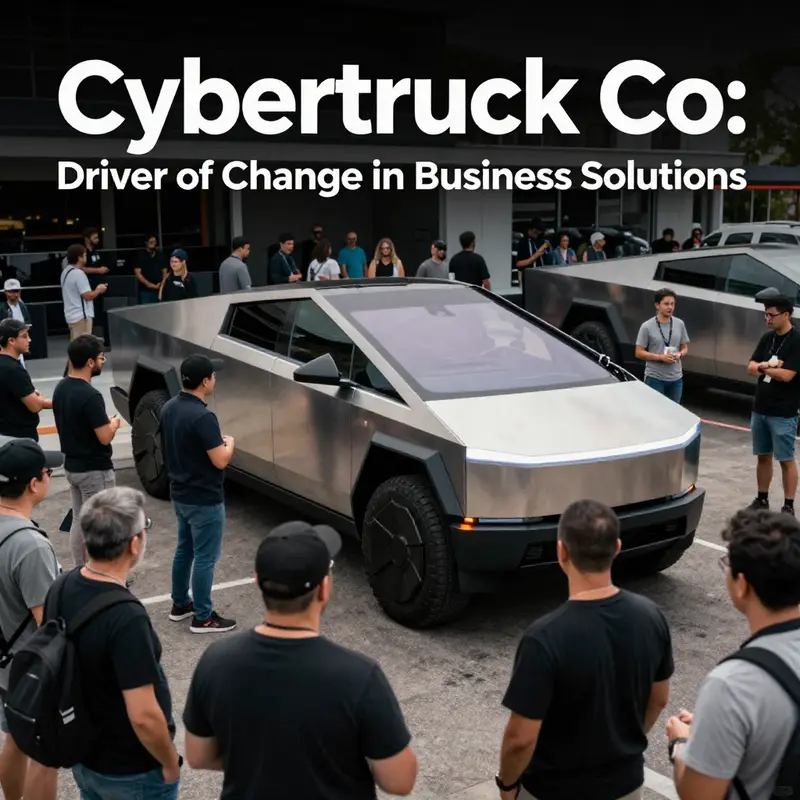
From the moment the vehicle emerged from the design studio, it stood as more than a new way to move goods or people. It announced an attitude. Its stark, stainless exoskeleton and angular silhouette invited not just curiosity about performance but conversation about identity, risk, and the future itself. In this sense, the vehicle became a cultural flashpoint, a mirror held up to broader currents in technology, politics, and everyday life. The term Cybertruck Co signals more than a product line; it implies a movement that weaponizes design as a statement and a test of belief. The public’s response—wholehearted approval, sharp critique, and everything in between—maps a contest over what progress should look like and who gets to decide. The result is a layered narrative about modern consumer culture: one where authenticity, narrative, and technical bravado compete for attention in a crowded marketplace of values, not just features.\n\nThe design language alone explains part of the phenomenon. A stainless steel body with a minimalist, almost weapon-like geometry invites judgments about practicality versus bravado. Some see it as a bold step away from the predictable, a manifesto of durable engineering suited to rough terrain and ambiguous weather, where function is honest and aesthetics are secondary to utility. Others see a misfit in everyday life—too rigid, too stark, too divergent from the soft curves of conventional pickup design that many buyers trust. This dichotomy is not merely about style; it embodies a larger debate about what innovation should look like in a time when consumers increasingly expect products to speak to a set of shared values. The vehicle’s appearance becomes a conversation piece in social spaces, online forums, and showroom floors alike, shaping how people assess risk, aspirational identity, and even political belonging.\n\nThat division grew more pronounced as the public cataloged personal experiences with the vehicle. In July 2024, the backlash around the Cybertruck—ranging from online harassment to social stigma—highlighted a lingering tension: the idea that ownership can act as a brand signal, and signals can invite scrutiny. Some owners reported feeling targeted simply for choosing the disruptive option, a reminder that in a media-saturated era, a machine can become a badge of nonconformity, an emblem of experimental taste rather than mass appeal. The phenomenon speaks to how consumer communities today negotiate belonging. Individuals who adopt such a product often do so not only for the performance numbers or the after-sales plans but for a narrative alignment—one that resonates with values of disruption, resilience, and self-reliance. The purchase becomes a way to declare allegiance to a broader vision of technology as a force for change, even at the cost of social friction. This is a shift from a simple evaluation of features to an embracing of a story that the product represents, the creator embodies, and the future promises.\n\nThe driver’s persona and the public figure at the helm amplify this effect. When a founder’s voice becomes part of the product’s aura, the vehicle moves beyond the showroom into the realm of cultural commentary. The public discourse around the creator—sometimes framed as a visionary, sometimes as a provocateur—inevitably bleeds into how people perceive the vehicle itself. The narrative is not neutral; it is performative. It invites supporters to see technology as a new kind of cultural capital and detractors to see it as a reminder of risk and volatility in policy and market expectations. In a political climate where policy preferences and branding often intertwine, the vehicle’s reception mirrors broader debates about how progress should be regulated, incentivized, and shaped by corporate actors who cast long shadows over the policy landscape. The January 2025 discourse around policy shifts illustrates how a technological artifact can drift into ideological events, becoming less about the machine and more about the ritual of how a society negotiates change, risk, and the distribution of opportunity.\n\nWhat emerges from this is a nuanced picture of consumer behavior in an era when products carry more than tangible utility. The appeal of the vehicle to certain demographics—the early adopters, the anti-establishment-minded, the tech-curious—relies as much on symbolism as on capability. The narrative around a device that champions durability and modularity provides a framework for users to articulate values: resilience in uncertain markets, confidence in unconventional problem-solving, and a belief that technology should push boundaries even if the path is not entirely paved. This is the core of authenticity-driven consumption. Buyers increasingly want a story to accompany the product—one that makes shopping less about adding a gadget and more about joining a movement. In practice, this means that customers weigh the creator’s motives, the product’s long-term adaptability, and the community’s discourse about future potential. When a brand can articulate a future in which technology and identity find a point of convergence, it moves beyond selling a tool and toward enabling a lifestyle. The consumer, in turn, becomes a co-author of that lifestyle, sharing in the narrative, and contributing to the brand’s evolving mythos.\n\nThe cultural reception has also illuminated the power of narrative architecture in branding. It is not enough to promise performance improvements or lower operating costs; the market expects a coherent story that explains why this particular path matters. The vehicle’s public persona—its edgy aesthetics, its reputation as a disruptor, and its association with a public figure who embodies ambitious risk-taking—offers a framework for consumers to interpret value. This is especially salient in a market saturated with options and where many buyers demand a sense of authenticity that extends beyond performance numbers. The vehicle becomes a litmus test for trust: do the design choices, the accompanying rhetoric, and the visible commitment to a long-term roadmap align with a buyer’s own beliefs about technology’s trajectory and the role of private enterprise in shaping the future? When they do align, purchasing becomes a form of signaling that reinforces a broader social identity: a stance that favors bold experimentation and a belief in a tech-forward social order, where disruption is welcomed rather than feared.\n\nIn parallel, the market’s geographic dynamics provide a subtle but telling layer. While the vehicle’s official presence in the Chinese market signals strategic ambition and a willingness to engage with new consumer ecosystems, it also raises questions about how a culturally distinct audience will interpret the symbol of disruption. The cross-cultural reception of a design that challenges conventional norms tests the universality of its appeal. Are the draws of durability and modular utility universal, or do they require local narratives to translate them into everyday relevance? The ongoing dialogue across markets suggests the answer lies less in the product’s raw capabilities and more in how a company crafts local stories that connect with everyday needs, while preserving the overarching message of fearless innovation. In this context, even the seemingly technical choices—hardware robustness, compatibility with modular racks, or the capability to adapt to different climates—become part of a broader cultural fabric that households, communities, and neighborhoods negotiate together.\n\nTo ground the discussion in practical traces of this cultural shift, consider the way communities form around the idea of modification and customization. A vehicle that foregrounds modularity invites owners to become curators of their own capabilities, tuning setups to align with off-road adventures, worksite demands, or personal exploration. The social economy around accessories—roof racks, toolboxes, and specialized lifts—becomes a form of collaborative storytelling, a way for enthusiasts to contribute to a shared narrative about what a modern utility vehicle can be. This dynamic reinforces a broader industry trend: buyers who value customizing their machines to reflect their environment and ambitions are shaping demand beyond baseline specifications. A quick glance at discussion forums and maker communities reveals a thriving ecosystem that treats the vehicle not as a static asset but as a canvas for ongoing innovation and personal expression. A concrete example of this modular ethos—and a gateway for readers to explore practical avenues for adaptation—can be found in accessory-focused conversations and product families that emphasize compatibility with the vehicle’s core concept. For deeper exploration, see Cybertruck co—Tesla Cybertruck 24 Modular Utility Roof Rack Frame.\n\nAs the narrative around this disruptive design continues to unfold, it becomes clear that the social significance of the vehicle rests as much on its capacity to provoke dialogue as on its mechanical performance. It is a device that makes people think about what counts as progress, what signals true innovation, and how communities define trust in an era of rapid technological change. Its influence is felt not only on the showroom floor or in industry conferences but in everyday conversations about what a practical future should look like and who gets to imagine it. Its cultural reception is thus not a footnote to engineering success but a central thread in the tapestry of modern consumer culture. The vehicle’s story—its dissonant allure, its resilience under scrutiny, and its capacity to spark both devotion and critique—continues to illuminate the evolving relationship between people, technology, and design in the early twenty-first century. External context from authoritative coverage helps frame this evolving relationship, reminding us that the conversation around disruption is as important as the disruption itself. For further context, consult the BBC’s analysis of the interplay between technology, branding, and societal values: https://www.bbc.com/news/business-68757347
Final thoughts
In conclusion, Tesla’s Cybertruck is more than just an innovative vehicle; it represents a strategic shift in how businesses can leverage technology for efficiency, sustainability, and market adaptation. Through its advanced features, substantial economic implications, and potential to influence global markets, the Cybertruck stands poised to become a cornerstone for business owners aiming to thrive in the modern economy. Embracing this game-changing vehicle could unlock new opportunities, setting the pace for a more progressive and sustainable business model.