

The Transfer Flow TRAX 3™ Fuel Management System represents a significant advancement in fuel management technology. Designed with business owners in mind, this innovative system streamlines fuel operations, saving time and reducing costs. In this exploration, we will delve into three pivotal features: automated fuel transfer, self-diagnostic capabilities, and fuel monitoring functions. By understanding these aspects, business owners can see how TRAX 3 not only simplifies fuel management but also contributes to overall operational efficiency and safety.
Automated Fuel Transfer: The Silent Guardian of Range and Reliability
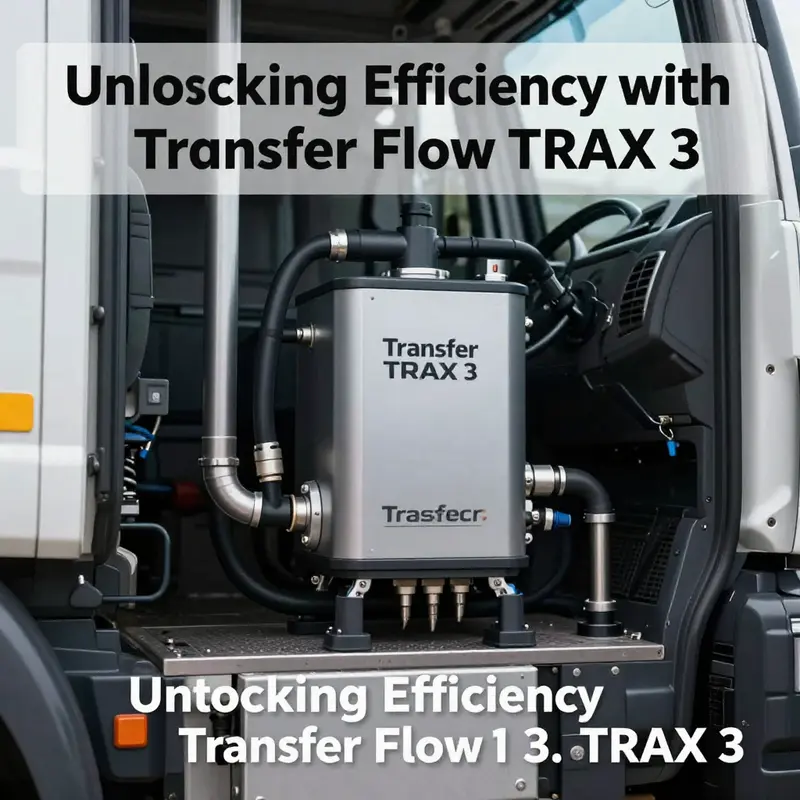
In the landscape of modern propulsion, where vehicles increasingly rely on more than one fuel reservoir, the challenge is not merely to store fuel but to manage it with precision, foresight, and resilience. The automated fuel transfer concept emerges as a quiet, intelligent layer that sits between the driver’s need for certainty and the system’s demand for continuity. Rather than relying on manual checks or ad hoc pumping, an advanced, AutoTrans-enabled approach monitors fuel status in real time and makes decisions that preserve performance, protect the engine, and extend the vehicle’s range across demanding conditions. This is more than a convenience; it represents a shift toward a holistic fuel ecosystem where auxiliary tanks feed the primary supply in a seamless, self-regulating loop. The essence of such a system is its ability to balance two often competing goals: keeping the main tank at a level that preserves consistent fuel pressure and flow, while not exhausting the auxiliary reservoir so early that the reserves are left stranded when miles stretch ahead.
At the heart of this balance is a computer-controlled architecture designed to operate with maturity under varying loads and terrains. Sensors continuously sample fuel levels in each tank, as well as flow and pressure metrics within the transfer conduit. The control software, using an algorithmic logic that could be described as a real-time ballast management routine, determines the optimal moment to initiate transfer. It considers the current demand from the engine, the relative levels of the tanks, the vehicle’s speed and incline, and even the anticipated terrain ahead. In practice, this means that fuel is moved not on a fixed schedule but in response to live conditions. As a result, the driver experiences a more predictable fuel economy profile and a steadier driving experience, especially during long hauls or when venturing into remote areas where refueling opportunities are few and far between.
The only thing more crucial than the transfer itself is the system’s ability to verify that everything is functioning correctly. The self-diagnostic capability acts as a guardian that continuously checks the health of the entire loop—from sensors and valves to the pump and the wiring that powers it. When a fault is detected, the system can either compensate by adjusting its operation or illuminate a fault code that guides maintenance personnel to the exact subsystem that needs attention. This self-awareness is not an added luxury; it is a foundational feature that reduces the risk of unexpected failures at critical moments and provides a clear, auditable trail for troubleshooting. In the end, the combination of automated transfer and self-diagnostic insight translates into a safer, more reliable driving experience where the risk of engine starvation diminishes, especially on long journeys where the vehicle’s energy demands are high and the margin for error is slim.
The logic that governs fuel transfer rests on a few simple truths that finance complexity with elegance. The engine’s fuel demand is dynamic, rising and falling with throttle input, gear selection, and the weight of the cargo carried. The fuel supply, meanwhile, is distributed across multiple tanks that may differ in geometry, outlet position, and vapor management. A well-designed system translates these realities into actionable control signals. It compiles data from the current fuel level in each tank, the known capacity, the remaining distance to the next planned stop, and the anticipated load profile. The goal is to keep the main fuel body within a zone that ensures stable pressure and uninterrupted supply while maintaining the auxiliary tank as a ready reserve for when the drive demands it. In effect, the system operates like a smart manager of resources, preserving the main tank’s ability to sustain engine performance while ensuring the reserve is not neglected. The continuous feedback loop—monitor, decide, act, monitor—embeds a form of operational intelligence that makes the transfer process resilient to sudden changes in driving style or road conditions.
Engine protection emerges as a core rationale for automating transfer. Fuel starvation is more than a momentary inconvenience; it is a loss of power, a stumble in acceleration, and a potential risk on grades or when overtaking. By ensuring that the engine’s fuel feed does not dip below critical thresholds, the system helps maintain consistent combustion, avoids abrupt shutdown risks, and reduces the likelihood of sudden, unexpected power loss. This is particularly relevant when the vehicle is operating in demanding environments—steep grades, dusty backroads, or sprawling desert corridors where refueling opportunities are sparse. The automatic transfer mechanism provides a proactive form of protection: it does not wait for a low-fuel warning to trigger a reaction but anticipates needs based on current trends and expected usage. In practice, drivers experience steadier performance and a smoother throttle response, even as the vehicle navigates challenging terrain or climbs long ascents. The result is not merely a safety feature; it is a performance-enhancing attribute that sustains momentum when it matters most and reduces the cognitive load on the driver who otherwise would have to monitor multiple gauges and plan refueling strategies far in advance.
Beyond the immediate mechanical benefits, the system contributes to a broader philosophy of fuel management that prioritizes visibility, predictability, and proactive maintenance. Real-time monitoring of fuel status across all tanks produces a data tapestry that can be reviewed by technicians during routine service intervals. This data can reveal patterns—such as consistent disparities between tank levels, unusual fluctuations in pump current, or recurring sensor drift—that may indicate wear or contamination issues. In essence, the self-diagnostic capability does double duty: it protects the drive in the moment and creates a historical record that informs longer-term maintenance decisions. A maintenance philosophy built around such data helps fleets and individual owners alike to optimize inventory planning, reduce downtime, and extend the service life of the fuel system as a whole.
Achieving such a sophisticated control loop, however, requires careful integration with the vehicle’s overall architecture. The transfer logic must harmonize with the vehicle’s fuel delivery architecture and with the electrical system that powers the transfer pump and sensors. Electrical reliability becomes a prerequisite for dependable operation, just as sensor fidelity underpins accurate state estimation. The design must account for potential variance in vehicle platforms, ensuring compatibility with different tank geometries, pump configurations, and gauge architectures. In technical terms, this means robust fault tolerance, clean sensor fusion, and a fault-tolerant control strategy that can gracefully degrade rather than fail catastrophically when a component behaves abnormally. The practical effect is a system that breathes in step with the car’s own life cycle—responding to wear, calibration drift, and environmental influences without requiring bespoke reconfiguration for every journey. That kind of resilience is what makes automated fuel transfer not merely a gadget but a reliable element of modern propulsion strategy.
Operationally, users encounter a straightforward interface that translates complex, high-stakes decisions into intuitive feedback. The driver is rarely compelled to micromanage transfers; instead, the system communicates through clear status indicators and fault alerts when attention is needed. In routine operation, the transfer occurs invisibly, preserving fuel balance and enabling a continuous power supply. The beauty of this approach is that it respects the driver’s focus on the road while leveraging the vehicle’s own intelligence to prevent surprises. The end result is a more seamless interaction with the vehicle’s fuel ecosystem, one that reduces anxiety about range and refueling logistics and lets the driver concentrate on the essential tasks of navigation, safety, and efficiency.
From a learning perspective, readers can view this system as part of a broader shift toward integrated, sensor-rich, and software-driven vehicle subsystems. The automation becomes a tangible example of how software and hardware co-design can yield tangible benefits in everyday driving, not merely in laboratory benchmarks. It demonstrates how a well-architected transfer mechanism can become a cornerstone of reliability, especially when the journey demands endurance rather than speed. The story is not about a single gadget; it is about a design philosophy that treats fuel management as an ecosystem problem—one that must be solved through careful balancing of supply, demand, sensor fidelity, and the prudence of automated decision-making. This perspective helps explain why such a system resonates with operators who live with the realities of long-distance travel, off-grid expeditions, and work in remote locations where every gallon matters and downtime is costly.
For readers seeking deeper technical context, the official owner’s manual provides the authoritative reference for installation, operation, and diagnostics. It outlines the precise procedure, specifications, and safety considerations that govern the system’s behavior across different vehicle configurations and usage scenarios. While the narrative here emphasizes the conceptual benefits and the practical value of autonomous transfer, the manual serves as the definitive guide for technicians and experienced users who need to understand the exact thresholds, wiring diagrams, and fault codes that may arise in real-world service. This combination of conceptual clarity and technical detail ensures that the system’s potential is realized both in everyday driving and in more demanding applications where reliability is non-negotiable.
As with any sophisticated subsystem, the human element remains essential. Operators and maintenance personnel who invest time in understanding the logic of automated transfer and the meaning of self-diagnostic signals can leverage the system more effectively. Training materials, service bulletins, and hands-on diagnostic procedures help translate the software’s voice into actionable knowledge. In turn, this informed approach enhances uptime, optimizes fuel usage, and reinforces the sense that modern fuel management is as much about disciplined maintenance as it is about clever automation. The synergy between smart hardware, reliable software, and disciplined human oversight creates a robust framework in which fuel becomes a managed resource rather than a passive commodity. In the end, the journey toward higher reliability is less about a single feature and more about an integrated approach to energy management that respects the constraints of real-world travel while pushing the boundaries of what automated systems can achieve.
For readers who want a concrete entry point into related topics, an exploration of auxiliary fuel storage options and their role in extended-range applications can provide practical context. The following article offers a focused deeper dive into ATI tanks and how such storage solutions interact with intelligent transfer logic. You can read it here: https://trucksdiy.com/blog/ati-tanks/. This linked resource helps bridge the conceptual framework described above with hands-on considerations for setup, compatibility, and maintenance in real-world vehicle configurations.
External Resource: the detailed technical reference and installation guidance for this class of systems can be found in the official owner’s manual, which presents the authoritative procedures, specifications, and safety notes. Access the manual for comprehensive information: https://www.transferflow.com/wp-content/uploads/2024/07/TRAX-3-Owner-Manual.pdf
Listening to the Quiet Brain: Self-Diagnostic Safeguards in Modern Fuel-Transfer Systems
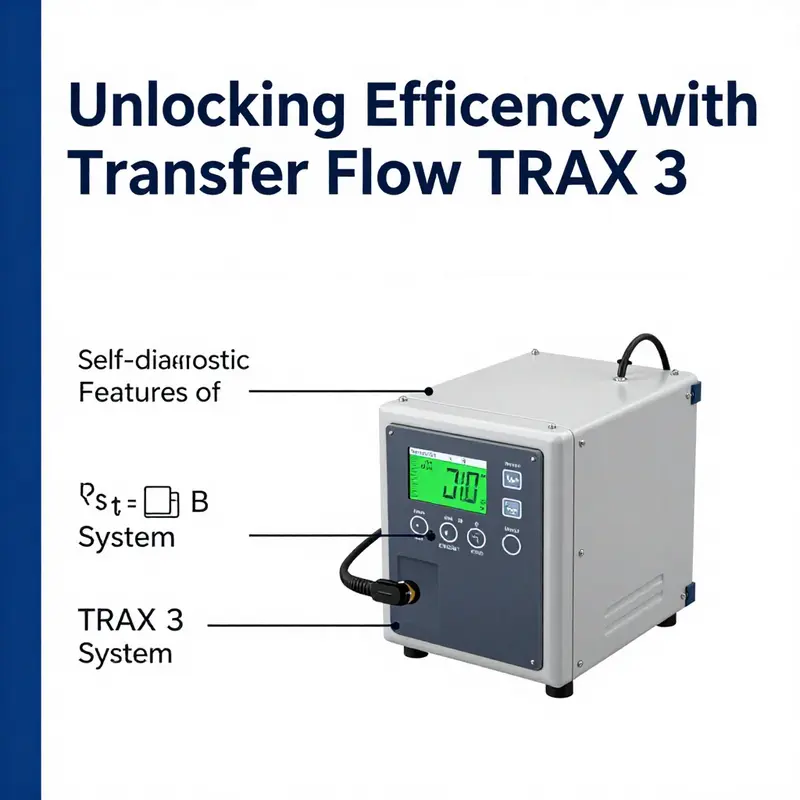
Self-diagnostics in a modern fuel-transfer system operate as a quiet, persistent guardian. A compact, computer-controlled module watches, analyzes, and reports through indicators before a driver ever notices a line issue. This chapter follows the language of self-checks: continuous monitoring, deviation detection, and safe responses that keep fuel moving safely between tanks and toward the engine. It is not flashy; it is steady work in the background, a conversation among sensors, actuators, and the control software that orchestrates the transfer.
At the heart of these safeguards lies the ability to perform continuous internal checks. The control module, small enough to fit in a lunchbox yet powerful enough to process streams of data, observes the critical components of the transfer: tank levels, line pressures, pump currents, valve positions, and electrical health. The checks are ongoing, not a single startup test, and they adapt to changing load, temperature, and vehicle attitude.
Fault detection uses three kinds of normal parameters: physical limits, logical relationships, and electrical characteristics. Physical limits verify that readings stay plausible given geometry and operation. Logical relationships confirm that transfers produce the expected changes in level and current. Electrical characteristics watch for voltage, current, resistance and noise that would signal degraded signals or hardware wear.
When a deviation persists beyond a chosen threshold, a fault is registered. A warning light may flash and a Diagnostic Trouble Code is stored in non-volatile memory. The code survives power cycles and becomes a traceable breadcrumb for technicians, who use the Troubleshooting Table and User Manual to locate a root cause. The system may enter a safe mode to limit transfers or isolate a faulty sensor while maintaining other measurements.
These safeguards also shape maintenance and operation. Persistent DTCs trigger a maintenance workflow, while the diagnostic data provides a structured justification for service decisions. The human operators gain a clearer understanding of system health, and the fleet benefits from reduced downtime and more predictable upkeep.
Finally, the design acknowledges limits. Calibration, periodic reassessment, and alignment between hardware, software, and procedures ensure that automated observation remains robust yet flexible. Self-diagnostics do not replace human judgment; they augment it, offering an auditable history and a quiet, reliable partner in safety-critical fuel transfer.
Fuel in Harmony: The Auto-Transferrable Flow and Tank Intelligence Behind TRAX 3
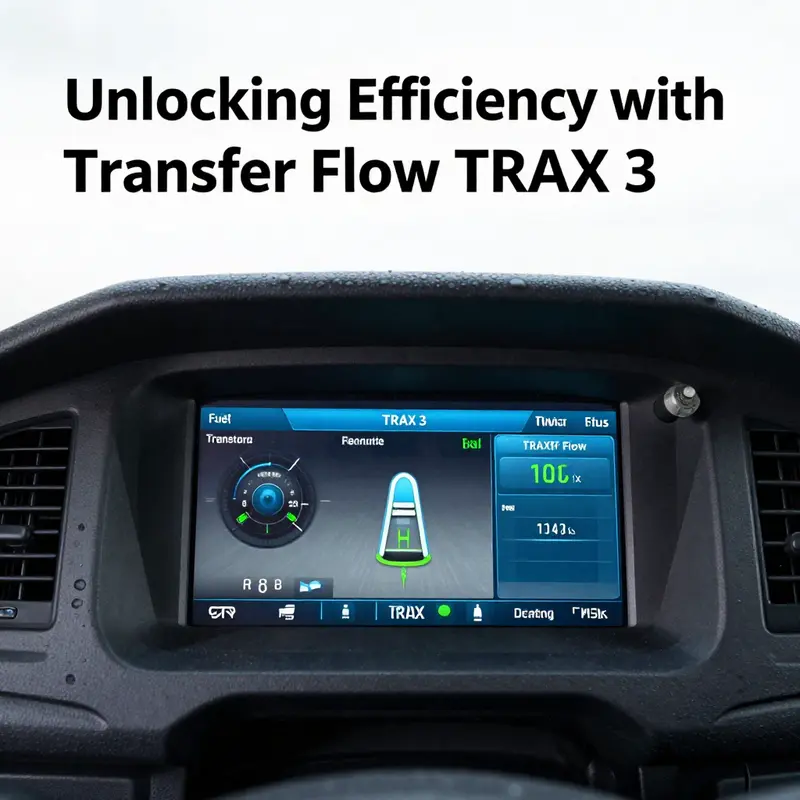
The world of modern fuel management in heavy-duty vehicles demands more than simple capacity and basic level indicators. It requires a coordinated orchestration of sensing, pumping, and decision-making that can respond to the vehicle’s dynamic needs in real time. In this light, a system described as the Transfer Flow TRAX 3 presents itself not merely as a clever add-on to the fuel system but as a distributed, computer-controlled philosophy of how fuel is managed between reservoirs. It embodies a convergence of automated transfer, self-diagnostics, and continuous status monitoring that aims to reduce manual intervention while increasing reliability on the road, at the ramp, or in the desert where every gallon counts and every maintenance stop counts even more. Understanding its potential means looking at the broader implications of automated transfer technology as a design principle: a system that treats fuel not as a single bulk resource but as a set of interdependent quantities whose balance should be maintained with precision under changing conditions.
At the core of this design is AutoTrans technology, a concept that reads almost like a digital conductor guiding the flow of fuel from an auxiliary reservoir into the primary tank. The operational premise is straightforward in description but intricate in implementation: when the engine or the vehicle’s fuel management logic detects a shortfall, a controlled transfer is initiated by an electric fuel pump. The transfer is not a crude overpour but a managed sequence that considers the state of both tanks, the pump’s capabilities, and the system’s overall energy budget. The value of such automation becomes most evident in long-haul operations or missions where access to fuel is irregular. In those circumstances, an automated transfer can prevent the primary tank from reaching critical low levels, mitigate the risk of fuel starvation, and maintain a stable fuel supply to the engine and, if applicable, to any auxiliary systems that depend on fuel pressure or volume.
The self-diagnostic dimension of the TRAX 3 framework adds another layer of resilience. Self-diagnostics in a fuel transfer context function like a medical monitor for a complex machine, scanning for anomalies in pump operation, valve performance, and sensor health. This means the system is constantly checking for sensor drift, pump stall conditions, or miscommunication on the control network that could lead to incorrect fuel accounting. When a fault is detected, the system can alert the operator and, in many cases, switch into a safe mode that protects both the vehicle’s fuel integrity and the reliability of the transfer process. The idea is not only to suspend operations when risk is detected but to provide actionable data—error codes, estimated fault nature, and recommended service steps—to keep downtime low and maintenance efficient. In practice, such capabilities are valuable in fleets that rely on predictable maintenance cycles and have limited downtime windows.
Fuel status monitoring, the third pillar of the TRAX 3 concept, creates a continuous feedback loop that informs decisions about when and how much fuel to move between tanks. Real-time monitoring of fuel levels in both tanks, along with flow and pressure readings, provides a more granular picture than a single-tank gauge could ever deliver. The continuous data stream supports more nuanced inventory management, enabling operators to track consumption patterns, anticipate refill needs, and optimize trips for weight distribution and center-of-gravity considerations. The practical upshot is the potential for smarter routing and scheduling, where fuel logistics align with mission requirements rather than being constrained by a fixed tank paradigm.
As compelling as this picture sounds, it is equally important to acknowledge the gaps in publicly available documentation about the specific monitoring capabilities of a given TRAX 3 configuration. The literature from the manufacturer emphasizes automated transfer, system self-checks, and overall fuel status awareness, but it does not always translate cleanly into a universal tally of sensor types, sampling rates, or threshold logic for every installation. This ambiguity becomes particularly relevant when one considers the broader ecosystem of fuel management technologies that exist in the market. A closely related family of systems, for example, includes dedicated fuel-flow measurement setups with a wide dynamic range and robust statistical evaluation of flow characteristics, designed to deliver precise readings even at low consumption levels, along with ongoing assessments of statistical behavior. While these characteristics are promising, they are not explicitly attributed to the TRAX 3 line in the available official materials. The discrepancy between general capability descriptions and model-specific confirmations is a reminder that engineers must verify capabilities through official specifications, technical support, and, when possible, hands-on testing.
This gap points to a practical approach for stakeholders who want to assess TRAX 3 within their particular vehicle configuration. Rather than assuming a one-size-fits-all set of monitoring capabilities, it is prudent to look at how the system would interface with the vehicle’s existing fuel topology, the types of auxiliary tanks in use, and the control architecture that coordinates the transfer pump with other subsystems such as fuel-level sensors, temperature compensation elements, and even the vehicle’s broader CAN network. In this regard, the role of sensors becomes a focal point. A complete picture would include gauge-level sensors in both the auxiliary and main tanks, possibly magneto-resistive or float-based devices, and a flow sensor or indirect flow estimator that informs the controller about how quickly fuel is moving and through which passage. The quality of those readings, the speed at which the controller responds, and the safeguards against pump stall or over-pressurization all determine how well the automated transfer performs in practice. It is easy to imagine a scenario where accurate, timely data prevents a miscalculation during an aggressive acceleration event or a steep incline where gravity and friction interplay with pump dynamics to shape the transfer profile.
To connect these ideas to tangible outcomes, consider the scenario of a long, remote leg where the vehicle begins with a partially full auxiliary tank and a near-empty main tank. The transfer logic would ideally assess not only the current tank levels but also anticipated consumption tied to the next segments of the journey, ambient temperature effects on fuel viscosity, and the potential for stratification if fuels with different properties are mixed. In such a setting, the automated transfer becomes less about simply topping up and more about maintaining a delicate equilibrium that supports stable engine performance, avoids overfilling, and manages fuel inertia without producing large slugs of fuel that could prompt pump cavitation or slosh-related concerns. This is where the autonomous decision-making aspect of AutoTrans starts to influence reliability, because it reduces the likelihood that a driver must intervene during a critical navigational moment or during a congested refueling process.
An ancillary benefit of a well-implemented automated transfer system is the potential for improved safety and ergonomics. If the system detects a fault or a trend toward sensor drift, it can raise alarms or even throttle back the transfer to a safe level while avoiding abrupt changes that might surprise the operator. The self-diagnostic layer thereby introduces a form of defensive engineering that protects both the vehicle and the operator from cascading failures. In practice, this translates to fewer emergency maintenance events and a reduced probability of fuel mismanagement during high-demand conditions such as towing heavy loads, negotiating rough terrain, or executing precise fuel planning for mission-critical routes. The human-machine interface, though not discussed in exhaustive detail in public sources, is a crucial bridge between the system’s automated capabilities and the operator’s situational awareness. Clear, actionable indicators about which tank holds how much fuel, how much is being transferred, and when the next top-off should occur can transform a normally tedious check into a confident, data-informed decision process.
The question then turns to how TRAX 3 might best be paired with practical hardware like auxiliary fuel tanks. In many fleets, the choice of auxiliary storage is dictated by capacity requirements, mounting constraints, and compatibility with various tank brands and configurations. The availability of a robust auxiliary-tank ecosystem is essential for realizing the benefits of automated transfer because the controller’s logic depends on reliable level readings and consistent transfer performance. A well-documented option in the field involves tanks engineered specifically for compatibility with advanced fuel-management strategies, where the interface between storage and transfer hardware is designed to minimize pressure fluctuations and to support reliable pump operation under a variety of loading conditions. The combination of a trustworthy auxiliary-tank system and a capable transfer controller makes it possible to design a fuel architecture that preserves balance, reduces dynamic stress on the main tank, and enhances resilience in the face of shifting fuel demands.
For readers exploring hands-on implementation, the dialogue between the TRAX 3 system and auxiliary fuel-storage choices becomes essential. A practical path involves consulting manufacturers and distributors who can confirm intercompatibility, electrical load requirements, wiring harness routing, and the environmental tolerances of the assembly. Additionally, it is wise to consider the maintenance implications of automated transfer: how often should the pump filters be inspected, what are the calibration procedures for level sensors, and how should the system be tested after installation to confirm that the AutoTrans function adheres to the designed transfer profiles? The reality is that the elegance of automation is only as reliable as the clarity of the maintenance plan and the precision of system integration. The more thoroughly a fleet or a vehicle owner maps out the interface between the TRAX 3 controller, the sensor suite, and the auxiliary- tank hardware, the higher the likelihood that the benefits of automation will be realized consistently across multiple trips and across varying environmental conditions.
A useful framework for evaluating the integration is to imagine the fuel system as a living ecosystem within the vehicle. The main tank anchors the core supply, while the auxiliary tank acts as a reservoir that can be brought online or held in reserve as conditions demand. The TRAX 3 controller functions as the coordinator, requesting fuel movement when certain thresholds are met and supervising the order and pace of transfers to minimize mechanical wear and fuel-temperature effects. The sensors feed the controller with a continuous drumbeat of information—level measurements, pump status, flow estimations, and perhaps even ambient factors that could alter fuel properties. This ecosystem thrives when data flows smoothly and decisions are made quickly, while the system remains robust enough to handle sensor variance and occasional communication hiccups without compromising safety or performance. In such a setting, the self-diagnostic capability becomes the check-and-balance mechanism, ensuring the entire loop remains healthy, and the monitoring capability becomes the lens that keeps the operator aware of what is happening at any moment.
All of this points toward a broader observation: the success of a system like TRAX 3 rests not only on the elegance of its automation but on the preciseness of its integration into the vehicle’s telemetry and control architecture. When this integration is executed with care, the operator gains a more predictable fuel profile, reduced risk of unplanned fuel stops, and the chance to optimize fuel logistics with fewer manual interruptions. Yet the path to that success requires careful planning, verification of specifications, and a clear understanding of how the system will behave under a spectrum of operating conditions. It is a journey from high-level capability statements to concrete, model-specific performance targets that govern real-world outcomes, and that journey benefits from a close reading of official documentation, direct inquiries to technical support, and, where possible, empirical verification through controlled testing.
To illustrate potential practicalities, consider a narrative of deployment where a fleet manager seeks to minimize downtime and maximize range for a set of off-road or expedition vehicles. The manager evaluates whether the automated transfer will operate across different terrain profiles, how quickly it responds to shifting fuel levels during long climbs, and whether there is any risk of inadvertently drawing fuel from the main tank when the vehicle is in a high-demand mode. The manager also considers how the system would interact with other accessories and ballast decisions, which might include installing specific auxiliary tanks designed to balance weight distribution. In this context, a reputable option within the auxiliary-tank ecosystem is the ATI Tanks line, a platform known for its compatibility with modern fuel-management strategies. A short discussion with a technician could reveal if the chosen tank configuration provides the ideal balance of capacity, physical fit, and sensor compatibility that the TRAX 3 system expects. For technicians and operators who want to ground their decisions in concrete options, a quick reference to the ATI Tanks discussion page can provide practical insights into how auxiliary storage can be tailored to support automated transfer workflows. ATI Tanks.
From a design perspective, the value proposition of automated transfer is to shift some cognitive load away from the operator and toward a system that can balance fuel between tanks according to defined objectives. Those objectives may include ensuring the main tank never drops below a critical threshold, preventing the auxiliary tank from overfilling during a rapid transfer episode, and preserving fuel quality by avoiding unnecessary mixing or temperature-induced stratification. The efficacy of this approach depends on the quality of the data that informs the decisions and the reliability of the hardware that executes the transfer. The controller must manage the pump’s duty cycle to optimize energy usage while keeping pressure within safe limits for both tanks and all connecting lines. A robust control strategy will also consider the possibility of fuel slosh and the dynamic inertial effects that arise when the vehicle is in motion across uneven surfaces. In short, the fusion of real-time monitoring with intelligent transfer choreography is a practical embodiment of how advanced fuel-management thinking translates into real-world benefits for fleets and individual operators alike.
The question of verification remains central. Because public materials may not disclose every capability, it becomes prudent to pursue a verification process that includes reviewing the system’s alignment with vehicle requirements, sensor coverage, and the expected lifecycle of the transfer components. Engaging with technical support to obtain the official specifications, installation guidelines, and any model-specific caveats is advisable. In addition, operators can benefit from a staged validation approach: confirm that the system reads correct levels in both tanks during steady-state operation, test the auto-transfer under simulated demand, and finally observe the system’s response during a transient demand event such as a fast deceleration followed by sudden acceleration. Each step provides insights into how well the TRAX 3 architecture meets the operator’s reliability and performance targets and helps reveal any calibration steps that may be needed. Only through this disciplined process can the system’s promise of automation and monitoring translate into tangible, repeatable gains in fuel efficiency, range, and uptime.
At the end of the day, the value proposition of the TRAX 3 fusion of AutoTrans, self-diagnostics, and continuous fuel-status monitoring lies in its potential to transform fuel-management from a reactive task into a proactive discipline. When operators have clear visibility into both tanks, when automatic transfers are seamlessly integrated with the vehicle’s energy management, and when healthcare-like diagnostics keep the system honest, the result is a fleet or vehicle that can operate with greater confidence over longer periods. The practical implications include improved planning accuracy for long trips, better utilization of auxiliary storage, reduced maintenance surprises, and a more predictable logistics footprint for teams that rely on consistent fuel availability as a core performance driver. Each of these benefits is anchored in the careful interplay of hardware reliability, sensor fidelity, and intelligent software that can interpret data, make decisions, and act with minimal human intervention while preserving safety and efficiency.
For readers seeking a broader context on fuel-flow measurement capabilities that often accompany sophisticated fuel-management ecosystems, external resources on measurement ranges and precision emphasize how a wide dynamic range and robust statistical assessment of flow can coexist with high-accuracy monitoring, even at low fuel-usage levels. Such sources help frame the environment in which a system like TRAX 3 operates and illuminate why accurate fuel accounting matters so much for long-distance reliability and operational efficiency. External reference: https://www.fq-systems.com
Final thoughts
The Transfer Flow TRAX 3 Fuel Management System stands as a vital tool for business owners looking to enhance efficiency. Its automatic fuel transfer capabilities reduce manual labor, self-diagnostic functions help maintain system integrity, and continuous fuel monitoring ensures that your operations run smoothly. Investing in TRAX 3 helps streamline fuel management, ultimately leading to significant cost savings and increased productivity. Don’t overlook the power of effective fuel management—it’s an essential part of staying competitive in today’s market.