

The Tesla Cybertruck, with its avant-garde design and impressive functionality, offers businesses numerous opportunities for enhanced utility. Among its notable features is the roof rack system, which significantly boosts cargo capacity and expands outdoor utility. For business owners, understanding the different types of roof racks available, their installation processes, weight capacities, compatibility with accessories, and overall impact on vehicle performance is crucial. This article encompasses these key factors, empowering you to make informed decisions and leverage the Cybertruck’s capabilities for your business needs effectively.
Racks on the Edge: Navigating the Cybertruck Roof Rack Landscape
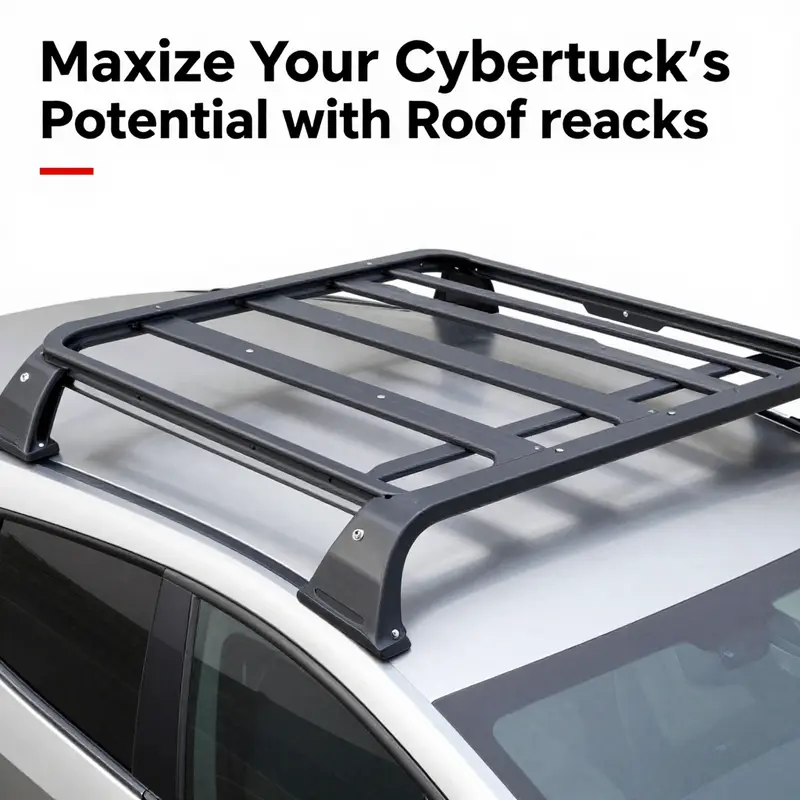
From the moment you look up at the Cybertruck’s flat, angular silhouette, the roof emerges as a purposeful extension of the vehicle’s outdoor mission. The options for turning that surface into practical cargo real estate are surprisingly diverse, yet they share a common goal: to expand capacity without compromising stability, weather sealing, or the distinctive character of the truck. In the 2023–2026 window, enthusiasts encounter a straightforward choice between two broad families—full-frame systems that bracket the entire roof and half-frame configurations that hug the roof’s contour—each with its own set of trade-offs. The decision often hinges on how you intend to use the load, how much weight you’re willing to add, and how much you value the visual integration with the truck’s design. While this chapter surveys the landscape, it is best read as a guide to thinking through function first and style second, with an eye toward long-term reliability and ease of use on the trail and beyond.
The Full-frame roof racks sit at the higher end of load-bearing capability. They create a continuous framework across the roof, with crossbars and side panels forming a rigid platform that can anchor bulky or heavy gear with confidence. In practice, that means rooftop tents, large cargo boxes, and multiple bikes can ride securely without introducing excessive flex. Aluminum alloy is a common material choice for these systems, prized for its durability and resistance to corrosion while keeping weight manageable. The advantage of a full frame is that it distributes stress more evenly across the roof, which is particularly valuable when traversing rough terrain or carrying heavy loads for long distances. Importantly, a number of these racks are designed for installation without drilling, relying on clamping feet or existing mounting points. This reduces the risk of water intrusion and preserves the vehicle’s factory seals, but it does place a premium on precise fitment and torque. Even so, the practical upside is clear: a sturdy, secure base for demanding adventures that looks more like a factory option than a bolt-on accessory.
The Half-frame design trades some absolute capacity for a lighter footprint and a more streamlined appearance. These configurations tend to follow the roof’s unique geometry, offering two or four crossbars that secure cargo without the bulk of a full frame. The lighter build reduces weight on the roof, which can be a meaningful factor for those who want to preserve marginal fuel economy and handling dynamics. Materials in this category often prioritize high-strength aluminum or reinforced polymers, balancing strength with a lighter touch. The configuration flexibility in half-frame systems is notable: two-piece or four-piece arrangements can adapt to different cargo shapes, from a single kayak to a bundle of camping gear. Additional features such as integrated padding and rubber seals help protect the paint and dampen vibration during travel, contributing to quieter highway runs. The result is a look that feels integrated and deliberate, rather than merely installed.
Across both families, universality is a recurring theme. The Cybertruck’s platform has been designed with modularity in mind, so many rack makers emphasize compatibility with factory rails, mounting feet, and a broad spectrum of third-party cargo systems. This helps owners tailor their rigs without sacrificing the clean lines that drew many buyers to the truck in the first place. Yet there is no one-size-fits-all solution. The specific load path—how weight is distributed, where tie-down points are located, and how the rack interfaces with weather seals—shapes how well your particular setup performs under real-world conditions. It also influences how you organize gear for optimal access. A thoughtfully chosen layout can turn loading and unloading into a simple, repeatable routine rather than a chore that tests your memory every time you hit the trailhead.
A further layer of complexity and choice arrives with higher-end variants that introduce sport-oriented or performance-oriented roof structures. A sport roll bar roof, for example, is designed to increase rigidity and reduce flex under the weight of gear and the stress of aggressive driving. The theoretical payoff appears in steadier handling and potentially quieter operation at speed, as a stiffer frame can help mitigate the buffeting that sometimes accompanies roof-mounted cargo. Aerodynamic considerations are never purely cosmetic in this space. Even modest refinements can influence air flow over the cabin, affecting both noise levels and fuel efficiency over long trips. For enthusiasts who push the Cybertruck into demanding environments—rocky outposts, long desert crossings, or rapid transitions from pavement to dirt—the extra rigidity can translate into tangible benefits: steadier loads, more predictable wind behavior, and reduced vibration that might loosen straps over time.
Despite the compelling advantages, roof racks demand thoughtful attention to installation and maintenance. The addition of rack hardware inevitably creates new interfaces with the vehicle’s waterproof seals. Feet, gaskets, and crossbar junctions become potential pathways for moisture or debris if not properly sealed and torqued. This is not a reason to avoid roof racks, but a reminder that the best setups are paired with careful installation by someone who understands how to preserve the integrity of the seal around every point where the rack meets the metal body and glass. Post-install inspections become part of routine maintenance, especially after off-road trips or months of seasonal use. It’s wise to re-check fasteners, inspect rubber seals for wear, and ensure no components have shifted under load or wind exposure. A little proactive care pays off in quiet rides, longer equipment life, and guard against the creeping creep of water intrusion near electronics or interior finishes.
In daily life, the choice between full-frame and half-frame often comes down to the scale of your cargo and the value you place on the truck’s silhouette. If your mission centers on big gear—rooftop tents, multi-bike caravans, or a lineup of expedition boxes—a full-frame configuration provides the most stability and flexibility. If your needs skew toward lighter, more modular setups—kayaks, paddle boards, or portable camping kits—a half-frame solution can deliver excellent capability with a cleaner look and potentially easier handling when loading off and on the vehicle. Both approaches share a commitment to preserving the Cybertruck’s aesthetic integrity while expanding what the vehicle can carry, and both are built to support a wide range of accessories that complement the rack without compromising safety or style. For readers who want a broader sense of how these configurations fit into the overall ecosystem of roof accessories, a general guide to roof racks offers practical context and considerations about compatibility with factory rails and aftermarket feet. roof racks.
Finally, for those who want to see how the premium end of the market approaches the challenge—rigidity, load distribution, and long-haul durability—the external perspective offers deeper technical detail. An external reference provides insight into how sport roll bar designs influence strength and streamlining under various driving conditions. To explore this further, see the external resource here: https://www.terratreck.com/products/tesla-cybertruck-roof-rack
Rugged Roofs, Ready Racks: Installation and Insight for an Angular Electric Pickup

A roof rack system extends the reach of any adventure vehicle, turning a compact shell into a floating storage loft that can carry bikes, kayaks, cargo boxes, and the gear that keeps days off the grid long and efficient. When a profile is as distinctive as the angular roof of a modern electric pickup, the racks must respect aerodynamics as much as utility. The goal is not simply to pile weight on top; it is to balance load distribution, preserve waterproofing, and preserve handling at speed, whether you are cruising through town or charging into a remote trail. A robust two-piece crossbar setup can deliver substantial carrying capacity—up to about 176 pounds when weight is spread evenly and the mounting hardware is torqued to specification. This figure matters not as a target for excess, but as a reminder that every bolt, bracket, and crossbar works within a carefully engineered system. The intent of a properly chosen roof rack is to unlock the vehicle’s outdoor potential without compromising its structure or the seal that keeps the interior dry during wet excursions. The best installations honor the roof’s geometric quirks while providing a universal compatibility canvas that accommodates factory integration or third-party transport modules. A more premium configuration may introduce a sport-style roof structure that reinforces rigidity and nudges aerodynamic efficiency forward. In practice, that blend of strength and efficiency translates into steadier handling on rough roads and more predictable behavior at high speeds on long trips. Yet the builder in this context must acknowledge that any roof-mounted system can affect the original waterproofing. This is not a fatal flaw but a reason to consider professional mounting and periodic inspection of the attachment points to ensure no seam or seal has been compromised by vibration, weather, or routine maintenance.
The installation journey begins with deliberate preparation. The roof surface should be cleaned thoroughly to remove dirt, grease, or corrosion that could undermine bracket adhesion and the stability of the entire rack. It is a small, often overlooked step, but it sets the tone for the entire project. Once the surface is clean, the mounting brackets are positioned with reference to the vehicle’s structural points. On an angular roof, distribution matters; align the brackets so load spreads toward the rear quarter panels enough to minimize flex and to sustain aerodynamic performance. Even a handful of millimeters can influence how the system behaves at highway velocity, where wind force becomes a steady companion rather than a distant concern.
With brackets fixed, the next phase is the careful alignment of connecting components. The goal is to avoid any misalignment that would place undue stress on attachment points or create gaps along the roof line that invite water leaks. The process calls for a patient eye and a precise sequence: secure the brackets first, then connect the spoiler and the primary bracketry in a way that preserves a straight, even plane across the roof. A misstep here can cascade into fit problems, prompting rattles, increased wind noise, or accelerated wear on fasteners. The crossbars then lock into place, forming the backbone of the system and giving the rack its vertical and horizontal stability. Finally, the spoiler support, if included, is installed to complete the assembly and lend a last measure of rigidity to the overall frame. Each of these steps relies on the torque specifications provided by the manufacturer. Over-tightening can mar painted surfaces or distort the roof’s structural integrity, while under-tightening invites movement that undermines security and safety.
A cardinal consideration centers on weight capacity and distribution. When a roof rack is loaded, the combined weight should stay within the vehicle’s rooftop cargo limit and should be spread across multiple contact points to avoid concentrating stress in one zone. For most setups, this translates to staying near the 100-pound mark as a practical ceiling, with attentive distribution across crossbars and interior anchor points. The distribution matters not only for safety but for long-term durability; a weight imbalance can cause fatigue in brackets, unwelcome chatter on road irregularities, and accelerated wear on seals around the roof line. This is especially true on a roof with a sharp, angular geometry where subtle misalignment can magnify stress. In addition to weight concerns, it is essential to secure every item tightly to minimize shifting during transit. The load should be checked after the first few miles of use and again after extended trips, when road conditions, weather, and the rack’s own settling can alter fit and tension.
Beyond the mechanics of fit and torque, the design characteristics of the rack itself deserve careful attention. The angular roof presents specific challenges compared with conventional roof profiles. The rack must be engineered to bridge those gaps without forcing the roof to bend or deform. Universal racks can be tempting for their broad compatibility, but a model tailored to the vehicle’s roof geometry is often the wiser choice. The fit should be seamless, with hollowed or contoured contact points that cradle the roof’s curvature and minimize wind lift. When the system is lightweight enough to preserve efficiency, yet sturdy enough to handle heavy gear, the difference is noticeable in both handling and fuel economy on longer journeys. High-end configurations that emphasize rigid roll-bar structures can offer a notable uptick in overall stiffness, a factor that translates to reduced sway and more confident handling when the road tilts or the trail narrows.
Operationally, the reality of roof-mounted cargo must be acknowledged. Driving with a loaded rack creates additional wind resistance and marginally higher fuel consumption. The prudent driver will plan routes with this in mind and perform regular inspections after extended use. The goal is not to minimize loading but to maximize secure loading. The process demands careful item selection, practical tying methods, and periodic checks of straps, clamps, and anchors to ensure everything remains tight and stable from city streets to gravel tracks. A thoughtful installation recognizes that while the rack adds utility, it also introduces new sensory cues—slightly altered wind hiss at speed, an increased tendency for the vehicle to track wind rather than drift with it, and a need to pause for a quick check during long legs of travel.
From a maintenance standpoint, the emphasis is on regular inspection and a willingness to revisit torque settings after a few thousand miles or following rough conditions. The threads and fasteners may loosen incrementally with vibration, which makes a periodic retightening routine part of responsible ownership. It is also wise to monitor the seals around door and roof interfaces for any signs of seepage after heavy rain or car washes. When in doubt, professionals can verify the integrity of the seal and the adequacy of the mounting hardware, ensuring that the system remains durable across seasons. If a sport-leaning configuration is part of the plan, the added rigidity can be beneficial for high-speed stability and off-road control, though it should not substitute for careful installation and alignment checks.
For readers who want to widen their perspective on rooftop cargo systems, a general guide on roof racks offers a broad overview of layouts, mounting strategies, and compatibility considerations. A concise exploration of roof rack configurations can be found here: roof racks. This resource provides context on how crossbars, brackets, and additional supports interact in a variety of roof shapes, which helps in evaluating whether a given system will fit the angular roof profile of a high-capacity pickup. While this chapter centers on the installation sequence and the core considerations unique to the roof geometry, it also reinforces the common principles that apply across many brands and models: clean surfaces, precise alignment, proper torque, and vigilant maintenance.
As a final note, the installation narrative is not a mere checklist but a pathway to confident, reliable use. The goal is to align form with function so that the rack enhances adventures without compromising the vehicle’s core integrity. The process respects the vehicle’s original design while embracing the practical realities of loading, travel, and weather. With proper preparation, careful assembly, and ongoing attention to torque and seals, the roof rack system becomes a trusted companion for outdoor exploration, one that patiently earns its keep with every mile. External resource: https://www.hasur.com/products/hasur-roof-back-ct-a-installation-manual-for-cybertruck
Weight in Motion: Mastering Load Capacity and Distribution for the Cybertruck Roof Rack

A roof rack is more than an accessory; it is a system that transforms a pickup into a versatile expedition platform. For the Cybertruck, the roof rack becomes a critical interface between cargo needs and the vehicle’s core design—weight, balance, and shape all translating into how the truck behaves on road, trail, and highway. The truth is simple on paper and complex in practice: the value of any roof rack is measured not only by how much it can carry, but by how those pounds move across the roof and how the vehicle responds to that mass when the driver brakes, steers, or encounters a sudden gust of wind. In this chapter, we explore weight capacity and distribution as practical realities, grounding the discussion in the realities of the Cybertruck’s engineering and the demands of real-world use.
The official figure for the roof rack crossbars is a starting point. Tesla documents a maximum static load capacity of 220 pounds (approximately 100 kilograms) when the load is evenly distributed across the crossbars. That number represents the total weight the roof can safely support, but it is not a prescription to pile gear anywhere without regard to position. Even distribution across the length of the roof is essential. Concentrating weight at a single point can create undue stress on the rack framework, the mounting points, and the body itself. Uniform distribution helps preserve the structural integrity of the rack and keeps the vehicle handling more predictable, especially during corners or evasive maneuvers. The math behind this is straightforward: the more evenly the load sits along the crossbars, the less bending force occurs at any single contact, and the less torque the roof structure must absorb over a given drive cycle. This is why many manufacturers emphasize crossbar alignment and even load spread as part of the installation and use routine.
For those seeking higher payloads, aftermarket configurations can offer higher static load capacities. It is important to stress that these gains typically depend on the load remaining evenly distributed. Some aftermarket options claim capacities up to 330 pounds (approximately 150 kilograms), but the practical reality remains the same: the load must be spread across the entire roof surface to avoid overloading a particular crossbar, joint, or leg. The physics of a roof rack under load does not change with the brand of rack; what changes is the tolerance of the mounting interface and how well it transfers the weight to the vehicle’s roof. Off-road and overland setups, which often pair crossbars with additional bracing or integrated support features, can feel more confident under heavier loads, but that confidence should be earned through careful weight planning and periodic inspection. In every case, the goal is to keep the center of gravity as low and as central as possible, minimizing wind-induced sway and the possibility of load shift during dynamic maneuvers.
Beyond single-figure ratings, the Cybertruck’s overall loading limits must always be considered. The Gross Vehicle Weight Rating (GVWR) and Gross Axle Weight Rating (GAWR) are not abstract numbers; they define the total mass the vehicle is built to carry, including passengers, cargo, and any mounted equipment. These ratings are specified on the Tire and Loading Information Label located on the driver’s side door pillar. Exceeding these thresholds—whether through roof load, cabin cargo, or towing—compromises braking effectiveness, alters handling, and increases the risk of mechanical stress or an accident. The lesson is not to chase the highest published figure but to understand how the roof load interacts with all other loads and the momentum of travel. When planning a multi-day trip or a remote expedition, a practical approach is to tally up the expected weight of all gear, riders, and fuel, and then compare that sum to the GVWR. If the sum pushes toward the upper end of the limit, a rethink of packing strategy or route planning becomes prudent.
Real-world loads tell stories that numbers alone cannot. A two-person bicycle setup, a couple of kayaks, or a roof-top tent changes the dialogue from static capacity to dynamic performance. When you carry bulky outdoor gear, you are managing not just weight but also wind resistance, crosswind sensitivity, and the risk of load shift during braking. A well-distributed roof load reduces yaw and roll tendencies. It also minimizes the amount of drag created by the rack and its cargo, which, in turn, can influence fuel efficiency and noise levels. A carefully staged setup might place heavier items closer to the center of the roof, with lighter items toward the ends to help keep the vehicle’s aero profile balanced. The practical approach is layered: verify capacity, plan distribution, secure items with reliable tie-downs, and conduct a pre-drive check that includes re-tightening any fasteners after the rig has settled.
The structural conversation extends into the design features that accompany roof racks. Some higher-end configurations introduce sport-brace elements or reinforced frames to improve rigidity and to optimize airflow. These elements can contribute to a more stable ride at speed and on rough terrain, particularly when the load is substantial. Yet every added feature also adds weight and potential points of stress, so the decision to pursue such configurations should consider the total weight budget and the anticipated route profile. In other words, the best choice marries a robust load strategy with a rack architecture that remains forgiving under a range of operating conditions. The balance is not about chasing maximum pounds but about constructing a safe, reliable system that behaves well under real-world conditions.
Professional installation remains a prudent step. The integration of a roof rack with a unibody frame and panel seams introduces the potential for changes in waterproof sealing around mounting points. While a correctly installed system should maintain sealing integrity, improper torque, misalignment, or incompatible seals can create leaks or corrosion pathways over time. Regular inspections of the mounting points, gasket conditions, and crossbar fasteners are wise, particularly after off-road use or long road trips. This maintenance mindset—checking torque, observing any movement in mounting brackets, and ensuring that all latches and locks engage properly—helps extend the life of the system and preserve the vehicle’s integrity in the long run. It also reduces the risk of unexpected cargo loss on the highway, a scenario no owner wants to face.
The practical guidance for load planning that follows from these principles is simple but powerful. Start with a clear cargo inventory, enumerating weight and dimensions. Map out how each item will be placed across crossbars, prioritizing central, evenly spaced positioning. Use high-quality tie-downs, distribute straps to minimize local stress on any given point, and keep the load within the rated limits. Do not assume that a heavier item can be offset by lighter ones elsewhere; the sum across the entire roof still governs safety. When adjusting the load for a journey, reassess your distribution with every significant change in cargo and again after any dynamic drive events—bumps, swerves, or sudden braking—that could shift weight on the roof. If any doubt exists about a particular configuration, err on the side of a lighter load or consult a professional.
For readers seeking actionable routes to implement these principles, practical guidance on selecting and using a roof rack can be found in the guide to roof racks for trucks. This resource offers context on crossbar dimensions, mounting hardware, and general load planning philosophy in relation to a wide range of vehicles, including the Cybertruck’s unique geometry. roof racks for trucks. The chapter you’re reading now threads these ideas into the specific case of the Cybertruck, highlighting how official metrics translate into road-ready practice and why distribution matters as much as the total pounds you carry.
In sum, weight capacity is a reliable compass, but load distribution is the actual navigation tool. The Cybertruck’s roof rack exists to enable adventure, not to force compromise. By aligning capacity with thoughtful layout, secure fastening, and periodic verification, the rack becomes a dependable partner in exploration rather than a risk factor. The numbers from the owner’s manual provide guardrails; the real-world routine of planning, securing, and checking turns those guardrails into safe, predictable performance. As the drive unfolds, the cargo on the roof should feel like an extension of you and the vehicle—a light, balanced, and stable companion rather than a stubborn payload that demands constant attention. Official guidelines continue to guide these decisions, and they are the bedrock for any planning around roof-mounted cargo. Official guidelines are drawn from the Tesla Cybertruck Owner’s Manual on roof load capacity: https://www.tesla.com/support/vehicle/roof-load-capacity
Crossbars, Compliance, and the Cybertruck Roof Rack Ecosystem
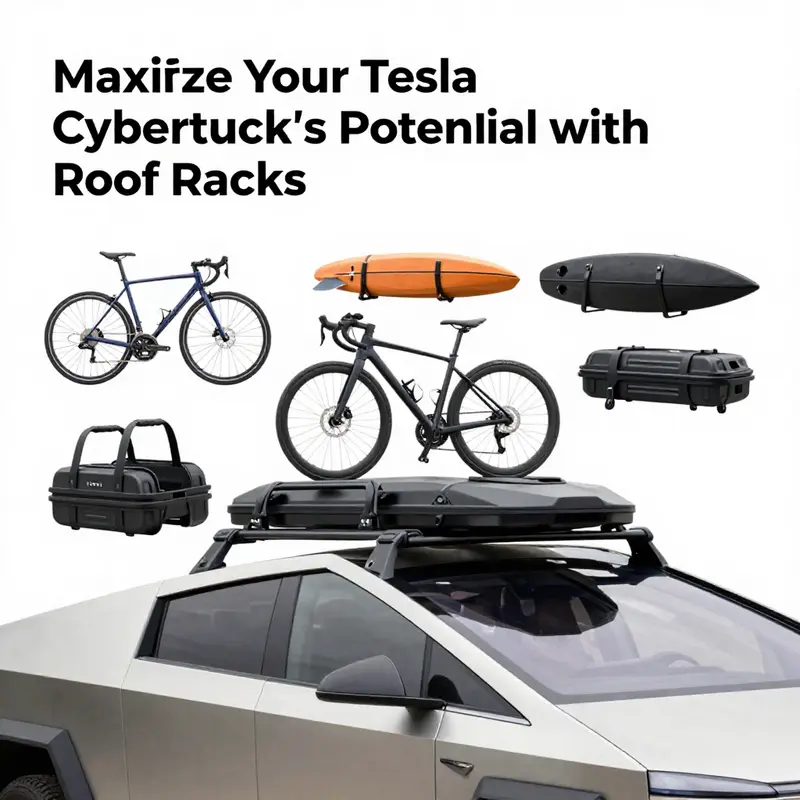
The roof of a Cybertruck is more than a flat platform for cargo; it is the threshold to a broader, modular utility system. When builders and adventurers start imagining what lives atop the cab, they quickly discover that compatibility is as important as capacity. A rack must do more than hold gear; it must work with the vehicle’s electrical architecture, software features, and sealing integrity. The result is a clean, integrated ecosystem where crossbars, mounts, and carriers communicate with the truck’s low‑voltage circuits and Trailer Mode software. In practice, this means choosing a rack that respects the original design language of the vehicle and that adheres to the manufacturer’s guidance on mounting points, power, and waterproofing. The aim is to extend capability without creating new points of failure or unexpected behavior during off‑road stretches, highway miles, or urban commutes.
Built‑in compatibility starts with the vehicle’s own electrical backbone. The Cybertruck design includes two power feeds that access a 48V low‑voltage system, intentionally reserved for accessory use when paired with approved carriers or roof racks. This is not a generic battery port; it is a controlled tap that allows lighting, small electrical devices, and other accessory hardware to draw power while maintaining protection against overload and short circuits. The practical upshot is that you can illuminate a rack, run a small inverter, or power a compact air pump without needing a separate power solution. But the key caveat remains: any consumption must stay within the vehicle’s approved power envelope and be routed through correctly configured, certified paths. This preserves not only performance but safety in motion, braking, and cornering, where even small electrical surges can influence stability management and fuse protection.
A closely related facet of compatibility is software integration. Trailer Mode software provides a structured framework for towing and accessory interaction, coordinating with the roof rack when it’s carrying gear that interacts with the hitch or with the vehicle’s sensors. In effect, the system can monitor load distribution, lighting circuits, and any mounted devices that might influence aerodynamics or weight center. The software layer acts as a guide, ensuring that accessory use does not disrupt the vehicle’s stability controls or charging logic. It also helps prevent misconfiguration, such as powering devices when the vehicle’s electrical system is in a mode that anticipates a different power draw. For enthusiasts, this means that a properly integrated rack is not merely bolted on; it becomes part of a thoughtful, software‑aware setup that respects the vehicle’s guardrails for performance and safety.
When it comes to aftermarket options, a two‑piece crossbar roof rack designed for the Cybertruck site largely emphasizes two core attributes: secure mounting and load distribution. These racks are typically built to a rugged standard—high‑strength steel or similarly robust alloys—and carry a substantial weight capacity, commonly around 176 pounds (about 79.8 kilograms). The design often features a locking mechanism to deter theft and a modular interface that can sit atop factory rails or other cargo transport systems. The universal appeal lies in a system that can be installed with relative ease while preserving the vehicle’s water sealing and structural integrity. A higher tier of options may incorporate a sport roll bar roof structure. Such a feature can improve rigidity and, when well engineered, reduce wind resistance or drag, which translates into steadier handling on long highway treks and improved efficiency off the beaten path. The practical takeaway is that a capable rack must strike a balance: it should be robust enough for heavy equipment such as bicycles or kayaks, yet refined enough to minimize incremental air resistance and noise, especially at speed.
Yet the promise of compatibility comes with essential cautions. The market offers aftermarket racks that are designed for Cybertruck models across several production years, and though many claim universal fit, not all installations are created equal. The most important caution is to use only approved parts and modifications. Installing non‑approved components can alter the vehicle’s performance characteristics, interfere with waterproof seals, or disrupt electronic conditioning. In the worst case, misalignment or improper mounting can create stress concentrations that compromise structural integrity or lead to water ingress around the roof seam. Most manufacturers also reserve warranty coverage for components and damages that arise from approved parts and correctly performed installations. That means hardware choices and installation practices matter as much as the gear you plan to carry. A careful approach—professional mounting, verified fasteners, and periodic inspection of attachment points—helps ensure the system remains reliable across seasons and terrains.
From a practical standpoint, compatibility extends beyond the weight rating and the presence of a power feed. It encompasses how the rack interfaces with other roof attachments, how it interacts with the vehicle’s aerodynamics, and how it preserves access to the roof’s drainage systems and weather seals. A well‑designed system uses mounting points that align with the Cybertruck’s structure and minimizes gaps that could channel water or wind noise into the cabin. In addition, the rack’s form can influence the vehicle’s center of gravity and handling feel, especially when loaded with heavy gear or when traversing rutted trails. The best setups emphasize synergy: gear that sits securely without banging against the glass or interfering with door operation, gear that can be accessed without removing interior headliners, and gear that deploys quickly but remains rock‑solid once parked on a rough trail or a windy bluff. The interplay of mechanical fit, electrical compatibility, and software awareness makes the choice of rack less about a single feature and more about how all the pieces work together under real‑world conditions.
For readers seeking a broader context on how roof racks fit within a truck‑grade cargo ecosystem, there is a helpful overview available that frames how racks integrate with other accessories and accessories’ mounting schemes. See Roof racks for trucks. This resource helps connect the dots between mounting approaches, load distribution, and the power and software considerations that shape a complete, road‑worthy setup. By examining the wider ecosystem, owners can better plan upgrades that complement each other—matching weight distribution to cargo type, aligning power needs with the vehicle’s electrical footprint, and choosing racks that maintain water sealing and structural integrity.
Ultimately, the question of compatibility comes down to planning with purpose. Start by listing the gear you intend to carry and its weight, size, and frequency of use. Then verify the rack’s load rating, mounting interface, and whether it can leverage the vehicle’s 48V feeds without exceeding the safe operating envelope. Consider how Trailer Mode could assist with gear like floodlights or run‑flat pumps, and how software updates might expand or constrain accessory operations over time. Don’t overlook the installation’s professional dimension; a trained technician can verify that seals remain intact, that fasteners are correctly torqued, and that wiring harnesses are properly routed and protected. The goal is a cohesive, dependable roof system that expands the Cybertruck’s outdoor utility while preserving the vehicle’s essential performance, warranty protections, and long‑term reliability. For anyone building toward a more capable, car‑like utility vehicle, compatibility is the anchor that keeps everyone in balance—gear, power, and software moving in harmony.
External resource: https://www.xprite.com/products/xprite-cargo-racks-for-roof-accessories-compatible-with-tesla-cybertruck-2023-2026
null

null
Final thoughts
The Tesla Cybertruck roof rack system is not just an accessory but a vital enhancement for any business looking to optimize its outdoor capabilities. Understanding the varieties of available racks, the proper installation process, and how to maximize load efficiency is crucial. Moreover, knowing accessory compatibility and the potential impact on vehicle performance and safety can significantly influence your operational efficiency and ensure a well-rounded investment. These insights will equip business owners to make sound decisions, leveraging the full potential of their Cybertruck and ensuring it meets the specific requirements of their unique ventures.