
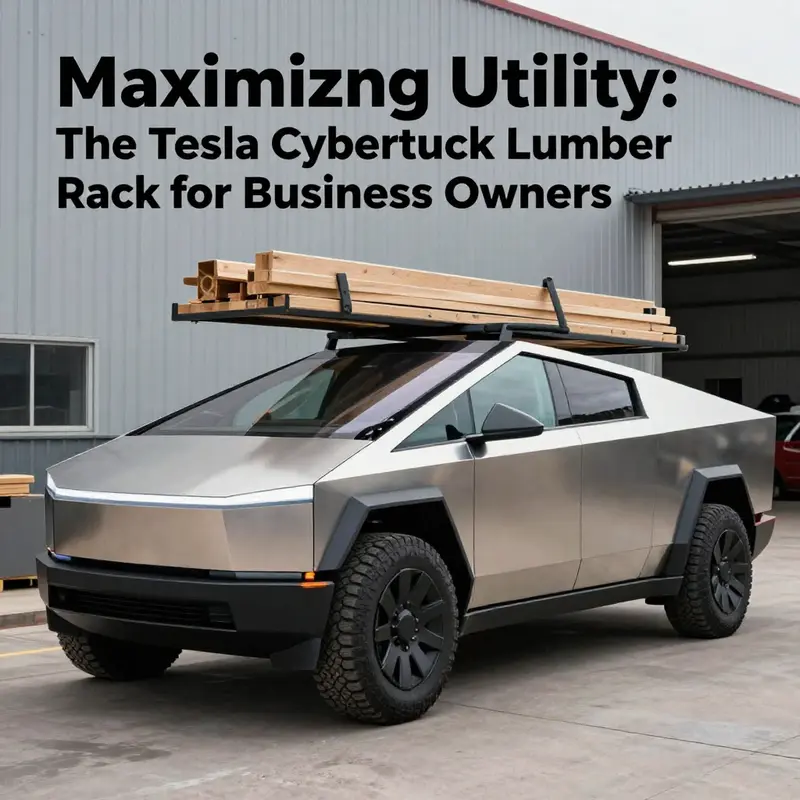
Navigating the complexities of transporting lumber and other bulky items can be a challenge for business owners. The Tesla Cybertruck Lumber Rack is engineered to provide an effective solution, integrating seamlessly into the truck’s design while enhancing cargo management. In this discussion, we’ll explore the design and features of the Cybertruck Lumber Rack, its compatibility with various accessories, the installation process, the numerous benefits it offers for cargo management, and the market availability and pricing of its accessories. Together, these insights will equip you with a comprehensive understanding of how the Cybertruck Lumber Rack can significantly benefit your business.
Lumber, Rails, and Precision: Designing a Modular Lumber Rack for a Modern Pickup Bed
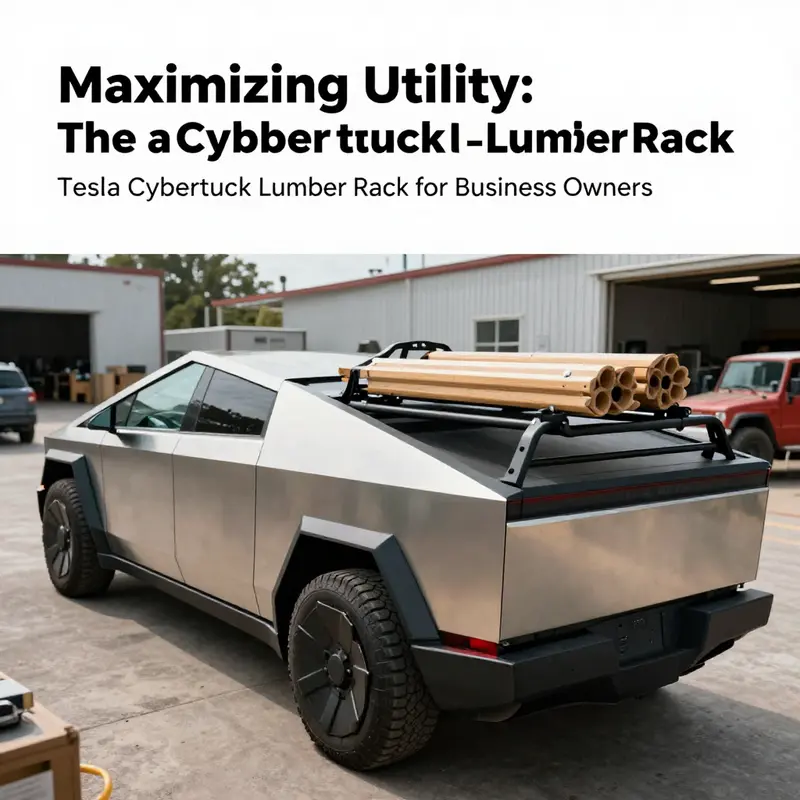
Across workshop ceilings and job sites, the rhythm of hauling long, bulky materials—lurching boards, stubborn pipes, and stubborn ladder sections—demands more than brute force. It demands a system that tames length and weight without turning the bed into a tangle of shifting clutter. A modular lumber rack built to ride over the bed rails does just that. It becomes a dedicated workspace for transportation, a guide for loading, and a pathway to greater efficiency. The goal is not to overwhelm the bed with a cage of metal, but to weave a structured, secure, and easily adjustable platform into the truck’s existing geometry. The rack should cooperate with the cab and tailgate, not fight them. It should offer robust support for long items, allow quick changes to accommodate different cargo, and stay out of the way when the work is done. In practice, this approach invites a workflow where a single trip can move lumber for framing, piping for plumbing runs, and seasonal gear for outdoor projects, all while preserving the bed’s interior for smaller tools and accessories. The result feels like a natural extension of the vehicle’s core purpose: to move people and materials with reliability and precision.
Material choice anchors the rack’s character. The system is sculpted from the same high-strength stainless steel used in the vehicle’s body, a decision that speaks to durability and longevity. Stainless steel resists the wear of wood dust, road spray, and the incidental moisture that follows a day on a muddy job site. The finish remains resilient without demanding excessive maintenance, so cleaning up after a long haul becomes a quick wipe rather than a ritual. The design leans toward a minimalist, industrial aesthetic. Clean lines, sharp angles, and a restrained profile ensure the rack integrates with the truck’s overall silhouette rather than shouting for attention. It’s a subtle form that respects aerodynamics and the eyes of anyone who appreciates a purpose-built tool that looks like it belongs where it works.
Installation and integration anchor the practical story. The rack is engineered to interface with factory bed rails, a decision that preserves the integrity of the truck’s mounting system. No drilling, no permanent modifications, and no specialized hardware beyond what comes in the kit. This means you can install, adjust, remove, and reconfigure without leaving a single toolmark on the bed. The approach is particularly valuable when projects change with the seasons or when the truck is repurposed for different tasks. In a space where every inch counts, the rack adds capability without stealing floor space. The integrated design ensures the load path remains consistent, reducing the risk of shifting when the vehicle is in motion. A compact footprint keeps the center of gravity predictable, which translates into steadier handling when lumber and long items are stacked. The perceived complexity of a modular system dissolves into a straightforward, repeatable process that makes sense whether you’re hauling a single 8-foot board or a collection of shorter pieces.
Modularity is the heart of the system’s philosophy. The rack scales with user needs, rather than forcing a one-size-fits-all solution. The framework supports a variety of configurations by design. The set includes two telescoping crossbars with quick-release towers, eight mounting pads, and the necessary hardware to secure different payloads. The telescoping crossbars are particularly valuable for handling long items that don’t sit evenly on a fixed length. They extend to reach beyond shorter loads, then retract to keep the bed from feeling crowded when the cargo changes. The quick-release towers simplify conversion between configurations, letting a crew switch from hauling a single long piece to multiple shorter items in a matter of minutes. The T-slots along the crossbars invite a range of attachments—accessories for skis, bikes, or cargo boxes—allowing the rack to morph from lumber carrier to multi-tool storage in the middle of a project. This is not a rigid, single-purpose rack but a living platform that adapts to what the day demands.
The feature set reinforces practical, real-world use. Built-in tie-down points align with common load-securing practices, creating a predictable anchor network for straps and ropes. The tie-downs are placed to maximize control over the cargo’s movement, so even when the vehicle travels over uneven ground, the load remains stable. A non-slip surface on the rack top further reduces shifting, especially useful when dealing with wood pieces that may otherwise slide with each stop and go. The non-slip layer protects the cargo and the rack itself, a small but meaningful detail when handling heavy lumber that can gouge or mark if allowed to move unchecked. Aerodynamics matter too. The low-profile structure minimizes wind resistance and reduces noise, preserving some of the efficiency that drew many buyers to modern pickups in the first place. These combined features translate into a simple yet reliable routine: place the long piece on the rack, secure it with the built-in points, and trust that it will stay put through the commute and the rough terrain alike.
The rack’s design also embraces the realities of outdoor work and overland practicality. For users who need to move long elements like pipes or lumber across rough terrain, the system’s modularity becomes a lifeline. It accommodates a variety of loads by shifting from a compact, ready-to-handle setup to a broader, more accommodating stance. The mounting pads provide a flexible foundation for attaching additional accessories or securing specialty racks. At the same time, the surface is forgiving, with enough texture to hold items in place without scarring delicate finishes or splintering materials. The balance between protection and performance is intentional: the rack protects its own finish by offering a stable base, while the cargo enjoys a natural grip that reduces the risk of vibration-induced damage during transit. The overall effect is a tool that feels integrated, not intrusive—a piece of gear that you trust as part of the bed’s natural ecosystem.
A guiding theme across this design is the balance between restraint and readiness. The rack never looks oversized, yet it presents a disciplined structure for transport. It respects the bed’s rails as the main alignment system, keeping the attachment points in a predictable plane. The combination of stainless steel, a low profile, and a modular crossbar system yields a calm, adaptable platform. It invites confidence: you know where everything belongs, you know how to secure it, and you know that, when you arrive at the site, the lumber will be in place and ready for the next step. The approach embodies a broader philosophy of tool design—one that values not only strength and capacity but ease of use, fast reconfiguration, and clean, repeatable workflows that can be picked up by a new crew member without a long training curve.
For readers curious about related rack configurations and how they can blend with the same underlying architecture, a deeper dive into ladder and utility rack solutions can provide insight into the continuum of bed-to-roof gear. See the linked guide on ladder racks for a complementary perspective on how modular systems scale across different needs. cybertruck-with-ladder-rack.
In the end, the lumber rack is more than a carrier; it is a disciplined workflow instrument. It grows with the project, adds structure to the workday, and preserves the bed’s versatility for tools and smaller cargo when the job shifts from framing to finish work or from construction to outdoor adventure. The architecture is mindful of real-world constraints: the need to maximize usable space, to protect both cargo and vehicle finish, and to present a load path that remains predictable through all phases of transit. It is a design that earns its keep by remaining unobtrusive yet indispensably functional. The result is not merely a way to move lumber from point A to point B; it is a deliberate, integrated system that unlocks the full potential of a capable pickup bed, turning it into a modular workshop on wheels.
For those who want to explore official details and real-time product information, the manufacturer’s accessory page offers the most current specifications and compatibility notes. This external reference provides the official context for how such racks are engineered to integrate with the bed’s rails, how the crossbars deploy, and what load ratings and safety features are currently supported. https://www.tesla.com/cybertruck/accessories
Beyond Lumber: Navigating Compatibility for the Cybertruck Lumber Rack Across a Wide Range of Accessories
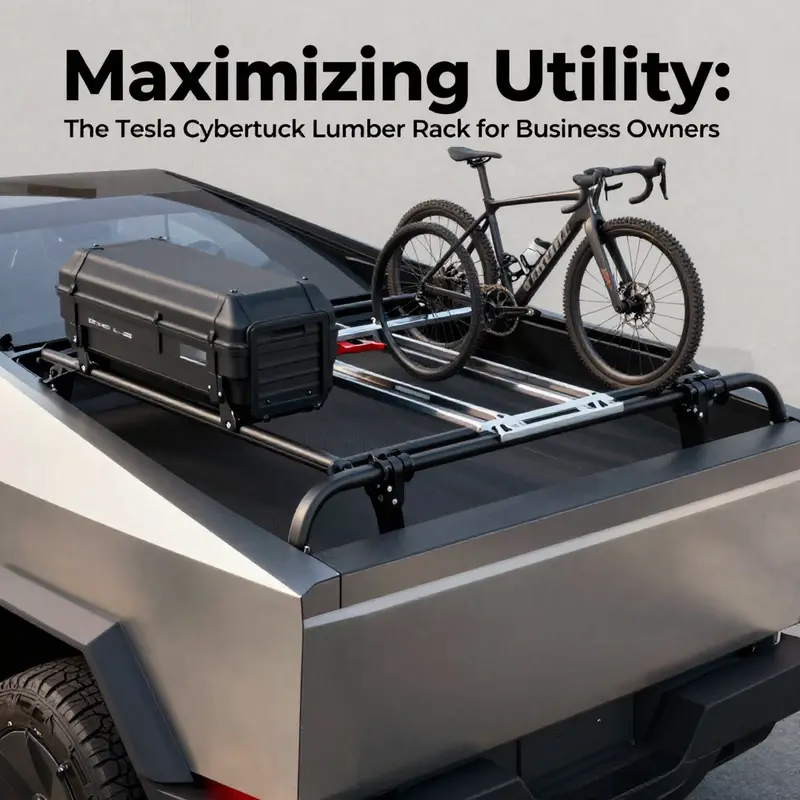
A lumber rack built into the Cybertruck’s cargo framework does more than simply cradle long boards. It invites a broader conversation about how a modular bed and roof system can transform the truck into a versatile platform for work, play, and daily transport. The essence of this compatibility story is not a single fitcheck but an ongoing negotiation between the rack’s core design—two telescoping crossbars with quick-release towers, a set of mounting pads, and factory mounting points—and the diverse accessories that a modern driver might want to deploy. The result should feel seamless, as if the rack were designed to work with long items from the first moment you uncrate it, while still accommodating the quick swaps, stays, and add-ons that turn the Cybertruck into a multi-tool on wheels. What matters most is how the crossbar system couples with accessory categories, how load paths are managed, and how accessibility is preserved when you switch from lumber to gear for a weekend adventure or a daily commuting routine.\n\nThe core of the compatibility story lies in the rack’s architecture. The crossbars, being adjustable and equipped with a modular attachment framework, are designed to accept a variety of supports and carriers without contorting the truck’s body or compromising its factory points. The ability to telescope the crossbars means you can tailor the span to accommodate the length of a lumber piece or the width of a cargo box, and the quick-release towers simplify reconfiguration, letting you shift from a lumber-hauling setup to a bike or ski rig in minutes. With eight mounting pads anchoring the system, the load path from a long piece of lumber through the rack to the Cybertruck’s structure remains consistent. This is not a one-size-fits-all mount; it is a platform that encourages you to curate a personal rack configuration for each mission.\n\nDurability and materials play a quiet but decisive role in compatibility. Aluminum construction, along with corrosion-resistant hardware, ensures that the system holds fast in sun and rain, which is essential when you rely on the rack to carry outdoor gear along with a worksite load. When designing for compatibility, engineers must also consider mounting geometry. The Cybertruck presents a unique set of factory mounting points and bed contours, and a good lumber rack aligns with those constraints so that no part of the system interferes with trailing arms, tailgate operation, or the truck’s seating and occupant safety zones. The importance of alignment is underscored when you load long lumber that bristles against the bed walls: any misalignment can translate into cantilevered loads that increase wear on mounts or create awkward handling at highway speeds. The inclusion of telescoping crossbars helps mitigate this by letting you tune the effective width and angle, keeping the long items stable and minimizing wobble as you roll through curves and bumps.\n\nThe practical scope of compatibility becomes especially clear when you widen the lens beyond lumber. A true Cybertruck lumber rack is designed to play well with a spectrum of roof and bed accessories—racks, boxes, carriers, and carriers-within-carriers. Roof-mounted cargo boxes, for example, can sit atop crossbars without crowding the bed’s opening, while bike racks and ski carriers can attach to the same crossbar network through standardized interface points. The shared interface is what makes the system versatile; the T-slots in the crossbars provide universal channels for fasteners, clamps, and brackets, enabling a practicalDrag-and-Drop approach to accessory coupling. In this sense, compatibility is less about guessing a single correct accessory and more about understanding how the crossbars’ attachment planes and mounting pads align with the chosen accessory’s hardware. It is the difference between a rack that carries lumber well and a rack that carries lumber and gear with equal aplomb.\n\nChoosing the right accessory often means considering weight distribution and center of gravity. Lumber is dense and heavy, and even a modest stack changes the way the vehicle behaves in crosswinds and over uneven pavement. The two telescoping crossbars help by letting you position the lumber toward the centerline or toward the sides as needed, while the mounting pads distribute the load across a wider footprint on the truck’s structure. This reduces peak stress at any single mounting point and preserves the integrity of the factory points. When you pair the lumber rack with other accessories, the same logic applies. A rooftop carrier or box, for instance, can add rotational inertia to the front or rear, which you may counterbalance by repositioning lumber or switching to a shorter crossbar span. The end result is a system that remains controllable, predictable, and safe across dynamic driving conditions.\n\nIn practice, compatibility also hinges on installation considerations and how much the rack’s geometry allows for accessory diversity without requiring a sacrificial blending of hardware. A well-designed system keeps installation straightforward and repeatable. You should be able to mount a protective cargo box behind a lumber stack or swap a bike rack into the same crossbar slots without requiring specialized tools or invasive drilling. The idea is modularity without compromise. That means access points stay unobstructed, clamps remain accessible for quick reconfiguration, and the system retains enough clearance to prevent snagging on doors, bed edges, or the tailgate mechanism. This kind of foresight becomes most valuable when you need to switch tasks midweek—carrying a long custom cut to a job site, then heading to a trailhead with bikes and a ski rack for the weekend.\n\nThere is a natural tension in any multi-use system: preserving the original function of the lumber rack while enabling a broader accessory ecosystem. To navigate this tension, the industry trend has trended toward standardized interfaces and rugged, weatherproof fasteners. A rack that embraces these standards does not force a single application but instead invites a spectrum of compatible tools. When you consider the future of your Cybertruck build, this approach matters more than the occasional one-off accessory. It fosters a flexible workflow where you do not need to abandon a lumber-haul setup for every weekend adventure. Instead, you build a dynamic configuration by adding or removing attachments at the crossbars, using the factory mounting points as anchor points and leveraging the mounting pads for secure, repeatable installs. The practical payoff is clear: you can haul lumber efficiently, and when the job ends, you return to a clean, organized bed for camping gear, sporting equipment, or daily cargo.\n\nIf you are exploring these possibilities, a starting point is to picture the rack as a modular lattice rather than a fixed cage. The lattice invites you to mix ladders, panels, and accessory rails in ways that maintain compatibility. For the working professional, this translates into less downtime—no permanent alterations, no specialized tools, and no need to shudder at the thought of a late-night swap. For the weekend explorer, it means a more capable rig without sacrificing the efficiency of a well-organized bed or roof. In all cases, the emphasis is on maintaining the integrity of the Cybertruck’s original design while unlocking a much wider range of uses. The rack becomes a conduit between raw materials and ready-to-use gear, a bridge between lumber and lifestyle, where the same mounting framework supports a ladder rack, a cargo box, or a ski carrier as your mission dictates.\n\nFor readers seeking a concrete sense of what is possible, think of the crossbar system as the backbone of a broader accessory ecosystem. The compatibility logic is not about chasing every possible product but about embracing standard attachment geometries, weatherproof hardware, and the modularity that keeps the system adaptable over time. When you navigate the attachment options, pay attention to how each accessory interfaces with the crossbar T-slots and mounting pads. Confirm that the setup remains within the truck’s official load ratings and that a long lumber stack never compromises visibility or rear occupancy. Above all, cultivate a mindset of incremental customization: add, test, remove, and reconfigure as your work and travel patterns evolve. The Cybertruck lumber rack, in this sense, is less a single solution and more a living platform that grows with your needs.\n\nAs you explore the how and why of compatibility, a practical handrail for further reading can be found in the general guide to mounting systems and roof racks, which offers broader context on crossbar interfaces and accessory fitment. This resource can help you translate the technical ideas here into concrete steps for selecting and placing components. For a broader look at how these systems are applied on Cybertruck builds, you can consult the roof racks overview, which aligns closely with the ideas discussed here and provides a framework for evaluating accessory fit without turning to a single brand or model. roof racks. For a deeper dive into real-world configurations and installation practices, a range of community experiences and guides can offer practical perspectives on how users balance lumber transport with other gear. External reference: https://www.amazon.com/dp/B0CVWJZV5S
Anchoring Payloads: Integrating a Lumber Rack into the Cybertruck’s Bed and Roof Framework
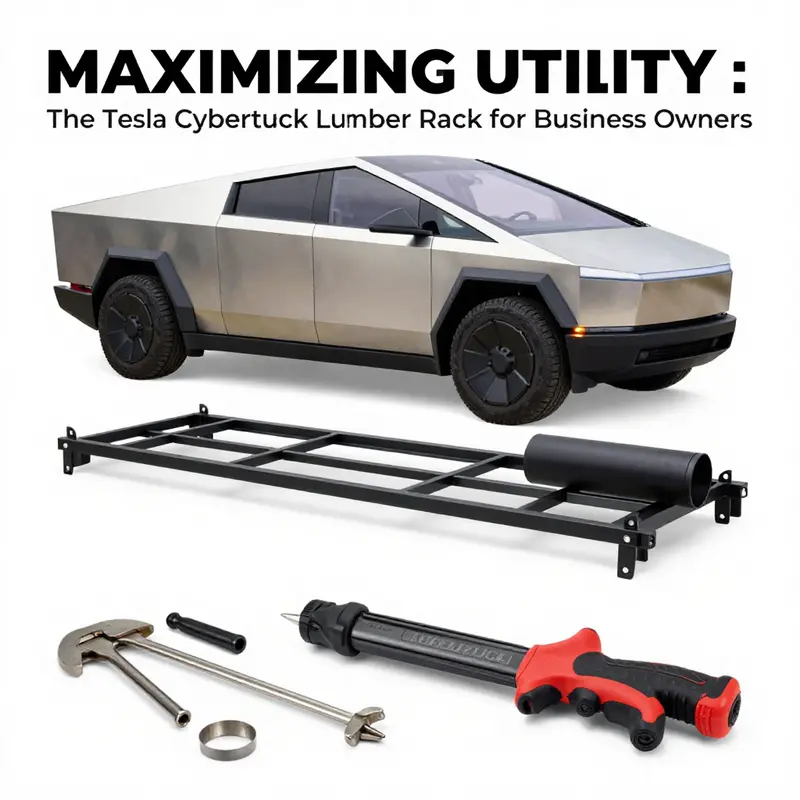
The idea of a lumber rack for a pickup truck often centers on cargo carried in the open bed. When the vehicle is a Cybertruck, with its distinctive box-style frame and a cargo system built to work with factory mounting points, the concept expands. A well-integrated lumber rack does more than hold long boards or pipes; it complements the vehicle’s structural personality by leveraging a modular, attachment-driven approach. The complete bed rack system with a MOLLE-inspired layout creates a versatile attachment surface for overlanding gear, tools, and long loads alike. For anyone seeking to haul lumber in bulk or transport exposed materials with minimal shifting, the system’s crossbars and mounting pads form a cohesive platform that aligns with the vehicle’s engineering intent rather than fighting against it. The beauty of this arrangement lies in how it blends with the Cybertruck’s core architecture, turning what could be a bulky add-on into an integrated feature that respects both safety and capability.
The installation sequence mirrors the vehicle’s own assembly philosophy. Core vehicle modules—the frame, body panels, and structural components—are manufactured through a disciplined process that includes casting, stamping, machining, joining, coating, sealing, and curing. These modules are then positioned with precision on dedicated sub-assembly lines. In the final assembly phase, after the main structure is complete, the lumber rack begins its integration. This staged approach ensures that the rack does not disrupt the alignment of critical structural elements and that mounting points remain within the tolerances designed into the vehicle from the outset. The rack’s mounting brackets are designed to secure to established roof rails or the vehicle’s frame, utilizing the same robust hardware and torque discipline that govern the rest of the assembly. When the rack is installed, technicians verify alignment and torque to prescribed specifications, so the load path remains predictable under both static and dynamic conditions.
The system is built around two telescoping crossbars with quick-release towers, a set of eight mounting pads, and a collection of brackets that can attach to the roof rails or directly to the frame. The crossbars are designed to accommodate long and bulky items, such as lumber, boards, or pipes, by allowing length adjustment without sacrificing rigidity. The T-slot nature of the crossbars makes it straightforward to slide in additional accessories—whether a ski rack, a bike rack, or a cargo box—and to anchor them with track-style fasteners that stay secure even when the vehicle is in motion over uneven surfaces. For lumber, the practical advantage is obvious: the crossbars can span the width of the bed, while the mounting pads distribute load across multiple points to minimize local stress concentrations. The result is a credible payload path that resists flex, minimizes wind-induced sway, and presents a cleaner silhouette than a cobbled-together rack solution.
From the outset, the installation guidance emphasizes safety and compatibility. Tesla’s official documentation warns that non-approved parts and aftermarket accessories can affect performance and safety. The message is not merely about following a checklist; it is about preserving the integrity of the vehicle’s load-bearing systems and the reliability of its structural connections. When an accessory is not certified to meet the engineering standards the company designs into the Cybertruck, there can be consequences that range from reduced durability to compromised safety in a sudden maneuver or braking scenario. Any damage resulting from such aftermarket modifications is not covered under the vehicle’s warranty. This is a crucial consideration for buyers who want to extend the utility of their truck without inviting unintended risk. The philosophy behind this warning is straightforward: the architecture is designed as a complete system, and every add-on must be evaluated against that system, not against a generic rack or a different vehicle’s mounting conventions.
Within the final assembly, when the lumber rack is brought into position, alignment becomes the decisive factor. The mounting brackets anchor to specific points on the roof rails or the frame, and the technicians perform a careful alignment pass to ensure the rack sits square with the truck’s centerline. Torques are checked at each mounting point, and the bracket interfaces are torqued to the recommended values. This is not cosmetic; it is about ensuring that the rack’s attachment path does not introduce micro-movements under load, which could gradually wear fasteners or alter load distribution. If the rack is misaligned or under-torqued, vibration can magnify the risk of upset loads, especially when a sheet of lumber shifts during a cornering maneuver. The attention to torque and alignment reinforces a broader design principle: the system is meant to be predictable, not just capable, so the operator can drive with confidence that the load will stay in place.
The lumber rack’s potential is further unlocked by leveraging the MOLLE-style layout and the crossbar’s T-slots. Plastic or metal mounting pads fit into the slots with a simple, repeatable interface, enabling quick changes in how cargo is organized. For lumber, this means you can adjust strap anchors or add short rails that keep boards from sliding toward the tailgate. It also means you can repurpose sections of the rack for other bulky gear when your project scope changes. The true utility emerges when the system is viewed as a flexible backbone for a wide range of tools and materials, all accessible from the side or the top, depending on the job at hand. The telescope action of the crossbars further enhances this adaptability, allowing you to prefer a longer span for extended loads or a shorter span for tight packaging without compromising stability.
Of course, part of the design’s confidence comes from the understanding that not all long or bulky loads are created equal. Lumber, piping, or boards pose particular challenges because they can vary in diameter, thickness, and edge condition. The support strategy therefore relies on more than just rigid crossbars; it uses helpful add-ons, like tie-down anchors, edge guards, and soft-straps that can wrap around a bundle without scratching or bending the stock. When properly configured, the rack becomes a staging area for handling materials: you can lay the lumber across the crossbars, then secure with straps, ratchets, and padding. The aim is to create a stable, repeatable process for loading and unloading, one that minimizes the risk of a slip or a shift during transit. This consideration is especially important when the vehicle must navigate uneven terrain, sudden braking, or cornering that tests the load’s inertia.
The balance between capability and caution is a daily reality for any owner who contemplates aftermarket lumber racks. The aftermarket path is not forbidden; it simply requires diligence. The installer must select accessories that meet Tesla’s engineering standards or come from certified third-party providers. Uncertified components might fit in the same space, but they may introduce new failure modes or create mismatches with the vehicle’s load-safety protocol. That is why the official guidance stresses compatibility and certified parts. A well-chosen, approved accessory system can preserve warranty coverage and protect the vehicle’s load distribution characteristics under dynamic driving conditions. Conversely, an unapproved configuration risks voiding warranty coverage and weakening the vehicle’s ability to protect occupants during abrupt maneuvers or in a rollover scenario where a misfit rack could behave unpredictably.
From a practical standpoint, the lumber rack is not a standalone add-on so much as an extension of the Cybertruck’s intended utility. The approach to install is staged and precise, with attention to the alignment of the box-style assembly and its interaction with the vehicle’s existing geometry. The final assembly loosens any ambiguity about whether the rack is simply perched on top of the roof or actually integrated with the frame. The final result—long items that remain secured, evenly supported across the crossbars, and easily accessible—speaks to a design that recognizes the vehicle’s dual role as both a rugged transporter and a precision machine. When you combine the crossbars’ telescoping capability, the robust mounting pads, and the disciplined torque and alignment checks, you get a holistic solution that supports lumber and other bulky loads without compromising the truck’s efficiency, aerodynamics, or safety profile.
For readers seeking deeper guidance on mounting options and where to source approved components, a related discussion on roof-mounted modular mounts can provide additional context. See Cybertruck with ladder rack for a concise exploration of how modular racks can be configured to complement the vehicle’s existing mounting framework and to illustrate how accessories are integrated into a cohesive system. This reference helps connect the practical steps described here with broader considerations about adaptability, mounting geometry, and the trade-offs between sheer capacity and ease of use. While the ladder rack discussion emphasizes different use cases, the underlying principles—secure attachment, standardized interfaces, and careful load management—remain consistent across configurations.”
In the end, the lumber rack installed during the final assembly phase embodies a design philosophy that favors a judicious blend of strength, modularity, and safety. It respects the core vehicle Modules and their integrated manufacturing lineage, while offering a configurable platform for long loads. The process is straightforward in principle: secure mounting brackets to predetermined points, verify alignment, torque to specification, and then leverage the crossbars and pads to create a stable, adaptable load path. The result is a vehicle that can shift from a high-capacity cargo hauler to a precisely organized suite for project materials with minimal fuss and maximum reliability. For owners who approach the system with clear attention to approved components and proper installation, the lumber rack becomes a natural extension of the Cybertruck’s utility—a tool designed to help you move more material, more efficiently, with the confidence that comes from engineering coherence and careful execution.
External reference: Tesla Support.
Stretching the Bed: How a Modular Lumber Rack Reframes Cargo Management on an Electric Pickup
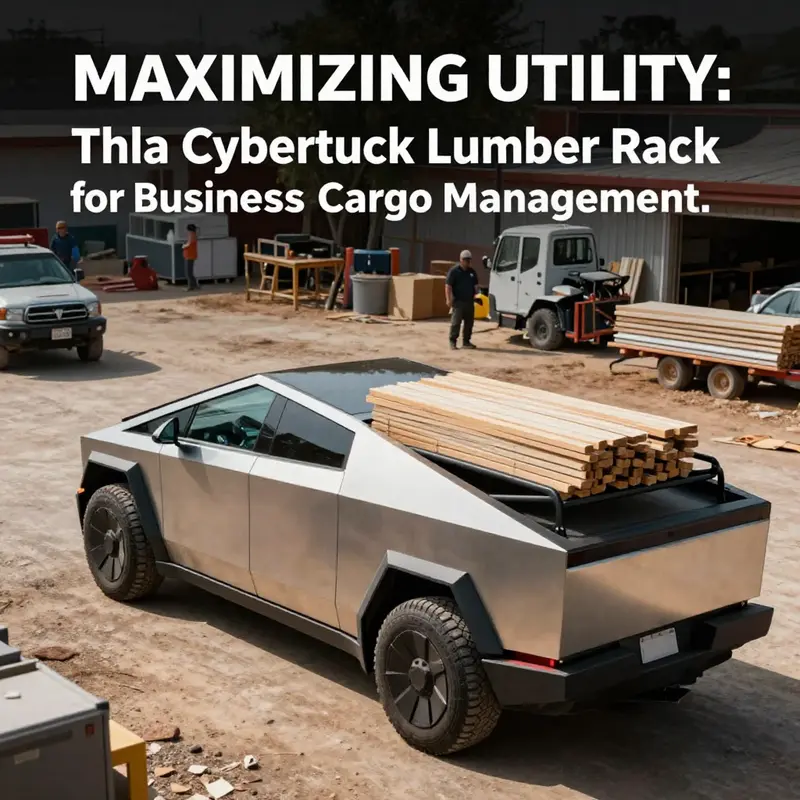
Carrying lumber, long pipes, or bulkier insulation often tests the limits of a pickup bed. The true win comes not from stuffing more material into the same space, but from a rack system that behaves like a second layer of the bed itself. When a modular lumber rack is designed to work with a vehicle’s inherent mounting framework, it transforms the way builders load, secure, and retrieve long, irregular items. The core idea is simple: introduce a configurable cargo rack that adds attachment points, preserves space, and minimizes movement during transit. The result is less time spent tying down and rechecking loads, and more time focused on the project at hand. A practical rack system does not intrude on the bed’s primary utility; instead, it augments it by offering a stable platform for securing lumber along the length of the bed while still leveraging the bed’s flat, wide surface for supporting shorter items or offloaded bundles. In day-to-day terms, that translates to fewer trips, quicker staging, and fewer scrapes from shifting boards that would otherwise rattle and slide during a rough road or a bumpy job site driveway. The approach emphasizes modularity—an architecture that accepts long components like studs or piping along the bed’s centerline while allowing shorter, handier items to live in the corners, under a protective lip or in a dedicated storage zone. The result is not just more cargo space; it is smarter space, laid out with a clear purpose in mind: lumber, boards, and pipes deserve to be carried in a way that respects their length, their weight, and their tendency to move when the vehicle is moving. The rack system accomplishes this by introducing a pair of crossbars that can telescope to match the length of the cargo and by providing quick-release towers that speed up the process of loading and unloading. These features work together with multiple mounting pads and hardware designed to anchor the rack securely to the truck’s existing mounting points. The crossbars themselves carry a built-in flexibility: the T-slots along their length invite a range of accessories, from simple tie-down anchors to specialized holders for long items. This is where the real utility appears. With a few deliberate placements, a single lumber bundle can be oriented along the bed so it sits low and flat, reducing the risk of snagging on the tailgate or the back wall while the rest of the material is tucked neatly in place. It is the kind of arrangement that invites a deliberate and disciplined loading routine, where each item has a defined slot and a clear path from ground to bed to destination. The ability to secure long items with adjustable towers and set points along the crossbars makes it possible to tighten down lumber without needing to balance precariously on a single strap or rely on the mercy of gravity alone. Over time, contractors learn that a well-configured rack reduces the cognitive load during every loading cycle. You do not guess where to place a board; you place it where the rack tells you it belongs. And because the rack integrates with the bed’s native mounting framework, it does not demand invasive drilling or custom fabrication. It respects the truck’s original design, letting the vehicle’s structure carry the weight and the rack spread the load evenly across a broader contact area. The moment you slide a few sheets or planks into position, you recognize the difference between improvising a makeshift rack and using a purpose-built solution that feels like it was engineered for the job from the start. The difference is not merely in how quickly you secure the material, but in how predictably those materials stay where you put them. The crossbars’ telescoping capability allows you to adapt to different lumber lengths or pipe diameters without creating a chaotic bundle of protrusions. Short items can ride on the sides, supported by pads that grip without marring, while long items are pressed into the center where the crossbars hold them in line. If the job requires more height, the quick-release towers simplify the process of raising or lowering the rack to clear overhanging loads or to fit into a narrowed garage. In practice, this translates to fewer scrapes on the exterior and less risk of damaging delicate surfaces on the ends of boards. The hardware included with a robust system—additional mounting pads and the required fasteners—complements the crossbars’ inherent strength. The rig is designed to resist weathering and exposure to dust, moisture, and vibration, a practical consideration for anyone who spends long days on a project site. The stainless steel or similarly durable materials chosen for the rack ensure that rust and wear are kept at bay, even when boards are wet or damp and packed into the bed for hours at a time. From the contractor who runs daily material drops to the DIY enthusiast who needs to transport large, unwieldy items for a weekend project, the benefit is consistency. The cargo bed becomes a modular work zone rather than a random mix of loose materials. Organization matters not only for efficiency but for safety. A stable load reduces the need for last-minute adjustments on the move, which in turn lowers the chance of a sudden shift that could compromise handling or create a hazardous situation at highway speeds or around a crowded job site. The system’s ability to add dedicated attachments—whether for securing lumber, creating a shallow crate for tools, or mounting a lightweight rack for accessories—turns the bed into a flexible platform. Accessories can be swapped as project needs evolve, and the crossbars’ slot system provides a straightforward pathway to customization without complex modifications. This adaptability is crucial when dealing with materials that come in varied lengths and profiles. A stack of two-by-fours behaves quite differently from a bundle of PVC piping, yet both can be managed with the same basic rack concept if you respect the geometry of the cargo and the need for secure tie-downs. In the end, the primary gains are practical: faster loading, steadier transport, and a more predictable workflow. The rack system helps translate the mental image of a well-organized job site into a concrete, repeatable practice. With it, long lumber and bulky materials no longer threaten to skew the load or shift at the first bend in the road. They sit aligned, anchored, and accessible for the next step in the project, whether it involves cutting, measuring, or staging for delivery. For readers who want to explore the specific ladder rack approach that complements this concept, there is a dedicated resource that dives into installation options and compatibility considerations. cybertruck-ladder-rack provides additional context on how similar attachment points and crossbar systems can be leveraged to extend cargo capabilities without compromising the existing bed structure. Looking at the broader ecosystem of accessories and add-ons shows how a single, well-thought-out rack concept can spawn a family of configurations tailored to different materials and job sites. The emphasis remains on modularity, durability, and ease of use—the three pillars that define a practical lumber rack for a modern, purpose-built pickup. Beyond the physical hardware, the real story centers on how the vehicle, the rack, and the user evolve together. The rack becomes a standard operating partner, enabling a workflow that feels natural and efficient rather than forced. It supports the user as they move from rough-cut lumber to finished components, from a load in the bed to a neatly organized stack on the rack that can be accessed without rummaging through gear or loosening a dozen straps. For a closer look at real-world demonstrations, see the official load test video that showcases how such a system performs under heavy, irregular loads. The video offers a practical visual reference for the concepts described here and helps bring the abstract idea of a secure, modular lumber rack into a tangible understanding of on-site performance. Watch and learn how the approach translates from theory to the field: https://www.youtube.com/watch?v=1sX8j4wZ0uA
Rugged Lumber Racks for the Electric Pickup: Availability, Pricing, and Practical Pathways
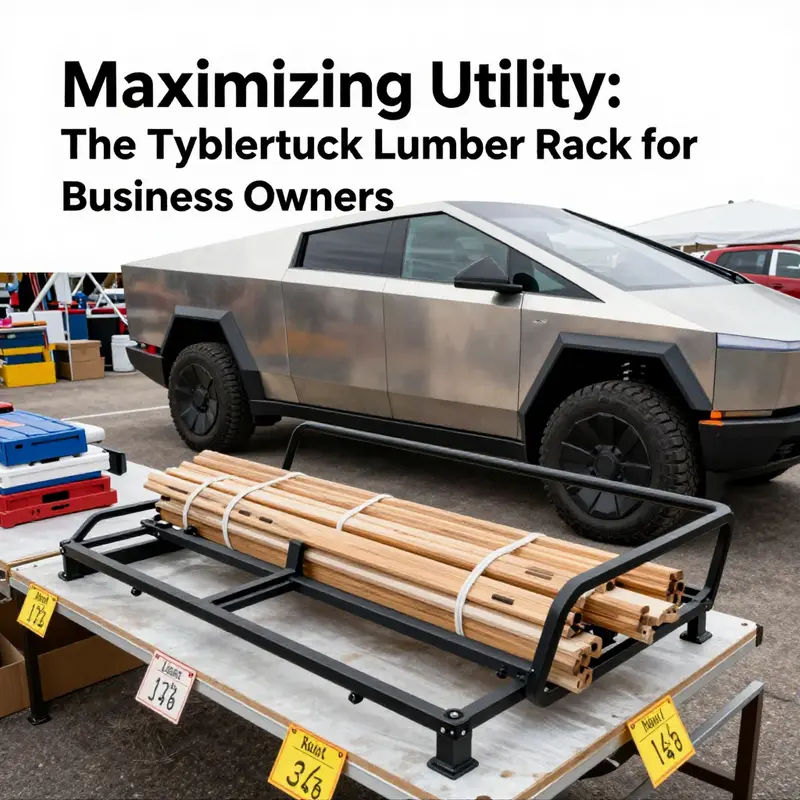
Carrying long, heavy, or bulky lumber on a modern electric pickup demands a rack system that blends factory-grade integration with modular versatility. The design language that has emerged in recent accessories centers on two core ideas: seamless compatibility with the vehicle’s mounting points and a flexible attachment grid that can hold everything from ladders to piping, while still leaving room for everyday cargo. The lumber-rack use case, in particular, benefits from a system that can be deployed without drilling new holes or compromising the vehicle’s factory safety and warranty assurances. In practice, this means a complete bed rack setup that locks into the bed’s existing mounting points, and crossbars that offer robust attachment surfaces through dedicated slots that accommodate a wide range of accessories. The result is a cohesive platform where the load—whether a stack of thick boards or a bundle of pipes—stays secure during urban drives and off-road forays alike, with the added peace of mind that comes from a modular, purpose-built solution rather than improvised ties and brackets. The bed rack system’s backbone is its integrated MOLLE-style attachment surface, which opens up a world of add-ons for everyday tasks and specialized jobs. This matrix gives you a predictable interface for securing tools, straps, clamping devices, and lumber-grade organizers. It also enables the use of accessories designed to slot directly into the rack, reducing the need for custom fabrication. On the roof, crossbars with T-slots extend that same philosophy to overland and lumber-carrying scenarios. The T-slots let you place clamps, hooks, or specialty brackets exactly where you need them, ensuring lumber remains aligned and does not shift during transit. The elegance here is in the adaptability: rather than choosing a fixed, one-size-fits-all rack, you select a core framework and complement it with the components that fit your job, your boards, and your preferred securing method. The system’s telescoping crossbars with quick-release towers further enhance this flexibility. When you carry long items, you can adjust the crossbar span to accommodate board lengths, while the quick-release mechanism speeds up loading and reloading—handy when you switch between a lumber day and a gear day. The hardware kit, including mounting pads and the necessary fasteners, is designed to be straightforward to install in the field, even for a user who puzzles through a first time setup. It is this emphasis on modularity and factory compatibility that makes a lumber rack solution practical rather than a stopgap when you need to transport planks, timbers, or pipes with confidence. The crossbars form a resilient bridge between bed-mounted utility and roof-based capacity, so you can choose the configuration that best suits the day’s cargo and the vehicle’s ergonomics. Availability and pricing for these components follow a market-realistic pattern that reflects both the value of integrated systems and the convenience of kit-based assembly. A complete bed rack system, designed specifically for the vehicle, is shown as being available for purchase with a discounted price noted as two thousand four hundred ninety-nine dollars, down from a regular price of two thousand nine hundred ninety-nine dollars. The messaging is clear: the system is a dedicated solution intended to maximize cargo capacity and organization within the truck bed, offering a robust platform for lumber, tools, or other bulky gear that would otherwise ride unsecured or require ad hoc tie-downs. The emphasis is on reliability and ease of use, which are essential when you are loading and unloading lumber on a regular basis. The discounted price serves as an incentive for buyers who want to upgrade from a temporary setup to a purpose-built rack system, and the price point is positioned to reflect the long-term value of improved cargo management, better load distribution, and reduced risk of shifting loads. Yet the market also offers roof-based storage expansion through crossbars, with two-piece and four-piece configurations that are custom-fit for the vehicle. The crossbars bring a different dimension of utility: a pair of crossbars can be extended across the roof to create a secure bare-surface cargo base, while a four-piece kit provides front and rear coverage with integrated padding and rubber seals to protect the vehicle’s surface. This protective layer is essential when transporting lumber that could scratch or dent the paint if the bars were rough or poorly secured. The load capacity of these crossbars is stated at up to 176 pounds, a figure that accounts for the weight of typical lumber bundles along with the rack hardware itself and any attachments. A lockable design further enhances security for longer trips, ensuring that a stolen steal of lumber isn’t a temptation to someone wandering by. For those who want to maximize value, the four-piece kit’s price advantage is noteworthy: it offers a savings of a hundred dollars compared to purchasing two separate two-piece kits. The presence of a multi-piece roof rail option gives buyers a way to scale their system incrementally, adding capacity as the project scale grows or as seasonal needs shift. Availability across retail channels mirrors the vehicle ecosystem at large. These accessories are distributed through official channels and authorized retailers, which helps ensure compatibility, warranty coverage, and standardized support. Of course, prices and stock levels can vary by region, driven by demand, distribution arrangements, and the cadence of supply. The takeaway is that a cohesive bed-and-roof rack strategy exists for the electric pickup that can be matched to the user’s needs, whether the priority is creating a lumber-specific cradle in the bed or building a roof-top platform for long items, or both. The dual-path approach—one for bed-mounted cargo with a MOLLE-focused system and another for roof-based storage with T-slot crossbars—offers a practical route for anyone who routinely moves heavy wood, pipes, or other oversized materials. When you begin to plan, consider the load paths and the user behaviors that define how you actually work on-site. For example, while the bed rack offers a solid base for securing tools and equipment in addition to lumber, the crossbars enable longer loads that might overhang the truck bed. Your choice may come down to whether your daily routine involves mostly within-bed storage, or whether a mix of roof and bed storage would best serve your job site. In practice, the practical strategy is to integrate the two systems so that long items ride high and long items ride low, balancing access with security and keeping weight within manufacturer guidelines. If you are evaluating the concept for the first time, a useful bridge is to explore the broader landscape of roof-rack options for trucks, which reinforces the philosophy of modularity and standardized interfaces. A simple way to approach this is to browse the accessible collection of roof racks for trucks, which showcases how crossbar systems, padding, and lockable features fit together to support a wide range of cargo, including lumber. This approach also helps you visualize a unified workflow: you can plan to mount lumber across a bed-mounted rack when it’s practical, and then reposition or supplement with roof-mounted crossbars when the load benefits from a higher transport profile or longer overhang. Ultimately, the combination of a complete bed rack system and roof-crossbar kits offers a coherent framework for lumber transport that respects the vehicle’s existing architecture while delivering the adaptability needed for real-world jobs. The market channels through which these products move—official stores and authorized dealers—serve as an important assurance layer, offering fitment guidance, installation support, and post-purchase service that can be difficult to secure with improvised solutions. As you weigh the pros and cons, keep in mind how the system integrates with the vehicle’s mounting points and how the MOLLE or T-slot interfaces translate into practical, repeatable setups for lumber. The objective is a flexible yet robust transport solution that reduces loading fiddliness, protects your investment in long boards and pipes, and simplifies the day-to-day logistics of construction, carpentry, and remodeling projects on a modern electric pickup. For those who want to dive deeper into related storage concepts and accessory ecosystems, a broader look at roof racks for trucks can provide an accessible entry point and context for how these modular pieces connect with broader travel and work-use cases. External reference: https://www.tesla.com/cybertruck/accessories
Final thoughts
The Tesla Cybertruck Lumber Rack represents a pivotal advancement for business owners aiming to optimize their cargo transport capabilities. With its intelligent design, compatibility with various accessories, straightforward installation process, and significant benefits in cargo management, this system is reshaping how businesses handle transportation of materials. By investing in this innovative solution, you’re not merely augmenting your vehicle’s functionality; you’re enhancing your operational efficiency. Consider exploring the numerous options available to integrate this system into your business strategy.