
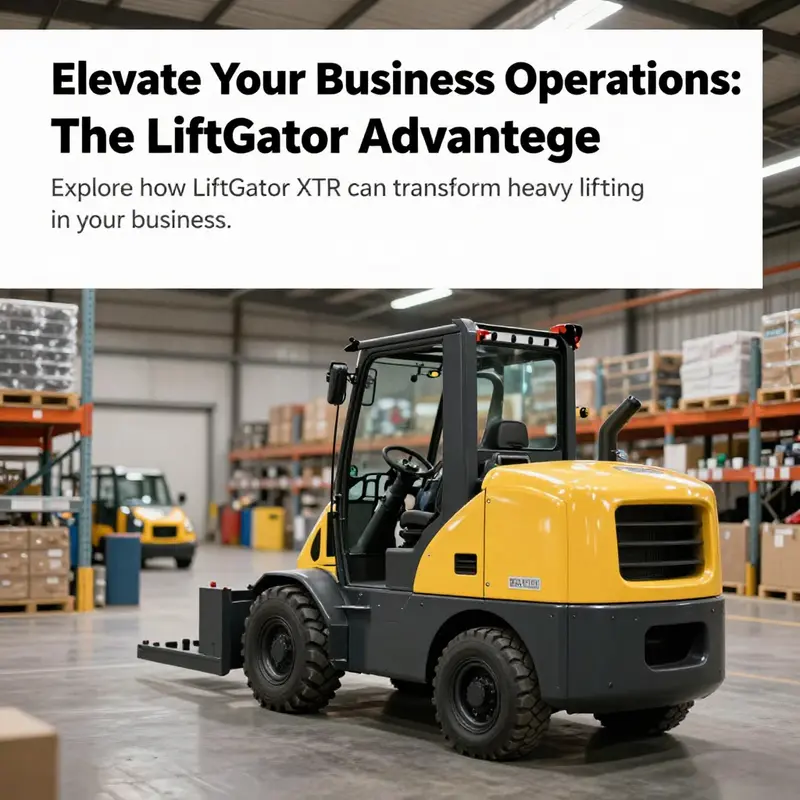
In the realm of business logistics, efficiency and ease of operation are crucial for success. The LiftGator XTR, a portable electric lifting platform, presents an ideal solution for business owners who regularly handle heavy loads. With its ability to lift up to 1200 pounds and features designed for ultimate convenience, this innovative equipment minimizes labor costs and streamlines the unloading process. Each chapter of this article delves into different aspects of the LiftGator XTR – from its unique design features to operational efficiency, and an outline of its advantages over traditional lifting methods. Understanding these elements will help business owners leverage this powerful tool to enhance productivity and reduce manual strain.
Beyond Muscle: Portable Electric Lifts Redefining Truck Loading
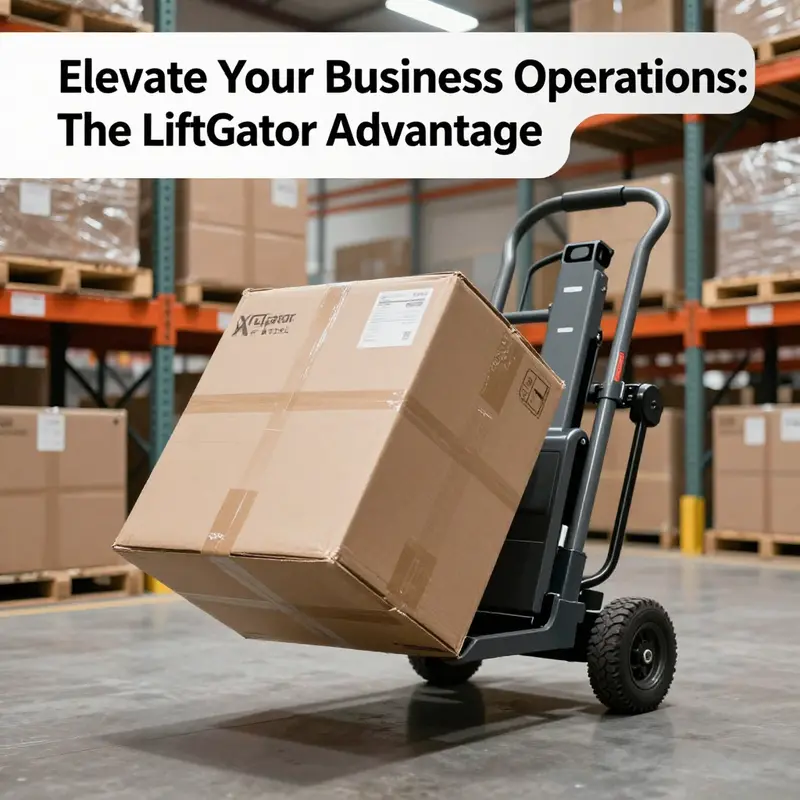
The choreography of loading and unloading heavy objects has long relied on human strength, freight ladders, and waiting on a crew to stabilize, lift, and slide goods into place. Yet a single tool—a portable electric lift designed to be mounted on or used beside a truck bed—has begun to redefine what is possible in both professional and home settings. This chapter threads a narrative through the practical realities of hauling, the constraints of space, and the promise of a compact machine that flips the script from brute force to precise, controlled motion. It is not about a magic gadget but about a class of equipment engineered to bring safety, efficiency, and flexibility to tasks that would otherwise demand multiple hands, specialized labor, or large, fixed installations.
At its core, the portable lift is a compact, electric system built to be removable and foldable, so it can be stowed away when not in use and deployed quickly when a heavy item—furniture, camping gear, construction materials, or industrial components—needs to be moved from ground level into a truck or vice versa. Imagine a deck that can be deployed to bridge the height difference between the ground and a truck bed, with a controlled raising mechanism that makes it possible to position a heavy item with a single press of a button. The practicality here is obvious: when the goal is to minimize manual handling, reduce the risk of injury, and avoid hiring extra hands, portability becomes as important as raw lifting power.
Two features consistently stand out in the best portable lifts: the capacity to lift substantial weights and the ability to collapse into a compact footprint. In real-world terms, this means a device capable of elevating large loads—think a heavy piece of furniture, a stack of crates, or a cargo bundle—without requiring a crew to guide every inch upward. It also means that the lift can be tucked into a garage corner, strapped into a vehicle’s trunk, or stored on a trailer without dominating the workspace. The foldable design usually comprises three main components that can be collapsed for storage. The elegance of such a design rests on simplicity: a few quick movements, and the entire system resembles a compact package that begs to be wheeled out on a moment’s notice.
When the lifting task sits in front of you, the control interface is a focal point. A single-button operation—clean, intuitive, and reliable—transforms what could be a three-step, multi-operator process into a smooth, repeatable action. This is not about sacrificing control for convenience; it is about eliminating extraneous steps that slow you down and introduce variance. A user can set a target height, press once, and watch the platform rise with a predictable, steady cadence. In environments where time matters—loading a schedule, meeting a tight delivery window—the value of a dependable, one-touch lift multiplies quickly. Of course, safety remains paramount. A well-designed portable lift pairs the power to raise heavy items with careful consideration of weight balance, anti-slip decks, and automatic stop safeguards that trigger if something veers off course. The result is a device that feels almost supplicant to the operator—ready to respond at a moment’s notice without demanding a complex initiation ritual.
Power is another defining dimension. These devices carry their own integrated battery packs that power multiple lifts before a recharge is needed. The charging flexibility is essential, because work sites are rarely convenient for a plug-in recharge. A common configuration can be charged from a standard 110V household outlet, which is increasingly available for personal use or yard setups, and can also tap into a trailer’s power source when a job moves from the driveway to a remote loading site. The practical upshot is that a single charge can support twenty or more lifting cycles, depending on the load and height, which translates into significant productivity, especially in tasks that involve repetitive lifts throughout the day. This level of endurance means the operator does not have to pause to recharge after every two or three operations, a luxury that often makes the difference between a smooth workflow and constant interruption.
The platform itself—often a square deck with generous real estate—is deliberate in its dimensions. A deck around 48 inches by 48 inches offers a stable stage for large or awkward loads. Such a footprint is not unwieldy; it is designed to create a stable working surface that remains manageable in a typical garage, driveway, or trailer. The size, balance, and stiffness of the deck are not ornamental details; they directly influence how safely and accurately items can be positioned and slid onto or off the truck bed. A larger, flat surface reduces the chance that a heavy object will tilt or shift during ascent or descent, while a rugged finish can help minimize slippage. In practice, the combination of a sturdy deck and a confidently controlled lift means operators can position loads in the exact location where they want them—without the guesswork that once defined these tasks. It is a quiet revolution in ergonomics, turning a potentially hazardous moment into a controlled, repeatable routine.
Behind the scenes, the engineering philosophy driving portable lifts emphasizes modularity and adaptability. The three main components—lift mechanism, support frame, and deck—are designed to interact through straightforward, robust joints. This modularity ensures that maintenance can be focused where it matters most and that the device remains serviceable in field conditions. Operators learn to move with the machine rather than against it: one can unfold the unit, secure the lift height, engage the power, and press the button to start a precise ascent. The machine then becomes a partner, not a hindrance, in the task of moving goods. This symmetry between human intent and mechanical action is what makes portable lifts genuinely transformative. They do not merely supplement muscle; they orchestrate a flow of actions that mitigates risk and extends human capability in ways that were previously impractical on a truck-loading site.
The benefits extend beyond the immediate act of lifting. By enabling on-site loading and unloading, portable lifts reduce the need for hired labor or fixed, permanent lifting infrastructure at a location. For DIY enthusiasts, that could mean loading a heavy appliance in a suburban driveway with equipment that stores neatly in a garage. For small businesses and contractors, the same class of device can reduce labor costs and expedite delivery timelines, all while maintaining safe handling practices that protect workers from injury and liability. The portability matters here because it enables a flexible approach to logistics that can adapt to changing job scopes, locations, or client needs. When a truck is used for multiple kinds of loads—furniture today, construction materials tomorrow—a adaptable lift becomes a singular tool that can be called upon for a broad spectrum of tasks, rather than a specialized, single-use gadget.
In talking about the broader ecosystem of loading equipment, it helps to consider related technologies and approaches that share the same aim: reducing manual strain while preserving control and safety. Portable lifts join a family of devices that includes stand-alone lift gates and other modular loading solutions. These related technologies vary in design, power source, and deployment complexity, but they share the core objective of elevating efficiency. If one imagines the landscape of portable, on-demand lifting as a spectrum, these devices occupy adjacent spaces, each offering different balances of capacity, footprint, and ease of use. Readers who want to explore related options will encounter a continuum—from compact, handheld helpers to more substantial, vehicle-mounted systems—that all aim to make heavy lifting less burdensome and more predictable on site. For those who prefer to dig deeper into practical comparisons and field reports, the topic of lift-gates is a natural place to start and helps illuminate how portable solutions fit into current workflows. See the lift-gates discussion for more context on how portable devices compare to other common loading aids and to gather practical tips from the field.
As with any tool designed to alter manual labor, the human element remains central. A well-designed portable lift does not replace the judgment, planning, and muscle of a trained worker; rather, it augments those capabilities. It asks the operator to set expectations about load geometry, weight distribution, and the path from ground to truck bed. It invites the user to think ahead about securing the load, choosing the right lifting height, and choreographing the sequence of actions that move an item with minimal friction. In environments with uneven ground, tight spaces, or sensitive goods, the operator’s situational awareness becomes as important as the machine’s mechanical leverage. In those moments, the most successful routines are those that blend deliberate planning with the instant feedback from a well-tuned lift system, creating a workflow where the only surprise is how smoothly the heavy load is positioned—precisely where it needs to be.
The implications extend beyond the garage or job site. Imagine a fleet of vehicles operating on a schedule that requires swapping cargo quickly and safely. Portable, foldable lifts can become a standard tool in such fleets, enabling a consistent loading process that reduces risk and variability. The ability to collapse and stow, to recharge efficiently, and to deploy with a single button makes these devices practical even in constrained spaces like small delivery hubs or remote work locations. They translate the promise of modern manufacturing and logistics into the everyday reality of moving goods with less fatigue, fewer hands, and more precise outcomes. In this sense, portable lifts are not merely machinery; they are enablers of a more resilient, responsive, and human-centered approach to cargo handling.
For readers who want a fuller sense of how these devices fit into broader maintenance and procurement strategies, consider how the equipment aligns with the ongoing management of a working fleet or the home workshop. The choice to adopt a portable lift often reflects a strategic stance: invest in tools that multiply capacity without increasing the physical footprint of your operation, embrace modularity that supports evolving needs, and prioritize safety as a core feature rather than a compliance afterthought. In practical terms, this means selecting a device with a robust deck, a reliable lift mechanism, and a battery that can endure a day of repeated use. It means recognizing that while no single tool can eliminate all handling risk, a well-chosen portable lift can substantially reduce it. It means building a workflow that respects the limits of human capacity while leveraging machine-assisted precision to place items exactly where they belong—on the truck bed, in the storage area, or on the workbench—without the drama of improvised lifting or the delays of chasing professional help.
As this chapter intersects with real-world practice, it is worth recalling the broader narrative arc of portable lifting technology: a response to the persistent tension between demand for heavy goods movement and the constraints of space, labor availability, and safety concerns. A portable, foldable, electric lift embodies a practical compromise. It trades a portion of peak lifting power for a larger, more agile operating envelope—one that can be deployed in a variety of settings and quickly stowed away when the job is done. The ability to perform twenty or more cycles on a single charge makes it a reliable companion for a day’s work, while the foldable design keeps it from turning a workspace into a permanent installation. This balance—power where you need it, footprint where you want it, and simplicity in operation—captures the essence of what modern lifting technology aspires to achieve.
In the end, portable electric lifts are less about replacing human labor and more about extending what a person can accomplish safely and efficiently. They translate the physical effort of moving heavy items into a sequence of controlled, repeatable actions. They offer a practical pathway to fewer injuries, faster turnaround times, and more predictable outcomes when loading and unloading cargo from trucks, trailers, and other elevated workspaces. The story of these devices is one of empowerment through thoughtful design—design that respects space, simplifies control, and respects the needs of workers and owners alike. For anyone who regularly wrestles with heavy cargos, the emergence of portable lifts represents not a gadget but a strategic capability—one that makes heavy lifting safer, faster, and more adaptable to the demands of diverse tasks.
For readers who want a deeper dive into related equipment and hands-on perspectives, the broader literature and community discussions around portable lifting solutions offer a wealth of practical insights. These resources illuminate how real users balance cost, portability, and performance in varied environments—from DIY projects in a home garage to professional operations on a moving schedule. Such discussions emphasize how small, well-considered design choices—like a square deck of ample area, a straightforward one-button control, or a battery that sustains many cycles—multiply outcomes in meaningful ways. If you want to explore connected discussions and practical experiences, you can turn to related topics on the blog that cover lifting accessories and related truck equipment, which provide additional context on how portable lifting tools integrate with other loading aids and workflow optimizations. See the lift-gates entry for related considerations and practical guidance in choosing and using portable loading solutions.
External resource: https://www.liftgator.com
Raising Efficiency on the Ground: Design Principles Behind Portable Lifting Systems for Cargo and Maintenance
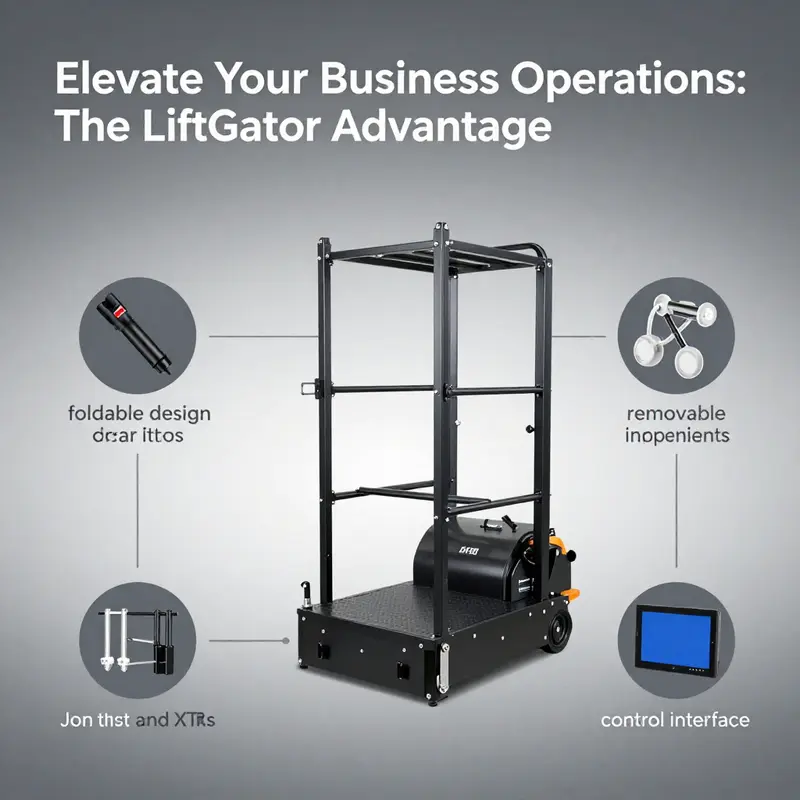
In the world of material handling and field maintenance, a portable lifting platform is more than a tool. It is a mobility solution that reshapes how teams approach unloading, loading, and service work in cramped spaces or on the move. The gator lift concept, in its broadest sense, embodies a category of devices designed to lift substantial loads without tethering users to a full-size shop or a dedicated pit. What makes these systems truly effective is not just the raw power they can muster, but the thoughtful integration of power, geometry, ergonomics, and storage. This chapter unpacks the design features that underlie practical portable lifting platforms, emphasizing how each choice influences reliability, safety, and everyday usability. The goal is to illuminate how a compact unit can deliver big performance while staying out of the way when not needed. For a practical overview of how these portable units come together, see the liftgator guide.
At the heart of any portable lift platform is a lifting mechanism that can deliver smooth, controlled, and repeatable elevation. Hydraulic power is the most common approach in this class because it provides a robust force curve and fine control. A compact hydraulic system uses a pump, accumulators, and hydraulic fluid to generate lift with minimal lag. The design challenge is to balance high lifting capacity with small reservoirs and lightweight components. Engineers optimize pump displacement, valve tuning, and fluid pathways to achieve a predictable raise and a gentle stop at the top. This predictability matters not only for safety but for workflow efficiency. When a loader, technician, or delivery worker positions a heavy item, the operator benefits from a lifting action that feels deliberate, not abrupt. In many designs, a single button or a simple control panel initiates a sequence that includes safe soft-start and built-in safety hold once the platform reaches the desired height. A well-tuned hydraulic system reduces the risk of fatigue and allows workers to concentrate on placement rather than fighting the equipment.
The structural backbone of a portable lift is typically formed by a crisscross or scissor-like mechanism. This geometry offers stability through a wide base and even weight distribution across several support arms. In tight spaces, such as a narrow alley or a compact workshop bay, the wide stance helps resist tipping and sway as the load rises. Crisscross configurations also provide a compactness when folded, which is essential for transport and storage. The interplay between leg geometry, contact pads, and arm length determines how level the platform remains during ascent and descent. A sound design ensures that load trajectory stays predictable, so the operator can align the load quickly and accurately without ad hoc adjustments. The result is a lifting experience that feels sturdy and confident, which in turn reduces the cognitive load on the worker who must manage heavy items under time pressure.
Space efficiency remains a defining constraint in portable systems.Owners and operators demand a low profile when the unit is stowed, so it slides beneath shelves, within van compartments, or into a back corner of a shop without becoming an obstacle. The best designs achieve this through foldable or retractable components. Ideally, the entire three-primary-part assembly—platform, arms, and base—can collapse into a compact form with minimal disassembly. In practice, the ability to fold or telescope sections translates into meaningful gains in workflow flexibility. A portable lift that drops to a near-floor plane when lowered can sit under a workbench or beside a vehicle bed, ready to deploy at a moment’s notice. When raised, the platform should present a stable, level surface to prevent shifting of the load during transport or service. The balance between a low-profile footprint and a high-clearance lifting range is a careful engineering compromise, and it speaks to the core mission of keeping heavy work portable rather than anchored to a single location.
Load capacity and stability are the other side of the space-efficiency coin. The design must support an ample working envelope without compromising safety. In this category, hydraulic actuation is paired with robust structural members and high-friction contact surfaces to ensure the load remains steady. A well-executed system avoids sudden jerks or rebound as the load rises or lowers, which can unsettle both the object and the operator. Stability is further enhanced by features such as positive-lock mechanisms, anti-sway devices, and load-sensing interlocks that verify the platform is correctly positioned before motion can occur. Even the way the platform couples to the ground or vehicle matters. Wide feet, non-marking pads, and, in some cases, leveling screws help distribute weight evenly across irregular surfaces. When a lift is asked to handle a variety of objects—from pallets and tool chests to tires and machinery components—the design must deliver a consistent performance across different load profiles. In practical terms, this means selecting materials with high yield strength, resisting deformation under load, and configuring joint connections that can withstand repeated cycles without loosening or fatigue.
Accessibility and versatility sit at the core of everyday usability. A portable lifting platform should offer easy access around the lifted object so technicians can work from multiple angles. This often means articulating arms with adjustable reach, a platform that’s wide enough for secure footing, and clearance that allows hands and tools to maneuver around the load. A thoughtful design anticipates the common maintenance tasks that crews perform—wheel changes, undercarriage inspections, or loading and unloading cargo—by ensuring there is space to work on all sides of the elevated object. The control interface plays a crucial role here. A clean, simple one-button control reduces cognitive load and speeds up operations. In stationary workshop settings, the operator benefits from an interface that can lock, pause, or reverse motion with minimal effort, while in the field the same interface should resist accidental activation and incorporate safety interlocks, ensuring that only deliberate actions produce movement.
Power and usability go hand in hand. The power source can be electric, battery-based, or manual, depending on the intended environment. A battery-powered design offers fast, quiet operation and the convenience of charging from typical outlets or workshop stands. In many configurations, a built-in battery supports dozens of lift cycles per charge, which translates into a complete maintenance session without frequent recharging. The trade-off is the need to monitor battery health and manage charging cycles to prevent downtime in remote locations. A manual option, often a hand pump, remains relevant for locations without reliable electricity or during power outages; however, it introduces physical effort and slower lift rates. Effective portable systems acknowledge this spectrum of use by offering either or both power modes, with smart cable management and isolation to prevent unintentional draining of the battery during non-use. A robust design also includes simple, accessible maintenance procedures: quick visual checks of hydraulic fluid levels, seals, and electrical connections; straightforward access panels for component replacement; and diagnostic indicators that alert operators to possible issues before they escalate into failures.
Installation and portability emphasize the device’s ability to move with the user rather than being anchored to a single job site. Many portable lifting platforms are designed to be carried on wheels or with light, lockable casters. Some models emphasize quick setup with minimal anchoring, allowing the unit to rest securely on workshop floors, vehicle floors, or even on uneven outdoor surfaces. The base geometry, the weight distribution, and the presence of leveling features determine how easily the unit can be repositioned between tasks. A well-considered product will also feature integrated storage solutions for hoses, cords, and toolkits, so the unit can be returned to its resting state without scattering parts across the workspace. In the field, a compact unit can be a lifeline, enabling service teams to reach undercarriages or load cargo on the curbside without requiring a full truck lift gate or external equipment. The portability question is not just about weight; it is about how quickly the device can be deployed, adjusted, and stowed again, all while maintaining operator safety and load integrity.
The design of a portable lift platform also reflects a broader pattern of risk management and ergonomic optimization. Human factors engineering shapes how controls are arranged, how visibility from the operator’s position is preserved, and how alarms and safeties communicate state. A typical approach includes audible or visual cues when the system detects improper setup, such as an uneven load distribution or insufficient contact with the base. Guards and barriers may be integrated into the platform to prevent particles or tools from slipping into the lift mechanism during operation. Even the finish selection matters: durable coatings resist corrosion from oils and chemicals, while textured surfaces improve grip and reduce the chance of slippage when the operator is moving around the raised load. All these features contribute to a design that not only performs well on day one but continues to perform reliably after hundreds of cycles and in varied environments—garages, loading docks, construction sites, and mobile workshops alike.
From a systems perspective, a portable gator lift concept embodies a philosophy of lean, modular, and user-centric engineering. It is lean in the sense that every component has a purpose and none are redundant; modular in that the core lifting assembly can be adapted to different base footprints or platform sizes; and user-centric in that the equipment mirrors real-world workflows rather than forcing operators to adapt their practices to the tool. When these principles align, the result is a device that feels as natural to operate as it is robust to depend on. The operator can approach a loading task with confidence, knowing that the platform is designed to stay level during lift, to hold securely at the target height, and to store away without demanding a second pair of hands to dismantle. Such a combination of attributes expands what teams can accomplish in a single shift: less waiting, fewer outsourcing needs, and more safe handling of heavy items in constrained spaces.
To connect these design considerations to practical outcomes, imagine a maintenance task that involves lifting a heavy component for testing or replacement. With a portable lift platform, the technician can position the base in the workshop corner, unfold the arms, and extend the deck to a height that brings the component to a comfortable working level. The one-button control initiates a slow, measured ascent; the load remains stable as the technician slides the part into the correct alignment. Once the task is complete, the operator reverses the sequence and lowers the deck with the same consistent motion, guiding the component toward its resting position. All this occurs without dragging heavy gear across the floor or requiring a second person to stabilize the object. The efficiency gained here is not just in speed; it is in reducing the physical strain on workers, minimizing the risk of injury, and preserving the integrity of fragile or precisely aligned parts. These advantages, when multiplied across a fleet of vehicles or workstations, translate into meaningful productivity gains and safer work environments.
The design challenges remain—and they drive ongoing innovation. Engineers continually explore new materials to reduce weight yet increase strength, improved seal designs to extend hydraulic life, and smarter control logic that anticipates user intent. They also explore how these platforms can integrate with digital workflows: sensors that report load distribution, battery health, and maintenance reminders can be wired into a shop’s existing asset-management ecosystem. In such ecosystems, portable lifting platforms become not only tools but reliable data sources that help teams optimize scheduling, maintenance intervals, and inventory handling. The evolving design landscape suggests that future portable lifts will be even more adaptable—capable of working with a wider range of vehicle heights, cargo shapes, and floor conditions while preserving the core values of safety, simplicity, and space efficiency.
As this exploration closes on the design core of portable lifting systems, the overarching lesson is clear. A well-conceived gator lift concept is not a single feature or a single authority on strength. It is a balanced package: a hydraulic or hybrid powertrain that delivers smooth, controllable lift; a geometry that keeps the load stable while accommodating tight spaces; a footprint and folding logic that maximize storage and transportability; a capacity profile that supports varied work without compromising safety; and an interface that makes operation almost instinctive. It is this synthesis of power, posture, and practicality that makes portable lifting devices indispensable for modern workflows. The more operators see such systems as extensions of their own hands—ready to assist with the heavy, the awkward, and the time-consuming—the more these tools prove their worth in the everyday rhythm of loading docks, maintenance bays, and mobile job sites. In the end, the value lies not in the ability to lift a weight in isolation, but in enabling people to move freight, replace components, and perform critical checks with less strain and greater precision.
For readers seeking a grounded look at real-world configurations and how the design choices play out in the field, the liftgator guide offers a practical entry point. It lays out typical setup patterns, demonstrates how folding mechanisms operate in compact layouts, and provides tips on maintenance routines that extend the life of portable lifting platforms. Meanwhile, external resources provide broader technical context and safety standards that shape how these devices are tested and certified for use in diverse environments. For authoritative technical context, see the external reference: https://www.gatorlift.com/products. This balance of practical guidance, design reasoning, and safety considerations helps teams choose or refine a portable lifting solution that truly fits their specific needs and workspace realities.
Effortless Elevation on Demand: How Gator Lift Transforms Sheet Material Handling
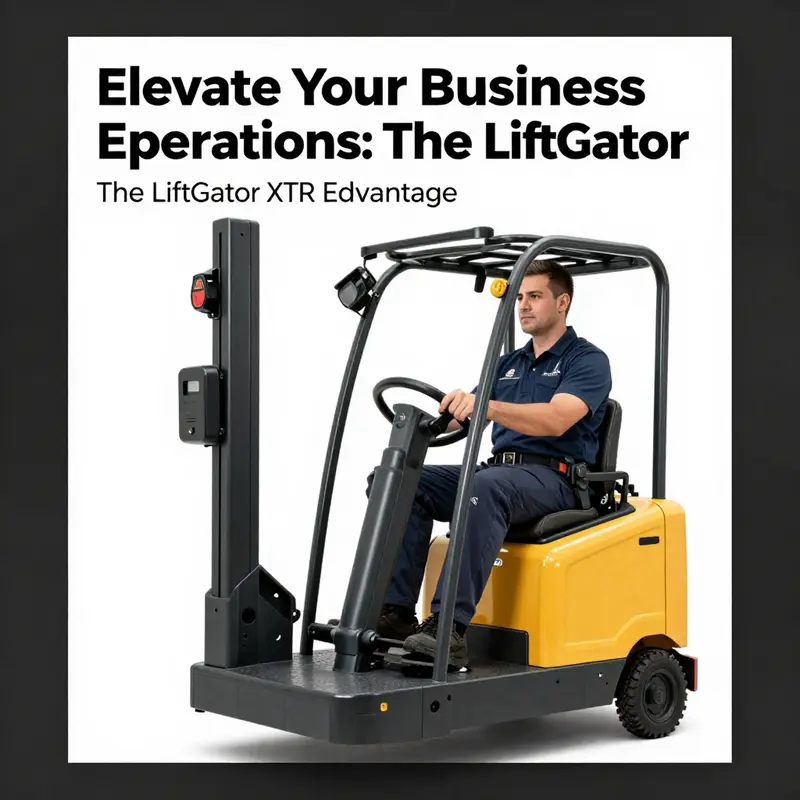
The rhythm of a busy workshop or construction site hinges on the ability to move heavy, bulky materials with minimal effort and maximum control. Plywood sheets, MDF panels, and other sheet goods arrive in stacks that demand careful handling to avoid surface damage and personal strain. Traditional manual lifting methods often force workers into awkward postures, inviting back pain and fatigue that compound as the day wears on. In this context, the Gator Lift emerges as more than a tool; it is a system that recalibrates the entire workflow of loading, unloading, and positioning. Its portable, electric lift platform is designed to be dismantled and folded, turning what used to require a team into a task managed by a single operator. The core idea is straightforward yet transformative: a compact, self-contained lifting platform that can be set up quickly, transported easily, and controlled with a single button. The qualitative shift this creates is measurable in days spent bending over, hours saved on setup, and reduced risk of surface marring or dropped loads during transit.
The physical architecture of the Gator Lift reinforces this shift. The design emphasizes modular portability, with all three primary components—base, lifting mechanism, and deck sharing a foldable, lightweight profile. When not in use, the system collapses into a compact footprint, allocating valuable storage space and simplifying transportation between job sites or workshop bays. This is particularly relevant for mobile operations or shops with limited floor space, where bulky, rigid lift devices are cumbersome to store and maneuver. The compact form does not come at the expense of capability. On a practical level, the platform can elevate materials with a robust, built-in power system. A single charge sustains twenty or more lift cycles, a performance envelope that supports extended workdays or multiple material transfers without constant recharging. Charging compatibility further enhances its practicality: the lift can be replenished from a standard 110V outlet in a shop, or through a trailer interface when work moves to a site or staging area. The deck—measuring 48 inches by 48 inches, or roughly 1219 millimeters square—provides a generous work surface for common sheet materials, allowing operators to align, grip, and stabilize loads with confidence before raising them to their target height. This combination of compact storage, straightforward operation, and dependable power aligns well with the expectations of modern trades where efficiency and reliability are paramount.
A closer look at the lifting action reveals the heart of the device’s efficiency: a simple, intuitive control scheme that belies the complexity of the mechanical choreography happening inside. The lift is designed so that a single operator can initiate and complete a transfer with a single button. That one-button simplicity masks a well-engineered sequence of power delivery, safe-guarding, and load-management routines that coordinate motor torque, chain or linkage motion, and platform stabilization. In practice, this translates to smoother starts, steadier raises, and controlled deceleration as the load approaches the chosen height. For the worker, this reduces the cognitive load of a task that could otherwise require careful manual coaching and several points of contact along the way. The impact on ergonomics is immediate: fewer moments of bending, twisting, and awkward reach, which translates into better posture, reduced fatigue, and an overall sense of steadier control during the lift and lower cycles.
The most practical benefits surface when handling sheet materials in particular. The application is simple and common: grab a stack of plywood or MDF, position the load on the deck, and use the dual-grip jaw system to secure the sheets with confidence. The dual-grip jaws are designed to provide a secure, slip-free hold without marking or scratching delicate surfaces. This is crucial when working with finished faces or thin veneers where surface integrity matters as much as the material integrity. The jaws’ geometry enables a stable, evenly distributed grip that minimizes spear-point contact and concentrates clamping force where it’s most needed. The result is a controlled lift that remains stable even as the operator guides the sheets toward the truck bed, a saw cart, or a cutting table. Because the grip is reliable and slip-free, the operator can take aim at the next stage of the workflow—from aligning sheets for edge-gluing to nesting multiple pieces for trim work—without pausing to reposition the load or recheck the grip. In other words, the dual-grip system reduces the number of handoffs and readjustments typically required when moving large sheets from stack to workspace.
One of the more compelling implications of this design is the ability to handle more than a single sheet at a time. The documented capability states that a single user can manage up to two sheets concurrently when tasks call for rapid turnover and compact staging. This is a meaningful productivity lever in busy shops where material flow is steady and demand for quick transfer between storage, cutting, and assembly zones is high. Handling two sheets at once cuts the setup time dramatically; there is less frequent reloading or realignment between moves, and the operator can advance a stack toward a given target with fewer interruptions. It is not merely about moving more material per pass; it is about reducing the number of discrete handling events that break concentration, slow progress, and increase the likelihood of mishandling. The ergonomic and efficiency dividends compound across a shift, contributing to lower cumulative fatigue and a steadier pace that keeps projects on track.
The high load capacity, while modest in some contexts, is purpose-built for the kinds of tasks described here. The documented capacity of up to 200 pounds positions the lift as a specialist tool for sheet handling rather than a general-purpose heavy-haul device. This scope matches common workshop realities: stacked sheets of plywood or MDF, when paired with simple gripping mechanisms and a stable deck, can be moved confidently by a single operator. In practice, the 200-pound limit is a meaningful guardrail that ensures the system remains manageable, responsive, and safe to operate without requiring additional personnel or specialized rigging. It also aligns with how users typically work in smaller shops or on site duties where the majority of heavy, bulky sheet material sits within that weight range per task. The result is an instrument that feels deliberately tuned for everyday efficiency rather than a factory-scale solution that might be overkill or unwieldy for smaller workflows.
Beyond raw capacity and control, the Gator Lift emphasizes user comfort over the long haul. The ergonomic design prevents excessive bending and awkward postures by placing the lift and deck at a height that supports a more natural stance. The operator can stand upright and guide the load with minimal knee and back strain, which is especially valuable during extended tasks that involve multiple cycles. The combination of ergonomic posture, one-button operation, and a foldable form factor culminates in a workflow that sustains momentum without sacrificing safety. In a practical sense, it means a worker can move from rough staging to precise final placement with fewer disruptions to rhythm, which has downstream effects on productivity, accuracy, and job satisfaction.
Storage and transport considerations further reinforce the Gator Lift’s value proposition. When not in use, the ability to detach and fold the device means it occupies a fraction of the space of a traditional, non-folding scissor lift or tall stand. This makes it easier to tuck into a corner of a shop, slide into a van or trailer, or stow alongside other portable equipment. The deck’s 48-by-48-inch footprint remains a generous platform to manage sheets without requiring constant repositioning; it gives operators a stable workspace at every stage, from scanning the stock to placing it into position. The integrated power system keeps the device ready for action, with a practical charging workflow that accommodates both home outlets and vehicle interfaces. In environments where space is at a premium and speed of setup is a daily determinant of job costs, the ability to deploy and retract with a light touch translates into tangible savings over time—fewer moving parts to manage, less manual labor required, and a ready-to-run asset that is versatile enough to pivot between tasks from unloading to precise placement.
As with any specialized tool, the Gator Lift is best understood within the broader ecosystem of lifting and material-handling equipment. Its value is amplified when used in tandem with complementary devices and workflows that emphasize efficiency and surface protection. For operators who perform frequent sheet handling, a short primer on method—secure the load with the dual-grip jaws, ensure even weight distribution, and proceed with slow, deliberate motion—will help maximize the benefits while minimizing risk. A comprehensive view of related equipment, accessories, and best practices can be found in related resources that discuss lifts, ladders, and related transport tools. For a concise overview that situates this device within the broader spectrum of lifting solutions, you can explore the LiftGator overview page. LiftGator overview.
The practical implications extend beyond the shop floor. On construction sites, space is often at a premium, and the ability to fold away the lifting platform after use translates into a more organized, safer work area. A single operator can move sheets from delivery pallets to staging carts or trucks without the typical bottlenecks that come with manual lifts or the need for extra crew members. The efficiency gains are measurable in the time saved during each transfer and in the smoother, more controlled transitions between tasks. This kind of predictable workflow is valuable not only for immediate project timelines but also for long-term planning. Teams can forecast material handling hours with greater accuracy, allocate labor more efficiently, and maintain a consistent pace that supports on-time completion. In environments where the precision of sheet placement is critical—whether for cabinetry, panelized wall systems, or cut-to-size manufacturing—the control offered by the dual-grip jaws and the stability of the deck provides a level of confidence that often translates into tighter tolerances and cleaner finished work.
In sum, the Gator Lift is a focused instrument that excels in specific conditions: portable, foldable, user-friendly, and capable of moving two sheets at a time with reliable grip and surface protection. It is a practical solution for operations where space, speed, and safety must align without the overhead of a full-sized lifting rig. This is not a generic replacement for all lifting needs but a targeted enhancement for the common, recurring chore of sheet material handling. The utility lies in turning a labor-intensive sequence into a smooth, repeatable routine that a single person can perform with minimal strain and maximal control. For readers seeking a quick glance at the device’s positioning within the broader landscape of lifting and utility equipment, the external resources linked below provide a deeper dive into specifications, use cases, and real-world applications.
External resource: https://www.gatorlift.com
Portable Power, Precision, and Safety: How Gator Lift Redefines On-Site Lifting
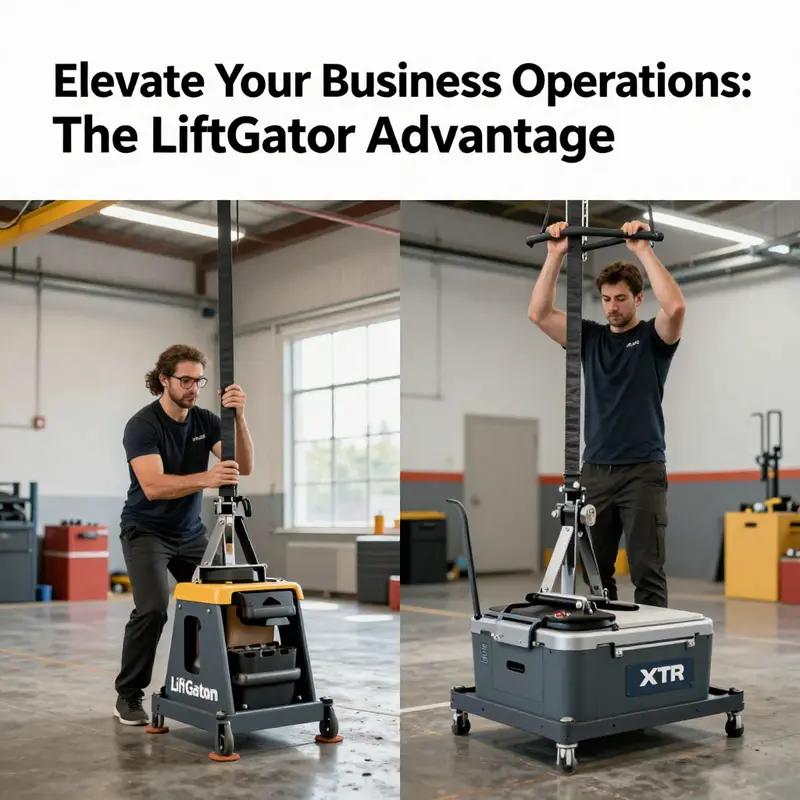
Lifting heavy loads has always tested human endurance and the limits of on-site equipment. Traditional approaches—manual hoists, bolt-together platforms, or bulky scissor lifts—rely on a combination of brute force, complex rigging, and time-consuming setup. In environments where space is at a premium, and workers must balance precision with speed, the demand for a portable, self-contained lifting solution becomes not just a convenience but a safety baseline. This is where a modern portable electric lifting platform enters the story, reshaping the expectations for how heavy loads are moved, loaded, and staged across the job site. Its core appeal lies not only in lifting capacity but in the integration of stability, portability, and intelligent design that reduces fatigue and minimizes downtime. It is a shift from relying on human stamina and modular assembly to embracing a compact, ready-to-use system that can be deployed in minutes, not hours. The resulting workflow is smoother, safer, and more predictable, which is precisely what high-stakes operations require whenthe margin for error is measured in minutes and safety margins rather than inches. A deeper look into the system reveals why this approach stands apart from older, more cumbersome methods and how it translates into real-world gains for crews across industries, from warehousing to light construction to maintenance in crowded interiors.
At the heart of this evolution is an innovative design that marries hydraulic power with a stabilization framework engineered for uneven ground. Traditional lifts often struggle to maintain balance on a slope, a patchy floor, or a transition from concrete to gravel. They can topple or settle as loads shift, inviting safety concerns and potential damage to sensitive cargo. The newer portable platform, by contrast, employs a multi-point stabilization system that distributes weight more evenly and automatically compensates for irregular surfaces. In practice, this meaningful capability translates into steadier lifts with far less operator input. The platform feels anchored even when the ground isn’t uniform, which is a quiet but powerful advantage when precision matters for delicate loading operations or when the next step in the workflow depends on the load being perfectly level. This stability also reduces the need for external cribbing or additional attendants to monitor tilt and balance, freeing up workers for other tasks and reducing the chances of unsafe improvisation under pressure.
Another core strength lies in its footprint. In many workspaces, space is a constraint that governs what equipment is practical. Large, traditional lifts may offer formidable height or reach, but they can dominate a corridor, block access, or require lengthy clearance to set up. A portable lift of this class emphasizes a compact, modular profile that can be maneuvered through narrow aisles, loaded into a van, or stowed in a workspace corner when not in use. The design philosophy centers around three foldable components that, when disassembled, collapse into a portable package. The tailboard, which serves as a crucial interface for load placement and stabilization, is specified at a generously usable size—approximately 48 inches by 48 inches—providing a stable platform for most common loading tasks without sacrificing the ability to tilt or level when the surface demands it. The modular nature means the same unit can be quickly reconfigured for different loads or different job-site layouts, preserving versatility without requiring a separate tool for each task.
Intuitiveness is not an afterthought but a guiding principle for this class of equipment. The control interface is designed to be approachable for operators who may not be lifting professionals but who need to perform precise, repeatable movements. The lifting action can be commanded through a straightforward control panel that prioritizes responsiveness and predictability. In the field, that translates to fewer misstarts, cleaner cycles, and a more confident sequence of operations when a supervisor approves the next step but the operator must act quickly to keep a project on schedule. Beyond the moment of lift, the ease of use extends to setup and teardown. The integrated hydraulic system, along with self-supporting structural elements, reduces the number of separate tasks required to prepare the unit for operation. This minimizes downtime—an important factor when every minute saved translates into more work accomplished and less disruption to adjacent tasks.
Power and autonomy further distinguish these units from their predecessors. The built-in battery system is designed to deliver multiple cycles per charge, so crews can complete more loading cycles before the need for a recharge. A single charge supports twenty or more lift operations in typical use, a capability that matters in environments where access to power outlets is limited or inconvenient. The ability to recharge from a standard 110-volt outlet at a shop or from a dedicated trailer interface expands flexibility on the job, ensuring the lift can be ready for use during a shift without requiring elaborate electrical setups. This kind of energy independence is especially valuable on a job site where power distribution is already stretched thin or where extension cords and temporary power cages create safety hazards.
From a safety perspective, the evolution is striking. Modern portable lifting platforms come with a layered approach to safety that many traditional methods lack. Overload sensors monitor the load in real time, preventing operation when a load exceeds capacity and signaling the operator to adjust. Automatic leveling helps accommodate uneven surfaces without demanding manual calibration for every lift, a feature that reduces the risk of tilt and misalignment. An emergency stop is readily accessible, allowing workers to halt operation instantly if something unexpected occurs during a lift cycle. These features collectively create a safer operating envelope and improve compliance with safety standards that govern industrial lifting activities. When combined with the overall ergonomic design—smooth, responsive lifting actions and minimal physical strain on the operator—the result is a workflow that protects workers while maintaining high productivity. In this sense, the modern portable platform not only aids individuals in performing their tasks more comfortably but also supports organizations in meeting stringent safety requirements and performance benchmarks that contemporary standards demand.
If one looks beyond the hardware, the practical implications for day-to-day operations become even more compelling. On crowded construction sites or in tight indoor maintenance spaces, maneuverability and rapid deployment are as important as raw lifting power. A traditional lift might offer the reach needed for a single operation, but its footprint and assembly time could hamper adjacent tasks. The portable platform, with its foldable components and compact base, slips into tight spaces and can be repositioned quickly as needs change. This mobility makes it easier to stage a sequence of operations—lifting, positioning, and unloading—without repeatedly breaking down and reconstructing gear. In a bustling warehouse, the ability to bring the lift close to the point of use, set it up in minutes, and move on to the next job reduces waiting times and improves throughput. The net effect is a schedule that breathes more easily: less time tying up large equipment, fewer bottlenecks around the dock, and fewer opportunities for injuries that arise from rushed, improvised lifting solutions.
To understand how these advantages translate into everyday practice, consider the integration of a portable lifting platform into established workflows. Operators gain a single, coherent tool that handles both the lifting and the essential stabilization tasks, which reduces the cognitive load associated with coordinating multiple pieces of equipment. The need to source, transport, and assemble external rigging—often a source of confusion and delay in older setups—drops significantly. With a self-contained unit, the operator can focus on the mechanics of the lift itself and the precision of load placement, rather than on the logistics of rigging and stabilization. This shift is especially valuable when handling variable loads, where the center of gravity shifts with each item. The system’s design anticipates such variability, supporting operators with steadier cycles and more predictable outcomes.
From an instructional standpoint, the knowledge transfer required for proficient use becomes more approachable. A concise training model that emphasizes the control flow, safety checks, and the sequence of setup and teardown tends to be effective because the device itself reduces the complexity of the physical task. In turn, supervisors can allocate training time toward understanding load assessment, path planning, and job-site risk awareness rather than mentoring new users through the intricacies of rigging and scaffold-like assembly. This alignment of training with actual operator tasks reinforces a culture of safety and efficiency on the shop floor or the construction site. For readers who want a broader view of how this category of equipment fits into overall material handling and mobile lifting strategies, a longer look at the LiftGator overview offers a useful context and illustrates how these design choices translate into real-world performance. LiftGator overview
The broader implications extend to compliance and accountability as well. When lifts are easier to deploy, operators are more likely to adhere to standardized processes rather than improvising ad hoc methods that skirt safety protocols. The built-in sensors, automatic leveling, and emergency stop functions create a traceable safety envelope that can be audited and reviewed. In many workplaces, this capability not only reduces risk but also simplifies reporting and incident review, providing a clearer path to continual improvement. The design philosophy behind these devices reflects a pragmatic response to modern job-site realities: shorter cycles, tighter spaces, higher variability, and a pressing need for consistent safety performance. In short, the portable lifting platform is not merely a refinement of an older concept; it is a deliberate recalibration of how people move heavy things in settings where every inch of space and every second of time matters.
For readers who want to cross-check specifications and explore how this class of equipment is evolving, the official product documentation provides detailed figures, performance curves, and operational guidelines. The documented capabilities reinforce the narrative of safety, efficiency, and adaptability that pervades this chapter. External resources offer a roadmap to further explore how such platforms are positioning themselves within the broader landscape of material handling and site readiness. For a concrete, up-to-date reference, you can visit the official product page linked above, which consolidates the technical data and user guidance that underpin these design choices. External reference: https://www.gatorlift.com/products/gator-lift-series
Final thoughts
Adopting the LiftGator XTR can fundamentally ease the burden of heavy lifting in various business operations. By combining a portable design with user-friendly features, it optimizes logistics, supports employee well-being, and enhances productivity. Understanding its benefits over traditional lifting methods, it is clear that the LiftGator XTR is not just a piece of machinery, but a strategic asset for businesses looking to thrive in competitive markets. Investing in such innovative technology paves the path toward more efficient and sustainable operational practices.