
The trucking industry stands as the backbone of the U.S. economy, transporting goods across vast distances. With approximately 3.5 million truck drivers currently in the workforce, business owners must grasp the significance of this figure, especially amidst a growing shortage. As the American Trucking Associations (ATA) reports an alarming gap of 80,000 drivers, understanding these statistics is imperative for entrepreneurs reliant on logistics. This article delves into the current statistics, industry challenges, economic impacts, workforce demographics, and future projections, providing a comprehensive overview that will inform and empower business decisions.
Counting the Miles, Measuring the Workforce: A Close Look at How Many Truck Drivers Move America
When people ask how many truck drivers move the United States, they are asking a question that sits at the intersection of labor markets, logistics, and the certainty of numbers. The answer isn’t a single figure that stays fixed across the years. It depends on how the term is defined, what data source is consulted, and the moment in time when the measurement is taken. Across industry groups, government agencies, and research analyses, estimates have fluctuated in ways that reveal as much about reporting methods as about the actual size of the workforce. What emerges clearly is a picture of a sizable, essential workforce facing evolving demand and persistent recruitment and retention challenges, all of which ripple outward into the reliability of the nation’s supply chains and the everyday experience of consumers who rely on trucked goods.
To begin with, the numbers themselves have varied substantially over the last couple of years. As of 2023, the American Trucking Associations (ATA) reported roughly 1.8 million truck drivers in the United States. That figure underscored trucking as a cornerstone of the economy, with the majority of goods transported domestically moving by trucks. The statistic is often cited precisely because it signals not just how many people are behind the wheel, but how central trucking is to commerce. Yet, if one broadens the lens to include a wider set of roles within the trucking ecosystem—owners and operators, long-haul and regional drivers, and those who drive heavy vocational vehicles as part of a larger logistics operation—the numbers can grow by a notable margin. In late 2024, industry observers and media reporting frequently framed the total as approximately 3.5 to 3.6 million professional truck drivers in the United States. That higher figure tends to reflect broader counting conventions and the inclusion of more categories of drivers in the industry, rather than a precise, apples-to-apples headcount from one year to the next. The discrepancy between 1.8 million and 3.6 million is not a contradiction so much as a reminder that “truck driver” is a multi-faceted designation that shifts with definitions, licensing, and employment status.
Beyond the headline numbers, another universal truth stands out: trucking carries a heavy load in the U.S. economy. More than seven in ten dollars’ worth of goods shipped domestically are moved by trucks. This reality sits at the heart of arguments about capacity, reliability, and inflationary pressure in the supply chain. The sheer scale of the enterprise helps explain why even modest shifts in the driver pool can produce outsized effects on delivery times, inventory levels, and the cost structures of fleets. If the driver shortage looms larger than the public recognizes, then the consequences ripple through warehouses, retailers, manufacturers, and every consumer who experiences a delay or a price change tied to the truckers’ ability to keep goods flowing.
A central driver of the current conversation is the shortage itself. By early 2025, the American Trucking Associations reported a record gap of about 80,000 drivers needed to fill open positions. That figure represented a roughly 30 percent increase over pre-pandemic levels, signaling a significant shift in the labor market dynamics facing the industry. The shortage is not a simple one-year blip; it is closely linked to structural factors that have built up over time. An aging workforce means a steady stream of retirements, while entry into the field—through training schools, licensing, and the strict safety standards that govern professional driving—remains a barrier for many would-be entrants. The consequences of this gap are nuanced. Fleets report longer wait times for new hires, higher onboarding costs, and a competitive market where wages and incentives rise to attract and retain drivers. These conditions reverberate through logistics pricing, capacity planning, and even the design of routes and shifts to optimize for available drivers.
It is important to acknowledge the data landscape behind these numbers. The ATA’s counts and annual updates provide a pragmatic gauge of the industry’s scale, but the Bureau of Labor Statistics (BLS) provides a different kind of visibility. The BLS offers ongoing employment data that captures not only who identifies themselves as truck drivers, but also how employment within the transportation and utilities sector evolves over time. The BLS point of view emphasizes trends rather than a fixed tally and is particularly valuable for understanding how demand is shaped by macroeconomic forces such as e-commerce growth, manufacturing activity, and consumer spending patterns. The BLS paints a picture of sustained demand, with projections indicating that job openings in trucking and related occupations are likely to remain elevated in the coming years. That outlook aligns with an economy that increasingly relies on rapid, reliable delivery of goods to households and businesses alike, even as the workforce ages and the pipeline for new entrants remains under pressure.
Growth in demand, in fact, is one of the most consistent threads when interpreting these statistics. E-commerce expansion has not simply increased the volume of freight; it has reshaped the timing and geography of demand. The ability to deliver more goods to consumers in shorter windows places a premium on a robust driver pool and on fleets capable of flexible scheduling, efficient maintenance, and predictable service levels. The aging profile of many drivers compounds the challenge. With a large portion of the driver workforce nearing retirement age, the industry faces not only the immediate gap in capacity but also a potential long-term erosion of experience and safety know-how. Training pipelines—from initial CDL training through on-road instruction and advanced qualifications for specialized equipment—have to operate in tandem with the need for more drivers, not fewer, if supply chains are to remain resilient.
The tension between supply and demand is not only a matter of numbers; it is also a story about how the industry adapts to new realities. The numbers inform policy debates, corporate strategies, and workforce development programs. Some of these adaptations involve enhancing pay and benefits, streamlining onboarding, expanding access to training in more localities, and creating clearer, faster pathways for entry into the profession. Others involve logistics innovations that can lessen the pressure on drivers, such as more efficient route planning, improved fuel efficiency, and better equipment that makes long-haul work safer and less arduous. Yet the core constraint—the availability of qualified drivers—remains a central, recurring question for anyone analyzing the health of the freight economy. In this context, accurate, timely statistics are not just a podium for numbers; they are a lens through which fleets, policymakers, and workers understand how close the industry is to meeting its obligations to move goods, keep price stability, and support regional and national growth.
In judging the figures themselves, it is helpful to distinguish between short-term fluctuations and enduring trends. A sudden spike in openings can reflect a temporary surge in demand or a change in reporting conventions, while a persistent gap points to deeper, structural shifts in how the labor market for truck driving is evolving. The ATA’s ongoing updates, combined with the BLS’s labor market indicators, create a fuller picture. They reveal a workforce that remains sizable and essential, even as it experiences pressures from retirement, training bottlenecks, regulatory demands, and the ever-increasing expectations of reliability and speed in freight movement. The numbers, then, should be read as a dialogue between what exists now and what is needed to sustain operations across the domestic economy.
For readers who want to delve deeper into the regulatory and statistical landscape, two pathways are particularly useful. First, consult the Bureau of Labor Statistics’ detailed occupation profiles, which describe the day-to-day duties, qualification requirements, and projected job prospects for truck drivers. This resource helps translate abstract numbers into the realities of work schedules, safety standards, and career progression. Second, keep an eye on ATA’s industry reports, which consolidate employer perspectives and market conditions into a more practical snapshot of how firms are managing recruitment, retention, and compensation in a competitive environment. Both sources complement one another, illuminating the same core truth from different vantage points: the United States relies on a large, dynamic, and increasingly challenged truck-driving workforce to keep the wheels turning through every sector of the economy.
As these numbers circulate through policy discussions, fleet planning, and workforce development programs, they also illuminate a more human dimension—the people behind the statistics. Truck drivers are not just a statistic on a spreadsheet; they are the link between factories, warehouses, and shelves. They bear the responsibility of keeping deliveries on schedule, meeting customer commitments, and supporting the fragile balance of supply and demand that characterizes modern commerce. The size of the driver pool matters because it affects the stability of service, the predictability of goods moving through distribution networks, and the capacity of carriers to invest in training, technology, and safety. In other words, the numbers matter not only as a yardstick of workforce size but as a barometer of the health and resilience of the broader economy that depends on reliable, timely freight movement.
For those following the practical implications of these dynamics, a clearer sense of the landscape is essential. The current figures reflect a profession that remains large and indispensable, even as it faces a well-documented recruitment challenge. The 80,000-driver gap reported by the ATA underscores the intensity of that challenge and the urgency of policy and industry responses. It also reinforces the idea that the trucking workforce is in a period of transition, one shaped by the twin forces of demographic aging and the evolving demands of a modern, just-in-time economy. The precise count may shift with new data releases and revised methodologies, but the underlying story is stable: trucking remains a pillar of American commerce, and the health of its driver workforce is a key lever for the entire supply chain.
For readers seeking an official, up-to-date perspective, the Bureau of Labor Statistics offers a robust framework for understanding the employment landscape of truck drivers. Access to their occupational outlook provides a grounded counterpoint to industry-sourced estimates and helps readers gauge long-term prospects, including how training pipelines, licensing requirements, and safety regulations shape entry into the field and the pace at which new drivers can be recruited and retained. This broader context is essential when weighing headline numbers against the ongoing needs of logistics networks and the consumers who rely on them. The data and analysis together illuminate not just how many drivers exist today, but how the numbers may evolve as e-commerce, automation considerations, and labor market dynamics continue to shape the profession.
To connect these insights with practical, on-the-ground considerations, consider how the trucking workforce translates into daily operations and planning. The driver pool’s size directly informs fleet utilization, route optimization, and scheduling flexibility. It influences wage structures, training investments, and the pace at which fleets can scale to meet growing volumes. It also affects decisions about technology adoption, maintenance cycles, and the safety culture that ensures cargo arrives intact and on time. The interplay between this workforce and the goods that sustain households and industries is not a static equation; it is a dynamic system that responds to policy shifts, economic cycles, and the innovations that define modern logistics.
In sum, while there is no single, universally agreed-upon count of how many truck drivers populate the United States, existing estimates illustrate a substantial and dynamic workforce that remains vital to the country’s economic heartbeat. The tension between a sizeable base and a growing gap in line with elevated demand highlights the challenges—and the opportunities—for training, recruitment, and retention in the years ahead. For readers who want to explore further, official government resources and trade association analyses offer complementary vantage points, helping translate raw numbers into insights about workforce strategy, policy design, and the practical steps needed to keep America’s freight moving smoothly. As the data continue to be refined, the core takeaway holds: the trucking workforce is large enough to matter profoundly, yet stretched enough to demand focused attention from policymakers, industry leaders, and communities invested in the reliability of the Nation’s supply chains. External resource: https://www.bls.gov/ooh/transportation-and-utilities/truck-drivers.htm. Internal context: for a practical look at trucking gear and cargo solutions that support drivers on the road, see this reference on truck equipment and accessories truckboxes.
null
null
Moving the Nation: The Economic Weight of America’s Truck Drivers
The road is more than asphalt and mileage; it is the living artery of the American economy. Truck drivers stand at the center of that circulation, moving goods from factories to warehouses, from distribution hubs to families across every region. The most recent estimates place the number of professional truck drivers in the United States at about 3.5 million, with the American Trucking Associations (ATA) reporting roughly 3.6 million drivers as of late 2024. Those numbers matter not just as a demographic tally, but as a reflection of the country’s capacity to sustain a vast, interconnected marketplace. In a nation where nearly every product you touch has traveled by road at some point, the trucking workforce is both a barometer of economic health and a lever that shapes the pace of growth. The sheer scale—millions of individuals steering hundreds of thousands of trucks daily—translates into a robust system of supply chains that undergird almost every sector, from the supermarkets that stock our tables to the manufacturers that drive innovation and export capacity. Without a dependable trucking workforce, inventory levels would falter, restocking would slow, and even the most efficient manufacturing lines would face costly interruptions. This is why the truck driver’s role is not simply about moving freight; it is about sustaining the rhythm of commerce itself.
Beyond the mere act of transporting goods, truck drivers facilitate a broader economic logic known as just-in-time manufacturing, an approach that minimizes inventory costs by synchronizing production with demand. When a retailer orders a shipment, the expectation is that it will arrive on time, and that expectation depends on drivers who can deliver consistent, reliable service. The trucking sector serves as the backbone of this system, ensuring that raw materials, components, and finished products flow through a network of suppliers and endpoints with minimal lag. The result is a reduction in buffer stock across the supply chain, more precise planning, and a market that can respond quickly to changing consumer preferences. This dynamic is part of what enables modern retailing to offer a wide array of choices while maintaining relatively lean operations. In turn, the efficiency gains ripple outward, helping to stabilize prices and keep everyday goods within reach for most households.
Yet there is a shadow that travels with this growth: a pronounced shortage of drivers. The ATA reported a record-breaking gap of 80,000 truck drivers needed to fill open positions as of early 2025, representing roughly a 30% increase from pre-pandemic levels. This shortage is not a mere industry trivia; it translates into real frictions in supply chains and tangible costs for businesses and consumers alike. When demand for freight outpaces the supply of drivers, shipments can be delayed, routes can become longer, and fleets may respond with higher rates to attract scarce talent. The impact cascades through the economy, nudging transportation costs higher and influencing the price of goods from groceries to electronics. Consumers may not always see the direct link between a driver shortage and the price on a store shelf, but the connection is systemic: every delayed delivery, every late trailer, and every extra mile driven to reroute freight adds a layer of expense that eventually crosses the consumer’s bill.
The scale of trucking’s economic imprint goes far beyond the miles traveled and the loads moved. The industry supports millions of direct and indirect jobs, spanning logistics, warehousing, maintenance, fuel services, and related services that keep fleets running. The pipeline of opportunity in this sector is sizable: wages, benefits, and the promise of steady employment in a trade that can offer long-haul or regional work attract workers across generations. The demand for drivers also acts as a catalyst for regional development. Highways, rest areas, and maintenance infrastructure become more vital as traffic volumes rise, and local economies along major freight corridors often experience spillover benefits from the presence of trucking activity. In this sense, trucking does more than move products; it sustains employment ecosystems that ripple across communities, supporting small businesses, service providers, and a variety of ancillary industries.
When we measure trucking’s contribution to the national economy, several metrics emerge that go beyond driver counts and load volumes. The ATA estimates that the trucking sector contributes over $1 trillion annually to the U.S. economy and supports more than 13 million jobs. This figure captures not only the direct employment of drivers but also the indirect and induced effects that ripple through the economy as fleets purchase equipment, procure fuel, invest in maintenance, hire dispatchers, and partner with third-party logistics providers. The importance of trucking to regional economies cannot be overstated: in rural and semi-urban areas, trucking jobs often form a crucial anchor for local labor markets, offering pathways to stable careers and opportunities for skill development. The positive externalities extend to infrastructure investment as well. The demand for reliable freight movement encourages investment in highways, rest areas, and safety improvements, which in turn improve road quality and the efficiency of freight corridors for decades to come.
A holistic view of trucking’s economic weight also reveals how the sector influences price stability and consumer access. When the cost to move goods rises because of driver shortages, fuel prices, or heightened regulations, those costs can manifest as higher wholesale and retail prices. In an economy with thin margins across many sectors, even small shifts in transportation costs can alter procurement strategies for manufacturers and retailers. This is not purely a regulatory or industry concern; it is a matter of macroeconomic significance. The reliability of trucking supports inventory turnover, which helps maintain steady shelves and reduces the probability of stockouts that could disrupt consumer access to essential items. In a time of volatility—from natural shocks to shifting demand patterns—the trucking workforce offers a counterbalance by sustaining supply chain resilience. The multiplier effect is substantial: every dollar spent on freight moves through a chain of services that employs millions more people, from vehicle maintenance technicians to logistics analysts, all of whom contribute to the broad health of the economy.
The economic case for strengthening the trucking workforce is, in essence, an argument for strategic investment in people, processes, and infrastructure. Recruiting and training more drivers, improving working conditions, and offering clear career ladders are essential steps toward closing the current gap. The shortage underscores a need for diversified pathways into the profession, including apprenticeship programs, scholarships, and affordable training that can be completed in a timely manner. Retention strategies—satellite terminals with better resting facilities, predictable schedules, and competitive compensation—could help reduce turnover, a chronic issue that erodes efficiency and elevates operating costs. As the industry works to attract more entrants, it also benefits from a broader culture shift that elevates the status of truck driving as a skilled, respectable career choice rather than a transient job. The societal recognition that accompanies a robust trucking workforce—paired with tangible incentives and supports—can turn a talent pipeline into a durable engine of economic growth.
In the larger narrative of American prosperity, the trucking sector is not merely a technical or logistical system; it is a social and economic engine. Its health mirrors the state of manufacturing, consumer demand, and regional growth. When drivers are plentiful, supply chains move with agility; when they are scarce, the entire economy bears the strain. This interdependence is why policymakers, industry leaders, and communities must view the trucking workforce as a strategic national asset. Investments in training, highway infrastructure, driver safety, and better work-life balance for drivers deliver compounding benefits: steadier freight flows, lower costs, and more predictable consumer access to goods. The traceable impact of this work is visible in every corridor where shipments pass through, in every warehouse large enough to handle the volume of goods that enters the flow, and in every local business that relies on timely deliveries to serve neighbors and customers.
For readers curious about how these realities translate into practical choices for those in the industry or considering a career shift, there are concrete avenues to explore. The ecosystem that sustains trucking is not just about cab and trailer; it is about the toolkit that bears the load. Equipment, maintenance, and properly configured cargo solutions matter. For instance, flexible, secure cargo options facilitate safer, more efficient journeys, enabling drivers to maximize uptime and minimize downtime. A practical example of the broader ecosystem can be found in the world of truck accessories and cargo management. Tools and gear designed to optimize space and safeguard loads can markedly improve operational efficiency. If you explore the available resources online, you will see a range of options—from reliable storage solutions to modular equipment that supports diverse freight needs. A representative example of how these components come together in daily operations can be seen in discussions about truck boxes and related cargo solutions. In this context, the utility of a well-equipped vehicle is not merely about carrying freight; it is about enabling the driver to perform at peak levels, reducing the risk of loss, and ensuring that goods reach their destinations in a timely and intact state. For those who want to delve into the topic further, consider looking at practical guidance on cargo organization and accessories, such as the detailed information available at Truck Boxes.
As the economy evolves, so too does the role of the truck driver. The workforce must adapt to changing freight patterns, regulatory environments, and technological advancements. The integration of data analytics, telematics, and automated solutions promises to repurpose much of the logistical backbone, allowing drivers to focus more on safe operation and on-time performance. Yet technology will not replace the human element at the wheel; rather, it will augment it, making routes more efficient, deliveries more reliable, and fatigue management more effective. In this evolving landscape, the enduring value of the driver remains clear: a capable, committed workforce that moves vast quantities of goods through a complex network of supply chains. The economic numbers—3.5 million drivers, a 70% share of freight by road, and a trillion-dollar impact—are not mere statistics. They are a portrait of a system that keeps the country moving, a system that demands thoughtful investment and sustained support to continue thriving.
For readers seeking a broader, external perspective on this fundamental economic role, comprehensive analyses from industry associations and research bodies provide deeper context. The American Trucking Associations’ economics pages offer authoritative, up-to-date insights into trends, shortages, and the macroeconomic footprint of trucking. These resources help illuminate how policy, infrastructure, and workforce dynamics intersect to shape performance across the supply chain. External resource: https://www.trucking.org/economics.
Demographics-Driven Movements: The Shifting Face of the U.S. Truck Driver Workforce
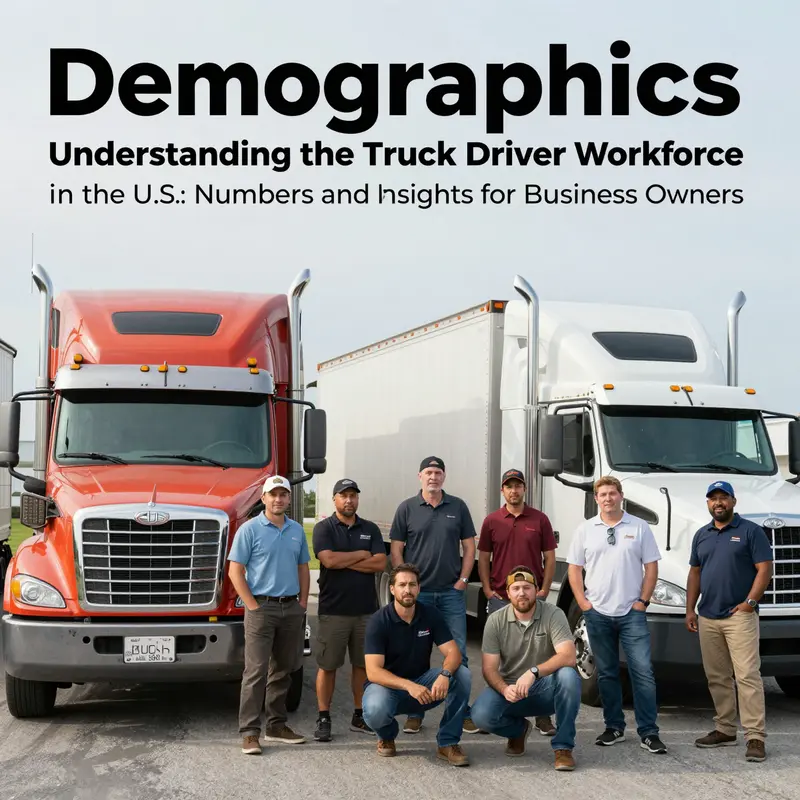
The demographics of the U.S. truck driver workforce shape not only the rhythm of the road but the very tempo of the economy that relies on those rhythms. In broad strokes, the driver population sits around 3.5 million, a figure that aligns with multiple industry estimates. The American Trucking Associations (ATA) has, in recent late-2024 snapshots, reported a driver pool near 3.6 million. While numbers vary slightly by source and method, the common thread is clear: a large, essential workforce underpins the supply chains that keep stores stocked, factories humming, and communities supplied with the goods that define daily life. Yet beneath that vast headcount lies a pressing constraint—the industry is running short of drivers. By early 2025, the ATA identified a gap of roughly 80,000 drivers to fill open positions, a figure that marks a 30 percent increase over what was observed before the pandemic. This shortage is not a stat in isolation; it ripples through pricing, delivery windows, and the ability of fleets to maintain service levels during peak seasons. It is a reminder that the numbers of drivers matter not just as an abstract headcount but as a keystone of operational resilience across the American economy.
The most resonant demographic story in trucking today is the aging of the workforce. The median age of a professional U.S. truck driver hovers around 46, noticeably higher than the median for all workers, which sits in the low to mid-40s range. That five-year gap sounds modest in a single sentence, but it carries long-term implications. An aging workforce means more imminent retirements and a narrower window to recruit and train the next generation of drivers who can sustain the industry’s capacity. It also signals rising pressure on fleets to design roles and training pathways that appeal to younger entrants, while simultaneously offering the stability and support that older drivers rely upon to extend careers on the road. In a sector where professional competencies accumulate across years of on-the-job experience, the aging profile translates into both urgency and opportunity: urgency to fill vacancies sooner and opportunity to tailor recruitment strategies that align with the life stages of newer cohorts. The aging trend is not just a human resources concern; it is an economic signal about how the industry must adapt its practices to preserve reliability in critical logistics chains.
As the industry ages, its demographics are also diversifying. The NATSO Foundation has highlighted a shift toward greater inclusivity, noting that the driver pool is becoming more representative of broader society. This diversification matters on multiple fronts. It opens pathways for underrepresented groups to enter the profession, supports more resilient recruitment pipelines, and challenges fleets to broaden their outreach and supports. Inclusive hiring practices, mentorship programs, and culturally responsive training environments can improve retention by making the work feel accessible and sustainable for a wider range of people. The demographic evolution is not merely about representation; it is about how the workforce can evolve to meet the evolving demands of a modern logistics system where teams need to coordinate across languages, backgrounds, and life experiences. The NATSO Foundation’s emphasis on inclusive strategies reflects a recognition that the pool from which drivers are drawn will shape safety, efficiency, and service levels in the long run.
This broader picture of who becomes a truck driver is inseparable from how people come to the profession in the first place. Training pipelines, vocational education, and apprenticeship models are central to sustaining numbers. Modern recruitment increasingly focuses on college- and non-college-pathways alike, with programs that connect high school graduates, veterans leaving the military, and workers seeking mid-career transitions to the road. The emphasis is less about a single entry point and more about a continuum: entry training, on-the-job development, and ongoing professionalization that keeps pace with shifting regulatory requirements and technological advances. The industry’s appeal expands when training is accessible, visible, and clearly connected to career progression, compensation, and a sense of purpose. In the context of a growing demand for drivers and a workforce that includes a broader mix of ages and backgrounds, the pipeline becomes a strategic asset rather than a peripheral consideration. At the same time, the sector must address operational realities that affect who stays and who leaves. Long hours, extended time away from home, and the physical demands of long-haul work can strain even the most committed workers. Fleets that invest in safer practices, healthier schedules, and better home time policies will inevitably attract and retain more talent, particularly among younger cohorts who weigh work-life balance as a central factor in career decisions.
One dimension nearly universal in trucking is the variation in work arrangements across the country. Some drivers spend most of their weeks on the highway, away from home for days at a time, while others operate in regional or local routes that bring people back to their communities more frequently. This spectrum of schedules interacts with demographics in meaningful ways. For example, younger entrants often seek roles that offer predictability and the ability to maintain social and family commitments, even while the road remains a defining feature of their professional identity. Older drivers may value stability and predictable safety nets, including comprehensive benefits and retirement options. The demographic mix can thus influence not only how fleets recruit but how they structure compensation, scheduling, and safety programs. In a system where margins tighten and the demand for speedy, reliable fulfillment grows, the relative attractiveness of different work models becomes a decisive factor in shaping the size and stability of the driver pool. The industry’s challenge is to harmonize demand with a workforce built on varied life circumstances, a task that demands thoughtful design of job roles, training timelines, and supportive work cultures.
Geography also renders its own fingerprints on demographics. Driver availability tends to cluster around major distribution hubs, with regional weather patterns, port activity, and manufacturing centers shaping where demand for drivers is most acute. This geographic concentration interacts with the aging and diversifying workforce in nuanced ways. For instance, regions with robust community colleges and vocational programs may recruit more quickly from local pools, thereby reducing recruiting costs and shortening training durations. Conversely, areas with fewer training resources may rely more on apprenticeship programs, veterans’ transitions, or immigrant pipelines to sustain driver numbers. The net effect is that local context matters as much as national headlines about shortages. The industry’s response, then, is not only to recruit more drivers but to recruit smarter—aligning program incentives with regional needs, building partnerships with educational institutions, and creating pathways that allow people from diverse backgrounds to become drivers with confidence and competence.
The shortage figure itself underscores the financial and operational urgency. An 80,000-driver gap is not simply a figure to be filed away in a statistics appendix; it translates into longer lead times, tighter freight margins, and, in some cases, reduced ability to meet customer demands during peak periods. For fleets, this creates a cycle: slower onboarding of new drivers can depress your capacity to meet demand, which can push up wages and benefits as a compensatory mechanism, which in turn feeds into higher operating costs. For the broader economy, the message is equally clear: steady drivers are the backbone of reliable delivery, and any persistent imbalance between supply and demand can translate into tangible costs at the consumer level. Stakeholders—from policymakers to training providers and fleet owners—recognize that numerical gaps are deeply tied to the lived experiences of drivers and to the downstream vibrancy of supply chains.
In the face of these realities, the industry is exploring multiple levers to stabilize and grow the driver base. Some of these are structural—revising home-time policies and enhancing safety programs to reduce attrition. Others are aspirational—making the profession more welcoming to a broader cross-section of society by addressing perception gaps, offering clear career ladders, and promoting lifelong learning opportunities that keep drivers engaged as technology evolves. The push toward diversification, supported by research and advocacy from organizations like the NATSO Foundation, is not a side project; it is integral to expanding the pool of potential drivers and enhancing retention across age groups and backgrounds. At a practical level, fleets increasingly recognize that improving the working environment, reducing unnecessary administrative burdens at the roadside, and equipping drivers with reliable tools to manage daily tasks can improve satisfaction and boost retention. The practical ties between demographic trends and everyday operations are intimate: a driver who meets his or her home-time needs, feels valued within a diverse and inclusive culture, and arrives at the end of a long shift with appropriate rest is more likely to continue in the profession and to mentor the next generation.
Moreover, the professional identity of truck drivers is evolving as technology reshapes the road. Telematics, advanced safety features, and digitized load planning can alleviate some of the cognitive load on drivers, particularly the newer entrants who might be balancing family commitments with demanding routes. The demographic shifts thus intersect with technological adoption in meaningful ways. Younger drivers, who have grown up in a digitally connected world, may respond more positively to modernized workflows and real-time feedback about performance, which can contribute to faster competency development and higher job satisfaction. This is where the connection to the broader topic—the scale and dynamics of truck driving in the United States—becomes visible: the size of the driver pool, the age profile, and the push for diversity all feed into how efficiently goods move, how resilient the logistics network is, and how economies adapt to changing patterns of consumption and production.
As we map the current landscape, it becomes clear that demographic data does not exist in a vacuum. It interacts with policy, education, and the daily realities of life on the road. The figures compel action—augmenting training capacity, rethinking compensation structures, and widening access to the profession through inclusive recruitment—while the demographic trajectory invites long-range planning. If the industry can align pipelines with the aspirations of a more diverse and younger workforce, while preserving the experience and reliability that come with seasoned drivers, the driver population can grow sustainably even as the economy expands. The road ahead demands coordinated efforts across employers, educators, and communities to ensure that the United States does not simply count its drivers but understands their stories, values their contributions, and builds a future where the road remains a viable, fulfilling career path for a broad cross-section of Americans.
For readers seeking a glimpse into the evolving diversity of the driver population and the strategic implications for recruitment and retention, further insights are available from the NATSO Foundation’s research, which highlights how driver demographics continue to diversify and what that means for the industry moving forward. Roof racks can serve as a small, tangible example of how the profession has to adapt at the ground level—equipment choices that enhance efficiency and organization, especially as fleets seek to attract younger talent who expect streamlined, practical tools to support their work on the road. This link offers a window into how drivers and fleets translate demographic shifts into day-to-day practice, illustrating the connection between workforce evolution and on-the-ground logistics.
External resource: https://www.natsofoundation.org/driver-demographics-continue-to-diversify/
Future Trends in the U.S. Truck Driver Workforce: Projections, Shortages, and the Tank-Trucking Boom
When we ask how many truck drivers are needed to power the United States economy, the answer sits at the crossroads of current labor statistics and forward-looking market forces. Today, the most reliable counts place the driver population in the vicinity of 3.5 million, with the American Trucking Associations citing about 3.6 million professional truck drivers as of late 2024. These figures, while varying slightly by source and methodology, converge on a shared reality: a workforce large in scale, yet persistently strained by a widening gap between demand and supply. By early 2025, the ATA highlighted a record-shortage of roughly 80,000 drivers, a shortfall that represents about a 30 percent increase over pre-pandemic levels. That is more than a numeric discrepancy; it is a signal about reliability in logistics, costs for shippers and consumers, and the urgency of training pipelines that can sustain the country’s freight movements. In this context, the question shifts from “how many drivers are there?” to “how many drivers will be needed in the years ahead, and under what conditions will they work?” The trajectory now hinges on several intertwined trends that shape both quantity and capability in the truck-operator workforce.
A core driver of future demand lies in the specialized segment known as tanker trucking. Projections anchored in market analytics show a robust expansion in the tank trucking market, with a projected value approaching USD 55.39 billion by 2026. This expansion reflects not only growing volumes of liquids and gases transported across diverse sectors—energy, chemicals, and food and beverage—but also the increasing stringency of safety standards and the need for skilled professionals who can manage the unique demands of tank trailers. The implication for the driver pool is twofold. First, more drivers will be needed who possess the endorsements, safety acumen, and operational discipline required for hauling hazardous and non-hazardous liquids. Second, as the market grows, employers will seek candidates who bring not only core trucking skills but also familiarity with the specialized equipment and cargo handling that tanker work demands. In short, the tanker niche will be a dominant axis along which job opportunities proliferate, and where the marginal demand for trained drivers is most acute.
The driver workforce of the near future will thus be defined by both breadth and depth. Across the broader trucking sector, demand will continue to track industrial activity, port volumes, cross-border trade dynamics, and the resilience of supply chains that must move critical goods under tight time windows. As infrastructure development advances and industrial output climbs, the need for seasoned drivers who can navigate complex routes, comply with safety and environmental regulations, and manage cargo integrity will rise. Yet the same market forces that generate opportunity also underscore the difficulty of attracting, training, and retaining a workforce sufficient to meet expanding needs. The gap of 80,000 drivers is not merely a numeric target; it is a reflection of recruitment challenges, wage pressures, and the long lead times required to bring new drivers from novice status to the level of proficiency expected in high-demand lanes and specialized tank operations. This tension between expansion and capacity will shape hiring strategies, compensation trajectories, and the geographic distribution of opportunities.
A practical way to grasp future projections is to consider the ecosystems that surround tanker operations. Tank trucks demand a precise blend of technical skill, safety culture, and operational discipline. Drivers must master not only the fundamentals of vehicle handling but also the nuances of loading and unloading hazardous materials, securing loads against dynamic forces, and maintaining robust spill-response awareness. In this sense, the growth of tank trucking amplifies the emphasis on training pipelines, apprenticeships, and ongoing professional development. Industry observers note that the talent pool will increasingly rely on a combination of vocational training, on-the-job mentorship, and targeted endorsements that expand a driver’s scope of work without compromising safety. Alongside this, the integration of advanced telematics, route optimization, and cargo monitoring systems will redefine what it means to be a competent tanker driver. The human element remains indispensable, but the skill set required will be deeper, more specialized, and continuously refreshed to keep pace with evolving cargo profiles and regulatory expectations.
For drivers themselves, the future market offers both opportunities and cautions. The expanding tanker segment promises more stable, long-haul lanes and access to higher-paying roles that reflect the added responsibilities of handling sensitive and hazardous cargo. It also invites a rethinking of career pathways within trucking. Rather than a single path from entry to retirement, drivers may chart a progression that moves through various specialized streams—liquids, dry bulk, or compressed gases—each with its own endorsement requirements and safety culture. This diversification can help cushion the industry against cyclical downturns in any one segment, while presenting pathways for skill-enhancement that translate into better earnings and greater job security. Yet this evolution will not occur without deliberate efforts to improve recruitment—particularly among younger workers and underrepresented groups—and to create a robust framework for ongoing training that keeps pace with changes in cargo type, equipment, and regulatory stringency.
The demographics of the driver population also matter when we project future headcounts. The industry has long contended with an aging workforce and recruitment bottlenecks that slow the pipeline of new entrants. If the sector can accelerate entry routes—through high school and community college partnerships, veteran transition programs, and expanded apprenticeships—the growth in tanker demand could be met more effectively. On the other hand, if enrollment and training efforts lag, the supply gap could widen further, amplifying wage pressures and reshaping who gets to work and where. In this context, wage structure, benefits, and working conditions will be critical levers. A broader appreciation of the lifestyle implications of long-haul driving, along with investment in safer, more comfortable equipment and predictable scheduling, could improve retention and attract a more diverse workforce.
The conversation about numbers would be incomplete without acknowledging the broader ecosystem that supports drivers on the road. Trucks and trailers—whether a standard configuration or a tank-specific design—do not operate in isolation. They rely on a web of maintenance facilities, parts supply chains, safety training programs, and regulatory regimes that define permissible operations. The expansion in tanker volumes will, gradually, stress-test supply chains for spares, service capacity, and roadside assistance services. That pressure can, in turn, influence the availability of drivers on certain routes or in particular regions, thereby shaping regional demand for new entrants. Even as some routes become more automated in their monitoring and dispatch workflows, the demand for hands-on driving expertise—especially in the context of hazardous cargo—will keep human drivers central to the business model. These realities underscore a fundamental truth: projections about driver numbers are inseparable from the quality and resilience of the support system that keeps trucks moving safely and efficiently.
In shaping a realistic forecast, one must also consider policy and regulatory developments that influence who can drive, how they are paid, and what training is required. States and industry groups are continually refining minimum endorsement criteria, safety training standards, and fatigue management rules. These policies can accelerate or slow the growth of the driver pool, depending on how they balance safety concerns with practical pathways into the profession. The industry seeks a balanced approach that protects public safety while enabling a steady inflow of capable drivers. In the tanker niche, where cargo sensitivity and potential risk are elevated, the regulatory environment is especially consequential. A stable, well-trained cadre of tanker drivers will not only support the expansion of the market but also help improve overall supply chain reliability during periods of stress, such as extreme weather or supply shocks.
Amid these dynamics, the industry looks for signals that help forecast labor needs with greater confidence. Market projections like the tank trucking sector’s growth to a multi-billion-dollar benchmark by the mid-2020s provide a compass. Yet the numbers alone do not capture the full picture of how work will evolve. The opportunity lies in aligning workforce development with sectoral demand through proactive training pipelines, compelling career pathways, and improved working conditions. If the industry can close the gap between demand and supply, the United States can expect not only more drivers but a cadre of professionals equipped to manage increasing cargo complexity, improved safety, and higher operational efficiency. In that sense, the projected trajectory is as much about elevation of skills as it is about expansion of headcounts. This integrated perspective helps explain why the projected tanker market growth matters to the broader question of how many truck drivers the country will need in the coming decade.
To explore how the equipment and cargo-handling aspects of this growth are evolving, readers may consult industry resources that discuss tanker-specific hardware and configurations. For instance, practical guides and industry analyses illuminate how tanker endorsements, loading protocols, and cargo containment practices shape the daily realities of tanker driving. A representative resource covering tanker equipment and related insights is the ATI Tanks platform, which offers focused perspectives on tank trailer systems and the ancillary gear that supports safe, compliant operations. See the resource here: ATI Tanks. This kind of practical knowledge complements the broader market outlook by connecting macro-trends to the hands-on competencies drivers must possess as demand for tanker work grows.
Looking ahead, the blend of growing tanker demand, the need for skilled, safety-conscious drivers, and the ongoing evolution of training and recruitment will determine the scale of the truck driver workforce in the United States. The numbers will hinge on the success of programs that shorten the pathway from novice to proficient tanker driver, the willingness of carriers to invest in better pay and working conditions, and the capacity of training institutions to supply workers who can rise to more complex cargo profiles. The picture is not simply about adding more drivers; it is about cultivating a workforce capable of sustaining higher volumes of sensitive cargo, improving safety records, and maintaining reliability across a shifting freight landscape. In that sense, projections for the U.S. truck driver workforce are less a single endpoint than a dynamic target that reflects industry maturity, infrastructure momentum, and the effectiveness of talent pipelines. The question remains open, but the trajectory—especially in the tanker segment—points toward meaningful growth in both opportunity and responsibility for those who choose the road as their career.
External reference for deeper market context: For a detailed market-level projection, see Grand View Research’s United States Tank Trucking Market Size, Share & Trends Analysis Report By Type (Dry Bulk, Liquid), By Application (Energy, Chemicals, Food & Beverage), And Segment Forecasts, 2023 – 2030. https://www.grandviewresearch.com/industry-analysis/usa-tank-trucking-market
Final thoughts
The landscape for truck drivers in the U.S. is evolving, with significant statistics shedding light on both the challenges and opportunities present. Business owners must remain cognizant of the truck driver shortage and its potential implications on supply chain and logistics. By understanding these dynamics, companies can strategically navigate the challenges while also recognizing the invaluable contributions truck drivers make to the economy. Addressing the shortage, adapting to the changing workforce demographics, and anticipating future trends will be crucial for sustaining operations in a competitive market.