

Tesla’s Cybertruck has captured significant attention in the automotive industry, particularly among business owners considering electric vehicles. With its innovative design and cutting-edge technology, understanding the pricing structure of the Cybertruck is essential for making an informed investment decision. This article delves deeply into the pricing strategies employed by Tesla, comparing different variants, analyzing market demand and its influence on pricing adjustments, conducting a competitive analysis against other electric vehicles, and forecasting future pricing trends. Each aspect will provide valuable insights tailored to business owners looking to adopt this electric powerhouse into their fleets.
The Price Between Power and Punch: Navigating the Cybertruck’s Volatile Pricing Landscape

When a vehicle is billed as both a high-tech disruptor and a rugged workhorse, its price becomes more than a number on a sticker. It becomes a signal about who the product is for, how quickly the company expects to move metal off the lot, and how it plans to compete in a market crowded with capable electric pickups. The Cybertruck pricing saga in early 2026 reads like a case study in dynamic pricing under pressure: demand signals, competitive pressure, and a branding choice all colliding in real time to reshape the perceived value of a vehicle that began life with a halo of audacious ambition.
As of March 4, 2026, the entry point into the Cybertruck lineup has shifted to a Dual Motor All-Wheel Drive configuration priced at $59,990 in North America. This base price marks a pivot away from the previously available rear-wheel-drive variant, which had been discontinued, and it positions the lineup as accessible to a segment that once assumed a higher entry threshold for a vehicle that aimed to blend utility with performance. Yet accessibility did not stay static. The initial launch window featured a limited-time promotional price of $59,990 that lasted ten days. That window closed, and a 10-day promo protocol became a tactical tool for gauging demand, complicating consumer expectations and trust in long-term pricing promises. In practical terms, the base price at that post-promo moment shifted upward to $69,990, illustrating a fundamental truth in the current market: price can be a moving target when the business model leans heavily on volume and market share rather than a single, static position.
The middle of the lineup retains a high-value proposition, priced at $79,990. This mid-range All-Wheel Drive variant preserves the full feature set many buyers expect at a higher price point—air suspension, a rear touchscreen, and the performance credentials that have become synonymous with the vehicle in question. The spectrum from $59,990 to $79,990 is not simply a scale of capability; it is a deliberate signal about where Tesla (for lack of a better noun in this discussion) believes the market will respond most reliably to a balance of price and performance. Then there is the flagship tier, the top-end Cyberbeast, which speaks to the other side of the pricing equation: performance, scale of capability, and brand prestige. After a notable price reduction, the top model moved from $114,990 down to $99,990. A $15,000 retreat for the Cyberbeast repositions it not merely as a more affordable halo vehicle but as a genuine alternative to other high-end full-size pickups with comparable payloads, range, and powertrain sophistication.
This three-tier arrangement—an entry-level price that sparked a promotional frenzy, a solid mid-range option, and a revived top tier—offers a coherent picture of a strategy designed to address a shifting market reality. The initial, ambitious price projection had looked to a broader, aspirational category, but sales data from 2025 told a different story. With annualized volume far below Elon Musk’s mid-century goals, and with real competition from traditional players rolling into the electric-fleet segment, Tesla faced mounting pressure to recalibrate. The market didn’t just want a high-priced novelty; it wanted a practical, compelling value proposition that could justify the cost in everyday use cases—from worksite duty to highway corridor cruising. The result is a pricing landscape that reflects a broader rethink about unit economics, demand elasticity, and the willingness of buyers to pay for an innovative aura as well as a robust feature set.
The pricing shifts are twofold: first, the price points themselves—what you pay for the same base capability and how much extra you’re asked to invest for higher trims and fringe capabilities. Second, the cadence of price changes—the regularization of discounts and the normalization of price windows—signal a broader intention to optimize volume. The low entry price in February 2026 was framed as a spark meant to ignite demand, not a final, guaranteed price. The subsequent price adjustments suggest a balancing act. The company aimed to lower the barrier to entry enough to attract a broader audience, while preserving the allure and profit potential of the top tier. In practice, this means buyers who previously assumed the truck was out of reach could now entertain the possibility of ownership without scrapping the dream entirely. And buyers who chase performance and premium perception still had a compelling option in the top tier, which, despite the price reduction, remains a flagship product in the lineup.
This dynamic mirrors a broader volatility in the pickup market itself. The Ford F-150 Lightning and the Chevrolet Silverado EV have added real competitive pressure to a space once dominated by traditional trucks with internal combustion engines. Price-sensitive buyers who previously hesitated at a six-figure price tag for a cutting-edge electric alternative now find a more nuanced decision space. The new base price of $59,990—though briefly superseded by a higher entry point after a ten-day window—serves as a reminder that the value proposition must endure beyond a promotional blip. It also raises questions about how much price flexibility the market will tolerate when coupled with features like adaptive air suspension and a rear touchscreen as standard or near-standard equipment across trims. The mid-range option continues to hold a sweet spot for those who want a robust blend of capability and modern conveniences without stepping into the premium bracket. The top tier’s price movement ensures the brand can still claim leadership in performance and design without losing credibility with cost-conscious buyers who expect a measurable return on their investment.
From a consumer psychology standpoint, the pricing narrative is as important as the numbers themselves. The initial promotional price established a clear expectation: this is a product worth considering now because the price is unusually favorable. When the price adjusted upward after the promo period, it triggered a recalibration among prospective buyers—some may have hesitated, others may have justified the investment as a premium for performance and utility, and many still weighed the long-term operating costs and depreciation in a way that aligns with their use cases. The subsequent price cut for the top tier reaffirms a core truth about price signaling: consumers respond not only to the sticker price but to the total value proposition, including performance, safety features, range, and the level of service or ecosystem support bundled with the vehicle. The pricing strategy thus acts as a negotiation with the market—a willingness to align price with demand while preserving the vehicle’s premium identity for a segment that values capability as much as conspicuous capability on top of the bedlining and payload that define the category.
For readers who want a deeper view into how this pricing conversation threads through the industry and the public discussion, a dedicated hub on the subject provides a broader frame of reference. See the Cybertruck Co hub for more on the pricing dialogue and the broader market positioning surrounding this model, which can help readers connect the dots between sticker price, promotional tactics, and real-world purchasing decisions. Cybertruck Co
Ultimately, the current pricing reflects a deliberate attempt to balance accessibility with a performance-first narrative. The base model’s position opens a doorway for a larger group of potential buyers, enabling them to explore a vehicle that blends heavy-duty capability with electric efficiency. The mid-range model reinforces the value proposition of feature-rich, all-weather performance that still speaks to work-uvility and daily driving practicality. The refreshed top-end price, now closer to the price range many buyers expect for high-end performance machines, preserves the allure of a flagship that defines brand benchmarks rather than merely expanding the catalog. In other words, the strategy aims to convert interest into actual ownership by lowering the entry barrier while keeping the promise of extraordinary capability at the top end intact.
Looking forward, the pricing narrative will likely hinge on a few key variables: the trajectory of competition, changes in material costs and supply chain dynamics, and the overall health of consumer demand for electric pickups as a durable, usable asset rather than a novelty. If the market continues to push for larger incentives or more aggressive price windows, further adjustments could unfold, perhaps in steps aligned with new model years or updated feature sets. But the core takeaway remains consistent: price is a tool, not a fixed fate. When used intelligently, it can expand market reach without diluting a product’s identity. The result is a more inclusive conversation about who can own a breakthrough truck and a more nuanced understanding of what “value” means in a market that increasingly blends performance with practicality.
External resource: https://www.reuters.com/technology/autos-cars/
Price Waves in the All-Electric Pickup Segment: Variants and Their Price Differences

Prices in the still-novel space of high-efficiency electric pickups moved with unexpected tempo in early 2026. A dynamic pricing strategy unfolded in the weeks around February as buyers and makers learned to value range, acceleration, and efficiency in a small but growing segment. Across three drivetrain configurations the price differences mapped to performance envelopes, interior refinement, and feature breadth, turning simple sticker numbers into a guide for budget and purpose.
At the base of the lineup sits the entry level all wheel drive model, a version that balances everyday usability with weekend adventure. When it first appeared, this variant carried a suggested price just under sixty thousand dollars. That initial price carried the weight of promise but was tied to a promotional window that would not endure. In about ten days the appeal of the discount faded and the price moved to around seventy thousand dollars. The new price reflected not just a shift in numbers but a recalibration of how the market valued balance between range, acceleration, and predicted ownership costs in the real world of fuel and maintenance.
The Price Puzzle of the Cybertruck: How Demand, Discounts, and Dynamic Pricing Reshape a Flagship EV

The Cybertruck entered the market with a narrative that teased both design revolution and affordability, a combination that promised to redefine a segment of pickups. In the public imagination, the base price was a symbolic target, a beacon that suggested electrification could arrive without the kind of upcharge that had come to define high-end trucks. In reality, the opening price tag reflected a very different calculus. The first available configuration arrived at a markedly higher level than the promised target, creating a disconnect between anticipation and the initial market offer. This dissonance set the stage for a pricing trajectory that would swing widely over the next years, as Tesla attempted to calibrate demand against production realities and inventory pressures. As early as the transition from teaser promises to actual market presence, the market observed a pattern: broad consumer interest collided with a pricing structure that kept the vehicle outside the most common budget ranges, and price leadership responded with adjustments rather than a single fixed path. The launch price point, while not the only driver of interest, became a lodestar for understanding how pricing could influence perceptions of value when a vehicle promised both rugged capability and futuristic engineering. The shift from promise to practice didn’t unfold in a vacuum; it unfolded within a broader market context where consumer expectations for value align against the realities of supply chains, production costs, and the cost of advanced materials and technology that characterize a vehicle of this kind. The narrative around price, therefore, became inseparable from the story of demand. Tesla introduced a lower-priced model later, attempting to attract buyers who might have been deterred by the first price tier. This new offering, while still priced well above the original $39,990 target, signaled a recognition that broadening appeal required more than a single price point; it required a price ladder that could capture both price-sensitive buyers and those drawn by performance or distinctive design. Yet even that ladder was not a straight ascent. As the market learned, cuts and promotions would be used to clear inventory and stimulate showroom interest, not merely to keep a single variant in the spotlight. The strategy evolved into a dynamic pricing approach that would become a central theme of the vehicle’s commercial narrative. By late February 2026, Tesla implemented a pricing strategy that reflected both experimentation and refinement. A promotional window briefly offered a base model at a level designed to gauge demand, but the subsequent move was to increase the price by a significant margin after that window closed. The entry-level Double Motor AWD Standard, which had been pitched with a promotional price, rose by ten thousand dollars after the promo period, lifting the entry price to $69,990. This shift underscored a core insight: early promotional pricing can be a powerful tool for testing the market, but it creates a reference point that the company must then navigate with precision if demand does not surge as hoped. Meanwhile, the higher-trim Double Motor AWD High-Performance remained available, now priced at $79,990, a figure that placed high-performance aspirations within reach of buyers who value speed and capability in a smaller, more affordable package than traditional full-size pickups. The pricing geometry also reflected a broader recalibration of the lineup’s value proposition. If the base variant was lifting its price, the top tier experienced its own dramatic transformation. The Cyberbeast, a name that symbolized peak capability and premium components, was brought into sharper alignment with the market by slashing its price from an earlier $114,990 to $99,990. That reduction compressed a wide gulf between the high-end flagship and the more mass-market variants, creating a spectrum that Tesla could use to position the truck against both mainstream rivals and premium trucks in the same category. The result of these adjustments was a narrative of recalibration rather than a simple payment plan; Tesla was signaling that the vehicle’s value was not fixed in one moment of time but could evolve as demand patterns and manufacturing realities shifted. The broader market reaction to these moves was mixed but instructive. Demand, while still strong in buzz terms, failed to convert into the kind of durable, predictable sales trajectory that would reassure investors and suppliers alike. The conversion story for the Cybertruck remained strikingly conservative by automotive standards. From the more than 200,000 pre-orders received in 2019, only a fraction had realized into deliveries by mid-2025, yielding a conversion rate that hovered around five percent. This figure stood in sharp relief against typical industry ranges, where 2 to 16 percent conversions are more common depending on brand strength and product segment. In other words, the market’s appetite, while real, did not automatically translate into the kind of sustained unit flow that a new pickup line would normally require to justify expansive production planning. The production reality underlined this gap. In the face of softening demand, Tesla reportedly adjusted its manufacturing cadence, slowing the Cybertruck line at its Texas facility and reallocating resources toward the more profitable Model Y. These shifts in the production mix signaled a preference for near-term profitability over long-run volume in a product family whose long-term appeal was still subject to debate. The narrative around the Cybertruck also encompassed a number of high-profile logistics choices that added layers of complexity to demand forecasting. There were reports of a sizable number of units delivered not to traditional customers but into the portfolios of Elon Musk’s private ventures, including SpaceX and xAI. While some observers argued this was simply a matter of corporate logistics, others interpreted it as an indicator that consumer demand was not being fully realized, at least not in the way enthusiasts had anticipated. The intersection of pricing strategy and demand clarity produced a complex marketing and financial picture. Tesla’s pricing shifts did more than adjust the sticker price; they altered perceived value, a critical lever in how buyers weigh the trade-offs between upfront cost, long-term operating expenses, and the distinctive features that a vehicle promises. In this sense, the price movements were as much about shaping expectations as they were about balancing the books. The pocketbook implications for buyers became a practical reflection of the evolving strategy. A base price of $69,990 for the entry model makes the vehicle more approachable than the initial price tier, but it remains substantially above the original promised target. The $79,990 tag for the higher-performance version positions the vehicle as a choice for enthusiasts who want a blend of rugged capability and preserved acceleration, while still competing with other well-equipped pickups in the broader market. The most striking alteration, however, occurred at the top end. The price drop to $99,990 for the Cyberbeast was a direct attempt to bring a flagship offering closer to the mainstream line, while preserving enough margin to fund ongoing development and production. This tiered strategy—more affordability at the base, yet a more aggressive discount at the top—reflects a sophisticated approach to price signaling. It invites a broader audience to imagine ownership without erasing the aura of exclusivity that accompanies a high-end model. The net effect on sentiment has been nuanced. For some buyers, the price reductions and the clear willingness to adjust the lineup signal a responsive maker that treats price as a lever rather than a fixed barrier. For others, persistent price volatility and the recurring need for discounts create a sense of risk, a concern about future resale value and total-cost-of-ownership. From a planning perspective, the dynamic pricing experiment provides a unique case study in how a pioneer in design can test new market realities and still preserve strategic aims. The pricing journey also carries implications for the broader category of electric pickups. It invites other automakers and disruptors to watch how price, incentives, and production discipline interact in real time. The story within the Cybertruck’s pricing saga reveals more than numbers; it reveals a learning process about how to align a bold product concept with a market that remains sensitive to value, reliability, and total transportation needs. For readers who want a compact, industry-facing takeaway, the key lesson is that price is now a dynamic asset, a signal that can move the market as readily as a feature list. The mechanism is not merely about lowering the price to close a sale but about calibrating the entire value proposition—range, performance, utility, and brand narrative—so that it resonates with a diverse set of buyers across a shifting economic landscape. The case also underscores the importance of timing and incentives in inventory management. With the Cybertruck, Tesla demonstrated how promotional windows can be a tool to test demand while price ladders can offer a path to broader appeal when tailored to different buyer segments. The evolving pricing structure—coupled with selective discounts, inventory control, and strategic production shifts—illustrates a flexible strategy designed to survive a volatile market and still advance a distinctive vehicle identity. As the chapter closes on this phase of the market’s reaction, the bridge to the next discussion becomes clear. If pricing remains a flexible instrument, the future will hinge on how demand stabilizes, how consumer perception of value matures, and how the company coordinates its production, incentives, and features to sustain a credible path toward mainstream adoption. The conversation about what a Cybertruck costs is thus inseparable from the conversation about its place in the market, its ability to deliver on promised capabilities, and the broader economics that shape every new model launch. For readers interested in a deeper dive into the ecosystem surrounding the Cybertruck’s pricing and its potential implications for market strategies, see Cybertruck Co. and its broader analysis of the vehicle’s community of enthusiasts and developers at Cybertruck Co.. Looking ahead, the price puzzle remains a live artifact of a dynamic industry, a signal that value is not static but responsive to demand, supply, and the ever-shifting expectations of buyers who want more than a number on a sticker; they want a story that aligns with their needs, aspirations, and sense of practical ownership. External context on how pricing dynamics influence investor sentiment and consumer behavior in the evolving EV landscape can be found here: https://www.reuters.com/technology/tesla-cybertruck-pricing-demand-2026-03-04/.
Pricing as Power: How the Cybertruck Competes on Price in the Electric Pickup Arena
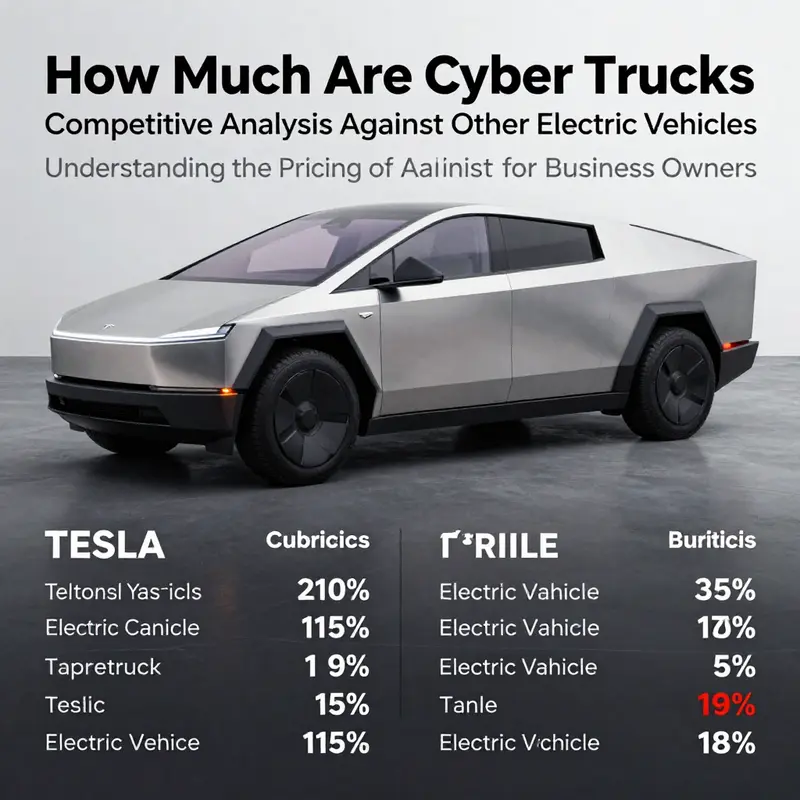
Pricing has become a central lever in the race to win the electric pickup market. As competition sharpens in early 2026, the pricing strategy for the vehicle in question shows a deliberate shift from a dramatic, attention-grabbing opening to a calibrated, demand-driven ladder. This chapter follows the thread of price as a measure of both desirability and practicality, showing how a single model line can pivot between accessibility and premium performance while still signaling distinct value propositions to different kinds of buyers. The numbers matter not as abstract figures but as signals about what buyers can expect in terms of range, acceleration, and overall ownership experience. By examining the entry-level tier, the middle-ground trims, and the most expensive, the analysis reveals a pattern: pricing is being used to widen the net without sacrificing core performance, even as the market landscape shifts around it.
The most notable development entering 2026 is the introduction of a new dual-motor all-wheel-drive standard model at a price that, at first glance, aims to lower the barrier to entry. The initial price point was set at around fifty-nine thousand nine hundred ninety dollars, a figure designed to spark trial buys and draw in buyers who previously considered such a vehicle out of reach. Within ten days, the advertised price moved upward by roughly ten thousand dollars, settling at sixty-nine thousand nine hundred ninety. The change was not merely cosmetic; it reflected a pragmatic calculation about demand elasticity in a market crowded with options and rising competition. The entry model’s performance attributes—an estimated range exceeding three hundred miles and a 0–60 mph time near four seconds—remain compelling selling points that matter to buyers who weigh more than just sticker price. The price adjustment did not erase the value proposition of the entry model; it repositioned it in relation to the entire lineup and the evolving expectations of buyers who want solid capability at a practical price.
Parallel to this simplified entry point, a higher-trim variant persists, offering more performance and features and carrying a price tag at roughly seventy-nine thousand nine hundred ninety dollars. The gap between the entry model and the higher-trim option illustrates a familiar truth in the electric pickup space: the incremental cost can unlock meaningful gains in power, acceleration, and capability. Yet the centerpiece of the week-to-week story remains the dramatic recalibration of the flagship tier, the top-end Cyberbeast, which has undergone a substantial price adjustment—from around one hundred fourteen thousand nine hundred ninety dollars down to ninety-nine thousand nine hundred ninety dollars. The cut is not simply about lowering the number on a spec sheet; it reflects a strategic retrenchment designed to reenter a more competitive mid-to-high-end stratum and to align the offer with what buyers in this segment expect to pay for top-tier performance and luxury touches.
A notable engineering and policy shift accompanies these price changes: the removal of certain previously bundled benefits. In embracing a lower price point for the top tier, the manufacturer has rolled back included perks such as unlimited fast charging and a Full Self-Driving software package. The implication is twofold. First, buyers now face a clearer, cash-based price for the core vehicle and are nudged to make separate purchases for additional conveniences. Second, the price decline of the top tier is partially offset by a more measured inclusion policy, signaling a broader industry trend toward price transparency and modular add-ons rather than bundled, all-inclusive packages. For enthusiasts, the reduced sticker may still be appealing, but it also heightens awareness of what is truly included and what comes as an optional upgrade.
In this pricing ballet, the market context matters as much as the numbers themselves. The company’s deliberate strategy aims to lift demand by offering a compelling entry price while simultaneously preserving margins through more selective provisioning of perks and services. The dynamic pricing approach—first introducing a short-lived promotional price and then adjusting the baseline—appears designed to test price sensitivity in real time. It is a move that echoes broader industry pressures: pressure from rising component costs, supply-chain realities, and a crowded field of rivals that each bring their own negotiation levers to the table. The goal, as insiders and analysts suggest, is to spark a sense of urgency in buyers who might otherwise wait and watch. When demand growth lags, a temporary low price can become a signal of willingness to buy, and in a later phase, the price can settle into a more sustainable equilibrium.
The competitive landscape for electric pickups in early 2026 is, in many ways, a mirror of the broader market. The entry price for a conventional competitor runs in the neighborhood of forty to fifty thousand dollars for base configurations, with extended-range or premium models climbing toward seventy thousand dollars or more. One example—the typical baseline of a widely available rival—demonstrates that there is still a wide gap between aspirational design and everyday affordability, even as electric powertrain efficiency and autonomy continue to improve. The lower end of the market remains an important terrain to claim, while the upper end must justify why the premium exists beyond a stronger badge or more adventurous styling. A rival with a more traditional silhouette and broad availability has positioned itself as a practical alternative, offering convincing value at a lower price point, with the caveat that its production faced strategic shifts late in 2025. The result is a market where buyers are not simply choosing a vehicle; they are selecting a strategy for ownership, charging habits, and the type of driving they expect to do most often.
In parallel, other players in the field present a mix of pricing philosophies. One competitor emphasizes luxury and technology, with a price spectrum that can exceed eighty thousand dollars for a capable, well-appointed model. Another focuses on rugged capability and off-road performance, with pricing that pushes the upper end toward the mid-to-high hundreds per month in terms of ownership costs when total cost of ownership is considered. Yet another rival offers more traditional truck utility with competitive base pricing and strong towing numbers, but with limited availability outside certain regions. The result is a marketplace that rewards flexibility: buyers who want high-speed deceleration off the line and the kind of acceleration that makes daily commutes feel more like performance driving may prize the top tier, while those who want a practical, work-ready electric truck may opt for a lower-cost entry and plan for incremental upgrades later.
From a consumer-sentiment perspective, the entry platform’s aggressive positioning against lower-cost conventional options signals Tesla’s intent to democratize access to advanced electric drivetrain technology without sacrificing the aura of exclusivity that often accompanies cutting-edge design. The vehicle’s unconventional styling remains a talking point—distinctive lines that invite conversation about aesthetics and aerodynamics. At the same time, questions linger about consumer acceptance in different markets. Availability remains uneven in certain regions and, for some global markets, access is constrained due to regulatory and supply dynamics. This means that even a compelling price cannot guarantee universal adoption, especially when prospective buyers weigh long-term ownership costs, charging infrastructure, and after-sales support.
The price moves also reflect demand dynamics in a market where volumes reportedly declined in the previous year. Analysts note a roughly fifty percent drop in annual volumes, a statistic that compels the automaker to calibrate pricing, incentives, and feature bundles to reignite demand without eroding brand positioning. In this light, the promotional window around the initial fifty-nine thousand nine hundred ninety-dollar offer can be read as a test of price elasticity in a season when buyers begin to look beyond sticker price to total ownership value, including charging costs, maintenance, and potential software updates.
For readers who want a closer look at the premium end of the spectrum, the top-tier model’s price cut makes the proposition more competitive with those who previously paid a premium for performance. The removal of perks from the top tier is a nod to the reality that many buyers no longer expect unlimited access to services as part of the base package; instead, they want the option to customize with add-ons that match their needs and budgets. This modular approach aligns with broader consumer expectations in connected, software-driven vehicles and reflects a broader trend toward price transparency, where the buyer is presented with a choice rather than a bundled promise.
In weaving these threads together, it becomes clear that the strategy is not merely about undercutting rivals on list price. It is about shaping perception and behavior. The entry model signals affordability and accessibility, inviting a broader audience to experience a new kind of electric pickup. The mid-tier preserves the promise of enhanced performance for those who want more acceleration and capability. The top tier—particularly after the price adjustment—offers a gateway to high-end performance without the premium that once accompanied the most exclusive configurations. The overall effect is a pricing architecture that can be read as a performance-versus-cost narrative, where buyers are invited to craft their own balance sheet: how much they value speed, range, charging convenience, and software perks relative to the cash outlay required today.
For those seeking a concise reference to the official pricing framework, the current configuration and numbers align with the latest public materials. The official site confirms the entry-level dual-motor AWD standard model at the introductory level, the subsequent adjustment to a higher price after a short promotional window, the mid-range option, and the reduced price for the top-tier variant along with the updated inclusions. The numbers summarized here reflect the best available snapshot of the market as of early 2026, and readers should consult the source for the most current figures as pricing can continue to evolve with market conditions and strategic considerations.
Internal note for context readers: a compact overview of how the pricing tiers are positioned within the broader ecosystem can be explored in more depth through industry-focused profiles, including a company page that highlights the Cybertruck organization and its product narrative: Cybertruck Co.
External resource: For primary pricing and feature details from the maker, see the official pricing page and related materials on the manufacturer’s site. External pricing and feature notes provide an independent check against market chatter and secondary analyses. External source: https://www.tesla.com/cybertruck
Decoding the Price Curve: How Much the Electric Pickup Costs Now and What It Signals for Tomorrow
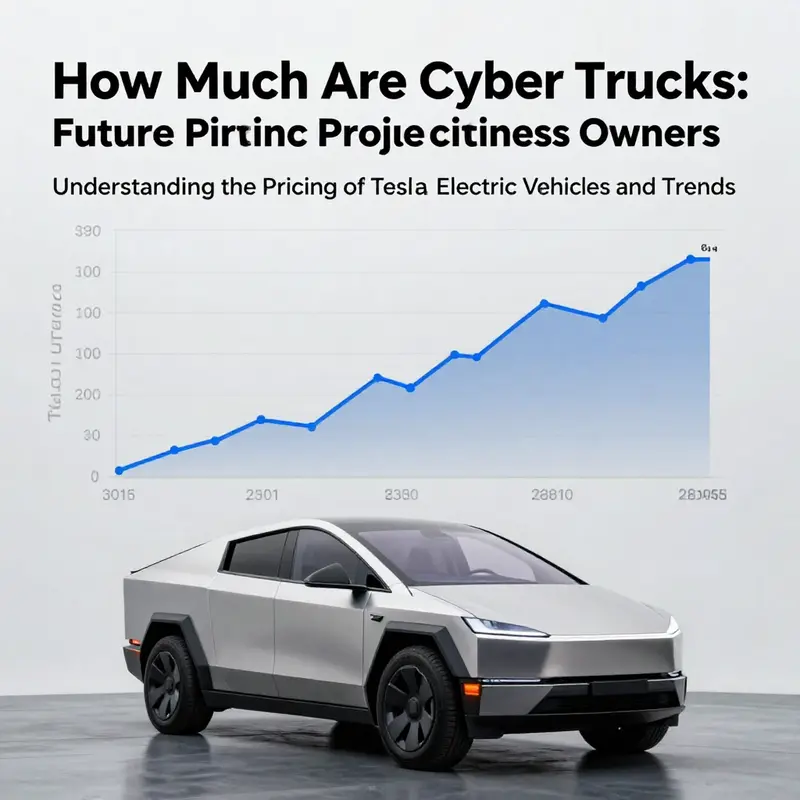
Price is never a single number in a market as active as the electric pickup segment has become. It is a moving target shaped by production efficiency, volume goals, and the bets a manufacturer makes on how many buyers will pay for certain capabilities today versus tomorrow. In early 2026, the pricing landscape for the electric pickup looked dramatically different from a year earlier, and the changes carried messages about where the segment is headed. The core takeaway is not simply a new sticker price; it is a recalibration of value, performance, and access, all aligned with a strategy to widen the buyer base while preserving the ability to monetize software driven features after delivery. This chapter traces that shift, explains the logic behind each adjustment, and connects those moves to longer term forecasts about how low prices might go and what that would mean for the market as a whole. The numbers matter, but so do the choices behind them: which features stay standard, which are sold separately, and how the company manages its scale to balance cost and capability.
On February 20, 2026, a major pricing move aimed to reset the entry point for the truck in a way that could broaden its appeal. A new entry level dual motor configuration entered the lineup with a starting price of 59,990 dollars, excluding delivery and fees. This price represented the lowest point the company had ever offered in the United States for this vehicle family. It was more than a promotional stunt; it established a new baseline designed to lower the barrier for first time buyers who might be drawn in by the prospect of a more affordable footprint. Yet this entry point did not come with the same set of conveniences found on higher trims. In return for a smaller price tag, buyers encountered a leaner feature set: an electric tailgate, power outlets in the cargo area, and basic efficiency tools, but there was no air suspension, and the suspension system relied on coil springs with adaptive dampers rather than the more sophisticated setup on premium configurations. The interior materials were simplified, and some comfort and entertainment features that many buyers come to expect in a pickup were absent. The overall effect was a practical, capable vehicle at a more accessible price, even as it signaled that some luxuries would live in optional packages rather than as standard fare.
Alongside the entry point change, the company also altered the premium end of the spectrum. The top tier model saw a notable price adjustment, but in a way that underscored the companys broader pricing philosophy. The top end variant, which carried a higher price tag before, was reduced by a substantial margin—about fifteen thousand dollars—reducing the sticker to 99,990 dollars. This move was accomplished by unbundling features that had previously been included at no extra cost, such as advanced driver assistance features and charging perks that had formerly been bundled into the purchase. In effect, the brand shifted toward a software led model: a lower upfront price for the vehicle, with high value software capabilities and charging benefits offered as add ons after delivery. It was a clear demonstration of the hardware first, software second approach that has become familiar in this market segment. At the same time, a mid range, higher performance configuration remained priced around 79,990 dollars, preserving a space for buyers who want strong performance without stepping into the full premium package. The pricing ladder thus presented a spectrum: a lean but capable entry point, a robust middle option, and a premium tier that could be enhanced through software and services.
The consequences of these moves extended beyond sticker shock. The entry level price strategy was explicitly designed to accelerate adoption among price sensitive buyers who might have been deterred by the higher entry thresholds of previous offerings. By lowering the starting line, the company was signaling that the basic package, while less feature rich, still delivered essential utility: a dual motor powertrain with spirited acceleration, respectable efficiency, and a practical four foot cargo platform. It is important to note that some customers who cared about premium experiences would still gravitate toward the higher trims, while others especially fleets or new buyers entering the category would be drawn by the lower price point. In tandem, the top tier price adjustment served to reframe value, showing that even the most feature rich, high end configurations could become more accessible if the value proposition is explicitly split into hardware and software components.
Pricing moves in themselves do not tell the whole story. The broader context for future prices hinges on several technology and production dynamics that have become central to the conversation about where the market will settle. First is the pace of battery production and the cost reductions that come with it. The Texas based manufacturing facility has pushed 4680 format cells with dry electrode technology into higher yields, delivering a meaningful drop in battery costs while simultaneously increasing energy density. The result is not just cheaper cells but more energy per unit, which translates into more range per kilowatt hour. As another plant in Asia ramps up its own 4680 line, researchers expect these savings to become embedded more broadly in the product line, reinforcing the case for price reductions without sacrificing performance. The second factor is the shift to cell to pack integration, a design and manufacturing approach that removes traditional modular battery structures from the BOM and reduces surrounding frame complexity. In practical terms, CTP can shave the base cost of the vehicle s power system well below the earlier target for a fully loaded truck, which in turn creates space for lower base prices while maintaining margins. Taken together, 4680 battery driven cost reductions and CTP integration set up a scenario in which the base model could, theoretically, stabilize in a much lower band than today—there are projections that place a future base price in the range of roughly 45,000 to 65,000 dollars.
Beyond the battery and pack architecture, scale and learning effects in manufacturing contribute to lower unit costs over time. The companys history of price adjustments after initial market introductions—evidence seen with other models as production stabilizes—provides a track record for downward pressure once demand broadens. The market s response to a lower entry price often includes an expanded pool of buyers who were previously on the fence, as well as new fleet opportunities that can absorb larger manufacturing volumes. A note of caution remains relevant: price is not simply a function of cost; it is also a strategic lever. While cost structures may trend downward, the manufacturer might still calibrate prices to balance demand with production cadence, supply chain realities, and the competitive landscape. In short, a stabilizing base price in the mid five figure range could be a real possibility, but it will be supported by an ecosystem of services, software upgrades, and financing arrangements that make the value proposition compelling even at the lower end of the spectrum.
The market context also matters for how buyers perceive value. In 2025, overall sales in the United States for this class of vehicle lagged behind expectations, nudging the company to consider a broader approach to reach non traditional buyers who might be drawn by a lower upfront cost and ongoing software enabled enhancements. The shift toward a more accessible price tier does not automatically erase concerns about total ownership cost, especially when software features and charging access are optional or billed separately. Buyers may weigh the upfront savings against ongoing costs for autonomy features, premium charging, and other services. Yet the potential upside in terms of fleet adoption, resale dynamics, and aftersales support remains significant, especially if the base price can be anchored within a price corridor that aligns with broader consumer budgets while leaving room for value added add ons.
A broader strategic thread runs through all these considerations: the move toward a more affordable, scalable, and software enabled transportation solution. Even as the truck becomes cheaper at the entry point, the company s longer term bets rely on monetizing software capabilities after purchase, and on expanding access without diluting performance. The implication for buyers who want a straightforward, no fruss experience is that they may still find compelling value in the base package, while those who require the newest driver assistance capabilities or the fastest performance will be able to opt into premium tiers and software packages. For the industry at large, the pricing trajectory signals a trend toward price diversity rather than a single fixed price. A practical takeaway is that the market could see a price band emerge that accommodates both budget conscious buyers and premium enthusiasts, with the software approach acting as the differentiator rather than a simple price multiplier.
The future is not a single price point but a spectrum. While the base volume may push toward the 45k 65k range as production scales and cost per watt falls, there remains a premium layer for those who want maximum capability and the conveniences software unlocks. That layering hardware delivered at a lower entry price, plus software driven value that can be added later helps explain why the current pricing changes are not merely price cuts but a broader reconfiguration of value. The trajectory also hints at a future in which the company pursues mass market penetration through affordability, while simultaneously preserving a path for high margin, software enabled features that can be monetized over the ownership cycle. In that sense, how much are these trucks becomes less about a single price tag and more about a price strategy that can adapt to demand, production, and the evolving expectations of a wide array of buyers.
For readers who want to explore the broader context of the company s pricing philosophy and product ecosystem further, a concise overview is available on a dedicated industry hub. This resource provides a useful perspective on how the company communicates value across hardware and software layers. External readers should also consider exploring the latest market reporting on price movement and demand trajectories to place these numbers within a broader consumer adoption framework.
External resource: https://electrek.co/2026/02/20/tesla-cybertruck-price-drop-new-model/
Internal link: Cybertruck Co
Final thoughts
Understanding the pricing structure of Tesla’s Cybertruck is crucial for business owners considering this transformative vehicle for their operations. With an attractive pricing strategy and competitive variances, the Cybertruck offers opportunities for businesses to transition to electric and benefit from operational efficiencies. As market demand continues to evolve, and with the projected trends indicating further price adjustments, staying informed will enable smarter investments. Evaluating Cybertruck pricing not only provides businesses with cost insights but also positions them advantageously within the growing electric vehicle market.