
Garbage truck drivers play a critical role in maintaining urban cleanliness and public health, yet their compensation often lags behind many other professions. For business owners in the waste management industry and related sectors, understanding the nuances of how much garbage truck drivers make is essential not only for budgeting but also for attracting and retaining qualified staff. This guide explores the regional salary variations across the United States, emphasizing the importance of geographic context in compensation strategies. It then delves into how experience levels and certifications impact earnings, offering insights into workforce development and skill-based pay differentials. Finally, it examines employment trends and future projections to help business owners anticipate changes in the labor market and make informed decisions. Together, these chapters provide a comprehensive overview of the salary landscape for garbage truck drivers, enabling smarter business planning and competitive positioning.
Pay on the Route: How Regional Realities Shape Garbage Truck Drivers’ Wages
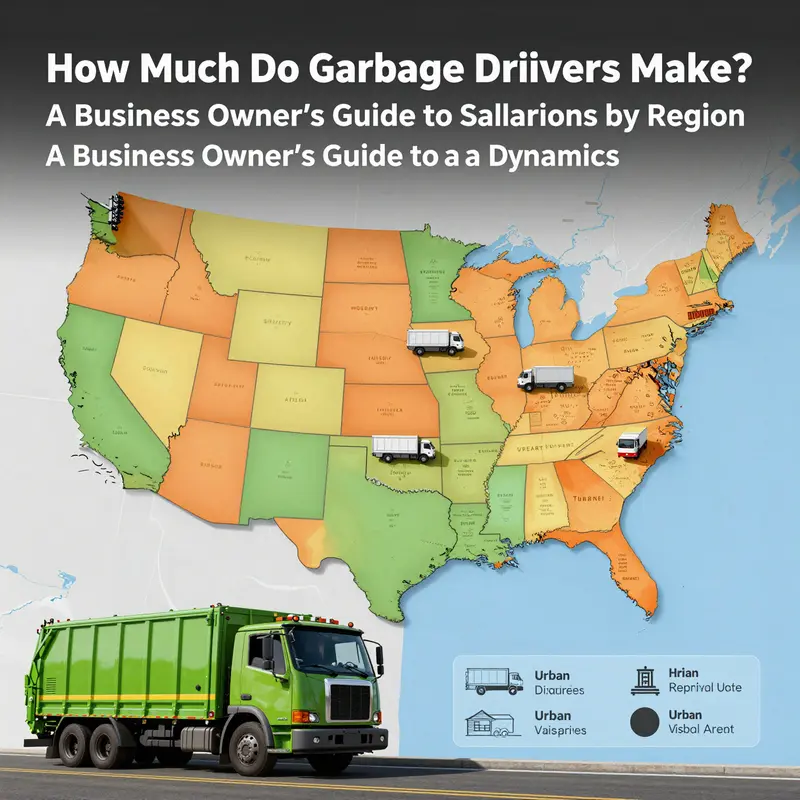
In the quiet moments before dawn, when neighborhoods still dream and streets glisten with the last drizzle of night, the rhythm of the city resumes its course because someone is out there keeping it clean. Garbage truck drivers are the frontline workers of urban life, the ones who move waste from curb to processing, who keep streets functional, air a little fresher, and sanitation systems humming. Yet the numbers behind their pay tell a broader story about how we value essential labor, how earnings vary by place and circumstance, and how a single role can look very different depending on where the route runs and who signs the paycheck. A snapshot from December 9, 2025 places the United States average wage for garbage truck drivers at about $20.00 per hour. That figure sits roughly 19 percent below the national average across all occupations, a gap that invites questions not just about skill or effort but about structure, opportunity, and geography. The truth is more nuanced than a single figure can convey, because compensation for these drivers arises from a blend of base pay, overtime opportunities, shifts, union presence, and the particular employer—whether a city or a private hauler. The result is a landscape where a driver’s take-home can change with the weather, the calendar, and the street grid they navigate every day. Understanding that landscape means looking beyond the headline wage to the regional patterns, the structural differences between labor market segments, and the practical realities that shape how much money a driver can expect to take home month after month.
Across the United States the pay story is mostly a regional one, braided with local cost of living, demand for municipal services, and the administrative choices of the employer. In major metropolitan areas, where the volume of waste and the complexity of routes tend to be higher, drivers may find overtime more readily available, especially during seasonal peaks or when staffing gaps occur. In those same cities, competition for experienced CDL holders can push wages upward as fleets vie for the most reliable operators. By contrast, some rural or smaller-town districts with fewer private haulers or with municipal departments that standardize pay more strictly may present a more predictable but modest earnings picture. The regional fabric of pay is a reflection of a labor market where supply and demand for skilled waste collection workers intersect with local budgets, public safety considerations, and the logistical demands of keeping streets clean in every season. The numbers matter, but they are best read as a gauge of how much the job pays on average in a given place, not as a verdict on the value of the work itself.
To understand the variation, it helps to outline the factors that most strongly influence a driver’s hourly rate and potential earnings. First is geography: the same job can be priced differently depending on the city or state, influenced by regional wage norms, the cost of living, and the presence or absence of unions in the waste-hauling sector. Second is experience and credentials. A driver with years on the route, a spotless safety record, and a proven ability to handle tricky neighborhoods or complicated collection systems often earns more—partly through overtime, partly through job tiering that rewards seniority. Third is the employment structure. Municipal departments may offer more robust benefits and a stable wage floor, while private haulers can vary widely in pay scales and overtime policies. Fourth is ownership and equipment. In Canada and some other markets, the distinction between owning the vehicle and leasing it can substantially tilt monthly income, a nuance less common in the U.S. market but still relevant where drivers operate under different contract terms. Finally, there is the rhythm of the work itself: night shifts, weekend routes, and the occasional holiday duty can add up to meaningful supplementary pay—often a critical part of a driver’s overall compensation package.
In the United States, the base figure of about $20.00 per hour points to a wage that is solidly within the lower-middle tier of the broader pay spectrum, yet the job carries a gravity that goes beyond raw dollars. Take-home pay is influenced by the number of hours worked and the availability of overtime. Municipal routes may offer more consistent hours, with overtime kicking in after a baseline weekly threshold, while private outfits might provide more varied schedules that include weekend or night shifts. For many workers, the kernel of financial security is not just the hourly rate but the predictability of hours and the certainty of benefits—health coverage, retirement contributions, paid leave—that can tilt a modest wage into stable, livable earnings over a full year. This is where the real-world math begins: two drivers could share the same hourly rate, yet differences in weekly hours, route length, or overtime eligibility yield markedly different annual outcomes. In other words, the hourly wage is the floor, not the ceiling, of what a driver can expect when the binder of a year’s schedule is laid out.
The Canadian context adds another layer to the conversation. An average annual salary around CAD 60,000 translates to roughly CAD 5,000 per month, but the distribution of that income varies by city and by whether the driver owns the vehicle they operate. In places like Toronto, hourly wages commonly span from CAD 22 to CAD 27. Those figures, when translated into monthly income, can yield roughly CAD 3,520 to CAD 4,320 in base pay. Yet the ownership factor looms large here. Drivers who own their cab or equipment can command higher totals—up to CAD 6,000 to CAD 8,000 per month in some cases—while those leasing equipment may face what you might call an economic drag, with hire fees that compress take-home to around CAD 3,000 to CAD 4,000 monthly. This dynamic underscores a broader truth about pay in the waste-collection field: the vehicle and asset structure surrounding the job can materially alter the monthly arithmetic, even when the hourly rate is favorable.
Turning to a different corner of the world, China presents a layered picture of regional variation tied to city tier and local labor markets. In first-tier cities like Beijing, Shanghai, Guangzhou, and Shenzhen, experienced drivers can earn between RMB 6,000 and RMB 10,000 per month. In other large cities, earnings typically range from RMB 4,000 to RMB 8,000, while smaller cities and rural areas often see monthly figures of RMB 3,000 to RMB 6,000. The financial landscape here is amplified by overtime pay, bonuses, and subsidies that can supplement base wages. The discrepancy across city tiers reflects not just the cost of living but the capacity of municipal budgets to fund pay scales and the presence of private operators competing for talent. Across these diverse markets, the common thread is that the base wage is just the foundation; total compensation frequently relies on additional pay for overtime, route complexity, and occasional allowances that recognize the demands of the job, such as navigating dense urban cores or working late into the night when visibility and safety become more challenging.
If we zoom out to the broader implications, regional pay differences illuminate how a society values the essential labor of keeping cities clean. They reveal the trade-offs workers face between stable, union-protected positions and the potentially higher, more volatile earnings that can come with private contractors who chase efficiency and coverage. They also highlight the trade-offs between a secure wage floor and the opportunity to grow through experience and expanded responsibilities. The narrative isn’t simply a matter of higher or lower numbers but of what those numbers enable in a worker’s everyday life: a predictable schedule that enables childcare and schooling, the ability to save for emergencies, and the capacity to invest in after-work training or certifications that broaden future prospects within or beyond waste services. For families and communities, regional pay patterns can influence retention, recruitment, and the long arc of workforce development in a sector that remains essential to urban health and resilience.
A practical way to translate these patterns for someone weighing this career is to consider the full compensation package, not just the hourly rate. In many regions, a driver’s take-home is shaped by shifts that begin early or extend late, combined with overtime opportunities that can push weekly earnings above the base wage. Benefits—health insurance, retirement plans, paid time off—add a layer of security that matters more in a year with unexpected medical costs or family needs. Even within a single city, two drivers may work for different employers, and those differences can manifest in how overtime is structured, what premium pay exists on holidays, and how workloads are distributed across the fleet. When a job offers consistent hours and a clear overtime path, a lower base rate can still lead to solid annual income. Conversely, a higher hourly rate that comes with irregular hours or sporadic overtime can yield more stress and less predictable finances. The bottom line is that pay is a function of the route, the employer, and the broader regional economy, not merely a reflection of a single number plastered on a job advertisement.
The data from Indeed and other labor market sources offer a benchmark, but the real experience of drivers can diverge from those averages. A driver’s day might begin before sunrise in a quiet residential zone or an early-morning municipal depot, where the pace is steady, safety obligations are high, and the job remains unglamorous yet indispensable. The truck’s bed fills, the route unfolds, and the clock ticks toward overtime eligibility, a point where the wage story becomes more nuanced. In some locales, unions help negotiate wage floors, negotiated overtime terms, and consistent benefits that cushion the employer’s wage variability. In others, private companies may adjust compensation more freely in response to labor market shifts, equipment investments, or changes in regulatory requirements. In all cases, the core skill—operating a heavy vehicle safely while adhering to a strict sanitation protocol—remains constant, and with it, a professional pride that often accompanies familiarity with the route and a team’s shared commitment to public health and order.
As markets evolve, drivers may explore avenues within the field that change the earnings landscape without leaving the cab and the curb behind. Advancing to lead driver roles or supervisory positions can unlock higher pay and more predictable schedules, while specialized certifications can broaden the scope of work to include fleet maintenance oversight or route planning. Some drivers diversify by learning maintenance or logistics tasks that improve efficiency on the road, potentially translating to bonuses or higher base pay tied to performance metrics. The potential for career growth in waste services is real, particularly in regions where urban expansion, green waste initiatives, and recycling programs add layers of complexity to daily routes. Those who are curious about a more expansive future may also find value in cross-training opportunities that extend beyond the immediate duties of a single route. The key is to approach compensation as a package, a combination of hourly rate, hours, benefits, and career development that together shape a driver’s long-term financial trajectory.
Beyond the numbers, the pay narrative is inseparable from the daily realities of the job. Night shifts can be physically demanding and require heightened attention to safety risks, yet they often come with premium pay that helps balance the fatigue and the social costs of working while others rest. Weekend work may also carry a premium in some jurisdictions, while in others it is simply a standard element of the schedule. The environment, too, matters: drivers contend with weather, traffic patterns, and the challenge of maintaining steady routes in dense urban landscapes. The urban wear and tear of a daily grind, though unseen by most, shapes the value that drivers extract from their work. The routine is not glamorous, but it is essential; the pay, in its regionally varied form, is a measure of the city’s willingness to fund the maintenance of its most basic public service.
For those weighing whether to pursue this line of work, a practical takeaway emerges. Start with the regional baseline: what is the typical hourly wage in your area, and how does that align with your cost of living and housing costs? Then look at the structure of the job: overtime policies, benefits, and scheduling consistency. Ask about union representation and the security it offers. Consider the ownership model for the vehicle and how that might affect monthly earnings, particularly in markets where vehicle subsidies or allowances are part of the compensation scheme. Finally, map out potential career paths within the employer’s system. If advancement is possible and the company nurtures skills beyond the wheel—safety training, mechanics, route optimization—the initial wage can translate into a higher, more resilient income over time.
In short, wages for garbage truck drivers are a product of place, policy, and practice. They reflect not only a base hourly rate but also the hours, the benefits, and the career options that come with working in a service that keeps cities functioning. The variation across regions, and even within them, reveals a labor market that values reliability, safety, and efficiency in equal measure. It is a reminder that the wage is part of a broader ecosystem—one where the importance of sanitation and urban health is recognized, and where compensation evolves with the city’s needs and the worker’s growing expertise. In this sense, the quiet dignity of the early-morning route is inseparable from the numbers that appear on a paycheck, and the true value of the role is counted not only in dollars per hour but in the ongoing contribution a driver makes to a cleaner, safer, more livable community.
For further context on current U.S. salary data, you can consult standard job market resources. The figures reflect a snapshot that can shift with policy changes, budgetary cycles, and labor market dynamics. As cities and towns reassess budgets and as the demand for waste services grows with population and waste diversification, the compensation landscape will continue to respond. This chapter has traced the contours of that landscape, emphasizing how regional realities shape earnings and how drivers navigate a compensation structure that is, in essence, a map of local economies, employer practices, and personal career choices. The road ahead for the profession includes clarifying pathways to higher pay through training and specialization, improving working conditions through better scheduling and benefits, and ensuring that the indispensable work of keeping communities clean is recognized with fair, sustainable compensation.
Internal reference: A driver who wants to explore how equipment and vehicle setups influence efficiency might find useful practical insights in the broader truck operations community. For example, you can explore related topics such as truck accessories and equipment configurations, which can improve workflow and safety on the route. truck accessories.
External data point: For a broader, continuously updated snapshot of salaries by role and geography, see Indeed’s Garbage Truck Driver Salaries in the U.S. entry, which provides current market context and variations across regions.
Wages on the Route: How Experience, Certifications, and Geography Shape Garbage Truck Driver Pay
A garbage truck rumbles through the early morning streets, its diesel pulse echoing off storefronts as a driver steers a precise balance between speed, safety, and schedule. The job is more than a grind of repetitive stops; it is a facet of urban life that keeps neighborhoods clean, businesses open, and public health protected. Yet the conversation around what garbage truck drivers earn often sounds like a sidenote to the broader economy, a footnote to more glittering professions. The numbers tell a different story, one that reveals both the constraints and the opportunities that come with this line of work. As of December 9, 2025, data show an average hourly wage hovering around twenty dollars. That figure sits about nineteen percent below the national average, a margin that helps explain why pay, benefits, and working conditions are persistent topics among drivers, unions, cities, and private waste companies alike. It also frames the path a driver might take if they want to translate the daily rhythm of a route into a sustainable wage over the years.
To understand how a driver gets from the first day on the job to the upper rungs of the pay ladder, it helps to map the arc of earnings along three dimensions that research consistently flags as decisive: experience, location, and credentials. Entry-level positions commonly start in the mid-to-high thirties and rise into the mid-forties thousands per year. The range—roughly $35,000 to $45,000—reflects not just the base rate but also the way employers recruit and price the value of working in a demanding, occasionally hazardous environment. When a driver sticks with a company for five to ten years, the pay typically climbs to about $45,000 to $60,000 annually. The incremental gains at this stage are driven by a combination of increased efficiency, reliability in meeting deadlines, mastery of routes, and the accumulation of knowledge about the truck’s weight limits, hydraulics, and maintenance quirks. Beyond the decade mark, senior drivers or those who transition into management roles can earn well above sixty thousand, with salaries that push past seventy thousand in some cases. These ranges are not absolutes; they are snapshots of a labor market that rewards experience as a proxy for safety, productivity, and the ability to manage a complex, time-sensitive operation.
When we turn to the official benchmark from the U.S. Bureau of Labor Statistics, the numbers become more precise, yet still contextual. The BLS reports a median annual wage for refuse and recyclable material collectors at $48,290 as of May 2023. Interpreted through the lens of a standard full-time schedule, that median translates to something near $23 per hour. It sits in the same neighborhood as the overall wage data for the occupation and underscores the reality that many workers stabilize near the median rather than always reaching the top end of the pay spectrum. The BLS figure is not a ceiling; it is a midpoint around which wages cluster, with many drivers earning significantly more due to overtime, union contracts, or specialized responsibilities.
Experiential gains in this field are not merely about time served. They are tied to a driver’s increasing familiarity with routes, traffic patterns, and the unique challenges of municipal versus private fleets. A driver who has navigated early-morning route snarls, missed pickups, or end-of-shift backlogs becomes a more valuable asset to the operation. Reliability compounds: a driver who consistently completes routes on schedule, with minimal vehicle downtime and lower incident rates, reduces overtime costs and maintenance disruptions. In some days, a driver’s value is measured in minutes saved per route and the consequent ability to adhere to tight sanitation schedules and compliance checks. That value translates into pay through higher starting offers for experienced hires, merit-based raises, or step increases within a company’s pay scale. Certifications amplify this effect, acting as formal signals of capability and safety discipline that employers reward with higher starting wages, faster progression, and sometimes bonuses.
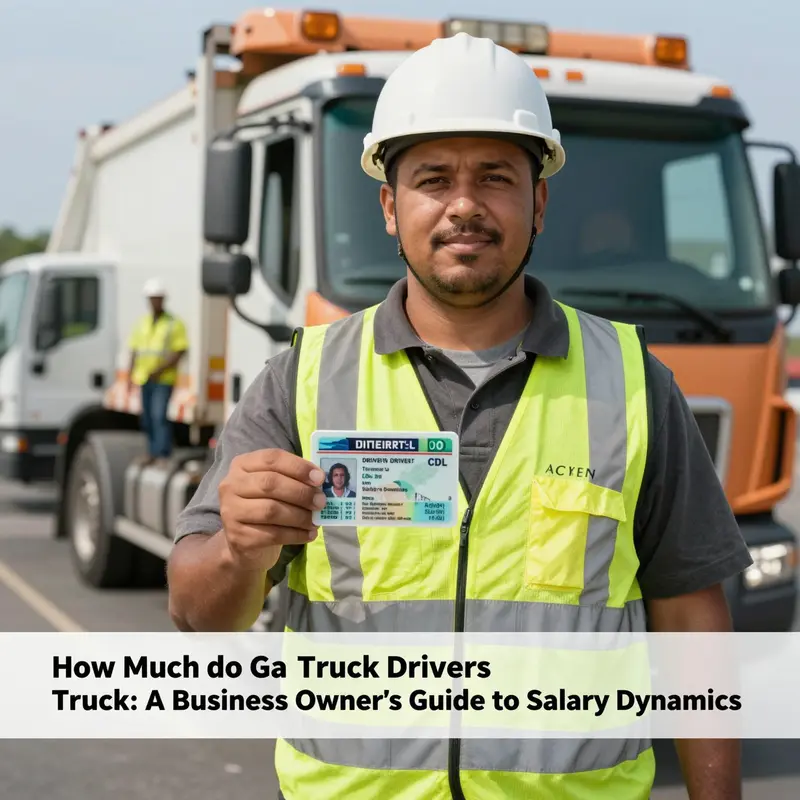
Certifications matter in practical, tangible ways. A Commercial Driver’s License (CDL) is often a baseline requirement and a gateway to more favorable hiring outcomes. Employers frequently prefer CDL holders because the credential signals a broader skill set, access to better driving records, and a reduced risk profile. But the credential does not end with the license. Additional certifications—hazardous materials handling (HazMat), defensive driving, or specialized training for automated side-loading trucks—can push earnings higher still. These credentials can come with direct financial incentives, such as certification bonuses, or with stepped increases in pay as drivers demonstrate mastery in more advanced tasks. Municipalities and private waste companies alike may offer enhanced pay to drivers who complete advanced training, recognizing that the higher safety standards and improved operational efficiency that come with those skills reduce risk and downtime. In practice, a driver who holds a CDL plus HazMat and defensive driving certifications stands a better chance of entering a company with a robust pay progression, particularly in regions with higher living costs or with employers who emphasize safety culture.
All of these pieces—experience, credentials, and the structure of the pay ladder—are tempered by geography. The same job in a coastal city with a high cost of living can command a different baseline than the same job in a midwestern town. Urban markets with dense coverage and larger fleets often feature higher nominal wages, a compensation structure that reflects longer, more complex routes, intensified traffic pressures, and the need to attract and retain staff in a competitive labor market. Conversely, rural or lower-cost areas may offer competitive base pay but slower wage growth, with fewer opportunities for rapid advancement or for overtime-heavy schedules that could push annual earnings higher. The company type also matters. Municipal systems tend to offer more comprehensive benefits and predictable schedules, while private contractors may provide higher overtime opportunities or signing bonuses to recruit and retain drivers. Each arrangement carries its own set of trade-offs, but the through-line is consistent: earnings reflect the intersection of route complexity, work hours, and the employer’s compensation philosophy.
In the context of the overall topic—how much do garbage truck drivers make—the numbers illustrate a profession that pays steadily but modestly relative to many other skilled trades. The average wage near twenty dollars per hour does not capture the entire story. It omits the differential earned through overtime, shift differentials, bonus structures tied to certifications, transportation of hazardous materials, and the additional earnings that come from moving into supervisory roles or specialized fleet management tasks. It also does not fully convey the value of benefits that accompany many municipal and some private positions, such as health insurance, retirement options, paid time off, and general job security that can shape the true value of a compensation package over time. For someone weighing entry into the field, the decision often rests on a combination of immediate take-home pay, the potential for advancement, and the long-term stability offered by the employer and location.
Education and training investment in this field is not enormous, but it is meaningful. A driver can enter with a high school diploma and a CDL, but adding HazMat and other specialty credentials tends to shorten the path to higher earnings and broaden the scope of responsibilities the driver can assume. The incremental cost of training is often offset by the pay premium that employers attach to certified skill sets, and by the possibility of faster promotions into lead driver roles or into maintenance and logistics coordination within the fleet. Training departments and public safety offices distinguish themselves here by recognizing that every certified driver adds to overall safety performance and route efficiency. The social value of the role is substantial—the driver is a frontline defender of sanitation services, environmental compliance, and urban health standards—and the wage trajectory often mirrors this increased responsibility.
The picture would be incomplete without acknowledging the subtle but pervasive influence of benefits and working conditions. Pay is only one axis of compensation. Health coverage, retirement plans, paid leave, paid training time, and the security of a union contract or structured private-sector pay scales can tilt the overall value proposition in meaningful ways. In some markets, the combination of solid pay and robust benefits makes the career path financially sustainable for years, even if the base salary appears modest at first glance. In others, the lure of higher base pay in nearby markets or with different employers can pull experienced drivers toward new opportunities, with the understanding that the total package will be re- negotiated in the new setting. These dynamics help explain why a driver might remain in a job for a long period yet still experience varied earnings across their career, influenced by where they work, how long they stay, and what credentials they accumulate along the way.
The practical takeaway for readers considering this field is simple but nuanced. Pay grows with time, but the pace of growth is not uniform. An entry-level driver can expect a solid start in the mid-to-high thirties, with potential to rise into the forties as experience accrues. By mid-career, a driver can reach the fifties, and with the right combination of seniority, route complexity, overtime, and certifications, surpassing sixty thousand dollars annually becomes a realistic outcome in many markets. In some cases, senior drivers or managers have earnings that exceed seventy thousand, driven by leadership duties, fleet oversight, or specialized operational roles. The exact ladder depends heavily on location, the employer’s pay framework, and the willingness to pursue additional credentials that signal safety and skill to employers.
For readers who want to verify the numbers and drill into regional specifics, the Bureau of Labor Statistics remains the most authoritative source. The national median wage, the regional variation in pay, and the occupational classification for refuse and recyclable material collectors are all cataloged in the BLS data sets. These numbers act as anchors when comparing local salary offers or evaluating career prospects in different cities or states. While the precise figures will always shift with inflation, contracts, and the expansion of municipal services, the underlying pattern tends to hold: more experience and more credentials typically translate into higher earnings, and geographic and employer differences shape the exact trajectory of a driver’s income.
To illustrate the practical impact of this framework, consider how a driver who begins with a CDL and a HazMat certification might negotiate an early career path. A fresh hire in a city with higher living costs may command a slightly higher starting base, but the real leverage comes from steady accumulation of experience, a demonstrated safety record, and the pursuit of additional credentials. Each credential unlocks the possibility of a better job fit—positions that tolerate tighter schedules, offer more pay for effective route optimization, or present opportunities to move into supervisory or training roles. These are not abstract benefits; they appear in job postings, in pay scales, and in the conversations between drivers and their managers, where performance metrics, safety incidents, and on-time completion rates are tracked and rewarded.
The narrative of pay in garbage collection is therefore a narrative of both steady ascent and strategic choices. It is a career that rewards those who approach it with diligence, a commitment to safety, and a readiness to invest in the knowledge that keeps a city clean. And while the average wage in the sector remains modest by many standards, the combination of experience, credentials, and favorable local conditions can create a financially viable and personally satisfying professional path for many years. For those who prioritize stability, predictable schedules, and a clear route to advancement, garbage collection remains a meaningful, if sometimes understated, career option. As the labor market evolves, the core message endures: earnings are a function of what you bring to the route—your time, your training, and your willingness to deepen your competencies—more than a single number on a pay stub.
If you want a concrete focal point while exploring how the industry values and compensates its workers, consider the practical dimension of equipment familiarity and safety. The work environment is highly tactile: drivers must manage hydraulics, understand how automated side-loading trucks operate, and stay current with safety protocols that reduce risk for themselves and the public. While the specific models and configurations of trucks vary, the underlying skill set—precise maneuvering, consistent route execution, and proactive maintenance awareness—remains constant. For readers curious about how fleet equipment interfaces with driver performance and pay, a side journey into truck equipment can be enlightening. For example, you can explore practical details about truck bodies and their configurations at this resource, which discusses truck boxes and related equipment: truck boxes.
The final piece of the puzzle is the external data that anchors all these qualitative observations. The official wage data published by the Bureau of Labor Statistics provides a baseline for national expectations and a benchmark against which regional offers can be measured. While the article’s focus is on the impact of experience and certifications on earnings, the broader context remains essential: wage data reflect not only the skill and effort of individual workers but also policy decisions, municipal budgets, labor market dynamics, and the evolving demands of urban sanitation and environmental stewardship. It is a field where pay, benefits, and working conditions intersect in tangible ways, shaping career decisions for entrants and veterans alike. For those who want to explore the authoritative figures directly, the BLS provides comprehensive wage data and occupational classifications that illuminate where garbage truck drivers fit within the broader economy. External resource: https://www.bls.gov/oes/current/oes372011.htm
Pay on the Road: The Real Earnings of Garbage Truck Drivers in a Changing Waste Economy
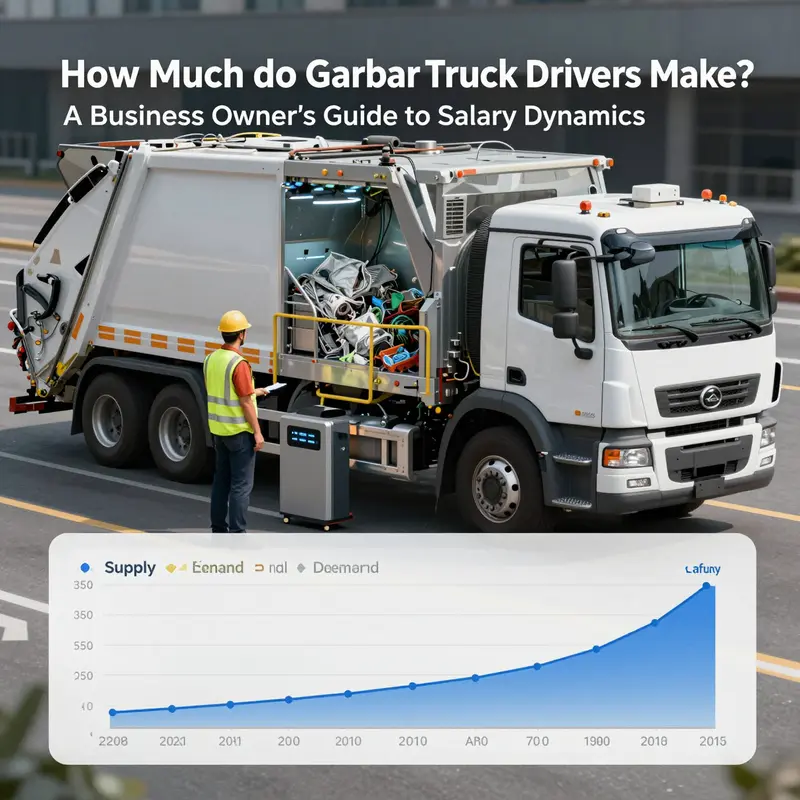
Garbage truck drivers perform essential work in communities, often out of sight but central to public health and daily life. Their pay reflects a blend of risk, skill, and reliability, and is shaped by location, employer type, and experience. In 2025, median wages for refuse and recyclable material collectors were in the mid-20s per hour, with annual earnings typically ranging from the mid-40s to mid-60s depending on overtime, benefits, and union status. Over time, drivers can increase earnings through seniority, certifications, supervisory roles, and access to overtime. Municipal and large private fleets often offer more structured pay scales and better benefits, while smaller non-union outfits may provide flexibility but less predictable compensation. Looking ahead, technology such as electric fleets, improved routing, and maintenance tools may influence both costs and earnings. Total compensation includes base pay, overtime, benefits, and opportunities for career advancement. The bottom line is that the pay story for garbage truck drivers is a balance between base wage, job stability, and the evolving value of essential city services.
Final thoughts
Understanding the salary landscape for garbage truck drivers is vital for business owners aiming to optimize operational efficiency and staffing strategies. Regional wage variations highlight the importance of geographic awareness when setting pay scales, ensuring competitive and fair compensation. Experience and certifications significantly influence earning potential, making investment in employee growth a strategic advantage. Moreover, evolving employment trends and future projections necessitate proactive planning to meet labor market challenges and regulatory demands. By integrating these insights, business owners can build a resilient workforce that supports both fiscal responsibility and service excellence in the waste management industry.