
As the electric vehicle market continues to evolve, Tesla’s Cybertruck emerges as a significant contender, particularly for business owners looking for innovative solutions in transportation. Understanding how much a Cybertruck costs is not merely about the sticker price; it involves an exploration of its varying models, features, market reception, and the economic forces that shape its pricing. This guide will delve into the specifics of the Cybertruck’s pricing structure, including the newly announced base and higher-end models. We’ll compare features and specifications across the lineup, review the market’s response to these vehicles, investigate the economic factors that influence their prices, and discuss projections for future pricing trends.
Pricing in Flux: Navigating the New Entry-Level and Top-Tier Cybertruck Costs
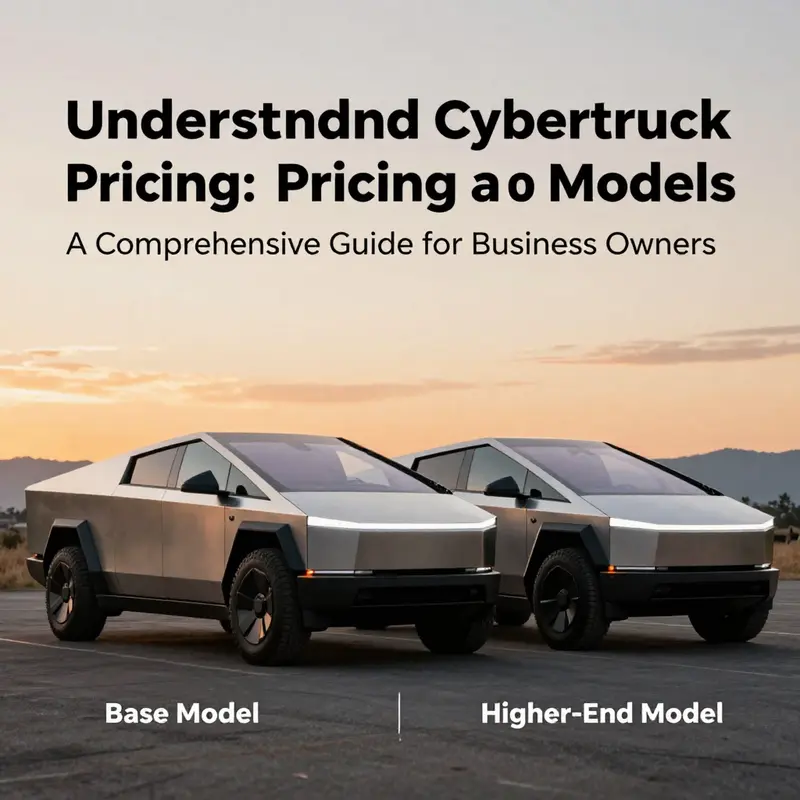
When a flagship product enters a market with a price that was once treated as a ceiling rather than a floor, observers begin to recalibrate what they expect from the entire segment. In early 2026, the pricing story around the electric pickup that has dominated car-showroom chatter for years took a fresh turn in the United States. Tesla, the company behind the vehicle, introduced a new entry-level variant that undercuts the headline price of many rivals while reconfiguring the expectations around what an affordable electric pickup can be—and should be. At the same time, the company also snipped the price of its most ambitious, performance-focused variant, effectively erasing a recent premium that had moved the ceiling higher and, in doing so, signaling a markets’ appetite for performance and utility to coexist in a single lineup. The result is a nuanced price landscape that invites buyers to weigh not just sticker price but the broader package of capabilities, features, and total ownership costs.
The centerpiece of this shift is the base dual-motor all-wheel-drive model, now priced at $59,990 in the U.S. market. This price point cements the variant as the most affordable version of the lineup while replacing the previously offered rear-wheel-drive option that had underperformed in sales momentum. The new entry point makes the vehicle accessible to a broader cohort of buyers who had been watching from the sidelines, unsure whether the total cost of ownership justified the bold styling and the promised utility. In practical terms, the base dual-motor model preserves a strong set of core capabilities, but it does so with a careful pruning of some premium touches that higher trims have long included. The balance struck here is deliberate: retain enough core functionality to satisfy the practical demands of daily use and long-haul chores, while offering a price tag that invites more frequent consideration from shoppers who had previously dismissed the category as out of reach.
To complement this more approachable entry, the top-step, high-end, tri-motor configuration—often referred to in the press and among enthusiasts as the “Cyberbeast”—has seen a notable downward adjustment. The price for the high-performance variant was cut from $114,990 to $99,990. That ten thousand dollar swing is not merely a marketing gesture. It represents a recalibration of the value equation for a model that emphasizes extraordinary acceleration, advanced traction control, and a high-level feature set designed to extract maximum capability from harsh environments, heavy loads, and demanding work cycles. The reduction acts as a bridge between performance allure and practical affordability, enabling a broader spectrum of buyers to contemplate the top-tier option without the resistance that a six-figure sticker often imposes. It also broadens the conversation around what “premium” means in the context of a vehicle that aims to be both a workhorse and a status symbol in its own right.
The current U.S. pricing pallet, then, looks like a three-tier arrangement that reflects not only the mechanical differences between trims but also the strategic narrative the maker intends to project. The base model at $59,990 sits alongside a mid-tier, high-performance all-wheel drive variant that carries a higher sticker—$79,990—while the top tier hovers at $99,990. The middle model’s position underscores a shift toward a more utilitarian appeal without sacrificing the acceleration and handling that enthusiasts crave in a modern electric pickup. The top trim, meanwhile, remains the benchmark for capability, offering a combination of power, propulsion control, and comfort features that justify its status as the peak of the line for buyers who must have the best of everything.
Yet price alone does not tell the full story. A careful buyer will weigh what is included at each level. The base dual-motor AWD retains foundational functionality but intentionally omits several premium features that differentiate the higher trims. Active air suspension, heated seats, a premium audio system, and a trailer tow package—these are among the omissions that distinguish the entry model from the more equipped versions. The adaptive damping suspension—the chassis technology that helps the vehicle ride and handle with composure over rough pavement or uneven terrain—remains part of the base model’s equation, signaling that Tesla intends to deliver a comfortable, controlled ride even in a lower-cost configuration. By contrast, the higher trims elevate the experience with air suspension, more refined seating comfort, enhanced audio, and, typically, broader towing and payload capabilities. The exact numeric differences in towing capacity and payload will depend on the final configuration and any optional packages selected, but the practical implication is clear: the price ladder is also a ladder of capability.
A further layer of complexity comes from the pricing strategy itself. The introduction of a lower-priced base model is not just about carving out a wider market. It’s also a signal that the company views demand as dynamic, with pricing responding to the market’s appetite within a short window after launch. The base price is described as a temporary “launch” price, with plans to implement dynamic pricing in response to demand signals within roughly ten days of the launch window. In other words, the sticker price is a starting point in a negotiation that factors in regional demand, inventory levels, production cadence, and perhaps even the pace at which consumers are choosing upgrades to the optional features that define the higher trims. This approach can create a period of price volatility that, if poorly understood by buyers, may lead to sticker shock or buyer’s remorse, depending on timing and the availability of incentives and financing terms. It also places some emphasis on the importance of timing when a consumer decides to pull the trigger on a purchase.
The geo footprint of availability also colors the pricing conversation. As of this moment, the vehicle remains unavailable in the Chinese market and remains a US-focused product in terms of official marketing and distribution plans. The absence from one of the world’s largest automotive markets underscores the strategic calculus behind price positioning. A domestic launch, at a price point that roughly undercuts many rivals while preserving pricing power at the top end, suggests a cautious, phased approach to global rollout that could, in the long run, influence the way regional demand shapes the global price picture. For buyers watching the rollout, this means that the cost story is not just about the numbers in a window sticker; it is about the broader market dynamics that can tilt the balance of value as the model reaches different cohorts of buyers in different regions.
Another important aspect in the cost narrative is total cost of ownership. The sticker price is only part of the equation. Insurance premiums, maintenance costs, charging infrastructure, and the depreciation trajectory all shape the long-term value proposition of any electric pickup. The base model’s price advantage could be offset by higher running costs or by the need to upgrade to higher trims to access features that matter most in certain use cases, such as a robust towing package or a premium audio experience for long-haul deployments. In practical terms, a buyer who uses the vehicle for heavy-duty work and who regularly tows or carries substantial payload may find the higher trims provide a better per-mile cost of operation when the value of those premium features is fully factored in. Conversely, a buyer whose day-to-day needs are urban commutes, light duty, and occasional weekend projects may find the base model’s combination of capability, efficiency, and cost of ownership to be a more advantageous fit.
Of course, any pricing reevaluation occurs within the larger ecosystem of purchasing costs. Destination charges, taxes, registration fees, and potential incentives all claim a portion of the final bill, sometimes in ways that obscure the headline price. Buyers will want to compute the total bottom line they will sign for, not simply the price printed on the window. The price ladder also invites a new kind of shopping behavior. Rather than simply choosing a single configuration, buyers may be inclined to compare the incremental cost of moving from base to mid-tier, and from mid-tier to top-tier, against the incremental gains in capability, comfort, and convenience. The decision becomes a careful calculus about what is truly essential for the buyer, and what can be postponed or acquired later through accessories and upgrades.
For readers seeking a concise snapshot of where this sits in the lineup, a quick reference in the Cybertruck overview offers a structural guide to the pricing ladder and the feature trade-offs that accompany each tier. Cybertruck overview
From a broader perspective, the reconfigured price strategy reflects trends across the electric-vehicle segment: a willingness to price for mass adoption while preserving premium tiers that allure performance enthusiasts and heavy users. It also signals a comfort with price flexibility as a tool for demand shaping, rather than a fixed barrier that could deter interest. The conversation around affordability is, in this context, not a single moment of reckoning but a dynamic, ongoing dialogue between what buyers want and what manufacturers believe they can responsibly deliver at scale.
As the market digests these changes, prospective buyers should approach the decision with a clear view of what each price point unlocks in terms of capability and experience. The base dual-motor AWD offers a doorway into electric pickup ownership with a price that accelerates the point at which the vehicle’s utility becomes accessible to a broader audience. The mid-tier option refines the experience with enhancements that matter to many users, especially those who value comfort and a stronger on-road presence. The top-tier Cyberbeast remains the aspirational option, combining top-end speed, control, and luxury touches that elevate the vehicle beyond mere transportation to a closer approximation of a high-performance work machine.
Price is, in other words, both a signal and a test. It signals where the manufacturer believes the market is headed and tests how buyers will react to a spectrum of choices that can be tailored to fit a wide range of needs. It tests also the discipline of buyers who must decide whether the allure of the top-end performance and premium features justifies the incremental cost, or whether an entry-level approach, complemented by thoughtfully chosen upgrades, provides a better path to owning a vehicle that is as practical as it is transformative. In this sense, the price shifts are not only a financial calculation but a reflection of evolving consumer values—preferences that increasingly favor versatility, efficiency, and the ability to customize a vehicle to specific tasks without surrendering core reliability.
As this pricing narrative continues to unfold, readers contemplating a purchase should remain mindful of the broader ecosystem: incentives, financing terms, warranty coverage, and the potential for future price movements as market dynamics shift. The three-price-point strategy is not a static map but a living document that will respond to demand, supply, and the ongoing evolution of technology and efficiency. If nothing else, this moment reinforces the basic truth about modern automotive pricing: the sticker price is only the beginning of a longer, more complex conversation about value, performance, and the role a vehicle plays in daily life.
External resource: https://www.motortrend.com/auto-news/tesla-cybertruck-price-cut-analysis/
Pricing in the Fast Lane: Tesla’s 2026 Cybertruck Price Overhaul and Its Ownership Implications
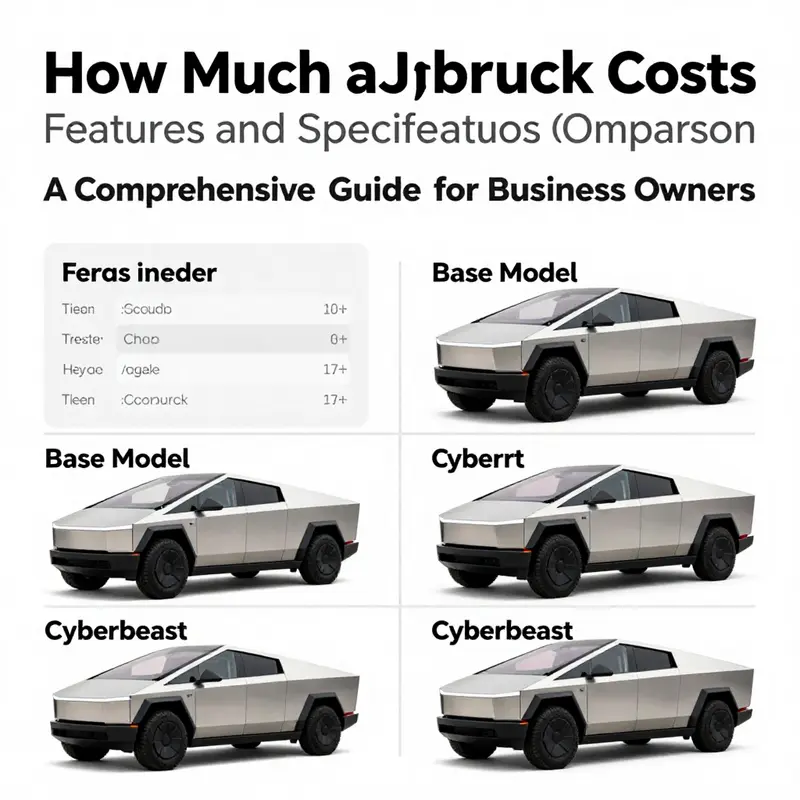
When a vehicle straddles utility, design, and propulsion, a pricing overhaul has ripple effects beyond the sticker price. In early 2026 Tesla reorganized the Cybertruck lineup by redefining the entry point and reshaping the top tier. The new base configuration, a dual-motor all-wheel-drive model, starts at $59,990, up from prior entry points but positioned with a lower ceiling at the low end. The top end, the tri-motor variant, sits at $99,990 after a reduction from its previous $114,990, while a mid-range option lands at $79,990. The three-tier ladder ends with a trailing 990 pattern, signaling a cohesive pricing philosophy aimed at value, demand, and producibility in a market still adjusting to premium electric pickups.
To understand what buyers get, the base model emphasizes affordability and core capability. It retains a dual-motor powertrain and a sophisticated damping system that replaces the prior air-suspension found on higher trims. Range sits around 300 miles per charge, with 0-60 mph in about 4.1 seconds—swift for a pickup of this size. However, luxury features are trimmed: no ventilated seats, no premium audio, and no cargo-bed power outlet or V2X sharing. The cabin is practical, and exterior styling remains bold with the stainless-steel finish and the distinctive silhouette that defines the model’s identity.
The mid-range model broadens the envelope with adaptive air suspension for improved ride and handling, a range near 320 miles, and a 0-60 time around 4.1 seconds. Inside, heated seats and a premium audio system lift perceived value, and an upgraded infotainment suite, along with a fuller driver-assistance package, narrows the gap to modern expectations. Payload and towing capabilities rise, supporting everyday work and recreation with more confidence. The feature set also reflects the industry-wide push toward advanced driver assistance and optional software upgrades.
The top-tier tri-motor Cyberbeast remains the performance crown of the lineup, now at a more approachable price. With tri-motor AWD, it delivers blistering acceleration—0-60 in under 2.9 seconds—and maintains around 300 miles of range. Payload and towing are at the maximum for the range, while the interior upgrades bring premium materials, heated and ventilated seats, a premium audio system, and a tech-forward cabin. Advanced driver-assistance tools are extensive, with some software features potentially sold separately in the future, which can affect total cost of ownership.
The recurring pricing pattern—prices ending with 990—adds a psychological edge. The cadence makes numbers easy to parse and creates a sense of deliberate control in a market where perception matters. Tesla signaled willingness to adjust base prices based on demand, balancing a larger buyer pool at the entry point with a still-attractive premium tier. The base price window opened briefly to capture early buyers, while the calendar for deliveries expanded as production and inventory adapted to demand.
For prospective buyers, the question is not only the sticker price but the total cost of ownership. The base model’s 300-mile range supports daily driving with straightforward ownership, though it lacks some premium comforts. The mid-range offers a balanced compromise between range, capability, and comfort, while the top tier prioritizes speed, luxury, and performance—an option for enthusiasts willing to pay a premium for acceleration and premium interior hardware. Insurance, maintenance, depreciation, and software subscriptions can all influence the long-term cost of ownership, especially for the higher-end trims with more complex systems.
Finally, the broader market context matters. Availability of charging, electricity costs, and potential incentives or policy changes can shift cost dynamics over the ownership horizon. The 2026 pricing strategy, with its tiered approach and the 990 endings, encapsulates a broader dialogue between automaker strategy and consumer expectations, aiming to offer a clear path to ownership while acknowledging the realities of supply, demand, and software-driven value in modern electric pickups
Pricing as Pivot: How a New Entry Point and a Discounted Flagship Reframe Demand for the Electric Pickup

Pricing, more than any single feature set, has become the fulcrum around which the market for the electric pickup moves. In the period leading up to and following February 2026, the pricing strategy for the maker of the electric pickup shifted from aspirational to tactical, from a high-price halo to a cut-rate entry that could broaden the buyer base without dissolving the brand’s performance narrative. The result is a layered story about market reception and consumer demand that reads as much like a study of price elasticity as it does a product launch. The base AWD variant, priced at $59,990, represents a deliberate recalibration of value. It follows the company’s decision to replace a previously discontinued rear-wheel-drive option with a dual-motor all-wheel-drive baseline that still delivers the core capabilities buyers expect—traction in varying conditions, respectable range, and towing potential that aligns with the segment’s needs. Yet this lower price point does not come with the premium amenities of the higher trims. Active air suspension, seat ventilation, and a top-tier audio experience sit in the optional or higher trims column, and their absence on the entry model serves as a deliberate trade-off between cost and luxury. In a market that often prizes features over fundamentals, the move to a cheaper entry model underscores a shift in strategy: keep the essential performance envelope intact while trimming nonessential luxuries in order to widen the affordability ladder for mainstream buyers. The decision to anchor the entry price at $59,990 also signals a broader pricing philosophy—one that embraces dynamic adjustments driven by demand signals rather than fixed, long-tail pricing only. This approach aligns with a broader industry trend where automakers continually test the tolerance point of buyers, watching how price interacts with perceived value, reliability, and ownership costs over time. The base model’s ability to deliver a similar range and towing performance to its higher-end siblings, despite feature trims, speaks to a design emphasis on efficiency and platform robustness. In practice, this means a buyer can still embark on weekend adventures, tow a light-to-mid-range trailer, and rely on the vehicle’s core capabilities, even if the interior ambiance or ride nuance feels leaner than what the most expensive variants offer. The psychological effect of price cannot be understated here. For many prospective buyers, the entry price lowers the barrier to entry and improves the sense that ownership is within reach, even if the total cost of ownership remains higher than initially promised. The new price hierarchy, paired with a switch from a higher-to-lower tier emphasis, reframes the conversation from “can I afford this on day one?” to “do the long-term costs align with my expected use and budget trajectory?” The market’s reaction to this shift has been a mirror of the policy itself: an eager initial attention followed by a tempered, real-world assessment of what the value proposition truly delivers after ownership considerations—insurance, maintenance, and the ever-present question of resale or trade-in value. The top-tier, previously priced at $114,990, was reduced to $99,990, a retreat that returns the price to a level the market already understood before a controversial hike late in 2025. This reversion mattered beyond the numbers; it signaled an acknowledgment by the maker that the demand curve for the flagship configuration could not sustain the higher price without risking a broader slowdown in momentum. The price reduction did not simply correct a price point; it was a strategic nudge aimed at rehabilitating perception, signaling that the vehicle’s value proposition could live closer to the buyer’s reality than to the aspirational benchmark that had earlier defined it. In this context, the market’s pulse is best read through the lens of real-world adoption. Even with aggressive pricing and a rebalanced feature set, the reported sales figures in the United States for 2025 disclosed a troubling divergence between hype and uptake. With only 22,037 units sold in 2025 and a 48.1 percent year-over-year decline, the data suggested a gap between early excitement and practical adoption. Several contributing factors emerged in industry analyses: the high initial price point likely restricted broader, sustainable demand; recalls and reliability concerns dampened confidence; and the vehicle’s refinement—while improving—was perceived as lagging behind mainstream expectations in certain areas such as ride quality and interior quietness. The executive calculus in this period became a study in price and expectations. Elon Musk publicly framed the $59,990 entry price as a temporary strategy designed to create a short, high-interest window that could be leveraged to gauge demand and then dynamically adjust pricing based on real-time market feedback. The ten-day price window was not merely a stunt; it reflected a broader philosophy about how to manage a product with enormous initial visibility but still-lengthy ramp-up needs. The logic was simple on the surface: attract price-sensitive buyers with a compelling anchor, then explore how elasticity behaves as the market responds to price changes, feature trims, and the evolving perception of the vehicle’s refinement and reliability. This approach also intersected with the maker’s global strategy. By February 2026, the model remained unavailable in the Chinese market, a decision that imposes a constraint on international scale and, by extension, on total demand. The global footprint of premium, high-cost pickups is inherently sensitive to regional market dynamics, regulatory factors, and local competition. The decision to omit a major market like China reduces the potential buyer pool at a time when price efficiency and volume could be decisive for production targets and ecosystem development. Yet, even within these constraints, the pricing moves resonate beyond the U.S. border. They shape how prospective buyers assess total ownership costs, including depreciation risk, insurance, and the likelihood of future incentives or price re-adjustments. In practice, a buyer weighing the entry point against the top-tier proposition may perceive that the cheapest variant offers the essential value while the most expensive version represents a more ambiguous calculus of premium comfort and performance. The widening of the price spectrum—and the willingness to adjust both ends—creates a broader narrative about what modern ownership means for a vehicle that seeks to blend utility with a future-forward image. It is a narrative that invites readers to consider not only the sticker price but also the ongoing economics of ownership, and how this economics interacts with personal usage, climate, and even geography. For instance, buyers in regions with greater access to charging networks and more favorable maintenance ecosystems might perceive the appeal of the lower entry price as an invitation to participate in a broader transition to electrified work and play. Conversely, buyers who prize interior ambiance, ride quality, and technologically dense cabins may gravitate toward the higher trims, even at a higher upfront cost, because those differences translate into tangible lived experiences. The strategic pricing moves also have a practical, after-sales dimension. A lower entry price can expand the potential service and parts ecosystem by increasing the number of owners who encounter maintenance needs, which in turn reinforces a robust after-sales network and, ultimately, value retention. The maker’s ecosystem, including a wide array of aftermarket options and add-ons—some of which are chronicled in industry coverage—begins to matter more as more buyers join the ownership cohort. For readers interested in how this ecosystem evolves, a quick look at the broader aftermarket space reveals the kind of modularity and accessory flexibility that many buyers want when they invest in a new platform. The market conversation around pricing is also enriched by the parallel development of complementary products and services. Some buyers seek a broader utility narrative, such as roof racks and storage solutions that accentuate the vehicle’s capability. The dialogue around accessories and fit-out options has grown into a kind of sub-market in its own right, which is worth following as pricing and availability fluctuate. In this context, the page for one industry ecosystem offers a useful case study: Cybertruck Co, a resource that highlights how add-ons and modular configurations can alter perceived value without changing the base price. This kind of ecosystem awareness helps buyers form a complete picture of ownership, one that weighs not only the upfront cost but the total cost of ownership across the vehicle’s lifecycle. While the official pricing pages and the company’s quarterly communications provide the baseline numbers, consumer sentiment ultimately coalesces around how well those numbers line up with real-world experiences. The mixed signals from 2025—strong initial interest, followed by a notable decline in unit sales, and a price strategy that oscillated between aggressive discounts and selective feature trimming—underscore a perennial challenge in the market: pricing can attract attention, but sustained demand requires a coherent story about value that persists after the novelty of the price drop fades. This story is not just about dollars and cents; it is about how a brand positions itself in a shifting landscape of consumer preferences, where reliability, refinement, and ecosystem support often shape the long arc of ownership more than a headline price move. As buyers weigh the trade-offs, the question remains whether the new entry price and the discounted flagship can deliver a durable path to mass-market appeal, or whether the market will settle into a tiered system where affordability remains important but the premium elements of ownership—comfort, quiet, and interior finish—continue to steer the decision toward higher trims for a growing segment of buyers. For readers following the evolution of this product and its price strategy, the external resource linked below provides a contemporaneous snapshot of how pricing is displayed and updated in real time by the maker. External resource: https://www.tesla.com/cybertruck
Pricing the Edge: Economic Forces That Determine How Much the Electric Pickup Costs

Pricing the Edge: Economic Forces That Determine How Much the Electric Pickup Costs
Pricing the edge requires more than a single sticker price. It is a conversation between engineering costs, market demand, supply chain realities, and the strategic gambits a manufacturer chooses to deploy to balance profitability with mass adoption. In early 2026, this conversation took a remarkably public turn as the maker of the electric pickup shifted its pricing ladder in ways that looked both tactical and revealing about the economics of scale in the battery era. The result is a chapter in the pricing playbook that helps explain why a vehicle marketed as a breakthrough in durability and capability can still sit above a traditional gasoline-powered baseline and why that gap matters for buyers, investors, and the broader arc of electric-truck adoption.
At the core of the current pricing narrative is a tiered lineup that lets different customer segments navigate the same product universe. The entry point announced for the latest iteration of the dual-motor all-wheel-drive configuration was set at 59,990 dollars for a limited window of ten days. The intention behind that windowed offer is not merely to move units quickly; it is a live experiment in price elasticity. Elon Musk himself has signaled that the final price after such a window will be shaped by how many buyers sign up at the introductory figure. This is not a static price; it is part of a dynamic pricing strategy predicated on real-time demand signals. In plain terms, the company uses the ten-day window to test how hot the market is for a particular package with a specific set of capabilities, and it reads the temperature of demand with a broad brush of market feedback. The consequence for buyers is real: a window price creates urgency, but it also creates a moment where the value proposition is continuously reassessed against competing options, and against expectations formed in the years before production resumed.
On the other end of the spectrum sits the top-tier model, a more extreme version of capability and luxury that has historically carried a higher sticker. The top configuration has seen a meaningful price adjustment, stepping down from a much higher figure to 99,990 dollars. Bringing the price in line with pre-2025 pricing levels sends a signal to the market: the manufacturer is acknowledging competitive pressures and consumer affordability concerns without erasing the premium nature of the most capable variant. The contrast between the entry price and the top end is not merely about raw numbers; it underscores the strategic calculus of price architecture. A company can maintain a tempting bargain on a base model while still extracting incremental value from higher trims that bundle premium features and advanced engineering, features that differentiate the variants in a crowded field of electric pickups.
The discussion of price would be incomplete without noting that a base rear-wheel-drive option remains part of the lineup, listed at a figure around 62,235 dollars once destination charges are included. The existence of this variant complicates any simple narrative of a single price point and highlights a broader marketplace truth: segmentation is essential when a single platform can be configured to meet divergent needs. The rear-wheel-drive baseline speaks to buyers who prioritize efficiency, lower upfront cost, or simpler mechanical packages, while the dual-motor all-wheel-drive entry offers enhanced traction, payload stability, and what many buyers perceive as a more complete, year-round capability. The price gap between these configurations is itself a signal, a message about how much value is attributed to the drivetrain, the suspension system, and the perceived premium of all-weather performance.
Beyond the surface price tags lies a layered discussion of features that buyers receive—and, equally important, what they forgo at each price tier. The base dual-motor AWD package is generous in its core capabilities, including adaptive damping suspension that helps the vehicle handle diverse road conditions and payload profiles. Yet, it deliberately trades off several premium conveniences that are standard on higher trims: air suspension for a smoother ride and higher ground clearance, seat ventilation for comfort on longer hauls, and a higher-end audio system for those who equate cabin experience with total ownership value. The philosophy here is not only about delivering capability but also about aligning the cost with perceived incremental value. The buyer who needs rugged reliability and predictable performance in tough conditions might prioritize the base dual-motor package, while the buyer who wants comfort and luxury as part of a flagship experience may gravitate toward the premium trim with the added features.
This tiered structure sits within a broader set of economic dynamics that shape every line item on the bill of materials. Battery chemistry and the materials that go into cells—lithium, nickel, cobalt, and their evolving compositions—are a central driver. The costs of these materials have, over the past few years, fluctuated with global demand, mining output, and geopolitical factors. The manufacturing footprint matters just as much. Large-scale casting technology, an efficiency-focused approach to chassis components, and the resulting economies of scale all compress unit costs as production volumes rise. When a company can produce more of the same shoe, so to speak, the price per shoe can fall even if the per-unit cost of raw materials climbs. That paradox—the coexistence of rising commodity prices and falling per-vehicle costs—helps explain why, at a moment in time, manufacturers experiment with pricing to steer demand while paneling in cost reductions that promise better long-run margins.
The interplay between material costs and labor costs also feeds into what the market can sustain. Labor costs are not just about wages; they reflect training, automation investments, retooling of plants, and the pace at which new manufacturing methodologies, like modular design and large-scale casting, can be scaled up. A company facing higher production costs can only shoulder so much of that burden before it must adjust price, reduce content, or seek efficiencies in other parts of the value chain. Conversely, if a brand can realize productivity gains—fewer steps, faster cycle times, higher yield—the savings can be passed back to customers in the form of lower prices or in the form of richer standard features that make the lower-priced variants feel even more valuable. In this context, pricing is not a fixed line; it is a dynamic ledger that negotiates between the cost of making the product and the value buyers place on it in their own budgets and lifestyle needs.
Another layer to this pricing story is the longer horizon of consumer ownership costs and total cost of ownership. The electric pickup’s price tag sits beside a suite of savings that can accrue over years of use. Compared with traditional gasoline trucks, the maintenance schedule for an electric powertrain tends to be simpler, with fewer moving parts that wear down and fewer fluids to manage. The price of electricity itself, though variable, has historically trended differently from diesel or gasoline prices, often offering a more predictable operating cost over a vehicle’s lifetime. This long-tail cost structure means buyers are not just evaluating the up-front sticker; they are weighing a longer, often more compelling, cost envelope. Manufacturers, aware of this, sometimes calibrate prices with a longer time horizon in mind. If consumers anticipate savings in upkeep and fuel, the up-front price can be framed as part of a broader, more favorable ownership proposition, even if the initial outlay remains substantial.
The macroeconomic environment also plays a decisive role. Global supply chains, interest rates, and the costs associated with scaling up a production program all feed into the final price at the dealer level. If a country or region offers incentives or rebates for electric vehicle purchases, those can effectively reduce the out-of-pocket cost for buyers, even as the sticker price remains unchanged. Conversely, if incentives shrink or taxes rise, the effective purchase price can move higher in the consumer’s mind. In this sense, price transparency across a product family becomes crucial. A consumer who compares multiple trims can better gauge which combination of features delivers the most perceived value per dollar, and a company can use that calculus to fine-tune the balance between base features and premium inclusions as a way to maximize both market share and profitability.
Interwoven with the domestic pricing strategy is a forward-looking note about connectivity and data services. The research materials hint at a broader tech-enabled future where advanced vehicles leverage space-based infrastructure and data systems to deliver enhanced features, remote diagnostics, over-the-air updates, and potentially new revenue streams from software and services. While these pathways may not alter the sticker price today, they can influence the perceived value of the product and, by extension, the willingness of buyers to invest at a given price point. The potential for deeper integration with broader space-based and satellite-enabled ecosystems—such as those envisioned in the broader aerospace context—suggests that the economic equation for a rugged electric pickup includes not just hardware and assembly costs, but also the costs and savings associated with a highly connected, software-driven platform.
Amid this web of factors, the market’s reaction to the current pricing structure reveals a critical truth: demand signals are the ultimate price lever. The ten-day introductory window serves as both a sales spur and a market probe. If buyers respond with enthusiasm to a sub-60k price point for the dual-motor option, the company has the data needed to justify price stability or further adjustments. If demand falls short of expectations, price revisions in subsequent months may be warranted to boost uptake or to preserve margins. Either outcome confirms that pricing a vehicle of this kind is less a one-and-done transaction and more a continuous negotiation between supply realities, consumer expectations, and competitive dynamics in a rapidly evolving segment.
In the end, the question of how much a cyber-ready pickup costs cannot be answered by a single number alone. It requires reading the price as part of a dynamic ecosystem in which cost inputs, market appetite, product differentiation, and long-run ownership economics all participate. The base model offers a compelling entry point with strong core capabilities, while higher trims entice buyers who want premium comfort and additional features. The rear-wheel-drive base remains as a lower-cost alternative for those who value efficiency and simplicity, reinforcing the idea that this is not a monolithic price tag but a spectrum designed to capture a wide range of needs and budgets. If the goal is to understand the financial geometry of owning one of these machines, the better lens is to view price as a stopping point on a curve shaped by manufacturing innovation, material costs, and the relentless gravity of consumer choices.
For readers seeking the latest configuration options and pricing shifts, the official configuration page remains the best point of reference. It provides the most up-to-date numbers, feature sets, and final charges, including destination fees and potential incentives. External references offer a broader context for these moves, including how market signals and macroeconomic conditions frame the price that eventually lands on a buyer’s driveway. External reference: https://www.tesla.com/cybertruck/configure
null

null
Final thoughts
Understanding the costs and value propositions associated with the Tesla Cybertruck is crucial for business owners considering this innovative vehicle. With a starting price of $59,990 for the base model and significant features tailored to enhance business operations, the Cybertruck represents not just a purchase, but a step towards sustainability and efficiency. As we reflect on market reception and economic influences shaping its price, it’s clear that the Cybertruck is set to play a pivotal role in the electric vehicle landscape. Staying informed about future trends and potential price adjustments is vital for business owners aiming to leverage this technology strategically.