
Understanding the weight of a semi truck is crucial for business owners involved in logistics, freight, and transportation. From knowing the curb weight to the maximum load limits, each aspect affects operational efficiency, compliance with regulations, and overall cost management. This article delves into several chapters that comprehensively cover key factors about semi truck weights. Discover how curb weight, state regulations, cargo variations, and axle configurations come into play in shaping your business strategies and ensuring compliance with industry standards.
Unladen Mass, Full Responsibility: Tracing the Curb Weight of Semi Trucks and Its Consequences for Loads and Regulation
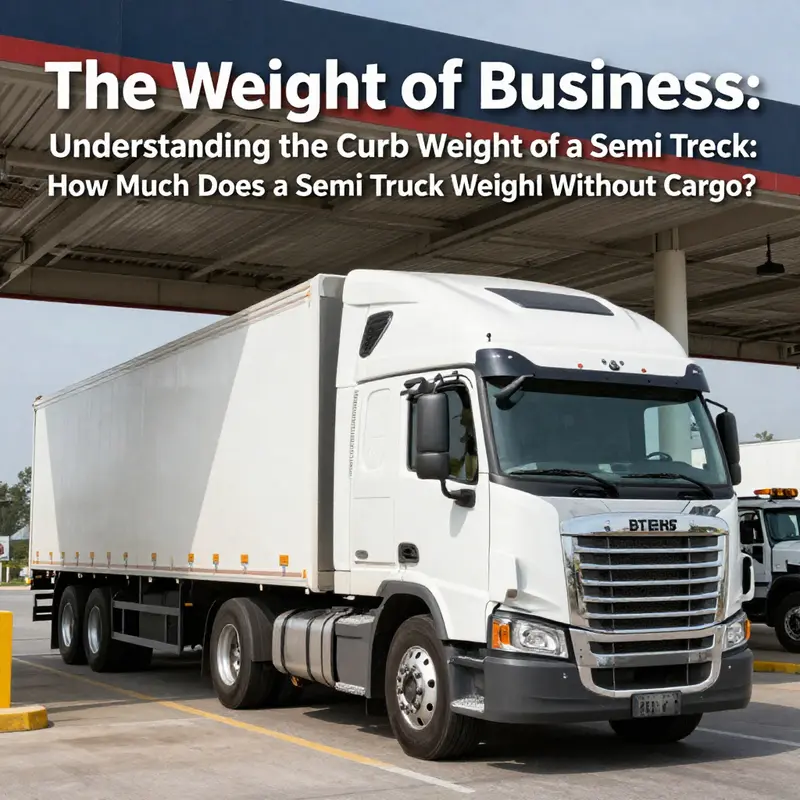
The curb weight of a semi-truck is more than a dry mass value. It is the baseline that governs payload, performance, and compliance on every trip. When we talk about the tractor unit’s mass without cargo, we are discussing a figure that anchors planning, budgeting, and safety decisions across the fleet. In practical terms, curb weight limits payload, influences fuel efficiency, and shapes maintenance schedules as mass changes through wear and aging. If understood well, curb weight translates into smarter routing, accurate fuel planning, and fewer surprises at weigh stations.
In general, a tractor unit weighs roughly between 10,000 and 15,000 pounds when ready for service but empty of cargo. This range reflects design choices—from more robust frames and larger fuel tanks to lighter configurations with alternative materials. Even within a model line, curb weight can vary with options such as engine type, cab length, frame material, and aerodynamic features. The wheelbase and axle configuration further affect mass distribution and handling, making curb weight a practical factor in dispatching and servicing braking systems.
Understanding curb weight matters most in the regulatory arena. The federal and state rules around commercial vehicle weight aim to prevent roads and bridges from bearing more load than they can safely carry. In the United States, the common ceiling for a tractor-trailer combination is 80,000 pounds gross vehicle weight (GVW), including tractor, trailer, and cargo. This ceiling is not uniform everywhere; some routes or bridges may have tighter allowances. For a fleet planner, curb weight sets the floor while GVW defines the ceiling. If the tractor weighs 12,000 pounds, the remaining 68,000 pounds must cover trailer and cargo within the route’s limits.
Discussions of curb weight also intersect with performance and maintenance. Heavier tractors place more demand on braking systems, tires, and suspension, and can carry more fuel or equipment, pushing mass higher and affecting stopping distances and tire wear. Lighter tractors—especially those built with aluminum or lighter frames—may offer payload flexibility and acceleration benefits, but require attention to durability for long-haul duty. The relationship between curb weight and maintenance is not purely linear; it depends on use and demands planning for tires with appropriate load ratings, braking capacity, and maintenance schedules that reflect mass-related wear.
Beyond the numbers, curb weight informs daily loading practices. When preparing a shipment, the goal is to maximize permissible weight while ensuring proper load distribution across axles. Improperly balanced loads can degrade braking efficiency, tire life, and stability, especially in poor weather or on grades. The data plate and manufacturer specifications remain the definitive references for a given model’s exact curb weight and the impact of options. Operators who routinely verify these figures gain safer driving, more accurate budgeting, and better compliance during inspections.
For readers seeking concrete planning guidance, curb weight is the starting line for payload calculations and route decisions. Heavier tractors reduce payload headroom, so fleets plan loads by subtracting the tractor’s mass from the regulatory ceiling and allocating the remainder to trailer, cargo, and equipment. The presence of certain accessories can nudge curb weight upward, while lightweight options may trim mass without sacrificing functionality. See manufacturer documentation and equipment planning resources for tailored guidance. The weight you do not haul is often as telling as what you do haul, because it determines margins across the supply chain.
For broader context, many fleets monitor how curb weight interacts with fuel strategy, maintenance cycles, and safety standards. The trend toward lighter materials and new designs continues to shift the payload equation, sometimes expanding capacity on the same GVW limit. In every case, curb weight remains a practical constraint that connects vehicle mass to strategic decisions about routes, equipment choices, and compliance. External resources, such as official weight limits pages, can provide additional regulatory context and help situate curb weight within the broader road-safety framework.
Under the Cap: Decoding the Weight of a Fully Loaded Semi Truck

A semi truck on the highway is more than a sum of its parts; it is a moving balance sheet that must stay within strict confines of weight, balance, and braking. The term “weight” in this context is not a single number but a layered calculation that starts with what the vehicle is built to carry and ends with what the road will allow. At its core, weight is divided into two broad categories: the curb weight, or tare weight, and the loaded weight, which expands as cargo, fuel, and even passengers accumulate. For most semi trucks, the curb weight—the empty chassis, engine, cab, fuel, and standard equipment—lands somewhere between ten thousand and twenty-five thousand pounds, depending on the truck’s configuration and age. The trailer itself adds a further baseline, often eight thousand to ten thousand pounds for a typical dry van when empty. Add the cargo, and the numbers swell quickly. The dynamic range is broad because freight is not a uniform load; it ranges from light consumer goods to dense machinery that weighs tens of thousands of pounds per pallet. The result is a spectrum: a rig can weigh far less than its maximum capacity when empty, and it can creep toward the regulatory ceiling when heavily loaded with freight that is both dense and bulky.
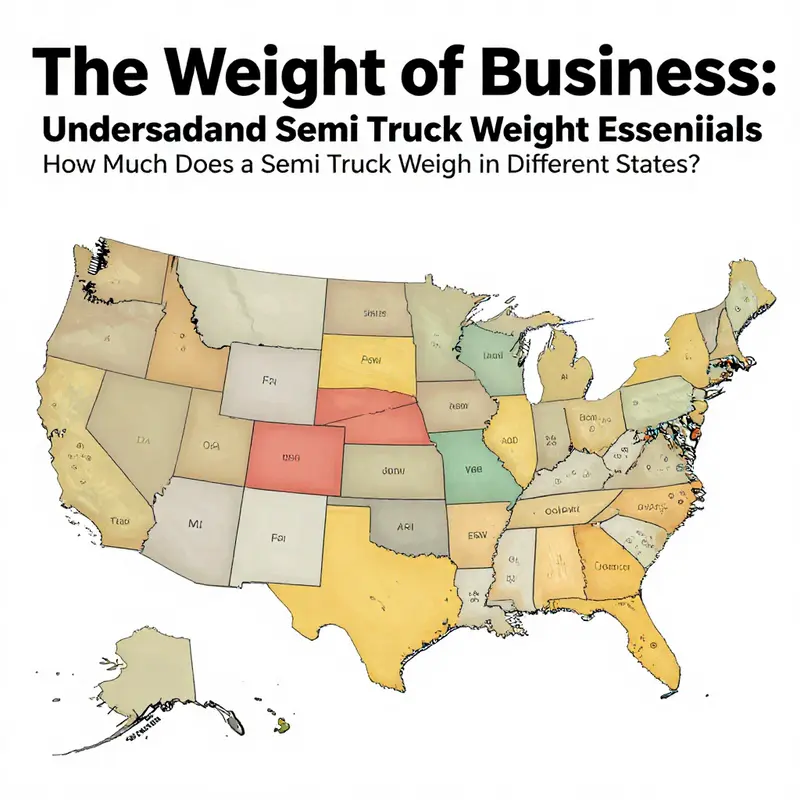
In the United States, the federal benchmark that governs interstate trucking is the maximum gross vehicle weight rating, or GVWR, often cited as eighty thousand pounds for a standard semi truck and trailer combination. This rating is designed to cover not only the weight of the truck and trailer themselves but also the cargo, fuel, and any passengers or additional equipment on board. It serves as a ceiling that cannot be casually exceeded on major highways, and in practice it is a limit that many shippers meticulously plan around. The federal standard applies to vehicles operating on the interstate system, but weight limits are not uniform across all roads. States and local jurisdictions can impose lower limits, and bridge and road restrictions may require lighter loads in certain corridors. The regulatory landscape is therefore both nationwide and local in its implications, shaping every stage from route selection to load distribution.
To translate these rules into a working understanding, it helps to break the loaded weight into its component parts: tractor weight, trailer weight, and cargo weight. A typical tractor or semi truck may weigh roughly ten to twenty thousand pounds when empty, though some configurations might push toward the higher end of that range. The empty trailer, particularly a dry van, typically adds eight to ten thousand pounds as a baseline. The cargo, however, is the variable driver of overall weight. Freight payloads can span a wide spectrum—from a few thousand pounds for lighter goods to nearly forty thousand pounds for heavy machinery or densely packed materials. Taken together, the tare weight of the combination—the weight of the tractor plus the empty trailer—often lands around twenty-four thousand pounds in a modest configuration. Once the payload is added, the gross weight can approach the regulatory ceiling of eighty thousand pounds or sit well below it, depending on the shipment.
A practical illustration helps illuminate how these numbers come together. If a tractor weighs about fifteen thousand pounds and the empty trailer weighs nine thousand pounds, the combined tare weight is twenty four thousand pounds. To reach the federal limit of eighty thousand pounds, the cargo would need to weigh up to fifty-six thousand pounds. This arithmetic is foundational to planning and compliance. It shows why ships, freight handlers, and fleet managers obsess over payload specifications and why precise calculations matter every time a truck is loaded. It also clarifies the distinction between the GVWR and the actual gross vehicle weight (GVW) on the road. GVWR is a specification included in the vehicle’s design and certification, while GVW is the real-time weight you see when the truck sits on a scale or at a weigh station. A load that approaches the GVWR is a load that leaves little room for error if fuel, passengers, or incidental equipment increase. In other words, the loaded weight is not just about the cargo itself; it includes fuel and any extra ballast that the vehicle carries.
What makes the subject even more complex is the variety in cargo and trailer types. A standard dry van is part of the baseline, but other trailer configurations change the calculus. Specialized trailers designed for oversized or heavy cargo can have different tare weights and may require permit-intensive operations. In some situations, shippers request or require loads that would push a vehicle beyond eighty thousand pounds; those situations trigger overweight permits issued by states, along with routing restrictions, time-of-day controls, and even escort vehicles. The logistics of moving a heavy, unusual load are a study in coordination, not just physics. The permits themselves tell a broader story about the road network: it was not designed to bear a uniform, maximum-density load everywhere, at every hour. Some stretches of road, bridges, or tunnels simply cannot handle the stress of frequent over-limit transport, and the system relies on careful planning, documentation, and compliance.
The weight discussion also invites a closer look at the distribution of weight across the axles. The legal limits for axle weights, while not identical everywhere, hinge on the idea that weight should be handled by the road more than by the vehicle’s tires. Proper weight distribution is essential for stability, steering response, and braking performance. A load that is too concentrated on a single axle can create excessive wear on that axle and unsafe handling characteristics. Conversely, even a near-limit total weight can ride smoothly if the burden is spread across the axles in a way that aligns with the truck’s suspension geometry and the trailer’s axles. This is especially important when the cargo is irregular in shape or when pallets create uneven weight distribution. Carriers often use scale tickets to verify per-axle weights at loading docks or weigh stations, ensuring the configuration complies with both overall GVWR limits and the specific axle allowances for the route they intend to travel.
Beyond the mathematics, weight matters on the road in tangible ways. Heavier loads demand more braking distance, greater tire contact with the pavement, and higher consumption of fuel. The dynamics of a fully loaded combination change how the vehicle accelerates, climbs grades, and responds to crosswinds or sudden maneuvers. For operators and fleets, the objective is not simply to stay under an abstract weight limit but to optimize safety, efficiency, and reliability. That means mindful loading practices, careful route planning, and a robust understanding of how payload affects the balance between traction, braking, and steering. It also means knowing when a load should stay within the standard eighty-thousand-pound envelope and when instead a permit, specialized equipment, or even a different transport mode would be prudent.
The reality of regulated weight is not a static fact on a page; it is a daily discipline. Trucking teams calculate payloads before departure, partition cargo to maintain even axle loading, and often adjust fuel levels to avoid creeping toward the maximum. They align with road authorities by maintaining accurate documentation and being prepared for weigh checks along the corridor. They design loading plans to keep the combination within the legal limits while still delivering the freight in a timely manner. In practice, that often means choosing cargo configurations that optimize the balance between payload weight and the trucking schedule, avoiding late-day routings that could complicate permit processes or escort requirements.
When you’re loading a heavy shipment, the tools and methods matter as much as the numbers. Equipment that aids in loading and unloading—such as lifts that handle heavy pallets and bulky equipment—plays a key role in controlling how the weight is applied to the trailer and how the cargo is secured. For instance, loading equipment designed to distribute weight gently and evenly helps prevent hotspots that might stress the trailer floor or compromise pallet integrity. It also reduces the risk of shifting cargo that could alter the truck’s center of gravity during transit. For a deeper dive into practical loading solutions, you can explore resources on lift systems and loading equipment, including detailed discussions on liftgates for trucks.
The regulatory landscape continues to evolve as new freight patterns emerge and as infrastructure challenges grow or change. The core principle remains straightforward: stay within the GVWR for your vehicle configuration, and plan cargo in a way that respects axle limits, route restrictions, and the physical realities of the highway. For operators, this is both a compliance matter and a safety imperative. For shipper and consignee teams, it is a shared responsibility to verify the weight and to understand how it translates into the time and cost of transportation. The weight of a loaded semi is not just a static figure; it is a dynamic determinant of how quickly goods move from dock to destination and how safely those goods arrive.
As a practical takeaway, remember this: a fully loaded semi truck is a carefully calibrated system, where the curb weight, trailer weight, and cargo weight must harmonize with regulatory limits, road conditions, and the truck’s own mechanical design. The numbers themselves are a guide, but the real measure is how the load feels in the cab and on the road—the feel of balanced mass, predictable braking, and controlled steering under any weather or traffic condition. For those who manage and operate these vehicles, the goal is not merely to stay under a weight ceiling; it is to maintain a stable, safe, and efficient rhythm across every mile of the journey.
For further reading on loading equipment and how it can facilitate safer, more balanced cargo handling, see the resource on liftgates for trucks. This type of equipment can be a practical enabler for maintaining proper weight distribution and reducing the risk of cargo shifting during transit. liftgates for trucks.
External resource for regulatory guidance: For official information on weight limits and related regulations, consult the Federal Motor Carrier Safety Administration at https://www.fmcsa.dot.gov.
null
null
Density, Dimensions, and Dockets: How Cargo Type Determines the Real Weight of a Semi-Truck

Weight is not a single fixed number on a truck’s door or a spec on a chart. It is a moving target that shifts with what you actually load, how you pack it, and the rules that govern the road you’re on. The common image of a semi-truck as a single mass is comforting but misleading. A tractor and trailer ride together as a platform with a defined curb weight, yet the moment cargo lands on the trailer, the scorecard changes. The curb weight—often cited as the empty weight of the vehicle—typically sits somewhere between roughly 10,000 and 25,000 pounds (4,536 to 11,340 kilograms). This range includes the truck’s chassis, engine, fuel, and other standard equipment, but excludes the trailer and any payload. When the trailer rides along, the combined weight swells to reflect the cargo pulled behind the truck. In practical terms, a fully loaded semi-truck and its trailer can carry a total weight ranging from about 30,000 to 80,000 pounds (13,608 to 36,287 kilograms), depending on the load and how the vehicle is configured. These figures anchor what many operators refer to as the truck’s payload capacity, but they do not tell the full story. The law adds another layer: the maximum legal gross vehicle weight, or GVW, for a tractor-trailer combination in the United States is generally 80,000 pounds. That limit, expressed in the abstract, assumes a certain balance between the truck’s own mass and the payload it carries. Yet this limit is not a universal constant. It shifts across state lines and can narrow further due to bridges or road restrictions, creating a landscape in which the weight you could legally haul depends on the exact route and the vehicle’s configuration. The FMCSA provides the regulatory backbone for these limits, and its guidance, among other resources, helps carriers navigate interstate and intrastate operations. When we move from North American norms to other jurisdictions, the numbers can look quite different, and the reasons are not just political but purely physical. The density of what you carry, the vehicle’s structural capability, and the specific axle rules all converge to shape the practical payload you can—or must—carry on a given run. This is where the concept of density becomes not a dry scientific term, but a practical lever for planning, safety, and efficiency on the road.\n\nThe core idea here is deceptively simple: cargo type dictates how heavy your payload can be, even when the trailer has plenty of space. Density is the primary link between what you load and what the wheelset and chassis can bear. A low-density cargo, like bulky furniture or packaging materials, may fill the trailer’s volume without adding much weight. In such cases, the truck can appear to be lightly loaded when observed from the outside, but the weight will rise to the permissible limit before the trailer’s volume is exhausted. In concrete terms, a loaded truck carrying bulky, low-density items might weigh in the 30- to 40-ton range, which translates to roughly 60,000 to 80,000 pounds. This scenario illustrates the mismatch that sometimes happens between available space and permissible weight. Conversely, high-density cargo—coal, ore, or scrap metal—can push a vehicle’s weight to the regulatory ceiling much more quickly. A high-density load produces significant weight in a smaller volume, so even a trailer that isn’t visually packed to the gills can hit the weight ceiling early in the loading process. This is why density matters more than volume in the practical sense of maximizing payload. The shape and packaging of the cargo further modulate this dynamic. Irregular or fragile goods require protective packaging, cradling, and securing methods that can add weight on their own. Well-packed, uniform cargo—think standardized pallets of dense material—tends to support a more predictable, efficient loading pattern and makes it easier to spread weight evenly across axles. In the end, the same trailer might carry a very different payload depending on whether the load is heavy and dense or light and bulky, even if the space on the trailer is similar.\n\nBut density is not the whole of it. The weight a semi-truck can carry is also a function of legal limits and the vehicle’s configuration. In many countries, including China, the regulatory framework is explicit about total mass and axle loads. China’s GB1589, which governs road vehicle mass, sets a maximum allowable total mass of 49 tons for a six-axle configuration, a threshold commonly reached by heavy freight configurations in that market. Crucially, no single axle may exceed 10 tons, so distribution across the axles is essential. This means that even if the overall payload seems to fit within the 49-ton ceiling, uneven loading or concentration of weight on fewer axles can lead to regulatory violations and unsafe operating conditions. The truck’s own unladen weight—the curb weight—also matters profoundly. A typical long, six-axle trailer might have a self-weight in the neighborhood of 15 to 16 tons. If the total allowed mass is 49 tons, the cargo weight you can legally carry is approximately 33 to 34 tons (49 minus 16). This formula, Cargoload = Maximum Allowed Total Mass − Vehicle Curb Weight, is a standard practice in planning a load. It’s a reminder that payload is not an abstract feature; it’s constrained by the physics of the vehicle and the rules carved into the road. The practical consequence is clear: a six-axle configuration in a market like China can accommodate a payload of roughly one and a half times the weight of a typical empty trailer, but only if the load is distributed evenly and respects the per-axle limit. When the load is coal or other very dense material, you’ll feel the cap quickly; when the load is foam insulation panels or other low-density cargo, you may reach the payload ceiling long before you’ve filled every inch of trailer space. This contrast underscores the central point: the number you hear when someone mentions “how much does a semi-truck weigh” is not a single fixed value but a dynamic figure tied to what’s being carried, how it’s packed, and the regulatory framework that governs that journey.\n\nA practical way to visualize this is to imagine a concrete scenario, one that mirrors the everyday choices operators face. Consider a 17.5-meter, six-axle flatbed truck. Suppose its curb weight sits around 16 tons. If we operate under a regulatory regime that allows a maximum total mass of 49 tons, cargo capacity is about 33 tons. If the crew loads dense material such as coal, that 33-ton cap is the limiting factor, and even a few extra pallets of lighter goods won’t push the total weight beyond the per-axle constraints or the overall cap. On the other hand, if the shipment is lighter but bulkier—say, a large quantity of foam insulation panels—the trailer’s volume could be underutilized because the geometry of the cargo prevents a full, dense pack without exceeding the weight limit. In that case, the same 16-ton curb weight would still allow roughly 33 tons of payload, but the actual payload might be less because the space is not being used efficiently due to the material’s shape or packaging needs. These scenarios illuminate why successful load planning is as much about physics as it is about logistics. The objective is to maximize the payload without crossing the line into unsafe or illegal territory, a balance achieved only through careful calculation of density, volume, and per-axle loading constraints.\n\nBack on home turf, the United States presents a slightly different arithmetic, though the logic remains the same. The typical maximum GVW for a semi-truck and trailer in the U.S. is 80,000 pounds, or about 40 tons. If you take an average curb weight in the U.S. context—say, a six-axle tractor-trailer around 32,000 pounds (approximately 16 tons)—the remainder available for cargo under federal limits is about 48,000 pounds, or 24 tons. This example demonstrates how density and volume interact within a given regulatory envelope. If the cargo is low-density and occupies a lot of space, you might not feel the weight limit as quickly, but you’ll still be constrained by the 80,000-pound ceiling. If the cargo is high-density, the weight limit will be hit well before you run out of space. In both cases, the essentials of load planning apply: distribute weight evenly, respect axle load limits, and respect route-specific restrictions that could lower the permitted GVW on certain bridges or roads. These real-world checks ensure safety while enabling efficient operation, a goal that sits at the heart of freight logistics.\n\nFor readers seeking a bridge between theory and practice, consider how a simple, well-informed choice about packaging can influence payload utilization. When cargo is irregular or fragile, additional protective packaging may add weight, reducing the effective cargo capacity by a small but nontrivial margin. Conversely, standardized, compact packaging can improve load distribution and allow more uniform axle loading, helping you approach the regulatory ceiling without triggering penalties or unsafe conditions. This is exactly the kind of operational insight that makes the question of how much a semi-truck weighs hinge not on a single figure but on a thoughtful integration of density, volume, equipment, and rules. If you want to explore practical aspects of securing and organizing cargo for efficient loading, you can read more on truck storage and organizational solutions at the linked resource: truck boxes. Across borders and markets, this blend of physics and policy shapes a truck’s payload as surely as its horsepower and torque.\n\nUltimately, the weight of a semi-truck is a dynamic quantity driven by cargo type. The same rig can roam from lightweight, bulky loads to dense, heavy freight, all within a framework of regulatory limits and axle-by-axle constraints. The math remains the same: the payload you can carry equals the maximum allowed total mass minus the vehicle’s curb weight, adjusted for per-axle limits and the cargo’s density, volume, shape, and packaging. In the United States, that translates to roughly 24 tons of payload on a typical six-axle setup, assuming a curb weight of about 32,000 pounds. In markets with higher total mass allowances or different axle configurations, the payload figure shifts accordingly. The crucial outcome is clear: understanding how much a semi-truck weighs is less about a fixed number and more about the careful orchestration of weight, space, and regulation.\n\nExternal reference for further regulatory context and formal mass limits can be found here: https://www.gov.cn/zhengce/zhengceku/2016-10/24/content_5149917.htm
Weight by Design: How Axle Configurations Shape the Mass and Motion of a Semi Truck
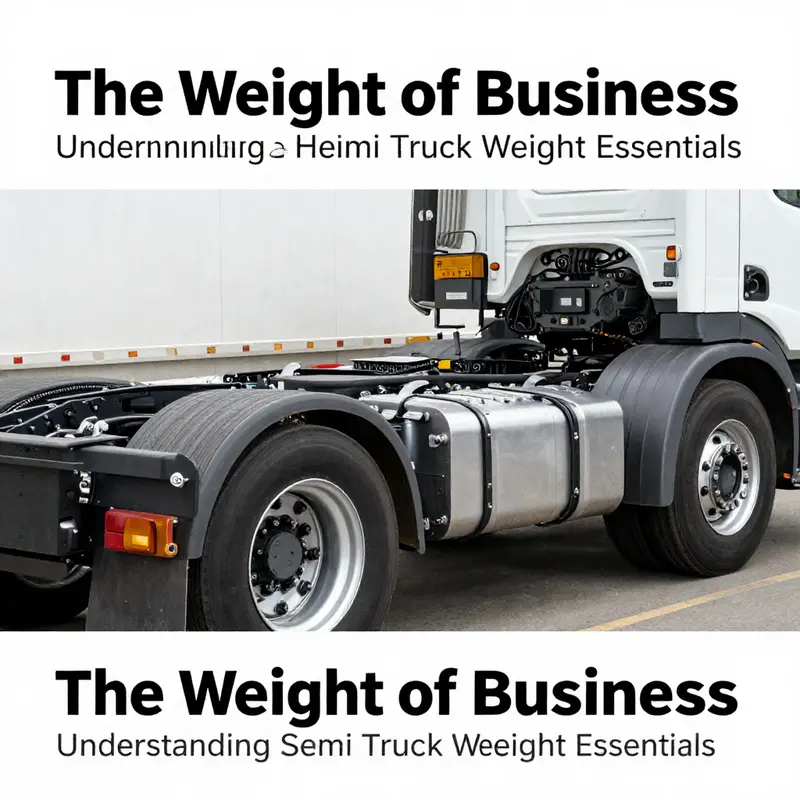
Weight is more than a single number on a scale when we talk about a semi truck. It is a story of where mass sits, how that mass is managed across the vehicle’s skeleton, and how rules carve out safe, efficient limits for movement on roads built for much lighter traffic than a fully loaded tractor and trailer. The curb weight—the mass of the truck in its basic form, without cargo or a connected trailer—includes the chassis, engine, fuel, and standard equipment. Yet that figure only hints at the real conversation truck operators must navigate. Once a trailer is coupled and cargo is loaded, the total becomes the gross vehicle weight, and the allowable maximum is governed by a blend of federal standards and state-specific rules. In the United States, the widely recognized ceiling for a semi truck and trailer is about 80,000 pounds gross vehicle weight, a number that many drivers reach only after careful planning and precise loading. Driving toward that limit is not a simple matter of stacking weight; it hinges on how that weight is distributed across axles, and how the configuration of those axles makes the limit both reachable and safe.
Axle configuration sits at the heart of this arrangement. The number of axles, their spacing, and whether they carry the load singly or as tandems (dual axles) do more than affect what the vehicle can legally carry. They shape the weight distribution on the road, influence tire wear and braking efficiency, and determine how stable the truck remains under various stresses. A five-axle tractor-trailer—two drive axles on the tractor and one or two axles on the trailer—offers a higher total weight capacity than a leaner three-axle setup. This is because the weight is spread across more contact points with the surface, moderating the force on any single axle and keeping each part of the system within regulatory limits. Federal guidance generally sets higher per-axle allowances when spacing between axles is optimized; single axles can bear roughly 20,000 pounds, while tandem axles can cap at around 34,000 pounds when configured with appropriate spacing. In practical terms, that means the same truck, with a well-chosen axle arrangement, can carry a heavier payload without crossing legal thresholds, simply by distributing the load more evenly across more wheels.
This distribution matters not just for legality, but for performance and safety. An overloaded single axle wears tires unevenly, strains the suspension, and taxes braking systems. When load is spread across tandem axles, the vehicle can maintain better stability, particularly during deceleration and cornering, where the risk of wheel lift, tire overheating, or brake fade grows with concentrated weight. Engineers sometimes turn to specialized components to optimize this balance. Hub-reduction axles, for example, offer a means to deliver torque more efficiently to the wheel while allowing a lighter overall drivetrain footprint. By housing the gearing within the wheel hub, these designs can improve traction and reduce drivetrain losses, a useful feature in heavy-haul or urban settings where weight must be managed without sacrificing grip or control. Even so, the appeal of such configurations rests on a broader objective: to maximize gross vehicle weight rating, or GVWR, while ensuring every axle works within its designated limit and the vehicle remains safely maneuverable across the varied roads it will traverse.
The decision-makers in logistics—fleet managers, owner-operators, and engineers—tune axle configurations to fit the intended duties of a truck. For long-haul interstate freight, a configuration that includes tandem drive axles is common, because it supports higher GVWR and helps the fleet stay compliant with weight laws across multiple jurisdictions. In contrast, for local deliveries that demand quicker turns and tighter maneuverability, operators might choose lighter setups with fewer axles. The trade-off is clear: higher payload capacity and smoother highway performance on one end, and improved maneuverability and reduced upfront cost on the other. These choices reflect a broader pattern in modern trucking, where weight management is not a static target but a dynamic balance among payload needs, road conditions, and regulatory landscapes.
One practical consequence of axle design is how weight is monitored and validated before a trip begins and after cargo is loaded. Portable axle weight scales and similar sensing technologies have become part of everyday fleet management. They help ensure each axle remains within its legal envelope, preventing overloading that could lead to fines or more severe outcomes on the road. The rise of integrated weight-monitoring systems within fleet management platforms further emphasizes that weight is not a one-time check at the dock, but an ongoing performance metric. By logging axle loads and correlating them with vehicle dynamics data, operators can fine-tune loading procedures, adjust routes, and plan maintenance needs with greater confidence. This operational discipline aligns with the underlying physics: even a vehicle with a generous GVWR can become unsafe if its weight is not properly distributed and controlled throughout the journey.
Beyond the physics and the legalities, the discussion of axle configuration touches the human side of trucking as well. A truck’s ability to carry heavier payloads safely can influence the total cost of operation, affecting fuel efficiency, tire life, and maintenance intervals. A well-balanced drivetrain and chassis reduce strain on steering and braking systems, leading to less downtime and more reliable service. In turn, drivers benefit from a vehicle that feels steadier in wind gusts, on uneven pavement, or when negotiating grade changes on a ramp. This is not merely about maximizing numbers on a balance sheet; it is about ensuring that every mile traveled preserves the integrity of the truck, its cargo, and the people who depend on it.
The framework that supports these outcomes is anchored in a few core ideas. First, axle count and the spacing between axles are not cosmetic features; they are essential components of compliance and safety. The regulatory environment recognizes that weight is not a single mass to be hauled but a system with multiple contact points whose interaction determines risk on the road. Second, the choice of “how much” a semi truck weighs is inseparable from the “how” and “where” of that weight. A heavier deliverable is not inherently better if it cannot be carried legally or managed safely across the trip. Third, the industrial ecosystem around heavy trucks—ranging from wheel hubs to braking systems and suspension designs—exists to support ambitious payloads without tipping the balance toward instability or excessive wear.
For readers who want a broader sense of how this topic fits within the larger landscape of heavy-duty transportation, consider the broader components and accessories that can influence weight distribution and handling. In the context of axle-aware design, even seemingly minor choices—such as choosing certain types of wheel end assemblies or adding equipment that shifts weight subtly toward or away from critical fulcrums—can have meaningful effects. A practical starting point is the accessories category, which encompasses a wide range of add-ons and enhancements that interact with weight and balance. See the Accessories page for a survey of options and considerations. truck accessories
Ultimately, the weight of a semi truck is best understood as a function of the vehicle’s core architecture and its configuration for a given mission. The curb weight tells you what the truck starts with, but the real story is the weight that accompanies the payload—the result of judicious axle design, proper load distribution, and adherence to the precise limits imposed by regulators. When these elements align, the truck not only meets the letter of the law but also performs in ways that promote safety, efficiency, and reliability. The 80,000-pound ceiling in the United States is not a ceiling hung over a rigid system; it is a dynamic threshold that reflects how weight travels across surface, how fuel efficiency is sustained, and how the vehicle responds to the demands of modern logistics. It is the product of careful engineering, disciplined operation, and a regulatory framework that seeks to harmonize the needs of commerce with the realities of road safety. As fleets continue to innovate—testing new axle configurations, exploring alternative drivetrains, and integrating smarter weight-tracking tools—the central truth remains constant: weight matters most when it is managed with intent, distributed with precision, and driven with awareness of the road beneath.
External resource: https://www.fhwa.dot.gov/operations/jpo/07019/appendix_c.cfm
Final thoughts
In summary, understanding how much a semi truck weighs is not just a matter of numbers; it’s an integral part of running a successful transportation business. By grasping the nuances of curb weights, maximum limits, state regulations, cargo types, and axle configurations, business owners can optimize their operations, ensure compliance, and enhance cost management. Equipped with this knowledge, you can make more informed decisions that drive your business forward.