
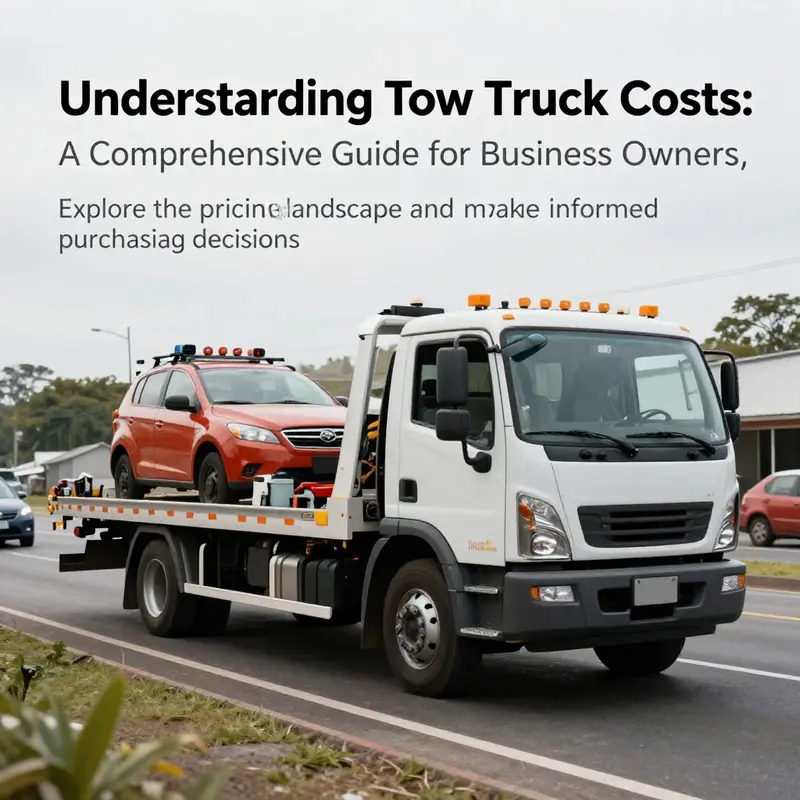
For business owners in the automotive services industry, understanding the costs associated with purchasing a tow truck is crucial for budget planning and operational efficiency. With a variety of types, features, and market factors influencing prices, it’s important to be well-informed. This guide breaks down the essential aspects of tow truck costs to empower you in making strategic purchasing decisions. Each chapter delves into different elements, including a cost breakdown, key features, various types, market influences, and a comparative analysis of leading brands, providing a holistic view to enhance your understanding.
null
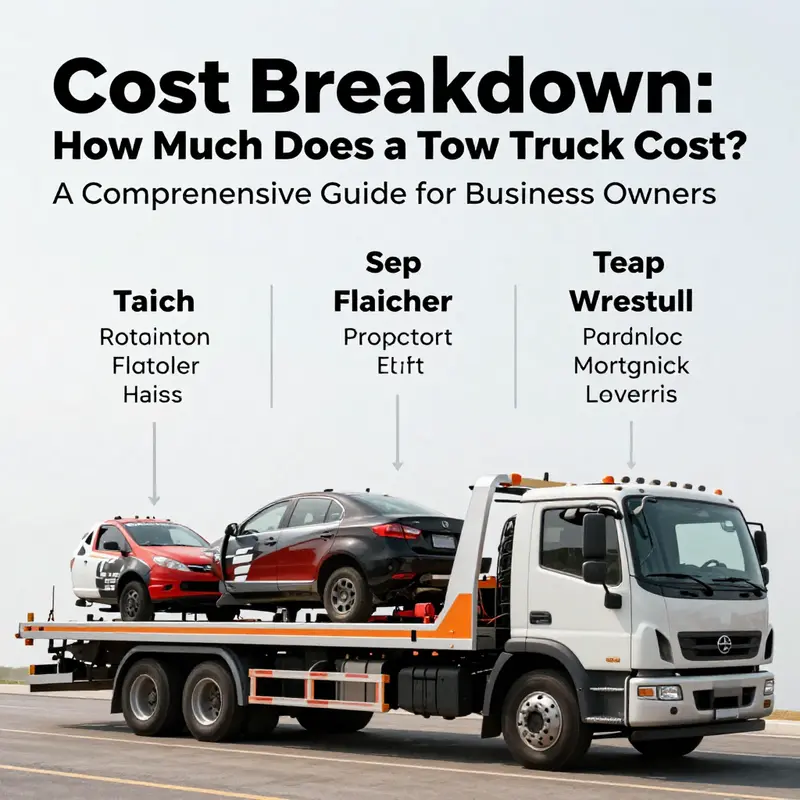
null
Tow Truck Price Demystified: How Size, Scope, and Service Decide the Bill
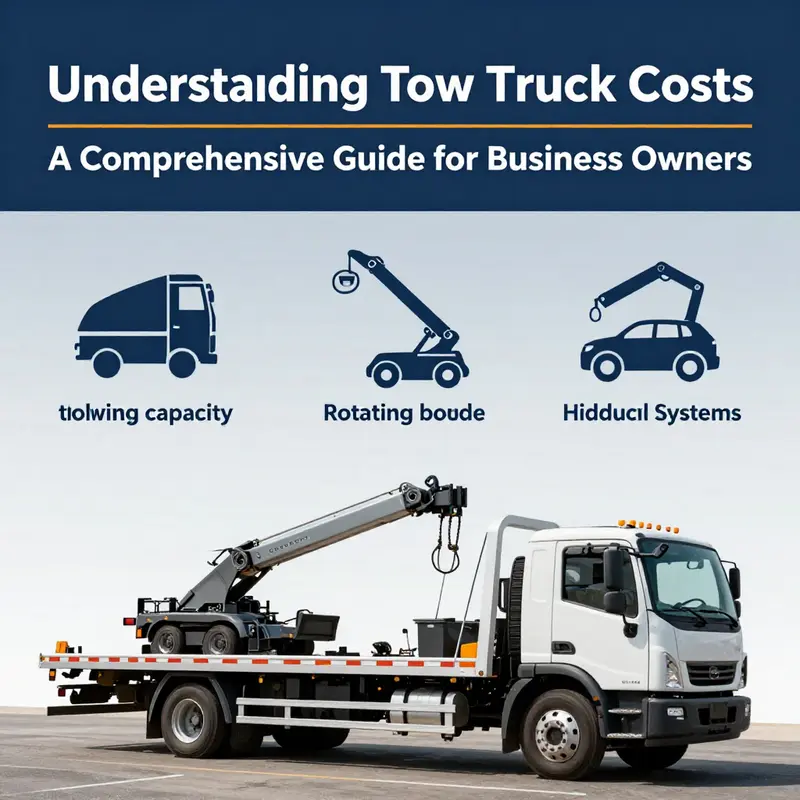
Tow-truck pricing is more than the sticker price. The total cost of owning or hiring a tow truck depends on type, capacity, features, usage, and market conditions. The sticker price is only the first chapter in a longer story, and regional and operational realities can push the total bill up or down. The price of acquiring a tow vehicle and the price of using a tow service are shaped by similar forces, but they affect consumers differently on the roadside.
Tow-truck archetypes range from rotators at the high end to smaller, more economical units. Rotator tow trucks feature a rotating boom for difficult recoveries but carry a premium price, often in the six-figure range when options and training are included. Flatbeds offer gentler handling for AWDs, low-clearance cars, and high-value vehicles, usually in the 80,000 to 150,000 range depending on configuration. Heavy-duty wrecker trucks designed for multi-vehicle incidents can vary widely, with representative listings sometimes showing mid five-figures to lower six-figures, influenced by reach, winches, stabilization, and extras. Compact 4×2 wreckers sit at the lower end, typically around 50,000 to 70,000, with price subject to condition and negotiation.
Beyond sticker price, region, market dynamics, and service quality influence ongoing costs. Higher operating costs in urban areas can push prices 15 to 25 percent above the national average, while rural markets may offer lower rates. The experience of the operator matters too: reputable firms with trained technicians and transparent pricing may charge more, but they also reduce risk and provide clearer invoicing. For consumers, tow pricing is typically a base fee plus per-distance charges, with surcharges for off-hours, weekends, and difficult recoveries; additional fees for tolls or destination charges may apply on long-distance calls.
External resources from industry bodies and pricing guidelines can illuminate why price differentials exist across regions and service types, and why quotes vary in real life. The core message is that tow truck cost is a layered equation that blends capacity, reliability, maintenance economics, and regional economics. By understanding these factors, buyers and users can set realistic expectations and engage more effectively with suppliers, asking informed questions about capacity, maintenance, and the conditions that influence pricing.
Tow Truck Costs Unfolded: How Power, Size, and Purpose Shape Price
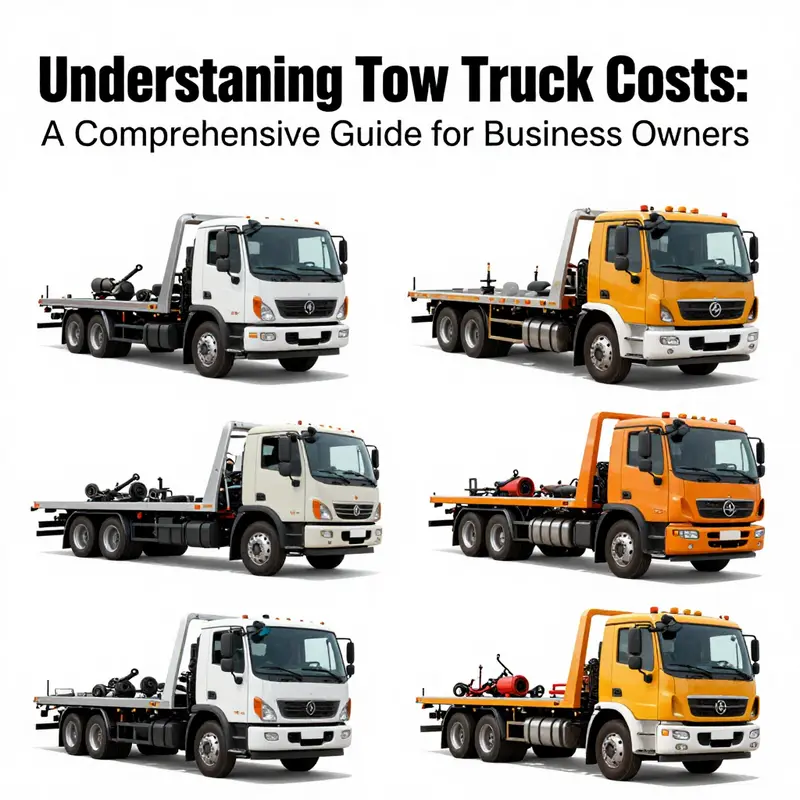
Tow truck costs vary with the job mix and the configuration. Different chassis types deliver different capabilities and price bands. Flatbed tow trucks with hydraulically tilting beds offer the broadest versatility and the safest handling for high-value or delicate vehicles, but they carry higher upfront costs, typically in the mid to upper six figures depending on bed length, controls, and options. Wheel-lift units are faster and cheaper to acquire but usually support lighter workloads and can incur higher maintenance costs over time. New wheel-lift prices generally range from about forty thousand to eighty thousand dollars, depending on lift capacity, frame rigidity, and added durability features. Rotator trucks provide heavy lifting and precise positioning but command six-figure prices that can climb toward the lower hundreds of thousands, with higher costs for larger rotation ranges and multiple winches. Integrated or small-wrecker units sit at the nimble end of the spectrum, offering excellent urban maneuverability and lower upfront costs, often in the mid to upper five-figure range but with reduced payload and rigidity for very large vehicles. Beyond unit type, total cost of ownership is shaped by planned workload, uptime, maintenance discipline, spare parts availability, and the strength of the service network. Buyers should translate expected job mix into bed type, lifting capacity, rotation, and add-ons such as GPS or load-sensing features to create apples-to-apples comparisons, start with a baseline configuration, and then plan for growth. Used trucks can provide lower entry costs, but buyers should budget for inspections, refurbishments, and potential downtime. Regional price variations, delivery charges, and currency factors can also influence the final figure. The goal is to match capability to need to optimize uptime, customer value, and long-term operating costs, rather than choosing the lowest upfront price.
Market Forces at the Bumpers: How Local Economics and Demand Drive Tow Truck Pricing
Prices for tow services do not arrive in a neat, one-size-fits-all line item. They emerge from a dynamic system where geography, time, vehicle specifics, service requirements, and current market conditions all conspire to set the final bill. This chapter follows that thread, showing how the price you pay reflects more than a simple meter running. It is a story of constraints, logistics, risk, and the real-world costs of keeping roads moving and accidents manageable. When you understand these moving parts, the sticker price on a tow becomes less mysterious and more predictable—within the constraints of your location and the moment you call for help.
Geography matters as a first-order price driver. Where you are dramatically shapes the base math of any towing job. In densely populated, high-cost regions, labor costs are higher, insurance premiums bite more deeply, and compliance with local rules tends to be more burdensome. All of these factors feed into the day-to-day price a customer sees. In major urban centers, fleets must navigate congested streets, longer wait times, and sometimes more restrictive parking and access challenges. Those conditions translate into higher minimum charges and larger base fees to cover the initial mobilization and the logistics of reaching a scene safely. In more rural or remote areas, while access may be easier and traffic lighter, the sheer travel required to reach a vehicle can push up the per-kilometer cost and the total hours billed. It is not simply a matter of distance; it is the combination of travel time, fuel burn, and the opportunity cost of a crew tied up away from other calls. The result is a pricing landscape where the same service can look very different from town to town, even if the underlying work appears similar at first glance. Urban price levels often reflect a higher floor, while rural areas may expose customers to sharper per-mile or per-kilometer rates as fleets balance shorter call volumes with longer travel to the scene.
The nature of the vehicle being towed and its condition is another layer of complexity that operates almost as a second price dial. A small passenger car is comparatively straightforward to load, secure, and transport, requiring less specialized equipment and fewer crew hours. This translates into lower base fees and more predictable labor costs. On the other hand, large vehicles such as heavy trucks or buses demand heavier gear, more extensive rigging, and more precise handling to avoid damage. The risk involved increases the time required to secure the vehicle and the likelihood of additional safety measures, all of which push the price upward. When a vehicle is severely damaged, unstable, or rests in a precarious position, technicians may need extra personnel, longer winching operations, or even tiered safety protocols. Each extra hour, crew member, or level of caution adds to the final sum. The pricing thus encodes not only the weight or size of the load but the real-world difficulty and risk of the operation. This is why a bill for a tow of a damaged or precarious vehicle can be noticeably higher than the bill for a similar-looking job performed on a stable, undamaged car.
Distance and time are the backbone of any towing quote, and they interact with each other in predictable yet sometimes surprising ways. Most pricing models start with a base rate designed to cover the essential mobilization: getting the truck to your location, the dispatch overhead, and the initial setup. After that, every kilometer or mile adds to the total, with incremental charges that reflect fuel consumption, tire wear, and crew labor. In many markets, a ten-kilometer service sits in a broad range—often around two hundred fifty to six hundred yuan—depending on the base structure and any distance caps. Longer trips push the price up further. Time is equally important. Night shifts, holiday calls, and adverse weather all demand additional compensation for the crew’s extra risk, more complex logistics, and the need to stay ready when normal routines are disrupted. A premium of up to thirty percent or more is not unusual in those scenarios, as the service provider absorbs the added hazards and the opportunity cost of waiting periods and overtime. The takeaway for customers is simple: shorter, daytime requests may be far less expensive than the same service performed during a busy evening or a storm, even if the basic task appears identical on the surface.
The choice of service type and any special requirements further shape the final figure. Tow operations vary in the method used to recover and move a vehicle. A straightforward flatbed tow often costs less than methods that involve hooks, chains, or additional stabilization steps, because the latter approaches require more equipment and more meticulous handling. Into this mix can enter the vehicle’s specific vulnerabilities. A car with low ground clearance, a delicate drivetrain, or an extended warranty may justify a higher price to ensure that transport occurs without damage. Beyond the mechanics of loading and securing, extra services—such as battery jump-starts, tire changes, or the transport of hazardous materials—are typically itemized separately. Each has its own regulatory and safety implications, which environments and markets translate into additional surcharges. The practical effect is that a single call can generate several line items, each reflecting a different aspect of the work performed. This modular pricing provides transparency for customers, even as it can appear complex at first glance, and it helps explain why “one price fits all” rarely applies in towing.
Market dynamics—supply and demand—add another vital layer. When traffic spikes due to holidays, major events, or severe weather, more people need towing and fleets respond by scaling up dispatch and, often, by adjusting prices to reflect the temporary bottlenecks in service capacity. Peak demand can drive prices up as operators scramble to meet urgent needs and maintain safety standards. Conversely, in slower periods, competition among providers intensifies, and some fleets may offer discounts or promotional pricing to secure business. In extraordinary circumstances—massive accidents, natural disasters, or large-scale transportation disruptions—the price can jump dramatically, sometimes by multiple times the standard rate, as resources are deployed with urgency and limited by the availability of skilled personnel and equipment. This fluidity means that a price cited on a quiet Tuesday could be markedly different from a price on a storm-impacted Wednesday, even for the same service.
The profile of the provider itself also colors pricing. Larger, well-established fleets bring reputational reliability, faster response times, and a consistent standard of service. Those advantages naturally allow them to command higher prices. Smaller operators, with leaner fleets and potentially quicker local presence, may offer lower base rates but with variability in response times or consistency. For customers, the decision often hinges on a balance between cost, confidence in the provider, and the value of speed and predictability. A premium paid to a larger operator can translate into quicker arrival, more reliable handling, and a clearer, more predictable billing experience, which is valuable in high-stress roadside scenarios. Yet for budget-conscious travelers or those who can wait a bit longer, a smaller operator could deliver acceptable service at a reduced upfront price, provided expectations are aligned with the service level.
Interpreting these forces together yields a practical frame for consumers navigating tow pricing. Think of tow pricing as a negotiation among several levers: geography, vehicle characteristics, distance, timing, service type, and the realities of the market at that moment. The best approach is not to chase the lowest price in a vacuum, but to seek a fair value that aligns with the risk, effort, and expertise required for the job. When requesting a quote, it helps to provide clear, detailed information: the vehicle type and weight, the precise location, any unusual conditions at the scene, and whether the tow will involve special equipment or additional tasks. If possible, obtain multiple quotes to gauge the market and identify any outliers that reflect unusual surcharges or unusually low estimates that may carry hidden risks. And for business readers, recognizing how dispatch efficiency and fleet management tools influence pricing can be the difference between a sustainable pricing model and one that leaves margins thin. Modern fleets that implement smarter dispatching—not just aggressive price competition—tend to price more accurately, reduce idle time, and deliver steadier quotes over time. In this sense, a consumer’s local price environment often mirrors the maturity of the local towing ecosystem, with more mature markets delivering more predictable pricing and better service consistency.
To support readers who want to explore efficient operational practices without naming brands, it can be helpful to consider generic capabilities associated with dispatch and fleet management resources. These tools enable better route planning, real-time position tracking, and more accurate labor-hour estimation, all of which contribute to price stability and improved customer experience. If you are a professional in the space, exploring such resources can yield insights into aligning pricing with actual workload and asset utilization. For a practical starting point, see this dispatch and fleet management resource for a deeper dive into how modern operations optimize pricing and dispatch efficiency.
Conclusion and context: understanding tow pricing means recognizing that the price tag mirrors a living economy on wheels. It reflects where you are, what’s dragged along with your vehicle, how far the tow must go, when you call, and how much the market is stretched at that moment. This perspective helps buyers and operators alike. Buyers gain a realistic frame for budgeting roadside assistance, while operators gain a lens to price services responsibly, transparently, and with an eye toward sustainable, high-quality service. The bottom line is straightforward: the cost of getting a vehicle from point A to point B is never just about the distance; it is about the choreography of people, machines, regulation, and timing that makes the journey possible.
External resource: https://www.autohome.com.cn/
Beyond the Sticker Price: A Practical Guide to Tow Truck Costs Across Types and Brands
When people ask how much a tow truck costs, the answer isn’t a single number. It’s a spectrum shaped by the truck’s purpose, its size, the features it wears, and where you buy it. The same logic that governs a small rollback in a city fleet will push a heavy, rotatable recovery unit into a different price tier entirely. In this chapter, we move through that spectrum with a focus on how the price breaks down by type and by the underlying choices a buyer must make. The aim isn’t just to name price ranges, but to reveal the mechanics that turn a $60,000 chassis into a reliable tool for urban towing or a $300,000 machine into a lifeline during an overturned-vehicle incident. The topic ties directly to the broader question of cost by asking how much value you’re buying with each incremental feature, and how that value translates into total ownership over the life of a tow operation.
At the heart of cost is capacity. A truck’s towing capacity, its lifting power, and the sophistication of its winching system set the floor for price and the ceiling for performance. A rotator, the most capable and complex class, commands a premium not merely for its 360-degree rotation. It is the integration of hydraulic power, mechanical reach, safety features, and the ability to reposition or recover vehicles in the most challenging angles that pushes the price upward. In cost terms, rotators sit high on the spectrum, with price ranges broadly described as six figures to well over six figures when options and after-market adaptations are included. Think of the rotator as the emergency responder in a towing fleet: indispensable in certain scenarios, but a significant investment that requires specialized training, higher fuel use, and a larger physical footprint on the yard or in service.
Then there is the middle ground, typified by the flatbed tow truck. The hydraulically tilting bed makes a flatbed a safer and less damaging option for AWDs, luxury cars, or vehicles with low ground clearance. It is in this category that many fleets find a balance between upfront cost and long-term saving: the ability to load without dragging a car’s undercarriage reduces wheel and frame damage—an often overlooked cost driver when vehicles get towed repeatedly. Price ranges here typically fall between the upper six figures and the lower mid-five figures, contingent on bed length, hydraulic speed, advanced alignment systems, and brand reputation. The flatbed is also more scalable for mix-use operations, offering options that can impact price by a few thousand dollars per feature—ranging from high-speed winching to integrated wheel-lift capabilities and on-board power systems.
The broad class of heavy-duty wrecker trucks sits closer to the mid-range of price, but with a long tail of configurations that reflect the operator’s needs. In the real world data, a representative 50-ton wrecker from a leading Chinese manufacturer shows a price spread that is wider than you might expect. A single unit can list anywhere from the mid-$30,000s up to nearly $100,000, and the entire range is driven by configuration, winch capacity, boom geometry, fuel efficiency, and the terms of delivery. Another 8×4 variant may fall roughly in the $40,000 to $70,000 neighborhood, illustrating how a single platform family can cover a broad spectrum of use cases—from urban-assist to light-on-megacities long-range recovery. For smaller urban operations, a 5-ton wrecker can be found in the $18,000 to $39,800 range, depending on condition and supplier, giving cities and small fleets a doorway into professional recovery services without the heavier capital commitment of top-tier heavy-duty equipment. These figures illuminate a central truth: as capacity and specialization rise, price follows, but the delta between models within the same class can be surprisingly wide, driven by the specifics of the build and the seller’s terms.
A separate but equally important tier is the economical rollback and entry-level flatbeds. A generic listing for a 10-ton rollback flatbed highlights a broader price window—roughly $15,500 to $52,900. This range captures a spectrum from lean base configurations to more capable units with better hydraulics and safer loading mechanisms. It serves as a reminder that for many operators, especially smaller fleets or new entrants to the market, the initial sticker price is only part of the story. The lifetime cost, including maintenance, parts, and potential downtime, can tilt the economic balance toward or away from more expensive but more reliable options. It also underscores the value of shopping carefully for features that provide real value in daily use, rather than chasing the most expensive tag for the sake of prestige.
Beyond the sticker price, price is shaped by brand origin, engineering philosophy, and the logistics of delivery. The data behind these numbers show a clear hierarchy: cheaper, smaller rollback flatbeds and light-duty wreckers sit at the lower end; mid-range heavy-duty wreckers occupy the middle; and rotators, with their specialized capabilities, sit at the top. Origin matters here as well. Chinese manufacturers often present more aggressive base pricing compared with Western brands, though total ownership costs can differ based on service networks, parts availability, and import duties. When buyers consider a purchase, an apples-to-apples comparison requires looking at the total cost of ownership: maintenance intervals, spare parts availability, fuel efficiency, and the price of crew training for specialized equipment. The rotator, with its rotating mechanism and added hydraulics, is a classic example where maintenance costs and downtime considerations tilt the equation toward a higher ongoing expense, even if the upfront price reflects a premium for capability.
The practical implication for a buyer is straightforward but worth emphasizing: align the truck type with the most frequent job profile. If a fleet rarely needs to recover overturned vehicles or handle complex multivehicle incidents, a flatbed or a mid-range heavy-duty wrecker may deliver the best return on investment. If, however, the operation centers on emergency response and high-angle, complex recoveries, the rotator’s cost is justified by the speed, safety, and versatility it brings to those high-stakes calls. The question becomes one of schedule and risk mitigation: how often do you anticipate needing the full gamut of capabilities, and how much downtime can you tolerate if a machine is down for maintenance or parts replacement? A useful rule of thumb is to treat a tow truck as a tool whose cost is amortized across the number of jobs it helps complete and the severity of those jobs. A higher upfront investment can be justified if it meaningfully expands the window of work that the crew can handle without subcontracting to third parties, or if it reduces damage to the vehicle being recovered, which can translate into lower insurance claims and faster customer turnover.
Costs are also sensitive to how a buyer sources the unit. New units from established dealers or manufacturers typically carry the strongest warranties and the cleanest maintenance records, but they come at a premium. Used or brokered units offer immediate price relief, yet they may bring higher maintenance risks and a shorter remaining service life. The decision often hinges on the buyer’s risk tolerance and the availability of service and parts in their region. Delivery and logistics—how far the unit must travel to the buyer, whether it comes with pre-delivery inspection, and how quickly parts can be shipped if a component fails—can add thousands to the final price. Buyers should request a transparent breakdown of the quote that includes base price, optional features, delivery terms, and any required training packages. This level of granularity helps prevent sticker shock and clarifies where value is being added.
When evaluating a specific purchase, it can be enlightening to consult trade-specific resources or industry forums that discuss not only price but real-world performance. For readers who want to explore practical insights into accessories and mounting options that affect upfront costs and daily operation, the Towsmart resource provides a helpful perspective and examples of how add-ons influence total cost of ownership. See the Towsmart blog for a practical discussion on how accessory selections can shift price and performance in everyday towing and recovery work.
In sum, the price narrative for tow trucks is not a single figure but a layered story of capacity, build quality, and intended use. Rotators deliver power and flexibility in the toughest recoveries but demand a substantial investment and ongoing commitment to training. Flatbeds offer a safer, more controlled loading process for a broad range of vehicles at a price that sits in the middle of the market. Heavy-duty wreckers occupy a broad middle-to-upper range, with costs closely tied to torque, wheel-lift systems, and boom geometry. The most economical path often lies with smaller rollback flatbeds, which provide essential capability at a price point that keeps entry into professional towing accessible. Across all categories, buyers should factor in maintenance, parts availability, training, and the possibility of import duties or shipping costs when comparing quotes. The real answer to “how much does a tow truck cost?” is not simply the sticker price but the total package of capability, reliability, and long-term value that each unit brings to a fleet.
External reference: https://www.made-in-china.com/products-search/hot-search/Howo-Wrecker-Truck.html
Final thoughts
Understanding the cost landscape of tow trucks is essential for business owners in the automotive services sector. With varying types and features influencing prices, this guide has provided insights into how to navigate these complexities. By considering the breakdown of costs, key features, market influences, and brand comparisons, you are now equipped to make informed decisions that align with your business needs. Remember, investing in the right tow truck not only enhances your service capabilities but also impacts your bottom line positively.