

As the market for electric trucks expands, understanding the pricing of the Tesla Cybertruck becomes vital for business owners. With its robust capabilities and innovative features, the Cybertruck emerges not only as a reliable vehicle but also as a strategic business investment. This guide delves into the current pricing for entry-level and top-tier models, tracks the historical pricing trends, analyzes market dynamics that influence costs, and provides future projections that can help informed purchasing decisions.
null

null
Premium Price, Practical Value: Decoding the Top-Tier Exoskeleton Truck’s Cost

If you were trying to gauge how much the most expensive version of the electric pickup costs, you’d quickly discover a price story that’s as dynamic as the vehicle’s performance. The top-tier model, often referred to in industry discussions as the premium variant, has carved out a price position that feels both aspirational and strategic. In early February 2026, the premium flagship showed a starting price of $99,990 after a notable price reduction from a prior level well over the six-figure mark. This shift came as part of a broader recalibration of the brand’s pricing architecture, a move that aimed to keep the exoskeleton-equipped chassis within reach for serious buyers while preserving the aura of exclusivity that accompanies the most advanced engineering. Even as the high end softened, the reasoning behind that sticker remains grounded in a mix of performance, manufacturing complexity, and the long arc of product strategy. Meanwhile, the base or entry-level dual-motor configuration—once introduced at a far more accessible level—had its own price adjustments, highlighting Tesla’s willingness to adjust the ladder of affordability in real time as demand, supply, and production realities shift.
The resulting price corridor—roughly from under seventy thousand dollars on the lower end to just under one hundred thousand on the top tier—translates into practical questions about value. What does the premium price buy, beyond raw speed and the bragging rights of owning the most advanced aluminum-and-steel chassis in the market? The answer, as many analysts and early buyers have discovered, lies less in a single metric and more in a bundle of capabilities, engineering choices, and long-term ownership outlooks. On the one hand, the top tier embodies a set of features and performance envelopes that push what a pickup truck can do in terms of payload, range, and on-road dynamics. On the other hand, it reflects a production philosophy that accepts higher upfront costs in pursuit of manufacturing elegance and fewer moving parts at scale. The result is a nuanced calculus of value: you may pay more upfront, but you enter a system designed to optimize efficiency, safety, and durability over the vehicle’s lifetime.
To understand why the top tier commands its price today, it helps to pull back and peek at the two pieces that carve the total cost—what you pay at the showroom and what you pay to operate over years of use. The showroom price is not just a number on a spec sheet; it’s a signal about the engineering decisions baked into the vehicle’s core. The exoskeleton, for instance, isn’t a conventional sheet-metal stamp; it’s a high-strength, stainless-finish structure formed through a proprietary fabrication approach—one that relies on an in-house manufacturing ecosystem capable of shaping thick sections with an exacting tolerance. Tesla’s investment in the gigapress technology at its Giga Texas site—a system designed to reduce part counts and simplify assembly—serves as a telling case in point. The upfront tooling and line investments here aren’t simply about producing a single model; they’re about building a production system that can sustain a premium product with consistent quality while wrestling with the realities of high-speed, high-volume manufacturing.
That manufacturing choice—pioneering a process that reduces the number of separate components and fasteners—helps explain the price delta between the top tier and other variants. It also explains why the price remained sensitive to demand signals and production milestones. When a company invests heavily in a new press system, the amortized cost per unit can stay elevated until volumes justify the expense. In other words, the premium price is not solely about the vehicle’s capabilities. It’s also a reflection of how the vehicle is built and the scale of the factory systems required to produce it. The deeper implication is that pricing isn’t a static number but a function of production efficiency, material costs, and the speed with which the assembly line can convert a design into a reliable, road-ready product.
Within that price framework, the decision for a prospective buyer often comes down to the perceived value of the advanced engineering and the experiential edge it promises. The top tier embodies a blend of attributes: a high-strength, corrosion-resistant exoskeleton; a unique, simplified assembly strategy; and a performance envelope that challenges stereotypes about what electric trucks can accomplish in terms of towing capability, off-road resilience, and on-road refinement. Buyers who gravitate to this model are typically seeking a combination of capability and prestige—an investment that, in their view, deserves a premium because it is anchored in a distinct manufacturing philosophy and a long-term service trajectory. The pricing narrative, then, is less about a single feature and more about the holistic package: engineering leadership that translates into tangible advantages in how the vehicle behaves in diverse conditions, how it travels over long distances, and how it holds up over years of use.
Yet the pricing story is inseparable from the consumer’s financial reality. In the market’s current climate, even a premium product needs a thoughtful path to ownership. The base and the top tier exist in a spectrum that invites buyers to weigh upfront cost against expected return: the time saved by greater payload efficiency, the reduced friction of day-to-day maintenance thanks to a simplified assembly, and the long-term depreciation profile that accompanies cutting-edge technology. Buyers must also factor in energy costs—charging at home versus public networks, the variability of electricity prices, and the potential incentives that can influence total ownership outlays. While the premium model sits at the higher end of the spectrum, the owning experience—if expectations align with the engineering promises—can tilt the decision toward long-term value rather than immediate cost alone. In a world where technology evolves quickly and supply chains continue to adapt, consumers increasingly appreciate that a higher upfront price can correspond to a longer, more predictable ownership journey.
The pricing trajectory also offers a window into Tesla’s broader strategic posture. The company has historically tested, revised, and re-tested its price points to balance demand with production realities. The entry price, after a brief window of affordability, was nudged upward as supply grew and the market responded to the vehicle’s distinctive attributes. The top tier, having shed some value from a previous peak, now sits at a rung that signals a deliberate bid to expand accessibility for a segment of buyers who demand top-tier engineering without fully abandoning the premium aura. This dynamic illustrates a market where price is both a reflection of cost and a signal to potential buyers about the likelihood of continued innovation, ongoing support, and long-term service commitments.
From a consumer education standpoint, the task is to translate these dynamics into a practical decision framework. For someone weighing whether the premium price is warranted, it helps to map out the key differentiators. First, the design philosophy and manufacturing approach—where fewer, higher-integrity parts replace a larger number of conventional components—can translate into measurable benefits in durability and maintenance. Second, the performance envelope—acceleration, load-carrying capacity, and stability in demanding conditions—offers a tangible reason to prioritize the top tier if those capabilities align with real-world needs. Third, the technology and safety ecosystems—sensor suites, software updates, and integration with a growing network of charging and service infrastructure—further justify an elevated price point for buyers who plan to rely on cutting-edge tech as part of their daily routine. While these factors don’t guarantee a linear return on investment, they frame the premium as an intentional commitment to a future-facing ownership experience, rather than a mere indulgence.
For readers who want to explore the deeper mechanics behind the top-tier pricing and production cost dynamics, there is a detailed analysis that unpacks the technical hurdles and manufacturing costs associated with bringing this kind of vehicle to market. That analysis delves into how gigapress deployments and the bespoke production lines influence unit economics, and it situates the price within a broader narrative about how automakers balance premium engineering with scalable manufacturing. Meanwhile, to connect this broader discussion to design and programmatic decisions at the company, one can explore additional perspectives from the industry blog that focuses on the brand’s engineering and product ecosystem. For a deeper dive into the design narrative and production economics, see Cybertruck Co.
As the market continues to watch price movements and production milestones, the central question remains: how much is the top-tier electric pickup, and what justifies that price in a market that prizes both performance and practicality? The numbers—$69,990 for the base entry-level variant in March 2026 and $99,990 for the premium top tier in February 2026—frame a category that stands apart from more conventional trucks. They signal that the fastest-growing segment in the market is willing to experiment with new manufacturing philosophies and design languages, and they invite buyers to weigh the immediate sticker against a broader, longer-term value proposition. The chapter’s broader arc thus centers on a single, provocative idea: the price of the top tier is not merely what the door handle reads on the showroom floor. It is part of a larger story about how high-performance electric engineering is priced, built, and owned in a rapidly changing automotive landscape.
External resource: The Verge’s in-depth analysis of the engineering and cost challenges behind the premium, high-end build can be found here: https://www.theverge.com/2026/2/18/25347846/tesla-cybertruck-price-gigapress-manufacturing-cost
Price Points on the Move: Tracing the Tesla Truck’s Value From Hype to Today
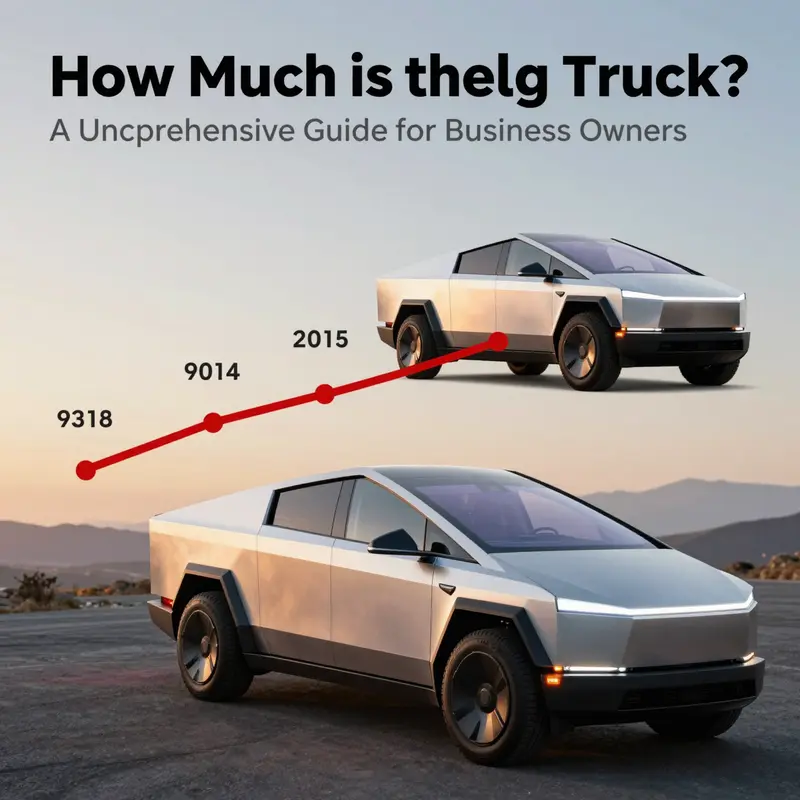
When readers ask how much the Tesla truck costs, they are often chasing more than a number. They want context—how a vehicle that began as a bold promise evolves into a price that shapes decisions for everyday buyers and fleet managers alike. The story of the Tesla Cybertruck, tempered by the company’s broader trucking strategy, is a window into how a cutting‑edge concept becomes a practical purchase. It is a narrative of shifting ambitions, manufacturing challenges, and strategic pricing that reframes what “affordable” means in a market where alternate powertrains, towing capacities, and total cost of ownership compete for attention. The price trajectory is not a simple line; it is a reflection of evolving engineering realities, inflation, scale, and the urgency of turning a remarkable prototype into a mass‑market workhorse.
In the early days after the Cybertruck’s 2019 reveal, Tesla mapped out a promise with three tiers that felt almost revolutionary for an American pickup. The base rear‑wheel‑drive model was pitched at $39,900 with a range around 250 miles, while the mid‑tier dual‑motor version promised more than 300 miles of range for about $49,900. Those figures were positioned to challenge the Ford F‑150 and its familiar ecosystem, implying not just a new truck but a reimagining of what a pickup could be in an electric era. Yet the road from concept to production never stayed straight. Stainless‑steel exoskeletons, battery integration, and the complexity of scaling up a new platform created delays and shifts in specifications that readers of the original unveil could hardly have anticipated. As production timelines slipped and details evolved, the company gradually moved away from the most aggressive early price targets. By 2023, observers began to temper expectations with a sense that, if the Cybertruck would exist at all, it would settle near the broader reality of a practical, mass‑market pickup around the $60,000 mark.
That turning point arrived in March 2026, when a decisive price adjustment blurred the line between aspiration and accessibility. Tesla announced a base price for the entry‑level Cybertruck at $59,990, marking a dramatic retreat from earlier expectations. The modular approach to features and trim levels meant that some interior and capability choices—cloth seats, streamlined tow ratings, and more modest materials—left the truck with a more attainable price tag. However, the economics of pricing are rarely one‑size‑fits‑all, and the market did not stand still. By March 2, 2026, the base price had risen to $69,990 after a $10,000 adjustment. This flip‑flop may seem counterintuitive at first glance, but it reveals a calibrated strategy: make the vehicle broadly appealing, then fine‑tune the price to reflect demand, production costs, and the desire to refine the product for real‑world use.
The price shift also mirrored a broader shift in how Tesla views its own lineup. The once‑premier, high‑concept Cybertruck has gradually embraced a more pragmatic posture. The top‑tier variant, informally dubbed the Cyberbeast, saw a substantial price reduction that brought its sticker to $99,990, down from $114,990 after an earlier hike. In effect, Tesla reset what the brand could offer at premium levels without permanently locking in a prohibitively high price. The implication for buyers is nuanced: the Cyberbeast’s reduced price opened the door to a performance‑focused luxury segment of trucks, while the base model’s price level aimed to improve everyday accessibility. In tandem, the company’s pricing circle is closing in on a spectrum that balances capability with affordability, a balancing act that is rarely visible in faster‑moving consumer electronics but is critical in heavy, high‑tension automotive markets.
This dynamic is not limited to the Cybertruck. Tesla’s Semi, the company’s commercial heavy‑duty solution, follows a different rhythm—one that speaks directly to enterprise economics and fleet planning. At its initial unveiling in 2017, Tesla offered three tiers: a 300‑mile range at $150,000, a 500‑mile model at $180,000, and a founder’s series at $200,000 requiring full prepayment. Those numbers were as much about signaling long‑term value as about revenue at launch. By 2026, after steady development and a dedicated production footprint in Sparks, Nevada, the pricing for the Semi had shifted toward a different scale: the standard‑range model at $250,000 and the long‑range variant at $290,000. The jump in price reflects inflationary pressures, expanded capabilities, and the vehicle’s operational economics for fleets—lower fuel and maintenance costs versus conventional diesels, but with a higher upfront commitment. The Semi’s pricing strategy illustrates a second, complementary axis in Tesla’s truck calculus: for fleets, the total cost of ownership and reliability deliver a different kind of value than for individual consumers.
The overall trajectory—initial grand promises, tempered by production realities, followed by recalibrated, strategic pricing—highlights a broader pattern in Tesla’s approach to trucks. Early promises captured the imagination, but the path to real‑world adoption demanded concessions. The 2026 price adjustments demonstrate a willingness to convert hype into practical affordability, while preserving a family of products capable of serving diverse markets. It is a careful orchestration: you do not want to undermine a vehicle’s desirability by making it too cheap too quickly, nor do you want to price itself out of its target customers. The adjustments, in combination with ongoing manufacturing improvements and scale, reflect Tesla’s intent to broaden the Cybertruck’s appeal without eroding the brand’s premium aura.
The market context for these moves matters as well. The pickup segment is intensely competitive, with traditional internal combustion pickups and newer electrified rivals racing to provide comparable payload, range, and technology at compelling prices. Inflation, battery costs, and supply chain realities have all pressed manufacturers toward more aggressive pricing strategies when there is both demand and a clear path to cost reductions through higher volumes. In that sense, the Cybertruck price cuts and subsequent adjustments are less about catering to a single moment and more about shaping a durable, long‑term position in a rapidly evolving segment. The value proposition for buyers has grown more complex: it is not merely the upfront price but the combination of range, payload, ruggedness, software features, maintenance, and the downstream ecosystem that supports the truck’s use in everyday life and in commercial operations.
For readers who want to explore the ecosystem around the Cybertruck and its growing accessory and customization landscape, communities and information centers such as Cybertruck Co offer practical perspectives on aftermarket options and practical configurations. See Cybertruck Co for a sense of how owners tailor their trucks to real world tasks, from roof racks to cargo solutions. This kind of practical insight helps translate sticker prices into potential value, illustrating how a vehicle’s price interacts with its ability to fulfill specific needs. Cybertruck Co
Beyond the purely numerical aspect, the price evolution tells a story about the intersection of technology, manufacturing scalability, and consumer expectations. The Cybertruck’s journey from a bold price forecast to a more iterative pricing reality mirrors a broader truth about truly disruptive products: early predictions often overestimate near‑term affordability while underestimating the rapid improvements that come with scale. When battery technology matures and production lines ramp up, costs tend to fall faster than conventional wisdom expects. Tesla’s price adjustments appear to reflect precisely that logic: the company aims to expand ownership while maintaining a level of performance and durability that justifies the higher upfront cost for the right buyers.
The pricing narrative also informs how customers plan purchases. A buyer weighing a Cybertruck against a traditional pickup now faces a more complex decision matrix. The entry point at $69,990 sits closer to mainstream full‑size pickups, while the top tier at $99,990 sits in a space where high‑end trims and performance variants are common in the automotive market. The consequence is a broader audience that can consider an electric truck not as a niche gadget but as a practical tool for work, family, and recreation. This shift in perception matters because it influences adoption rates, fleet planning, and even the pace at which charging infrastructure and service networks expand to meet demand. It also reframes how buyers think about depreciation, resale value, warranties, and potential incentives that can soften the total ownership cost.
In the end, the price points are not just about numbers; they are about aligning promises with practicality. Tesla’s pricing moves for the Cybertruck and the Semi reflect a company that recognizes the importance of making value transparent and attainable. The base model’s current price point, the top‑end variant’s revised value, and the fleet‑oriented pricing for the Semi together sketch a broader picture of a company trying to balance aspiration with rational purchase decisions. For readers who follow the numbers closely, these shifts offer a lens into how a brand with a history of breaking the mold negotiates the realities of manufacturing, inflation, and a rapidly changing competitive landscape. The result is a narrative where the price tag becomes a guide to what the truck is capable of delivering in real life, not just what it could symbolize on a stage or in a brochure. And as supply chains improve and battery efficiency continues to climb, those price points will likely continue to adjust, keeping the conversation alive about how much the Tesla truck truly costs—and what it ultimately delivers in value over time.
External resource: https://electrek.co/2026/03/14/tesla-cybertruck-price-cut-59990/
Pricing Currents in the Electric Pickup Era: How Market Forces Shape the Cost of the Modern Electric Truck

To answer the question of how much the electric pickup costs, you must follow a moving line that runs through factory schedules, policy debates, and the shifting sands of demand. Price, in this landscape, is not a single figure but a dynamic signal that Tesla and similar manufacturers tune in real time as supply chains, labor, and the competitive field bend under evolving conditions. The most visible movements lately come from two directions: the price steps announced for the entry-level configuration and the adjustments at the high end of the lineup. In February 2026, the company briefly offered a new dual-motor option at a notably lower sticker price, a move that looked like a strategic effort to widen the addressable market. By early March, that price had adjusted upward again, illustrating how pricing is used as a calibration tool rather than a fixed price tag. Meanwhile, the flagship, top-tier variant—an extreme example in utility and performance—also moved, with a notable reduction from its earlier peak, returning to a price point that aligns with the broader goal of preserving a premium yet accessible halo within the lineup. Taken together, these shifts show how the base model and the top model serve different roles in the broader pricing architecture, while the middle ground remains the battleground for demand and margin.
Pricing in this space rests on more than desire and appetite. It begins with the stability of the supply chain. When a producer relies on a global web of suppliers for battery materials, electronics, and high-spec metals, even small disruptions can ripple into production costs. A stable supply chain lets a company commit to more predictable production curves, which in turn underpins pricing decisions. Conversely, if suppliers encounter bottlenecks, the company can either push price upward to protect margins or slow production to avoid oversized inventory risk. In either case, the price becomes a reflection of logistics as much as technology. The narrative surrounding the electric pickup is inseparable from the chatter about raw material costs, especially the swing factors that accompany lithium and cobalt markets. When these inputs tighten, per-unit costs creep higher, and the automaker must decide whether to absorb the hit, push the price, or accelerate product changes that alter the cost structure.
Production scalability compounds this dynamic. As manufacturing capacity expands at existing facilities and new lines come online, per-unit costs fall through economies of scale. The Texas facility, which has broadened its output capabilities, illustrates how scale can soften the price pressure on a product already positioned as a premium utility vehicle. The logic is straightforward: more units produced at a lower incremental cost can create space for either price reductions that expand volume or price stability that preserves margins during volatile periods. Either path depends on demand signals—the speed at which buyers are clearing through inventory, dealer backlogs, and the company’s ability to forecast seasonal and macroeconomic shifts. The pricing playbook, therefore, is not a single move but a sequence: lock in favorable supply terms, push through volume-driven cost reductions, and deploy price adjustments that reflect the evolving cost base while preserving the brand’s aspirational positioning.
Material costs, especially energy-dense components like batteries, are a recurring fulcrum. Battery chemistry, pack design, packaging materials, and even the alloying used in chassis and structural elements all influence the cost to produce each truck. When commodity prices rise, there is a direct effect on the manufacturing expense, and the pricing mechanism must decide whether to pass those costs to buyers or to absorb them in the short run to maintain competitive positioning. The opposite also holds: if new battery technologies or supplier arrangements yield cheaper per-kilowatt-hour, the company might find it feasible to adjust prices downward or to reallocate savings toward feature expansions, service packages, or value-added bundles that enhance perceived value without eroding the core price ladder.
Government incentives and policy shifts add another layer of complexity. Tax credits, emissions standards, and incentive programs shape consumer demand in the same way that a retailer might adjust promotions to clear stock. If incentives increase, the effective out-of-pocket cost to the buyer decreases, potentially lifting demand and allowing for more aggressive pricing or promotions. If incentives tighten, demand could soften, prompting a recalibration that might include price movements, redesigned financing offers, or expanded bundled value. The strategic response to policy shifts is a hallmark of dynamic pricing in this sector. It is not about chasing a single number but about maintaining a balance between affordability targets and the margin required to fund ongoing software development, autonomy research, and customer support infrastructure that underpins the ownership experience.
Competitive pressures cannot be overstated. The electric pickup market is crowded with both legacy automakers and new entrants who bring different cost structures, feature sets, and service promises. The pricing decision, then, is as much strategic signaling as it is arithmetic. A company may tilt toward aggressive pricing in a period of intensified competition to protect market share, or it may elevate price discipline when its unique capabilities and brand equity promise a higher willingness to pay. The way a company communicates value—through build quality, uptime, software updates, and the breadth of available configurations—affects how buyers perceive price and what they expect in return.
Underlying all these forces is a deliberate pricing strategy built for speed. The direct-to-consumer model, with its fewer intermediaries, offers a leverage point: the ability to adjust sticker prices quickly in response to inventory levels, demand spikes, or the shifting costs of components. This capability reduces the friction between cost realities and consumer expectations, enabling a narrower or broader gap between production cost and sale price as needed. It also means that a price change can ripple in weeks rather than months, affecting orders in transit, reservations, and the mix of configurations that buyers select. The result is a pricing ecosystem that feels almost as dynamic as the technology itself, with each adjustment signaling a recalibration of what the brand stands for in a market where performance, utility, and affordability keep moving targets.
The ongoing investment in research and development further informs pricing through the back half of the equation: the software-dense value that arrives via over-the-air updates, autonomy capabilities, and ongoing feature expansion. While some components become cheaper over time, the value captured by continuous improvement can justify maintaining or even increasing prices for premium variants, particularly when those improvements translate into real-world utility for owners—whether that means enhanced towing performance, smarter energy management, or safer, more reliable operation under varied conditions. The brand’s positioning—a balance between premium engineering and practical, rugged utility—leans into this by framing ownership as a long-term partnership rather than a one-time transaction. The price, then, becomes a reflection of the entire ownership experience, not just the initial checkout amount.
In this landscape, the marketed price also intersects with consumer psychology and total cost of ownership considerations. Buyers weigh the sticker price against potential savings from tax incentives, lower fuel or energy costs, maintenance plans, replacement parts, and potential resale value. The calculus shifts with every new announcement, and buyers who follow the news closely understand that a “base” price one quarter may no longer be the floor in the next. For some, the value proposition is strengthened by optional packages, extended warranties, or bundled services that increase the upfront cost but reduce future surprises in maintenance or upgrades. For others, the lure of a lower entry price becomes the deciding factor, especially if the lower-cost configuration can still perform at a level that meets their needs. The pricing architecture, therefore, is less about a single number and more about a continuum of options, each priced to reflect capabilities, reliability, and the anticipated cost of ownership over time.
For readers who want to ground these broad dynamics in a concrete reference, consider how accessories, upgrades, and modular add-ons play into the total price picture. While the core truck price grabs headlines, the real value often resides in how buyers tailor a vehicle to their use case. The ability to equip the truck with modular racks, bed systems, and other utility enhancements is not merely cosmetic; it shapes how the vehicle performs in daily life and work. A thoughtful buyer will weigh whether a particular accessory package reduces the need for later variants or services, or whether it adds cost without a commensurate gain in functionality. In discussions about price, these factors matter because they frame the real-world economics of ownership. For further context on how modular capabilities can influence perceived value and aftermarket considerations, see the Cybertruck Co resource (cybertruck-co).
In sum, the current sticker prices are a snapshot of a broader, evolving system. The base model sits at a level intended to broaden appeal while preserving the premium feeling of the lineup. The high-end variant remains a beacon of capability, but its price moves in step with policy, supply, and the strategic aims of the company. The mid-market configurations, which often capture the most sensitive demand, show how the firm negotiates between affordability and margin in a landscape defined by intense competition and rapid technology change. The dynamic pricing approach—enabled by direct sales, responsive supply chains, and ongoing software evolution—shows how the market is not simply purchasing a product but entering a relationship with a continuously updated value proposition. The price is both a signal and a commitment: a signal to the market about where the company sees demand and a commitment to reinvest in the technology, the services, and the experience that turn a price tag into ongoing value. This is what makes the question, “how much is the electric pickup?” less about a fixed number and more about understanding the forces that shape a moving target, guiding buyers not only to a price point but to a decision about whether the overall ownership experience matches their needs and expectations. If readers want to explore these dynamics further, they can look to related industry analysis that tracks how pricing shifts correlate with deliveries and demand swings, including coverage that highlights pricing strategy shifts in response to market conditions, as reported in major business outlets.
External reference: https://www.bloomberg.com/news/articles/2026-03-22/tesla-cybertruck-deliveries-surge-as-pricing-strategy-shifts-in-response-to-market-demand
null

null
Final thoughts
The Tesla Cybertruck presents a unique blend of innovative technology and robust performance, making it a prime candidate for business owners looking to invest in electric vehicles. With entry-level pricing currently at $69,990 and the top-tier Cyberbeast at $99,990, understanding these costs in conjunction with market trends is essential for informed decision-making. As we look towards the future, the dynamic nature of these prices reflects the evolving landscape of electric trucks. By staying informed, business owners can leverage insights to maximize their investments and embrace sustainability.