
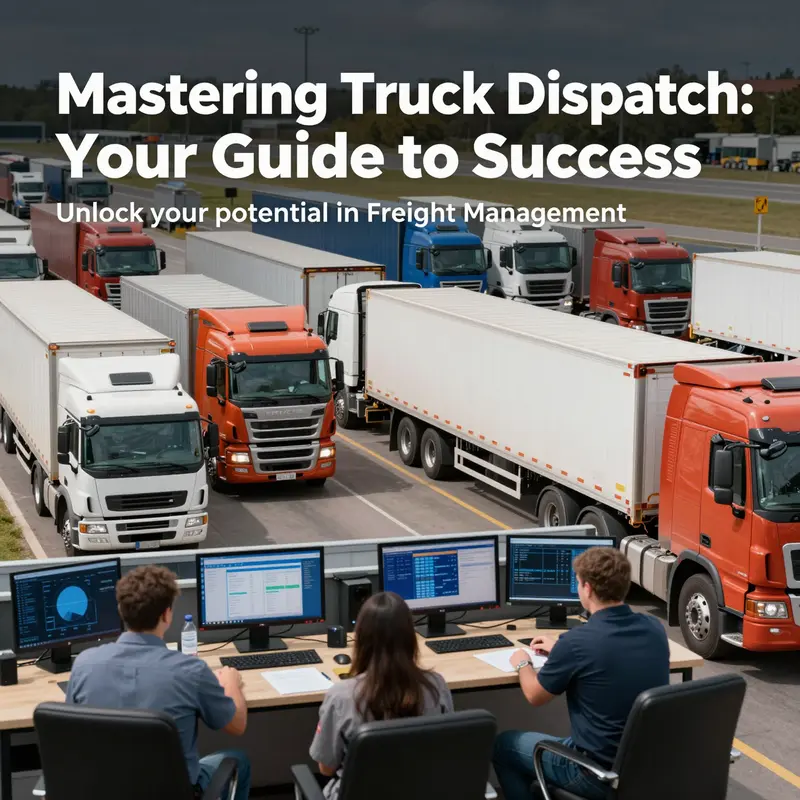
The role of a truck dispatcher is critical in ensuring smooth freight operations. As a business owner, understanding how to cultivate effective dispatch professionals can elevate your logistics strategy. This article explores the educational requirements, essential skills, certification pathways, and career progression for aspiring dispatchers. By investing in developing these capabilities within your team, you can enhance efficiency, reliability, and overall business success in the competitive transportation landscape. Each chapter provides actionable insights tailored to helping you understand and implement the necessary steps for achieving dispatch excellence in your operations.
Educational Foundations for the Dispatcher: From GED to Logistics Mastery
Education forms the backbone of a successful truck dispatch career, yet many enter the field with only a high school diploma or a GED. The moment you choose to become a dispatcher you commit to more than a job; you commit to a specialty in moving goods efficiently through complex networks. The road to proficiency begins in classrooms, online modules, and on the floor of a dispatch office, where theory meets the realities of driver calls, unexpected delays, and the pressure to keep shipments flowing. A strong educational foundation earns the respect of employers and fuels the confidence needed when plans shift at the last minute. While the minimum requirement is clear and straightforward, the smart path shines when you view education as a strategic lever that accelerates learning, broadens problem solving, and expands career options over time.
For many, the entry bar is a high school diploma or its equivalent, and that is enough to start in entry level roles related to logistics and freight coordination. But that starting point is not the finish line. In fact, it is a doorway to deeper knowledge that unlocks more responsibility and steady opportunity. A formal program in logistics, transportation management, supply chain, or a closely related field signals to employers that you have committed to mastering the essentials of how goods move. Such programs teach more than the mechanics of moving freight; they cultivate a mindset tuned to efficiency, safety, and accountability. Students learn about inventory flows, warehousing interfaces, routing logic, and the economics of transportation in a way that translates directly into dispatch practice. The return on this kind of study is durability in a field that rewards both accuracy and growth, because every additional layer of understanding reduces the time needed to respond to a disruption or customer inquiry.
Even when a full degree is not in reach, targeted training can yield meaningful gains. Short certificate programs, college nonstop courses, and recognized online offerings provide a bridge from novice to capable professional. Courses designed for beginners typically cover freight routing concepts, load board fundamentals, common industry terminology, and carrier coordination basics. The aim is not to overwhelm but to deliver practical tools that translate into faster, more reliable decisions in the dispatcher seat. In a way, these programs offer a compact laboratory where you learn how to read a situation, interpret real time data, and decide the best course of action for a shipper and a driver together. The emphasis on real world applicability helps new dispatchers move from passive note taking to active problem solving on day one.
When considering education, look for curricula that emphasize core competencies rather than a long list of optional electives. Strong programs teach the language of freight, including terms that describe pickup windows, service levels, and load priorities. They introduce the rhythms of the day in a dispatcher’s life: window planning, contingency thinking, and the discipline of documenting every decision. The best offerings also address the governance around safety and compliance, including how to interpret hours of service, vehicle limits, and route restrictions. This is not about memorizing rules for a test; it is about building a practical scaffold that supports safe, legal, and timely deliveries. A well designed course will present case studies that mirror the kinds of shifts a dispatcher faces when traffic snarls, equipment breaks down, or a customer changes a deadline mid shift. Reading those scenarios and practicing responses helps convert knowledge into muscle memory you can rely on under pressure.
Part of the education journey is recognizing that certification can act as a signal of credibility. A national or widely recognized credential for dispatchers can validate that you possess a vetted set of skills and knowledge. These credentials typically span multiple levels to accommodate different stages of a career, from entry level through advanced operations roles. They commonly assess understanding of freight scheduling, logistics planning, safety regulations, and customer service, which are the pillars of the dispatcher’s responsibilities. While credentials alone do not guarantee success, they can shorten the path to promotions and higher responsibility by demonstrating to employers that you have invested time and effort into mastering essential functions. Importantly, the field values ongoing learning, so many professionals pursue additional coursework or micro credentials as they gain experience. In that sense, education is less a single achievement and more a continuous practice that evolves with technology, regulations, and industry practices.
As you plan education, consider the ecosystem that supports your growth. Universities and community colleges offer degree programs with structured sequences that build from fundamentals to advanced topics. Online platforms provide flexibility and a breadth of options for individuals juggling work and study. Industry workshops and professional seminars can deliver condensed, practical insights focused on current challenges and regulatory updates. The blend of formal study with hands on, real world exposure tends to yield the best outcomes. Shadowing seasoned dispatchers, taking part in logistics simulations, and volunteering for cross functional projects such as load planning with a carrier relations team can compound the impact of coursework. Such experiences help you connect theory with the daily flows of a dispatch operation, making the learning tangible and memorable.
An additional thread worth weaving into your educational plan is exposure to digital tools and data literacy. Modern dispatching is inseparable from technology. Even if you do not yet specialize in software, a comfort level with digital records, basic data analysis, and mapping concepts makes you more effective. You will soon interact with live GPS data, electronic logs, mobile communications, and dashboards that visualize fleet performance. Early familiarity with these digital channels—while not a substitute for hands on experience—gives you the confidence to interpret what the data is indicating and to use it to inform timely decisions. That fluency, built through study and practice, reduces the learning curve when you finally join a dispatch team and begin managing real shipments.
The educational path should also reflect the global nature of freight now. Even when your focus is domestic, the ability to interpret international standards, consider multi modal links, and understand regulatory variance adds value. Employers increasingly seek dispatchers who can navigate cross border considerations, coordinate with overseas carriers when needed, and communicate clearly with shippers who anticipate complex supply chains. Education helps cultivate a flexible orientation toward problem solving and a global mindset that is rare in those who rely strictly on on the job learning. It is about building a toolkit that remains relevant as the industry shifts toward more sophisticated optimization, more stringent compliance, and more transparent customer expectations.
If you are exploring practical steps, start with the basics: ensure your high school or GED credential is in place, then map your next 12 to 24 months around a combination of foundational coursework and targeted training. Prioritize courses that will strengthen your ability to interpret schedules, understand the language of freight, and communicate clearly across multiple parties. Build a habit of documenting your decisions and the rationale behind them, because this discipline translates directly into performance reviews and audits. Seek opportunities to practice with simulations or real life scenarios in controlled environments, and actively seek feedback from mentors or supervisors who model strong dispatch discipline. In time, you will find that education becomes less about ticking boxes and more about developing a professional outlook that makes you reliable, resourceful, and capable of maintaining service even when things go off plan.
To help you visualize the journey, imagine education as a bridge you cross among years of experience, technical proficiency, and a steady understanding of regulations. The better you design that bridge, the more routes you open—joining a team as a coordinator, stepping into a dedicated dispatcher role, or advancing to supervisory positions where strategic planning and process improvement matter most. The steps you take in education will echo through every shift you work, every route you optimize, and every stakeholder you reassure during a disruption. And as you gain experience, your formal studies will unlock greater responsibility and a broader view of how freight moves through the economy. If you are seeking a concrete starting point, consider exploring beginner friendly courses and certificate programs that emphasize freight routing, load board literacy, and the fundamentals of carrier coordination, all framed to deliver practical results in real world dispatch environments. The goal is not perfection out of the gate but steady, meaningful progress that compounds over time.
As you advance, remember that a single credential or course cannot replace daily practice. The logistics world rewards those who couple formal learning with on the job application. An educational plan that aligns with the realities of a dispatch desk—where every second counts, every decision matters, and every communication impacts a customer and a driver—will stand the test of time. With that mindset, education becomes not a hurdle but a powerful accelerant that speeds you toward the competencies that define effective dispatching. For many, this combination of foundational schooling, targeted training, and growing hands on experience creates a career path that is not only stable but increasingly well rewarded as you climb toward senior roles in operations management, planning, or logistics leadership. The bridge from GED to logistics mastery is built with intention, practice, and a willingness to learn, and it is a bridge worth crossing for anyone who wants to shape a durable, future proof career in freight.
For readers who want a concrete pointer to start with, the field supports a range of beginner friendly options and structured online programs designed to demystify dispatching, cue practical skills, and scaffold toward certification. While formal education beyond high school is not mandatory in every market, a targeted learning plan will equip you with the confidence and competence that employers seek. It signals readiness to take on the responsibilities of coordinating shipments, guiding drivers through the day, and delivering reliable service to customers. In other words, education is the first gear that enables you to accelerate through the early years of a dispatching career, then shift into higher gears as you gain experience and leadership responsibilities. A thoughtful blend of coursework, certification, and real world exposure sets the stage for a durable career in a field that remains essential to the economy and continually adapts to new technologies and regulatory expectations.
To keep the narrative grounded, remember that this education journey is not isolated from real work. It should be integrated with hands on roles and internships, mentorship, and opportunities to observe and participate in live dispatch cycles. The most successful dispatchers treat education as a continuous activity, revisiting core concepts as their operations grow more complex and as the technology stack evolves. The goal is to become not only competent in the basics but also adept at anticipating issues, communicating clearly, and applying data insights to improve service levels. With patience, persistence, and a clear plan, the educational path to becoming a skilled dispatcher becomes a reliable ladder to broader responsibilities within logistics and supply chain management.
In summary, the educational requirements for a truck dispatcher start with a solid base, typically a high school level credential, but real progress comes from targeted training, practical exposure, and ongoing certification. Look for programs that teach freight routing, load board literacy, industry terminology, and carrier coordination, while also integrating safety and regulatory fundamentals. Embrace online options and micro credentials to complement your degree ambitions and keep your skills fresh as the industry evolves. The path is navigable, the payoff substantial, and the door to advancement opens wider for those who invest in education as a living, growing practice. For readers who want a structured starting point linked to practical learning experiences, explore beginner friendly courses that emphasize the core skills described here. The journey from GED to logistics mastery becomes clearer when you couple study with hands on work, mentorship, and a mindset oriented toward continuous improvement.
TruckBox blog offers practical perspectives on equipment and workflows that support dispatch activities and fleet coordination, illustrating how a dispatcher’s decisions ripple through the physical operations of a trucking business. While tools and gear vary, the underlying discipline—clear communication, organized planning, and disciplined data use—remains universal across the profession. By grounding your education in both theory and the realities of daily dispatch work, you position yourself to grow into roles that shape how goods move across markets and how customers experience reliability. The journey is iterative and collaborative, and it begins with the educational foundations discussed here.
External resource for further reading on structured, beginner friendly training: https://www.udemy.com/course/truck-dispatch-training-for-beginners/
Steering the Flow: A Practical Path to Becoming a Truck Dispatcher
The role of a truck dispatcher sits at the precise intersection where planning meets real time, where schedules become miles on the road, and where people—drivers, shippers, customers, and safety teams—rely on one calm, capable voice to keep the freight moving. If you’re drawn to fast-paced problem solving, you might assume this work is mostly about finding the quickest route. In truth, it’s about orchestrating a complex choreography that keeps a fleet aligned with demand, capacity, and safety. The path to joining that central hub begins with a solid base—education, then skill-building, then tested experience—and it unfolds through a blend of formal training, hands-on practice, and daily dispatch discipline.
Education forms the first frame of that toolkit. At minimum, a high school diploma or GED opens the door to entry-level roles that expose you to the rhythms of freight movement. A formal understanding of logistics, transportation management, or supply chain concepts is often valued by employers. A college degree in one of these areas can distinguish you, signaling familiarity with how goods move and a mindset oriented toward optimization and systemic thinking. You don’t need years of coursework to begin, but a structured study in topics like inventory control, carrier relationships, and route optimization will compound with hands-on work to build a strong foundation.
Beyond the classroom, a core cluster of skills serves as your passport to effective dispatching. Communication sits at the top of that list. Dispatchers translate complex operational realities into clear, actionable instructions for drivers and accurate expectations for customers. The best dispatchers minimize ambiguity and speed up decision-making by practicing concise writing, precise timing for pickups and deliveries, and active listening to what drivers report in the field. Equally important is organizational prowess. A dispatcher juggles multiple shipments, plans routes, monitors ETAs, and adapts to changes as conditions on the road evolve. The goal is to create visibility—an always-on view of where every asset stands and what comes next, resulting in robust scheduling that can absorb disruptions.
Problem-solving and quick decision-making are the heartbeat of the role. Delays due to weather, equipment failures, or late shipments demand rapid assessment and timely communication of options to all affected parties. A dispatcher’s judgment weighs factors like fuel efficiency, driver hours, customer deadlines, and safety, then acts with accountability. Technical proficiency follows closely behind. In modern freight, dispatch software, load boards, and transportation management systems are the tools you wield to see, assign, and adjust loads. The basics—navigating loads, lanes, capacity, and constraints—remain universal, and a fluency with digital tools is a baseline expectation.
Alongside these technical skills, solid computer literacy anchors your daily routine. Dispatchers rely on email for confirmations, spreadsheets for analysis, and a spectrum of digital communications to stay in touch with drivers, shippers, and customers. Accuracy in data entry and record-keeping underpins compliance, billing, and service commitments. The discipline you bring to your digital workflow becomes a quiet competitive advantage: precise, timely updates that keep everyone aligned even when the road throws a curveball.
As you map your path, certification can help accelerate legitimacy. A nationally recognized credential signals commitment to the craft and can improve employability. In some regions, a certificate focused on freight scheduling, safety compliance, and customer service can be earned through a structured program and validated by a national framework. Pursuing this credential—or an equivalent recognized certification—can provide credibility with employers and a shared ladder of advancement that aligns with other milestones.
Gaining practical experience is the bridge between theory and execution. Entry-level roles such as logistics coordinator, freight clerk, or assistant dispatcher immerse you in the end-to-end flow of shipments. You’ll observe how orders are created, how carriers are engaged, and how delays are resolved in real time. A successfulDispatcher often advances by moving through structured roles in operations or logistics support, then leveraging that experience to take on broader responsibilities. Mentors, shift handoffs, and analyzing late deliveries become a practical lab where decisions gain stakes and confidence grows.
A strong dispatcher does not work in isolation. Knowledge of industry regulations and safety standards is essential to stay compliant and minimize risk. Hours-of-service rules, driver qualification files, permits, trip manifests, and other regulatory paperwork must be understood and embedded into the dispatch workflow. Confirming driver hours, validating paperwork, and ensuring any exceptions still respect legal limits helps you avoid penalties and support safe operations.
Technology and data shape the daily reality of dispatching. Real-time GPS, electronic logging devices, and mobile communications let you monitor vehicles and react to deviations quickly. The goal is not to own the most advanced tool but to use whatever capable tool you have to generate actionable insights. You should be able to read a dashboard, spot when a route needs adjustment, and communicate changes clearly to the driver and the customer. Maintaining accurate records, updating ETAs, and documenting the rationale behind decisions builds trust with customers and credibility with drivers. Adaptability matters as platforms evolve and new data sources appear.
The path toward advancement is built on performance, reliability, and leadership. With experience, you can move into senior dispatcher roles, supervising others, coordinating larger fleets, or aligning dispatch with broader logistics teams. Some professionals transition into dispatch supervision or logistics management, where the emphasis shifts to planning, process improvement, and performance measurement. Pay and incentives often reflect these contributions, rewarding efficiency, customer satisfaction, and safety outcomes.
To make this path concrete, consider the daily realities you’ll encounter as a new dispatcher. A typical morning includes reviewing overnight shipments, noting exceptions, and confirming pickup windows. You’ll assign loads to drivers based on routes and hours, then adjust plans in response to traffic, weather, or equipment issues. The middle of the day can hinge on a carrier breakdown or a new urgent pickup. Your job is to assess options, preserve service levels, and communicate those choices with clarity and empathy. You’ll monitor vehicle positions, ensure regulatory documents are in order, and coordinate with customer service to maintain visibility for the client. In moments of crisis, you’ll set contingency routes, reallocate loads, and keep the shipper informed. The best dispatchers stay calm, lean into data, and translate that calm into precise instructions for teams on the road.
As you prepare to embark on this career, structure matters. Build a learning plan that combines coursework, certification steps, and a deliberate sequence of entry-level roles to accelerate readiness. Start with foundational studies in logistics and supply chain concepts, then pursue the credential that aligns with your region. Seek hands-on experience in roles that expose you to daily cadence, carrier coordination, and regulatory compliance, and cultivate soft skills like disciplined time management, solution-focused negotiation, resilience under pressure, and the humility to learn from mistakes.
The journey you are choosing is not a straight line but a series of navigations guided by demand, capacity, and risk. You will learn to read signals and weave them into plans that keep freight moving with confidence. Success hinges on a blend of people-focused communication and data-driven discipline, balancing speed with safety, and ambition with the humility to learn from every delivery window. Becoming a truck dispatcher is a long-term commitment to steering the flow of goods through a network with clarity, care, and courage.
External resource for further study: Begin building foundational knowledge with a beginner dispatch course on a popular online learning platform. This type of program offers structured lessons that translate theory into practical on-the-ground skills, helping you confidently step into entry-level dispatch roles and begin building the track record that will support your careers-long growth. Beginner dispatch course on a popular online learning platform.
Charting Certification Pathways: Practical Routes to Becoming a Truck Dispatcher
In the freight world, the path to becoming a truck dispatcher doesn’t hinge on one perfect credential. It rests on a blend of accessible training, real-world exposure, and recognized certifications that prove you can plan, coordinate, and communicate with accuracy under pressure. This chapter offers a cohesive view of how you can certify your competence without waiting for a four-year degree. It highlights practical online courses, mobile training options, and formal government-backed certificates that signal to employers you can manage routes, balance competing priorities, and maintain safety and service standards as shipments move through a busy network. The emphasis is on concrete, job-ready skills you can apply the moment you step into a dispatch role. You’ll meet training formats that accommodate different schedules, budgets, and learning styles, and you’ll consider how these credentials fit with hands-on experience to accelerate your entry into a growing field.
A practical entry point for many aspiring dispatchers is a widely available online freight-dispatcher training course designed for beginners. Such programs typically walk learners through core duties like negotiating with brokers, booking loads, and using load boards, while also covering the paperwork that accompanies freight moves and the basics of truck types and equipment to support decision-making. The course structure is often concise but thorough: a few hours of on-demand video, a downloadable article or workbook, and lifetime access to the materials. On completion, most programs issue a certificate that you can display on a resume or in a portfolio as evidence of your readiness to manage shipments and respond to changes in real time. The design is intentionally beginner-friendly, recognizing that many people transition from clerical or support roles into dispatching. The training is meant to be flexible, enabling you to study at your own pace and revisit sections as needed. A common selling point is the affordability and accessibility of such courses, with discounts and guarantees that reduce the risk of trying out a new career path. The combination of practical content and a certification can help you stand out when you apply to freight operations teams that value nimbleness, reliability, and clear communication.
Alongside formal online coursework, a modern dispatch career can be supported by a purpose-built mobile training app. This type of resource reflects the reality that dispatch decisions often occur away from a desk, whether in a cab, at a staging yard, or during a layover between shipments. A well-designed app guides learners from foundational concepts to more advanced topics, including setting up a small business side of dispatching, managing real-time scenarios, and connecting with mentors or peers for live guidance. The value of a mobile format lies in its ubiquity and interactivity: you can practice routing decisions, simulate load bookings, and receive feedback while you’re commuting or traveling for work. A privacy-conscious design—one that minimizes data collection—resonates with many students who want to learn without leaving digital traces. Connectivity features such as live webinars or chat with mentors help bridge the gap between self-paced study and the practical know-how that comes from experienced dispatchers. By offering flexible learning on the devices you already use, a mobile training app complements longer-form online coursework and accelerates your confidence in applying what you’ve learned to real dispatch tasks.
Beyond these flexible learning formats, there are formal certification pathways that carry widely recognized weight in the logistics world. In some regions, there is a government-backed credential system for road freight dispatch, organized as a multi-level certification and administered through a national skill-assessment framework. The structure is designed to accommodate different levels of experience and education, with progression from foundational competency to more advanced scheduling, safety, and customer-service practices. While the exact naming and levels may differ by country, the core idea remains the same: you prove your capability through a sequence of evaluated knowledge areas, often including freight scheduling, route optimization, safety regulations, and service standards. In practice, you may encounter a three-tier pathway where entry-level certification confirms basic understanding, an intermediate level acknowledges practical on-the-job experience, and a senior or advanced level recognizes a combination of formal education and substantial field expertise. These programs are valuable not only as a credential but also as a framework that guides your learning journey, helping you identify gaps and target improvements that align with the responsibilities of a dispatcher.
A notable example of a certification pathway is the Road Freight Station Dispatcher Certificate, which operates within a national skill-assessment system. This credential is organized into levels that reflect increasing mastery and experience. The junior level typically requires foundational vocational training and a minimum age, while the intermediate level recognizes documented field work or completion of a more formal training track. The advanced level often combines a higher level of formal education with several years of relevant work experience. Each level signals to employers that you understand critical components of the role, including freight scheduling, logistics planning, safety regulations, and customer service—areas that are central to keeping freight moving on time and compliant with rules. Official enrollment, exam schedules, and verification procedures are centralized on the national platform that administers the assessment process. While it’s helpful to know these details, it’s important to note that the applicability of international employers for a credential earned in another country may vary. Some organizations abroad may not recognize a domestic certificate directly, but the credential still demonstrates a serious commitment to professional development and a solid grounding in the responsibilities of dispatching.
When considering certification paths, it’s wise to align your choice with your career goals, time constraints, and financial situation. An online course may be ideal if you want to test the waters with minimal upfront investment and quickly add a credential to your resume. A mobile training option can be especially beneficial if you have limited access to a computer or prefer learning in small, incremental sessions during travel or downtime. A formal, multi-level certification provides a deeper foundation and a clearly defined ladder for advancement, which can be particularly attractive if you plan to stay in dispatching long enough to pursue senior roles. Regardless of the route you choose, the common thread is the practical relevance of the content. The goal is not merely to earn a certificate but to acquire the concrete skills that enable you to negotiate loads, coordinate with carriers, monitor vehicle positions, ensure compliance with hours-of-service rules, and maintain high customer satisfaction.
As you weigh these options, it’s useful to think about how you’ll integrate training with hands-on experience. Entry-level positions such as logistics coordinator, freight clerk, or assistant dispatcher provide exposure to the day-to-day rhythms of the work—from confirming carrier availability to updating customers on shipment status. These roles help you translate theoretical knowledge into action: you learn to interpret carrier capacity, juggle priorities when multiple loads demand attention, and respond to delays with actionable contingency plans. In practice, success as a dispatcher comes from blending what you’ve learned in coursework with what you observe on the job—how brokers structure terms, how drivers communicate constraints, and how shippers expect real-time updates. The more you can connect the certification content to concrete dispatch scenarios, the more quickly you’ll become a dependable member of a logistics team.
Technology remains a central pillar of modern dispatching. Regardless of the training pathway you pursue, you should expect to work with dispatch software and digital tools that track vehicle locations, optimize routes, and present performance dashboards. Learning to use these tools effectively enhances the value of your certification, because you’ll be able to translate the theoretical frameworks of scheduling and safety into real-time decisions. The strength of a good dispatcher lies in the ability to read data, anticipate problems before they escalate, and communicate those insights clearly to drivers, shippers, and customers. A thoughtful training plan also includes familiarity with electronic documentation, regulatory reporting, and basic analytics—capabilities that help you demonstrate reliability and accountability in your role. With consistent practice, you’ll develop a disciplined approach to prioritization and a calm, solution-focused communication style that serves both the carrier network and the customers who rely on timely deliveries.
Choosing a certification pathway is ultimately about mapping your learning to the realities of the work, not chasing a credential for its own sake. If your aim is rapid entry and you’re comfortable with self-directed study, a concise online course coupled with hands-on exposure can deliver the foundations you need to secure an initial dispatcher position. If you seek deeper expertise and long-term progression, a multi-level government-backed certificate provides a recognizable framework for growth, signaling to employers that you’ve earned a comprehensive baseline and can continue climbing the ladder as you gain experience and competence. In practice, many professionals blend these options—completing an online course to establish readiness, then pursuing the formal certificate later to unlock senior roles and broader opportunities. This approach aligns with the realities of a dynamic logistics market that rewards both practical know-how and formal validation.
As you plan your path, consider how you’ll leverage industry resources to complement training. For example, practical guides and forums can offer real-world perspectives on dispatch challenges, and you may discover useful examples of how dispatch decisions interact with equipment and capacity planning. For a sense of how these tools connect to on-the-ground practice, you can explore resources such as the Truck Boxes guide, which provides context on how equipment considerations intersect with routing and scheduling. This kind of supplementary material helps you build a holistic picture of the dispatcher’s role, bridging the gap between coursework and daily operations. Incorporating such insights into your study plan can make the difference between a certificate and a career launch, especially when you start applying for entry-level dispatcher roles.
Ultimately, certification is a means to an end: the ability to move freight efficiently, safely, and in a way that satisfies customers and keeps your employer competitive. It signals that you understand the core disciplines of freight scheduling, route planning, and regulatory compliance, and that you can translate those principles into reliable, repeatable processes. The most effective approach is to select a pathway that fits your current situation, stack it with practical experience, and continuously refine your skills as the market evolves. If you combine disciplined study with hands-on exposure and a willingness to learn from mentors and peers, you’ll build momentum toward more responsible roles such as senior dispatcher, dispatch supervisor, or logistics manager. The journey may begin with a single course or a small certification, but the trajectory is defined by your ongoing commitment to accuracy, communication, and service quality in a highly interconnected, time-sensitive field.
For formal enrollment, exam information, and credential verification, refer to the appropriate national or regional platform that administers the assessment process. External guidance and official documentation provide the most up-to-date requirements and schedules, ensuring you follow the correct steps to achieve the credential that aligns with your career goals. (External resource: https://www.osta.org.cn/)
From First Shifts to Fleet Steward: Crafting Experience and Steering Your Career as a Truck Dispatcher
The path to becoming a proficient truck dispatcher begins with intent, then builds through steady practice, thoughtful education, and a clear vision for advancement. It is a role that sits at the nerve center of the transportation ecosystem, where every delay, every reroute, and every customer inquiry tests your judgment and your ability to keep moving goods with reliability. Experience in this field does not come from a single certificate or a flashy title; it grows from a pattern of growing responsibilities, closer attention to detail, and a willingness to learn how the pieces of a complex operation fit together. Early moves into entry-level roles can provide a solid foundation, but the most durable progress comes from turning daily challenges into opportunities to refine your skills and expand your scope of influence. This chapter walks through how to enter the field, how to develop the transferable capabilities that make you valuable, and how to translate those capabilities into meaningful career progression over time, even as the industry itself continues to evolve with technology and heightened regulatory expectations.
Education creates the first hinge in your career, but it does not lock you into a single trajectory. At a minimum, a high school diploma or equivalent opens the door to dispatcher roles that rely on basic logistics literacy and the ability to manage routine communications. Yet many employers prize additional training—without insisting on a four-year degree—as long as the candidate demonstrates practical competence in planning, scheduling, and problem solving. An associate degree in logistics, transportation management, or a related field often makes a recruiter pause a little less, because it signals a structured understanding of how freight moves from origin to destination, how carriers are selected, and how costs balance with service levels. Even when a degree is not required, pursuing coursework that covers topics like inventory control, routing optimization, and import-export fundamentals can distinguish a candidate in a crowded field. The emphasis is not on chasing prestige but on building usable frameworks that translate into smoother dispatch operations under pressure.
What follows is not a map drawn in advance but a compass that points toward the kinds of experiences that shape confident, capable dispatchers. Transferable skills matter as much as formal credentials. Strong communication is the backbone of the role. Dispatchers must convey precise instructions to drivers, relay updates to brokers and shippers, and maintain a professional tone under stress. This requires clarity, conciseness, and the ability to tailor messages to different audiences. Time management and organizational prowess follow closely. A dispatcher can juggle dozens of moving parts—load assignments, driver availability, traffic disruptions, weather contingencies, and regulatory constraints—without losing track of essential details. The skill set also includes a pragmatic form of problem-solving. Delays happen, equipment can fail, and routes may need to shift quickly. The dispatcher who can promptly assess options, weigh risks, and communicate a clear course of action is the dispatcher who keeps deliveries on track.
Technology has become inseparable from the dispatcher’s toolkit. The modern dispatcher lives in a workflow that blends GPS-based tracking, automatic data collection, and real-time dashboards with traditional phone and email communications. Learning to navigate these tools—without becoming overwhelmed by data—is a critical early milestone. A basic literacy in digital workflows, including how to read a live vehicle map, interpret alerts, and document decisions, supports faster and more accurate operational decisions. At the same time, basic computer skills remain essential. You should be comfortable with email, spreadsheets, and word processing, because those are the fabrics that stitch together orders, manifests, invoices, and compliance records. While the exact software brands or platforms may vary from one company to another, the core competencies are universal: you must be able to translate a plan into executable tasks across people, routes, and timelines.
Gaining real-world experience is where theory begins to settle into practice. Many aspiring dispatchers start in entry-level positions such as dispatch assistants or operations coordinators. In these roles you learn how load boards function, how bookings are secured, and how documentation aligns with compliance needs. You observe the rhythm of a typical day: a driver checks in, a shipper requests a pickup window, a carrier quotes a new lane, and a last-minute change ripples through the schedule. The learning comes not only from watching but from doing—assessing the best available options, communicating them clearly, and following through on execution. The advantage of starting in support roles is that you acquire a detailed, hands-on understanding of the end-to-end process, which makes you a more effective problem-solver when you step into a fuller dispatcher role.
To accelerate learning, seek opportunities that broaden your view of the freight ecosystem beyond the immediate dispatch desk. Look for assignments that expose you to carrier negotiations, rate calendars, and the subtleties of service levels. Ask for tasks that require you to interpret a bill of lading, review driver hours of service records, or coordinate with maintenance teams about vehicle readiness. Building a wider perspective helps you anticipate bottlenecks before they appear and positions you to contribute ideas for route optimization and cost efficiency. It also signals to managers that you are thinking beyond day-to-day tasks and considering how every decision affects the broader operation.
Educational resources can support this growth without requiring a fixed timetable. A blend of formal coursework and practical study tends to work best. In addition to on-the-job learning, many professionals pursue online courses that cover freight routing techniques, terminology, and foundational logistics concepts. While the specific courses or platforms may vary, the value lies in the structured exposure to key topics such as load planning, prioritization, and effective negotiation with carriers. As you progress, you can tackle more advanced topics like capacity planning, exception management, and performance analysis. Most programs also emphasize safety and compliance, underscoring why a dispatcher’s role is integral to maintaining regulatory adherence and safeguarding both people and cargo.
The regulatory dimension deserves particular attention. Dispatchers operate within a framework of transportation laws, hours-of-service rules, and safety protocols designed to protect drivers and the public. A solid grasp of these requirements helps you prevent violations that could lead to fines or more serious incidents. The discipline of compliance is not a burden but a differentiator. A dispatcher who consistently prioritizes regulatory alignment reduces risk for the entire operation and earns the trust of carriers, customers, and leadership alike. This mindset—where efficiency never comes at the expense of safety—defines the professional standard over the long arc of a dispatcher’s career.
Technology remains a constant companion as you grow. The ability to leverage GPS tracking to monitor vehicle locations, interpret real-time data dashboards to identify delays, and use electronic logging devices to maintain compliant records becomes a defining skill. You do not need to become a technologist, but you should be comfortable with digital workflows and the sense-making discipline that data requires. When disruption hits, those who can quickly translate data into actionable steps—rerouting, rescheduling, or reallocating loads—differentiate themselves from peers who react slowly. In addition to mastering the mechanics of the tools, cultivate a habit of documenting decisions and outcomes. This practice builds a personal playbook you can refine over time and share with teammates when complexity rises.
Career progression in dispatching is both logical and contingent on earned credibility. With sufficient experience and proven reliability, you can move into senior dispatcher roles, where you shoulder greater responsibility for coordinating multiple teams, overseeing performance metrics, and mentoring newer staff. A natural step beyond is the dispatch supervisor position, which blends people leadership with operational optimization. From there, many professionals transition into logistics manager roles, where strategy, budgeting, and cross-functional collaboration take center stage. Some individuals even branch into entrepreneurship, starting their own independent dispatching practice that serves a portfolio of brokers and carriers. Each step builds on a foundation of demonstrated responsiveness, consistent communication, and a track record of delivering on commitments, even when the route is imperfect.
To succeed at higher levels, certain capabilities become increasingly important. Negotiation with brokers—balancing rate competitiveness with reliability—gains strategic significance as you handle larger volumes or more complex lanes. Proficiency with dispatch software remains critical, not as a flashy tool but as a mechanism for scalable, auditable decisions. A deeper understanding of regulations and safety standards becomes not just a compliance requirement but a competitive advantage, enabling you to design routes that optimize duty cycles, reduce risk, and improve overall performance. As you ascend, leadership acumen—how to motivate team members, set clear expectations, and cultivate a culture of continuous improvement—shines through in your results and your influence within the organization.
An important element of growth is recognizing the opportunity to consolidate learning through exposure to diverse scenarios. Some days involve last-minute changes when a carrier calls to pull a load at a moment’s notice. Other days require meticulous documentation to ensure every compliance box is checked for an audit. The more you experience this spectrum, the more you understand the levers that move a schedule from good to excellent. Reliability becomes your reputation. When customers see a dispatcher who communicates early, acts decisively, and keeps promises, they see a partner who delivers consistent service, and that perception translates into more opportunities and better partnerships.
In daily operations, coordination extends beyond the dispatcher’s desk. You will learn to align equipment readiness with customer needs, ensure that drivers have the proper documentation, and verify that each handoff is smooth and timely. The practical reference for organizing physical assets and workflow is often closer to your day-to-day realities than a distant strategic plan. For a tangible sense of how equipment coordination can influence dispatch outcomes, you can explore practical resources on truck equipment and layout at this reference: truck boxes. This resource offers a grounded perspective on how the placement and management of physical assets intersect with dispatch decisions, reinforcing the idea that successful routing rests on both cognitive planning and physical readiness.
Ultimately, the roadmap you follow is highly personal and shaped by the opportunities you pursue and the outcomes you deliver. Your career trajectory—not a fixed ladder but a ladder you build—depends on your willingness to take on responsibility, your habit of learning from every surge in workload, and your capacity to maintain composure under pressure. The most enduring dispatchers are not those who wait for promotion but those who demonstrate, day after day, the traits that make operations resilient: proactive communication, disciplined organization, and a continuous appetite for improvement. They keep their eyes on service quality and safety, while their hands stay on the controls that steer freight to its destination. As you advance, your professional identity grows from a focus on immediate scheduling tasks to a broader stewardship of a logistics operation, where your decisions ripple outward to customers, drivers, and partners across the supply chain. This is the arc of a career in dispatch—the ascent from informed assister to strategic enabler of reliable, efficient transportation.
For readers seeking structured learning paths that translate directly into practice, consider an accessible, beginner-level online course that covers fundamentals and practical applications in dispatch training. This resource provides a comprehensive introduction to freight routing, load optimization, and the terminology that underpins the daily work of a dispatcher. Access to such training can complement hands-on experience and help accelerate mastery of the core competencies discussed above: communication, organization, problem solving, regulatory awareness, and technological fluency. For a comprehensive beginner-level online course, see the resource at https://www.udemy.com/course/truck-dispatch-training-for-beginners/.
In sum, the journey to becoming a skilled truck dispatcher is crafted through a blend of foundational education, hands-on experience, and a commitment to continual growth. It is a career that rewards reliability, clarity, and curiosity. If you approach each step with intention—learning from entry-level roles, pursuing relevant coursework, embracing the tools of modern dispatch, and steadily expanding your responsibilities—you can build a durable, rewarding career that scales with the demands of a dynamic logistics landscape. As the industry continues to evolve with new technologies, regulations, and market opportunities, your ability to adapt without losing sight of service quality will define your lasting impact and your long-term professional growth.
Final thoughts
Becoming a skilled truck dispatcher is not just about acquiring a job; it’s about building a career in an essential industry. By focusing on education, essential skills, and certifications, and by gaining relevant experience, aspiring dispatchers can unlock numerous opportunities within the logistics field. For business owners, investing in the professional growth of your dispatch team will lay a foundation for enhanced operational excellence and ultimately drive business success. The key lies in a commitment to continuous learning and adaptability to the ever-evolving transportation landscape.