
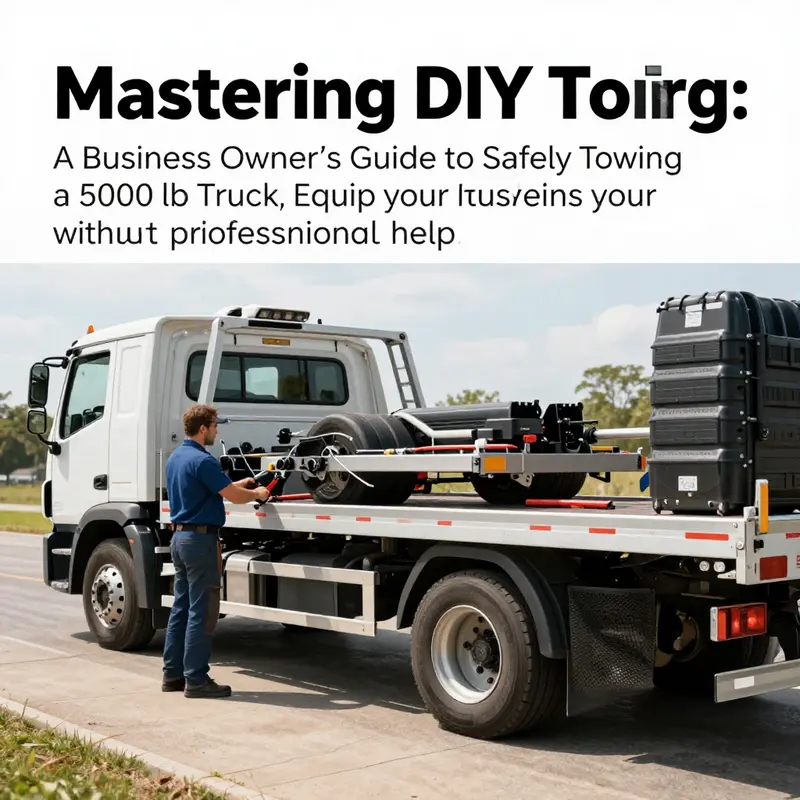
Towing a 5000 lb truck may appear daunting, yet with proper knowledge and preparation, it can be executed safely and efficiently. For business owners, ensuring the ability to transport heavy-duty vehicles can not only solve potential breakdown dilemmas but also facilitate business operations like logistics, delivery, and service mobility. This article breaks down the essential equipment needed, outlines a step-by-step guide for towing the vehicle, and highlights crucial safety and compliance considerations to ensure a smooth towing experience. With the right tools and guidelines, you can confidently take on the challenge of DIY towing.
Rig It Right: Essential DIY Towing Gear for a 5,000-Pound Truck
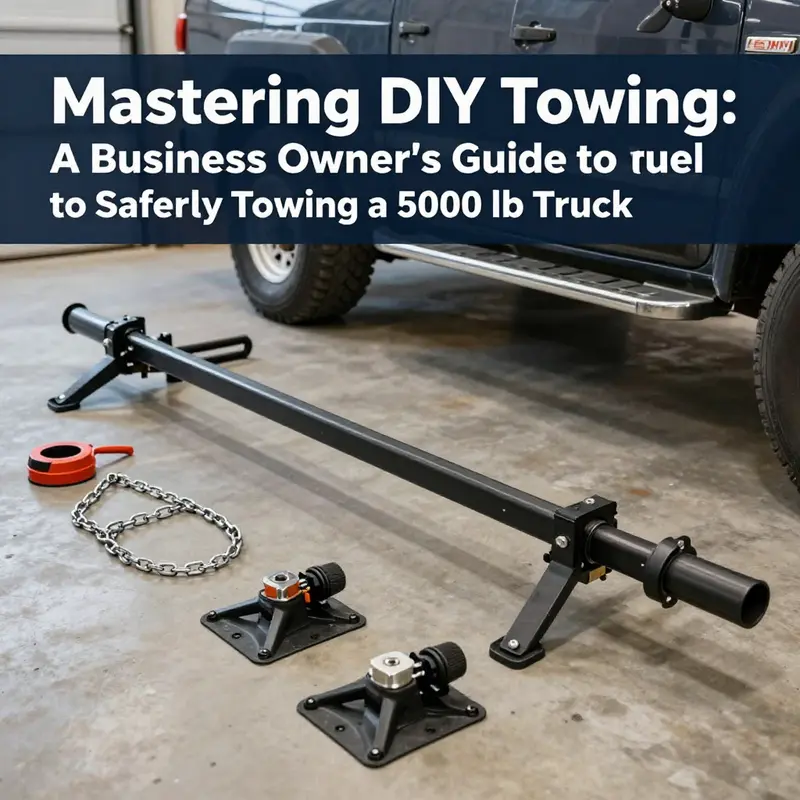
Towing a 5,000-pound truck isn’t a throw-together task or a weekend improvisation. It demands a thoughtful, methodical approach to choosing and configuring gear, mounting points, and the less-visible elements that determine how well a setup behaves under real-world conditions. In this context, the heart of a safe, effective tow is a single, sturdy premise: everything in the chain must be rated for at least the vehicle’s towing weight, and every connection must be solid, correctly installed, and regularly inspected. With that mindset, a DIY approach becomes less about “how little can I get away with?” and more about “how consistently can I reproduce safe, predictable results day after day, trip after trip.” The core gear for a 5,000-pound towed vehicle is simple in concept but precise in execution: a tow hitch or adjustable tow bar rated for 5,000 pounds, robust electrical connections, an appropriate braking solution for the trailer and its load, and a set of auxiliary tools that add safety and flexibility without turning the project into a shop full of specialized equipment. The emphasis is on the structural and electrical integrity of the system before anything else, because the most carefully matched components still fail if any link is neglected or installed incorrectly. This is not about fancy features; it’s about dependable performance in the spaces where a tow bar, a cable, a brake signal, or a winch can mean the difference between a controlled stop and a dangerous pull. The planning phase should begin with a clear picture of the weight you’re actually moving, including the weight distribution on the towed vehicle, and how that weight shifts during acceleration, braking, and cornering. Knowing that, you choose a core component—the adjustable tow bar or hitch assembly—that can accommodate the geometry of your two vehicles and remain within the rated capacity under all expected angles of pull. This is where many DIY attempts stumble. If the connection point on the towed chassis is compromised, or if the bar cannot maintain a rigid alignment as the vehicles move, you’ll invite binding, forked pulls, or sudden shifts that stress the frame, suspension, or hitch mount. A well-chosen, properly installed core is what keeps the rest of the system honest and predictable, letting you focus on the details of safety and operation rather than fighting a mismatch on every mile. When you translate this principle into concrete steps, the most reliable approach becomes that of assembling a system around a 5,000-pound-rated tow bar, or, when appropriate, a fixed hitch with compatible mounting hardware that matches your frame and bumper geometry. You’ll cast doubt aside about “will this hold?” and replace it with a tested, repeatable sequence: confirm the bar’s rating matches or exceeds the towed weight, ensure the mounting brackets are designed for your vehicle’s frame and are attached with hardware that meets or exceeds manufacturer torque specifications, then secure the bar to the towing vehicle with proper alignment and tension. This mindset—rating first, mounting second, tightening to spec third—quietly explains why some DIY setups fail under load while others remain rock solid. The weight class you’re dealing with also highlights the importance of a reliable electrical system for signaling and braking. The trailer coding, lights, and brake signals are not just compliance features; they’re critical for visibility and predictability behind you. The simplest baseline is a robust trailer cable that can carry the required signals without breakdown in rain, dust, or mud. If your tow plan involves a trailer with a braking system, you’ll want a brake controller that responds to your actual braking input and translates that into proportional braking at the trailer. For a 5,000-pound load, a controller that can be coordinated with your vehicle’s braking system helps keep the towed unit in sync with the tow vehicle, reducing the risk of the trailer pushing or overtaking the tow vehicle in sudden stops. The electrical backbone should be sealed and weatherproof, with splices minimized and contacts protected against corrosion. The final piece of the core puzzle is the braking arrangement itself—either a compliant trailer brake setup or an integrated controller that modulates the trailer’s brakes based on your deceleration. This is often the line between a controlled, predictable tow and a scenario where the trailer imposes additional resistance or creates unpredictable yaw. Beyond the core, the auxiliary tools round out the practical capabilities that keep a DIY tow both feasible and safer in less-than-ideal conditions. A manual winch can be a lifeline in soft terrain or when you need to reposition gear without drawing power from the vehicle’s electrical system. It can help with freeing a stuck vehicle or adjusting the alignment of the towed unit during setup. An electric winch, on the other hand, provides a more convenient, faster option when you regularly perform recovery tasks or when the environment invites repeated repositioning. In these cases, a winch rated near or above the towed weight improves efficiency and reduces manual effort, but you must ensure the winch’s mounting points and power supply are designed to handle continuous load and heat. A hydraulic winch offers the strongest sustained performance for heavy-duty or commercial applications, though it comes with higher cost and installation considerations. Each option has trade-offs in power, reliability, and complexity, so weigh your typical use cases, terrain, and frequency of towing before committing. What matters most is keeping the system coherent: the core tow bar, the wiring, the braking control, and any auxiliary winching tools all work in concert and share a common reliability standard. The emphasis remains on correct installation and ongoing maintenance. A crucial element often underestimated is how the towed vehicle is prepared for transport. AWD and 4WD vehicles, or those with low ground clearance, benefit greatly from setups that minimize undercarriage contact and distribute weight to avoid missing or damaged components. In some scenarios, a flatbed solution—though more expensive and less portable—offers superior protection by lifting the entire vehicle off the road surface. For many DIYers, the decision comes down to practical realities: terrain you expect to encounter, how often you tow, and whether you want to maximize the protection of the vehicle’s drivetrain and lower body sides. Once the core, electrical, braking, and auxiliary components are in place, the next phase is a disciplined approach to installation and inspection. First, mount the brackets or a receiver on the towing vehicle and the towed frame with all fasteners clean, dry, and torqued to the manufacturer’s specification. Use the correct hardware—matched to the frame material and thickness—and verify that every connection sits flush and true before load. The alignment between the towed and towing vehicles should be checked at multiple angles and distances; misalignment creates leverage that can gradually loosen fasteners, wear the hitch, or stress the frame. After installation, conduct a thorough pre-tow inspection that reads the road like a checklist: verify that safety chains cross and clear all moving parts, confirm wheel chocks are in place, and ensure that the towed vehicle’s parking brake is disengaged and that transmission-related requirements for towing are respected. The brake wiring should be tested with the vehicle stationary, then in a low-speed environment to confirm that brake signals, turn signals, and tail lights illuminate correctly and illuminate the trailer in tandem with the towing vehicle. In practice, this is not a one-and-done step. Environmental conditions, vibration, and road stresses can loosen fasteners or degrade insulation. A routine after-action check is essential. Each time you complete a tow, perform a quick inspection that looks for unusual movement, wear on connection points, signs of rust or corrosion on metal surfaces, and any heat buildup in electrical components after a test drive. If any suspect wear appears, address it before you attempt another tow. This ongoing maintenance mindset is what differentiates a DIY setup that operates with the calm confidence of a well-trained driver from one that becomes a source of risk. The approach to towing a 5,000-pound truck is deeply practical, but it also invites a broader consideration of how to integrate the setup into your broader vehicle and equipment ecosystem. A well-planned towing system should harmonize with other accessories and gear you carry—chains, wheel chocks, recovery boards, lighting options, and even storage solutions that keep the tow gear organized and accessible. If you’re looking to explore how these accessories best fit into your overall toolkit, you can consult the Accessories-2 guide for practical ideas and layout strategies that maintain efficiency without compromising safety. For a deeper dive into the structural options that support a 5,000-pound towed vehicle, a careful review of guidelines and specifications is essential. The right combination of strength, fit, and reliability ensures your tow remains predictable, even when conditions test your setup. Outside of the page, remember that the real test of any DIY tow is the discipline with which you approach maintenance and adherence to safety standards. You should never push the rated limits, and you must respect local rules for towing practices. This includes ensuring lights, signals, and brakes are fully compliant, and that the weight distribution remains within the system’s design expectations. With these principles in place, your DIY towing gear becomes not a risky improvisation but a carefully engineered support system that keeps both your vehicle and others safe on the road. External reference: https://www.draw-tite.com/products/adjustable-tow-bar-5000-lbs-capacity
null
null
Precision in Motion: Safety, Compliance, and Methodical Care When DIY Towing a 5,000-Pound Truck
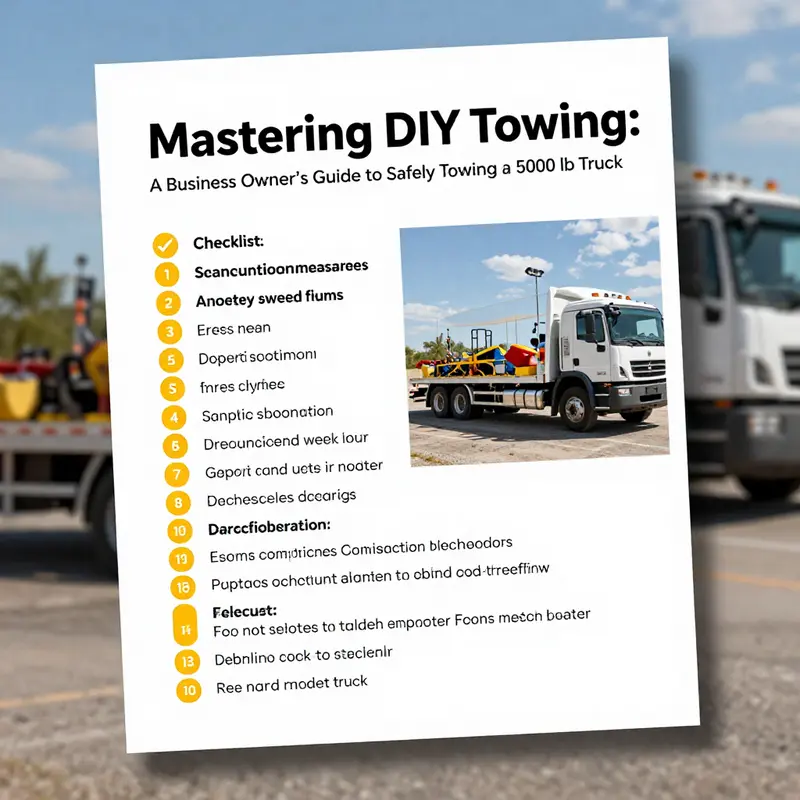
Towing a 5,000-pound truck is more than a simple hook-and-pull task. It is a test of planning, restraint, and respect for the rules that govern our roads. The moment you decide to tow, you are responsible for the safety of everyone sharing the highway, as well as the integrity of the vehicles involved. The path from a decision to a secure, lawful tow runs through several critical checkpoints: verifying towing capacity, managing weight distribution, selecting the correct hitch and coupler, ensuring electrical compliance, and rigorously securing and inspecting the entire setup before you move. This chapter weaves those checkpoints into a steady, practical narrative that emphasizes the why behind each step and the how of executing it without compromising safety or legality. The goal is not to intimidate but to equip you with a reliable mental map for a DIY operation that respects both the hardware and the law. For readers who want to compare different approaches or gather practical tips, resources such as Towsmart offer well-structured guidance that can be incorporated into your planning process. Towsmart\
At the core of any safe tow is the matter of capacity. Your towing vehicle must have a towing capacity that comfortably exceeds the total weight of the towed truck plus any ballast, fluids, or incidental loads in the towed vehicle. Capacity is defined by the vehicle’s manual and stamped in the chassis specifications, often expressed as GCWR (gross combined weight rating) or a similar metric. Using a vehicle that approaches or exceeds these limits dramatically increases the risk of mechanical failure, steering instability, or a loss of control. It is tempting to push the line in a DIY scenario, especially when time is tight or professional services are unavailable. Resist that temptation. If there is any doubt about whether the towing vehicle can handle 5,000 pounds plus the equipment and potential payload, reassess the plan. The safe path usually means choosing the right tool for the job, even if it costs more or takes longer. When you check capacity, you are not simply confirming a number; you are validating the entire chain of safety that makes the operation possible.
Weight distribution is another pivotal factor. A towed vehicle is effectively an unbalanced load unless you manage it carefully. The weight distribution discussion centers on two quantities: tongue weight and how the weight rides behind the hitch. If the towed vehicle rides too heavily on the hitch, it can cause the towing vehicle to behave like a lever, increasing the risk of sway and reducing steering control. If the weight is too far back, braking can become unpredictable, and the towed vehicle can bounce or yaw, undermining stability. The goal is a balanced, predictable pull where the downforce on the hitch is just enough to keep the drawbar or tow bar aligned with the towing vehicle’s frame while maintaining tire contact and braking performance on both vehicles. Achieving this balance requires careful calculation, a solid understanding of the hitch system you’ve chosen, and, when feasible, a scale check of the loaded setup. As you set up, you’ll want to simulate the load’s behavior at typical speeds and on familiar grades. Gentle acceleration, modest deceleration, and smooth steering inputs reveal how the combination behaves and where adjustments are needed. Weight distribution is not a one-and-done calculation; it is an ongoing check that accompanies the entire towing operation.
The hitch and coupler form the essential physical connection between tow vehicle and towed truck. A properly rated hitch and coupler must be matched to the total weight being towed, and every connection must be inspected before departure. A coupler or hitch rated below the combined weight creates an immediate failure risk, while a system that is too permissive can allow unexpected disengagement under load. The coupler should also be free of excessive wear or deformation, with pins, locks, and safety clips secured. The connection point on the towing vehicle should be firmly mounted to the frame or a designated mounting point that is rated for the expected load. Electrical connections—lights, turn signals, brake lights, and trailer braking systems—require equal attention. In many places, the law requires functional lighting on any towed vehicle. A failure to connect or a malfunctioning lighting system can lead to liability in an accident and saps the ability of other drivers to anticipate your movements. A thorough pre-departure test of all lighting, including brake and turn signals, is a non-negotiable step. If the towed vehicle has an independent braking system, ensure the control wiring is intact and the operator understands how the brakes will engage during stopping.
Securing the load is a daily practice that separates a careful tow from a dangerous one. Tie-downs and winching equipment must be chosen with care. For a DIY approach, a 5,000-pound electric winch—powered by a reliable 12V or 24V system with a remote option—offers speed and precision for recovery and secure towing. However, it is critical not to exceed the winch’s rated capacity and to avoid continuous heavy loading that could cause motor overheating. If you opt for a manual winch, you gain portability and independence from electrical systems, but you sacrifice speed and sustained effort. Regardless of the winch type, examine the cable for wear, kinks, or fraying before use, and ensure the drum is properly spooled. High-quality, industry-standard tie-downs should be used to secure the towed vehicle to the trailer, tow bar, or flatbed, with anchor points chosen to distribute load evenly. Do not rely on a single strap or line to bear the entire load. A multi-point securing system reduces the risk of slippage and helps maintain alignment during movement.
Wheel chocks should be placed on both the towed vehicle and the towing vehicle as a backup against rolling, especially on grades or uneven surfaces. Safety chains or cables are a standard requirement in most jurisdictions and provide a failsafe if the primary connection fails. The chains should be crossed beneath the hitch to help cradle the connection in case of a separation. The chain length must allow full articulation of the towing system without binding, yet not so long that it drags on the ground or interferes with tires and suspension. This is not a one-time setup; wires and chains should be checked and adjusted during the entire operation, particularly after initial movement and during any grade changes.
The legal and regulatory layer adds a clear, enforceable framework to the practical steps. Regulations vary by location, but common requirements include properly functioning lighting and braking, safety chains, and correct hitch usage. Some regions also mandate additional safety devices or inspections for tow setups, and insurance coverage can be affected if the tow does not meet local standards. The safest approach is to assume that compliance is multi-faceted rather than a single checkbox. Review your local regulations before you start, and if you are unsure, consult a professional or your local traffic authority. A careful, compliant plan reduces the chance of fines, however remote, and it protects you and other road users should a failure occur.
The practical safety framework rests on a sequence of disciplined checks. Start with a pre-trip inspection that follows a consistent routine. Look at the hitch, coupler, and mounting points for signs of fatigue or loosening. Inspect the tow bar and its mounting hardware, ensuring bolts are tight to the manufacturer’s specifications. Check the electrical connectors and the integrity of wiring harnesses. Confirm that lights and brakes operate correctly on both vehicles and that the towed vehicle’s brakes engage appropriately when the towing vehicle slows or stops. Inspect tire pressure on both vehicles according to the manufacturers’ specifications. Ensure the towed vehicle’s wheels are chocked and that the tow bar is aligned along the intended path with no clearance issues or potential interference with suspension components. The pre-trip checklist is the backbone of the process; it is the moment when a plan is translated from theoretical safety into practical action. If any element shows risk, stop, reassess, and correct it before continuing.
Incorporating an awareness of best practices from established DIY towing resources can help you refine your approach. For example, reputable guides emphasize the importance of weight distribution and secure connections, and they caution against improvisation in critical connections. While specific product names and models should not drive your decisions, the concepts above—proper capacity, balanced load, rated hitch and coupler, secure tie-downs, functional electricals, and a thorough pre-trip inspection—are universal truths that apply across equipment and setups. If you want to explore these concepts in a different light, a resource such as Towsmart offers practical, experience-based guidance that complements your own planning. Towsmart\
Beyond the mechanical and regulatory layers, there is the human factor. The operator’s mindset matters as much as the gear. A calm approach reduces the likelihood of errors when facing changes in road grade, weather, or traffic. It also informs decisions about speed and following distance. The towing speed should never exceed posted limits or the pace that allows you to maintain control and respond to sudden developments. In particular, your speed should remain well below the speed limit when negotiating curves, changing lanes, or traversing surfaces that reduce traction. The tire condition of both vehicles is a decisive factor. Worn or improperly inflated tires increase the danger of blowouts, heat buildup, and loss of control. Before you depart, confirm tire pressures are within the recommended ranges on both vehicles and that there is no obvious tire damage. If you encounter a situation that compromises safety, the prudent choice is to stop, reassess, and adjust or cancel the operation rather than risk a roadside emergency.
A practical takeaway from the safety and compliance framework is to treat towing as a layered process rather than a single action. The first layer is the equipment’s capability and compatibility, including tow bars, hitch, and coupler. The second layer is the securement of the load and the integrity of the connections. The third is electrical compliance and signaling, ensuring that other drivers can anticipate your movements. The fourth is the choice between a tow-bar-based DIY approach and a flatbed solution. A flatbed tow, while more expensive and less portable, often provides superior protection for all-wheel drive or damaged undercarriages by lifting the entire vehicle. In a worst-case scenario, choosing the wrong method increases the risk of further damage or injury. The fifth layer is legal compliance—the rules that govern safe operation, lighting, and insurance or liability considerations. Each layer reinforces the others; skip one, and you weaken the entire system.
To close the loop on safety and compliance, remember that the aim is not merely to complete a tow but to do so with predictable behavior, repeatable results, and respect for the law. If doubt creeps in about any element—capacity, balance, connections, or signaling—pause and consult additional resources. The official guidelines from national safety authorities provide authoritative guardrails for towing practice, and they serve as a reliable reference point for DIY plans. In the end, the most responsible choice is one that prioritizes safety, legality, and the long-term health of both vehicles.
External resource: For authoritative guidelines on safe towing practices and equipment standards, consult the National Highway Traffic Safety Administration at https://www.nhtsa.gov/.
In sum, towing a 5,000-pound truck as a DIY project is feasible when approached with a disciplined, methodical mindset. The keys are understanding and respecting capacity, achieving proper weight distribution, using appropriately rated hardware, securing the load with robust tie-downs and reliable winching plans, ensuring complete electrical compliance, and staying within legal boundaries. When you combine these elements with a careful pre-trip inspection and a calm, deliberate approach to operation, you not only reduce risk but also set a standard for responsible DIY towing that others can follow. If the situation ever feels uncertain, the safest course is to step back, seek professional assistance, or switch to a more controlled method such as a flatbed transport solution. The road demands respect for physics, for equipment limits, and for the shared responsibility of all road users, and a well-planned tow demonstrates that respect in action.
Final thoughts
Successfully towing a 5000 lb truck can be a straightforward task with the right understanding and tools. Business owners can greatly benefit from possessing these DIY skills by not only saving costs on professional towing services but also ensuring that they have control over their logistics. As you dive into the process, remember the essentials: secure proper equipment, follow the step-by-step guide diligently, and prioritize safety and compliance. With this knowledge, you’re well-equipped to tackle any towing scenario confidently.