
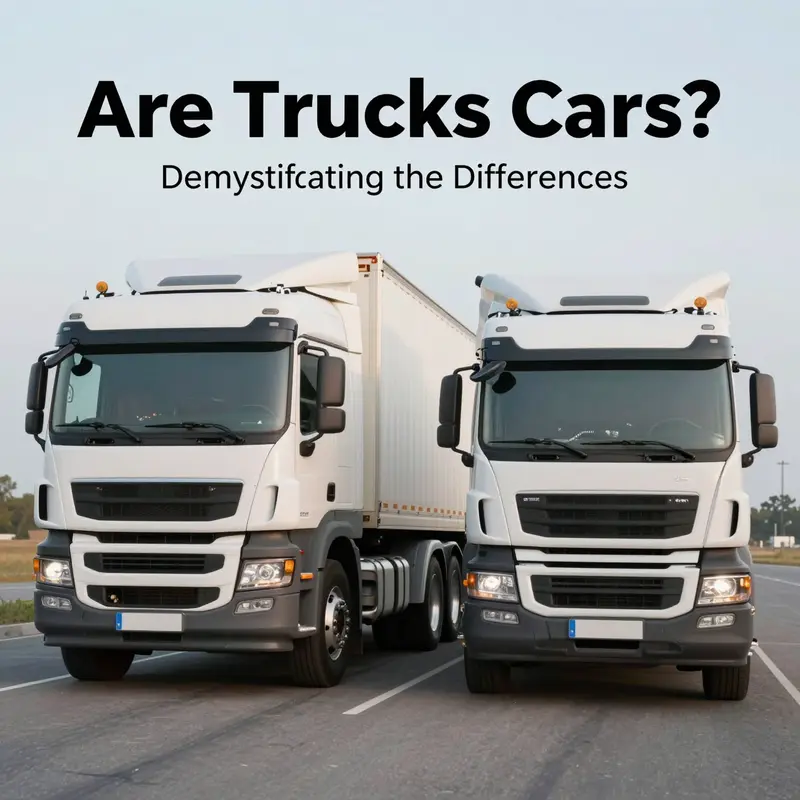
Understanding the differences between trucks and cars is crucial for business owners who rely on vehicles for their operations. While both serve transportation needs, they are designed with distinct functionalities in mind. This article will explore the fundamental differences in design and purpose, provide a comparative analysis of functionality, and delve into how market demands shape preferences for each vehicle type. By the end, you will have a comprehensive understanding of whether a truck is a car, backed by insights that will aid in making informed business decisions.
Between Bed and Cabin: Why a Truck Isn’t a Car and What That Means for How We Move
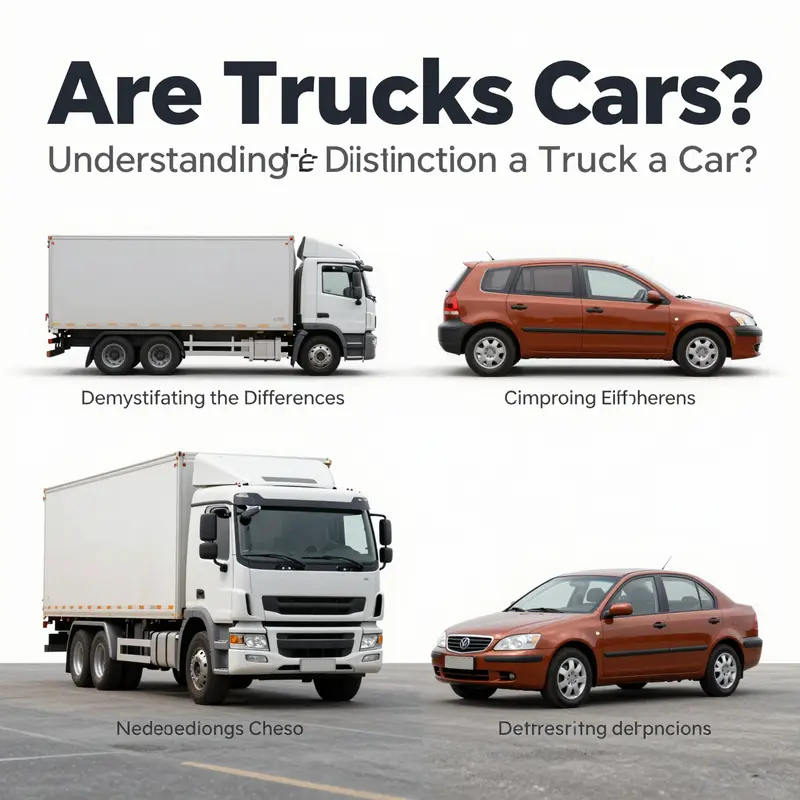
The question that often surfaces when people first encounter a pickup or a long truck is deceptively simple: is a truck a car? The straightforward answer is no. Yet the deeper truth lies in a careful look at how we define a vehicle, how those definitions shape design and use, and how culture and regulation frame our expectations of what a vehicle should do. In everyday life, a car is something you drive to work, to the store, or to visit friends. It is a compact, comfortable space designed to move people with efficiency, ease, and a focus on on road manners. A truck, by contrast, is built to move things. It carries payloads, tethers heavy loads, and tows equipment that keeps businesses running or construction sites progressing. The visual difference is only a hint of the functional difference that underpins an entire philosophy of design. Cars prioritize comfort, quiet, and fuel economy in a package tuned for the smoothness of everyday travel. Trucks prioritize strength, durability, and reliability under load, with a chassis and suspension that can endure rough treatment and demanding tasks with less compromise than a passenger car would permit. The contrast is not merely a matter of scale; it is a difference in purpose, a difference in how the vehicle interacts with the world around it, and a difference in how people should think about ownership, classification, and maintenance as they choose a vehicle for a given job.
A useful way to frame this distinction is to imagine two overlapping circles that describe the broad universe of motor vehicles. One circle centers on people movers. It includes cars and many vehicles that emphasize passenger comfort, space efficiency, and predictable handling. The other circle centers on workhorses. It includes trucks of various sorts whose primary mission is moving cargo, equipment, or materials. The overlap contains vehicles that the public often mislabel or misread, such as SUVs and minivans. These are designed with dual objectives in mind, balancing passenger comfort with some degree of cargo capacity. But even within that overlap, the distinguishing thread remains clear: the primary mission of a truck is the transportation of goods, not merely the transportation of people. The dichotomy is not about elegance versus ruggedness alone; it is about how each vehicle allocates its structural advantages and its energy toward achieving a particular outcome—the safe conveyance of passengers or the secure handling of payload.
The simplest differences begin with purpose and proportion. Cars are scaled to maximize passenger space per seat, with a floor that keeps occupants low to the road for easy ingress and stable cornering. The engineering emphasis leans toward a refined ride, responsive steering, and efficient propulsion. The cabin is a sanctuary of controls, seats, and climate comfort, tuned to the rhythms of daily life. Trucks flip that emphasis. They lean toward payload capacity and durability. The chassis is heavier and more rigid, the suspension is engineered to preserve ride height and tire contact when a bed is loaded, and the frame is designed to bear forces that would bend or twist a car’s structure. The bed or cargo area is not an accessory; it is the core feature, a staging ground for tools, materials, or freight. Even the way many trucks interact with the road signals a different relationship to motion: longer braking distances and handling that accounts for the extra weight behind the driver, the risk of sway when a trailer is attached, and the need for more robust steering geometry when the vehicle is tall and unwieldy in a crosswind or on a loose surface.
This fundamental split is echoed in the daily realities of ownership. Insurance policy language, registration categories, and licensing terms frequently reflect these differences. In many regulatory environments, a truck is classified as a different category from a passenger car, with distinct rules for emissions, safety inspections, licensing, and in some cases commercial operation. The regulatory framework is not arbitrary; it is a response to the responsibilities that come with moving freight, towing heavy loads, and operating large or heavy vehicles in varied environments. The practical impact of classification surfaces in insurance costs, permit requirements for commercial use, and even in how a vehicle is taxed. When people navigate these rules, the distinction between car and truck becomes more than a label; it is a map to responsibilities and costs that follow the vehicle in use.
Yet classification is not always a clean line. The market has long embraced vehicles that blur boundaries. SUVs and minivans, for instance, borrow design cues from both camps, offering family seating with some cargo versatility. They can handle modest towing and carry more passengers than a traditional car, yet their weight distribution and chassis are not the same as a heavy duty pickup or a purpose built cargo van. For many owners, the choice hinges on a practical balance: how much passenger comfort do I need versus how much cargo capacity or off road capability? In many households the answer is a single vehicle that can cover a spectrum of tasks, from weekend trips to light work. Even so, the stronger the need for cargo, the more the advantage shifts toward a truck’s core strengths. The moment that cargo becomes a regular and central requirement rather than a secondary consideration, the design philosophy and the functional expectations align more closely with the truck than the car.
Another layer of distinction lies in structural philosophy. A car typically uses a unibody construction: the body and frame are integrated into a single, dependent structure designed to absorb impact and deliver a quiet ride. A truck often uses a body on frame design, where a separate, reinforced chassis supports a body or bed that carries payload. The separation offers advantages in durability and repairability when the vehicle is subjected to heavy use, and it allows for modular applications such as different cargo configurations, suspension upgrades, or specialized racks that enhance the vehicle’s work capability. This arrangement has downstream effects on maintenance and customization. The maintenance ecosystem for a truck tends to accommodate heavier loads, more frequent heavy-duty use, and a wider range of aftermarket components that adapt the vehicle to particular tasks. It is a different kind of ownership experience, one that reflects a readiness to repurpose the vehicle for work at a moment’s notice rather than a pursuit of everyday efficiency alone.
Of course the lines blur in another direction as well. The modern vehicle market increasingly presents options that resemble workhorse capabilities without fully stepping into the world of heavy trucks. The crossover zone is an important reminder that classification serves people more than it serves labels. For many buyers, the question is not simply can I classify this vehicle as a car or a truck, but rather what tasks will it actually perform, and in what environments will it operate? Will the vehicle need to navigate narrow streets with a full payload, or will it live on easy pavement with occasional weekend hauling? The answers to these questions illuminate why the distinction matters. A vehicle engineered for loads is not inherently a poor choice for passenger comfort, nor is a passenger car inherently a poor choice for light cargo. But when heavy work becomes a routine, the vehicle must be designed with that purpose in mind, and the owner must expect certain tradeoffs that come with carrying heavy payloads or towing substantial weight.
The design priorities translate into the feel and the ergonomics of the cabin as well. Inside a car, the seating layout is optimized for the driver and several passengers, with compact dimensions, quiet acoustics, and a climate system tuned for a smaller interior. In a truck, the cabin may be more austere or simply more practical, focusing on durable materials and layout that makes sense when you are reaching across a wide cab to handle tools, binders, or equipment. The interface that governs how you interact with the vehicle—controls, displays, and the placement of gear shifters—also reflects the intended use. A truck is less concerned with a pampered, feature rich interior than with resilience, straightforward operation, and clear visibility for the driver in demanding tasks. The human experience within each vehicle type thus models an entire philosophy about how people should live with their machines, not just how they should ride in them.
From a performance standpoint, the gap remains pronounced. Trucks are built to deliver torque and robust hauling capability, with power curves tuned to move heavy loads rather than to accelerate with the same finesse as a compact car. This is not simply a matter of more engine power; it is the alignment of engine torque, transmission behavior, gearing, and chassis dynamics to the realities of working under load. The result is a driving experience that communicates a different relationship to speed, traction, and stability. The weight of payload or heavy towing affects braking distance and steering feel. A truck will require different habits from the driver, such as accounting for longer stopping distances, allowing for more momentum when descending hills with a load, and being mindful of center of gravity when turning or maneuvering with a trailer attached. Understanding these differences is not about devaluing one vehicle type in favor of another; it is about recognizing how design decisions respond to different tasks and how those decisions shape the actual use of the vehicle on a daily basis.
The distinction also carries practical implications for someone choosing a vehicle in the real world. If you primarily transport people and value a comfortable, economical ride for daily use, a car or a car based family vehicle is often the better choice. If your life or work requires moving gear, building materials, or equipment on a regular basis, a truck offers advantages that can justify its other tradeoffs. There are also variations within each category that modern buyers should understand. For example, a wide range of pickup configurations exists, each tailored to different payloads, bed lengths, and cab layouts. A delivery or service vehicle has its own constraints and capabilities, focusing on cargo efficiency, accessibility, and durability for commercial settings. Even the same vehicle model can be configured differently depending on whether the user intends to navigate urban streets or rural backroads. The lesson is simple: choosing between car and truck is not a question of which one is better overall, but which one better fits the tasks you actually perform and the environments you operate in most often.
The journey from a simple label to a functional choice is also a psychology of use. People assign values to machines based on what they believe the vehicle says about them, what tasks they imagine it can perform, and how it will integrate into daily routines. The car, with its sleek lines and compact footprint, often projects efficiency and social ease. The truck, with its hewn heft and open bed, signals readiness for work, reliability, and a certain rugged practicality. Those perceptions influence decisions from the moment a buyer steps onto a lot or sits in a showroom, and they ripple into how the vehicle is licensed, insured, taxed, and maintained over time. The language of the road changes as the vehicle changes, and that is one of the most compelling reasons to treat the distinction not as a mere curiosity but as a practical guide to your transportation needs.
For readers who want to see how these principles translate into real world configurations, it helps to consider how a truck is often outfitted for a specific function. The cargo area, the bed height, the mounting points for racks, and the choice of tires all reflect a deliberate alignment with work tasks. A truck may be paired with functional accessories such as tool boxes, bed liners, ladder racks, and reinforcement systems designed to handle equipment that would bend a passenger car’s floor or bed. Those choices emphasize the idea that the vehicle is built around a workflow, a set of routines in which loading, securing, and traveling with gear is the regular pattern. A car, by contrast, evolves around passenger routing, comfort, and everyday travel efficiency, with storage deepened by seat folding and clever interior design rather than by a bed and the brute hardware of a payload chassis.
In the end, the question is less a matter of a rigid taxonomy and more a matter of alignment between vehicle design and human needs. If your life involves regular interaction with material goods, those goods require movement, protection, and pace across varied environments. The truck is the vehicle that makes that alignment practical. If your life centers on people, experiences, and proximity, the car remains the instrument of choice because it optimizes comfort, efficiency, and social ease. Yet it would be a mistake to assume the two kinds of travel never intersect. The best choice for many is a flexible compromise—an SUV or a van that can shuttle people and cargo in moderate measure. The more you understand the core differences in purpose, structure, and regulation, the easier it is to navigate the marketplace without conflating a cargo oriented machine with a passenger oriented one.
For readers who want to explore the logistics of cargo handling and vehicle configuration more concretely, there are practical resources that walk through the why behind the forms. A useful reference on how cargo oriented design shapes overall vehicle architecture can be found on the truckbox page, which illustrates how a bed and related accessories enable a vehicle to function as a portable workspace. This kind of resource helps ground the abstract distinctions in real world possibilities and reminds us that the chassis is not merely a frame but a platform that supports specific kinds of work and behavior on the road. truckbox illustrating the practicality of cargo oriented design serves as a tangible example of how the concept of a truck moves beyond a label and becomes a system tailored to a purpose. For those who want to supplement this understanding with official, broader regulatory context, official sources describe vehicle classifications and how they affect licensing, taxation, and safety requirements. The Federal regulations that govern commercial motor vehicles, for example, provide a framework for distinguishing work vehicles from passenger cars and set expectations for operation in different environments. For a broad, authoritative overview, see the official resources provided by government agencies on vehicle classifications and related rules: https://www.transportation.gov.
In sum, a truck is not a car because it is not primarily designed to move people in the same way or under the same constraints. It is a vehicle built to move goods, to handle weight, to endure demanding use, and to function as a tool for work. Pursuing the right vehicle means tracing the path from need to capability, from payload to performance, and from the road to the workspace. When those connections are clear, the distinction between car and truck stops being a semantical debate and becomes a practical decision that guides inspection, maintenance, and everyday operation. The world of transportation is richer when we recognize the specialized roles that different vehicle types play, and when we respect the logic behind those roles, decisions about what to drive become less about branding and more about function and purpose. And as the landscape of vehicle design continues to evolve, the line between the two may blur in exciting ways, but the core truth remains: the truck is a tool for work, and the car is a tool for travel, each with its own built in strengths, limits, and responsibilities.
External resource: https://www.transportation.gov
Beyond Labels: Understanding How Trucks and Cars Serve Different Roles on the Road
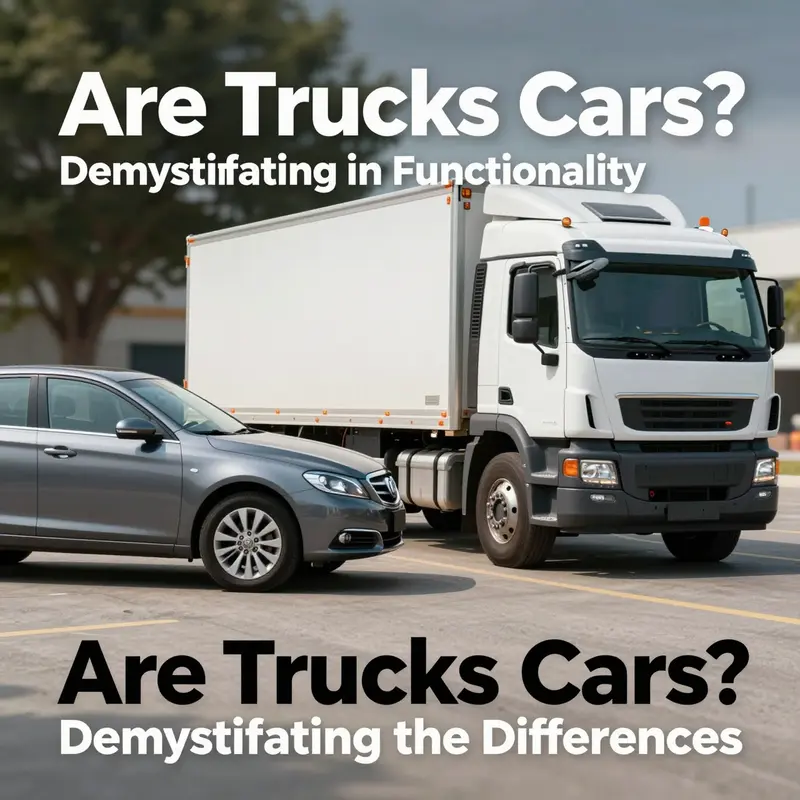
Is a truck a car? The question invites quick labeling but misses a practical truth: cars and trucks are built for different jobs, and those jobs drive the design. The result is a spectrum rather than a wall, with crossovers and multipurpose vehicles blending traits. To understand why a truck is not a car, start with purpose and follow the design choices that follow.
In their simplest form, cars are passenger devices designed to move people with comfortable interiors, smooth rides, and good fuel economy. They aim for quiet cabins and predictable behavior at common speeds. The engineering trades off harshness for efficiency and everyday usability, making cars approachable for families and urban living.
Trucks, by contrast, center on utility. They exist to move heavy loads, tow trailers, or handle rough terrain. The frame and suspension are built to stay stiff under load, ground clearance is higher, and the powertrain favors torque and durability. The cab to bed layout is designed for cargo, and the vehicle is tuned to stay stable when carrying weight or pulling a heavy trailer. This often means a firmer ride and longer stopping distances when fully loaded.
Overlaps with sport utilities and minivans add complexity, but the core logic remains. Vehicles are optimized for the primary task the market expects them to perform. If the job is transporting people efficiently and comfortably, the choice leans toward a car. If the job is moving cargo, towing, or working off pavement, the choice leans toward a truck. Some vehicles blend traits but still reveal their mission in the way they are built.
Practical implications show up in urban design and safety. Cars tend to have smaller footprints and are engineered for efficient operation in traffic. Trucks require more space and careful driving when loaded. As fleets evolve, manufacturers seek ways to improve efficiency and reduce emissions across both categories, including electrification and smarter aerodynamics.
For readers facing real decisions, the guidelines are simple. If daily travel is about people and groceries with modest loads, a car or crossover is typically best. If the tasks include carrying tools, equipment, or heavy materials, a truck offers the needed capability. Some buyers opt for blended options like larger SUVs or crew cab pickups that balance passenger comfort and utility.
Under the Hood of Distinction: Why Trucks and Cars Serve Different Purposes
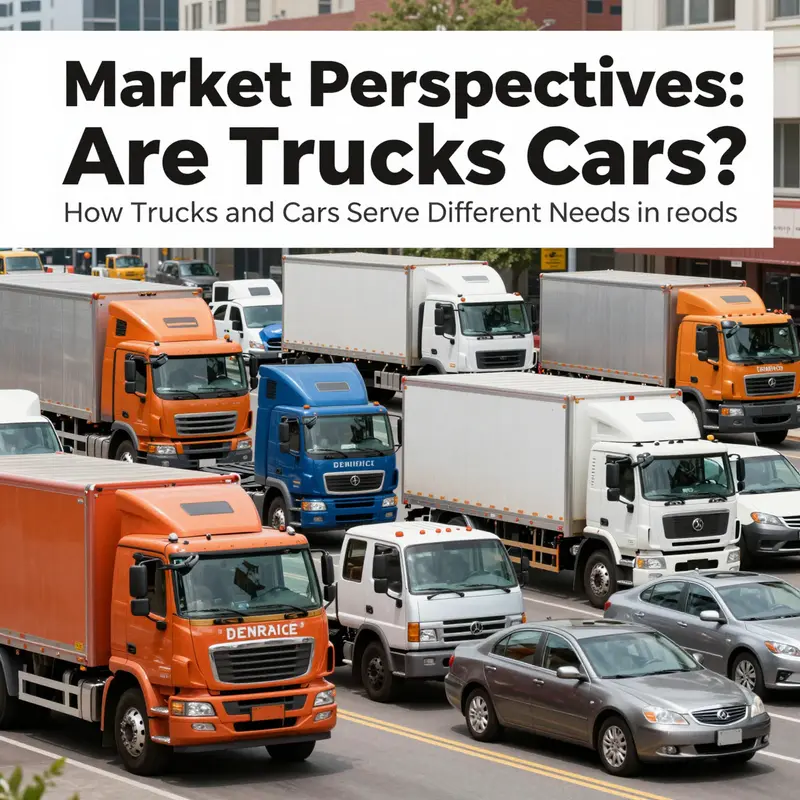
Is a truck a car? The quick answer is no. Yet the question is more revealing than it seems. It opens a window into how people live, work, and move through daily life. Cars and trucks share roads, engines, and miles, but they are built around different promises. The distinction matters because it shapes not only what we expect from a vehicle but also how we experience it. A tool is only as good as the job it is designed to perform. When the job is misidentified, the tool wears out faster, wastes fuel, or creates unnecessary friction in everyday tasks. In that sense, understanding why a truck is not a car becomes a practical guide to selecting the right vehicle for the right moment and a window into how design responds to real use on real roads.
Historically, autos emerged to move people safely and comfortably, with an urban bias that rewarded efficiency and refinement. The truck grew from the demand to move freight, to perform in rugged conditions, and to serve as a workhorse on construction sites, farms, and long-haul routes. Over time, both lines evolved in ways that sometimes blurred the edges: sport utilities, crossovers, and even minivans borrow elements from both camps. Yet even those hybrids retain a core logic—the mission they are built to accomplish. The difference between car and truck is not merely size or speed; it is a difference in philosophy about daily life and long-haul endurance.
Design choices tell much of the story. Cars optimize for urban mobility, fuel efficiency, and passenger comfort. They sit low enough to keep a streamlined silhouette and minimize air resistance. The cabin is designed to feel intimate, with a focus on quiet operation, cabin openness, and passengers who ride in comfort on shorter to medium trips. The headrests and seats must support relaxed travel, and the interior aims to feel cohesive and refined. Aesthetics, acoustics, and ergonomic layouts are calibrated to create a sense of ease as people weave through city streets, glide along highways, and park in tight spaces. The result is a vehicle that behaves like a refined companion for daily routines, school runs, commutes, and weekend getaways.
Trucks, by contrast, orient themselves toward durability, utility, and extended use. They demand capability rather than purely comfort. The chassis and frame are built to resist torsion under heavy payloads, to endure multiple shifts on active fleets, and to tackle rough roads or job sites where pavement ends and mud or gravel begins. The seating reflects this reality: tall, broad seats with substantial lumbar support, sturdy materials, and headrests that offer extensive adjustability. These headrests are designed to stay supportive across long days of work, with vertical, horizontal, and fore-aft adjustments that help align neck and spine during sustained driving, towing, or navigating uneven terrain. The ride is a compromise—stiffer than a family sedan but purposeful, delivering control and confidence over a wider range of conditions. The cargo bed, the bed’s geometry, and the powertrain choices all reinforce a different set of expectations: payload, towing capacity, and the ability to haul equipment or raw materials. In short, trucks are engineered to endure work, weather, and distance; cars are engineered to enable refined, economical, and comfortable everyday travel.
In markets around the world, the practical distinctions sharpen because people live with different needs and different road infrastructures. In many regions, compact pickup trucks have become indispensable tools for small businesses and rural transport. They blend passenger seating with a practical cargo area, delivering a kind of portable toolkit that can serve as both commuter vehicle and mobile workspace. These vehicles show that the boundary between car and truck is not a single line but a spectrum shaped by necessity. Work fleets rely on high-back captain seats for crews who ride long hours, with generous seat adjustments and robust support that reduce fatigue on lengthy trips or continuous shifts. For drivers who spend days behind the wheel, such features translate into tangible comfort and reduced risk of strain. At the same time, the truck’s core identity remains intact: a platform designed to carry significant payloads, tow heavy loads, and perform in challenging environments across varied geographies. The market’s appetite for versatility keeps pushing manufacturers to offer configurations that honor both passenger needs and practical workload demands.
Technology has begun to blur boundaries while also reinforcing the fundamental differences. Both cars and trucks benefit from advances in safety, efficiency, and connectivity. Yet the way technology is deployed often signals different priorities. The push toward automation, particularly in freight and long-haul trucking, highlights a future where reduced driver costs and improved logistics could transform supply chains. But even as fleets experiment with autonomy, the driver’s role remains central in the trucking world due to the varied operating conditions, regional regulations, and the sheer scale of certain loads. Cars, meanwhile, primarily pursue enhancements that improve everyday safety, comfort, and energy efficiency for urban and suburban use. The result is a transportation landscape where technology acts as a translator rather than a uniform equalizer—helping both camps move toward safer roads and more efficient journeys, but doing so by strengthening different strengths.
Amid these dynamics, the everyday experience of sitting behind the wheel makes the differences tangible. The car cockpit tends to be a sunlit, uncluttered space with easy reach to controls, a calm ride, and seating designed for short to mid-length trips. The truck cabin, in contrast, feels more deliberate and utilitarian, oriented to the tasks at hand: smooth access to the bed, more pronounced stance, and controls that acknowledge longer working days. The contrast extends to ergonomics: car interiors minimize visual obstruction, with seats and head restraints positioned to offer maximum rearward visibility and a sense of openness. Truck interiors tilt toward resilience and practicality, with headrests that are taller and more adjustable to accommodate a wider range of body types and working scenarios. The difference is not exclusive to seating. It threads through the entire vehicle—how the instrument cluster is laid out, how the mirror geometry provides line-of-sight for varying tasks, how the materials stand up to wear, and how the overall experience invites a certain rhythm of use.
This is not a debate about superiority but about alignment of purpose. If your life is built around daily commutes, school runs, and the quiet cadence of urban living, a car-like experience remains compelling. It delivers comfort, efficiency, and ease of use in predictable settings. If your days demand hauling, towing, or traversing rough roads, a truck rolls in as a workhorse that can shoulder the load and keep moving when others pause. Even within the same household or small business, it is common to see both types functioning in tandem: a car for everyday arrival and a truck for the real-world tasks that require durability and cargo capacity. The lesson here is not to categorize vehicles by labels alone but to assess how well a particular vehicle’s design matches the tasks at hand. It is a practical philosophy that helps people avoid the trap of assuming one vehicle can do all things equally well. In that light, the question Is a truck a car becomes less a matter of classification and more a matter of fit.
Part of this fit is how vehicles accommodate the work-life mix. In many parts of the world, family life and business life intersect, and individuals want a single vehicle that can handle both daily transport and occasional work needs. This demand sustains a market for versatile options that maintain the distinct advantages of both worlds. Even as crossover models push into new territory, the fundamental differences persist: a car remains more about light, efficient daily use; a truck remains a platform for heavy lifting, rugged capability, and extended endurance. The ongoing evolution of these vehicles reflects broader shifts in how people live and work, how roads are used, and how infrastructure evolves to support more efficient, safer, and more resilient mobility.
For readers seeking ways to tailor a vehicle to specific tasks without compromising basic safety and usability, the world of add-ons and accessories provides meaningful options. To explore how owners tailor trucks to work and life through careful accessory choices, see truck accessories.
Finally, the broader question about headrest safety and design reminds us that these distinctions extend into safety standards and regulatory guidance. Safety devices—headrests included—are not cosmetic features; they respond to the realities of each vehicle’s typical use. The evolution of headrest design mirrors how manufacturers approach the different operating environments of cars and trucks, aiming to protect occupants across a wide range of scenarios. For safety guidelines on headrests, refer to the external resource provided by safety authorities: https://www.nhtsa.gov/vehicle-safety/headrests
Final thoughts
In conclusion, while both trucks and cars are integral to transportation, their inherent distinctions serve different purposes that cater to specific business needs. Understanding these differences equips business owners with the knowledge to make informed vehicle choices based on their operational requirements. Whether it’s the hauling capacity and ruggedness of a truck or the comfort and efficiency of a car, recognizing what each vehicle offers can drive success in your endeavors.