
As a business owner, managing operational costs is crucial, and the ability to perform DIY repairs on your Ford F-150 can represent significant savings. While some tasks may appear straightforward, the complexity often varies widely across different repairs, impacting both time and resources. This article delves into five key chapters, exploring basic maintenance tasks, the challenges of more complex repairs, the best resources available, safety considerations, and when to opt for professional help. Understanding these facets will empower you to make informed choices about your vehicle’s upkeep.
Basic Maintenance Mastery: Is DIY Repair on the Ford F-150 Really Easy?
When people ask whether it’s easy to fix a Ford F-150 themselves, the honest answer sits on a spectrum. Basic maintenance tasks sit at the easy end for many owners, while more ambitious repairs drift toward the professional side. The charm of the F-150 for a DIYer is that many routine services are approachable, well-documented, and designed with practical access in mind. The workrail behind this is simple: if you can plan, gather the right tools, and follow a reliable guide, you can keep the truck in good health without a trip to the shop. What makes basic maintenance genuinely doable is a combination of straightforward procedures, abundant documentation, and the F-150’s design that favors hands-on service. The entry points are clear and often gratifying; once you’ve mastered one routine, the next feels natural, almost mechanical in the most satisfying sense.
Begin with the fundamentals that most owners tackle during a weekend of steady work: an oil change, air filter replacement, tire rotations, fluid checks, and a quick inspection of wear items like brakes and wipers. These tasks share a common rhythm. You warm the engine, prepare a safe workspace, drain and replace fluids, or swap a component that is designed for simple removal, and then you double-check levels, torques, and fitment. The Ford F-150’s layout tends to favor these activities. The engine bay is arranged in a way that allows access to the filter, drain plugs, and fluid reservoirs without an arsenal of special tools. This accessibility is not accidental; it reflects a longstanding emphasis on user-friendly maintenance that Ford has cultivated across recent models.
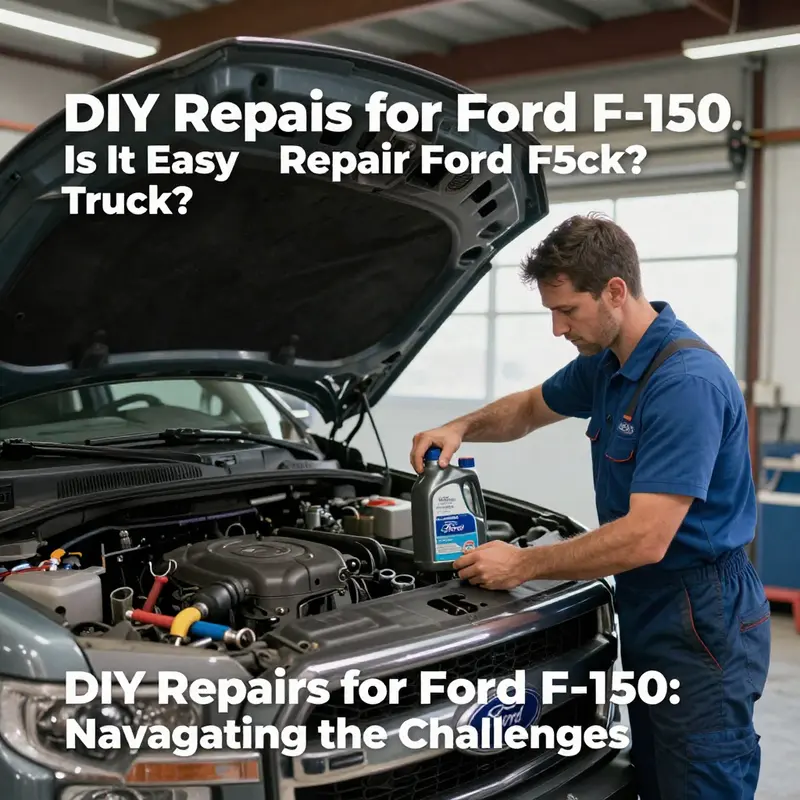
If you are new to DIY automotive work, start with oil changes. The steps are physics and common sense: warm up the engine so the oil drains thoroughly, place a drain pan beneath the oil pan, remove the drain plug, and allow gravity to work. Then unscrew the old filter, replace the gasket, and install a fresh filter with a light, even turn to seal it snugly. The final act is to pour in a measured amount of clean oil, and then check the dipstick to confirm the level. The practice teaches you discipline about cleanliness, tool control, and the importance of following torque specifications when fastening components. It also introduces you to the rhythm of a job that requires patience, not bravado. The oil change becomes a reliable gauge of your growing competence, a small accomplishment that confirms you can follow a plan and handle risk with care.
Air filters are next in line with a similar logic. The job is a matter of removing the old filter, inspecting the housing for debris, and snapping in a new filter. The procedure doesn’t demand advanced mechanical theory; it rewards careful observation. A clean, properly seated air filter improves engine breathing and can yield a noticeable performance and efficiency benefit over time. The same approach applies to the cabin air filter in many trucks, although Ford’s layouts can vary by year and trim. A quick inspection of the air intake path teaches a lesson about how modest neglect can compound over miles, and that replacing a simple component can feel like a personal win for pride and efficiency.
Tire maintenance, including rotations, aligns with the same ethos of steady, repeatable tasks. Rotating tires evenly distributes wear, preserving grip and prolonging tire life. The process involves lifting the vehicle with appropriate stands, removing each wheel, and following a rotation pattern guided by your owner’s manual or a reputable DIY guide. The chassis remains stable if you respect safety steps: chock wheels, ensure the jack is stable, and never work under a vehicle supported only by a jack. These steps are not just safety reminders; they are training wheels for more ambitious projects. The moment you proceed with stops and starts that keep the car’s weight balanced, you gain confidence in your ability to manage a vehicle under load. The result is not just better tire life but a burgeoning sense of self-reliance.
Fluid checks—engine oil, coolant, brake fluid, and transmission fluid—form a pragmatic trio of quick health checks. Engine oil levels give you a glimpse of the engine’s appetite and the effectiveness of your last change. Coolant levels reflect the cooling system’s readiness to prevent overheating, and they also signal leaks or air in the system if you see unusual color or pressure on the reservoir. Brake fluid should stay clean and amber or light gold in color; if it darkens or thickens, you’ve got a maintenance issue to address before it grows into a safety problem. Transmission fluid checks, when applicable, reveal shifts that are smooth and consistent. The broader point is that these checks are not decorative chores; they are preventive diagnostics that reduce the risk of unexpected breakdowns and help you understand how the vehicle behaves as it ages.
Wiper blades and small wear items are the kind of maintenance that rewards routine: quick replacement, immediate improvement in visibility, and a visible reminder that small steps preserve safety. A quick blade swap takes only a few minutes, but it adds up to a measurable gain in daily reliability. The same approach applies to hoses, belts, and other wear items that come up on a routine inspection list. A methodical, patient approach to these parts pays off, and the sense of accomplishment can be motivating for more challenging tasks later on.
A practical backbone for all of this is access to reliable, model-specific guidance. The Ford Owner Manuals section on the official Ford website offers free, model-specific PDFs that cover maintenance schedules, troubleshooting tips, and clear, step-by-step instructions. This resource is particularly valuable because it scales with your growing expertise. You can start with simple reminders about service intervals and gradually introduce more detailed tasks as confidence builds. For someone who wants to stay aligned with Ford’s recommended practices, this is where good habits start to feel grounded and repeatable. The manuals also help you avoid common pitfalls, such as using the wrong oil viscosity for your climate or confusing fluid types that look alike but behave very differently in the system. Access to precise specifications and sequence of steps makes a big difference in how quickly you can complete a task with minimal friction.
Another powerful dimension of DIY ease is the availability of broad, supportive learning communities and guide libraries. You don’t have to reinvent the wheel with every job. Detailed videos and walk-throughs from credible DIY sources illustrate each step and help you visualize the process before you begin. When you encounter a task that is slightly unfamiliar, a well-chosen guide provides a mental map of the steps, the common mistakes to avoid, and the safety precautions to observe. This is where the balance of tools and information matters most. With the right resources, you can align your hands with the plan and proceed with a calm, confident pace.
Of course, there is a caveat. Not every task is appropriate for a home workshop, and not every F-150 will be equally forgiving. Engine work, major transmission repairs, or complex electrical diagnostics step into a territory where precise tools, specialized knowledge, and sometimes factory-level programming become essential. In those cases, even experienced DIYers pause to confirm the safest and most effective approach. The guiding principle is clear: if a task feels uncertain, consult the official manuals or seek professional help. Having a solid knowledge base lets you participate meaningfully in a repair alongside a technician, which can be the most productive way to handle substantial work.
As you build your DIY routine, consider how small upgrades or enhancements can support ease of maintenance. Simple organizational aids in the shop, like labeled tool kits, a dedicated drain pan with a wide mouth, or a compact torque wrench, can save minutes and reduce mistakes. The mindset that supports these improvements mirrors the mindset you bring to maintenance itself: plan, execute, evaluate, and refine. This is not about becoming a professional mechanic overnight; it is about becoming a capable, informed owner who can responsibly manage routine care and contribute value when a professional resource is required.
When the question turns to the practicality of basic maintenance, the answer is nuanced but uplifting. For many Ford F-150 owners, basic maintenance is accessible, repeatable, and rewarding. The road to mastery begins with small, deliberate tasks and grows through consistent practice, careful reading of manuals, and the wise use of trusted online guides. The vehicle’s design, which emphasizes serviceability for routine tasks, supports this journey. Even with modern F-150s incorporating advanced electronics and driver-assist features, the core steps of oil changes, air filters, tire care, and fluid checks remain approachable for a motivated owner who loves the learning process as much as the outcome.
For those who want to extend their DIY repertoire beyond the basics, a practical next step is to explore adaptable tools that fit the truck’s layout and your workspace. Some tasks benefit from a portable service cart, a compact air compressor for quick tire inflation checks, or a magnetic tray to keep fasteners organized during a project. The path to greater self-sufficiency isn’t an abrupt leap; it unfolds through a series of careful, successful jobs that build your toolkit, both literally and figuratively. If you want to see how other enthusiasts organize their maintenance workflow, you can explore the Accessories hub for ideas on storage solutions, mounts, and portable tools that make frequent tasks smoother. Accessories This kind of resource keeps your garage efficient and your projects enjoyable.
In closing, the core takeaway is simple: basic maintenance on an F-150 is approachable for many owners with moderate mechanical skills. The combination of straightforward procedures, accessible manuals, and a patient, planful approach makes DIY maintenance not only feasible but satisfying. You gain a practical understanding of your truck, a clearer sense of how components interact, and the confidence that comes from taking control of your vehicle’s health. The journey from oil changes to more involved diagnostics can be gradual, guided by trusted manuals and a growing toolbox of skills. And when a job exceeds your comfort zone, you’ll know you’ve built a foundation strong enough to support professional collaboration, not disruption. For model-specific guidance, refer to the official manuals and trusted DIY resources—and keep your Ford F-150 running the way you expect it to run: smoothly, reliably, and with pride in the process.
External resource for further reading: https://www.ford.com/owners/manuals/
Navigating Complex Repairs on the Ford F-150: The Real Challenges Behind DIY Efforts
When a Ford F-150 turns from a trusted workhorse to a project, the temptation to roll up your sleeves and fix it yourself can be strong. Routine tasks—oil changes, air-filter swaps, brake-pad replacements—are well within reach for most owners. But once you move beyond those basics into complex repairs, the work often becomes a maze of mechanical precision, electronics, and safety considerations. This chapter maps which repairs are approachable for a determined DIYer and which are best left to professionals, so you can decide when to learn, when to pause, and when to seek advanced help.
At the core of practical decision-making is an honest assessment of the failing subsystem. Engine, transmission, fuel delivery, and integrated electronics present very different challenges than routine maintenance. The closer a repair gets to precise systems—fuel metering, ignition timing, or engine control—the more it demands accurate information, specialized tools, and disciplined procedures. Even with the right attitude and a well-equipped workshop, success depends on assessing risk, skill level, and access to reliable repair data.
Carburetion highlights many of these difficulties for classic F-150s. Older models with carburetors require careful cleaning, diagnosis, and tuning to restore stable idle and consistent fuel metering. Carburetors are sensitive to varnish, debris, and wear; a misadjusted or improperly reassembled unit can lead not only to poor drivability but to engine damage. Tuning jets and mixtures is a precise, sometimes iterative task that rewards patience and methodical measurement.
Parts availability compounds the problem for vintage trucks. Original carburetors and rebuild kits can be scarce; specialty suppliers and salvage yards help, but sourcing parts often extends project timelines and introduces uncertainty. For many restorers, the DIY path becomes as much about sourcing suitable components as it is about technique, and planning for longer timelines and potential trial-and-error is essential.
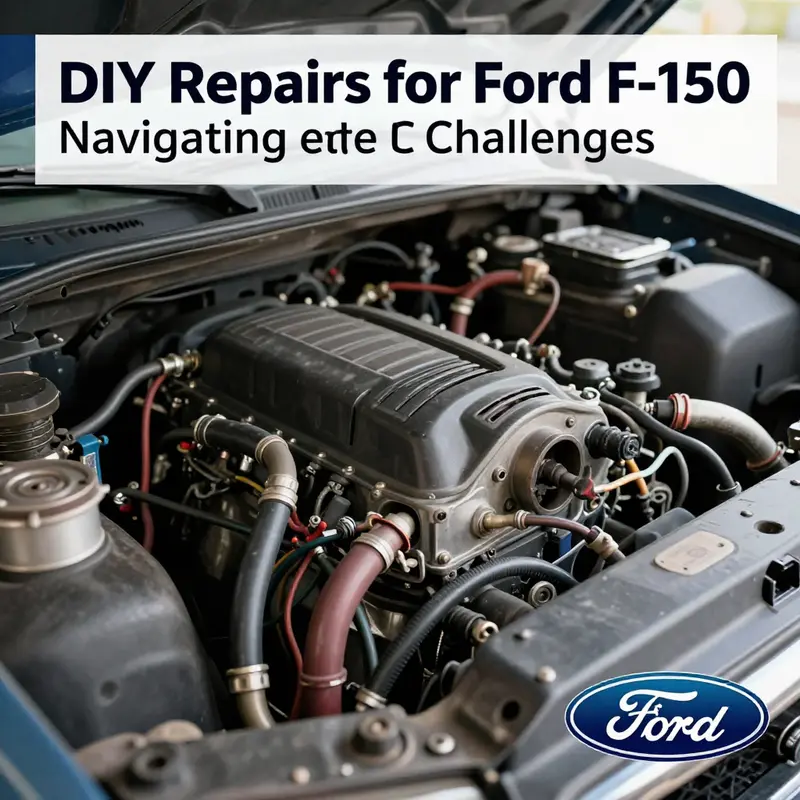
Modern F-150s add their own complications. Engine repairs, valve-train work, and transmissions typically require precise torque specs, specialized tools, and clean work environments. Integrated electronics and driver-assistance systems improve safety and performance but make diagnostics more complex. Improper handling of connectors, misapplied updates, or inaccurate diagnostic interpretation can create new faults or unsafe conditions.
A practical DIY strategy is staged: begin with tasks that reliably fall within your skill set—fluids, filters, basic brakes, and inspections—then expand gradually. Use official service manuals and reputable repair guides for procedures, torque values, and diagnostic flows. Observe symptoms, isolate the subsystem with measurements, and verify results before part replacement. When disassembly is required, document the process with notes and photos, label parts, and keep fasteners organized so reassembly follows a clear reverse order.
Diagnostic equipment and comfort with disassembly matter. Modern engine bays require careful handling of wiring harnesses and control modules; a single misconnected pin or brittle connector can lead to confusing fault trees. If you lack a reproducible fault signal or the right diagnostic tools, the repair can feel like an investigation that benefits from professional support.
For those committed to learning, adopt an iterative, safety-first approach. Cross-check community tutorials against official service information, maintain a clean, well-equipped workspace, and use proper lifting equipment for heavy components. Track what you remove, test, and replace. Decide whether to rebuild or replace components based on time, cost, and the desired outcome—reliability versus speed of return to service.
Safety is paramount. Even a seemingly successful repair can introduce hazards if procedures or calibrations are incomplete. Critical systems affecting steering, braking, or propulsion demand professional intervention when there is any doubt about the repair quality. Choosing help in those scenarios is not a failure but a responsible, safety-conscious decision.
The DIY mindset remains valuable: it builds mechanical understanding, cost awareness, and hands-on problem solving. Yet enthusiasm must be balanced with humility and judgment. When challenges involve precise metering, difficult-to-diagnose electronics, or hard-to-source parts, collaborating with professionals often yields faster, more reliable, and safer outcomes.
To expand capability, curate trusted learning resources, invest in essential diagnostic tools, and build a shop environment that emphasizes organization and process. An accessories and tools hub can guide choices that improve efficiency and safety in the workshop, reducing time and errors when complex repairs arise.
Ultimately, whether a complex F-150 repair is feasible for a DIYer depends on the subsystem, the specific fault, and the willingness to invest time in learning and careful execution. Approach repairs with a staged plan, rely on verified information, and know when to call in expertise. With that mindset, complex projects become opportunities to gain meaningful skills while keeping safety and reliability at the forefront.
Navigating DIY Repairs for the Ford F-150: A Practical Guide to Manuals, Tutorials, and Tools
The question isn’t simply whether DIY repairs on a Ford F-150 are easy. It’s more nuanced: what task are you tackling, what tools do you have, and how comfortable are you with both measurements and safety procedures? For many owners, routine maintenance like an oil change, air-filter swap, or brake-pad replacement can be straightforward projects that reward careful preparation and access to clear guidance. These tasks have long been the entry point for beginners who want to develop hands-on confidence without risking major mechanical or safety issues. But the same truck also carries systems that require more than basic know-how. Engine work, transmission concerns, complex electrical diagnostics, or significant body repairs demand a deeper understanding, specialized tools, and reliable, model-specific information. In short, the Ford F-150 can be approachable in the right hands, but the scope of the job and the quality of the information you consult are what ultimately determine how easy the repair feels in practice. A solid, stepwise approach to DIY work—grounded in reputable manuals and well-structured tutorials—can make the difference between a satisfying weekend project and a frustrating expedition into a repair you never fully finish.
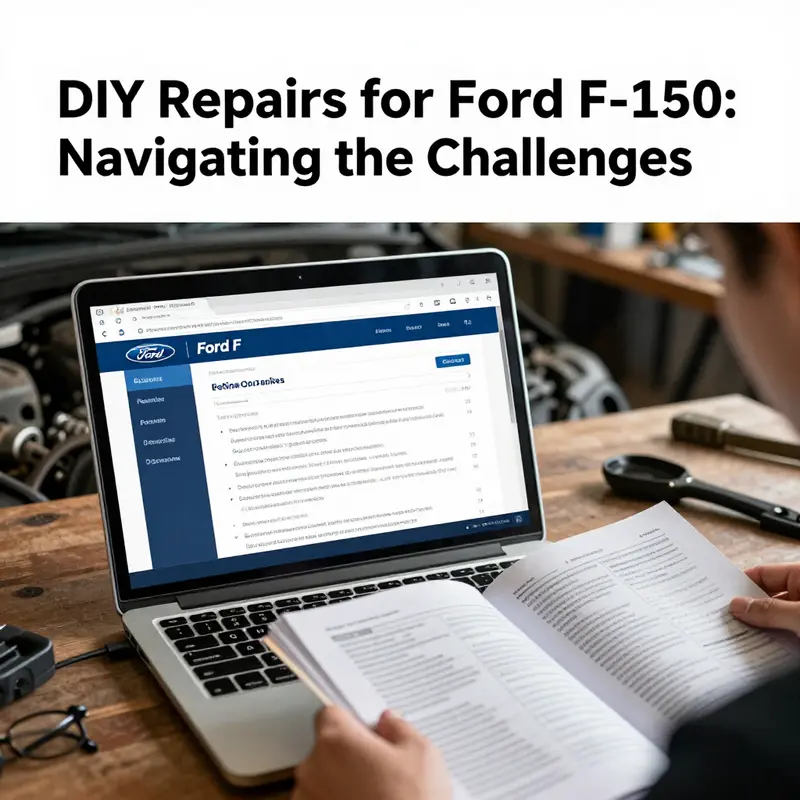
A practical way to think about the landscape of resources is to separate what is genuinely accessible to a DIYer from what belongs in the hands of a professional. The owner’s manual and repair guide, in its most current form, serves as the foundation. It lays out basic maintenance intervals, torque specs, recommended fluids, and safe disassembly sequences. While it won’t replace the need for a crowded toolbox or a solid garage setup, it does provide a map for beginners and a reliable reference for more complex tasks. Following a well-structured manual reduces guesswork and helps you prevent common missteps, such as over-tightening fasteners or misrouting an electrical harness. For more thorough technical depth—such as wiring diagrams, advanced diagnostics, and disassembly-reassembly procedures—the official repair documentation becomes indispensable. The manufacturer’s official materials are designed to be precise and model-specific, which makes them a trusted anchor when you decide to press beyond simple maintenance.
Beyond official manuals, the DIY landscape is rich with alternative guidance that can spark practical understanding and build confidence. Online platforms host a multitude of step-by-step guides that pair visuals with written instructions. These resources often break down tasks into manageable stages, show exactly which tools are required, and provide real-world tips learned from long-term ownership and restoration projects. The value of such tutorials lies not just in the steps themselves, but in the way they model a careful, patient workflow. Watching someone explain why a connector must be unplugged in a particular order, or why you must support a component before loosening its mounting, helps a beginner internalize the reasoning behind the procedure. The best videos and written guides emphasize safety first, demonstrate clean working practices, and include troubleshooting notes for common pitfalls. When used thoughtfully, online tutorials complement official manuals by clarifying ambiguous passages and by offering practical demonstrations that a static page cannot convey.
If you map out the path of a typical DIY project on this truck, you’ll find a natural progression from simple to more complex tasks. Start with routine maintenance that is well-documented and forgiving: an oil change, air-filter replacement, brake-pad swap, or replacing worn belts and hoses. These tasks reward careful preparation and accurate reference. They also teach you essential habits—checking for leaks, cleaning components, and rechecking fluid levels—that carry over to more demanding jobs. As you gain experience, you’ll likely expand into tasks that involve more intricate systems. You might tackle a failed sensor, perform a basic electrical diagnosis, or replace a faulty actuator. Each step you complete builds practical knowledge—how to use a torque wrench correctly, how to test a circuit with a multimeter, or how to identify a marginal connection before it fails completely. It’s here that the value of reputable sources becomes clearest. A reliable owner’s manual provides the sanctioned baseline information, while tutorial platforms offer applied demonstrations that reveal the “feel” of the repair—the rhythm of loosening and tightening, the sequence of harness disconnections, and the moment you realize you’ve undone something you shouldn’t have.
In the mix of resources, a crucial distinction emerges: not every repair is a candidate for DIY, and not every DIY path yields success on the first attempt. Certain tasks demand professional oversight because they influence vehicle safety or drivability in ways that require precision beyond what a hobbyist can safely achieve. Chassis rust repair, frame straightening, or electronic control module programming, for example, are typically best left to professionals who can verify tolerances and safety outcomes. Modern F-150s also feature advanced driver-assistance systems and integrated electronics that can complicate diagnostics and reprogramming if approached without specialized equipment and knowledge. Yet this doesn’t mean DIYers should shy away from meaningful opportunities to learn. It simply means approaching the work with honesty about the limits of your current skill set, a plan to acquire the necessary tools, and a readiness to seek professional help when a task exceeds your capacity.
What makes a DIY project feel accessible is not merely the presence of guides, but the quality and structure of those guides. A well-constructed maintenance plan pairs the official manuals with practical, real-world tutorials that demonstrate safe, repeatable procedures. It’s important to assess the reliability of any online resource: are the steps logically ordered, is the nomenclature consistent, and are the safety warnings clearly stated? For the eager beginner, cross-referencing multiple sources can help confirm that a procedure is accurate. A consistent approach—read the manual, watch a couple of tutorial videos, gather the specified tools, and work in a clean, organized space—reduces the risk of missing a step or rushing a critical safety precaution. The recommended sequence becomes a personal protocol: identify the task, locate the correct procedure, assemble the tools, prepare the workspace, perform the repair step by step, recheck connections, and test the system after the repair is complete.
The practical value of documentation is amplified when you pair it with a reliable set of tools and a well-lit workspace. A basic but sturdy toolbox, a mechanical jack and stands, a torque wrench, thread-lock compound, and a multimeter often turn a potential headache into a solvable puzzle. For a newcomer, investing in foundational tools is not merely about finishing a job; it’s about building a toolkit of habits—checking fastener sizes, noting step-by-step revisions, and returning to the manual if a step feels uncertain. In parallel, it helps to cultivate a habit of documenting your process as you go. Jot down torque values, note any variations in procedure, and save the diagrams from the official manuals or the online guides you rely on. This practice creates a personal knowledge base you can revisit for future maintenance or larger-scale repairs.
A honest, well-informed DIY plan also anticipates the learning curve. Early on, it’s natural to struggle with parts access, clearance, or the time required to complete a task without rushing. The beauty of a mature approach is that it becomes evident which projects are best tackled incrementally and which are better deferred. To tie this back to the resources you lean on, the combination of a current official manual and a robust set of online tutorials presents a balanced ecosystem. The manual provides the definitive vehicle-specific information, including wiring diagrams and safety standards; the tutorials translate this information into actionable steps with real-world context. When you see a straightforward oil-change procedure presented with clear diagrams and a short video, you gain confidence. When you encounter a more complex diagnostic, the tutorials illustrate the investigative process, with notes about what readings or measurements to expect and how to interpret them. This dual-resource approach reduces the fatigue that often accompanies learning by doing.
For those who want to extend their DIY repertoire beyond the basics, it’s useful to learn how to leverage each source effectively. An authoritative owner’s manual or repair guide should be your first stop for the fundamental specifications and the planned maintenance intervals. After that, you can explore curated online tutorials that demonstrate the actual hands-on steps. The best tutorials present a sequence that mirrors the manual’s logic but adds the practical sequencing that makes a repair feel intuitive. They also often include troubleshooting sections that help you decide whether a symptom is a normal variation or an indicator of a developing problem. As you accumulate experience, you’ll begin to recognize patterns: the same set of symptoms that point to a common fault across multiple model years, delivered through consistent diagnostic steps in tutorials and cross-validated by the official diagrams.
To keep the journey well-grounded, you can use an internal resource channel to gather ideas for future projects or to verify your approach. For instance, a broad maintenance and accessories hub can guide you toward practical upgrades that complement your DIY repairs. See trucksdiy.com/blog/accessories/ for a collection of ideas that can inspire your next project, from mounting solutions to vehicle organization upgrades that make working on a truck easier and safer. This kind of cross-reference helps maintain momentum without losing sight of the core repair tasks and the safety standards that underpin every worthwhile DIY effort. While you explore, remember that the goal is steady improvement, not perfection on the first try. With the right combination of manuals, tutorials, and a measured approach to tools and space, a motivated owner can tackle a surprising range of maintenance tasks and modest repairs on the Ford F-150, turning knowledge into capability and time into tangible results. External resources remain important as benchmarks for accuracy and safety; a reputable repair-guide platform offers model-specific guidance that complements the official materials and helps you validate your planning before you turn the wrench. External resource: https://www.ifixit.com/Device/Ford_F-150
null
null
Between Wrench and Warranty: Navigating DIY and Professional Repair Choices for the Ford F-150
Owning a Ford F-150 often feels like carrying a stubborn but loyal partner. It rewards curiosity with reliable service and occasionally tests patience with stubborn rattles, odd electrical quirks, or a stubborn squeak that won’t quit. When something goes wrong, the question becomes less about whether the truck can be fixed and more about who should fix it and how. The reality for most owners is not a blanket rule but a practical balance: some tasks invite you to grab a wrench and learn, while others demand the precision, tools, and oversight that only a seasoned shop can provide. Decisions hinge on three core factors: the task’s complexity, the tools and environment you have at hand, and the potential costs—both immediate and long-term. For a modern F-150, that equation can tilt toward DIY for routine maintenance and basic repairs, while warning bells should ring for high-stakes, high-risk work that affects the engine, transmission, or advanced safety systems.
Start with the low-hanging fruit. Routine maintenance—oil changes, air filter swaps, brake pad replacements, and similar tasks—continues to be the gateway for many DIY enthusiasts. These jobs come with established, well-documented procedures. They require some basic tools, a sturdy work surface, and a willingness to follow torque specs and manufacturer recommendations. When approached with care, these tasks provide a tangible sense of accomplishment and a deeper sense of the truck’s inner workings. They also build the confidence needed to tackle more involved projects. The Ford F-150, like many modern trucks, benefits from a well-maintained routine schedule; adherence to it can prevent many minor issues from blossoming into expensive repairs. The manual and repair guides surrounding these maintenance items provide a reliable map: step-by-step sequences, safety cautions, and the critical reminders to use the correct fluids, filters, and replacement parts. It’s not merely about performing a task; it’s about understanding the role that each component plays in the broader system and recognizing when fatigue or complexity begins to creep in.
Yet, not every task belongs in the driveway. The same truck that responds happily to an oil filter change can expose a novice to real hazards during engine work, transmission service, or the diagnosis of an electrical fault that involves multiple modules and control units. When the task touches the heart of the vehicle—its powertrain, its drivability, or its safety systems—the margin for error narrows. Engine issues, for example, may require precise torque sequences, calibrated timing procedures, or specialized diagnostic tools that interpret live data streams from sensors scattered across the engine bay. Transmission repairs can demand exact alignment, careful electrical grounding, and the ability to interpret fault codes that may have multiple possible causes. In some cases, attempting such work without the right experience not only risks damaging components but also creates safety concerns for the technician and for others on the road.
The reality is that some repairs demand a level of expertise and precision that are safest left to professionals. Chassis rust repair, frame straightening, or major electrical system diagnostics with multiple failure modes, are classic examples. The structural integrity of the chassis and the alignment of critical components bear directly on vehicle safety, towing capacity, and the potential for future damage if not handled correctly. Modern F-150s also come equipped with advanced driver-assistance systems and integrated electronics that require careful handling to avoid triggering safety faults or compromising performance. In these instances, the best outcome often comes from leveraging professional services that have the right equipment, the correct training, and access to up-to-date repair information.
Despite these boundaries, the decision to DIY or to hire a pro is not a binary choice. A practical approach is to adopt a tiered strategy: handle simple, routine tasks yourself to save money and gain experience, then reserve more complex issues for a professional. This hybrid path often offers the best balance of cost, convenience, reliability, and peace of mind. The DIY route is not merely about saving money; it is also about building a working knowledge of how your truck operates. This knowledge can help you make better decisions when problems arise, improve your ability to describe symptoms to a technician, and potentially prevent needless repairs by keeping up with preventive maintenance. It also cultivates a sense of ownership, a feeling that you are stewarding your vehicle rather than simply using it. The payoff can be significant, especially for those who relish the learning process and enjoy the tangible rewards of a job well done.
A practical framework can help chart a course. Begin by cataloging the tasks you are considering, separating them into those that are clearly within reach and those that sit on the boundary between doable and dangerous. For the within-reach tasks, invest in a basic set of tools, a reliable anti-seize compound, appropriate lubricants and fluids, and a clean, well-lit workspace. Make sure to have the manufacturer’s recommended specifications on hand, including oil viscosity, filter type, and torque values. Treat these tasks as small projects with defined time blocks. The discipline of budgeting time, buying parts, and setting aside a window of undisturbed work helps prevent rushed decisions and sloppy work. A well-planned approach often yields better results and keeps the process enjoyable rather than frustrating.
On the other side of the ledger, set strict criteria for when a professional should take the wheel. Look for repairs that involve critical powertrain components, advanced electronics, or structural elements. When in doubt, err on the side of caution. A professional shop brings more than just hands; it brings diagnostic capabilities, access to official repair information, and, crucially, the ability to guarantee the work performed. A trained technician can interpret fault codes in the context of your vehicle’s history, perform precise repairs that meet safety standards, and provide a warranty on the workmanship. This warranty serves as a long-term form of risk management, protecting you from hidden defects that might not be evident at the moment of repair. The value of this protection should never be underestimated, especially for high-stakes repairs that could impact reliability and safety.
For those who want to push a little further into the realm of DIY without stepping into risky territory, a curated set of resources can make a meaningful difference. A well-regarded repository of repair guides and community-driven tutorials has long supported owners who are learning on the go. These guides break down complex procedures into manageable steps, accompanied by photos and, in many cases, video demonstrations. They can be especially helpful for confirming that you are following the correct sequences and looking at the right components during a task. When you use these guides, approach them as learning companions rather than definitive authorities. Cross-reference with the official manuals whenever possible, and pay close attention to any task-specific cautions or safety notes. Remember that even the best guide cannot substitute for your own judgment and the vehicle’s unique condition.
If you lean toward DIY, you can harness a practical, almost scientific mindset: isolate variables, test safely, and document what you did. Start by performing non-destructive tasks that allow you to observe how components interact with each other. For example, changing an in-car component that does not affect drivability or safety can be a useful practice that builds your confidence. When you advance to tasks that require special tools—such as certain brake components, cooling system work, or sensor replacements—take the time to confirm you have the correct torque specifications, alignment procedures, and reinitialization steps for the truck’s system. It’s easy to underestimate how even small mistakes can cascade into larger problems once a vehicle’s onboard computer reconciles the new input with its learned data. This is not to discourage ambition but to encourage a careful, disciplined approach that respects the vehicle’s complexity and the safety of its occupants.
Guiding principles for the DIY learner include a readiness to pause and seek professional input when a task crosses into uncertain territory. Keep a running checklist of warning signs that should prompt a professional consultation: unusual noises under load that persist after an adjustment, warning lights that stay on after a diagnostic cycle, a noticeable decrease in braking performance, or signs of misfiring or overheating. When such symptoms appear, the risks of continuing a DIY approach increase dramatically. Even with the best intentions, pushing through symptoms can mask underlying issues and lead to irreversible damage or safety compromises. A measured approach, therefore, blends self-reliance with humility—the humility to recognize when expertise is needed and the patience to wait for a trusted professional when required.
For those ready to explore the DIY path, a sense of community and shared knowledge can be immensely comforting. A broad ecosystem of tutorials, guides, and forums supports owners who want to learn by doing. Access to such resources—paired with a solid grounding in basic mechanical concepts—can transform a daunting repair into a series of approachable tasks. In this space, the value is not only in the fix itself but in the education that accompanies it. You gain not just a repaired vehicle but a practical language for discussing issues with technicians, a clearer understanding of part function, and the confidence to participate more fully in maintenance routines that keep the truck dependable for years to come. The journey from novice to capable DIYer is iterative: each repair builds a little more competence, a little more speed, and a little more assurance that you can handle the next challenge.
To support this journey, it helps to have a single, trusted hub for practical guidance. For those who want to explore a wide range of repair topics, a particular resources section on a DIY site provides a structured starting point for common tasks. This hub hosts guides, diagrams, and community tips organized to help owners approach projects in a systematic way. As you grow more comfortable, you can branch out to more specialized materials, while still keeping the core practice of careful planning, proper tooling, and safety first. This approach keeps the process enjoyable rather than overwhelming and helps ensure that your Ford F-150 remains a reliable companion rather than a source of ongoing frustration.
Ultimately, choosing between professional help and DIY is less about a fixed diorama of rules and more about a dynamic assessment. Consider the task’s importance to safety and driveability, the level of risk you’re willing to absorb, and the time you can devote without compromising other responsibilities. A practical rule of thumb emerges: handle the straightforward, routine maintenance tasks yourself to build skills and save money, but reserve high-stakes, precision-dependent work for the professionals who bring specialized tools and warranty-backed expertise to the table. For many owners, the most satisfying path is a hybrid approach—self-managing the predictable, simple jobs and trusting seasoned technicians with the complex, safety-critical repairs. In this way, you gain the best of both worlds: ongoing reliability and enduring pride in your own hands-on work.
For readers who want to dig deeper into DIY resources while keeping a clear boundary around high-risk tasks, practical guides and community-driven support can provide invaluable assistance. A curated library of step-by-step instructions, diagrams, and real-world troubleshooting tips can guide you through common maintenance tasks and help you understand the system interactions that govern modern trucks. If you’re ready to take the next step in your journey, consider visiting a dedicated hub of repair guidance and projects—it can be a trustworthy companion as you decide which tasks to tackle, which to defer, and how to approach the repair journey with confidence. Accessories offers a gateway to practical, hands-on resources that can support builders and do-it-yourself enthusiasts as they equip their trucks for both work and adventure. And when real diagnostics or structural work becomes necessary, remember that a professional assessment, a fair estimate, and a warranty on the workmanship can be the most prudent choice for safeguarding your investment and your safety. For a deeper dive into repair guidance, explore an external, widely used repair guide that lays out comprehensive procedures and cautions for Ford F-150 models across generations: https://www.ifixit.com/Device/FordF-1502004-2008
Final thoughts
Navigating DIY repairs on your Ford F-150 can provide significant advantages, including cost savings and the satisfaction of hands-on work. Basic maintenance tasks are often manageable and are essential for any business owner who relies on their vehicle for operations. However, recognizing when the repair is beyond your capabilities or requires specialized knowledge is also vital. By accessing the right resources and prioritizing safety, you can make informed decisions tailored to your needs. Ultimately, a well-maintained Ford F-150 not only keeps your business running smoothly but also enhances its overall longevity.