
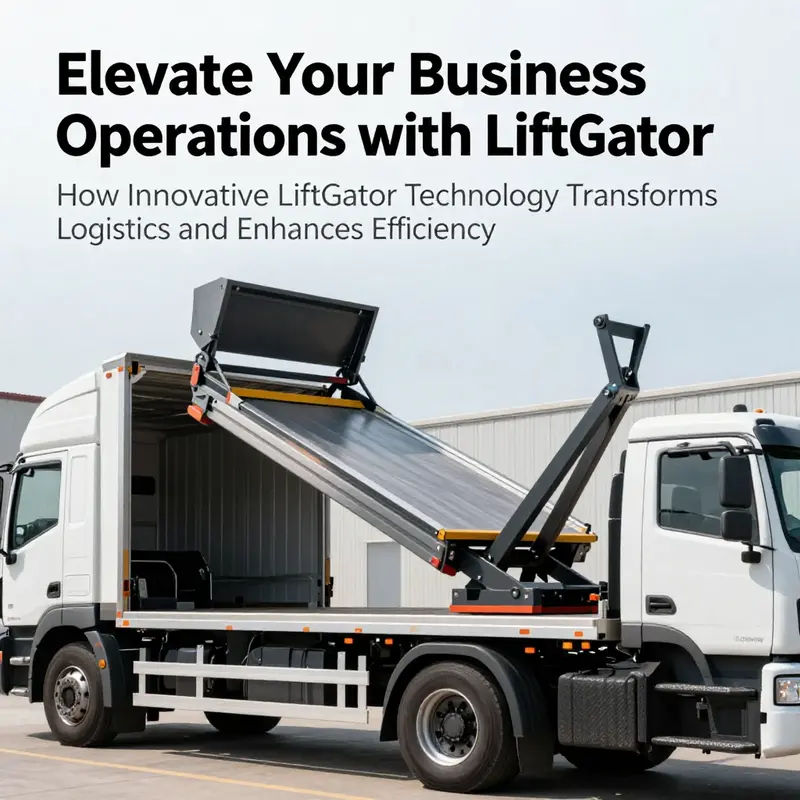
In the competitive landscape of business logistics, efficiency and adaptability are key. LiftGator’s groundbreaking technology, particularly its removable and foldable liftgate systems, addresses these needs by providing a unique solution for cargo handling. With a focus on granting truck owners an edge, LiftGator’s products offer unparalleled convenience, operational cost savings, and adaptability to various logistical scenarios. This article explores the innovations driving LiftGator’s success, the economic impact of its implementation, geopolitical factors influencing market strategy, and the societal benefits derived from using these advanced systems.
Foldable Power, Portable Precision: Innovations Redefining Portable Tailgate Lifts for Modern Fleets
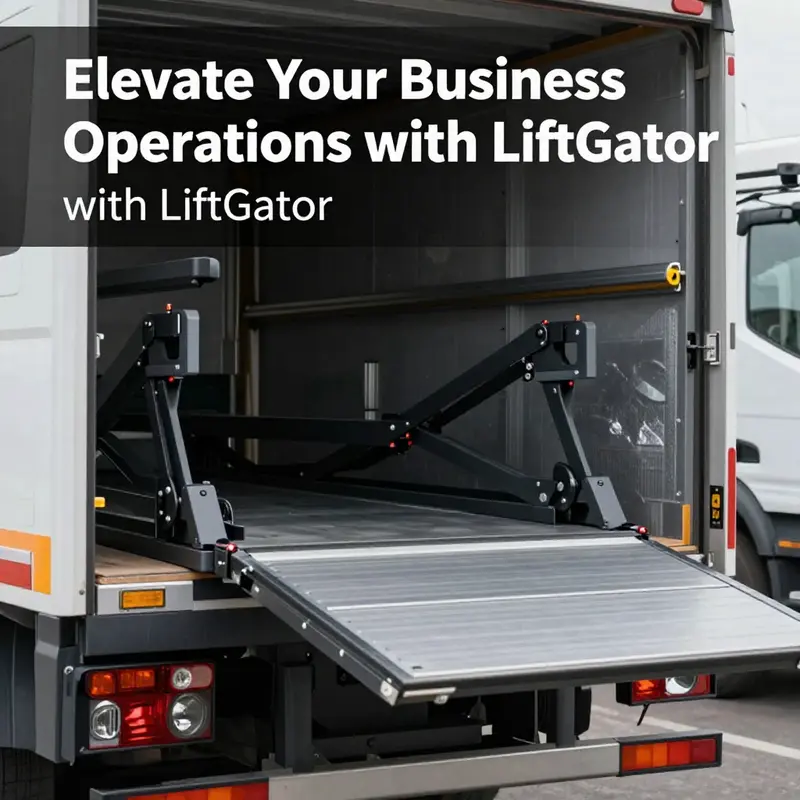
When fleets scale and space becomes a premium, the way goods move changes as much as the way they are moved. A portable lifting system that can ride in the back of a truck, deploy in seconds, and be tucked away just as quickly once the job is done can alter the economics of every loading dock, job site, and delivery route. The innovations embedded in modern portable tailgate lifts are not merely about adding capacity; they are about recasting how cargo handling happens on the move. They bring together three core pillars: a modular, foldable design that minimizes footprint; an integrated power system that liberates users from tethered power sources; and an interface that makes complicated lifting tasks feel almost intuitive. Together, these elements create a tool that is as much about strategic workflow as it is about raw lifting force. The result is a system that feels almost seamless in practice, turning a handful of awkward, back-breaking minutes into a few predictable, safely executed seconds. In this light, the most important innovations are less flashy than functional: form and function aligning to expand what is possible in the field without demanding additional space back at the shop or in the truck bed. This synergy reflects a broader shift in material handling, where mobility, reliability, and simplicity converge to empower operators who balance tight schedules with tight spaces. The practical implications are immediate for small businesses and independent operators who rely on reliable, repeatable performance rather than heroic, one-off feats of strength. A system that can secure up to substantial carrying loads, yet fold into a compact shape for transport or storage, introduces an elasticity to operations that is difficult to achieve with traditional, fixed equipment. The capacity figures, while impressive, become most meaningful when viewed in the context of time, space, and energy resilience. The more the apparatus can do on its own—without requiring a dedicated power supply or elaborate setup—the more a business can leverage it across multiple jobs, across different sites, and across varying vehicle configurations. This chapter traces how the foldable, battery-powered, one-button lifting concept translates into tangible gains on the ground, weaving together the technical innovations with the practical realities faced by operators who must move quickly, safely, and efficiently.
The first pillar—modular, foldable design—addresses a problem that has vexed many operators for years: the clutter and inefficiency of traditional lifting equipment. Conventional tailgates or fixed lifts can be invasive, bulky, and time-consuming to deploy or relocate. In contrast, the foldable system at the heart of this new generation collapses into a compact form without sacrificing structural integrity or load capacity. The three main components, engineered to fold, can be stowed in a bed or garage, preserving space for cargo and other tools. The design philosophy here is not to squeeze every millimeter of space out of a single job but to maximize utility across a spectrum of jobs and environments. When the equipment is not in use, it disappears from the work area, freeing up floor space for inventory, staging, or even a second crew member to navigate a crowded loading zone. This level of compactness matters most in urban or high-frequency operations where every square foot and every minute count. By enabling rapid deployment and quick stowage, foldability reduces downtime and keeps teams moving at the pace demanded by modern logistics.
The second pillar—the integrated battery-powered operation—speaks directly to the freelance and small business reality: powering equipment without being tethered to a specific electrical outlet. A self-contained energy system allows the lifting process to proceed with a level of independence that is rare in traditional, hard-wired solutions. This independence matters not only on the job site but also during transit and in remote locations where access to power can be inconsistent. With a single charge, the lift system delivers a practical number of lifting cycles, supporting the repetitive tasks that define daily operations. The energy design makes the unit a dependable partner on job sites that lack a nearby power source or where every minute of downtime translates into lost revenue. The dual charging options—household 110V outlets and trailer-powered sources—offer real flexibility. Operators can begin their day in a home garage and finish at a multi-stop route, recharging as needed without returning to a central shop. This autonomy is not merely a convenience; it reshapes planning assumptions, enabling more predictable scheduling and reducing the risk of a power outage derailing a delivery window.
The power in the mouth of the operator is, in part, the simple interface that governs the whole system. The single-button control is not a gimmick; it is a design decision rooted in human factors engineering. Complex machines can intimidate new users or slow seasoned operators who must recall a sequence of steps under time pressure. A one-button solution compresses the operational model into a straightforward action: press, lift, lower, and stop as needed. The result is a reduction in training time, fewer operator errors, and a lower barrier to adoption for individuals with limited experience. This simplicity does not erase safety or capability; it reframes the interaction so that the user remains focused on the task rather than the mechanism. The interface becomes a driver of consistency. When a team can count on the same simple input producing the same response, the variance that often complicates yard routines—misloads, mis-timings, and miscommunications—declines. In environments with multiple operators or seasonal workers, that consistency is a quiet, powerful asset.
The size and capacity of the deck, at 48 inches by 48 inches, are not incidental. A square, 4-by-4 foot platform fits a broad cross-section of cargoes and vehicle configurations, offering enough surface area to stabilize items that might otherwise shift during lifting. The load rating—safely handling significant mass—meets the requirements of typical commercial logistics tasks while remaining manageable within portable, trainable equipment. This balance between deck area and lifting capability ensures that the system can be integrated into a variety of fleets without forcing operators to modify their loading procedures. It is not simply about what the device can lift; it is about how reliably it handles common, everyday loads in real-world settings.
How do these innovations translate into economic and operational advantages? Consider labor costs, the heart of most small-business margins. A system that reduces the amount of manual handling, speeds up individual loads, and minimizes the risk of injury has a compounding effect. The time saved per pallet or per large item adds up quickly across a week, month, and year. Fewer hours lost to back strain, fewer trips to repair damaged cargo due to unstable loads, and less downtime waiting for power or equipment availability all contribute to a lower total cost of ownership. Additionally, the foldable design supports a lean asset strategy. Rather than maintaining multiple bulky lifts or renting large, stationary equipment for occasional jobs, a single portable unit can be deployed across various tasks and sites. The practical implication is clear: equipment that is easy to move, easy to store, and easy to operate translates into greater job throughput with lower overhead.
From a workflow perspective, the integrated power and simple interface interact with the broader logistics ecosystem. In a typical day, a crew might prepare products for installation or shipment, load items onto a pallet, and transfer them into a truck or trailer. With a portable lift, the transition from preparation to loading becomes more fluid. There is less need to stage heavy items near fixed docks or to coordinate multiple pieces of equipment. The foldable framework ensures that the lift can be carried, stored, and transported with the same ease as other portable tools, allowing teams to keep the truck bed clear for cargo rather than equipment. In environments where space is at a premium—urban warehouses, on-ramp loading zones, or mobile delivery hubs—the capacity to fold away equipment between jobs is not a luxury; it is a necessity that preserves operational tempo and reduces clutter.
The broader implications extend to the perception of equipment as a flexible resource rather than a static utility. When teams can deploy a tool where and when it is needed, their planning models begin to reflect that flexibility. This is especially valuable for small fleets that must juggle unpredictable demand, last-minute routes, and varying cargo profiles. The foldable, battery-powered system embodies a design ethos that prioritizes portability without compromising reliability. It demonstrates that high-capacity lifting can coexist with space efficiency and energy autonomy. Operators who adopt such a system gain a dependable partner in the lifting process—one that scales with their business as it grows and adapts to new lines of work.
The narrative surrounding this technology is not just one of technical prowess; it is a story about accessibility and democratization of capability. A device that can be deployed quickly, powered independently, and controlled with a single action becomes reachable to a broader set of users—from seasoned drivers expanding their service offerings to new entrepreneurs testing the waters of independent logistics. The accessibility extends beyond the user to the shop floor: easier maintenance, fewer moving parts in the control scheme, and fewer specialized training requirements. When a piece of equipment can be learned in minutes and integrated into routine operations within days rather than weeks, it changes expectations about what is possible on small budgets with modest scale. In this sense, the innovations represent a deliberate shift toward a more resilient, versatile, and inclusive model of material handling on wheels.
To understand the practical resonance of these innovations, it helps to think about how this kind of system responds to common job-site constraints. If a loading task involves coping with uneven surfaces, slight misalignments of cargo, or weather-induced challenges, the stability and control afforded by a predictable, single-action lift fosters confidence. Operators know what to expect from the system in terms of the lift rate, the stopping point, and the tactile feedback of the deck meeting its target height. The foldable design then ensures that this capability is not stranded on a single heavy vehicle but can be repositioned across the fleet, enabling a single, adaptable tool to cover many corners of the operation. The integrated power supply, meanwhile, removes a persistent source of friction: the need for the right outlet at the precise moment when a job must begin. With energy independence, the crew can start a job with certainty and complete it without circuit trips or extension cords that create hazards and complications. In practice, this combination of foldability, energy autonomy, and simple control is not a collection of separate wins but a harmonized performance envelope that heightens the predictability and efficiency of every lifting task.
The conversation around innovations like these is increasingly about compatibility and ecosystem thinking. A portable lift must coexist with the rest of a fleet’s toolkit and with its workflow scripts. In this sense, the approach mirrors the philosophy found in communities and guides that discuss truck accessories and modular upgrades. The idea is that a well-designed modular lift can slot into existing routines, augmenting them without forcing a wholesale reconfiguration of operations. This is where a link to practical resources—such as those found on truck accessory guides—can offer a helpful frame for readers seeking to connect the lift system with broader truck setup ideas. For instance, exploring how accessories support modular, on-demand configurations can illuminate how operators think about optimizing their own fleets. See more at Truck DIY Accessories for ideas on how operators tailor their vehicles to fit growing, flexible uplift capabilities. Truck DIY Accessories.
As this wave of portable lifting technology continues to mature, one can envision a future where the emphasis shifts from single, specialized machines to a portfolio of compact yet capable devices that share a common design language. The foldable, battery-powered principle could be extended to a family of tools that address different load profiles, vehicle types, and job-site constraints while preserving the core benefits of portability and ease of use. In such a scenario, fleets of all sizes gain a modular toolkit that can be allocated according to demand, with minimal downtime and maximal return on investment. The present innovations already demonstrate that it is possible to harmonize power, space, and control into a single system that feels almost natural to operate. The result is a practical, scalable approach to material handling on the move—one that aligns with the goals of small businesses eager to improve efficiency, reduce risk, and expand their service footprint without being tethered to a fixed infrastructure.
For readers seeking further technical specifics and broader product context, the manufacturer’s official resources provide a deeper technical dive into the design choices, material standards, and lifecycle expectations that underpin these innovations. External resource: https://www.liftgator.com/products/liftgator-xtr
Raising Efficiency, Reducing Costs: The Economic Currents Behind Removable Liftgate Systems in Modern Logistics
In the evolving world of freight, removable liftgate systems are more than hardware; they are catalysts for flexibility, capital efficiency, and faster throughput. By folding and sharing a single platform across fleets and sites, businesses can convert a capital expense into a modular asset pool that travels with demand rather than remaining idle in a yard.
A first-principles look shows how productivity gains translate into measurable economics: automated lifting reduces manual handling, lowers injury risk, speeds cycle times, and raises throughput. In practice, this means shorter dock dwell, steadier delivery windows, and more reliable service levels across peak seasons and diverse product mixes.
The modular, shareable design further enhances value. A compact, foldable liftgate takes less storage space, can be moved between sites, and can be deployed across shifts or even partner networks. The amortized cost drops as utilization increases, and the cognitive burden on operators falls as controls remain simple and consistent.
Space efficiency and layout optimization are real cash outcomes. Smaller equipment footprints loosen dock configurations, enable new cross-docking layouts, and improve last-mile density in urban markets. This translates into faster payback, better asset utilization, and more options for scalable expansion without major physical upgrades.
Energy, maintenance, and data analytics complete the value equation. Battery-powered platforms enable predictable energy spend, flexible charging, and the possibility of predictive maintenance driven by usage data. Real-time status and health indicators feed maintenance planning and fleet optimization platforms, weaving liftgate performance into broader supply-chain analytics.
Market, macroeconomic, and workforce considerations reinforce the case for liftgate automation. Growth in automation-enabled freight handling supports higher service levels and more resilient networks, with measurable inputs to productivity and GDP over time. At the same time, workforces shift toward higher-skilled roles that oversee automation, data interpretation, and preventative maintenance, underscoring the importance of retraining and safe transitions.
Viewed together, removable liftgate systems emerge as strategic assets that expand operating leverage, accelerate asset turnover, and enable more agile, data-driven logistics. They empower pilots of automation at smaller scales, while offering scalable pathways to larger network effects as utilization grows and technology matures.
For readers exploring further, practical case studies and market analyses illuminate how these dynamics play out in real fleets and across regions, linking technology choices to tangible financial and operational outcomes.
Geopolitical Currents on the Dock: Navigating Global Supply Chains with Removable Liftgates

Geopolitics rarely wears a badge that shouts its direct relevance to a niche equipment category, yet the story of a portable, high-capacity, removable lift platform unfolds precisely where policy, trade, and regional security collide with day-to-day operations. When a fleet owner books time on a trailer-mounted, 1,300-pound-class lifting platform or a shop technician dispatches to service a tail-lift in a small town yard, every decision—from sourcing to installation to maintenance—rests on a set of geopolitical conditions that stay in the background until disruption makes them undeniable. The value proposition of such a platform is built on flexibility and speed: a rugged, detachable system that can be quickly installed or removed to fit a range of truck beds and commercial tasks. But the ease of deployment hinges on the stability of supply chains and the predictability of policy environments that govern components, batteries, electronics, and the cross-border logistics that move them. To understand how geopolitics shapes the practical realities of these systems is to recognize that every cadence of manufacturing and every mile of transport is guided by a map drawn not only by engineers and logistics managers but by diplomats, regulators, and market watchers. This chapter threads that map into a narrative about resilience, adaptability, and the deliberate strategies that keep a portable lifting solution accessible across diverse markets, even when the political weather shifts suddenly.
Part of the geography is obvious: regional differences in trade policy, tariff regimes, and sanctions can redraw the cost and availability of critical components. A hydraulic actuator, a control unit, or a sensing array may travel across borders multiple times before a customer receives a completed package, and each crossing introduces a new layer of regulatory scrutiny, documentation, and potential delay. The practical effect is that sourcing decisions cannot be based solely on price or lead time in a vacuum; they must account for potential policy shifts in major sourcing corridors. A manufacturer that advances its operations through a diversified, multi-regional supplier base reduces single-point exposure and builds a buffer against sudden duties or export controls. In turn, customers benefit from improved continuity of supply and more predictable service when component parts arrive through alternative routes or from nearby suppliers. This is particularly salient for gear that combines metalwork, hydraulics, and electronics, where a single disruption in any one category can ripple through the entire value chain and slow down installation or maintenance windows for fleets.
Trade dynamics also intersect with the broader movement toward reshoring and nearshoring—strategies that seek to anchor more production, assembly, and service capabilities closer to end markets. North America in particular has seen heightened interest in domestic manufacturing tempo, partly driven by the desire to reduce exposure to extended international lead times and the volatility of global freight. Yet reshoring is not a binary choice of “home-made” versus “imported.” It represents a nuanced balancing act: maintaining a core set of components in regional inventories while continuing to source specialized parts from global partners who offer unique capabilities or cost advantages. In practice, this blended approach translates into a more resilient service ecosystem. Regional hubs can expedite field service, support rapid parts replacement, and speed commissioning in local markets, while the broader global network preserves access to advanced manufacturing processes and the ability to scale with demand swings. The immediate payoff for users is straightforward: faster response times, less downtime, and a tighter alignment between maintenance cycles and regional operating realities. The long view, however, recognizes that supply chain adaptability—underpinned by clear regulatory alignment and transparent lead times—serves as a form of strategic insurance against policy-induced volatility.
Another layer of geopolitics that matters is the regulatory architecture that governs equipment, safety, and cross-border business. In many regions, highly prescriptive safety standards shape how a lift platform is designed, tested, and certified before it reaches a customer’s fleet. In others, the regulatory environment emphasizes flexibility and modular adaptability to accommodate a wider array of vehicle types and usage scenarios. This mosaic means that product architecture must be robust enough to meet universal safety benchmarks while also permitting region-specific configurations that comply with local electrical codes, load-testing protocols, and installation practices. The battery and charging subsystem illustrate this dynamic in a tangible way. Countries may diverge in charging standards, energy efficiency requirements, or even the availability of certain battery chemistries. A design philosophy that maintains universal mechanical reliability while offering modular electrical interfaces and secure, cross-compatible charging options is well positioned to navigate these differences without triggering bespoke redesigns for every market. Such an approach reduces the time between a new regulation announcement and compliant production adjustments, enabling quicker response to policy developments and smoother market entry. For buyers, this translates into a steady assurance that the core capability—the ability to lift and lower loads with a simple command—remains intact even as the surrounding policy landscape evolves.
Within Europe, North America, and Asia-Pacific, the economics of component sourcing is explicitly tied to political and regulatory conditions. A spike in tariffs on imported hydraulic components or microelectronics can raise material costs and alter inventory planning. A currency movement can influence the relative attractiveness of nearshoring versus offshore manufacturing. Governments are increasingly attentive to how supply chains for critical equipment contribute to national security, infrastructure readiness, and economic resilience. In this environment, manufacturers who pursue modularity and interoperability—where a single platform can be configured for multiple truck bed geometries and electrical interfaces—are better prepared to pivot when a new trade cycle appears. They can reallocate production or switch suppliers without invoking a complete redesign, preserving both time-to-market and customer confidence. End users, for their part, gain not only from a versatile product but also from the assurance that its installation and maintenance can be carried out within the regulatory and service frameworks of their own jurisdiction. The objective is not to eliminate geopolitics from the equation but to internalize its pressures into the product and service architecture so that the impact of policy shifts is minimized in everyday operations.
The discussion would be incomplete without acknowledging how intelligence about market risk and policy trajectory informs both procurement and fleet management. Market analytics from credible research outfits flag how regional risk profiles, currency regimes, and regulatory tempo shape investment in capacity and product development. For fleets with multi-market operations, this means building in strategic redundancy: spare parts stockpiles at regional centers, certified technicians across service networks, and a supplier portfolio that can accommodate sudden changes in which components are readily available. It also means cultivating a collaborative posture with distributors who understand the local regulatory cadence, can translate policy changes into practical maintenance schedules, and can communicate clearly about lead times for parts and service. In this sense, geopolitics becomes a shared language of risk management—one that aligns forecast horizons with the realities of cross-border supply chains and the evolving rules of trade. The goal is not to predict every political turn but to anticipate likely pivots and plan for them in both product configuration and service delivery. When a platform’s physical design emphasizes detachability and quick field installation, it also embodies a pragmatic stance toward geopolitical risk: you can re-route, reconfigure, or re-deploy more readily when markets shift, rather than waiting for a fixed, bespoke setup that locks you into a single chain of suppliers and a single regulatory route.
In framing the geopolitical realities around portable lifting platforms, it is helpful to anchor expectations with market-sized perspectives. Industry analyses sketch a landscape in which the regional mix of demand, the pace of regulatory adaptation, and the supply chain’s ability to withstand shocks all influence capital allocation and product roadmaps. Buyers and operators who monitor these signals can anticipate policy-induced price pressure, identify competition dynamics, and tailor their sourcing to maintain continuity of operations. The emphasis, therefore, is on resilience through design, diversification through sourcing, and transparency through service networks. A platform that can perform reliably under diverse electrical standards, across various chassis configurations, and with modular add-ons designed for quick integration earns a distinct advantage when policy volatility becomes a routine feature of the business environment. In this way, the geopolitics of global trade becomes not a limitation but a driver of intelligent design and strategic collaboration across the value chain.
For a broader, data-driven view of how geopolitical factors influence the global truck liftgate market, refer to industry reports that provide regional breakdowns, risk assessments, and forecasts through 2030. These analyses illuminate the distribution of demand across North America, Europe, and Asia-Pacific, and the policy signals that may alter both supply and demand. See the Grand View Research report for a comprehensive market perspective. The internal link below offers a gateway to related reading on equipment and accessories that complement portable lift platforms: Accessories.
External resource for market context: https://www.grandviewresearch.com/industry-analysis/truck-liftgate-market
Removable Liftgates and the Promise of Safer, Smarter Freight
Removable, powered liftgate systems are reshaping how communities move goods and how fleets operate. These devices are more than convenient tools; they are catalysts for social inclusion, economic efficiency, and shared responsibility for safety. In loading docks and delivery routes, a tailgate platform that can be deployed on demand, relocated when not needed, and powered to lift heavy cargo changes the calculus for individuals and organizations alike. A tailgate platform rated to move about 1,300 pounds and compact enough to fold away after use is not merely a hardware choice. It is a statement about the agility of small businesses, the safety of workers, and the reliability families depend on. When the system is designed to be easily installed and removed, loading and unloading becomes less a test of brute strength and more a test of planning, collaboration, and respect for the constraints of every user on the road. The result is fewer bottlenecks at the curb, quicker turnarounds at the dock, and a more predictable cadence for everyone involved in the supply chain.\n\nThe first and most visible transformation is accessibility. The physical demands of moving heavy or bulky items have traditionally constrained who can operate a commercial vehicle and participate in the transportation economy. A liftgate that can lift up to a sizeable payload and then disappear when not needed lowers a barrier for people with physical limitations, older drivers, and even occasional operators who do not rely on a full-time loading crew. The equipment becomes almost invisible in its utility — there when you need it, unobtrusive when you don’t. This simplicity translates into a widening of opportunity. For a small business owner who drives a route every day, the ability to self-load and self-dispatch means less dependence on third‑party labor or intermittent help. It sustains autonomy without sacrificing reliability. In communities where mobility is already a challenge, the technology ensures that essential goods — medicines, groceries, small appliances, and parts that households depend on — can move with less friction and greater dignity. For people who live with limited mobility themselves, this shift is more than convenience; it is a pathway to independence. The design ethos encourages empowerment rather than accommodation, and that distinction matters when dignity intersects with daily necessity.\n\nBeyond the individual experience, the efficiency gains ripple across fleets and neighborhoods. Modern liftgate systems are often paired with smart vehicle platforms that monitor usage, battery health, and load patterns. This integration enables remote operation, scheduling, and even adaptive control based on the payload and route. A fleet can coordinate multiple drop-offs with precise windows, reducing idle time and smoothing traffic flow through congested corridors. In practical terms, this means less fuel burned per mile, fewer cold starts on warehouse doors, and a shortened presence of heavy vehicles in high‑traffic zones. The cumulative effect is a smaller environmental footprint for the same level of service, as well as a measurable reduction in road congestion during peak hours. The technology supports a more sustainable approach to delivery, where speed and safety are not pursued at the expense of the environment but are balanced with optimizations that reduce waste and energy use. Deliveries arrive on time, and vehicles spend more of their operating hours moving toward the next task rather than idling while workers wrestle with heavy gear. In this way, the liftgate ecosystem becomes a quiet engine of efficiency that aligns with broader goals of responsible transportation.\n\nThe safety implications deserve careful attention. Manual lifting, twisting, and repetitive motion are well‑known sources of injury in warehouse and on‑road settings. By shifting the physical burden away from human joints and backs, powered liftgates dramatically reduce the risk profile of loading operations. Fewer injuries mean lower workers’ compensation costs for businesses and less disruption for families who rely on reliable service. Safety is not merely about avoiding accident reports; it is about preserving the ability of people to work, transport, and connect without being sidelined by preventable harm. The consistency provided by a dependable liftgate also lessens the temptation to improvise risky workarounds. When operators know that the platform will respond predictably to a simple command, the likelihood of improvisation that can lead to injury declines. The result is a safer workplace culture that acknowledges the realities of physical labor without letting those realities become a chronic hazard. The social implication extends beyond the dock: safer operations translate into steadier employment, steadier incomes, and communities where daily life remains intact even when the logistics chain faces stress.\n\nEconomic resilience is another thread in this tapestry. For small fleets and single‑operator businesses, the return on investment for removable liftgate systems often shows up as lower labor costs, faster turnarounds, and greater flexibility in service offerings. The ability to share or relocate the lifting capacity means that a single vehicle can serve a broader set of customers, expand to new routes, or pivot in response to seasonal demand. This adaptability strengthens local entrepreneurship and invites more players into the formal economy. The result is a healthier ecosystem where truck owners can compete more effectively, hire more workers, and contribute to local tax bases with greater confidence. The economic ripple is not just about profits; it is about the stability and continuity of livelihoods in communities that rely on reliable logistics to maintain access to goods and services. It also shapes workforce development, as technicians and operators gain new competencies in installation, maintenance, and remote monitoring. The skill set associated with these systems has practical, long‑term value beyond a single company or industry.\n\nIn thinking about communities, the social value of removable liftgate systems extends to accessibility in public life as well. When a local business is equipped with a tailgate that enables safe handling of heavy items on a regular schedule, it supports neighbors who need assistance with moving, renovation projects, or event setups. The capability becomes a quiet public good, enabling community members to participate more fully in commerce and civic life. In rural or suburban areas where distance multiplies the cost of delivery, the reliability of a portable platform can mean the difference between a project staying on track and slipping behind schedule. In such contexts, the equipment acts as a bridge—between the practical demands of day‑to‑day work and the longer arc of community well‑being. As more fleets adopt these systems, the cumulative effect is a street network where loading zones are better organized, sidewalks are less obstructed, and the rhythm of daily life is smoother because the most strenuous parts of the job happen with less strain and more predictability.\n\nThe environmental dimension of these systems also warrants emphasis. While the initial production of powered liftgates requires energy, their long‑term use tends to lower emissions by reducing truck dwell time and improving route efficiency. When fleets can load quickly and depart with purpose, engines spend more time in efficient operating regimes and less time idling in traffic or at docks. The charging options—from common household outlets to vehicle‑mounted circuits—offer flexibility that minimizes additional infrastructure needs. In practice, this means a fleet can operate in tighter urban footprints without committing to costly electrical upgrades or specialized charging stations. The net effect is a more adaptable, greener operation that aligns with city‑level sustainability targets and the growing expectations of customers who value responsible business practices.\n\nThe human story behind these systems is perhaps the most compelling. The safety gains, the independence afforded to drivers, the reliability for families waiting on essential deliveries—these outcomes translate into increased trust in the logistics system. When people believe that the equipment and the people operating it are committed to safety and efficiency, they interact with the service differently. Small business owners can tell a more confident story to customers, employees can plan their shifts with greater certainty, and drivers can navigate routes with fewer surprises. This trust matters because it reduces the intangible costs of uncertainty—frayed nerves, last‑minute changes, and the social cost of delays. The liftgate ecosystem, in this sense, is more than hardware; it is a framework for predictable, respectful, and inclusive commerce. The result is a transportation culture that mirrors the values of the communities it serves: reliability, safety, and opportunity built into the cadence of everyday life.\n\nAs technology continues to evolve, so too does the potential for these systems to be integrated with broader digital ecosystems. The next iteration may feature more sophisticated remote diagnostics, predictive maintenance alerts, and closed‑loop data that helps fleets optimize every leg of a journey. This deeper connectivity is not a premium feature for large operators alone; it becomes a practical tool for small operators seeking to optimize cash flow, uptime, and service levels. When a platform can alert an operator to a battery fatigue signature before it fails, or when a route planner can auto‑reschedule a delivery to avoid a bottleneck, the social benefit is a calmer, more reliable urban and rural landscape. The promise is not just efficiency; it is resilience—an ability to continue delivering essentials in the face of disruption. In that sense, removable liftgate technology contributes to social cohesion by supporting dependable access to goods, maintaining workplaces that prioritize safety, and enabling a broader spectrum of people to participate in the transport economy.\n\nFor readers seeking to explore how such systems fit into a broader ecosystem of vehicle accessories and modular solutions, a deeper dive into the availability and compatibility of various add‑ons can be found in the Accessories section. The page discusses components that extend flexibility, safety, and usability for fleets of all sizes. This exploration helps operators tailor a liftgate system to their unique needs, whether they are running a multi‑stop urban route or a rural delivery program. By building from a platform that emphasizes removable, foldable, and battery‑powered operation, businesses can craft a customized approach that reflects local conditions and community priorities. These decisions—about compatibility, ease of installation, and ongoing support—shape how quickly and effectively liftgate technology can scale across sectors and geographies. In the end, it is not just about lifting capacity or speed; it is about building a transportation system that respects people, supports local economies, and adapts to the changing requirements of a modern, interconnected world.\n\nThe chapter closes not with a final claim but with an invitation to observe how small, deliberate design choices in loading infrastructure can magnify social benefits. When equipment is reliable, easy to use, and adaptable, it lowers barriers and expands opportunities for a wide range of participants in the transportation economy. The story is ongoing, and the next chapters will explore how these systems interoperate with other innovations—such as modular racks, smart routing, and predictive maintenance—to further strengthen the promise of accessible, efficient, and safe freight movement. In that shared vision, the role of removable liftgates is not merely technical; it is societal, carrying forward a practice where technology serves people first and communities next.\n\nExternal reference for real‑world applications and additional context can be found at the manufacturer’s product information page. For readers who want to see how the concepts described here translate into concrete deployments in the field, this resource offers insights into design choices, material considerations, and performance benchmarks that inform responsible adoption of liftgate technology. https://www.truckgator.com/products/tg-genii
Final thoughts
LiftGator stands at the forefront of transforming logistics operations with its innovative liftgate technology. The benefits are clear: from enhancing efficiency and reducing costs to contributing positively to society and adapting to global market dynamics. As businesses look for solutions to streamline operations, LiftGator’s systems set a new standard. By embracing this technology, business owners can not only enhance their operational capabilities but also position themselves for future growth in an ever-changing landscape.