
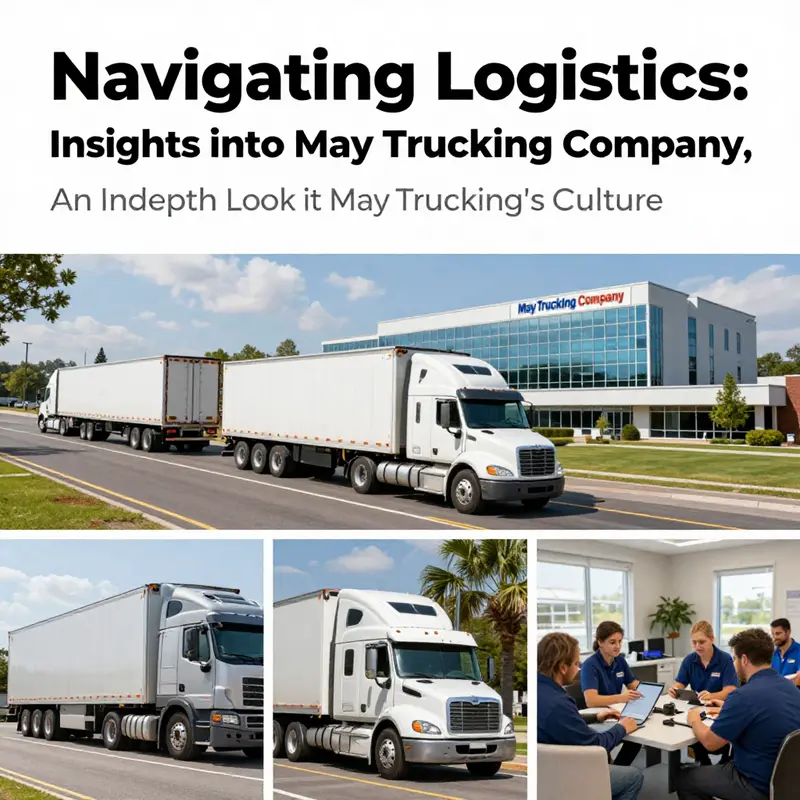
In the complex landscape of transportation and logistics, understanding a company’s structure, scale, and employee experience is essential for business owners and stakeholders. May Trucking Company, based in Salem, Oregon, stands as a significant player in the logistics sector with operations extending across multiple states. This article dissects May Trucking’s corporate framework, operational reach and economic contributions, and the internal culture that shapes its workforce. By exploring these dimensions, we aim to furnish business owners with vital insights that could inform potential partnerships or recognition of industry standards.
May Trucking Unfolded: Private Roots, National Reach, and the Architecture of Service
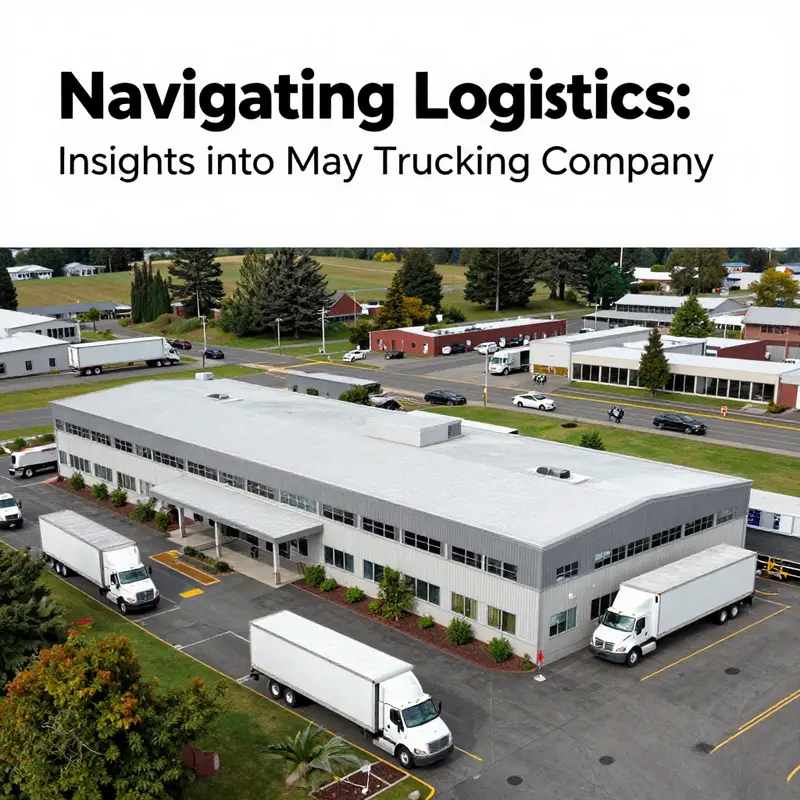
May Trucking Unfolded is not merely a line on a map or a schedule in a dispatch office. It is a story of a private, family-rooted carrier that has grown its footprint across the American landscape while maintaining a disciplined core focused on steady reliability. The company’s identity sits at the intersection of long-standing regional culture and the modern demands of freight transportation. Its headquarters sit in Salem, Oregon, at 4185 Brooklake Rd. NE, a location that anchors a network designed to move goods between dry van lanes and temperature-controlled corridors with consistency. What evolves from that single address is a national operation that serves multiple states and markets, a pattern that reveals both the resilience and the complexity of a business built on relationships, regulations, and a shared sense of purpose among its drivers, operations teams, and customers.
From the outset, the May Trucking profile in public records presents a company that is larger than a local fleet but not a megafleet. With operations extending into Arizona, where Phoenix serves as a strategic hub, and into Virginia, the enterprise positions itself to bridge demand across regional markets. The geographical spread matters because it underscores the organizational architecture that supports service levels across the United States. In practical terms, the company maintains a network of operating points designed to optimize lane density, driver availability, and cargo compatibility. The dual focus on dry freight and temperature-controlled freight illustrates a breadth of capability that requires both specialized equipment and a disciplined safety and regulatory program. In an industry where uptime and asset utilization are the currency of competitive advantage, May Trucking’s structural choices—regional management paired with centralized coordination—mirror a balance seen in many enduring mid-size carriers that aim to scale without losing the human edge that defines them.
Within this framework, the corporate structure emerges as a private, family-owned model that values continuity, client relationships, and operational excellence. Although exhaustive, publicly disclosed details about ownership or the full organizational hierarchy remain reserved, the publicly observed posture points to a governance approach that favors long horizons and practical, hands-on leadership. This kind of structure typically supports both regional autonomy and centralized policy enforcement. It allows a local team in Phoenix or a terminal in Virginia to interpret client needs with an eye toward standard operating procedures and compliance frameworks that protect safety, efficiency, and reliability. The emphasis on centralized coordination does not erase the local touch; rather, it enables a cohesive standard while preserving the ability to adapt to local conditions—whether weather, road access, or regional load patterns.
The operational consequences of such a structure are tangible in fleet management and service design. For May Trucking, the capacity to handle diverse cargo types—ranging from dry van freight to temperature-controlled shipments—depends on a disciplined asset mix, well-planned routing, and robust driver engagement practices. In practice, this means a careful balance between the number of tractors and trailers, the mix of dry vans and reefers, and the scheduling that makes full use of them. Each mile traveled and every load completed is part of a larger calculus about asset utilization, maintenance windows, and the predictability that customers rely on when planning production lines, distribution centers, or just-in-time deliveries. The corporate structure, then, is not an abstract diagram but a living mechanism that translates strategy into daily flows of freight, with the regional teams translating corporate policy into dispatch instructions, maintenance checklists, and driver support programs.
This is also where the workplace experience enters the narrative with concrete texture. Employee feedback, as reflected in public reviews and forums, suggests a mosaic of impressions. Some drivers and staff describe an environment that offers a solid starting point for new entrants, with possible paths toward professional development and a steady employment horizon. Yet there are cautions worth attending to. The same voices point to pockets of mentorship gaps, elevated job pressures, and compensation concerns that can give a sense of isolation when workers lack experienced guidance. The tension between growth opportunities and practical, on-the-ground support is not unique to May Trucking. It is a hallmark of many mid-sized, service-oriented carriers that operate at scale while still trying to preserve the mentorship and camaraderie that often define trucking culture. The company’s private, family-driven model can intensify this dynamic, because leadership continuity and a long-term orientation simultaneously raise expectations for stability and incremental improvement. These signals are not merely background noise; they influence retention, recruitment, and the everyday mood inside terminals and on the road.
Underpinning the corporate architecture is a commitment to safety, regulatory compliance, and performance discipline. The road network May Trucking navigates—interstate corridors linking the Pacific Northwest with inland markets and coastal hubs—demands strict adherence to federal regulations, state rules, and industry standards governing driver hours, vehicle maintenance, and cargo handling. The company’s scale demands a robust safety culture that translates into standardized checklists, periodic training, and a disciplined approach to incident reporting and root-cause analysis. This is where the private, family-owned ethos can align with the professionalizing impulses of a modern freight carrier: both sides emphasize trust, accountability, and a shared responsibility to protect people and assets, while also enabling a practical approach to evolving compliance landscapes, from ELD mandates to emissions considerations and beyond. In other words, the corporate structure is not only about who sits at the top; it’s about how the organization translates values into routes, maintenance schedules, and a safety-first lens that guides every dispatcher’s hand and every driver’s wheel.
From the customer perspective, this translates into a service design that prioritizes reliability and scalability. A carrier with a national footprint but with a private, relationship-driven culture can offer dependable capacity for clients who need predictable transit times, consistent communication, and a partner who understands the complexities of cross-state logistics. The presence in multiple states means May Trucking can flex its network to meet shifting demand, whether seasonally or in response to macroeconomic cycles that influence freight volumes. The capacity to shuttle freight through a combination of dry and temperature-controlled lanes enables bundled offerings for customers who face the dual challenges of speed and product integrity. In a fragmented market, such a carrier can become a stabilizing backbone for supply chains, a partner that can balance cost, service, and risk through a combination of disciplined routing, asset control, and a culture oriented toward facing challenges head-on instead of retreating when demand spikes or disruption arises.
The broader context of the trucking sector also helps explain why May Trucking’s particular configuration matters. The industry has seen consolidation, market entry from new players, and persistent driver shortages that test the supply chain’s resilience. A mid-sized enterprise with a substantial regional footprint may not rival the scale of the largest national fleets, but it can offer a nimble alternative to slower, more bureaucratic incumbents. The private ownership model, when paired with a clear operational mandate and a scalable regional framework, can produce a steady cadence of investments in people and processes that keep service levels intact even as volumes swing. In this sense, May Trucking’s corporate architecture becomes an enabler of continuity—continuity in customer relationships, continuity in driver employment experiences, and continuity in the capacities needed to keep commerce moving as markets evolve.
Operationally, the business leans on a balanced asset mix and strategic location planning. Salem serves as a solid headquarters that coordinates talent, policy, and planning functions, while Phoenix and Virginia operate as regional nodes that bring the fleet closer to key markets and customers. The structure supports a funnel of activities essential to the day-to-day business: recruitment and onboarding of drivers, maintenance scheduling and depot operations, routing and dispatch optimization, safety training, and compliance oversight. These elements do not simply exist as isolated functions; they are interwoven into a workflow that requires precise timing, real-time communication, and an almost choreographed synchronization of people, vehicles, and loads. The result is a transportation ecosystem that can absorb shifts in demand, maintain performance standards, and sustain client trust even when external pressures—such as weather, traffic, or fuel price volatility—disturb the usual rhythm.
As with any organization of this size, the human dimension matters. The chapter on corporate structure must acknowledge that the lines between policy and practice are drawn not only in policy manuals and quarterly reports but in the daily interactions of dispatchers who negotiate lanes, maintenance teams who schedule repairs, and drivers who interpret the ever-changing road ahead. The private, family-led identity can embolden a sense of stewardship. At the same time, it requires explicit attention to mentorship and employee development to prevent a drift toward isolation for newcomers or for those who might be balancing long hours with limited guidance. The corporate strategy, therefore, sits at a crossroads of sustaining a culture that values relationships and delivering a scalable, repeatable service model that clients rely on—every week, every month, year after year.
In this sense, the May Trucking narrative unfolds like a portrait of a company that chose a path between private heritage and public-facing responsibility. The choices about leadership continuity, regional autonomy, and centralized policy enforcement collectively shape how the company grows while preserving the core that many clients and employees value: predictability, safety, and a straightforward promise that freight will move with care and professionalism. The story of its corporate structure is really a story about how a private carrier can combine local ownership sensibilities with the demands of national logistics. It is about building and maintaining trust across geographies, about aligning a workforce with a shared mission, and about the continuous, practical work of turning strategy into routes, schedules, and safe, timely deliveries.
For readers who want to explore practical context beyond the narrative, consider how fleet equipment and modernization discussions in industry outlets intersect with corporate strategy. The design of the fleet—its mix of dry vans and reefers, its maintenance cycles, and its replacement plans—reflects decisions that indirectly echo the company’s broader priorities: reliability, utilization, and safety. A chapter on fleet equipment and optimization can provide tangible illustrations of how the underlying structure supports day-to-day performance. In related discussions, readers can find deeper dives into equipment categories and their implications for fleet management at sources focused on truck hardware and configurations. For those who wish to connect the dots between corporate structure and field-level realities, a practical link to equipment-focused content helps bridge strategy with execution: roof racks for trucks.
Another facet worth noting is the public-facing presence that can provide a window into the company’s ongoing evolution. While private, family-owned entities often keep core governance to insiders, external profiles—such as the company’s LinkedIn presence—offer a lens into leadership priorities, career opportunities, and corporate messaging. These signals can matter to potential recruits who weigh a company’s culture and stability as they consider a long-term professional home. For readers seeking that outward-facing perspective, a visit to the company’s professional profile can yield insights about its size, scope, and the kinds of roles it values in the modern freight landscape. Keeping sight of these public signals helps illuminate how May Trucking communicates its identity to the market and to prospective employees, just as its operational design communicates its capabilities to customers.
In sum, the May Trucking chapter offers a cohesive portrait of a private carrier that has built a substantial regional-to-national network by combining a steady, family-inspired focus on integrity with a disciplined, scalable operational framework. Its headquarters in Salem anchor a network that reaches across the Southwest into Arizona and up the East Coast into Virginia, reflecting a deliberate strategy to optimize lanes, assets, and people in alignment with customer needs and regulatory expectations. The corporate structure—private, likely family-influenced, with centralized coordination and strong regional management—emerges as both the source of steadiness and the engine of growth. It is a structure designed to support both the routine and the irregular, the predictable schedule and the sudden disruption, the needs of a single client with a complex supply chain and the demands of a thousand different shipments across a calendar year. The chapter invites readers to see May Trucking not as a static entity but as a living system where leadership philosophy, regional knowledge, and day-to-day discipline converge to keep freight moving with a reliable rhythm, even as markets shift and regulations evolve. This is the voyage of a private carrier that has learned to scale without losing the essential human touch that underpins the trust at the heart of every successful logistics relationship.
External resource for further context: https://www.linkedin.com/company/may-trucking/
Between Scale and Strategy: Navigating the Economics of May Trucking in a Modern Haulage Landscape
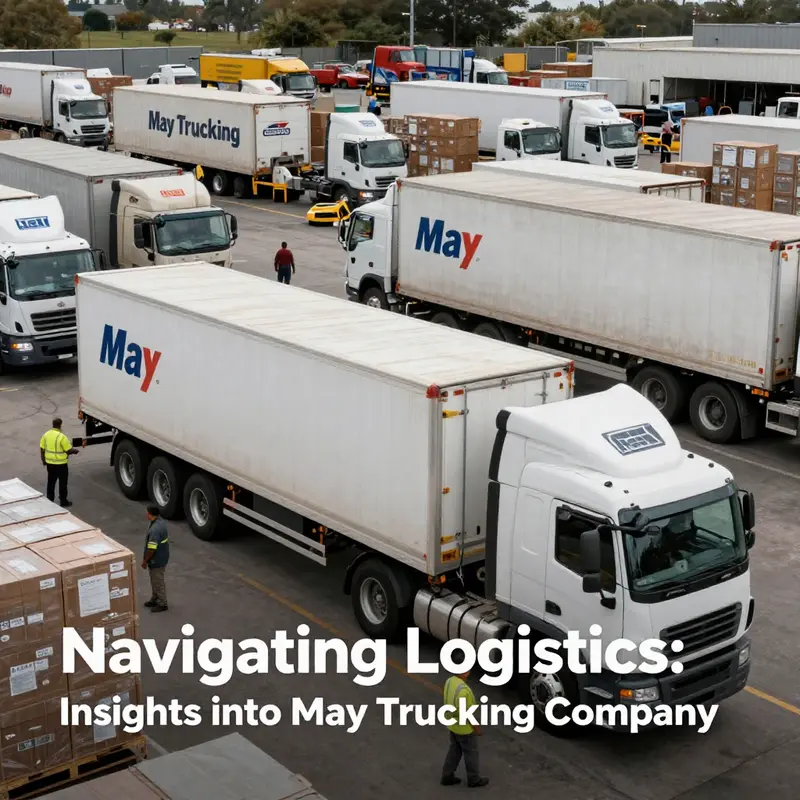
May Trucking, anchored in Salem, Oregon, with a headquarters at 4185 Brooklake Rd. NE, sits within a North American freight ecosystem that prizes scale, reliability, and the seamless orchestration of thousands of moving parts. The company operates across multiple states, with registrations that span from Arizona to Virginia, signaling a coast-to-coast footprint that is essential for handling the diverse demands of long-haul freight. Founded in 1998, May Trucking has grown into a mid-to-large carrier by industry standards, employing roughly one thousand to several thousand people and reporting revenue in a range that places it well above regional operators yet well below the largest global fleets. This positioning matters because the economics of trucking tighten or loosen with changes in workforce, equipment utilization, fuel costs, and the efficiency of back-office disciplines such as dispatch, maintenance, and safety compliance. In this sense, May Trucking’s size and geographic spread shape both its opportunities and its vulnerabilities, making it a revealing case for examining how scale interacts with the evolving technologies and labor dynamics that define contemporary trucking.
The broader trucking sector has long hinged on the principle that economies of scale translate into lower unit costs when activity levels are sufficiently high, routes are managed holistically, and maintenance and procurement can be centralized. For long-haul, the research signals that autonomous or semi-autonomous truck technology can unlock meaningful cost savings, but primarily when the operation is large enough to capture the accompanying efficiencies in routing, platooning, and utilization of capital assets. Short-haul operations, by contrast, may see either smaller returns or even increased costs due to the fixed nature of many urban bottlenecks, scheduling complexity, and the need for rapid response in densely populated corridors. This distinction—between the economics of scale on long-haul routes and the tighter margins of regional and urban distribution—frames how May Trucking’s current configuration might translate into competitive advantage or risk under future market and technology scenarios.
May Trucking’s scale, with a workforce that spans the full spectrum from drivers to dispatchers to maintenance technicians, situates the company in a zone where the right mix of assets, culture, and processes can drive meaningful efficiency gains. Large operators that can consolidate purchases for fuel, tires, and parts, negotiate favorable terms with maintenance chains, and exploit centralized data analytics tend to realize substantial unit-cost reductions on long-haul lanes. In practical terms, if May operates a sizable, well-connected fleet across West Coast hubs and cross-country corridors—backed by Phoenix in the Southwest and a presence in Virginia—then the company could harness scheduling flexibility, asset utilization, and real-time visibility to smooth variability in demand and capacity. Yet this same scale can amplify exposure to labor costs, regulatory complexity, and the stressors that come with managing a large field workforce. The research landscape points to a nuanced trade-off: scale fosters efficiency on the big stage, but it also places a premium on the consistency of operations and the quality of the workforce that keeps those operations moving.
A close look at May Trucking’s workplace narrative, as captured by employee voice platforms, adds texture to this economic portrait. Ratings hovering in the mid-3s out of 5, with work-life balance and compensation in the upper-echelons of concern, suggest a company at a crossroads common to mid-to-large logistics players. Drivers, often the most visible face of any trucking enterprise, describe opportunities for professional development and a doorway to experience in the industry. At the same time, they report gaps in mentorship and support, especially for those building early in their careers or navigating the early, fragile years of long-haul service. The payroll and benefits narrative—where pay scales seem to be a point of contention—reflects broader industry pressures: the need to attract and retain skilled drivers against the backdrop of a persistent labor market tightness. Within this complex social terrain, May Trucking’s leadership must balance the imperative to maintain cost discipline with the equally critical obligation to cultivate a workforce that feels valued and supported. A company that can align its compensation philosophy, career pathways, and supervisory culture with clear operational metrics stands a better chance of sustaining low turnover and high reliability, two elements that are themselves central to the cost structure of long-haul fleets.
To understand the implications of May Trucking’s scale for cost management and service quality, it helps to embed the company’s situation in the broader structural features of trucking. The industry’s long-haul segment benefits materially from capacity utilization—how intensively the fleet is deployed across miles and days. When demand is high and routes align with predictable patterns, large fleets can deploy trucks with fewer idle periods, share maintenance and administrative overheads across a larger base, and negotiate favorable procurement terms for fuel, tires, and lubricants. These advantages tend to accumulate over time, enabling a virtuous cycle: better utilization reduces per-mile costs, which allows more aggressive pricing or higher margins on core lanes, which in turn sustains investment in personnel, equipment, and safety programs. May Trucking’s cross-state exposure suggests a potentially broad network of primary lanes, with the West Coast and Southeast or mid-Atlantic corridors as likely strategic arteries. If so, the company could leverage centralized dispatching, dynamic lane optimization, and data-driven planning to smooth service levels and reduce volatility in both fuel and maintenance expenditures. Yet scale also invites vulnerability—when demand shifts, or when regulatory regimes change, large operators must navigate a broader matrix of compliance requirements, driver hours-of-service rules, and safety standards, all of which demand sophisticated governance and robust training infrastructures.
A central element in the economic calculus of modern trucking is fleet composition, and here the concept of medium trucks—vehicles that sit between smaller urban delivery units and the heavy, long-haul tractors—emerges as particularly relevant. Medium-category vehicles, with weight ratings in the 16,000 to 26,000 pounds range, often power the backbone of urban logistics and regional distribution. They fill the gap between the agility of lighter-duty work and the efficiency of heavy-haul moves, enabling more frequent restocking cycles and tighter last-mile timing without requiring the full-scale capital outlay of larger tractors. For a company like May Trucking, which operates across intercity routes and must manage a mosaic of regional Distribution Centers, medium trucks can improve responsiveness, reduce dwell times, and enhance the reliability of door-to-door service. The economic spillover from such an approach can be significant: higher service levels translate into customer retention, more precise fuel budgeting through shorter average legs, and better load factor when combined with longer hauls. In pure cost terms, scaling a mixed fleet to optimize for lane density and average load can lower per-mile costs, but it demands refined maintenance scheduling, more granular driver training across vehicle types, and a dispatch system capable of matching the right asset to the right run with minimal human friction.
The modern freight economy also invites a conversation about technology as an amplifier of scale. It is not merely a matter of equipping trucks with advanced sensors or fleet-management software; it is about weaving data streams into a coherent operating rhythm. For a midsize carrier, the question is whether the incremental value of adopting new technologies justifies the upfront investment, given current staffing, route structure, and anticipated returns. In the long-haul context, even modest improvements in fuel efficiency, maintenance planning, and route planning can compound into meaningful savings over the life of a vehicle. However, the magnitude of those savings is closely tied to the scale of operations: smaller fleets may see limited delta gains if fixed costs dominate and if utilization rates are already near practical best practices. In this light, May Trucking’s distribution across multiple states could be an engine for higher efficiency, provided that the company channels data-driven decision-making into concrete actions—such as consolidating back-office tasks, standardizing maintenance protocols across facilities, and investing in driver training that supports safer, more economical operation across the fleet spectrum. A well-timed push toward integrated planning and transparent performance dashboards could unlock the kind of discipline that makes scale sustainable rather than burdensome.
What does this mean for May Trucking’s workforce strategy and culture? The data sketch a picture of a company whose potential benefits from scale could be amplified or muted by the human dimension of operations. A culture that actively programs mentorship and progressive responsibility for newer drivers can transform early-career risks into early-career wins. For new entrants, a structured pathway—paired with measurable milestones, regular feedback loops, and visible opportunities for promotion—can convert the inevitable stresses of learning into a sense of gradual mastery. When drivers perceive clear incentives and consistent support, turnover tends to decline, which in turn stabilizes scheduling and maintenance cycles. Conversely, if mentorship is ad hoc and the sense of isolation among junior drivers grows, the cost of turnover rises, and scheduling volatility—driven by frequent driver gaps or inconsistent performance—erodes the very efficiencies that scale would otherwise deliver. May Trucking’s challenge then becomes twofold: preserve the cost discipline that comes with a larger operation, and simultaneously invest in the human infrastructure that sustains that discipline over time. The company’s leadership can, in effect, convert its size into a strategic advantage by embedding a culture of continuous improvement, safety, and professional development that aligns with the metrics that matter to customers and partners.
In parallel with people, equipment and process modernization can play a decisive role in how May Trucking realizes the benefits of scale. The industry-wide shift toward more sophisticated dispatch systems, predictive maintenance, and real-time visibility has accelerated over the past decade. For an operation of May Trucking’s profile, the practical payoff of such systems is not only reduced downtime and smoother planning; it is a stronger competitive position when negotiating with customers who demand reliability and precise delivery windows. The combination of better route visibility, fuel-usage data, and maintenance forecasts feeds into a virtuous cycle: fewer unscheduled repairs, more predictable service times, higher load factors, and better utilization of each asset. In turn, customers are likelier to place longer-term commitments, which stabilizes demand and lowers revenue volatility. The link between technology and logistics performance is not a luxury for large fleets alone; for May Trucking, it is a potential lever to reconcile high service levels with sustainable costs, turning scale into a durable advantage rather than just a larger bill for administration and capital.
The economic narrative must also reckon with broader market forces: regulatory dynamics, fuel price fluctuations, labor market conditions, and the push toward sustainability. Regulation can alter the cost of operation in direct and indirect ways—from hours-of-service rules that reshape scheduling and vehicle utilization to environmental standards that affect retrofitting and procurement. Fuel price volatility impacts not only per-mile costs but also the capital planning cycle for new equipment. A company with a wide geographic footprint can mitigate some of this risk by diversifying its routes and by optimizing its refueling and maintenance geography to smooth price spikes. The driver shortage, a persistent theme in trucking, amplifies the value of a well-structured development path that keeps drivers engaged and reduces churn. May Trucking’s ability to attract and retain talent, particularly at the driver and mid-level supervisory tiers, will influence its capacity to sustain high utilization and high service levels in the face of external volatility. In this environment, the economic logic of scale remains intact but becomes a matter of execution: how effectively can the company translate data, people, and assets into reliable, cost-efficient service across a dispersed network?
The literature on autonomous truck technology helps sharpen this discussion, even when practical deployment remains uneven across regions. The research notes that autonomous solutions can produce considerable savings in long-haul operations by enabling more consistent platooning, improved asset utilization, and better scheduling discipline. Yet the cost curves for these technologies depend on scale; the marginal value of automation grows with the number of trucks and the density of routes that can be governed by a centralized control system. For May Trucking, this implies a staged pathway rather than a sudden leap. A cautiously incremental approach—initially focusing on optimization of existing routes, driver training, and predictive maintenance—can produce near-term gains and reduce risk. As the network matures and the data foundation strengthens, May could evaluate the selective introduction of automation-enabled decision tools that complement human judgment rather than replace it. The goal would be to preserve service quality and workforce stability while gradually improving efficiency. In practice, this means the leadership should design experiments that measure not only direct cost savings but also impacts on safety, driver satisfaction, and the reliability of service—a broader set of outcomes that better captures the long-term value of scale.
From a strategic perspective, May Trucking’s position invites a composite set of actions. First, strengthen route planning and capacity management by investing in integrated data analytics that fuse telematics, maintenance history, driver performance, and customer demand signals. This multi-layered data approach can reveal hidden patterns in lane profitability and maintenance risk, enabling more precise capital allocation and staffing decisions. Second, formalize a mentorship and development pipeline for drivers and frontline supervisors. A transparent ladder of roles, with structured onboarding, performance feedback, and promotion criteria, can convert the current labor concerns into a competitive edge, reducing turnover and improving reliability. Third, pursue a disciplined procurement strategy for fuel, parts, and tires that leverages the company’s scale—through centralized sourcing programs, volume discounts, and standardized specifications across facilities. Fourth, maintain a deliberate stance on driver pay and benefits that reflects market realities while emphasizing predictable schedules and reasonable workloads. The internal culture—where drivers feel supported by managers who understand the demands of long-haul life—can be a powerful differentiator in a market where many operators struggle with retention and safety incidents. Fifth, prepare for the technology horizon without surrendering short-term performance. May can pilot non-disruptive improvements—such as enhanced fuel planning on long-haul lanes, more efficient maintenance scheduling, and smarter dispatch rules—that collectively improve margins while building the data foundation necessary for more ambitious automation or electrification projects later.
The interwoven thread through these considerations is that with scale comes both opportunity and responsibility. May Trucking, by virtue of its size and geographic reach, has the potential to convert scale into a durable advantage if it couples operational discipline with a coherent talent strategy and a prudent technology agenda. The path is not a single leap but a sequence of well-managed steps designed to lift utilization, reduce variability, and sustain a culture of safety and professional growth. The story of May Trucking, in this sense, reflects a broader arc in the industry: the shift from a purely asset-light or purely asset-heavy model to a hybrid, data-informed framework that seeks to optimize every mile and every minute of the day. In such a framework, the company’s status as a mid-to-large carrier becomes a platform for strategic differentiation rather than a mere statistical marker of size. Success hinges on how quickly and how consistently May can translate its scale into lower costs per mile, higher reliability, and a workforce that feels valued and empowered to perform in an increasingly complex environment.
The conversation about May Trucking would be incomplete without acknowledging the practical realities that color every strategic choice. The company’s staffing, for instance, sits at the intersection of wage pressures, benefits commitments, and the costs of training. The industry’s talent pipeline has become more constrained over time, elevating the value of robust onboarding, career development tracks, and a supportive management culture. When drivers sense that a company is investing in their growth and wellness, engagement tends to rise, and with it, the likelihood that experienced drivers will stay and pass on knowledge to newcomers. Such social capital becomes a differentiator that complements the more easily quantified efficiency gains from route optimization and maintenance discipline. Meanwhile, the external environment continues to push for greater efficiency and safety. As customers demand higher service levels and as regulatory expectations rise, the need for precise scheduling, transparent communications, and consistent safety practices grows more acute. May Trucking’s ability to align organizational design with these demands—through standardized processes, a unified safety culture, and a clear set of performance expectations—will largely determine whether its scale translates into superior profitability or merely larger fixed costs without commensurate returns.
In this sense, the May Trucking case is less about a binary choice between investing in technology or investing in people, and more about orchestrating a balanced portfolio of actions that leverages scale while preserving the human and operational fabrics that sustain it. The industry’s longer-term trajectory suggests that gradual gains from optimization, coupled with selective experimentation in automation and sustainability, will likely shape winners and laggards alike. May’s leadership, therefore, faces a dual mandate: maintain the reliable backbone that long-haul freight requires while cultivating a culture and a capability set that can embrace incremental innovations without destabilizing the workforce. The ultimate test is whether the organization can preserve safety, reliability, and employee dignity as it expands in reach and intensifies its use of data and automation.
To readers seeking further context on how scale interacts with autonomous technology and cost structure in trucking, a foundational resource offers a rigorous analytical perspective on these dynamics: Economic Analysis of Autonomous Truck Technology. This external material delves into how scale economies influence cost control across different fleet sizes and route configurations, providing a framework that complements the practical intuition described here. As May Trucking charts its course, these insights can serve as a compass for evaluating where to invest first and how to measure progress over time. For readers interested in a practical glimpse into the equipment side of the industry, the broader ecosystem of truck hardware and accessories continues to evolve, with options that can improve efficiency and safety on busy corridors. A relevant reference point is the idea that the right equipment choices, when integrated with disciplined operations, can contribute meaningful gains in utilization and service quality, reinforcing the argument that scale and strategy must work in concert rather than in competition. For a concise primer on how equipment choices and operational performance intersect in trucking, explore the practical insights available at Truck accessories.
In sum, May Trucking’s position in the U.S. freight milieu underscores a fundamental truth about modern logistics: scale creates opportunities to optimize, but only if accompanied by disciplined execution, a commitment to workforce development, and a willingness to embrace measured, data-driven experimentation. The company’s geographic breadth, combined with a sizable but not bloated workforce, places it in a favorable position to realize efficiency gains from better route planning, more predictable maintenance, and improved driver retention. The road ahead will demand balancing the cost discipline that comes with size against the human needs of those who keep the wheels turning. If May can align its strategic objectives with a culture that prizes safety, growth, and stability, the scale it has already earned can become a durable advantage in an industry that continues to evolve under pressure from regulatory, technological, and market forces. The economic logic remains consistent: larger scales enable more meaningful optimization opportunities, but those opportunities only crystallize when paired with clarity of purpose, robust human capital, and a thoughtful approach to technology adoption that respects the realities of the workforce and the customers who rely on timely, safe, and predictable freight movement. External considerations notwithstanding, the trajectory for May Trucking will be determined as much by its internal coherence as by the external currents of the freight market, making this moment a pivotal juncture in its ongoing story of growth and resilience. External resource for deeper exploration of autonomous-truck economics: https://www.sciencedirect.com/science/article/pii/S096585642300456X.
At the Wheel of Culture: Balancing Family, Growth, and Pay in May Trucking Company
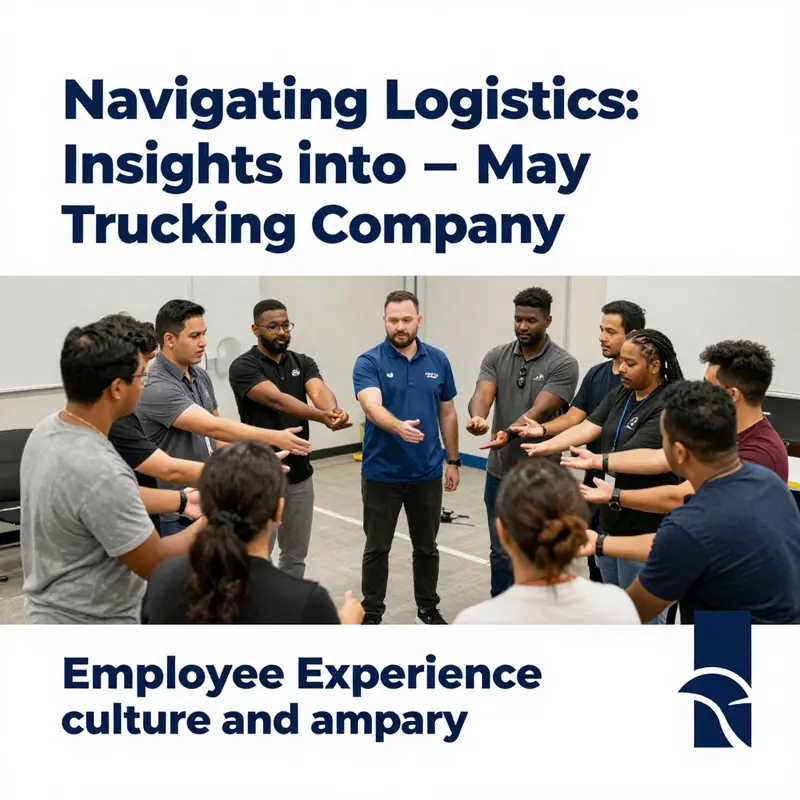
The May Trucking Company chapter opens with a sense of place and purpose that sits at the heart of many mid-sized carriers: a culture built not just on routes and logs, but on people who show up ready to support one another. Headquartered in Salem, Oregon, and with operations spread across several states, May Trucking presents an organizational image that blends regional pride with a wider mission: to train and sustain drivers who can carry freight with reliability while navigating the daily realities of life on the road. In this landscape, culture is not a slogan but a lived experience, one that drivers describe as notably family and team oriented, especially in the Denver office where the sense of belonging is frequently mentioned by those who have walked the line from trucking school to first miles on the road. The narrative that emerges from employee voices—such as those found on career review platforms—speaks to a workplace that can feel like a second family, with colleagues who step into mentorship roles and managers who try to create an environment where new drivers can grow with confidence. Yet, as with any large, semi-regional organization, the texture of that culture is nuanced, shaped by both moments of solidarity and the tougher realities that come with the job and with compensation that may not always meet every driver’s long-term expectations.
The core of May Trucking’s employee experience rests on a combination of warmth and structure. The warmth is captured in terms like “family and team oriented,” which recurs in feedback from drivers and staff who credit the company with fostering a supportive network. That network can be especially meaningful for those stepping out of trucking school and into the miles-and-miles world. For many new drivers, May offers more than a paycheck; it affords a guided entry into the profession, a chance to accumulate miles, and a safety net of colleagues who are quick to lend a hand when the road grows uncertain. The emphasis on onboarding—teaching the basics of routes, schedules, and safety protocols—appears to translate into a smoother transition from classroom to cab. In a field where the early years often determine whether a driver sticks with the trade, the sense of being supported can be a decisive factor in shaping a driver’s first impression of the trucking life.
That said, the culture is not a cure-all, and the feedback reflects the complex trade-offs that accompany growth. While many describe a welcoming environment and a management style that is attentive to the needs of newer drivers, others point to gaps in mentorship and a perception that the compensation structure does not always keep pace with escalating demands. The tension between culture and compensation is common in the trucking industry, and May Trucking sits squarely within that conversation. One of the recurring themes in employee reflections is the contrast between the immediate, tangible support of a welcoming team and the longer arc of financial rewards. In other words, the same culture that makes drivers feel valued and connected can coexist with concerns about earnings potential for longer-tenured drivers. This dynamic matters because it speaks to retention. When the call of the open road remains strong, drivers seek more than a friendly workplace; they seek a sustainable financial trajectory. And in May’s case, the daily pay policy emerges as a distinctive feature that helps stabilize cash flow during slower freight periods, a practical benefit that aligns with the practical realities of life on the road. The daily pay mechanism can be a lifeline when the freight market softens and pay cycles lag; it reduces the friction between work and personal obligations, which in turn reinforces the sense that the company understands the daily pressures drivers face. This is not merely a perk; it is a structural element that underpins the daily rhythm of life on the road and the confidence with which drivers can plan ahead.
The discussion of daily pay sits alongside observations about the quality of equipment and amenities. In the truck fleets described by employees, modern and well-maintained trucks are cited as a major positive. The reliability of the hardware contributes to a more predictable day-to-day experience, which in turn supports the broader cultural emphasis on safety, reliability, and professionalism. When trucks perform consistently, drivers experience less stress related to vehicle breakdowns and are more able to focus on safe driving practices and route efficiency. It is not just about comfort or prestige; it is about reducing the cognitive load on a driver who must constantly balance time pressure, safety, and customer expectations. In such contexts, the culture of caring for equipment translates into a culture of care for people—the drivers and their families who rely on steady work and predictable schedules.
Yet the narrative of May Trucking’s culture is not purely affirmative. The same feedback that praises mentorship and onboarding also surfaces concerns about the extent to which experienced drivers feel fairly compensated. The sentiment—summarized in some reviews as the idea that it can be an excellent starting point for those fresh from trucking school but less compelling for the long haul—points to a nuanced understanding of what the company is best positioned to offer. This is not a condemnation but a candid evaluation of how an employer’s identity as “supportive and welcoming” intersects with the economic realities of a profession where earnings can vary widely based on miles, familiarity with routes, and the ability to fill freight gaps during slower periods. In practical terms, drivers facing escalating responsibilities or seeking higher earnings may weigh the benefits of a nurturing environment against the draw of more lucrative opportunities elsewhere. It is here that May’s culture becomes a lens—not just of what the company is, but of what it aspires to be for a shifting cohort of drivers who come through its doors.
The chapter’s deeper arc follows this tension into a broader reflection on how a firm of May’s size navigates the competing needs of growth, stability, and talent retention. The organization’s multi-state footprint—Arizona, Virginia, and Oregon at minimum, with diverse terminals—means a mosaic of local cultures under a single corporate umbrella. The local atmosphere can feel distinctly different depending on the region and the team. In Denver, the narrative of a supportive, almost familial unit carries particular weight. In other regions, the same core values are present but expressed through different routines and mentor dynamics, as well as through differences in schedules, freight patterns, and local labor markets. Taken together, the story of May Trucking’s employee experience is thus not a singular thread but a tapestry. It weaves together mentorship and onboarding, daily financial stability, equipment reliability, and the persistent question of how to keep experienced drivers engaged over the long term without sacrificing the very culture that attracts new talent in the first place.
One of the more instructive textures in this tapestry is how the day-to-day realities of a driver’s work can shape, and be shaped by, technology and equipment, even in subtle ways. Tasks that might seem routine—loading and unloading, securing cargo, checking the condition of the trailer, and coordinating with dispatch—are part of a broader ecosystem that includes the physical interfaces of the truck, the dashboard tools, and the support network that helps solve problems in real time. The presence of modern, well-maintained equipment reduces friction and creates a smoother user experience, which in turn supports safer driving and fewer interruptions. From a cultural standpoint, this translates into a shared sense of pride: drivers know that their employer is investing in them through reliable vehicle fleets and through policies that cushion the financial shocks of the industry’s seasonal fluctuations.
Equally important is how the company presents itself as a place that can cultivate the next generation of drivers. The onboarding emphasis, the availability of mentorship, and the explicit focus on getting new drivers miles early in their careers cohere into a compelling narrative for anyone contemplating a start in trucking. The story is less about a rigid, hierarchical regime and more about a supportive ecosystem where experienced drivers and newer teammates collaborate to reach common goals. That is the core of the culture: the belief that success in trucking is a collective enterprise, built on mutual aid, shared learning, and a workforce that understands the rhythm of the road as a shared experience rather than a solitary challenge.
The flip side remains important for a balanced assessment. The concerns voiced by some employees—particularly around compensation and the endurance required for long-term retention—are not easily dismissed. They are reflective of an industry-wide negotiation between what a company can offer in terms of culture and what drivers ultimately need on a career horizon. In this context, May Trucking’s daily pay policy is a concrete response to cash-flow realities that disproportionately affect those with fluctuating freight volumes. It signals a practical commitment to supporting drivers’ immediate financial needs, which can be decisive in the short term. But the longer-term question is whether the compensation framework, when viewed across a driver’s entire career, remains competitive enough to retain seasoned professionals who can bring years of experience and reliability to the table. This is not a simple equation, and it requires ongoing dialogue among management, drivers, and recruiters to calibrate a package that preserves both the culture and the financial incentives that sustain it.
In the broader arc of the article series on may trucking, this chapter sits at a crucial junction. It traces the way a mid-sized carrier negotiates identity amid expansion, customer demand, and workforce expectations. The conversations around culture, onboarding, and benefits are not mere internal matters; they shape how the company is perceived by prospective hires, customers, and industry observers. A culture built on family-like support, a reliable fleet, and policies that offer immediate financial relief has significant implications for how May markets itself to new entrants and how it competes for talent in a competitive labor market. The emphasis on developing new drivers—helping them accumulate miles, learn the ropes, and become confident operators of complex machinery—reflects a long-term strategy. It recognizes that the industry’s future hinges on cultivating skilled professionals who can deliver consistent performance over time, rather than pushing for rapid, short-term gains at the expense of workforce stability.
As the chapter closes, the reader is left with a portrait of May Trucking that is at once warm and pragmatic. The culture invites newcomers in with open arms and a clear path to growth, while the daily pay option offers a practical cushion that makes the job more manageable when freight slows. The equipment remains a backbone for safety and reliability, reinforcing a sense of professional pride. Yet the conversations about pay and long-term retention remind us that culture alone cannot compensate for market realities. The challenge, then, is to sustain the very strengths that draw people in—community, mentorship, and a safe, supportive environment—while continually refining compensation structures, career ladders, and recognition programs that retain experienced drivers who could otherwise seek higher earnings elsewhere. May Trucking’s story is a microcosm of a trucking world that seeks to balance heart and hands: a culture that feels like family, and a business that must remain financially nimble to keep that family intact.
For readers seeking a fuller sense of the employee experience described here, consider viewing industry voices and driver reviews that offer diverse perspectives on what it means to work at May Trucking. These reflections help illuminate the full scope of the culture and its real-world implications for people who decide to make their living on the road. And for those who want to see how practical tools and equipment shape daily routines, a closer look at lift operations and related truck amenities can deepen understanding of how hardware choices intersect with human experience on the job. To explore a practical example linked to equipment and handling, see the discussion at liftgates, which reflects how even routine operational details can influence driver comfort, safety, and efficiency on a daily basis. This connection between culture and technology—between people and their tools—underlines why May Trucking’s approach matters in the broader conversation about may trucking as a career path and a business model.
In summary, May Trucking presents an environment that many drivers find appealing for its emphasis on family, teamwork, and onboarding support. The daily pay option adds a tangible layer of financial resilience that aligns with the unpredictable cadence of freight markets. The combination of modern equipment and a culture of mentorship creates a compelling foundation for a successful, long-term career for newer drivers and a steady, albeit nuanced, path for more seasoned professionals. The ongoing question—how to keep experienced drivers engaged while maintaining a welcoming, supportive culture—will shape May Trucking’s evolution in the years to come. As the industry continues to attract new entrants and adjust to changing freight dynamics, the May Trucking story offers a meaningful case study in balancing heart and hand on the road. For readers who want to investigate the employee sentiment further, the broader spectrum of reviews provides a nuanced mirror to the chapter’s themes and invites ongoing dialogue about what it takes to create a sustainable, people-centered trucking company.
External resource for broader context: https://www.indeed.com/cmp/May-Trucking-Company/reviews
Internal resource for practical context: liftgates
Final thoughts
May Trucking Company exemplifies the multifaceted nature of transportation logistics, blending an extensive operational scale with a focus on employee engagement. Understanding the structure and culture of May Trucking not only provides a window into the company’s values but also reflects broader industry trends. As you navigate potential partnerships or explore employment opportunities, this insight equips you with knowledge that transcends the ordinary, highlighting the significance of both operational efficiency and employee satisfaction.