
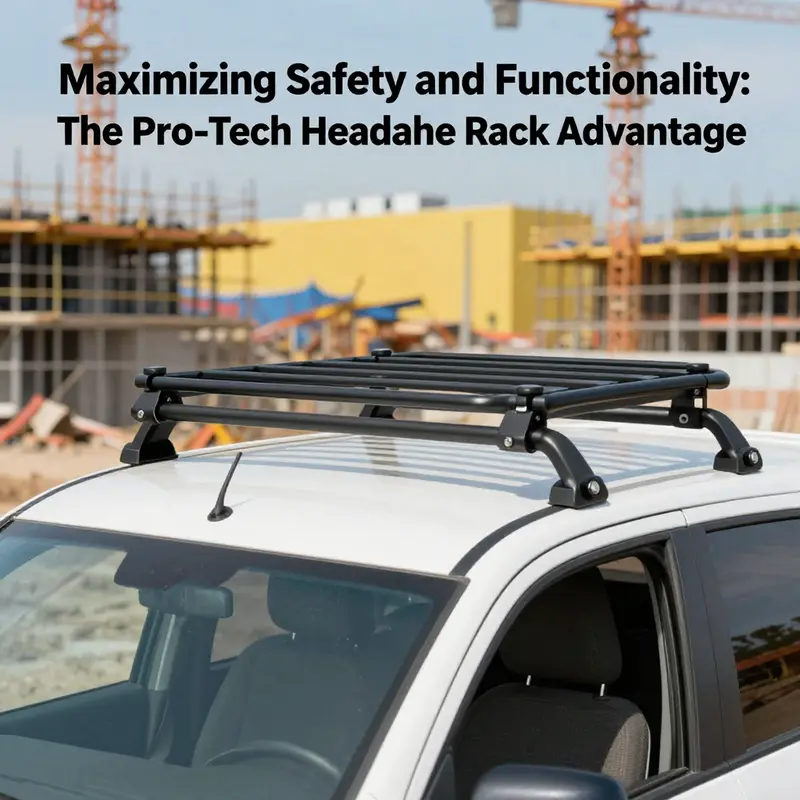
For business owners in the automotive industry, ensuring the safety of your vehicle and maximizing functionality is paramount. The Pro-Tech headache rack provides exceptional rear window protection, mitigating risks associated with transporting cargo and tools. Comprised of high-strength steel and designed for versatility across various vehicle models, this accessory is not just a form of protection but a vital part of operational efficiency. This article will delve into the core benefits of the Pro-Tech headache rack, explore its robust design and durability, and demonstrate its application in diverse settings, illustrating why it is an essential investment for trade professionals, logistics drivers, and fleet operators.
Guarding the Glass and the Crew: The Safety Promise of a Heavy-Duty Headache Rack
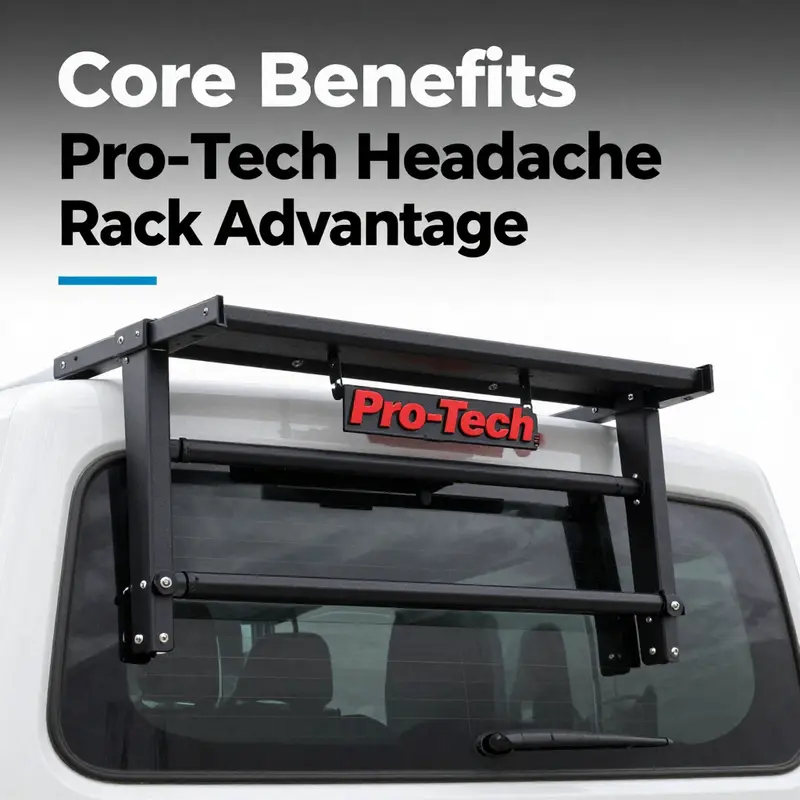
In fleets that live and work on the edge of a demanding road, the rear window is more than a view; it is a fragile barrier between the driver’s focus and the chaos that cargo brings. Operators hauling tools, pipes, fittings, or bulky materials know that a sudden stop, a jackknifing moment, or a shifting load can turn glass into a liability in an instant. The humble headache rack, built from heavy steel and engineered with purpose, stands as a shield for both the vehicle and its people. It is not merely an add-on; it is a considered safety feature that transforms routine trips into safer operations. The core function is stark and clear: it is a protective barrier that absorbs and deflects the energy of loose cargo, preventing it from intruding into the cab through the rear window during emergency braking or a collision. In environments where cargo is moved quickly and security is a daily concern, this barrier becomes a critical component of the vehicle’s safety system. By stopping loose items from penetrating the glass, the rack reduces the chance of glass fragmentation, injury to occupants, and secondary damage that can follow a shattered rear window. In the eyes of fleet managers and drivers alike, this translates into fewer incidents, reduced downtime, and a more predictable daily workflow. When a truck is loaded with heavy tools or racked cargo, the risk isn’t merely cosmetic—an impact can compromise visibility, create dangerous shards of glass, and invite expensive repairs. The presence of a robust barrier makes it less likely that debris will reach the cab, preserving the driver’s line of sight and the integrity of the vehicle’s interior and electronics. This protective logic is rooted in practical experience: in the course of long hours and high miles, the rear window is repeatedly tested by the vibrations, jolts, and shifts inherent to on-site work. The rack’s purpose is to speak a language of durability and reliability, a language that speaks to the realities of daily operation and the need for dependable protection that does not falter under pressure. The design philosophy is straightforward yet sophisticated. Constructed from high-strength steel, the rack bears the stress of heavy-use environments without bending, deforming, or loosening its mountings. Welded joints and rigid members form a lattice that can resist compression and shear in the event of a sudden stop, while still allowing visibility through the glass area to the extent necessary for safe maneuvering. The geometry is chosen for two reasons: to provide robust structural support and to preserve a clear, unobstructed view for the driver. The latter is not a luxury but a safety requirement, because a driver’s awareness of surrounding traffic, pedestrians, and the cargo’s position is the frontline in preventing accidents. Beyond the material and geometry, the installation system speaks to the same ethos of reliability. Mounting points are engineered to integrate with the truck’s existing body structure, distributing load forces across reinforced areas rather than concentrating them at a single anchor. This distribution matters in real-world conditions, where the rack must withstand road salt, heat, humidity, dust, and vibrations without corroding or loosening over time. A well-designed frame resists fatigue, and a frame that resists fatigue protects both glass and driver. In practice, fleets that invest in this kind of protection report a measurable difference in how cargo behaves during transit. When straps or nets are applied to secure tools, ladders, or pipes, the barrier helps keep the load contained, reducing the chance of dislodgement that could generate a sudden, unpredictable surge of momentum. The barrier thus becomes part of a larger safety system, complementing the driver’s training, the vehicle’s braking performance, and the securement practices used in loading bays. It is a three-layer logic: robust physical protection, disciplined load management, and attentiveness to driving conditions. This layered approach is essential in high-demand workplaces where the risk profile is shaped by long hours, variable terrain, and the need to deliver on tight schedules. The protected rear window enables better situational awareness; the driver can rely on a clear view of approaching traffic while remaining shielded from unexpected cargo intrusion. This is a practical and tangible benefit that translates into fewer incidents and lower risk exposure for operators who rely on their trucks every day. The aesthetic match, while secondary to function, also matters in commercial fleets. A well-integrated rack does not shout its presence; it complements the vehicle’s lines and does not dramatically obscure the rear view, reverse lights, or camera systems. Finishes, often including durable powder coatings, are chosen to resist corrosion from road spray and the salt used in winter months. The result is a product that remains effective and visually appropriate in harsh environments, whether the operation is in a coastal setting, inland heat, or rural dust. For a fleet, the economic argument is compelling. When a rear window is protected, the likelihood of glass replacement, cab interior damage, and downtime diminishes. The rack, though a sizable piece of equipment, costs less than repeated repairs and the downtime that accompanies them. A well-maintained barrier thus pays for itself over the course of a year, especially when miles accumulate across multiple shifts and routes. The operational advantages extend beyond safety and economics. The rack can play a practical role in organizing the cabin’s interior. By allowing easy mounting of hardware, tools, or equipment that might otherwise roll around the cab, it helps reduce clutter inside the vehicle and minimizes the risk of items contacting the rear window during abrupt stops. This reorganization makes the cabin a more efficient workspace, where drivers can focus on the task at hand rather than chasing stray gear after every stop. The potential for customization also merits attention. While the fundamental requirement is protection, the system can accommodate varied use cases. Some operators seek additional tie-down points or integrated lighting, while others emphasize compatibility with a broad array of cargo carriers. The rack’s modular or adjustable features help fleets tailor the setup to the particular loads, routes, or regulatory requirements they face. In practice, that means that a single solution can adapt as a business evolves—from a tradesperson’s daily route to a small fleet serving multiple clients with different needs. The broader context of safety in commercial transport is a field of ongoing refinement. Industry guidance and case studies consistently highlight the importance of a persistent safety culture that integrates physical protections with clear procedures for loading, securing, and transporting. A trusted resource can help illuminate the way a barrier such as this becomes part of that culture. As discussed in related coverage, the core protection remains the barrier’s ability to keep objects from breaching the rear window, but that protection only delivers value when drivers, fleet managers, and maintenance teams treat it as one part of a comprehensive safety program. This perspective frames the decision to install a heavy-duty barrier not as an isolated precaution but as a strategic investment in people, productivity, and vehicle longevity. For readers seeking additional context on the design philosophy and performance characteristics of headache racks, a concise overview is available in the related discussion pro-tech-headache-racks. That resource reinforces how the fundamental protective role is realized through a blend of material strength, thoughtful geometry, and reliable mounting that sustains performance under demanding conditions. While the specifics of each installation vary with the vehicle and the load profile, the underlying principles endure: protect the rear window, protect the driver’s line of sight, and protect the cargo’s integrity. In the day-to-day rhythm of fleet operations, these principles translate into smoother handoffs, fewer surprises during unloading, and more consistent delivery times. The effect is not merely a financial calculation; it is a reliability story—the kind that keeps a crew confident that the truck will perform when it matters most. The chapter that follows will explore how such protective systems interface with other vehicle accessories and how fleets plan for longevity, serviceability, and safety as part of an integrated approach to transport operations. In the meantime, the takeaway is simple: a robust headache rack is more than metal. It is a disciplined response to the realities of on-road work, a practical tool for reducing risk, and a durable presence in a vehicle that never stops moving. External resource: https://www.pro-tech.com/headache-rack
Guarding the Glass: Design Integrity and Rugged Durability of a Pro-Tech Headache Rack
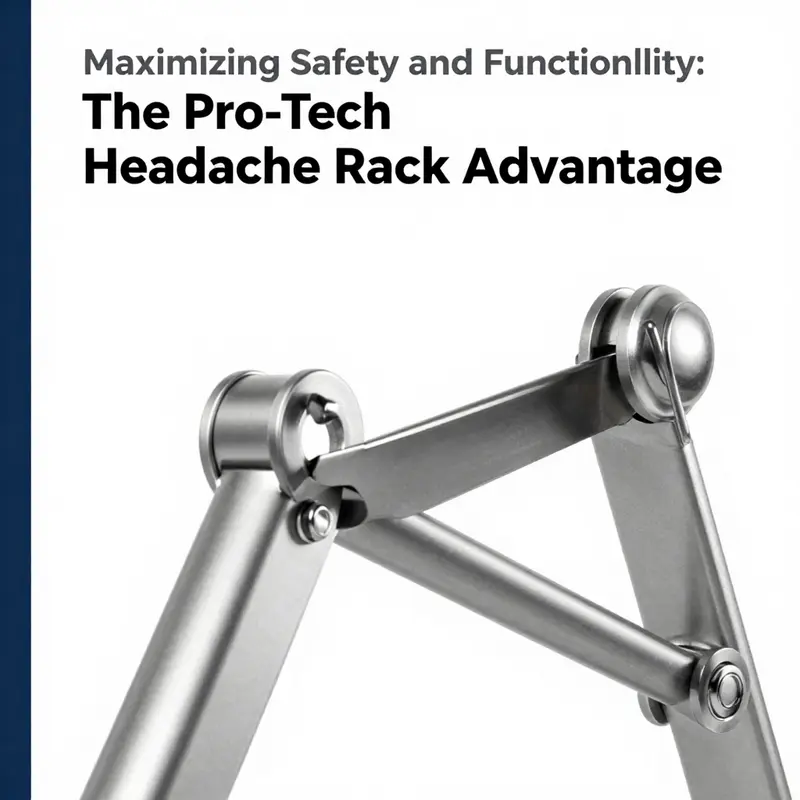
In the rough-and-tumble world of trades, logging, mining, and heavy hauling, the cockpit of a work truck becomes a moving workshop. The rear window bears the brunt of every loading maneuver, braking jolt, and momentary miscalculation as cargo shifts or tools tumble toward the glass. That is why a purpose-built headache rack exists: not as cosmetic trim, but as a shield that stands between crew, cabin occupants, and the unpredictable geometry of daily load handling. The leading Australian manufacturer wires this shield into the vehicle’s ecosystem with a philosophy that blends rugged physics with practical ergonomics. The headache rack is conceived to respond to the most common failure modes in the field: sudden decelerations that can propel loose gear backward, vibrations that loosen off-road cargo, and the corrosive touch of salt air, dust, and abrasives that gnaw at metal over long periods. Every detail—from the initial sketch to the finished product—reflects an informed empathy for workers who rely on their vehicles as mobile workshops and, at times, as lifelines in remote locations. The result is a piece that does more than protect the rear window; it shapes the way a rig handles, shields its occupants, and accommodates the add-ons a fleet can’t live without. In this chapter, we explore how design intent, material science, and field-tested durability converge to give the headache rack its edge.
From the material choice to the way it weaves with the truck’s silhouette, the construction of the rack is a study in balancing strength with weight and resilience with serviceability. The core is a high-strength frame that can lean toward durable steel for maximum rigidity or lean toward lightweight aluminum where weight savings translate into payload efficiency without compromising protection. In practice, the decision between metal types involves a trade-off calculus. Steel offers robust dent resistance and a long service life in environments where impacts are frequent and tools are heavy, but it invites more mass and greater corrosion considerations if not properly protected. Aluminum reduces weight and often resists corrosion better in coastal or damp climates, yet it may require careful design to resist bending under heavy loads. The engineered solution, therefore, is not a one-size-fits-all, but a family of configurations engineered to maintain identical protective performance while offering tuning for weight, visibility, and fuel economy. The environmental envelope is kept in view: a rack that can endure sun, rain, wind, and salt spray, without becoming a drag on fuel economy or a magnet for scratches and scuffs. The designers emphasize a measured approach: select materials that deliver predictable behavior under load and over time, and pair them with coatings or treatments that hold the line against the elements.
Structural features extend beyond the mere grid of metal. A reinforced wire mesh option, for example, adds a layer of crush resistance without erasing visibility through the rear window. The mesh is a deliberate compromise: fine enough to resist protrusions yet open enough to keep the driver and passengers aware of what sits behind. In the field, this matters when crew members operate in close quarters with cargo compartments, where a small object can become a projectile in a sudden stop. Beyond the mesh, integrated mounting points are not afterthoughts but central to the rack’s utility. They invite the addition of LED light bars, spotlights, or scene lights that can illuminate a work zone without straining the truck’s electrical system. The positioning of these anchors is calculated to give light where it is needed most—near the cargo that often occludes sightlines at night, or near the periphery of the frame where the operator’s eyes naturally sweep during a dynamic shift in terrain. The result is a platform that accepts upgrades without requiring structural surgery, enabling teams to tailor brightness, reach, and coverage to the task at hand while preserving the integrity of the rear glass and the vehicle’s aerodynamics.
Safety grows from this pairing of protection and visibility. Lighting integration, in particular, adds a dimension of safety that extends beyond the chassis. In emergency or remote-area operations, a well-placed light bar can turn a pitch-black ground into a navigable space and help responders avoid obstacles that might otherwise go unseen. The headache rack becomes a staging area for illumination rather than a mere mount; it becomes part of a comprehensive safety system that improves reaction times, situational awareness, and the ability to communicate through signals and silhouettes. Durability is another pillar: corrosion resistance protects the rack from the harsh compounds of road salt, off-road mud, and environmental exposure. Impact resistance is embedded in the geometry of the frame and the mesh, designed to distribute energy rather than concentrate it in one vulnerable point. This philosophy pays dividends in the long run. The rack resists bending, maintains alignment with the vehicle body, and preserves the rear window’s visibility by keeping scratches and pitting at bay. In combination, these traits translate into fewer service interruptions, lower maintenance costs, and higher confidence for operators who live by their vehicle rather than parked beside it.
Compatibility and configurability anchor the design’s practicality. The headache rack is engineered to fit a broad spectrum of vehicle models, including popular platforms widely used by tradespeople, logistics fleets, and utility operators. The goal is not only a snug, rigid fit but a modular approach that accommodates different cab dimensions, bed lengths, and tailgate architectures. Rapid install/remove capabilities reduce downtime and support fleet turnover, while standardized mounting patterns simplify alignment and retightening over the vehicle’s lifetime. For fleets that rotate crews or deploy in changing environments, this flexibility matters as much as raw strength. The design acknowledges that a truck is a moving tool rather than a static platform; as tasks evolve, so too must the protective accessories that shield it. In practice, this translates into racks that ship with a robust set of hardware and a precise fit guidelines, ensuring that a customer can achieve reliable protection without a protracted installation process. Because fleets live on a schedule, the ability to retrofit or reposition the rack as needs shift becomes a quiet but decisive advantage, turning a one-time purchase into a long-term asset.
Maintenance and care complete the lifecycle of the headache rack. A design’s durability is not tested only by the moment of installation but by the routine inspection that follows over months and years of service. The protective coatings and joinery are chosen to resist rust and fatigue, but users will appreciate clear guidelines on cleaning the mesh, checking mounting points for loosening bolts, and re-tightening fasteners after heavy use or vibrational exposure. The integrated mounting points, while convenient for lighting and auxiliary accessories, demand a periodic check to ensure that nothing has shifted under load. Yet, the modular nature of many configurations supports straightforward maintenance: panels can be re-coated without dismantling the entire assembly, and add-ons can be upgraded as new lighting or sensor equipment becomes available. The design also anticipates the realities of field service: many operators work with gloves on, bagging cargo, or maneuvering around tight spaces. The rack is engineered to withstand those conditions with simple, repeatable maintenance routines that keep the protective function intact without turning routine checks into a scavenger hunt. The outcome is a product that remains a faithful partner across seasons, weather cycles, and operational shifts.
In practice, the rack’s protective logic resonates with the everyday demands faced by professional drivers. Picture a loading dock scenario where a pallet slips or a toolbox slides toward the cab during a sudden stop. The rear glass, which might otherwise absorb the trauma of such events, is now shielded by a rigid, high-integrity barrier that distributes impact away from the glass surface. When a vehicle traverses uneven terrain or snow-laden roads, the same barrier prevents loose items from becoming airborne projectiles inside the cabin. The design also understands that drivers need unobstructed rearward visibility at crucial moments, so mesh and frame are tuned to preserve line of sight while still delivering the protection required by a sudden deceleration or a rear-end collision. The rack’s mounting system keeps the rear window free from contact with heavy tools, shoring up the safety envelope with a practical, everyday solution rather than a theoretical guarantee. For hands-on operators who drive long shifts, this capacity translates into a tangible reduction in stress: less worry about catastrophic glass failure and more focus on the task at hand.
Beyond function, the aesthetic of a well-executed headache rack matters. The clean lines and crisp geometry communicate that protection does not have to come at the expense of vehicle proportions. A rack that integrates seamlessly with the cab and bed rails enhances the overall silhouette, contributing to a sense of professional readiness. In workshops, fleets, and on job sites, this contributes to a perception of reliability and care, echoing the discipline of maintenance programs and safety protocols. The emphasis on modularity, upgradeability, and field-repairability makes the rack look as at home on a rugged back road as it does in a fleet yard where technicians routinely service dozens of vehicles. A well-considered solution becomes part of the vehicle’s identity, signaling that the operator values safety, efficiency, and forward planning. This alignment between function and form is not accident. It is the result of years of testing, feedback from users in the field, and a willingness to iterate on details that matter most when life and livelihood depend on the vehicle’s performance. The chapter ends not with a promise but with an ongoing invitation to evaluate, adapt, and improve protective hardware as conditions change.
To readers who think about a truck as more than transportation—a mobile workshop, a courage and capability platform—the shield behind the cab is a coherent extension of the vehicle’s purpose. It embodies the principle that protection should be proactive: a structure that anticipates impact, supports visibility, and accommodates the tools and lights that keep a job moving after dark. The headache rack is simultaneously a safeguard against risk and a platform for capability. It invites operators to consider how the right mounting points and the right materials translate into fewer interruptions, safer work environments, and measurable gains in efficiency across a fleet’s lifespan. As technologies evolve and tasks expand—from mounting lighting arrays to supporting sensor systems—the rack is designed to evolve with them, preserving its protective core while embracing compatible add-ons. If the discussion here feels like a synthesis of engineering discipline and field wisdom, that is because it is. It is an invitation to look closely at the interfaces between vehicle, cargo, operator, and environment, and to recognize that even a single piece of hardware can influence safety, productivity, and longevity. For a broader view on the accessory ecosystem and more insights, see Pro-Tech headache racks. For detailed technical specifications and real-world performance data, refer to the official product documentation: https://www.protechproducts.com/headache-rack-specs
Protection with Purpose: The Aluminum Headache Rack as a Flexible Backbone for Modern Hauling
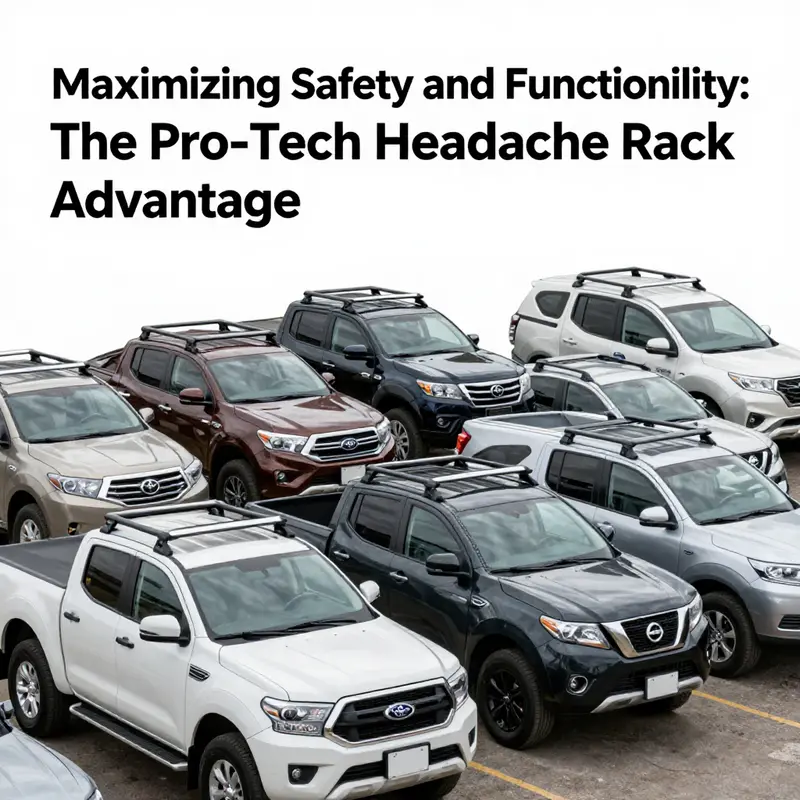
The rear of a work truck is more than a cargo space; it is a moving workshop, a temporary office, and a gateway to multiple job sites scattered across a day. In this context, a seemingly modest accessory—the aluminum headache rack—emerges as a pivotal enabler of safety, efficiency, and adaptability. Its design speaks to a clear principle: protection is not merely about stopping projectiles from reaching the cabin; it is about preserving momentum, organization, and pace. When loaded with ladders, pipes, timber, or bulky tools, a vehicle becomes a platform that can morph to fit the needs of the moment. The aluminum headache rack, with its goalpost silhouette and open frame, is engineered to do more than shield the rear window. It is a system that channels cargo habits into safer, more reliable driving and, equally, into a workflow that respects both the driver and the cargo.
The core purpose of this class of rack is straightforward and enduring: to prevent shifting loads from impacting the cab area and rear window during sudden starts, decelerations, or even minor collisions. The risk is not only aesthetic—scratched glass or dented metal—but practical and potentially dangerous. A jarred toolbox, a swinging ladder, or a loose bundle of timber can strike the window, break the glass, or strike a passenger. The rack serves as a barrier and a guide, keeping items in place while the vehicle negotiates uneven surfaces, potholes, and the unpredictable dynamics of a workday. In that sense, the device embodies prevention through thoughtful design, turning a high-risk scenario into a controlled one.
Yet protection is only one axis of value. The most compelling aspects of the aluminum headache rack lie in its versatility. Consider the kinds of loads that routinely cross a trade professional’s path: long, slender items like ladders that must clear the cabin space, or bulky, rigid lengths of timber and pipe that easily threaten alignment with the rear door or cab corners. The rack’s spine, which often adopts a robust, open-goal design, provides a frame that can accommodate a wide variety of loads without forcing a compromise in how those loads are carried. It acts as a staging platform, a place where contractors can secure items temporarily during transit, but also a flexible anchor for longer-term solutions such as rope, straps, or even light auxiliary gear when the job calls for it. In practice, this translates into more predictable loading patterns and easier, faster unloading at the site. From the driver’s seat, visibility remains a steady priority. An open-frame structure preserves more of the sightline through the rear window than a solid, paneled alternative would. That visibility is not merely a luxury; it is a fundamental safety feature for reversing into tight gaps or docking at crowded jobsites. It reduces the mental load on the driver, enabling quicker, more confident movements when every second counts.
The material choice—aluminum—further compounds the rack’s value in both performance and daily use. Aluminum brings a crucial blend of strength and lightness that is hard to match in the context of a vehicle accessory. Compared with steel, an aluminum rack contributes less additional weight, which, in turn, supports improved payload efficiency, handling, and fuel economy. In fleets where every kilogram matters and where drivers must balance load capacity with maneuverability, the lighter footprint of an aluminum rack translates into measurable operational benefits over the long term. The strength remains sufficient for demanding workloads; aluminum alloys used in these racks are engineered to resist bending and flexing under loads that would distort or damage less engineered solutions. This durability is vital when tradespeople routinely navigate city streets, rural lanes, and the rough edges of a workday. A sturdy, corrosion-resistant frame stands up to weather exposure, road salt, and the hustle of daily use, which reduces maintenance costs and downtime—an important consideration for fleet managers who track uptime as a key metric of productivity.
Versatility also extends to the rack’s capacity to adapt to different vehicle models and configurations. The automotive landscape is diverse, spanning compact work trucks, mid-size service vehicles, and larger work vans. A well-designed headache rack aligns with a wide range of makes and models by employing adaptable mounting points and modular accessories. When a rack is designed with these qualities, it becomes a shared resource across a fleet, supporting a broader spectrum of trades—from electricians and plumbers to carpenters and technicians—without forcing owners to purchase model-specific solutions. That universality reduces total cost of ownership and simplifies the logistics of outfitting a growing fleet with the same core equipment. It also means that individual professionals who own their own vehicle may find the same component useful across different work trucks, enabling a return on investment that outpaces more specialized devices.
The rack’s adaptability is most evident in its capacity to host accessories and optioned components as conditions demand. Though the basic frame provides the essential protection and load-anchoring points, the real value resides in the ease with which aftermarket lights, warning beacons, or additional tie-down anchors can be integrated. In low-light or adverse conditions, a strategically placed light bar or work lamp can dramatically improve situational awareness during night shifts or early-morning site starts. Even without built-in lighting, the sturdy mounting arrays of a well-planned rack invite a modular approach: the user can tailor the setup to their typical workflow, whether that means attaching straps and hooks for quick tie-downs at the site or installing a racking system for safer storage of long items when space in the cabin is a premium.
This degree of adaptability—where a single accessory system can transform to accommodate ladders on Monday, timber on Tuesday, and a toolbox on Wednesday—speaks to a broader truth about how sustainable, efficient hauling emerges. The most effective setups are not those that do one thing well; they are those that generalize across tasks and contexts. The open, goalpost design, with lumber ears and tall, forgiving frames, is a blueprint for that generalization. It provides just enough structure to guide loads, yet it remains permissive enough to avoid constraining how goods are arranged and secured. Tradespeople learn to read the rack as a partner in the jobsite narrative, a steady presence that helps keep the van organized, the tools accessible, and the crew focused on the task at hand rather than wrestling with shifting cargo.
As a result, the rack becomes a foundational anchor in both professional fleet operations and personal use. For fleet operators, reliability translates into fewer incidents of cargo-related damage, reduced risk of glass breakage, and lower insurance costs attributable to safer transport practices. It also translates into a more predictable workflow. When every driver operates from the same attachment system, technicians can standardize their loading protocols, stock commonly used hardware in predictable spots, and establish repeatable routines for securing long or bulky loads. This consistency cuts the cognitive load during rush periods, which is when mistakes are most likely and the consequences most severe.
For individual users, the same logic holds, though the scale shifts toward convenience and everyday safety. The aluminum construction remains a practical choice for hobbyists who balance weekend adventures with weekday commutes. The rack can support weekend projects that require transporting longer items—decking materials, framing lumber, or long pipes—without forcing costly vehicle modifications or compromising rearward visibility. The ability to adapt the rack to different tasks—carrying a ladder to a neighbor’s home, transporting a storage rack for a DIY project, or simply keeping a clean cab while traveling—demonstrates its value beyond the initial purchase decision. The practicality of such a system becomes most evident when a driver realizes that the same asset does not just protect a window; it quietly enables smoother transitions between work and personal life, between site and street, and between the expectations of a busy calendar and the realities of a vehicle that must respond to those expectations with efficiency.
In discussing protection, versatility, and capability, it is essential to ground the narrative in the realities of loading and unloading. A well-conceived rack disperses weight in a way that preserves the structural integrity of the vehicle’s tailgate and bed while maintaining straightforward access for securing cargo. The lumber ears, often part of the rack’s design, provide practical anchoring points for securing ladders and long items, ensuring they remain in place as the vehicle accelerates, brakes, or corners through tight spaces. The balance between securing power and maintaining view is delicate; a frame that is too heavy or obstructive can raise safety concerns, while one that is too lightly built risks cargo movement and damage. A thoughtfully engineered aluminum rack strikes that balance, delivering dependable performance without tipping the scales toward excess mass.
As the discussion extends from the technical to the experiential, the rack’s role in safety becomes more tangible. When drivers reverse toward a loading dock or along a cluttered street, the open frame acts as a quick visual cue that reinforces spatial awareness. The absence of a fully enclosed rear profile eliminates a blind spot that could otherwise mask oncoming pedestrians or small obstacles. Even in the most crowded urban environments, the rack contributes to a safer, more predictable driving experience because it maintains a clear line of sight and encourages deliberate, measured movement rather than last-minute, panicked maneuvering. In this way, the rack is not merely a passive barrier; it is an active part of the driver’s safety toolkit, working in concert with mirrors, cameras, and the driver’s judgment to produce a safer, more confident journey from site to site.
In this light, the conversation around the headaches rack expands beyond its most obvious function. It reveals a broader ecosystem of vehicle accessories and a philosophy of modular, adaptable equipment that underpins modern hauling. It is about aligning equipment with workflows, rather than forcing workflows to conform to equipment. It is about ensuring that the design respects the realities of a working day—where speed matters, where space is premium, and where the reliability of every component translates into real-world uptime and reduced downtime. This mindset—prioritizing protection, enabling versatility, and preserving visibility—transforms a straightforward accessory into a strategic asset for professionals who depend on their pickup or light commercial vehicle every day. The result is a coherent approach to vehicle outfitting, one that recognizes that a properly chosen rack is not simply a protective device but a facilitator of safer, faster, and more organized work. For readers seeking a deeper look at how this family of systems fits into the broader ecosystem of vehicle accessories, see protech-headache-racks.
For a broader perspective that connects these ideas to a wider ecosystem of vehicle customization and accessory ecosystems, consider resources that discuss how modular racks and open-frame designs interact with other gear, including lighting, storage boxes, and universal mounting systems. This contextual view helps translate the specific advantages of an aluminum headache rack into a practical, daily-use vocabulary familiar to fleet operators and individual drivers alike. When traded off against heavier, more restrictive frames, the aluminum rack’s advantages—strength with lightness, visibility with protection, and versatility with modularity—often prove decisive over the lifecycle of a vehicle and a career that depends on dependable, repeatable hauling capability. The result is not merely a solution for today’s shipment but a foundation for tomorrow’s workflow, where a single frame supports a growing set of tools, loads, and jobsite demands.
In closing, the aluminum headache rack exemplifies a design philosophy that looks at hauling not as a single task but as an evolving practice. It acknowledges that protection must be paired with legibility, that utility must honor every weight category, and that a single accessory can become a platform for a dozen different tasks. It invites users to think of the back of their truck not as a static feature but as a dynamic space, one that can adapt to a changing job landscape without requiring a truck swap. The result is a more capable, more confident, and more productive day on the road, where safety and efficiency travel together in a single, well-considered frame. For those who want to explore further, protech-headache-racks offers a concise entry into this category and can serve as a stepping stone toward a broader, more integrated approach to vehicle outfitting. External resource: https://www.amazon.com/ProTech-Aluminum-Headache-Rack-Ladder/dp/B07Z5FQKXW
Final thoughts
The Pro-Tech headache rack is more than just an accessory; it is a strategic investment for business owners in the automotive and logistics industries. By ensuring the safety of tools, cargo, and other items during transit, this robust solution enhances operational efficiency while protecting your vehicle. The design durability and broad application range further exemplify its value, making it a must-have for trade professionals and fleet operators alike. Equip your fleet with Pro-Tech headache racks and experience the difference in safety and functionality.