
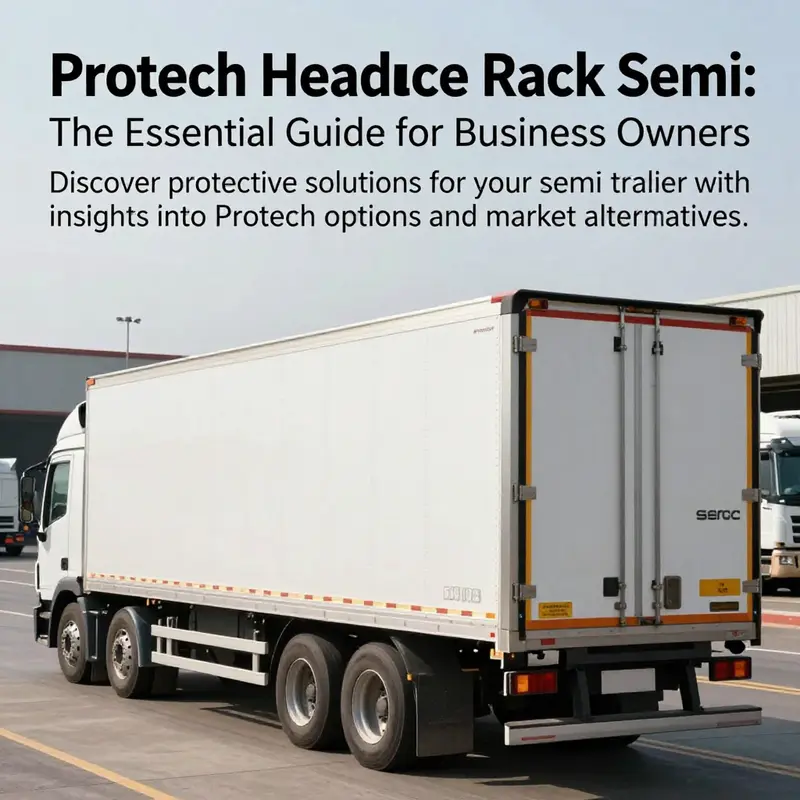
Business owners operating semi-trailers require effective solutions to ensure cargo safety and vehicle protection. The Protech headache rack emerges as a potential option for those looking to safeguard their operations. However, this article presents a critical overview of the Protech headache rack semi, examining its functionalities and alternatives in the marketplace. By exploring the unique features and benefits of headache racks and discussing viable substitutes, this guide will empower business owners to make informed decisions that enhance safety and efficiency in their transport ventures.
Headache Rack Realities on Semi-Tractors: Decoding Function, Form, and Misconceptions
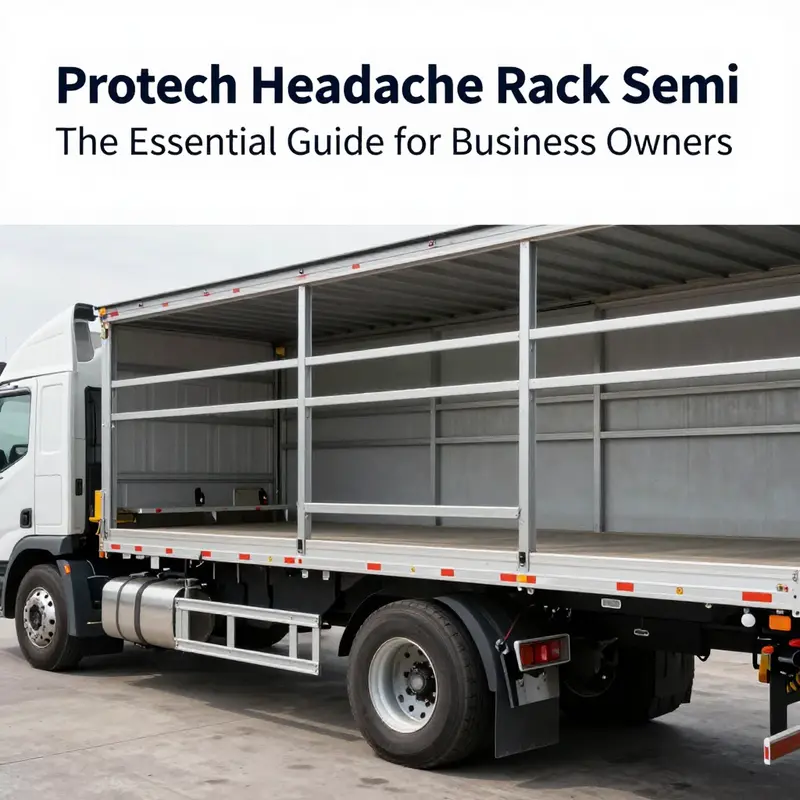
The phrase you might encounter in discussions about heavy truck equipment—headache rack—is often loaded with assumptions. When the conversation shifts to semi-trailers and the large over-the-road fleet segment, those assumptions become a tangle of terms, configurations, and practical realities. At its core, a headache rack is a protective structure mounted behind the cab of a truck. Its purpose is to shield the cab, the rear window, and the driver from potential damage caused by shifting cargo or tools during transit. The image many people carry, however, is more complicated when semis and their paired trailers are considered. The semi truck, a tractor unit hauling a separate trailer, operates with a different risk profile than a single, integrated truck-and-trailer setup. In this context, the traditional headache rack belongs to the tractor, not the trailer, and its function sits squarely at the intersection of safety, access, and cargo management. For readers exploring this topic, the distinction between tractor-mounted protection and any protective measures on the trailer itself is not merely semantic; it shapes what products exist, what configurations are practical, and how fleets plan maintenance and year-round protection.
To understand why this matters, it helps to unpack what a headache rack actually does and how it is designed. The typical construction is a robust, welded framework, often featuring diamond-plate steel and reinforced crossbars, forming a barrier that sits directly behind the cab. The materials are chosen for impact resistance and for withstanding the daily grind of highway operation. This protection is not decorative; it is a first line of defense against loose cargo sliding rearward. In many fleet environments, tools, hardware, or even parts might shift during braking, acceleration, or sudden maneuvers. A properly designed rack absorbs some of that energy, reduces the chance of damage to the cab’s rear window, and minimizes interior wear and tear on upholstery, electronics, or controls that lie near the back of the driver’s cockpit. That functional clarity becomes important when evaluating whether a semi’s protection strategy should mirror a tractor’s or rely on other protective systems.
Beyond pure protection, headache racks have a practical dimensionality that aligns with the daily rhythms of trucking work. A notable number of racks are designed to integrate with storage solutions. They may provide mounting points for toolboxes, lighting, or secure stowage panels. The rack becomes more than a shield; it is a support system for organization on the road. In the long-haul routine, drivers appreciate having secure, accessible spaces for essential equipment close to the cab, while still keeping the rear window clear enough for visibility when backing into docks or aligning with a pull point. This dual role—protection plus organization—helps explain why headache racks persist as a staple in many fleets. It is not simply about blocking debris; it is about creating a small, organized ecosystem at the back of the cab that can improve response times and reduce downtime.
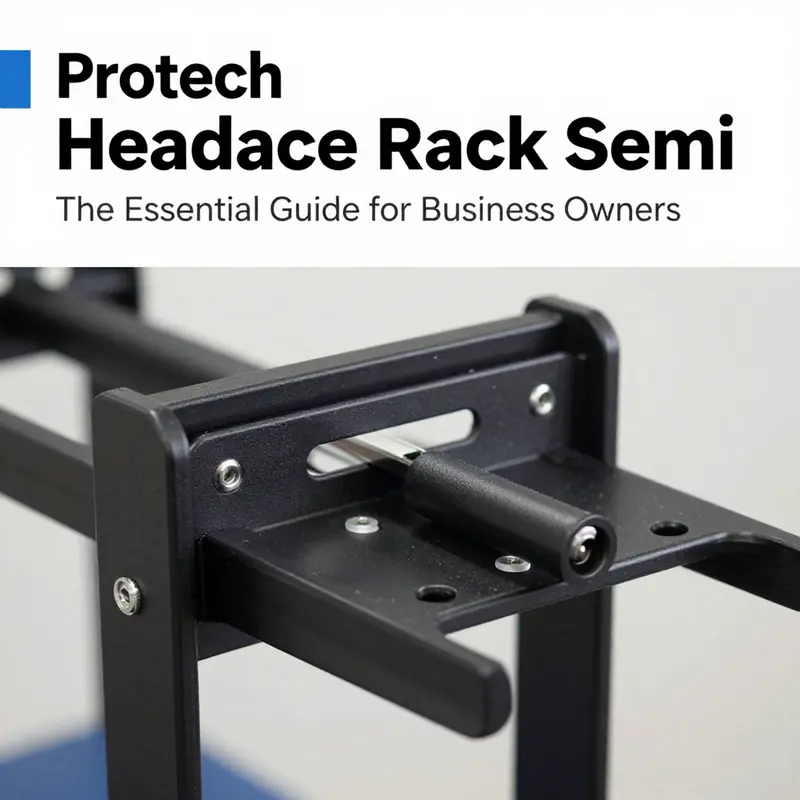
Material choice and fabrication quality matter deeply for any protective accessory used on heavy trucks. The typical metal choice is high-strength steel, selected for its balance of stiffness, resilience, and fatigue tolerance. Welded joints must perform under dynamic loads, and the surface finish often includes anti-corrosion treatments given the exposure to road spray, salt in winter, and humid conditions in some regions. The rack’s geometry is equally important: a dense, sturdy frame with adequate clearance avoids interference with antennae, exhaust routes, or emergency equipment. Designers also consider the rack’s interaction with the cab’s external features, such as mirrors and window seals, ensuring that the added mass does not impede proper sealing or airflow. In short, the construction philosophy behind these racks is about reliability under fatigue, not a one-off, showpiece build. When fleets evaluate upgrades or replacements, they weigh the cost against the anticipated service life, the ease of maintenance, and the potential for aftermarket accessories to integrate smoothly with existing tool sets.
In the semi-trailer ecosystem, it is easy to conflate the cab protection concept with the trailer’s protective strategies. The semi-trailer itself is an independent unit that connects to the tractor for operation. This separation means that, in practice, most rear-end protection strategies on trailers take a different form—guard rails, underride protection, and bumper-type guards—that focus on the interaction between the trailer and downstream hazards. The tractor-mounted headache rack, by contrast, remains firmly rooted in the driver’s immediate line of sight and the cab’s structural envelope. When fleets review their protection architecture, they assess how to balance cab shielding with visibility, ergonomic access to controls, and maintenance access to the rear cab area. The result is often a layered approach: the tractor retains a sturdy barrier behind the cab, while the trailer’s rear interface emphasizes underride protection and structural integrity that interacts with regulatory requirements for the back end of the vehicle. In this light, the semi’s protection story is not about a single piece of hardware but about how multiple components work together to minimize risk across the entire transport chain.
A frequent source of confusion comes from labeling in the marketplace. In many cases, vendors and sellers may describe protective rails or similar structures in terms that echo the language of a headache rack, even when the product is more accurately described as a rear-cab protection piece for heavy tractors or as a modular storage framework that attaches near the cab. The risk here is not just a mismatch in terminology; it is a risk of selecting a product that may not fit the intended vehicle architecture. To navigate this, buyers should focus on the product’s specifications: mounting interfaces, compatible rail spacing, weight, and whether the unit is explicitly designed for tractor installation behind the cab versus being integrated with the trailer’s back end. If a listing or specification mentions compatibility with the tractor’s frame rails, rear window protection, or truck cab environment, that is a strong signal it is addressing the right use-case. Conversely, a label that emphasizes box capacities, external dimensions, or rugged transport cases could indicate misclassification or a different product family altogether. This discerning approach becomes essential for fleets updating older rigs, where a single misfit component can ripple into maintenance challenges or unforeseen clearance issues.
For readers who want to see how this distinction plays out in real-world product narratives, there are resources that discuss the broader category of rear-cab protection and related accessories. A deeper dive into the topic can be found at protech-headache-racks. The article there outlines how buyers often encounter a tension between protection, storage integration, and compatibility with a given truck’s layout. Although the page uses a brand-specific frame of reference, the underlying considerations—compatibility with the tractor, interaction with storage systems, and the practicalities of mounting—are universal to the discussion of headache rack-like devices for semi-tractors. Readers who want to explore the terminology, the design options, and the practical trade-offs will likely find that link a useful waypoint as they map out their own specification criteria.
When evaluating options, it helps to ground decisions in how a rack will be used day-to-day. Long-haul operators may value racks that pair snugly with toolboxes and secure storage, ensuring a tidy cab area without obstructing windows or alarmingly altering the truck’s center of gravity. For regional fleets, where duty cycles emphasize frequent stops and load checks, the ability to quickly access stored tools behind the cab can translate into meaningful time savings. Maintenance crews operating in hazardous environments might prioritize rugged finishes and ease of cleaning, since the rack area can become a magnet for grit, moisture, and grime. In all cases, the decision calculus should balance protective strength with ease of use, and it should recognize that the semi’s protection system is part of a broader workflow rather than a standalone feature. The best practice is to treat the headache rack not as a single device, but as a module in a protection-and-organization strategy that accompanies a driver through a day’s route, a week’s schedule, and a season’s worth of wear and tear.
The marketplace’s ongoing evolution adds another layer of complexity. As fleets adopt new materials, modular designs, and smarter storage attachments, headache racks become adaptable systems rather than fixed installations. This adaptability means that a rack might be specified with optional bolt-on panels, accessory rails, or integrated lighting that protrudes slightly beyond the primary silhouette but enhances utility for the driver. It also means that what constitutes a compatible option can shift as new cab configurations emerge or as engines and exhaust layouts change. For buyers, this signals the importance of verifying current compatibility with the specific make, model, and year of their tractor, and, when possible, consulting with a distributor who can map the protective solution to the exact vehicle geometry. In practice, a careful planning phase—one that considers mounting patterns, clearance around mirrors and antennas, and the potential need for vibration dampening—can protect against mismatches that would otherwise become headaches of their own.
In weighing the broader implications, it is instructive to reflect on the lifecycle of protective equipment in the trucking world. A heavy-duty rack is not a disposable item. It is a capital asset that should endure the vagaries of highway speeds, weather, and the rigors of equipment upgrades. The right design tolerates misalignment during installation and remains serviceable during routine maintenance. It should be accessible for inspection and easy to repair when a bent support or corroded fastener appears. The best practice for buyers is to think about the rack as part of a predictable maintenance plan: confirm mounting integrity during periodic inspections, check hardware for corrosion, and assess the protective surface for dents that might indicate cargo contact. While the visual impact of a rack can be substantial, the practical payoff lies in sustained performance and reduced downtime, both of which contribute to a driver’s safety and a fleet’s reliability over the long haul.
As you continue to navigate the terminology and the options, consider how internal resources and community knowledge can illuminate choices. For example, deeper explorations of related equipment classifications and practical installation tips can be found alongside broader vehicle accessories discussions. An internal resource with thoughtful perspectives on accessories, storage, and cab protection can be found under protech-headache-racks. This link serves as a guidepost toward a more granular understanding of how a particular protective module fits into a larger ecosystem of truck equipment, even as you keep the distinct lifecycle and responsibilities of semi-tractors in mind. Keeping this nuanced view in mind helps prevent the mislabeling that sometimes creeps into listings and ensures that buyers select the right product for the right vehicle architecture.
For readers who want a concrete, external data point illustrating how these products are valued in the market, a used unit listing demonstrates how durability and function translate into lifecycle value. External resources can provide snapshots of price ranges, condition descriptions, and typical wear patterns over time. A representative listing shows that substantial, steel-based protection hardware can remain functional and valuable even after years of service, underscoring the durable engineering behind these components. External listings such as this one illustrate how fleets balance capital expenditure with long-term reliability in a harsh operating environment. See the following external resource for a broader sense of price and condition: https://www.ebay.com/itm/267183447552. This reference should be viewed as illustrative rather than prescriptive, and it reinforces the idea that the protective category discussed here exists within a real-world marketplace where durability and practicality matter as much as aesthetics or hype.
In sum, the conversation around headache racks for semi tractors is best approached with a clear distinction in mind: the rack is a cab-protection and storage-support module, not a trailer-mounted feature, and it should integrate with a fleet’s broader protection strategy rather than stand alone. The language in the marketplace can blur this distinction, but careful specification, a grounded understanding of vehicle architecture, and an eye toward lifecycle value keep the discussion tethered to reality. As with any substantial aftermarket upgrade, the goal is to improve safety, reduce downtime, and support the driver’s efficiency. When this framework is kept front and center, the decisions about whether a headache rack is appropriate for a given semi-truck—and which exact configuration to choose—become more straightforward and less prone to the kind of mislabeling that sometimes crops up in listings and marketing chatter.
null
null
Alternatives for a Semi Headache Rack: Finding Durable, Compatible Truck Protection
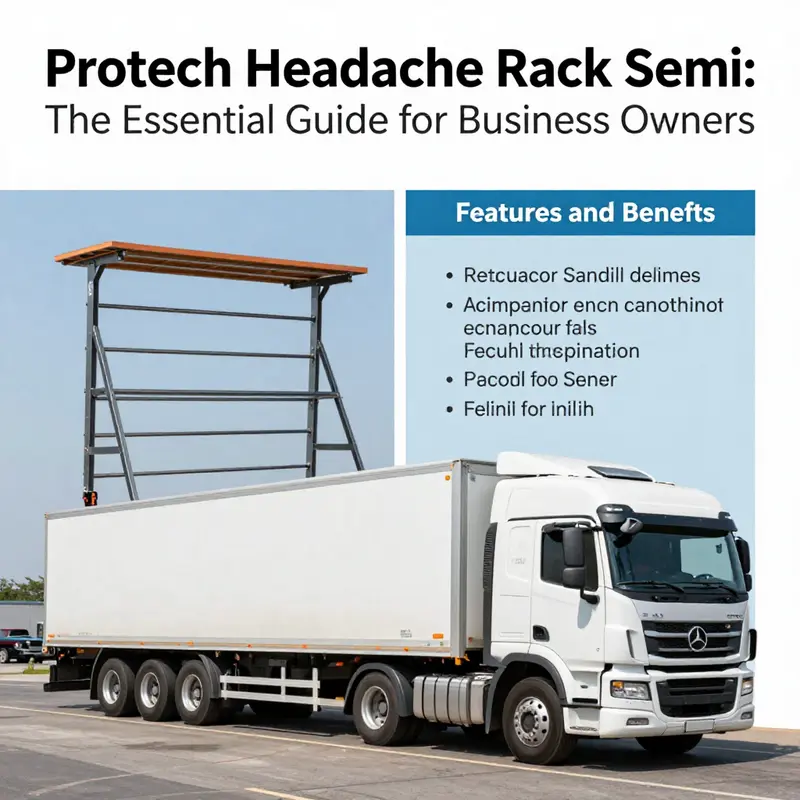
When a listing claims a specific model of headache rack for a semi, the buyer faces two immediate questions: is that product actually what it claims to be, and is it the best fit for the truck’s requirements? This chapter walks through how to evaluate alternatives for a semi headache rack, focusing on durability, compatibility, installation, cost, and practical trade-offs. The guidance avoids brand endorsements and instead emphasizes the decision points that matter most when replacing or upgrading a protective rack behind the cab of a tractor unit.
Start by recognizing the role a headache rack plays. It acts as a barrier between cargo and the cab. It protects occupants and the cab’s rear wall from shifting freight. It can also be a mounting point for lights, tool boxes, and chains. Because it serves safety and utility roles, material choice, structural design, and mounting method are crucial. Any alternative you consider must address these needs before price or aesthetics.
Material selection defines the conversation. Steel remains the default for heavy-duty, impact-resistant racks. It offers predictable ductility and excellent energy absorption during large impacts. However, steel requires corrosion protection. Ask whether the finish is galvanized, powder-coated, or treated with a specialty corrosion system. Galvanizing delivers long-term rust resistance in harsh environments. Powder coating improves appearance and adds a second protective layer. Alternatives made from aluminum weigh less and resist rust naturally. Aluminum suits operations where every pound matters or where salt exposure is moderate. Note, though, that aluminum has different deformation characteristics under impact. It is more likely to bend than deform in a ductile manner, which can be acceptable for preventing debris intrusion but may transfer different forces to the cab. High-strength alloys and thicker sections can narrow that gap, but they raise cost.
Design features also matter. Some racks are simple flat panels with perforation. Others combine vertical bars and cross-members to provide a clear view while maintaining protection. A perforated or slotted design reduces wind resistance and cabin noise while still stopping pallets or strapping. Solid diamond-plate surfaces maximize impact resistance but can reflect more road noise and create greater wind load. Consider how the rack will be used: if loads are frequently stacked in the trailer nose, stronger, closely spaced members are preferable. If the rack is mainly for light cargo shifting and for mounting equipment, a lighter, ventilated design may be better.
Mounting and compatibility should guide your selection. Off-the-shelf racks come with several mounting approaches. Some bolt to the truck’s frame rails using predrilled plates. Others clamp to existing headboard points on flatbeds or attach to custom brackets. Welding is an option for permanent installations, but it removes flexibility. Check the truck frame’s cross-section and the location of key obstructions like fuel tanks and exhaust components. A good alternative will either match those mounting locations or be easily adapted with a set of universal brackets. If the truck will change configurations or be sold later, prioritize bolt-on systems that allow removal without cutting or permanent modification.
Safety standards and engineering are non-negotiable. Seek alternatives that reference load ratings or that are accompanied by engineering documentation for impact resistance. Where available, look for designs tested to recognized commercial vehicle safety criteria. If no formal test data is provided, at minimum the supplier should describe material yield strengths, weld procedures, and recommended mounting torque values. A rack’s protective ability depends as much on installation quality as on its intrinsic strength. Inspect welds, fasteners, and backing plates when evaluating a candidate.
Practicality and serviceability influence long-term satisfaction. Think about how the rack will age in service. Steel racks need attention to chips in protective coatings. Ask how replacement parts are handled. Are removable components modular and stocked? Can the rack be repaired easily after damage, or will repair require extensive disassembly or frame access? Racks designed with replaceable upright sections and bolt-on reinforcement plates simplify field repairs. Also, consider accessory integration. Racks that include light mounts, tool box attachment points, or integral tie-down slots reduce the need for later modifications and save labor costs.
Cost considerations balance initial price against lifecycle expenses. New custom or high-strength engineered racks cost more up-front than simple bolt-on units. However, a more robust rack may avoid frequent repairs and deliver lower total cost of ownership in heavy-use fleets. Conversely, for trucks used in lighter applications or for short-term assignments, a more economical rack can be the smarter choice. When comparing costs, ask for freight and installation estimates. A cheap rack shipped with expensive brackets or requiring long shop hours to fit can become a poor value. Also factor in downtime: rapid-install designs that minimize shop time have hidden value.
Local fabrication versus off-the-shelf deserves careful thought. Local metal shops can build racks tailored to your truck. Custom fabrication can account for unique frame geometry, auxiliary equipment, or nonstandard cab heights. A custom rack can deliver superior fit, finish, and integration with other bodywork. But custom work requires clear specifications and quality control. Not all shops produce commercial vehicle-grade welds and protective finishes, so inspect past work and request references. Off-the-shelf racks, by contrast, are often engineered for compatibility with common platforms and may include tested hardware and standardized mounting kits. They reduce variability and can be faster to obtain, but they might need adapters when trucks have atypical configurations.
Compatibility with accessories should not be overlooked. Many fleets mount tool boxes, light bars, and spare parts on the headboard. If you plan to add accessories, verify that the alternative rack includes accessory mounting points or that compatible brackets are available. Some racks come with integrated channels or tapped inserts to accept easy mounting. This reduces the need for drilling into the rack later, which can compromise corrosion protection and structural integrity.
If weight matters, consult the specification sheets. Heavier steel racks provide strength but can increase axle load and fuel consumption. Aluminum options cut weight but may require thicker sections to match strength, which affects cost. Consider how the truck’s gross vehicle weight ratings distribute load and whether added weight will push the vehicle into higher regulatory classes. Small weight savings per unit can add up across a fleet and influence fuel economy. When saving weight matters, also evaluate the rack’s effect on aerodynamics and whether perforations or rounded profiles might reduce drag.
Another practical consideration is resale and standardization. Fleets that keep vehicles for short cycles often find value in standardized, easily removable racks. These preserve the truck’s resale appeal and allow parts to be swapped among units. If you aim for long-term ownership, a permanent, heavier-duty rack tailored to specific operations may be more attractive. Make a fleet-level decision rather than a truck-by-truck one if many units will carry similar loads.
When it comes to procurement, verify lead times and warranty terms. Off-the-shelf items typically offer shorter lead times and clearer warranty terms. Custom fabrications require longer lead time and often have more limited warranties. Ensure the warranty covers both materials and finishes, and check whether it includes labor for replacement if a manufacturer defect is found. Also confirm return policies and whether the vendor offers technical support for fitment questions.
Finally, examine used-market options carefully. A used rack can represent significant savings if it is structurally sound. Look for straightness, absence of major weld repairs, and intact mounting hardware. Avoid racks with heavy corrosion at critical welds or with evidence of prior bending and heat damage. When evaluating a used unit, factor in the cost to refinish and reinstall.
For practical research, one helpful internal resource discusses racks and related accessories. See the write-up on headboard and rack solutions for detailed installation tips and accessory choices. For retail availability and current pricing on alternatives, consult a trusted external parts marketplace to compare models and check estimated prices and shipping options.
Throughout the selection process, prioritize safety and compatibility over aesthetics. A headache rack’s primary job is to protect the cab and its occupants. Choose materials and designs engineered for that purpose. Consider how the rack will interact with cargo patterns, accessory mounting plans, and maintenance cycles. Compare lifecycle costs, not just sticker price. Whether choosing a standard off-the-shelf solution, a local custom build, or a refurbished unit, the best alternative will match the truck’s structural interfaces and the fleet’s operational profile while delivering predictable, documented protection.
This practical framework will help you evaluate alternatives for a semi headache rack. It balances material science, engineering practice, installation realities, and cost management. By focusing on compatibility, durability, and serviceability, you ensure that the chosen rack protects both the vehicle and the people who depend on it.
Explore headboard and rack solutions for installation tips and accessory choices
External reference for current pricing and model availability: https://www.truckpartsdirect.com
Final thoughts
In the protection landscape for semi-trailers, the Protech headache rack regards as a strong contender among various options. While its specifications cater to specific needs, understanding distinct functionalities and considering alternative products can bolster overall safety and performance. Embracing the right headache rack not only aids in protecting your assets but also enhances the efficiency of your transportation operations. Invest wisely, and your business will navigate the open roads with confidence.