
In the logistics and transportation industry, efficiency and reliability are paramount. The truck box, a key component of freight operations, is designed to meet these demands by providing a durable and secure space for transporting goods. This article delves into the intricate design and structure of truck boxes, illustrating their vital role in logistics and transportation. It will explore their applications and compare them with box vans, highlighting the technological advancements shaping the industry. Lastly, we’ll assess their economic impact on freight transportation, demonstrating that a well-chosen truck box can significantly enhance business operations.
Engineering the Enclosed Backbone: The Hidden Architecture of Truck Boxes
A truck box is often taken at a glance as a simple enclosure, a practical place to stash gear and goods. Yet the most enduringly useful box is not merely a container; it is a carefully engineered system that integrates with the vehicle it sits upon and the tasks it must perform. In the world of logistics, transport, and everyday hauling, the box defines durability, protects cargo from the elements, shields against theft, and shapes how the entire vehicle behaves under load. When viewed through that lens, the box emerges as the enclosed backbone of a modern workhorse, a lineage of design choices that balance weight, strength, accessibility, and long-term reliability. Its significance grows from a simple premise: cargo should travel in a space that remains rigid, dry, and predictable from mile one to mile one thousand, yet those conditions must be achieved without sacrificing maneuverability, fuel efficiency, or payload. The box, in this sense, becomes a chorus of engineering decisions rather than a single feature added to a chassis.
Material selection is the first dialogue in that engineering conversation. Light duty pickup boxes typically rely on high-strength steel or aluminum alloys as the primary construction material. Steel offers proven strength and crash resilience, while aluminum reduces overall weight and enhances corrosion resistance in certain environments. The tradeoffs extend beyond mere weight: a thinner aluminum wall can save mass but may require different reinforcement strategies to manage dents and creases during heavy loading. A steel floor, with its rugged bite and weldability, often works in concert with aluminum side walls or a mixed-material approach to optimize stiffness, durability, and cost. Beyond the shell, attention to corrosion protection—through thoughtful primer protocols, sealants, and anti-corrosion coatings—ensures longevity in weather-exposed cargo zones where spray from road moisture and road salt can take a toll. In the long arc of a truck’s life, material choices influence how often doors seal, how seams behave under temperature swings, and how easily maintenance cycles can be planned without compromising the cargo space.
The core of the box consists of several interlocking structural components, each with a precise job in maintaining the integrity of the whole. The floor pan anchors the cargo area, serving as the base that bears weight and distributes loads across the chassis. The side walls rise from this foundation to establish both height and containment, guiding cargo and resisting lateral deformation. A robust tailgate closes the rear opening and must withstand repeated cycles of opening, closing, and bearing the impact of loaded items bumping against it during transfers and travel. Bed rails, running along the top edges of the side walls, reinforce the structure and help preserve the box’s geometric stability when loading and unloading. These elements are not mere shells; they are tuned to work with each other so that a heavy pallet does not distort the box or transfer undue stress to the cab and chassis. The geometry matters just as much as the materials—from the curvature of a seam to the placement of a reinforcing rib, each feature contributes to a predictable and controllable response under real-world loads.
One notable aspect of truck box design is the ongoing integration with the chassis. A box is not a freestanding cage; it is a loaded extension of the vehicle’s frame. In a well-engineered system, the methods of attachment—whether welded bonds, bolted connections, or hybrid schemes—are selected to promote even load transfer to the frame while preserving the box’s own stiffness. The goal is to avoid stress concentrations where the box meets the chassis, which could accelerate fatigue or lead to fatigue-induced cracks over time. In modern practice, engineers apply advanced analyses, including finite element analysis (FEA), to simulate how the box deforms under dynamic loads, vibration, and crash scenarios. These simulations help identify where reinforcements are needed, how fasteners should be placed, and how sealants must perform across temperature ranges. The result is a structure that not only holds cargo securely but also maintains ride quality and steering feel by limiting unwanted flex or resonances that can ripple through the entire vehicle. The importance of this integration cannot be overstated: the box’s performance reverberates through payload stability, tire wear, fuel efficiency, and the driver’s perception of the truck’s ruggedness.
Specialized applications demonstrate how the core principles of the truck box design adapt to different contexts while preserving the essential balance of safety, accessibility, and protection. In the realm of mini trucks and work-ready setups, technicians often situate tool storage behind the cab and integrate it with or just above the so-called headache rack. This arrangement keeps frequently used tools within arm’s reach yet shielded from shifting cargo and the weather. The design philosophy here emphasizes secure mounting and weatherproof enclosures, so that tools remain dry, organized, and accessible with minimal fuss during a workday that may demand rapid reconfiguration of the payload. The standards guiding these installations govern dimensions, material strength, and mounting arrangements to ensure repeatability and safety across different vehicle models. Such tool boxes are not just add-ons; they are a deliberate extension of the vehicle’s utility, crafted to protect expensive gear and simplify daily routines for drivers who rely on reliable, quick access to their equipment.
Beyond smaller, city-focused applications, larger industrial scenarios call for modularity and versatility. Modular or detachable truck boxes offer a different set of advantages and challenges: the ability to swap or relocate cargo modules can increase flexibility for varied payloads and routes. This adaptability, however, brings complexity in mounting interfaces, alignment tolerances, and maintenance. The trade-offs often include increased bulk, higher upfront costs, and more demanding maintenance regimes, but for fleets that shuttle diverse loads or require rapid reconfiguration, the payoff is real. In such contexts, the box becomes a modular asset rather than a fixed enclosure, with connections engineered to maintain structural integrity even when a module is swapped or reconfigured. The result is a fleet that can scale its capacity and function in response to shifting logistics demands, while still preserving the protection and performance that a properly designed box supplies.
Manufacturing realism grounds these design aspirations in practical constraints. The assembly sequence, joint design, and sealing strategies are chosen to withstand the rigors of real-world use. Welded assemblies provide strength and a continuous surface that resists moisture ingress, but they demand careful quality control to avoid warping and to ensure consistent seam integrity. Riveted or bolted joints offer serviceability and modularity but require careful detailing to prevent loosening under vibration. Sealing solutions, gaskets, and seam treatments must accommodate expansion and contraction with temperature changes, a common reality in overland transport where a box can experience freezing nights and hot daytime heat. The box’s floor, walls, and lid are typically engineered with tolerances that guarantee smooth operation of doors and tailgates, even after years of loading and unloading cycles. Such attention to detail translates into reduced maintenance costs, fewer unplanned repairs, and a longer service life, which in turn supports lower life-cycle costs for fleets and owners who rely on predictable performance.
From the perspective of end users, the design choices in a truck box translate into real-day benefits. A box that optimizes interior space without sacrificing structural weight allows drivers to store more equipment without diminishing payload. The choice between a rolling door and a side-hinged door, or between an integrated floor pallet system and a simple flat surface, influences loading speed, accessibility, and safety in cramped or hazardous environments. The interior geometry can be tailored with mounted brackets, fixed shelves, or raised decking to maximize organization and minimize the time spent locating tools or parts. These ergonomic considerations underscore a broader principle: cargo handling efficiency is inseparable from the box’s structural and protective characteristics. When a box holds cargo securely and permits rapid access, it improves overall productivity and reduces the risk of damage to goods, equipment, and even the truck itself.
To connect the design to the wider ecosystem of the vehicle, manufacturers and operators increasingly consider how the box interacts with accessory systems and storage solutions that surround the cab and box area. A practical reminder of this integrated mindset is the availability of dedicated accessories that expand capabilities without compromising the integrity of the box or its protection features. For readers exploring this angle, simple explorations of truck accessories can provide concrete ideas about mounting options, weatherproof enclosures, and modular storage that complement the box’s core function. See more at truck accessories. Use of such additions should remain consistent with the base box design, ensuring that any extra weight and mounting points do not interfere with load paths, foil the protected cargo space, or degrade handling. The most successful configurations are those where the box and its accessories form a coherent system, each element reinforcing the other rather than competing for space or strength.
In this light, the truck box emerges as a disciplined synthesis of material science, structural engineering, and practical utility. It is a device that not only shelters cargo but actively sustains vehicle performance, safety, and efficiency across a spectrum of tasks and environments. The box’s floor, walls, tailgate, and rails are not incidental features; they are the active carriers of the vehicle’s mission, providing a dependable platform that translates every mile into reliable delivery, safer transport of fragile goods, and faster, more predictable work cycles. As logistics demands evolve and payloads diversify, the box will continue to adapt, guided by the same core principles: manage weight without surrendering strength, guard against the weather and theft, ensure accessibility under demanding conditions, and integrate seamlessly with the chassis to preserve ride quality and long-term reliability. For engineers and operators, understanding this architecture is essential to selecting, configuring, and maintaining a truck box that remains a trustworthy partner across the lifetime of the vehicle. For those seeking deeper engineering insight, see Structural Analysis of Light-Duty Truck Pickup Boxes at https://www.sciencedirect.com/science/article/pii/S187770582300012X.
The Moving Shell: How Truck Boxes Drive Efficiency, Compliance, and Resilience in Modern Logistics
The moving shell of a freight operation often goes overlooked, yet it sits at the heart of how goods travel from factory floors to household doors. A truck box is more than a closed container; it is a designed chassis for control and confidence. In the flow of modern logistics, the box defines what can be shipped, how quickly it can be loaded, how securely it travels, and how reliably it returns with data about every mile. The box sets the tone for safety, pace, and precision, shaping decisions across routing, scheduling, and inventory management. When drivers slide into their cab and the doors latch shut, they do not just seal a cargo space; they seal in a plan for delivery, a standard for protection, and a rhythm for the day ahead. The box, therefore, is both shield and catalyst, mediating between the unpredictable environment and the predictable needs of a supply chain that demands speed without sacrificing integrity.
The most immediate virtue of a truck box is cargo containment. The cargo space is engineered to resist the elements, deter theft, and minimize movement that could damage items during transit. The box’s rectangular geometry is more than a familiar silhouette; it is a geometry that supports efficient packing, predictable loading, and steady weight distribution. Materials such as high-strength steel or aluminum alloys provide the resilience required for long-haul journeys and rough road conditions. The doors, whether they slide open and closed with robust rollers or hinge to accept a wide loading aperture, are designed to balance accessibility with security. A well-sealed box guards items from rain, road dust, and temperature fluctuations, ensuring that a delicate shipment—whether electronics, furniture, or perishables—arrives in the condition the customer expects. In effect, the box translates the vagaries of weather and road into a constrained, manageable space, reducing surprises at the point of delivery and preserving the integrity of the supply chain’s promises.
Beyond protection, the box is a legal and logistical instrument. Regulations governing weight and size are not abstract constraints but live parameters that determine how a load is distributed along axles, how much of the vehicle’s capacity is deployed for each leg of a journey, and how quickly a vehicle can move through a distribution network. A well-designed box helps ensure compliance by providing standardized volumes and mounting points for securing straps, nets, and restraint fixtures. In warehousing and manufacturing contexts, weight and dimensional accuracy are essential for planning, billing, and carrier compliance. The practice of using weight check cartons, for example, demonstrates how teams actively monitor and verify shipment weights at various points in the chain. These tools, when used with the box, minimize the risk of overloading and help ensure that the vehicle’s total mass aligns with roadway regulations and carrier requirements. The box thus becomes an ally in achieving precision, not merely a receptacle for goods. This is why the coordination between box design and loading procedures matters so deeply for overall efficiency and safety.
Operational efficiency is inseparable from the design choices embedded in a truck box. The rise of box truck freight has underscored the advantage of a single, integrated platform: a cargo space that can be rapidly loaded, secured, and dispatched. A box with a wide, uninterrupted floor, solid anchor points, and a door system that minimizes the time spent at each stop can shave minutes off every delivery run. In urban and regional networks, where last-mile performance defines customer satisfaction, the ability to quickly load and unload becomes a differentiator. The box’s interior configuration matters as well. Some boxes are equipped with fixed or modular racks, tie-down fixtures, and/or refrigeration options that accommodate specialized goods. These features extend a vehicle’s utility, enabling it to handle a broader mix of freight while maintaining the necessary speed and reliability of service.
Training and planning have grown more sophisticated alongside these physical designs. Logistics simulators, such as truck and logistics simulations, allow operators to practice route planning, load management, and delivery scheduling in controlled environments. By modeling how a box interacts with different payloads, drivers, and routes, teams can anticipate bottlenecks and identify opportunities to improve throughput. The skills developed through such simulations—accurate weight distribution, efficient securing methods, and quick toggling between configurations—translate directly into on-road performance. As the industry leans into data-driven practices, the box becomes a visible interface for information: a space where physical security meets digital oversight, where the cadence of a successful delivery aligns with the data that confirms it occurred as planned.
The box’s utility also grows through customization and standardization in tandem. Within broader fleets, standardized box dimensions enable smoother handoffs between carriers and consistent loading practices across facilities. Yet customization remains essential to meet varied cargo needs. Internal shelves, fixed fixtures, and configurable tie-downs offer versatility without compromising the core benefits of a closed, secure space. When a shipment requires temperature control, foaming insulation, or rigid internal supports for awkward shapes, the box adapts rather than the goods, preserving the efficiency of the operation. Such adaptability is not a single value; it is a balancing act that weighs precious uptime against the specialized handling demands of certain cargo, all while maintaining safety margins and regulatory compliance. In this process, the box also serves as a platform for efficiency improvements in warehousing and distribution centers, where standardized loading interfaces and predictable cargo handling reduce dwell times and accelerate turnover.
To appreciate the broader ecosystem in which truck boxes operate, consider how accessories and modular options can tailor a box to a specific network’s needs. Small adjustments—like additional anchor points, added lighting, or improved weather sealing—can yield measurable returns in reduced damage rates and faster loading. A practical route to explore such enhancements is the Accessories page, which aggregates a spectrum of adjustments and improvements that fleets can adopt to optimize their boxes for particular routes or cargo profiles. The goal is not to chase novelty but to align the box’s capabilities with the realities of daily operations, from the constraints of city streets to the demands of long-haul corridors. For readers seeking a concise overview of how accessories integrate with box configurations, the link to the Accessories page offers a clear starting point: Accessories.
As the choreography of delivery becomes more complex, the box’s role in education and workforce development grows in importance. Simulation tools mirror the real world, enabling planners, dispatchers, and drivers to rehearse scenarios that would be costly or risky to test on actual routes. By immersing participants in presumptive conditions—varying traffic, weather, or shipment types—these tools strengthen decision-making under pressure. The experiences gained in virtual environments shape on‑the‑ground practices, including how teams approach route selection, how loads are sequenced, and how early interventions prevent delays. This synergy between digital models and physical boxes helps ensure that the fleet remains agile in the face of disruption while preserving reliability in service levels. The box serves as both a physical constraint and a digital touchpoint, a dual role that reflects the increasing integration of hardware with analytics in modern logistics.
Looking ahead, the evolution of truck boxes is likely to be driven by safer materials, smarter hardware, and more granular data capture. Components such as load sensors, door position indicators, and tamper-evident fixtures can feed real-time information into fleet management platforms, enabling quicker detection of anomalies and more precise control over cargo. In practice, this means a box can tell a dispatcher not only that a load is present but that it has shifted during transit, or that a refrigeration unit is operating outside the desired range. Such capabilities promise to reduce waste, lower insurance risk, and improve customer satisfaction by ensuring that shipments arrive as expected. In turn, the box becomes a critical node in a network of visibility and accountability, a transparent vessel that supports proactive decision-making rather than reactive firefighting. This trajectory reinforces the sense that the box is not just a passive container but an active participant in optimizing routes, loads, and outcomes across the supply chain.
In sum, the applications of truck boxes reach far beyond mere storage. They shape safety standards, regulatory compliance, loading efficiency, and the strategic choices that drive network performance. The box is a versatile platform that accommodates a range of cargo profiles while remaining a reliable anchor for planning, execution, and learning. Whether used for last-mile delivery, regional distribution, or specialized freight, the box helps translate complex operational goals into practical actions on the road. It is this combination of protection, precision, and adaptability that sustains contemporary logistics and will continue to guide the design and use of cargo solutions in the years ahead. For readers seeking a broader sense of visuals related to delivery truck boxes, see the illustrative references at Freepik: https://www.freepik.com/free-photos-vectors/delivery-truck-boxes
Choosing the Right Enclosure: A Deep Dive into Truck Boxes versus Box Vans for Modern Freight
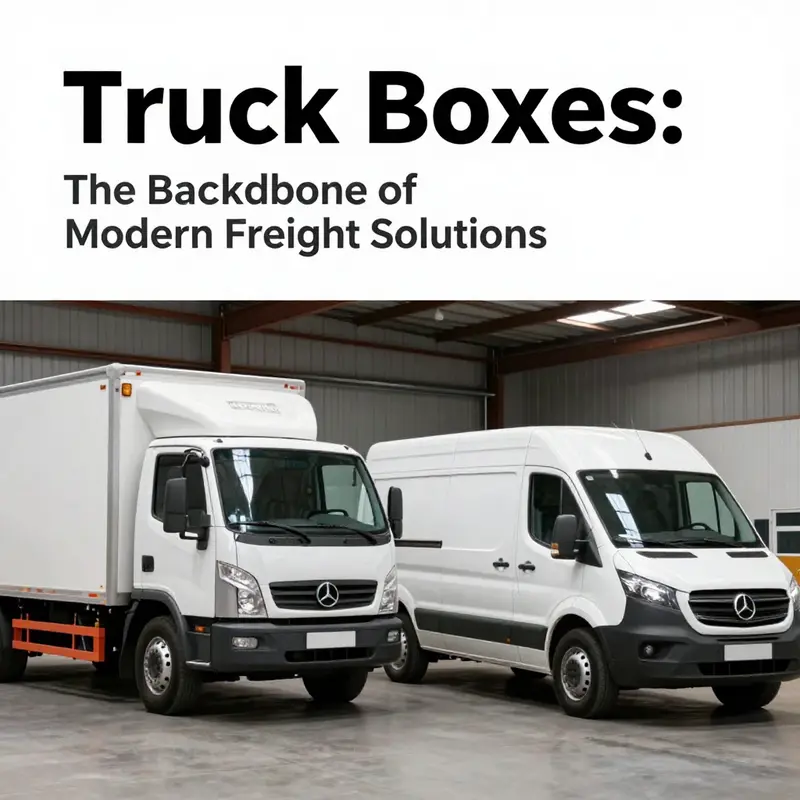
In the world of moving goods, the choice between a truck box and a box van feels like a choice between agility and magnitude. Both serve the same broad purpose—protecting and delivering cargo—but they embody different design philosophies that ripple through every part of a logistics operation. A chapter in a broader exploration of the truck box topic needs to trace not just the differences in form, but how those forms shape daily work, cost, and the pace of a business. When we look closely, the decision is less about one being superior and more about which envelope best fits a company’s routine, risks, and growth trajectory. A truck box, mounted neatly onto the bed of a pickup, reads as a modular tool in a field service kit. It emphasizes accessibility, flexibility, and on-site adaptability. Its structure tends to be a compact, purpose-built compartment that can reconfigure as needs shift from job to job without abandoning the entire vehicle. This is not merely a cargo container; it is a portable shop, a weatherproof drawer system, a set of secure, weather-resistant shelves that sit in plain view of a driver who still needs to respond quickly to a suddenly changing worksite. In practice, a truck box comes in several styles designed to maximize access within the limits of a truck’s frame. Cross bed boxes rest over the bed, enabling quick reach to tools while leaving space for larger items in the truck’s main cargo area. Gull wing variants open from the sides with dual doors that lift upward, providing a balanced approach to reach and organization. Floor boxes disappear beneath the bed rails and reveal slide-out drawers that allow technicians to retrieve a wrench or a spare part without bending or stooping. Each design aims to harmonize tool accessibility with the ability to haul the larger materials a job may require, preserving the truck bed for loose cargo and preventing the cramped compromise that often comes with cramped spaces. The emphasis is practical, not ornamental; the logic is to keep the hands free and the mind focused on the task at hand. The box van, by contrast, embodies a different architectural principle. It is a fully enclosed vehicle, with a cargo area that forms a weatherproof, often insulated chamber separate from the driver’s cabin. The body usually derives from a monocoque or a robust chassis-cab platform, designed to create a single, sealed volume that protects goods from rain, dust, and the more drastic swings of temperature encountered on long hauls. This enclosure is not merely a shell. It is a structured, engineered space with a rhythm of access that favors rear or side loading, pallet jacks, and sometimes forklifts because the interior is intended to be organized into bays, racks, or fixed platforms. The envelope becomes a controlled habitat for cargo, encouraging stacking, secure strapping, and predictable handling. It is less about tool access and more about inventory control and environmental stability. The contrast between these two approaches echoes a broader truth about logistics: the envelope shapes the routine. Where a truck box frames a mobile workshop, a box van frames a mobile warehouse. Both are built to withstand the elements, but the box van leans harder into environmental protection, security, and the efficient management of bulk goods. In the realm of materials, the truck box commonly uses rugged aluminum or steel, chosen for its resilience against impact and weather. The box van leans on a more substantial, integrated body design, often with enhanced seals and insulation that guard against moisture and temperature extremes—features valued when sensitive or perishable items ride along. The trade-off is clear: the truck box favors lightweight adaptability and quick retrofit potential, while the box van emphasizes durable containment and cargo integrity over longer, more controlled journeys. When it comes to capacity, the distinctions become more tangible. A truck box’s capacity is tightly coupled to the dimensions of the truck bed and the box style. It excels at protecting tools, equipment, and supplies in a compact footprint and can be tailored to specific workflows—say, a contractor’s kit with drawers for fasteners, a diagnostic toolkit, or a mobile inventory rack. Yet its internal volume remains bounded by the bed’s footprint, which means larger machinery or expansive inventories may outgrow the format. A box van, by comparison, offers far greater internal volume and payload potential. Depending on the model and configuration, a standard box van can carry anywhere from roughly a thousand pounds to three thousand pounds or more of cargo, depending on the chassis and axle setup. This difference translates into fewer trips to move the same inventory and can translate into meaningful fuel and labor savings over time. Accessibility complements capacity. Truck boxes are designed for proximity work. They provide targeted access to tools and gear, often from the ground or at a modest height, which can be a major advantage in field service—electricians, plumbers, technicians, and installers who need to reach a specific tool on a moment’s notice. Yet this design can also constrain how contents are organized and accessed, especially for items that require vertical stacking or wide, unobstructed spaces. Box vans invert that equation. They offer large rear doors, sometimes split or side-loading configurations, and interiors that are more amenable to palletized goods and heavy loads moved with manual or powered equipment. The interior’s rigidity supports systematic storage, secure strapping, and orderly stacking, a boon for delivery fleets, moving services, or distributors who must relocate inventory with confidence. The security and environmental protections offered by each design reflect similar priorities but differ in emphasis. The truck box shields through weather seals and sturdy construction, but because it sits atop a vehicle not fully dedicated to containment, it tends to be less encased than a true box van. It remains a protective accessory rather than a full enclosure. The box van, with its sealed, insulated body, provides superior moisture protection and temperature control, reducing the risk of damage to sensitive goods or perishables. Modern box vans augment this with locking systems, alarms, and reinforcement that further deter theft and tampering. If cost and maintenance are considered, the calculus shifts with time. A truck box generally represents a lower upfront investment and easier installation, especially for fleets retrofitting existing pickups. Maintenance tends to be straightforward, with a design that emphasizes practical durability and modularity. A box van carries a higher initial price tag along with ongoing costs for fuel, insurance, and routine servicing of a more complex vehicle platform. Yet the durability, integrated cargo protection, and potential long-term efficiency gains can offset these costs for operations with steady demand for high-volume, high-security transport. The decision between these two configurations hinges on how a business operates. A truck box shines where field service takes center stage—where technicians must carry a varied toolkit to multiple sites, spaces are constrained, and the ability to adapt quickly to changing jobs is a competitive advantage. In such settings, the truck box’s accessibility, modular layout, and ease of retrofitting are not just conveniences; they are essential productivity levers. A box van, on the other hand, is well suited to enterprises whose core requirement is reliable, secure transport of larger inventories, equipment, or goods over longer distances. Its capacity, security, and organized interior layout translate into improved efficiency for deliveries, relocations, or inventory distribution where the cargo itself is the primary driver of value. In framing a final recommendation, practitioners often weigh the day-to-day rhythm of their operations. If a crew spends most of its time at job sites, unloading and reloading small to medium loads in a flexible pattern, a truck box offers significant, tangible benefits. If, instead, the operation centers on moving substantial quantities of goods between facilities, or maintaining strict environmental control over the cargo, the box van’s strengths become compelling. The right choice is not about one being better; it’s about which envelope aligns with process, risk tolerance, and the cadence of work. For readers exploring practical enhancements, it is worth considering how accessories and add-ons can alter the utility of either option. A well-chosen set of tools, rails, and drawers can transform a bare box into a precise, on-demand workspace. For those curious about how such adaptations propagate through a broader vehicle ecosystem, the Accessories page offers a concise view of the kinds of upgrades that support efficiency and organization on the road. Accessories can become a bridge between a base enclosure and a tailored fleet, enabling adjustments that reflect the unique demands of a contractor’s day. In evaluating these designs, it is useful to keep a mental map of the trade-offs. The truck box excels where speed, flexibility, and on-site responsiveness matter most. The box van excels where volume, protection, and predictable logistics dominate. The two are not rivals in a single lane; they are two lanes of the same highway, each serving different destinations, times, and cargo profiles. The result is not a universal rule but a decision framework: identify the daily workflow, quantify the typical load and distance, assess exposure to weather and theft, and forecast future growth. Only then can a fleet align its enclosure strategy with the rhythm of its business. The literature and field evidence converge on a straightforward insight: the envelope matters because it shapes behavior. When crews can reach the right tools at the right moment, they move faster and with less friction. When cargo is protected from climate and theft, the risk-adjusted cost of moving goods goes down. This is the practical essence of choosing between a truck box and a box van. For those who want to put this learning into practice, a careful audit of current operations—what is loaded, how often, and where it is stored—will illuminate the path forward. External research points to the same conclusion: the best solution depends on how goods flow through a business’s network and how much emphasis is placed on accessibility versus capacity. External reference: https://www.britishtrucks.com/truck-box-vs-box-van-which-is-better-for-your-business/
From Steel to Sensors: The Digital Reboot of Truck Box Construction
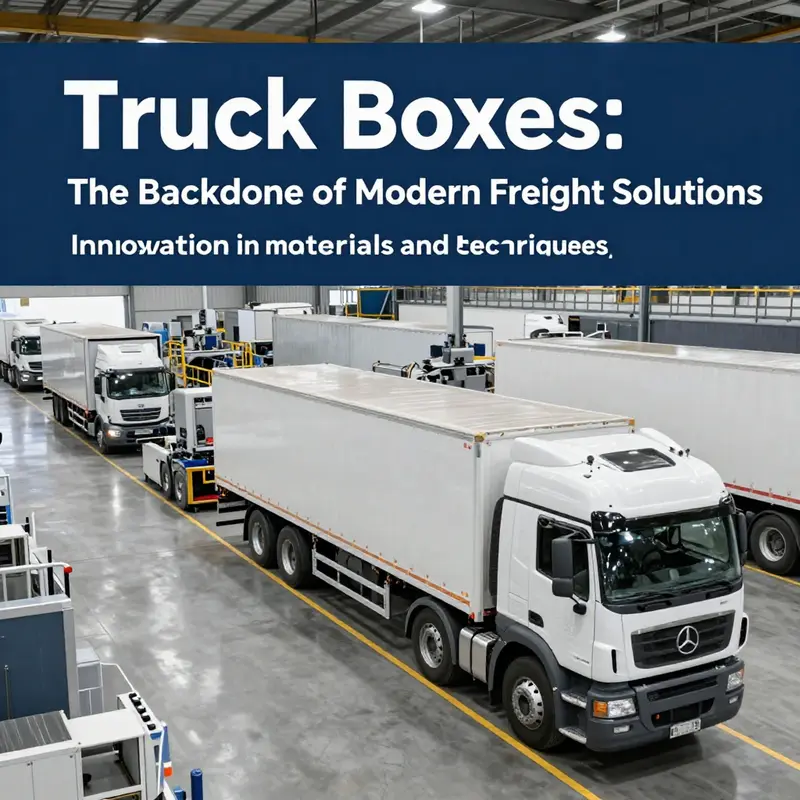
The truck box is no longer just a rigid enclosure welded to a chassis. In the modern logistics landscape, it stands as a functional node where structure, data, and sustainability converge. The shift from purely mechanical design to an integrated, digitally aware system is reshaping how these cargo enclosures protect, secure, and optimize the flow of goods. Far from being a secondary add-on, the box itself becomes a smart element of the fleet, capable of communicating with the vehicle, the driver, and the broader supply chain. This transformation is not simply about adding gadgets; it is about rethinking the box as a programmable space that can adapt to different cargos, routes, and regulatory environments, all while maintaining the core priorities of safety, durability, and efficiency.
At the heart of this transformation lies the integration of smart technologies. GPS tracking and telematics have moved from optional extras to standard expectations. Real-time location data allows fleet managers to know exactly where a vehicle is, but the implications extend far beyond asset visibility. Sensors embedded in the cargo area monitor conditions such as door status, vibration, and temperature, providing alerts when anomalies arise. For freight that demands climate control, insulated or refrigerated compartments can be paired with thermal sensors that report deviations before they affect goods. The result is a feedback loop that keeps cargo secure and helps drivers adjust routes or handling practices on the fly. When a box is equipped with door alarms, load sensors, and tamper indicators, the risk of theft or tampering is markedly reduced. These capabilities also support compliance and audit trails, because every event is timestamped and recorded in the telematics stream.
The software layer that rides on top of the hardware makes all of this actionable. Data from the box can be fused with vehicle telemetry, weather information, and traffic feeds to optimize loading sequences and routing decisions. The ability to monitor cargo status remotely reduces the need for repeated stops or manual checks, which in turn lowers labor costs and minimizes dwell time at facilities. In addition, the box can host modular interfaces for various fixtures or racks, enabling rapid reconfiguration for different loads without structural changes to the chassis. This modular approach aligns with the broader move toward agile logistics, where fleets must pivot quickly to accommodate surges in demand or changes in service levels. As these systems evolve, even small improvements in data accuracy translate into meaningful gains in reliability and customer satisfaction.
Material science has joined the conversation with advances that make the box both lighter and stronger. Traditional steel remains a foundation for its durability, but lightweight high-strength steel and advanced aluminum alloys offer torque resistance and fatigue performance that enable larger payloads without a proportional increase in weight. The lighter the box, the more weight can be allocated to the cargo itself, delivering direct economic and environmental benefits. Composite materials are also finding a foothold in non-structural panels, where they provide superior impact resistance, insulation, and corrosion resistance with lower mass. The material mix is chosen not only for strength but for manufacturability and serviceability. Panels that resist denting, seals that hold under a wide temperature range, and liners that reduce noise and protect cargo all contribute to a more efficient, user-friendly enclosure. In practice, this means fewer maintenance interventions and longer service intervals, which in turn keep vehicles on the road longer and reduce lifecycle costs.
Manufacturing processes mirror this virtuous circle of performance and efficiency. Automation and precision fabrication techniques improve the consistency of box construction, ensuring that joints, fasteners, and seals perform uniformly under real-world conditions. This consistency is crucial for heat management, water ingress prevention, and structural integrity during long-haul operation. Automated coating and curing processes reduce VOC emissions and enable tighter control of surface finish, which enhances durability in exposed environments. The result is a truck box that not only protects its contents more reliably but also withstands the rigors of diverse climates and intermodal transfers. In a broader sense, these improvements contribute to a supply chain that is less prone to disruption, because the box is less likely to fail in the field and less likely to require unscheduled downtime.
Sustainability has moved from a niche concern to a central design criterion. The shift toward smarter logistics toward smarter materials and processes is guided by a simple principle: design for longevity and adaptability. Reusable fixtures and modular interiors allow fleets to transform a single box into multiple configurations for different cargo classes, reducing the need for a fleet full of specialty bodies. Eco-friendly materials, when feasible, are chosen not only for their lower embodied energy but for their compatibility with repair and end-of-life recycling streams. In addition, design choices are oriented toward energy efficiency. Aerodynamic refinements at the box level, when integrated with the vehicle cab, reduce drag and fuel consumption on longer routes. Insulation strategies that minimize peak cooling loads lower energy use in refrigerated operations. Together, these elements show that the box can contribute to the vehicle’s overall efficiency profile rather than being a passive recipient of energy costs.
The interior design of the box has emerged as a focal point for functionality and safety. It is common to see internal fixtures—racks, fixed tie-downs, and modular anchoring systems—that secure cargo with precision while allowing rapid reconfiguration. For specialized loads, the interior environment can include fixed racks or adjustable partitions, along with built-in anchoring points that align with standard pallet dimensions. For perishable or sensitive goods, integrated climate-control modules and humidity-aware liners create controlled micro-environments that stabilize product quality during transit. In all cases, the goal is to reduce cargo movement, which protects both the goods and the box itself from impact and wear. With such interior versatility, a single box can be repurposed for groceries, electronics, machinery parts, or furniture—all without sacrificing the integrity of the body or the safety of the driver.
Alongside the core engineering and materials choices, the ecosystem surrounding the box has grown more robust. The box is now embedded within a digital workflow that includes route planning, maintenance scheduling, and predictive analytics. When the system detects wear on hinges or sealants, it can trigger proactive maintenance before a failure occurs. This predictive capability lowers the total cost of ownership and improves uptime. The driver benefits as well; fewer unplanned stops and smoother handling translate into a less strenuous work experience and a safer operating environment. The fleet gains from better asset utilization, allowing more consistent service levels and improved reliability for customers who depend on timely deliveries. All of these improvements reinforce a simple truth: the modern truck box is a smart, adaptive platform that amplifies both the vehicle’s capabilities and the fleet’s performance.
In this broader arc, the box is no longer a solitary component but part of an integrated system. A well-conceived box works in concert with sensors, connectivity, and intelligent software to deliver a level of operational visibility that was unimaginable a generation ago. The practical implications extend to maintenance planning, where predictive data about insulation performance, structural fatigue, and seal integrity informs service schedules. They extend to safety, where real-time alerts about door status, load shifts, or overheating components prompt immediate action. And they extend to sustainability, where smarter materials, lightweight designs, and energy-conscious features reduce environmental impact across the vehicle’s life cycle. The box thus evolves from a protective shell into a proactive participant in the logistics chain—one that helps ensure goods arrive on time, intact, and in the most efficient manner possible.
For readers seeking to explore practical implementation and ongoing enhancements, the Accessories page offers insights into how drivers and fleets tailor the box to their specific needs. These upgrades range from simple fixtures that improve organization to more advanced modules that monitor conditions and provide secure anchoring for varied cargo classes. See Accessories for a sense of how small, deliberate additions can multiply the value of the primary cargo enclosure. The chapter’s trajectory toward smarter, lighter, and more resilient box construction remains anchored in a simple premise: design and technology must work together to maximize reliability, reduce waste, and support humane, efficient operations on every mile of the journey.
As the industry continues to test and refine materials, sensors, and manufacturing methods, the future of the truck box points toward modularity, connectivity, and stewardship. A box that can be reconfigured quickly, communicate with the rest of the vehicle, and operate with minimal energy input will be the norm rather than the exception. This evolution aligns with broader shifts in logistics toward end-to-end visibility, sustainable practices, and high-performance reliability. It also invites further exploration into standards, interoperability, and the training required for crews to maximize the benefits of these advanced enclosures. In sum, the digital reboot of truck box construction is less about replacing steel with circuitry and more about weaving the box into a smarter, more responsive transportation system that still honors the timeless demands of protection, security, and dependable operation.
For a broader market perspective on how technology is shaping the box truck body landscape, readers can consult industry analyses that synthesize material, regulatory, and economic trends. See the external resource at the end of this chapter for a comprehensive overview: https://www.grandviewresearch.com/industry-analysis/box-truck-body-market.
The Economic Weight of Truck Boxes: How Cargo Boxes Shape Freight Economics
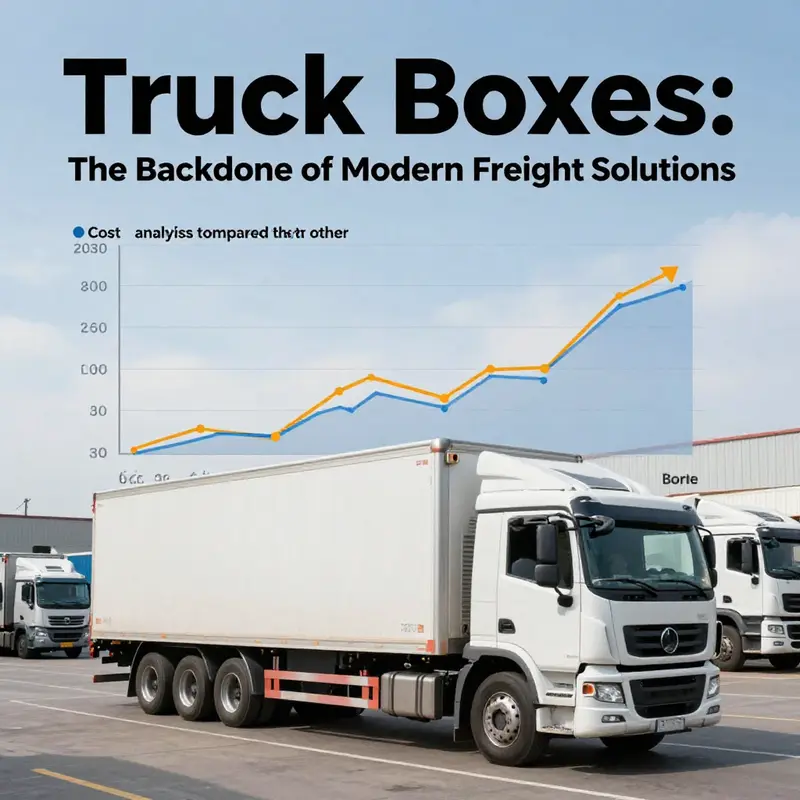
In the vocabulary of modern logistics, the truck box is more than a numeric cargo space or a painted box on wheels. It is a strategic element that folds into the cadence of supply chains, shaping costs, timing, risk, and value. As a tightly engineered enclosure that protects goods from rain, dust, and damage, the box defines how efficiently a truck can move from origin to destination. It is the shared surface where material science, operations research, and market dynamics meet. The economic story of truck boxes begins with a simple truth: every cubic foot of payload, every ounce of tare, and every minute of loading or unloading translates into cost, revenue, and competitive advantage. Across different scales of operation—from regional distribution to跨境 freight corridors—the design, capacity, and utilization of freight containers or cargo boxes are among the most consequential variables in the equation of freight economics. The box’s influence extends beyond the visible trade-off between payload and weight; it touches fuel burn, maintenance, downtime, and even the reliability of delivery promises that customers rely on to keep their own operations synchronized with production schedules and store shelves.
A central thread in this economic tapestry is operational efficiency. The box functions as a controlled environment that couples with chassis and cab, forming a rigid, durable unit. Its dimensions and interior architecture determine how quickly goods can be secured, how easily shelves or anchor points can be adapted to different products, and how smoothly the box pairs with loading docks, ramps, or automated handling systems. When a box is designed with standard, well-understood dimensions, it unlocks a cascade of downstream efficiencies. Intermodal transfer points—where trucks hand off to trains or ships—depend on consistent dimensions to minimize handling time and reduce the risk of damage during transfers. In other words, standardization is not merely a matter of warehouse comfort; it is a productivity amplifier that lowers labor costs and shortens cycle times. The economic effect echoes through the entire logistics chain, because time saved at one node reduces the cost of waiting, inventory holding, and congestion at others. Operators can plan routes with greater confidence, knowing that a standardized box will fit the same pallet plans, the same dock equipment, and the same loading procedures across fleets and geographies.
Capacity matters for the bottom line in two complementary ways. First, the gross freight value tied to every trip rises with the efficiency of space utilization. A box that provides more usable volume without disproportionately adding weight elevates payload per mile. This translates into lower cost per ton-kilometer or per mile and a stronger return on capital for the same truck and trailer combination. Second, the utilization of the box across a fleet affects fixed costs and depreciation. When the same box serves a wide array of shipments—retail merchandise, perishables, consumer goods, industrial equipment—its value rises because it supports a larger set of revenue-generating activities. In a practical sense, higher utilization rates diminish the per-shipment overhead that carriers must recover through prices, leading to more predictable margins even when fuel costs or tolls swing. The economics of utilization are especially acute for carriers that operate under just-in-time manufacturing models, where every mile and every minute of cargo handling translates into measurable savings in days of inventory and in production line uptime for customers.
The design of the truck box, including materials, aerodynamics, and thermal management, has a direct bearing on operating costs. Advances in lightweight yet durable materials reduce tare weight, allowing more payload without increasing total vehicle mass. This directly lowers energy consumption per unit of freight moved, enhancing fuel efficiency and reducing emissions for the fleet. In an era where fuel price volatility is a constant concern, even modest gains in aerodynamics and weight reduction multiply into significant savings when scaled across hundreds or thousands of trips. Temperature-controlled compartments illustrate how specialized design decisions can preserve product integrity while constraining energy use. Perishable goods demand reliable cooling or temperature control, and the extra energy required to meet those conditions must be weighed against the value preservation of the cargo. The economic trade-off is settled only through a careful alignment of box design with product requirements, route characteristics, and service levels. In this optimization, the box becomes a tool for preserving value rather than a mere container for transport.
Beyond raw efficiency, the economics of truck boxes are deeply interconnected with risk management and reliability. A well-designed box reduces exposure to weather, theft, and damage, which translates into lower insurance costs, fewer claim settlements, and diminished reputational risk for carriers and shippers. The box, in effect, is a protective shield that keeps goods in the right state upon arrival. Fewer incidents mean less capital tied up in reserves for incident handling and a smoother flow of cash. In urban settings, where congestion and road restrictions shape travel time, robust cargo boxes that minimize on-route shocks help ensure on-time delivery rates. High on-time performance, in turn, is a critical determinant of customer satisfaction, contract compliance, and the willingness of clients to commit to longer-term, higher-value logistics arrangements.
A further dimension concerns macroeconomic dynamics: how the static features of a truck box influence dynamic markets. When standardized box dimensions are widely adopted across regions, they reduce the friction of cross-border and cross-modal trade. A standardized box becomes an interoperable unit that can ride trains, ships, and trucks with minimal reconfiguration. This interoperability lowers handling costs, reduces damage risk, and supports faster, more predictable supply chains. The economic benefits of such standardization extend beyond individual firms to national and regional economies by enabling more efficient freight corridors, accelerating industrial access to markets, and refining just-in-time manufacturing ecosystems. In this sense, the box is a microcosm of how equipment standards can enable macro-level efficiency gains, directly affecting competitiveness and growth.
The design and deployment of truck boxes do not occur in a vacuum. Infrastructure, regulatory regimes, and urban planning all shape the economic value of cargo boxes. For example, if access restrictions or weight limits constrain the use of certain boxes on specific routes, the overall cost and reliability of deliveries can be affected. Conversely, when infrastructure projects harmonize with equipment standards, congestion can be reduced, and travel times can become more predictable. A seminal study in this space analyzes the economic, environmental, and congestion impacts of truck access restrictions, showing how equipment standards—including cargo box design and usage—interact with infrastructure to influence freight efficiency and urban mobility. The insights from such research help explain why investments in better box design can pay for themselves through savings in travel time, fuel, and emissions, while also supporting smoother urban logistics operations.
This line of thinking connects to practical implications for fleets and shippers alike. A fleet that prioritizes box designs with robust load anchoring, modular interior configurations, and adaptable door mechanisms can tailor its boxes to a wide array of cargo profiles without sacrificing speed or safety. The ability to quickly reconfigure a box interior—whether to accommodate bulky furniture, delicate electronics, or temperature-controlled goods—reduces the need for specialized equipment at every stop. It also helps pin down the loading process to a repeatable sequence, which lowers labor costs and reduces the probability of human error during high-pressure loading windows. When a box is easy to load and unload, and when it provides secure, damage-free containment, asset utilization rises. Trucks spend more time moving goods and less time idling in yards or waiting for dock access. The downstream effect is a leaner operating model with tighter cash conversion cycles, improved service levels, and greater resilience to disruptions.
The broader economic picture cannot ignore the role of innovation in this space. Lightweight materials, improved insulation, and smarter cargo restraints all contribute to better performance without a commensurate rise in price. The economic payoff emerges when these design advances are scaled across fleets and regions, creating measurable savings in fuel, maintenance, and downtime. In turn, those savings can be reinvested into more productive capacity, enabling carriers to offer more competitive rates while preserving margins. The cycle—design improvements driving efficiency, efficiency enabling lower costs and higher utilization, which funds further innovation—makes the truck box an enduring lever of freight economics rather than a one-time upgrade.
To connect these ideas with everyday practice, consider the gradually increasing sophistication of the loading ecosystem itself. Integration with dock equipment, pallet standards, and routing software hinges on the box’s predictable geometry and secure attachment points. When the box aligns with dock seals, pallets, and hitches in a repeatable way, the entire loading chain gains speed and reliability. Operators who invest in a versatile, well-thought-out box architecture often see reductions in handling damage, shorter dwell times in yards, and a steadier cadence of outbound deliveries. The cumulative effect is a more predictable cost structure, which translates into competitive pricing for customers and steadier revenue streams for carriers. As demand for fast, reliable freight continues to rise, the economic value of a well-conceived truck box becomes clearer with every mile traveled.
For readers seeking further insights into how these relationships unfold in practice, the research that links freight containerization, equipment standards, and urban efficiency offers valuable context. The interconnectedness of infrastructure, design, and utilization makes clear that the box is not a passive shell; it is an active instrument of economic performance. As the industry continues to push toward greater standardization and smarter materials, the potential for improved efficiency and reduced environmental impact grows correspondingly. And while the box itself is only one part of the broader system, its influence is disproportionately large, shaping not only the way goods move but also the pace at which economies can evolve around those movements. For those who work in logistics, the chapter of the box is a reminder that the most consequential improvements often appear at the intersection of form, function, and financial prudence. In this sense, embracing thoughtful truck box design becomes a practical strategy for sustaining competitiveness in a world where speed, reliability, and cost discipline are the key currencies of success. When evaluating opportunities to upgrade or standardize fleet equipment, teams should consider how a box can unlock faster loading cycles, reduce damage risks, and enhance interoperability across modes—thereby lowering total cost of ownership and elevating service levels across the supply chain. For readers interested in related practical considerations, see the broader discussion of those accessories that can complement a truck box with improved functionality and resilience, such as the array of truck accessories. The overarching lesson is clear: the economics of freight are inseparable from the economics of enclosure, and thoughtful design choices around cargo boxes amplify value across every mile of transport. To deepen the scholarly perspective on the topic, researchers point to the link between infrastructure constraints, equipment standards, and freight performance in studies such as the Economic, Environmental and Congestion Impacts of Truck Access Restrictions, which illuminate how tighter or looser rules can reverberate through costs, efficiency, and urban mobility. https://www.researchgate.net/publication/228745319EconomicEnvironmentalandCongestionImpactsofTruckAccess_Restrictions
Final thoughts
As businesses strive for operational efficiency and reliability in freight transportation, understanding the role of truck boxes becomes essential. Their innovative design, practical applications, and economic advantages significantly influence a company’s logistical strategies. By choosing the right truck box for your needs, you not only enhance cargo protection and loading efficiency but also drive cost-effectiveness and competitiveness in your field. Investing in high-quality truck boxes is ultimately investing in your business’s future success.