
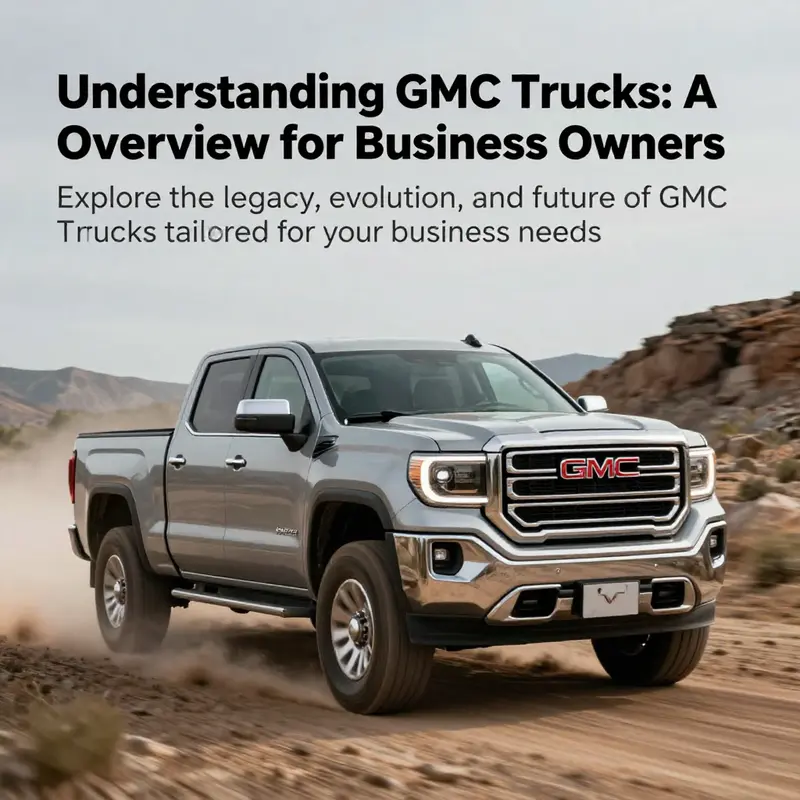
GMC Trucks, a cornerstone of the automotive industry, stand for General Motors Corporation Truck and represent a rich history of innovation and durability. Established in 1907, GMC was born from the Rapid Motor Vehicle Company, emphasizing commercial vehicle reliability. As business owners, understanding GMC’s heritage, brand evolution, product offerings, market position, and sustainability commitment is crucial for making informed vehicle choices. Each chapter will delve into these facets, ultimately providing a holistic view of what GMC Trucks stand for today.
GMC Meaning and a Century of Trucking Toughness
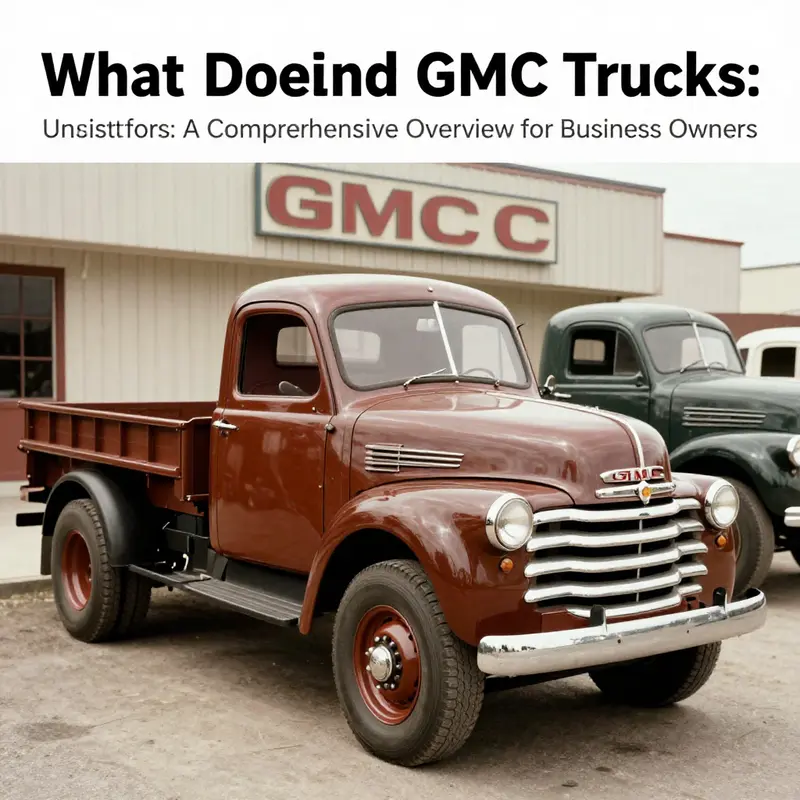
The letters GMC are familiar in the world of trucks, but what they stand for has a history that goes beyond a simple badge. For many drivers the GMC name signals rugged capability and dependable performance. The origin of the acronym traces back to General Motors and the company’s early truck operations, but the exact meaning has varied over time. In the earliest days the brand emerged from a division focused on heavy duty commercial vehicles, a lineage that grew out of a collaboration with Rapid Motor Vehicle Company. The goal was to deliver durable trucks that could handle work sites, long hauls, and tough environments. Over the decades the brand expanded its scope while keeping the core promise of reliability and practical engineering.
There are two commonly cited interpretations of the letters. One view is that GMC stands for General Motors Company. Another, more specific reading is GMC Motor Truck Division, a designation used to underline the truck focus within General Motors. Both strands reflect real moments in the brand’s history. The General Motors Company interpretation ties GMC to the wider corporate family, while the Motor Truck Division interpretation recalls the unit’s roots in heavy work vehicles. In practice the badge has come to symbolize a blend of durability, straightforward maintenance, and a willingness to tackle demanding tasks. Modern GMC models also add comfort, safety and technology, but the emphasis on workhorse capability remains a through line.
Today, GMC sits at the intersection of heritage and contemporary design. The trucks and SUVs bearing the badge are built to endure, with engineering that supports uptime for fleets and confident driving for everyday customers. The brand has evolved with new powertrains, smarter safety systems, and refined interiors, yet it still aims to honor its work oriented origins. For readers curious about branding and history, the GMC story offers a clear example of how a corporate division can evolve into a broad mainstream lineup while keeping a consistent message about capability and reliability.
What GMC Truck Stands For: A Century of Built-Tough Heritage and the Drive Toward an Electric Future
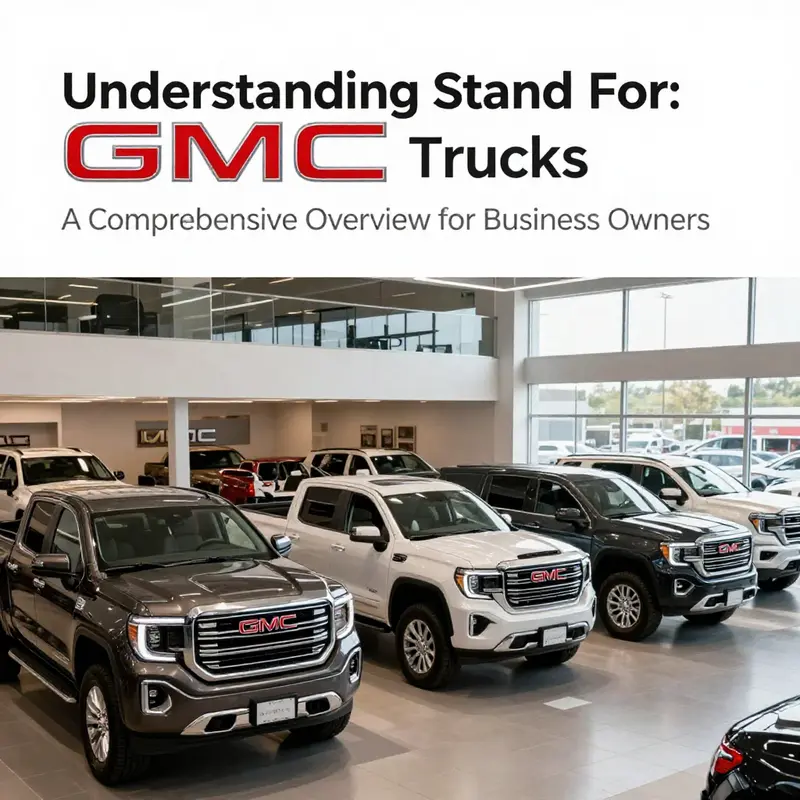
At its core, GMC Truck stands for more than a string of letters. It is a declaration of a purpose forged in the early days of mechanized industry and tempered through decades of American enterprise. The acronym itself, General Motors Truck Company, marks a historical commitment: a business unit within General Motors dedicated to the hard, practical work of moving people and payloads in demanding conditions. That origin story is not merely about a name; it is a lens through which we can read the brand’s evolving ambitions, its response to changing needs, and its deliberate drift toward new technologies while staying true to a promise built on durability and dependability.
The earliest chapters of GMC trace to the dawn of the 20th century when rapid industrial expansion demanded rugged, reliable vehicles capable of hauling, logging, building, and supporting commerce. The Rapid Motor Vehicle Company, a precursor to what would become part of General Motors, specialized in commercial vehicles. The acquisition and consolidation that followed helped GM organize its engineering muscle around a single, clear mandate: trucks and commercial transport could be engineered to endure, to perform in tough environments, and to scale with the nation’s growth. The official adoption of the GMC name later became a public declaration of that mandate. It signaled a centralized identity within GM that the public could trust for workhorse capability and practical innovation.
What followed was a long arc of development that intersected with moments of national necessity and civilian aspiration alike. During periods of global conflict, the brand earned a reputation not merely for endurance, but for a kind of reliability that could be counted on in the most demanding logistics and supply chains. In those years, GMC’s vehicles gained a reputation for steadiness under pressure, a trait that would define the brand for generations. The lessons learned in war-time operations informed how GMC approached design, materials, and manufacturing discipline long after the smoke cleared. The resulting blend of ruggedness and precision became the backbone of GMC’s identity as a maker of trucks and utility-focused SUVs that could perform when it mattered most.
As markets shifted and technology progressed, GMC did not rest on its legacy alone. It evolved from a utilitarian workhorse into a more versatile brand that could marry practical capability with the comfort and refinement expected by a broader audience. The shift was gradual but unmistakable: the company began to frame its offerings as premium in their class, while continuing to emphasize durability, serviceability, and real-world functionality. That evolution created a space where workhorse capability and refined engineering could coexist. In this way, GMC reframed its narrative from “only trucks for hard labor” to “premium trucks and utilities with a backbone of toughness.” The same core values—reliability, strength, and thoughtful engineering—remain visible in every new model, even as the features and materials have advanced to meet modern expectations.
The journey into the modern era marked a distinct pivot toward electrification and sustainable leadership, a move that signaled broader ambitions beyond mere horsepower. General Motors lined up a substantial investment toward electric propulsion, autonomous technology, and the infrastructure needed to support a cleaner and more connected form of mobility. GMC’s role in this strategic reorientation is not a rebuke of its past; it is a continuation of its core promise in a new language. The company frames its future around electric, capable, and premium vehicles designed to perform across terrains and tasks that demand efficiency as well as strength. In this vision, the brand’s history remains a touchstone—proof that toughness does not have to come at the expense of responsibility or innovation.
If one looks closely at the brand’s current identity, the throughline becomes clear. GMC positions itself as American craftsmanship that does not overstate its ambition but instead quietly elevates what customers expect from a utility-focused vehicle maker. The emphasis is on premium performance within the framework of rugged practicality. Across the lineup, the engineering teams seek to balance power with efficiency, luxury with usability, and technology with reliability. The result is a family of vehicles that can handle daily life with polish while still delivering the confidence needed for work or adventure. This is not a contradiction but a deliberate synthesis designed to meet evolving consumer needs without discarding the brand’s hard-won reputation for endurance.
A feature that often sparks interest in discussions about brand identity is the emblem itself. The GMC badge is more than a logo; it is a visual shorthand for a century of engineering discipline. The mark—red, bold, and legible—embodies the idea of assertive capability. The surrounding design, with its metallic framing and carefully considered negative space, invites observers to consider the balance between visible strength and the quiet precision that accompanies sophisticated engineering. The color choice and the overall silhouette convey a sense of confidence rather than bravado, suggesting that the brand’s competence is rooted in thorough process, rigorous testing, and a relentless focus on real-world performance.
Today’s GMC is less about proving a point and more about delivering a comprehensive value proposition. Its offerings are designed to appeal to drivers who want a vehicle that can serve as a practical tool for work, a comfortable daily car, and a capable partner for weekend exploration. The approach to design emphasizes straightforward usability, durable construction, and technology that enhances, rather than distracts from, the driving experience. This clarity of purpose underpins the brand’s messaging: you don’t have to choose between ruggedness and refinement; you can have both in a single, purpose-built package.
The alignment between past and present extends to how GMC views reliability. The concept of “built tough” is not a throwaway slogan but a reflection of decades of engineering choices intended to extend service life under demanding conditions. It is also a reminder that durability is a product of systems thinking—sound engineering, quality materials, and meticulous manufacturing practice—rather than a single feature or loud performance claim. In this sense, GMC’s current identity as a maker of electric, premium, capable vehicles represents a continuation of a carefully honed philosophy: that strength should be paired with intelligence, and that technology should serve people, not complicate their lives.
For readers curious about how a modern truck brand can maintain its distinctive voice while embracing electrification and software-driven features, the answer lies in a careful balance of tradition and experimentation. GMC’s evolution shows that a legacy brand can grow without erasing its core meaning. It can expand its capability set, adopt cleaner propulsion, and still stand for a tangible, redeemable promise: vehicles that endure, that perform with confidence, and that offer a comfortable, well-appointed experience. The brand’s journey demonstrates that the most compelling identity is one that respects the past while actively shaping the future—a trajectory that resonates with anyone who has faced tough jobs, difficult terrain, or the thrill of a weekend ride.
In practice, what this means for the consumer is continuity with progress. A GMC vehicle promises a certain level of resilience backed by modern engineering. The user experience is designed to be intuitive, with a focus on essential controls, robust materials, and meaningful technology that genuinely enhances safety, efficiency, and comfort. This combination of enduring function and refined execution explains why the brand retains a loyal following even as it pushes into electric powertrains and next-generation propulsion systems. It is not nostalgia masquerading as progress; it is progress anchored in a tradition of dependable manufacturing and a clear, customer-centered vision.
The question, then, of what the GMC acronym stands for becomes less a literal explanation and more a narrative frame. It is a record of how a company built around a specific mission—to move people and goods reliably in a competitive landscape—evolved in response to changing technology, shifting consumer expectations, and broader economic pressures. The name remains a reminder of that mission, a public statement that the company’s core purpose has endured even as its tools and capabilities have changed dramatically. And as the industry advances toward autonomous driving, smarter energy management, and connected ecosystems, GMC’s stance is to keep the workhorse instinct alive while embracing innovations that expand what a truck can be and do for people in their daily lives.
For those who value practical guidance on outfitting a vehicle for real-world tasks, there are accessible resources that illustrate how to extend a truck’s utility without compromising its core strengths. A concise guide on practical add-ons and accessories provides a window into how owners adapt their vehicles to diverse environments—work sites, farms, and family adventures alike. An example of this practical wisdom can be found in a dedicated resource about effective roof-mounted gear, which highlights how simple thoughtful enhancements can multiply a vehicle’s usefulness in a variety of contexts. See Roof racks for ideas on extending cargo versatility and organization on the go. This kind of hands-on information complements the brand’s emphasis on robust engineering and thoughtful design, underscoring the idea that a truck is most valuable when it is adaptable to the user’s needs rather than limited by the vehicle’s original configuration.
As GMC continues to articulate its future, the brand’s legacy serves as a steady compass. It reminds us that enduring strength, intelligent engineering, and a commitment to responsible progress can coexist with a forward-looking electrified lineup. The name stands for a history of tangible outcomes—vehicles that could be trusted to perform under pressure—and a future in which reliable, efficient, and premium mobility remains within reach for more people. The arc from a focused truck division within a global corporation to a modern, sustainability-minded brand reflects a broader pattern in American manufacturing: the capacity to honor time-tested craft while embracing change that expands opportunity. In that sense, GMC’s story is not simply about a label or a family of vehicles; it is about a philosophy of work, care, and ambition that continues to resonate with drivers who demand that their trucks do more than move from point A to point B.
External resource: https://www.gmc.com
What GMC Stands For: A Century of Rugged Purpose, Craft, and Forward-Looking Innovation
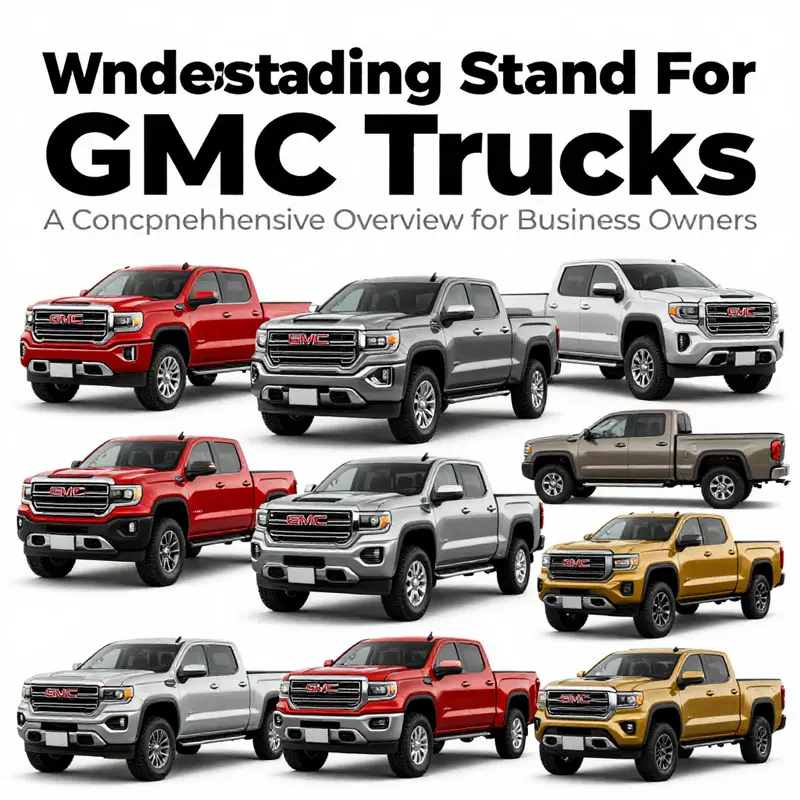
The question of what GMC stands for is more than a collection of letters. It is a concise reminder of a larger story about a brand born within the machine-making muscle of General Motors and then tempered by decades of real-world use. In its simplest form, GMC is tied to the idea of trucks that work as hard as the people who use them. Yet the history embedded in those three letters runs deeper than the word “truck.” It traces a lineage from a steel-and-engineering era to today’s blend of capability, craftsmanship, and technology. The letters themselves originated as an emblem for a division of General Motors dedicated to heavy-duty, commercial, and eventually premium personal-use vehicles. The name evolved from a division centered on commercial mobility to a broader identity that still values durability, but now also emphasizes refinement, safety, and smarter engineering for everyday life as well as demanding jobs. In this sense, GMC stands for more than a corporate moniker; it embodies a philosophy about how a vehicle can be both steadfast ally and quiet innovator, a partner for work sites, job sites, weekend getaways, and everything in between.
From the outset, the GMC lineage was built on a straightforward premise: strength that lasts. The division emerged under the umbrella of General Motors through a strategic alliance with the Rapid Motor Vehicle Company, a collaboration that anchored the brand in practical engineering and robust chassis design. Those roots explain why the early GMC trucks earned a reputation for enduring performance in challenging conditions. The priority was never merely to move goods or people; it was to move them reliably, even when the weather turned rough, the terrain became unforgiving, or the schedule demanded precision under pressure. That emphasis on reliability has persisted as the brand matured, even as it expanded into more refined interiors, more sophisticated tech, and a broader range of body styles. The core idea—trustworthy performance—remains the through line that connects the original purpose to the contemporary product lineup.
In the modern era, GMC has embraced a more holistic identity that still respects its commercial backbone but invites a broader audience to experience what a premium truck can offer. The brand’s product line has become a clear expression of its philosophy: premium features, thoughtful craftsmanship, and a commitment to durability that doesn’t require sacrificing comfort or convenience. This is not marketing talk; it reflects how the trucks are designed and built. Every component—from the frame geometry to the seat foam and from the instrument panel to the weather seals—receives careful attention to ensure that long days behind the wheel feel less strenuous and more purposeful. The differentiation from other GM brands rests not on abandoning rugged capabilities, but on elevating the experience with refined materials, quiet cabins, better sound dampening, and intuitive technology that supports drivers in real-world tasks rather than merely showcasing gadgetry.
A focus on premium features marks GMC’s current product narrative. The brand has cultivated a distinct identity by harmonizing heavy-duty capability with refined interiors and modern technology. The approach is pragmatic: a truck that can serve as a work tool during the week and a comfortable, confident companion on family trips during the weekend. This duality speaks to a broader cultural shift in the pickup segment, where buyers increasingly value both toughness and everyday usability. The product line emphasizes configurations that accommodate varied needs—towing capacity, payload, off-road capability, and interior luxuries—without compromising the essential reliability drivers expect. In this sense, the GMC proposition is less about chasing a single consumer segment and more about delivering a versatile platform that can adapt to different roles with competence and ease. The emphasis on premium craftsmanship ensures that this versatility is not at odds with a sense of solid, long-term value. For those considering practical upgrades that enhance utility, options such as roof-mounted storage and external organizing systems are frequently discussed in owner forums and accessory guides, offering ways to extend the truck’s usefulness without diminishing its core strengths. A practical starting point for customization is often found in guides like those dedicated to roof racks for trucks, which illustrate how thoughtful add-ons can expand capacity while preserving access and balance. roof racks for trucks.
Innovation is not a gloss on the GMC badge; it is embedded in the engineering choices that determine how a vehicle behaves on the road and how it supports a driver’s ambitions. One notable area of progress is a driver-assistance system designed to enable hands-free operation on approved highways. The system represents a shift toward safer, more convenient driving in scenarios where long highway stints are common, such as daily commutes, long-haul deliveries, or weekend getaways that require sustained focus. It is an example of how GMC integrates advanced driver aids with a robust platform that remains accessible to a broad user base. The technology is paired with a chassis and powertrain tuned to preserve stability and confidence, whether traversing a muddy backroad or cruising along a smooth interstate. Importantly, these features are intended to reduce fatigue and increase awareness, while respecting the driver’s responsibility and attention. They symbolize a philosophy that innovation should extend human capability rather than replace it. The result is a vehicle that feels both sophisticated and dependable, a rare combination in a sector where progress can sometimes outpace practical usability.
Another significant thread in GMC’s innovation story is the adoption of lighter materials to improve efficiency without compromising strength. Aluminum alloy bodies, for instance, have been explored as a means to reduce weight while maintaining the rigidity and durability essential to heavy-duty use. Lighter vehicles trimmed with strong materials can deliver better handling, more efficient operation, and lower emissions—benefits that resonate with professional users who depend on payload and performance as non-negotiables. The engineering teams behind GMC emphasize compatibility between material choices and real-world application, ensuring that the weight savings translate into tangible advantages, such as improved acceleration, better braking response, and enhanced fuel economy in everyday driving. This material strategy aligns with broader industry trends toward sustainability, but GMC’s approach remains anchored in the practical realities of construction sites, ranches, and remote work sites where credibility and resilience are paramount. It is a reminder that innovation at GMC is not about chasing novelty; it is about meaningful, measurable improvements that help professionals and enthusiasts alike.
The most contemporary facet of GMC’s innovation portfolio is its commitment to electrification as a core strategic path. Rather than approaching electric propulsion as a niche or a marketing ploy, the brand treats it as an evolutionary step that broadens capability while reducing environmental impact. The development of all-electric platforms within the truck family speaks to a recognition that clean power and sustained torque can coexist with heavy-duty performance. The engineering challenge here is clear: to preserve the traditional strengths of the GMC platform—durability, towing and payload capacity, and off-road prowess—while delivering the instant torque, quiet operation, and efficiency associated with electric propulsion. The narrative, in essence, is about balancing legacy with transformation. It signals a future where the GMC ethos remains intact—hard-working, reliable, and capable—while embracing new propulsion technologies and adaptable architectures that can support evolving needs and regulations. This careful synthesis of past and future helps explain why the GMC name continues to carry credibility among commercial fleets and weekend adventurers alike.
The GMC identity also reflects a broader commitment to craftsmanship. Inside, materials, fit, and finish are treated with a purpose that goes beyond mere appearance. The cabin invites long-haul comfort with ergonomically designed controls and thoughtful layout, while the exterior communicates a readiness to tackle rough conditions through stable lines, protective detailing, and a balanced stance. This focus on interior quality does not detach the vehicle from its workhorse lineage; instead, it reinforces the idea that a modern truck can endure demanding days and still offer a refined sense of ownership. Vehicle design teams emphasize longevity and ease of maintenance as essential elements of the product philosophy. Longevity reduces lifecycle costs and fosters a sense of trust between driver and machine, a rapport that is hard to achieve with a purely commoditized product. In this light, GMC’s approach to product development is about more than peak specifications; it is about the daily utility and enduring value that come from deliberate engineering choices.
In sum, the meaning of GMC, as a practical and aspirational concept, has evolved without sacrificing its core purpose. The letters describe not only a corporate lineage but also a practical promise: a vehicle that can handle heavy tasks, support meaningful time away from work, and do so with a degree of refinement that makes daily life more comfortable and predictable. The brand’s product line mirrors this promise through configurations that cater to different uses, features that improve safety and convenience, and innovations that push the envelope while remaining grounded in real-world reliability. The interplay between heritage and forward-looking technology is what keeps the GMC footprint distinctive in a crowded market. It makes the brand more than a badge on a truck; it makes it a living statement about how durable performance and thoughtful luxury can coexist, and how a company can chart a course that respects its roots while embracing the opportunities of tomorrow. For readers who want to explore the official stance and current lineup, the brand’s site provides a detailed portrait of its direction and capabilities: https://www.gmc.com.
null
null
Brand DNA in Motion: Unpacking What GMC Truck Stands For as It Drives Toward Electrification and Sustainability
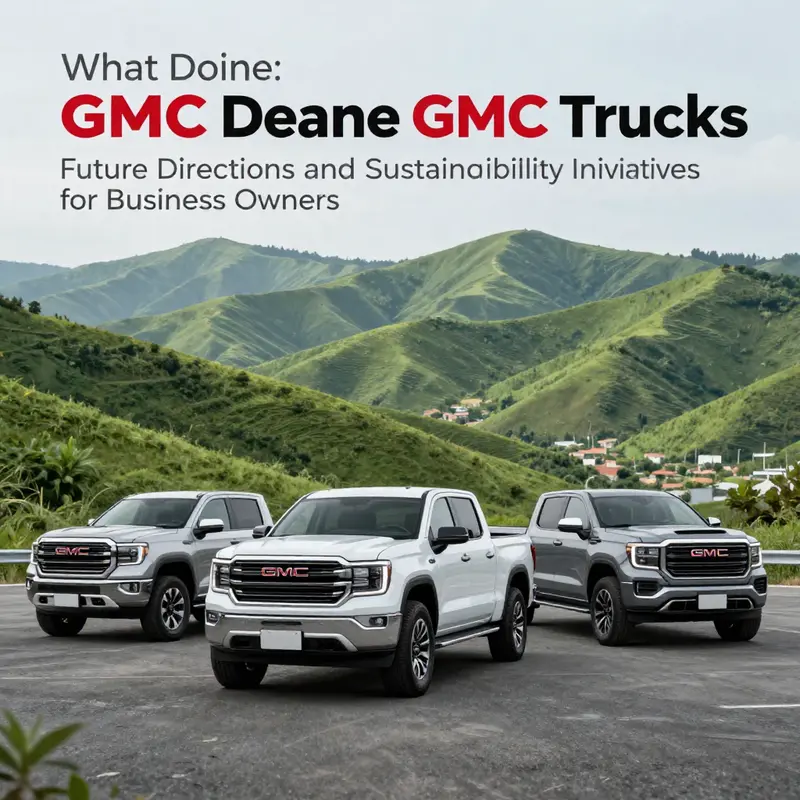
Brand DNA in motion: GMC stands for a legacy of practical, professional-grade trucks from General Motors. Rooted in durability, utility, and a disciplined approach to design, GMC has evolved from a workhorse provider to a premium brand that blends rugged capability with refined interiors and thoughtful technology. Today, GMC is reimagining its identity through electrification and sustainability, delivering instant torque, controlled handling, and a calmer ride while preserving the reliability customers expect. The brand’s commitment to carbon neutrality by 2040 guides its manufacturing changes, materials choices, and lifecycle thinking, aligning product strategy with responsible stewardship without sacrificing capability. Geography and market strategy extend GMC beyond North America, while maintaining predictability, durability, and long-term viability everywhere it is used. In daily practice, GMC remains a dialogue between utility and refinement: a truck that helps people move, work, and live with confidence, now with an electrified, smarter future. External resource: https://www.gmc.com
Final thoughts
To understand what GMC Trucks stand for is to grasp a legacy steeped in durability, innovation, and a commitment to addressing modern market demands. From their historical roots as a commercial vehicle pioneer to their current position as a leader in sustainable truck development, GMC provides business owners with reliable and innovative vehicle solutions. As the brand continues to evolve, maintaining awareness of its advancements and sustainability initiatives will be vital for anyone in the truck using sector.