
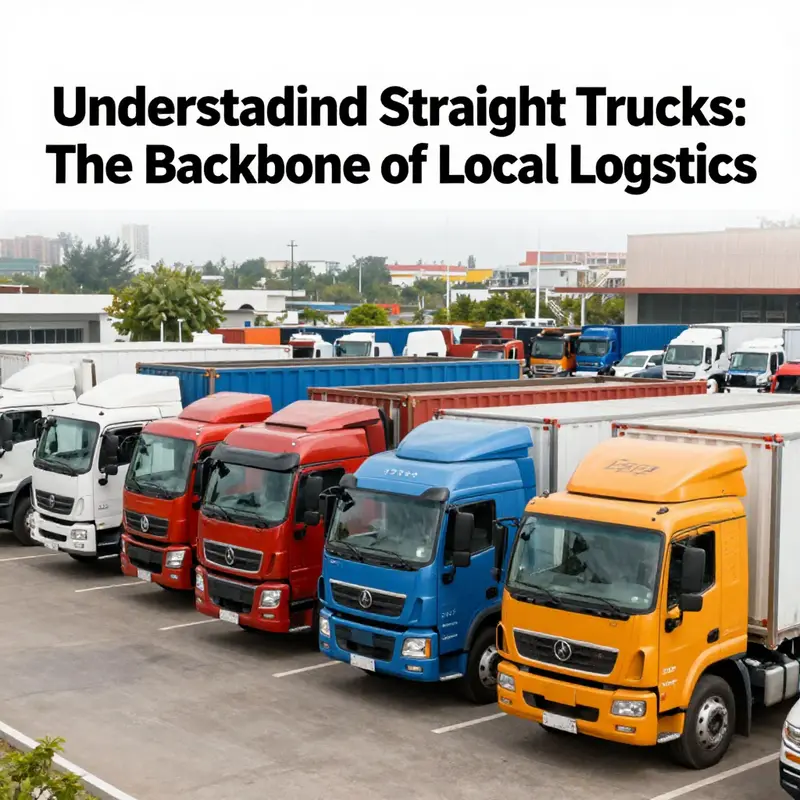
A straight truck serves as a pivotal resource in logistics, especially for businesses focused on local deliveries. Unlike articulated vehicles, a straight truck has a single chassis that integrates both the cargo area and the cab. This unique construct offers advantages and challenges for business owners managing their delivery fleets. In the forthcoming chapters, we will delve into the definition and structural intricacies of straight trucks, examine their applications in local deliveries, and evaluate the benefits and limitations they present in logistics operations.
Rigid by Design, Agile in Practice: Understanding the Straight Truck and Its Role in Local Freight
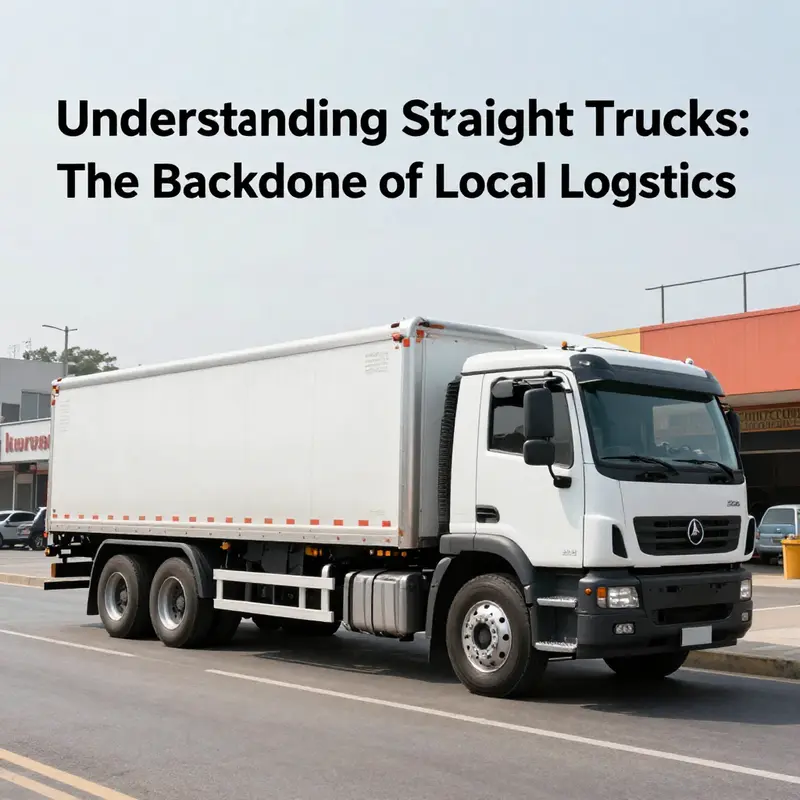
A straight truck, at first glance, appears as a single, compact box perched atop a sturdy base. Its essence is simple: the cargo area and the cab are mounted on the same chassis, forming a continuous, unbroken structure. This unity is what drivers notice first when they navigate tight city streets or load docks in bustling neighborhoods. The instrument panel, the engine, the steering column, and the cargo enclosure all share the same frame, which gives the vehicle a distinct set of strengths and limitations. In a world where logistics demands rapid, predictable movements over short to medium distances, the straight truck offers a blend of maneuverability, reliability, and ease of use that makes it a staple of local delivery fleets, utility services, and moving operations. To appreciate its value, it helps to trace the straight truck’s anatomy and to consider how its integrated design informs every step of its operation, from the moment a driver climbs in to the moment cargo is safely delivered or swapped for a new load.
The definition sits at the heart of the straight truck’s appeal. It is a rigid vehicle, sometimes called a rigid truck or a box truck, meaning there is no trailer attached behind the cab. The power unit—the engine, transmission, and drive system—propels the entire cargo compartment as one piece. This contrasts with tractor-trailers, where the power unit and the cargo body are separated by a fifth-wheel connection and a separate trailer. The absence of a trailer makes the straight truck inherently simpler to operate and maintain. There is no fifth-wheel coupling to manage, no articulation to negotiate, and no need to couple or uncouple a trailer at the loading dock. In dense urban settings, this translates into fewer points of failure, more predictable handling, and a shorter learning curve for new drivers. The result is a vehicle that can be deployed quickly for routes that begin and end at fixed locations—grocery depots, hospital supply chains, apartment complexes, or municipal service centers—without the logistics overhead that a semitrailer might entail.
The core structural idea is straightforward: a robust chassis underpins both the cab and the cargo enclosure. The cab is not a separate, detachable unit; it is embedded into the frame. Behind the cab sits a cargo area, which can vary widely in size, shape, and material. Some straight trucks appear as modest delivery vans with a compact, enclosed box; others take the form of larger freight box trucks whose cargo spaces span several dozen cubic feet and approach several tons of payload. The cargo enclosure is typically constructed from durable materials such as steel or aluminum, sometimes insulated for temperature-controlled needs. The size and configuration of this box—its height, length, and overall volume—often determine the vehicle’s role. A smaller box suits last-mile grocery or parcel deliveries, while a larger, reinforced box with reinforced floors can handle regional shipments or contractor workloads that demand more space and higher durability. The chassis itself is engineered to bear the combined load of engine, drivetrain, and cargo, with a suspension system tuned to keep the ride stable while ferrying heavy goods through city streets and on short highway hops. The steering mechanism, brakes, and tires are all selected to balance stopping power, turning radius, and wear, given the relatively stop-and-go nature of urban work.
If we zoom in on the practical implications, two features stand out. First, the vehicle’s unarticulated structure produces a remarkably favorable turning radius. In dense neighborhoods—think narrow alleys, curb-side loading, or parallel parking at a bustling downtown block—the straight truck’s lack of a trailer means the wheelbase is effectively shorter to the driver, and the overall footprint is more manageable. A longer, articulated vehicle would struggle with the same maneuvers, whereas a straight truck can pivot with a confidence born of its compact form. Second, driving ergonomics are simplified. The cab and controls are designed for one operator, with a direct line of sight to the cargo area behind and to the sides. This can reduce fatigue and confusion, particularly for drivers who deal with frequent stops and starts, curbside loading, and careful nesting of pallets or boxes at loading docks. In practice, these factors translate into higher daily productivity and a lower risk of off-hits during delivery cycles.
Yet the very traits that make the straight truck attractive also shape its limitations. Because the cargo area is physically part of the same frame that houses the engine and drive components, payload capacity is inherently tied to the vehicle’s overall weight class. Straight trucks are excellent for short-haul tasks and local freight where the total volume of goods is substantial but not excessive. They typically do not match the raw payload of a heavy tractor-trailer designed for long-distance, high-volume movement. This is not a flaw so much as a design trade-off: the goal is to optimize for city navigation, quick turnarounds, and reliable door-to-door service rather than long-range fuel economy per mile or maximal tonnage. For fleets that rely on frequent, predictable trips within a defined geographic area, these constraints are often a small price to pay for the benefits of speed, ease of use, and upfront maintenance simplicity.
The structural overview extends beyond a single diagram in a warehouse catalog. The chassis forms the backbone of the vehicle, supporting the engine, drivetrain, and suspension. The cab, mounted directly on the chassis, contains the driver’s seat, steering wheel, pedals, and instrument cluster. The cargo area—often referred to in industry parlance as a box or cargo enclosure—sits at the rear and is attached with a configuration that keeps it sealed from weather and theft while offering a floor robust enough to support pallets and heavy loads. Materials vary, with aluminum box sections popular for their light weight and corrosion resistance, and steel boxes chosen for their durability and damage resistance in rough environments. The diversity of configurations reflects the wide range of tasks straight trucks perform—from temperature-controlled environments in food service or pharmaceutical supply chains to rugged, open-bed options for construction and landscaping contractors. The engine and transmission are mated to a standard suspension system that tolerates potholes, speed bumps, and uneven pavement. Braking systems are sized to provide reliable stopping power even when the truck is fully loaded, and steering mechanisms are calibrated for steady, predictable input that minimizes driver fatigue.
Within this structural framework, the absence of a trailer connection yields a pivotal operational consequence: maintenance and inspection are streamlined. There is one powertrain to service, one suspension system to inspect, and a single steering axis to monitor. There are fewer risk points than in a tractor-trailer configuration, where the fifth wheel, kingpin, and articulation joints demand regular attention. For a fleet manager, this translates into lower lifecycle costs and fewer maintenance downtime events. The cost savings accrue not only from reduced parts and labor for the drive system but also from simplified inspections during daily pre-trip checks. The cargo area, while critical for the business, is a separate challenge in its own right. The design of the box—whether it is a ventilated van, an insulated dry box, or a heated cargo area—directly influences the types of goods that can be carried, the speed of loading and unloading, and the risk of cargo damage on rough urban roads.
A straight truck’s uses reflect its structural and mechanical profile. Its versatility suits a broad spectrum of industries that require reliable, local logistics rather than long-haul efficiency. Deliveries in urban and suburban corridors benefit from the vehicle’s nimble handling and straightforward operation. Waste management services rely on the rigid body to contain refuse and recyclables securely while navigating tight streets for daily pickup routes. Moving companies lean on the box-like cargo region to enclose household goods and furniture, balancing protection with the ability to stack and secure items in a way that minimizes shifting during transit. Local freight transport, such as parcel distribution or supermarket replenishment, benefits from predictable schedules and quick dock operations, both made easier by the vehicle’s integrated design. Even within specialized sectors, variations exist: refrigerated straight trucks, insulated models, and boxes designed for temperature-sensitive cargo extend the concept beyond mere transport to a controlled environment that protects product integrity in varied climates and seasonal conditions.
If we consider the vehicle as a whole, the decision to choose a straight truck often comes down to matching the fleet’s operational demands with the vehicle’s inherent strengths. The cab-body integration fosters straightforward maintenance routines, a familiar driving experience, and the agility to operate within fixed-route networks where time is a critical factor. For fleets that must frequently adapt to evolving routes, the straightforward loading and unloading geometry of a box-like cargo area minimizes the complexity of dock operations. Drivers can learn the standard sequence of steps—from approaching a loading bay to securing the cargo locks—without wrestling with a trailer’s tilt, coupling, or disconnecting procedures. This reduces training time and lowers risk during increasingly congested delivery windows. In many ways, the straight truck emerges as the practical compromise between smaller cargo vans and larger, more cumbersome semitrailers. It embodies a philosophy of delivering capability where it matters most: close to customer doors, within a manageable footprint, and with a single, reliable operator at the helm.
In parallel with these practical considerations, the choice of the cargo enclosure remains central. A box truck’s signature feature is its enclosed cargo space, which protects goods from weather, theft, and incidental damage. The box can be customized with shelves, tie-downs, and load-rated floors to optimize the transport of varied goods, from boxed consumer products to bulky equipment. The internal environment is adjustable through ventilation, insulation, and climate-control options, enabling businesses to preserve product quality in transit. A deeper dive into cargo enclosures, their configurations, and their practical implications for loading efficiency is useful for fleet managers weighing options; for a focused look at how the cargo box itself is designed and integrated, see the truckbox resource. truckbox
The broader implications of this design also touch on safety and regulatory compliance. Since the straight truck can be classified as a heavy vehicle under many regulatory schemes, licensing and operator qualifications can hinge on the gross vehicle weight rating (GVWR). In many jurisdictions, a GVWR over a certain threshold triggers the requirement for a commercial driver’s license (CDL) and related endorsements. The exact thresholds vary by country and region, so fleets must verify local rules to ensure compliant operation. This regulatory dimension is not merely a formality; it shapes who can operate the truck, how fleets deploy it, and how risk is managed on the road. Drivers benefit from the vehicle’s predictable handling and consistent stopping dynamics, which support safer operation in urban traffic, where pedestrians, cyclists, and unpredictable bottlenecks demand constant situational awareness. The integrated design reduces coupling-related blind spots and potential misalignment issues that sometimes complicate the operation of tractors and trailers on city streets. In practical terms, this means fewer surprises on daily routes and more precise control over the vehicle’s kinetic behavior when stopping or maneuvering in tight spaces.
Beyond the chassis and the box, maintenance practices for straight trucks emphasize reliability and uptime. Routine checks target the engine’s health, the transmission’s responsiveness, the braking system’s coverage, and the suspension’s ability to cushion heavy payloads. Because there is no trailer to inspect, technicians can focus on a consolidated set of mechanical interfaces, which makes proactive maintenance easier to schedule. The cargo area itself demands attention too; hinges, door seals, and weather stripping must resist repeated daily opening and closing, all while continuing to protect the goods inside. A durable cargo enclosure, whether made of steel or aluminum, pays dividends by reducing damage from road debris and environmental exposure. For fleets seeking to maximize lifespan and minimize downtime, the straight truck’s design lends itself to predictable wear patterns and targeted maintenance plans that can be implemented with minimal disruption to service.
In practice, this combination of maneuverability, simplified maintenance, and reliable cargo protection explains why many local delivery and service fleets lean toward straight trucks as their backbone. The vehicles are not costly to acquire when compared with large tractor-trailer combinations, and they deliver predictable performance in the daily rhythms of urban work: regular routes, planned loading times, consistent dock availability, and a driver’s familiar routine learned through local experience. The result is a fleet that can scale its operations by adding more units that share common parts, standard maintenance procedures, and uniform driver training. In short, a straight truck is not merely a transportation tool; it is a modular workhorse that can be tuned to a company’s specific neighborhood geography, inventory profiles, and service commitments.
As with any vehicle class, the decision to deploy straight trucks should consider the full spectrum of operational realities. Space at loading docks, the nature of goods carried, pallet configurations, and the expected duration of trips all influence the appropriate box size and envelope material. A fleet that handles fragile items may prioritize a climate-controlled or well-padded interior; one performing heavy construction material transport might favor a reinforced floor and tougher exterior panels. The beauty of the straight-truck concept is its adaptability within a familiar framework. The chassis and cab stay constant, while the cargo box can be adjusted or upgraded to meet shifting needs without reconfiguring the entire vehicle. This modularity is a practical form of resilience for businesses that must respond quickly to changing demand, seasonal peaks, or evolving regulatory and safety requirements. The straight truck thus earns its place not only through current efficiency but also through its capacity to evolve with a company’s route networks and service models.
For readers who want a more tangible sense of how these cargo enclosures function in real-world operations, the truckbox article offers a closer look at how boxes are designed, assembled, and integrated with vehicle frames. The article delves into the considerations for floor loading, wall thickness, and tie-down points that ensure goods stay secure during the daily jogs through traffic and across loading docks. It also discusses the practicalities of maintaining a consistent internal environment, a key factor for businesses handling sensitive items or perishable goods. Engaging with that resource can provide a deeper understanding of how the cargo space translates into operational efficiency, protecting both the goods and the driver while enabling smooth dock-to-door service.
The straight truck’s story is not about replacing other truck types but about complementing them. It fills a space where urban logistics demand frequent, controlled, short-haul movements. It excels where a driver can leverage predictable routes, standardized loading practices, and straightforward maintenance schedules. It is a vehicle that embodies reliability in the city’s rhythm, turning complex urban challenges into manageable tasks performed with confidence and consistency. As the landscape of local freight continues to evolve—driven by e-commerce demand, stricter safety standards, and the ongoing tension between speed and cost—the straight truck remains a steady workhorse. Its enduring appeal lies in a design philosophy that prizes simplicity, usability, and a direct connection between the driver, the cargo, and the road ahead. This chapter has traced the anatomy and the rationale behind that philosophy, showing how the converging lines of chassis integrity, cargo enclosure engineering, and driver-centric operation come together to form a vehicle uniquely suited to moving goods efficiently within defined geographies. For readers who want to extend their exploration of the broader ecosystem surrounding these vehicles, the linked resources offer practical guidance on loading equipment, accessories, and the kinds of enhancements that commonly accompany straight-truck fleets.
External resource: https://www.fhwa.dot.gov
The Box on Wheels: How Straight Trucks Power Local Deliveries with Speed, Security, and Simplicity
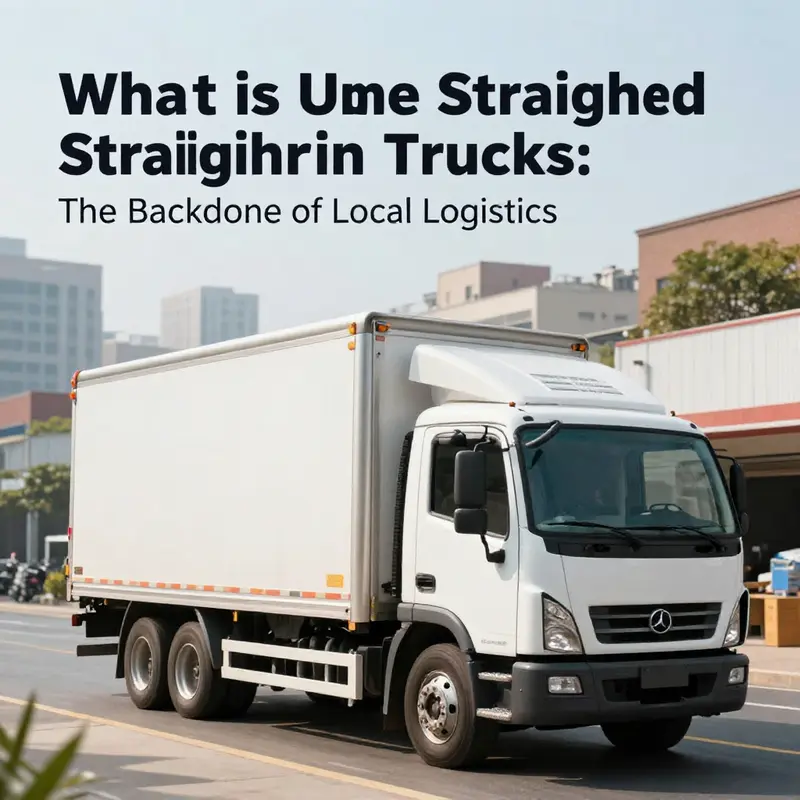
A straight truck is a vehicle where the cargo area and the cab sit side by side on a single, unified chassis, forming one rigid structure. This simple arrangement has a surprising amount of impact on how goods move through towns and neighborhoods. It stands in contrast to larger, multi-part systems such as tractor-trailers, where a separate trailer is coupled to the tractor. The straight truck’s design may seem modest, but its influence on local deliveries, service work, and job-site logistics is substantial. It is a vehicle built for efficiency in the places where people live and work, where streets are tight, loading docks are common, and time is a precious currency. To understand the essence of a straight truck is to recognize its balance of space, maneuverability, and reliability that makes it a practical workhorse for the everyday economy.
At its core, a straight truck features a fully enclosed cargo box mounted directly to the cab chassis. The enclosed cargo area is not just a weather shield; it is a defined, secure chamber that protects the contents from rain, wind, dust, theft, and accidental damage during transit. The weatherproof enclosure matters especially for perishable or fragile items, but it also pays dividends for everyday goods that must remain clean and intact from door to door. The absence of a separate trailer reduces complexities in handling and maintenance. With a single, rigid frame, the ride tends to feel steadier and more predictable, which can translate into gentler handling of sensitive loads and less risk of shifting cargo during urban driving or sudden maneuvers.
A straight truck’s size matters in a practical, almost tactile sense. It is large enough to carry meaningful quantities of goods, equipment, or materials, yet compact enough to weave through narrow streets, make precise parking, and access loading docks that sit close to storefronts or apartment complexes. This combination is why the vehicle is so commonly seen in local delivery routes, service calls, and on construction sites that require a reliable, reachable presence. The interior space inside the cargo area is generally configurable in ways that suit different trades and firms: shelves, dollies, and racks can be arranged to maximize inventory density; apace for bulky items can be left unblocked; and secure tie-down points can be integrated to keep cargo stable during the last mile. In this sense, the straight truck is less about a single use and more about adaptable logistics, an asset that can morph to the needs of a particular day’s schedule.
The driver experience is another pillar of the straight truck’s practicality. Cab and cargo area share a common chassis, which yields a straightforward control layout and predictable handling. For local deliveries, the vehicle typically does not require the same level of long-haul fatigue management as larger tractor-trailers; the driving profile often emphasizes nimbleness, careful attention to pedestrians and cyclists, and frequent stops. The compact footprint aids maneuverability in dense urban cores and residential neighborhoods where curbside parking and loading zone timing demand both speed and courtesy. Moreover, many straight trucks are designed with loading docks in mind. They offer ground-level access to a cargo floor or an integrated lift mechanism, which reduces manual lifting risks and increases loading efficiency. When a driver can roll a pallet or a cartonized shipment straight into the cargo bay with minimal lifting, time is saved and the likelihood of injuries declines.
From a systems perspective, the single-body construction of a straight truck fosters durability in daily operations. The rigid chassis eliminates the boundary between cab and cargo area that exists in vehicles with trailers, which can reduce maintenance points and potential alignment issues. This sturdiness translates into a smoother, more controlled ride that helps preserve cargo integrity and driver confidence. It also makes the vehicle easier to service in many respects: one frame, one powertrain, one set of joints to monitor. In practice, this simplicity lowers the barrier to routine maintenance, which can be crucial in keeping a local delivery fleet on the road when schedules tighten and every hour counts. The straightforward architecture also often means lower upfront complexity for fleet managers who need a dependable vehicle that can be quickly dispatched to multiple, back-to-back deliveries without extensive pre-trip planning.
The applications of straight trucks in local settings are as diverse as the neighborhoods they serve. For those in the delivery sector, the cargo box becomes a modular canvas for a wide range of goods: consumer merchandise, packaged foods, dry goods, and even small-scale furniture. Utilities and service contractors rely on the same platform to transport tools, spare parts, and lightweight equipment to job sites. Retailers use straight trucks for restocking and outlet distribution, moving bulk orders between warehouses and storefronts with a degree of precision that helps keep shelves full and customer satisfaction high. In the moving space, a straight truck provides a compact, self-contained solution that can handle a household or small office relocation with less overhead than a larger truck-and-trailer combination. For construction firms, the vehicle is an efficient carrier for materials and equipment that must arrive together, on time, and secure from the moment they leave the depot until they’re in position on site.
Local delivery thrives on a blend of speed and reliability, and a straight truck is crafted to optimize both. Its size makes it adept at navigating tight turns and negotiating urban geometry that can challenge longer rigs. It can park in ordinary curbside spaces or loading zones that might be scarce for bigger trucks, enabling drivers to complete multiple drop-offs within a tight time window. The cargo area’s enclosure protects goods from weather and theft, which is an essential consideration for time-sensitive shipments or high-value items. These traits combine to reduce the risk of delays caused by weather exposure or unsecured cargo, which, in turn, improves overall delivery performance. The design also supports efficient loading and unloading processes. Many straight trucks are paired with roll-up doors, dock-level or near-dock alignment, and interior configurations that ease the movement of pallets, cartons, or small packages. In a world where speed to the customer matters, the ability to load and unload with minimal nonproductive time becomes a defining advantage of the straight-truck paradigm.
The common uses of straight trucks extend beyond the obvious parcel or merchandise flows. A municipal services context, for instance, benefits from a vehicle that can transport tools, equipment, and supply lines to work sites without the coordinator overhead of coordinating separate trailers. A small emergency-response or maintenance fleet can deploy a straight truck quickly to a service point, where the cargo box keeps essential gear secure and readily accessible. In the context of retail logistics, straight trucks support bulk deliveries and restocking runs that keep inventories accurate at the point of sale, reducing the risk of stockouts in a busy store network. The spectator is not the only actor: drivers appreciate a vehicle that prioritizes straightforward operation, predictable handling, and a kitchen-sink simplicity that cuts maintenance headaches. In practice, this translates to fewer surprises during daily routes and more consistent on-time performance.
Of course, no tool is perfect in every scenario. Straight trucks come with considerations that must be weighed in fleet planning. Parking space requirements can be larger than those for compact vans, and the vehicle’s footprint, while smaller than a tractor-trailer, still commands a notable amount of curb space. In dense downtown corridors, even a straight truck can encounter loading zones with time constraints that demand careful route planning and scheduling. Fuel economy, while generally more favorable than larger tractor-trailers, still trails behind smaller van-based delivery vehicles, particularly when the vehicle is loaded to capacity or operated in heavily congested traffic. Operators must balance payload, fuel efficiency, and maintenance costs to optimize the total cost of ownership. The payload capacity, while generous for a single-body truck, is still less forgiving than a truck designed to pull a dedicated trailer; every extra hundred pounds costs fuel and may affect braking distances and handling. Regulations governing weight, licensing, and driver hours also shape how straight trucks are used on local routes. Fleet managers must account for local road restrictions, urban zoning rules, and the need for periodic inspections to ensure ongoing safety and compliance.
A practical way to think about a straight truck is as a versatile work platform that aligns with the cadence of local commerce. It is not the vehicle that dominates every transport need, but it is the vehicle that can fit most of the everyday realities of delivering to stores, offices, and homes. The cargo box is not simply a container; it is an engineered space that supports a workflow. Pallet jacks, hand trucks, dollies, and cargo nets all find a ready home in the box, and the interior can be configured to minimize the number of handling steps required on a typical stop. In a way, the straight truck is a facilitator of routines. It does not force a particular process; it adapts to the process that a business has already developed for moving goods efficiently within an urban or suburban environment.
From a design perspective, the beauty of the straight truck lies in its restrained ambitions. It does not attempt to mimic the high-mileage endurance of a regional hauler or the long-haul versatility of a tractor-trailer. Instead, it focuses on what matters most for local work: reliability, predictable performance, ease of maintenance, and the ability to start the day with a clear plan and end it with a fully loaded payload safely delivered. This is why many fleets rely on straight trucks as the backbone of their local operations. They are the daily workhorses that keep the pace of commerce steady, enabling a business to meet customer expectations and maintain a visible presence in the market. A well-chosen straight truck can reduce the friction of daily operations, from loading to unloading, from navigation to parking, boosting the throughput of a route and lowering the stress on drivers who must manage tight schedules and complex urban environments.
In the end, the straight truck is a statement about practicality and purpose. It embodies a design philosophy that favors the essential over the extravagant, the predictable over the risky, and the accessible over the obscure. It is a vehicle designed to make local delivery and service work smoother, safer, and more economical. Its single-structure chassis and enclosed cargo area translate into real-world benefits: faster loading times, less exposure to the elements, easier maintenance, and a better driver experience. When a business contemplates how to move goods in a city or suburb, the straight truck presents a compelling option that aligns with the rhythms of daily life and the realities of urban logistics. And while it may not carry the romance of a sleek long-haul rig, its value lies in the quiet power of being perfectly suited for the tasks that define everyday commerce.
For readers seeking a deeper sense of how straight trucks fit into the broader landscape of truck and van design, the following resource offers a thorough overview that complements this chapter’s focus on local delivery applications: Truck and Van — Straight Trucks Overview.
Internal reference for practical integration: as you consider how to optimize a straight truck for a specific operation, explore the concept of modular cargo storage and secure tie-down layouts. A practical example is the “truckbox” approach, which can be integrated into the cargo area to organize tools, parts, and small equipment efficiently while maintaining quick access during stops. The link below points to a detailed example of such a setup and can provide tangible ideas for configuring a straight truck’s interior without sacrificing payload space or security. For more on this approach, see truckbox.
In sum, the straight truck stands as a robust, adaptable platform that excels where urban logistics demand reliability, speed, and straightforward operation. Its simple, rugged architecture is ideally suited to the routine, day-after-day reality of local deliveries, utility work, construction logistics, and the needs of retailers and movers who require a dependable vehicle that can keep pace with the rhythm of neighborhood life. By understanding its core characteristics—the integrated cab and cargo box, the weatherproof enclosure, and the single-frame construction—businesses and drivers can appreciate why this class of vehicle remains a mainstay in the toolkit of local commerce. The straight truck, in its modest ambition, delivers a powerful edge: predictability. And in a world where every minute matters, that predictability often translates into better service, smoother operations, and happier customers.
The Straight Truck in Focus: How Box-Style Rigs Shape Local Delivery and City Logistics
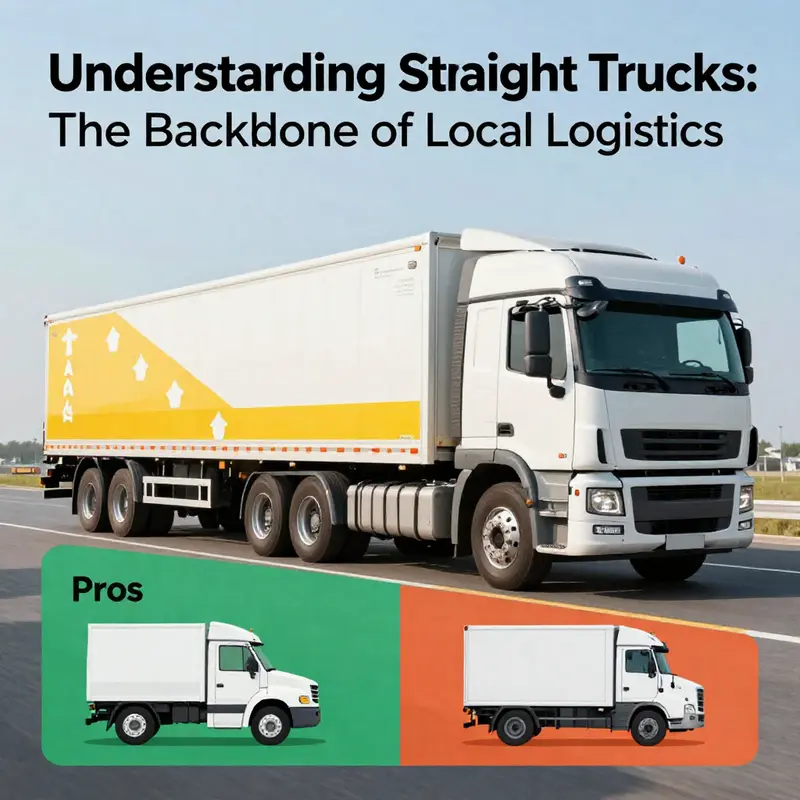
A straight truck sits at the intersection of practicality and urban necessity. Its design—the cab and the cargo space welded into a single, rigid unit on one chassis—speaks to a mission: move goods reliably over short to medium distances with predictable handling and straightforward operation. In contrast to tractor-trailers, where the trailer can be swapped and the chassis is designed for long hauls, the straight truck is built for locales where streets narrow, parking is tight, and delivery windows demand punctual, repeatable routes. This chapter keeps the focus on that core idea: a unitized, boxy silhouette that turns local logistics into a more manageable craft, especially where the pace of city life and the cadence of curbside loading and unloading shape every decision around fleet composition and daily planning.
The fundamental anatomy of a straight truck reveals the logic behind its advantages. The cargo area and the cab share a common chassis, creating a seamless, integrated shell that resists the complexity of detaching a trailer or reconfiguring a linkage. The absence of a fifth wheel, a landing gear, or a separate trailer means fewer moving parts bearing load in transit. That simplification translates into several practical outcomes: lower maintenance costs, fewer points of failure during a drive around town, and a level of reliability that fleets can count on when schedules hinge on punctual deliveries to retail stores, service sites, or apartment complexes.
From a driver’s perspective, the ride and the control philosophy of a straight truck are markedly different from those of a two-piece tractor-trailer setup. There is no need to navigate a combined rig with a long, articulated trailing element. Instead, the straight truck presents a concentrated footprint that fits into familiar urban spaces. The driver’s field of view improves as the cabin sits closer to the front axle and the cargo box directly behind, minimizing the blind zones that can complicate backing into loading docks or tight street parking. This visibility—paired with shorter overall length and a tighter turning radius—creates a natural advantage for last-mile tasks and urban distribution where every maneuver is weighed against time to the customer, the likelihood of a loading dock being available, and the needs of pedestrians and cyclists who share crowded streets.
A cargo area that is integrated with the chassis also tends to be more predictable for loading and securing goods. The cargo volume is a fixed geometry, designed to be loaded from the rear or sometimes from side doors depending on the model and build. It is common for straight trucks to feature a box-like, weather-protected enclosure that shields goods from sun, rain, or winter weather during the interval between pickup and delivery. This fixed geometry simplifies the plan for how shipments are loaded, staged near the dock, and retrieved by the driver when a run ends. The box itself acts as a defined, almost architectural space—a closed chamber that makes it easier to stack, organize, and secure freight with standard tie-downs and restraints. In many fleets, that translates into faster loading cycles and more reliable dwell times at the delivery points, because dock personnel can anticipate the dimensions and access points without guessing where a pallet or carton will be placed.
The operational bright spots extend beyond the dock. Straight trucks generally carry sufficient cargo to cover the needs of many urban routes without resorting to the complexity of swapping trailers. This is particularly valuable in markets with high frequency deliveries and narrow corridors, where the predictability of a single-vehicle system reduces the variability that can compound scheduling errors. For on-demand service operations, the simplicity of a straight truck means less training time for drivers and a shorter learning curve for fleet managers. New hires can be introduced to the vehicle and routing software with fewer friction points, enabling faster ramp-up times and a more consistent practice across teams. The absence of complicated coupling mechanisms also lowers the risk profile for drivers who must perform delicate maneuvers in loading bays or in tight street conditions.
Yet, the advantages come with trade-offs that fleets must weigh against their service goals. The cargo space of a straight truck is substantial, but it is not unlimited. The fixed cargo area limits how much can be moved in a single trip, particularly for businesses that rely on high-volume freight or require flexible load configurations to respond to sudden demand spikes. In practical terms, this means urban distributors may need more trips to carry the same volume that a tractor-trailer could haul in fewer runs. The impact on frequency and route planning can cascade into scheduling complexity, the need for more drivers across a fleet, and higher vehicle utilization targets to maintain service levels. In other words, the excellent maneuverability and ease of use come at the price of endurance in longer routes and bulk freight tasks.
The range profile of a straight truck is another important dimension. Given the engine sizing typically aligned with city driving and the weight distribution of a non-detached cargo box, long-haul reach is often outside the design envelope. Long distances on highways require more fuel, larger fuel tanks, and sometimes more rest stops than their tractor-trailer counterparts. For local distributions—where most work happens within a metropolitan perimeter or within regional corridors—their fuel efficiency shines in the context of short segments with frequent starts and stops. In this sense, the straight truck is not a one-size-fits-all solution; it is a specialized tool for a particular tier of logistic operations where the geography, cityscape, and service cadence converge to favor a compact, integrated system.
Cargo configuration, while less flexible than a tractor-trailer, is not completely rigid. Operators can optimize the internal use of the cargo space by implementing careful load planning. Standard box configurations lend themselves to palletized freight, stacked cartons, and organized shelving for parts or fixtures that service fleets may need to access quickly. The absence of a detachable trailer makes the loading environment more predictable, reducing the risk of unbalanced loads that could compromise handling during turns or braking. But because the cargo area is tied to the chassis, there is less ability to reconfigure the space by swapping in a different trailer for a materially different payload. This constraint leads some businesses to use a mixed fleet strategy: a stable set of straight trucks for urban routes paired with separate, bigger vehicles for regional runs when the demand profile shifts toward bulk shipments. This approach can balance the benefits of a straight truck with the economies of scale that larger trailers provide on longer legs of a network.
The economics of ownership and operation reinforce the practical decision to adopt straight trucks in certain contexts. Purchase price, insurance costs, maintenance, and depreciation all tilt toward favorable numbers for straight trucks when compared to tractor-trailers on a per-mile basis in city driving. The simplified powertrain and chassis translate into lower upfront costs and less complicated maintenance schedules. Fleet managers often cite lower break-even points and shorter payback periods for straight-truck investments in markets where daily cycles hinge on reliable, short-distance deliveries rather than the high-volume, long-haul capability that a tractor-trailer offers. The financial calculus is not merely about sticker price; it extends to training, labor, downtime, and the ability to service routes with a lean staffing model. With fewer specialized skills required to operate a straight truck, onboarding becomes more scalable, and turnover—a constant concern in logistics—can be mitigated by a lighter training burden and more straightforward operational expectations.
Safety and driver experience sit at the center of day-to-day decisions about fleet composition. A straight truck’s tighter geometry and the absence of a trailing unit reduce some risk vectors, particularly those associated with docking and reversing in crowded spaces. The driver often benefits from improved sightlines when backing into a loading dock, and the shorter wheelbase can provide more immediate feedback on steering inputs, making the vehicle feel more responsive in urban lanes. However, the compact footprint can also induce caution about overloading and weight distribution, so rigorous loading procedures and load-securing practices remain essential. Fleet safety programs typically emphasize routine pre-trip inspections, load checks, and clear protocols for securing cargo in the box—a practice that protects drivers, cargo, and other road users as the vehicle negotiates stop-and-go streets and tight intersections.
When a business weighs its options, the decision to deploy straight trucks frequently comes down to the geography and the rhythm of demand. In a city that requires constant, predictable deliveries to multiple addresses within a tight radius, the straight truck often outperforms heavier tractor-trailers in terms of reliability and cost per stop. The urban infrastructure—narrow streets, intermittently available loading bays, and the necessity of precise time windows—favors a vehicle that can thread through traffic, maneuver into loading docks, and complete multiple micro-deliveries within a single shift. In contrast, industries that routinely move freight across longer distances or require substantial bulk shipments can justify the higher capacity and the flexibility of swapping trailers that a tractor-trailer ensemble affords. The straight truck, then, is less a universal solution and more a strategic instrument: its value grows where speed, predictability, and ease of operation trump the advantages of scale.
From a design and maintenance perspective, the integrated chassis and cargo box influence not only performance but also lifecycle planning. Routine service intervals, parts inventory, and preventive maintenance strategies can be streamlined because there are fewer moving parts to track and fewer high-stress joints that could fail in extended, high-mileage hauling. The simplicity is not a guarantee against adversity, but it is a meaningful reduction in the complexity that can slow down repairs and lower uptime. For fleets that manage a portfolio of vehicles, the straight truck’s reliability can translate into a more consistent service level and the potential for shorter total downtime across the fleet, which in turn reinforces the reliability of the entire logistics network.
In practice, the straight truck also finds a place in the broader ecosystem of urban distribution, where partnerships with local suppliers, service providers, and last-mile carriers shape a network of moving parts. A common scenario is a distribution center or a local vendor hub that relies on a steady cadence of deliveries to a defined catchment area. For such operations, the straight truck’s combination of deliverability, maneuverability, and ease of operation aligns with the pace of the city and the expectations of customers who value on-time arrivals and straightforward, predictable service. The integration with digital route planning, real-time tracking, and dock scheduling tools can further amplify these strengths, turning a simple, reliable vehicle into a critical node in a city’s logistical web. In this context, even the cargo area itself can behave like a well-considered workspace, where accessibility and organization enable faster loading and unloading, improved inventory control, and reduced dwell times at the curb.
To illustrate how all these elements come together, consider the mental model of a typical urban route. A driver begins the day with a planned sequence of deliveries to a handful of addresses within a tight radius. The truck’s integrated box is already prepared for the day’s goods—pallets securely strapped, boxes neatly stacked, and the most time-sensitive items placed for immediate unloading. The driver navigates to the first dock, aligns with a level surface, and executes a precise reverse into the loading bay. The absence of a separate trailer simplifies the approach; there is less to synchronize with a partner vehicle, and the driver can focus on the dock itself, the dock attendant, and the freight that awaits transfer. After each drop, the route progresses to the next point, with the truck’s size and maneuverability allowing it to slip into spaces that a longer rig could not. By day’s end, the vessel has serviced multiple stops, each handoff efficient because the vehicle’s design is aligned with the geometry of urban spaces and the tempo of city life.
The broader narrative around straight trucks in logistics also touches on the importance of context. In some fleets, a straight-truck-first strategy makes sense as part of a multi-tiered fleet that balances the need for quick, frequent deliveries with the capacity to handle larger loads during peak periods. Operators may deploy straight trucks for core urban routes while reserving tractor-trailers for regional distribution or dedicated lanes where long-haul efficiency is a more compelling value proposition. The result is a hybrid approach that leverages the strengths of each vehicle type in line with the geography, demand, and service commitments of the business. This strategic alignment reinforces the idea that vehicle choice is not just a technical decision but a fundamental element of supply-chain design, shaping how quickly products move from supplier to customer and how resilient the network remains in the face of daily variability.
Within this framework, the cargo box becomes more than a container; it is a modular space whose design subtly influences operations. The choice of insulation, climate control, shelving, or racking systems within the box affects not only cargo safety but the speed of loading and unloading. For example, a well-organized, climate-controlled box can accommodate perishable items or temperature-sensitive goods, expanding the range of services a fleet can offer in urban markets. On the other hand, more open, aisle-like layouts can be advantageous for bulky items or irregularly shaped freight that requires flexible hand-unloading or forklift access. While a straight truck may not boast the same level of cargo-field configurability as a trailer-and-dolly combination, it can still be optimized through thoughtful interior setup and best-practice loading procedures. In practice, fleets frequently adopt a standardized interior design for their straight trucks to support consistent operations across multiple drivers and shifts.
Another layer to consider is the environmental and regulatory context in which straight trucks operate. In many regions, urban fleets are subject to emissions standards, congestion charges, and urban delivery permits that influence the total cost of ownership and the desirability of compact, efficient vehicles. A straight truck’s smaller profile and often simpler propulsion systems can confer advantages in meeting these regulatory and community requirements, especially when paired with modern, fuel-efficient engines and advanced driving aids. As cities continue to tighten curb space usage and prioritize freight efficiency, the straight truck’s design can become a natural fit for policy-driven logistics strategies that emphasize reliability, reduce dwell time, and minimize neighborhood disruption.
Ultimately, the straight truck is a story about how a vehicle’s form shapes its function. Its integrated design channels a specific set of capabilities—maneuverability, ease of operation, predictable maintenance, and cost efficiency—toward a niche within the broader logistics landscape. It is not meant to replace all other truck types, but to complement them by delivering best-in-class performance where local delivery, urban distribution, and last-mile service dominate. The decision to deploy straight trucks should emerge from a careful assessment of route density, dock access, service windows, and the total cost of ownership over the life of the fleet. The result is a logistics system that can move goods with calm confidence on streets where every corner, every curb, and every minute matters.
For readers who want to explore practical examples of how a straight truck’s interior can be optimized for efficiency, the truck-box page offers a concise view of interior configurations, storage options, and load-management ideas that align with the realities described above. This resource helps translate the concepts discussed into concrete planning and everyday practice: truck-box.
External resource for broader context and comparative perspective: for a broader comparison of straight trucks and tractor-trailers, see the external guide at Indeed’s career insights page on straight trucks versus tractor-trailers. This source complements the discussion by outlining the pros and cons in a real-world workforce and operations context. https://www.indeed.com/career-advice/working-in-the-truck-industry/straight-truck-vs-tractor-trailer
Final thoughts
In summary, straight trucks offer an efficient and practical solution for businesses engaged in local deliveries. Their integrated design provides maneuverability and simplifies operations, making them ideal for urban landscapes where space can be limited. While there are specific benefits, such as easier handling and versatile applications, potential limitations—like lower cargo capacity compared to articulated models—must also be considered by business owners. Understanding these dynamics can better equip you to make informed decisions about your logistics strategies.