
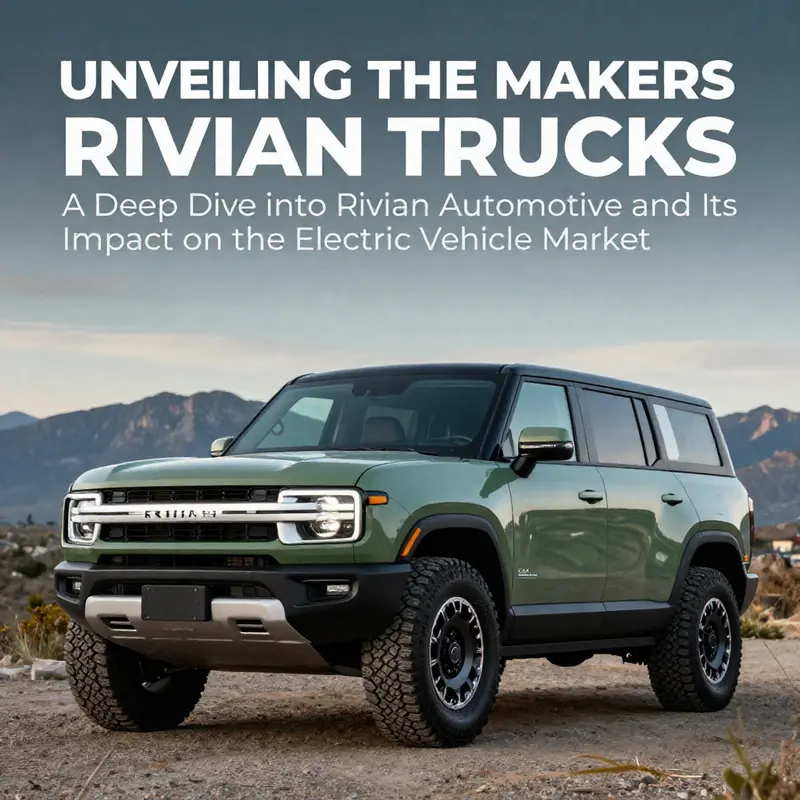
Rivian Automotive, Inc. is at the forefront of the electric vehicle revolution, merging cutting-edge technology with innovative design to create its flagship trucks—the R1T and R1S. In this exploration of Rivian’s impact on the automotive industry, we will dissect who exactly makes Rivian trucks, with particular focus on the company’s foundation, manufacturing processes, strategic partnerships, future plans, and the challenges it faces in a competitive market. Business owners and industry stakeholders will find insights into how Rivian’s initiatives can influence the electric vehicle landscape and align with business opportunities. Each chapter will delve into critical aspects that shape not just Rivian, but the future of electric vehicles.
Inside Rivian’s Factory: The Makers, the Skateboard Platform, and the Quest to Build an Electric Truck
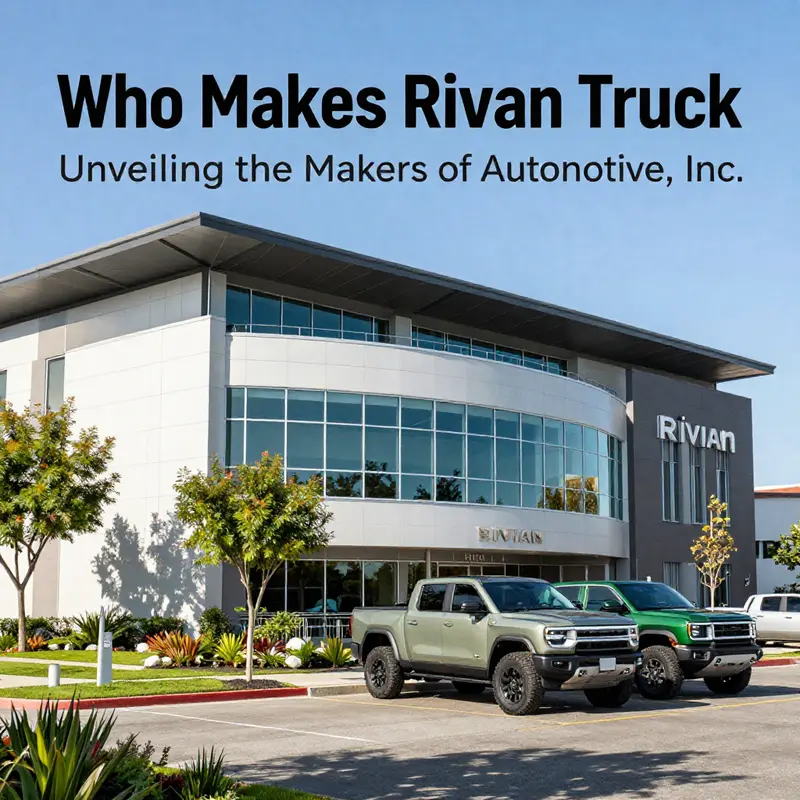
When people ask who makes Rivian’s truck, the answer isn’t a single name on a factory door. It is a constellation of people, processes, and a distinctive engineering philosophy that begins long before the vehicle ever rolls onto a production line. Rivian Automotive, Inc. stands at the center of this effort. Founded in 2009 by Robert J. Scaringe and headquartered in Irvine, California, the company built its reputation not by chasing existing norms but by reimagining how an electric vehicle can be designed, manufactured, and scaled. Its production footprint centers in Normal, Illinois, where a dedicated facility houses the assembly line for the company’s flagship electric pickup and an electric SUV designed for versatility and off-road capability. Yet the story of who makes the Rivian truck extends beyond the walls of that plant. It is a tale of a modular chassis philosophy, of partnerships that widen the engineering envelope, and of investors who believed in a future where electric workhorses could blend utility with sustainability in ways previous generations hadn’t imagined.
The core of Rivian’s approach lies in what engineers often call a skateboard platform. In practical terms, this means placing the battery pack, motors, and drivetrain on a compact, flat undercarriage that travels beneath a wide, optimized cabin. This arrangement has multiple benefits: it lowers the vehicle’s center of gravity for better handling, preserves interior space for occupants and cargo, and keeps the platform adaptable across different body styles. It is a deliberate architectural choice, not a clever gimmick. The result is a chassis that can support a pickup bed and still offer generous ground clearance—an essential feature for a vehicle advertised as capable off-road and practical as a daily driver. The concept also accelerates manufacturing efficiency because the same electric skateboard can underpin multiple body configurations, reducing complexity on the line as the company scales.
Behind that platform is a team that blends design, engineering, software, and manufacturing know-how. Rivian has positioned itself as a holistic mobility company rather than a pure automaker, a stance reflected in how it structures its development programs and supplier relationships. The company’s approach to powertrain integration, battery management, thermal systems, and software stacks is designed to be iterative rather than revolutionary in fits and starts. This matters because the assembly process in Normal isn’t just about tightening bolts; it is about validating software-enabled systems, ensuring reliability under real-world conditions, and streaming data back into the product development loop. The human element—engineers, technicians, quality specialists, supply chain professionals, and factory floor operators—frames the day-to-day reality of building a modern electric truck. Each person contributes to a larger objective: to deliver a vehicle that can perform consistently, serve its owners over years of use, and do so in a way that aligns with Rivian’s sustainability commitments.
Rivian’s product portfolio thus far has included a flagship electric pickup and a versatile electric SUV, both designed to meet demand for capable, durable, and technology-forward transportation. Beyond consumer vehicles, the company has extended its production capabilities to commercial delivery vans built for a major e-commerce partner. This multi-seat, multi-purpose output illustrates how the same fundamental platform can serve different market needs without compromising the core engineering philosophy. The result is not simply a lineup of vehicles but a network of capabilities—battery chemistry, thermal management, drive electronics, software integration, and manufacturing discipline—that can be repurposed as market demands evolve. It is a practical expression of the skateboard architecture in real products, and it helps explain why Rivian has pursued a broader collaboration strategy, including collaborations and strategic investments that extend its reach beyond a single product line.
From an investor’s perspective, Rivian’s trajectory is inseparable from the capital that helped it scale. The company went public on the Nasdaq in November 2021 under a ticker that signaled not just a transaction, but a statement: the era of dedicated electric utility vehicles was moving toward mass-market feasibility. The IPO raised a substantial sum and placed Rivian in the center of conversations about U.S. manufacturing, domestic electric vehicle production, and new business models for corporate fleets. The capital infusion backed not only vehicle development but the expansion of manufacturing capacity, supplier partnerships, and the data-enabled software layers that Rivian regards as essential to a complete mobility solution. The investor story also intersects with commercial partnerships that stretch the supply chain and broaden the company’s ecosystem. One headline partnership, announced in the mid-2020s, linked Rivian with a major European automaker to create shared platforms and software architectures. While details shift with market conditions, the underlying principle remains clear: scale is achieved not only by building more vehicles, but by building smarter vehicles through shared software and component strategies.
The broader enterprise is equally defined by its customers and the markets it serves. On the consumer side, Rivian’s trucks and SUVs are designed for owners who value utility, off-road capability, and a clean energy footprint. The commercial side includes a significant order pipeline from a large logistics customer, illustrating demand for high-mileage, low-emission fleets in real-world operations. These relationships demand a manufacturing rhythm that can accommodate both individual consumer vehicle cycles and high-volume fleet programs without compromising quality. As the company has navigated the realities of ramping production, it has faced familiar industry challenges: occasional supply interruptions, component recalls, and adjustments to trade policies that ripple through sourcing and timing on the line. Each of these hurdles has tested Rivian’s resilience, but also sharpened its processes. The company has publicly acknowledged the need to manage complexity as it scales, while continuing to invest in quality control, supplier development, and continuous improvement practices that keep the line moving toward higher volumes.
A pivotal moment in Rivian’s growth came with the involvement of external capital and strategic partners. Federal and state funding, including conditional loan commitments from the Department of Energy, underscored a public-policy dimension to the story: the United States was signaling that advanced manufacturing and electric transportation could be a national priority. At the same time, state incentives and local development grants supported plant expansion and workforce training, reinforcing a commitment to domestic production. These government-backed signals complemented private investment and corporate partnerships, creating a framework in which Rivian could push toward greater scale while preserving the safety margins necessary to sustain first-rate quality.
By the mid-2020s, the company began reporting tangible production and delivery outcomes, indicators that suggest a transition from early-stage manufacturing to more stable, repeatable operations. Production volumes increased, and the business entered a phase where the company could begin addressing the longer-term reliability expectations of customers and fleets alike. Simultaneously, Rivian kept investing in new capabilities that would extend the product lifecycle. In particular, the company pursued significant software and hardware enhancements—advances in power management, onboard computing, and driver-assist capabilities—aimed at differentiating Rivian in a crowded market. The development of an in-house intelligent driving processor represented a deliberate step toward a more autonomous-capable architecture, reflecting the company’s emphasis on software as a differentiator and the belief that the most valuable feature set in the coming years would be a combination of range, reliability, and intelligent, safety-conscious software.
Looking forward, Rivian’s plans for additional models based on the same platform signal an intent to broaden accessibility and reduce per-vehicle costs through shared engineering. The R2, a midsize offering, was positioned as a strategic expansion intended to bring more customers into the Rivian ecosystem by addressing a broader price and size spectrum. The emphasis on scalable architecture and a modular platform was not merely about creating more products; it was about building a continuous, adaptable pipeline that could respond to evolving demand while maintaining manufacturing discipline. And as the company contends with supply chain realities and the need to stay competitive, it remains committed to maintaining a high standard of safety, performance, and environmental stewardship.
In this light, it becomes clear that the question “who makes Rivian’s truck?” is not a single attribution but a synthesis of people, facility, platform, and partnerships. The factory floor in Normal, the design studios in Irvine, the engineering teams that refine the skateboard system, and the network of suppliers and strategic allies all contribute to a product that is more than a vehicle. It is an integrated system designed to meet real-world needs—from off-road resilience to efficient urban transport—while keeping a sharp eye on the evolving rules of the road, the demands of fleets, and the expectations of customers for whom a vehicle is a daily tool rather than a weekend novelty. Within this framework, a single model line becomes a testbed for the company’s broader ambitions: to prove that an American-made electric truck can embody durability, software sophistication, and a thoughtful approach to lifecycle value.
For readers curious about the broader ecosystem surrounding modern electric trucks, the trajectory matters as much as the product. The aftermarket space—ranging from lighting and racks to modular storage and drivetrain enhancements—has begun to mature around the growing class of electric trucks. The conversation around accessories and integration is evolving in tandem with vehicle capability, and it highlights how a truck is not just a chassis and battery, but a platform that invites customization and long-term ownership. In this context, a well-timed reference point is the broader EV-truck ecosystem embodied by other automakers and their accessory networks; you can explore related concepts at a resource focused on modular, utility-focused vehicle components, often discussed under the umbrella of modern truck customization: Cybertruck Co. Cybertruck Co..
As the chapter closes on the current landscape, it is important to anchor these developments in a reachable reference— Rivian’s own public material and corporate communications. The company emphasizes safety, sustainability, and scalable technology as its core pillars, and it continues to publish progress across manufacturing capabilities, vehicle performance, and software innovations. For readers seeking the most authoritative, up-to-date information about Rivian’s strategy, product lineup, and corporate initiatives, visiting the official site offers the clearest lens into how the makers, the platform, and the partners come together in practice. External resource: https://www.rivian.com
Who Makes Rivian Trucks: Inside the Factory, the Skateboard Platform, and the Pace of Electric Truck Making
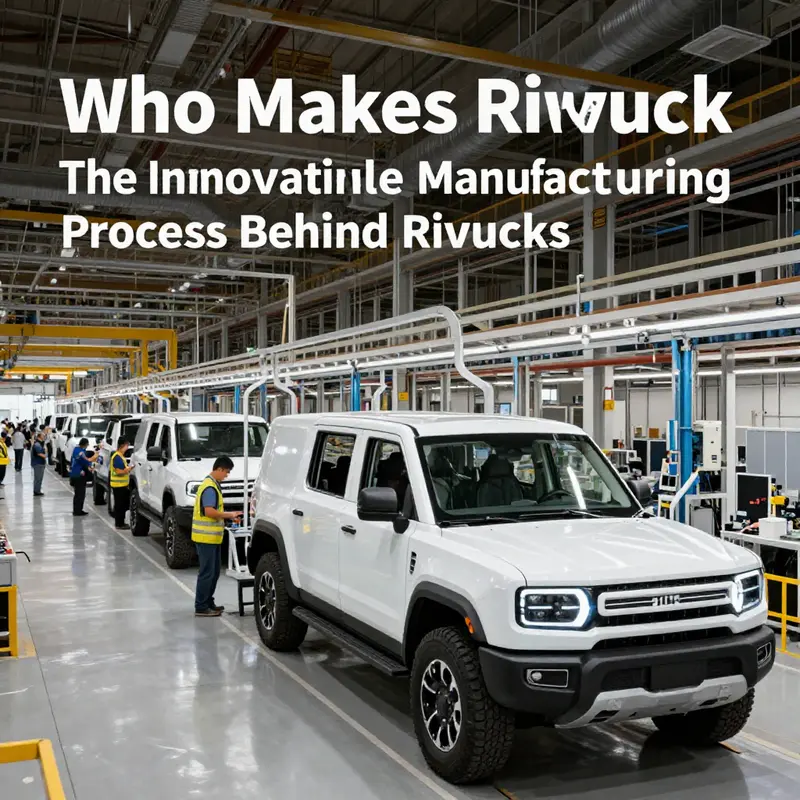
The question of who makes Rivian trucks points to more than a name on a badge. It points to a company born to redefine what is possible in electric mobility. Rivian Automotive, Inc. is the architect behind a line of fully electric trucks and sport utilities that aim to blend rugged capability with modern efficiency. Founded in 2009 by Robert J. Scaringe, the company has grown from a dorm-room idea into a full-fledged manufacturing operation with a distinct approach to vehicle construction. Its headquarters are in Irvine, California, but the heart of production sits in Normal, Illinois, where a dedicated factory, purpose-built for electric propulsion, channels a core belief: high performance can coexist with sustainable manufacturing. Rivian’s pursuit is not merely about building a vehicle; it is about building an integrated system that supports daily use, off-road exploration, and long-distance practicality without sacrificing environmental responsibility. In that sense, the company’s work is a reminder that a truck can be as efficient as it is capable, and as adaptable as it is reliable. The tale of who makes Rivian trucks is a story of design intent meeting manufacturing discipline, of software-driven engineering meeting a hardware-driven world, and of a production line tuned to an all-electric ethos rather than a traditional internal combustion cadence. The result is a vehicle family built to carry people, gear, and ambitions into moments of both work and play, with an eye toward the evolving expectations of commercial fleets and individual buyers alike. It is a story that begins with a bold vision and continues in a facility designed to scale as demand grows, while maintaining a clear focus on the user experience and the environment. In that balance lies the answer to who makes Rivian trucks: a company that engineers the vehicle, the drive system, and the assembly itself in a cohesive, forward-looking framework. The people who bring this framework to life range from software developers to skilled technicians, from supply chain planners to robotics programmers. Each role contributes to a common objective: to produce electric trucks that do not compromise on capability or practicality while pushing the boundaries of what modern manufacturing can achieve. The motors, the battery pack, and the drivetrain are integrated into a single, compact skateboard platform, a concept that sits at the core of Rivian’s engineering philosophy. This architecture is more than a clever packaging trick; it is a deliberate choice to optimize handling, space, weight distribution, and crash safety. By placing the heavy components low and centrally, the design preserves generous ground clearance and substantial interior room for occupants and cargo. The result is a vehicle backbone that supports both a rugged, off-road persona and a refined on-road experience. In practical terms, the platform translates into a chassis that can flex with different body configurations, enabling the same undercarriage to support a pickup-style bed or a sport utility body with equal efficiency. This modularity is not an afterthought; it is embedded in the factory’s process, guiding decisions about parts sourcing, assembly sequences, and QA checks. When you walk through Rivian’s Normal facility, you encounter a production environment that blends automation with human oversight. The assembly lines are laid out to accommodate precision tasks at each station, while collaborative robots perform repetitive, high-precision motions with consistency. Yet even in a highly automated setting, skilled technicians pace the line, perform final checks, and troubleshoot anomalies in real time. The philosophy is clear: automation should elevate craft, not replace it. The factory’s energy and culture reflect a sustainability-forward mindset. Waste reduction, emissions minimization, and energy efficiency are woven into everyday operations. Lighting, heating, and process controls are tuned to minimize energy use, and the plant’s footprint is designed to support a smaller environmental profile for a large-scale manufacturing operation. The result is a facility that demonstrates how a modern EV maker can pursue productivity without losing sight of long-term ecological impact. The assembly itself is a carefully choreographed sequence. The skateboard platform arrives at the line as a complete understructure, ready to accept the powertrain and control systems in a tightly integrated workflow. The battery pack, a critical component not merely for range but for performance stability, is positioned and connected with rigorous safety checks. Drivetrain components are aligned to ensure torque delivery is precise across varied terrain, a feature that matters as the production line advances from cowl and hood to doors and interior assemblies. The interior is not an afterthought, either; it is engineered to balance comfort, durability, and modularity. The cabin architecture supports a flexible seating arrangement, ample storage, and adaptable interface layouts, mirroring the platform’s emphasis on versatility. The finishing touches—the exterior panels, protective coatings, sealing, and trim—are applied with an eye toward durability and aesthetics alike. Through every step, the aim is to create vehicles that perform consistently, whether they are used for daily commuting, family adventures, or demanding work conditions. Of course, the story of Rivian’s manufacturing would be incomplete without acknowledging the scale and pace of production. Reports and industry observations highlight a remarkable rhythm: a complete electric truck rolling off the line approximately every three minutes. That cadence is not accidental. It is the result of a carefully engineered production system that integrates advanced robotics, precise process controls, and lean manufacturing practices tailored for electric vehicles. The three-minute pace suggests that the plant has achieved a balance between speed and quality, with testing and quality assurance woven into the routine rather than rushed at the end. It also reflects a mindset of continuous improvement, where data from each stage informs adjustments to tooling, workflows, and staffing to maintain reliability as demand grows. The factory’s focus on lean techniques translates into a streamlined supply chain as well. Parts are staged for just-in-time delivery, with a procurement function that prioritizes reliability, traceability, and minimal waste. Quality gates at each major milestone ensure that a vehicle leaving the line meets stringent standards for safety, fit, and finish. In this context, the manufacturing environment functions as a living system, capable of evolving with new technology, supplier innovations, and shifts in production volume. The company’s ecosystem extends beyond the factory floor. A substantial investment from a major technology and logistics player has helped Rivian scale its production while positioning the brand for broader commercial partnerships. This investor also serves as a customer channel, introducing the trucks into fleets that can test durability, total cost of ownership, and service requirements at scale. The collaboration with such a partner is a reminder that modern automotive manufacturing sits at the intersection of engineering excellence and enterprise optimization. The same discipline that shapes a factory’s throughput also informs the product strategy. Rivian’s approach to vehicle design emphasizes not just performance, but practicality and longevity. The skateboard platform supports a family of models built to meet different use cases, from chores and hauling to long-range adventures and worksite tasks. The emphasis on modularity extends to accessories and storage solutions designed to fit seamlessly with the platform. In that vein, the broader ecosystem around the truck—provisions for cargo management, mounting systems, and protective equipment—reflects a design philosophy that anticipates varied user needs. For readers curious about how aftermarket and factory design intersect, a quick look at the broader world of vehicle integration helps. The way accessories are conceived, tested, and standardized reveals a similar logic to Rivian’s own modular engineering. In that sense, a link to related discussions about accessories can offer practical insight: Accessories. This reference point helps connect the concept of a resilient, adaptable platform to real-world usage and customization without implying any specific product endorsement. The story of who makes Rivian trucks thus extends beyond a single assembly line. It encompasses a corporate culture that prizes rapid learning, hands-on problem solving, and disciplined execution. It also includes a supply chain and partner network that enable scalable production while preserving quality. And it embraces a performance paradigm in which electric power is harnessed with the same reliability expected from traditional trucks, but with the added benefits of reduced maintenance, instant torque, and the potential for smarter energy use. The company’s trajectory—rising from a startup to a serious manufacturing entity—speaks to a broader shift in the automotive landscape. It demonstrates how a modern EV maker can blend software-driven control and hardware-grade robustness, maintain a degree of secrecy around proprietary processes while inviting transparency about continuous improvement, and deliver a vehicle class that matters to work fleets and private buyers alike. As Rivian continues its journey, it remains clear that the people behind the trucks are engineers, technicians, managers, and craftsmen who share a common conviction: vehicles should be capable, responsible, and ready for the next frontier. That conviction shapes every decision—from the layout of the Normal plant to the cadence of the line, from the architecture of the skateboard platform to the cadence of supplier deliveries, and from the design of the cabin to the expectations of the customers who rely on these machines every day. For those who want a closer look at the production narrative, the official production-focused materials and demonstrations provide a window into the factory’s day-to-day operations. And for a deeper dive into the broader landscape of automotive manufacturing, the following external resource offers a vivid glimpse into Rivian’s production storytelling: https://www.msn.com/en-us/video/technology/how-to-build-a-rivian-worlds-fastest-truck/vi-BB1jZrXJ
The Makers Behind Rivian Truck: Partnerships, Platforms, and the Road to an Electric Pickup Era
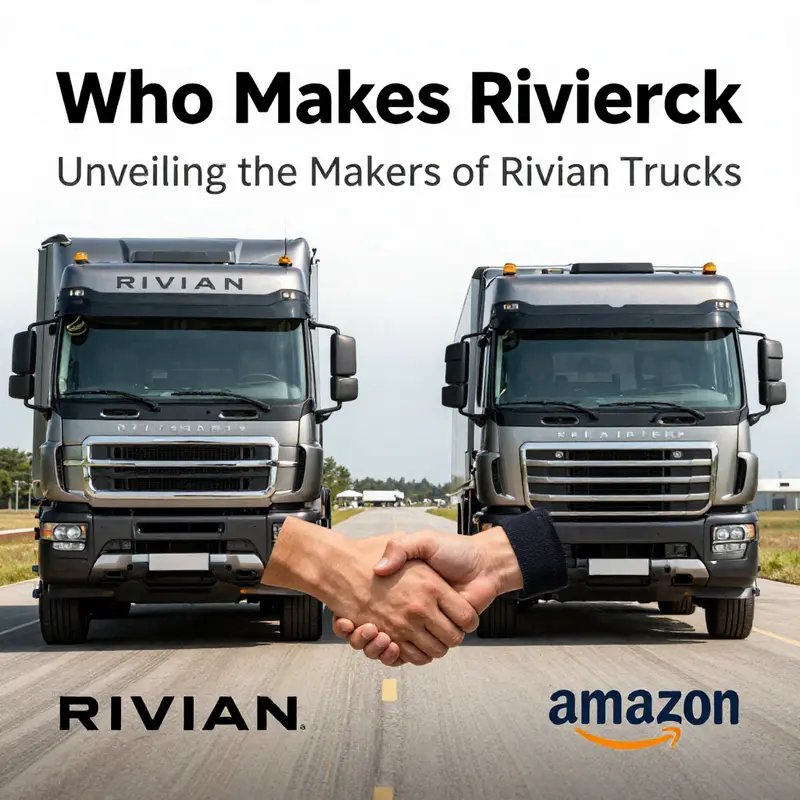
Rivian trucks result from a company built around a bold mechanical idea and a network of collaborators, financiers, and public-sector partners. At the core sits Rivian Automotive, Inc., an American electric-vehicle maker founded in 2009 by Robert J. Scaringe. The company operates from Irvine, California, but is known for its manufacturing footprint in Normal, Illinois, where the R1T pickup and R1S SUV come together on a shared skateboard platform. That skateboard, a modular chassis housing the battery pack, motors, and drive unit, enables a low center of gravity, flexible interiors, and the potential for future derivatives built on the same architecture. The broader story of who makes Rivian trucks extends beyond the factory floor to a constellation of partnerships and investors, with Amazon as a major customer and financier, Daimler’s early support, and a high-profile joint venture with Volkswagen announced in the 2020s. Public incentives and government support in Illinois and at the national level have helped scale manufacturing and signal a policy environment favorable to electric mobility. Technologically, Rivian emphasizes software and autonomy, with in-house development of vehicle controls and a view toward scalable platforms that can underpin multiple models beyond the R1T and R1S. The result is a cohesive system – engineering, manufacturing, and partnerships – designed to deliver durable electric trucks at scale while exploring the frontier of software-enabled mobility. The practical outlook for Rivian includes expanding production capacity, leveraging shared platforms to offer a family of vehicles, and continuing to integrate software and services into the ownership experience.
Who Makes Rivian Trucks: From Irvine Startup to Global EV Trailblazer, with the R2 on the Horizon
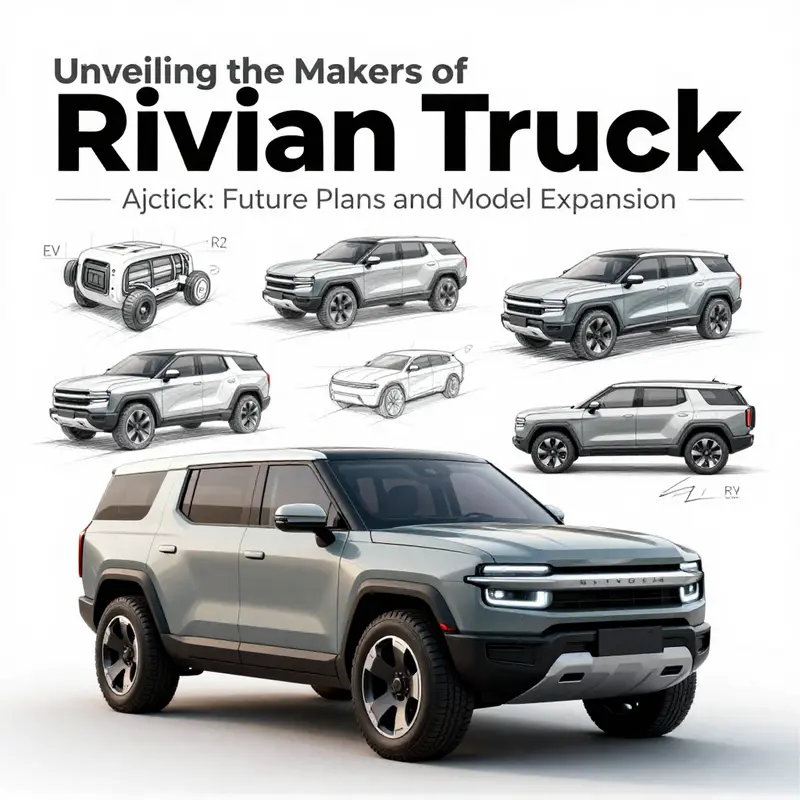
Rivian Automotive, Inc. is the maker behind the Rivian trucks, and its identity is as much about the people steering the company as it is about the machines rolling off the line. The company was founded in 2009 by Robert J. Scaringe, starting life as a dream in a quiet corner of Florida that gradually grew into a full fledged engineering and manufacturing operation. Today, Rivian sits on two coasts of the United States in a way that reflects its ambitions: its leadership, engineering culture, and investor base all push toward a future where adventure vehicles can tread off the beaten path without sacrificing efficiency, safety, or software sophistication. While the corporate headquarters are in Irvine, California, the pivotal manufacturing heartbeat is in Normal, Illinois, where a large-scale assembly plant handles the heavy lifting of turning ideas into rugged, ready-to-work machines. This arrangement—an agile, California-rooted concept paired with a Midwest, manufacturing backbone—has become a defining feature of how Rivian creates its trucks and how it plans to grow them.
At the center of Rivian’s product story is the skateboard chassis, a modular, undercarriage-centric architecture that houses the battery pack, electric motors, and drivetrain in a compact, low-profile platform. This design choice unlocks interior space and ground clearance while enabling precise control over power delivery and handling. The R1T and R1S, the company’s flagship models, arrived on the scene after a reveal in 2018 that positioned Rivian as more than a niche EV maker. The R1T, a pioneering electric pickup, showcases a blend of rugged capability and refined technology. It can venture into rough terrain with confidence thanks to features like four-wheel torque vectoring, which allows each wheel to receive power independently for optimized traction. The R1S follows a similar philosophy but in a sport-utility package, delivering generous interior space and the same core platform that makes both vehicles efficient without compromising performance. A detail that underscores Rivian’s willingness to experiment with the boundaries of utility is the R1T’s rooftop solar panel, an auxiliary charging option designed to extend range in remote settings and support long expeditions. These elements—platform, powertrain, and practical innovation—are not afterthoughts but essential components of how Rivian defines itself as a maker of adventure-ready machines.
The collaboration with Amazon is perhaps the most consequential aspect of who makes Rivian trucks in the broader sense. Amazon’s stake in Rivian is matched by a strategic commitment that transcends typical supplier-customer relationships. The e-commerce giant has placed a colossal order for Electric Delivery Vans (EDVs) built on Rivian’s platform, totaling tens of thousands of units. That order has anchored Rivian’s financials and stretched its industrial capacity, serving both as a validation of the technology and as a catalyst for scale. The EDV program clarified Rivian’s role not only as a consumer vehicle manufacturer but as a partner capable of delivering durable, purpose-built vehicles tailored to a global logistics network. In exchange, Rivian gains a stable revenue stream and the capital to invest in manufacturing efficiency, supply networks, and software capabilities that can later translate into consumer models.
With the handful of models established, Rivian is not standing still. The company has laid out a roadmap that centers on scalability, affordability, and geographic reach. The most anticipated addition to the lineup is the R2, a mid-size electric SUV designed to strike a balance between price and capability. Early indications point to a starting price around forty thousand dollars, a figure intended to broaden the addressable market while preserving the core traits that define Rivian—all-wheel drive, long range, and off-road competence. Production of the R2 began in the first part of 2026, and first deliveries are slated for the second quarter of the year. This timing is not incidental; it marks Rivian’s explicit effort to achieve economies of scale that can drive down per-unit costs and improve margins after years of heavy investment and ongoing development. The move toward a more accessible price tier is central to the company’s plan to move from high burn rate to sustainable profitability, a transformation that requires disciplined manufacturing execution and careful supplier negotiation to keep the plant in Normal humming at a higher cadence.
The production ambitions at Normal are more than a matter of headcount or capacity alone. The plant, designed for a factory-wide annual throughput in the hundreds of thousands, is central to Rivian’s profitability calculus. A multi-year strategy focuses on optimizing everything from assembly line workflows to parts logistics. It includes a careful renegotiation of supplier contracts and a tighter grip on operating costs, particularly staffing levels. Rivian publicly acknowledges the need to streamline even as demand grows. The company has signaled a willingness to recalibrate its workforce to fit the scale of production required for a broader product lineup, including the R2, EDVs, and future offerings that the company may develop in collaboration with existing and new partners. The goal is not only to manufacture more vehicles but to do so with greater efficiency and predictability across the supply chain, ensuring that quality remains high as output expands.
Rivian’s ambitions extend beyond North America. The company has voiced a clear plan to pursue international growth, with Europe and China on the horizon. This international expansion is more than a marketing exercise; it reflects a strategic approach to tapping markets where premium EVs, rugged capability, and sustainable mobility are increasingly valued. In Europe, the initial approach focuses on select markets such as Norway and Germany, where infrastructure, consumer demand, and supportive regulatory environments align with Rivian’s strengths. Entering those markets requires more than shipping vehicles; it demands localizing supply chains, establishing service networks, and building relationships with partners who understand the regional nuances of EV ownership. China presents a different set of opportunities and challenges, including scale, competitive dynamics, and the need to align with local manufacturing and distribution ecosystems. Rivian’s global strategy thus hinges on a measured, disciplined entry that leverages the company’s existing technology while adapting to the regulatory and consumer realities of each region.
A steady tempo of software and autonomous-driving work complements these hardware ambitions. Rivian continues to invest heavily in its software stack, with ongoing over-the-air updates that refine performance, efficiency, and user experience after vehicles leave the factory. The company’s 2025 AI Day underscored a broader vision: to augment its vehicles with self-driving capabilities that could evolve into mobility services, such as a robotaxi model. This software-centric expansion aligns with a broader industry trend toward software-defined vehicles, where data, connectivity, and intelligent systems enable value beyond the initial sale of a vehicle. The potential of MaaS—mobility as a service—would allow Rivian to monetise capabilities that aren’t strictly tied to a customer’s ownership timeline, though any such path would need careful consideration of safety, regulation, and public trust. OTA updates serve as the mechanism to keep Rivian vehicles at the forefront, enabling rapid iteration of driving assists, user interfaces, and battery management strategies as the company learns from real-world operation around the world.
In the background, Rivian continues to solidify its manufacturing and supply chain foundations. The Normal plant remains the central production hub, but the company has pursued long-term battery and components agreements to shield itself from the volatility of global supply chains. This stability matters not only for delivering on contracts with Amazon but also for giving consumer customers confidence that the R1T, the R1S, and the R2 can be produced at scale without compromising safety or performance. The ability to secure reliable battery capacity is crucial for any EV maker, and Rivian’s approach—paired with its large-scale assembly capabilities—helps position the company as a credible competitor in the fast-growing EV pickup and SUV segments. As production costs drift downward with scale, the company’s message about affordability—especially with the R2—gains weight, making price competitiveness a tangible part of Rivian’s narrative rather than a distant aspiration.
All of these strands—the people who lead Rivian, the engineering teams that refine the skateboard platform, the manufacturing crews pushing metal and software toward synchronized operation, and the strategic partners who shape financial stability—come together to answer the central question of who makes Rivian trucks. The answer is not a single entity but a collaborative ecosystem that blends founder-driven vision, corporate governance, investor support, supplier networks, and the disciplined execution of a large-scale production operation. It is an ecosystem designed to move from being a high-growth startup with ambitious prototypes to a mature manufacturer delivering a steady stream of capable, innovative vehicles across markets. The R1T and R1S established the early blueprint, the EDV program anchored revenue and scale, and the R2 is intended to demonstrate that a broader market can be served at price points that make profitability more attainable. In this sense, Rivian’s makers are not just the engineers at the drawing board; they are the entire constellation of people and processes that make the company a functioning, growing enterprise capable of delivering on its promise of adventure with responsibility.
For readers who want to dive deeper into how Rivian’s products connect with the wider ecosystem of EVs and adventure gear, there is a practical reminder that extends beyond the factory floor: owners and enthusiasts often tailor their Rivian vehicles with rugged, purpose-built accessories that enhance capability yet respect the vehicle’s electrical and software systems. A practical starting point for those curious about customization and outfitting is the Accessories hub, which collects ideas and components designed to work with modern electric trucks while preserving performance and reliability. The link serves not as an endorsement of any single product, but as a gateway to understanding how a community of owners translates the company’s design ethos into real-world usefulness and personal expression.
In reflecting on Rivian’s trajectory, it becomes clear that the company’s identity as a maker is inseparable from its ambition to redefine how a truck and an SUV fit into a sustainable, software-enabled future. The path to profitability, the push into new markets, and the expansion of the line with the R2 all reinforce a central idea: Rivian’s trucks are the product of a collective effort to fuse engineering rigor with adventurous spirit. The story of who makes Rivian trucks is, in essence, a story of a company building an ecosystem around a core platform that can adapt to different needs—from a rugged workhorse to a refined family vehicle, from a consumer favorite to a partner-driven logistics solution. The result is a narrative that blends the pragmatism of industrial production with the optimism of disruptive technology, a narrative that continues to unfold as the company scales, localises, and refines its approach to how electric trucks and SUVs should perform in a changing world.
External reference: Rivian announced its first positive gross profit in 2025, signaling a move toward financial sustainability as it scales production and expands its lineup. https://www.reuters.com/business/autos-rivian-reports-first-positive-gross-profit-2026-02-13/
Who Makes Rivian Trucks: Behind the Wheel at Rivian’s Factory and the Race to Scale
Rivian Automotive, the American electric vehicle maker forged in 2009 by Robert J. Scaringe, sits at the intersection of ambitious engineering and the stubborn realities of bringing a new automotive platform to mass production. Headquartered in Irvine, California, the company built its manufacturing backbone in Normal, Illinois, where the assembly lines turn a skateboard-shaped chassis into the R1T electric pickup and the R1S electric SUV. This skateboard design—where the battery pack, motors, and drive system ride on a low-profile, flat platform—has become a signature for Rivian, enabling generous ground clearance and flexible interior geometry that appeal to both adventure-focused buyers and utility-minded fleets. The R1T, in particular, earned attention as a pioneer in the electric pickup space, including features once considered niche, such as a rooftop solar panel for auxiliary charging and advanced four-wheel torque vectoring that helps conquer rough terrain with a level of control traditionally associated with purpose-built off-road machines. These capabilities sit at the heart of Rivian’s claim to be not just a maker of electrified trucks, but a platform-focused company that rethinks how power, software, and hardware intersect on wheels.
Rivian’s story is also a story of partnerships and scale. Amazon, already a major investor, places its trust in Rivian not merely as a stake holder but as a supplier of tens of thousands of electric delivery vehicles—an order book that has pushed Rivian into a new tier of manufacturing discipline and volume targets. The collaboration with Amazon underscores a broader strategy: Rivian aims to prove the backbone of a future logistics fleet, while also pursuing consumer models that can ride a similar architecture into a broader market. This dual-path approach—consumer-grade trucks and SUV variants built on the same underlying platform—sets Rivian apart in a crowded field dominated by legacy automakers and newer EV startups alike. As a consequence, the company has found itself navigating a delicate balance between rapid product cadence and the realities that come with scaling a high-technology manufacturing operation.
The pipeline of Rivian products expanded beyond the original R1 lineup with a move toward mid-sized platforms. In 2024, the company introduced new models based on a mid-sized architecture, notably the R2 and the R3 series, with the R2 priced starting at around $45,000 and planned for delivery beginning in early 2026. This shift signals Rivian’s intent to broaden its addressable market by offering a lower entry price while leveraging the same software-defined backbone that supports its more premium offerings. The R2’s promise embodies a pragmatic response to a market that increasingly demands versatility, affordability, and a scalable engineering approach that can support a ramp in production without sacrificing the “smart” elements—driver-assistance, over-the-air updates, and modular software stacks—that Rivian has cultivated as a differentiator. The strategy is not simply about selling more vehicles; it’s about validating Rivian’s core proposition—an EV platform that can be tailored to different body styles, sizes, and use cases—without commoditizing the technology that powers it.
Yet the path from concept to customer is rarely linear, especially for a company transitioning from niche showcases to high-volume production. Rivian faced the familiar hurdles of scaling a complex EV program: balancing demand with the efficiency of the supply chain, refining manufacturing processes, and maintaining quality at greater output. In 2024 the company delivered 51,579 vehicles, a commendable milestone for a relatively young automaker but short of ambitious internal targets. The following year brought a recalibration of expectations as the company acknowledged headwinds from tariffs and broader supply chain pressures that constrained its ability to deliver at the pace investors had anticipated. The recurring challenge of quality control appeared in recalls, including a notable episode affecting a large portion of vehicles due to issues such as loosening front suspension bolts and sensor malfunctions. The recalls were a stark reminder that the same engineering strengths that empower Rivian on rugged terrain can also reveal vulnerabilities when production scales rapidly. It is a reminder that the engineering prowess required to conceive a new EV platform must be matched by the discipline of a mature manufacturing process—one that can sustain quality through thousands, then tens of thousands, of units.
Management’s response to these pressures has been hands-on and strategic. The company announced two rounds of workforce reductions to align expense growth with demand and production realities. Such measures are never taken lightly in a company that has built its identity partly on innovation and aspirational branding, yet they are often necessary to preserve future viability in a capital-intensive industry where profitability trails behind top-line growth for several years. Rivian also leaned on government support to soften the cost of expansion and to stabilize its manufacturing footprint. Conditional loans from the U.S. Department of Energy and substantial state grants have formed a financial lifeline that complements private investment and equity markets, allowing Rivian to push ahead with factory expansion and product development. These measures reflect a broader industry pattern: as new EV platforms move from prototype to production, capital efficiency becomes a defining competitive factor, along with a relentless focus on product cadence and software differentiation.
Beyond the numbers and the quarterly targets, Rivian’s strategic posture highlights a dual emphasis on software and hardware, and a belief that software-defined vehicles can sustain competitive advantage. In December 2025, the company unveiled its RAP1 intelligent driving processor, signaling a move toward greater vertical integration of the computing core that governs sensing, perception, and decision-making. The RAP1 platform represents more than just a new chip; it embodies Rivian’s broader ambition to tightly couple silicon, firmware, and vehicle software into a cohesive system that can be updated as the vehicle ages. The same strategic mind-set underpins the November 2024 joint venture with Volkswagen, a $5.8 billion collaboration designed to share EV architecture and software platforms. The alliance recognizes that development costs and time-to-market can be dramatically influenced by shared platforms, and it reflects a pragmatic understanding that even ambitious startups must cooperate to keep pace with an industry that is consolidating behind scale and standardization.
The Rivian story, then, is not simply about a handful of glossy trucks rolling off a single assembly line. It is about a team striving to translate a bold design philosophy into a durable manufacturing ecosystem capable of delivering on promises to customers, fleets, and partners alike. It is about engineering a vehicle architecture that can accommodate a family of products while preserving a distinctive feel—an interior simplicity, a drive experience grounded in torque vectoring and off-road capability, and a software layer that can grow through over-the-air updates and feature expansions. It is about the people who design, test, and assemble these machines, and about the investors and customers who believe in Rivian’s potential even as the company negotiates the rough terrain of scale and competition.
The competitive landscape is fierce. Rivian finds itself competing with established giants and nimble newcomers that are racing to integrate battery technology with autonomous capabilities and robust charging networks. The company’s trajectory showcases both the promise and the peril of a new automotive platform in a market where consumer demand is strong but supply chain vulnerabilities and tariff sensitivities can tilt forecasts in unanticipated directions. Rivian’s response—diversifying product lines with the R2 to broaden market appeal, deepening software integration through RAP1, and leveraging a high-profile partnership strategy with VW and Amazon—illustrates a strategic blueprint that aims to convert early traction into sustained, longer-term growth.
In this evolving narrative, the people making Rivian trucks matter every day. Engineers push the limits of what a skateboard platform can do, suppliers expand capacity to meet demand, and the leadership team makes calculations that balance the urgency of scale with the necessity of maintaining quality and customer trust. The Normal, Illinois facility remains the crucible where vision and practicality collide, and where the company tests new ideas on a line that must be both precise and adaptable. And while the road ahead will include more recalls to resolve, more cost controls to tighten, and more competition to outpace, Rivian’s intent—to provide capable, software-led EV trucks that can serve both adventurous consumers and essential fleets—remains clear. As the company navigates this complex landscape, it will depend on disciplined execution, continued software differentiation, and the ability to translate visionary concepts into reliable, repeatable production.
For readers curious about how owners can extend and personalize Rivian’s capabilities through aftermarket options that complement a rugged, adventure-ready truck, consider exploring resources on roof racks and related cargo solutions. Roof Racks for Trucks offer a glimpse into how real-world owners customize their vehicles for overlanding, hauling gear, or weekend escapes, illustrating the broader point that the true test of an EV platform lies not only in performance figures but in how well it adapts to everyday usage and evolving demands of the road—and the trail. While Rivian continues to invest in vertical integration, software refinements, and strategic alliances, the aftermarket space remains a valuable barometer of how the broader ecosystem responds to a new generation of capable electric vehicles.
External resource: https://www.rivian.com/press
Final thoughts
As Rivian Automotive, Inc. continues to carve its niche within the electric vehicle market, understanding the intricacies of who makes Rivian trucks offers critical insights for potential investors, business owners, and anyone interested in the future of sustainable transportation. Each aspect from Rivian’s innovative manufacturing processes to its strategic partnerships and market challenges illustrates how the company is poised to shape the automotive landscape. With an ambitious expansion plan and commitment to eco-friendly technology, Rivian is not only positioning itself as a leader in electric trucks but also as a pioneering force for the automotive industry as a whole. As they move forward, it will be essential for businesses to monitor Rivian’s journey, as it could signal new opportunities and trends in the market.