
Starting a trucking company is not just a business decision; it’s a strategic venture that holds the potential for substantial profitability and growth within the logistics sector. With the demand for transportation services skyrocketing, understanding the foundational steps to launch your trucking operation is crucial. Each phase requires careful consideration, from selecting the right business structure that aligns with your long-term goals to meticulously managing the necessary legal registrations and documentation. The journey doesn’t stop there; establishing robust operational systems and adhering to compliance protocols is essential for sustaining your business. Throughout this guide, you’ll uncover essential insights and procedures designed to navigate you through these crucial phases of starting your trucking company effectively. Get ready to steer your business toward success.
Foundations on the Road: Choosing the Right Business Structure to Launch Your Trucking Company
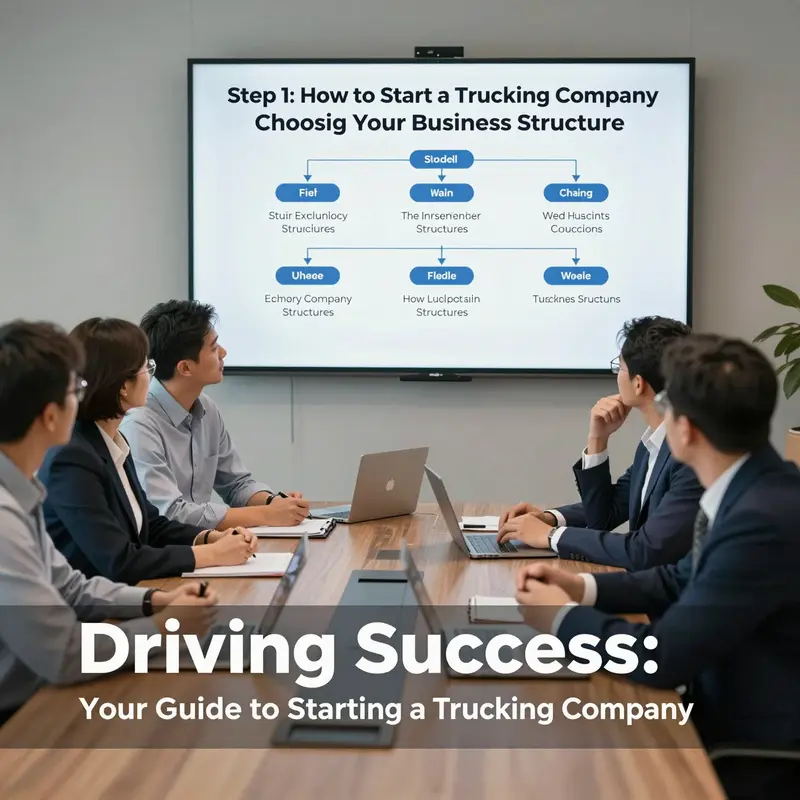
Choosing the right business structure is the first real decision you face when starting a trucking company. It isn’t just about legal form; it shapes liability, taxes, funding options, and how you will run the business day to day. In the broad landscape of structures, four options stand out for a trucking operation: sole proprietorship, partnership, limited liability company (LLC), and corporation. Each has a different balance of risk, simplicity, and long-term potential. For a new entrant with a practical eye on the road ahead, the LLC often hits the sweet spot between protection and flexibility, while still leaving room for controlled growth and straightforward management. The choice you make at this stage can echo through your licensing, insurance, banking, and even the way you recruit and manage drivers. It is not an abstract exercise; it is a decision that affects every subsequent step from how you file taxes to how you secure financing or add new trucks in the coming years.
Sole proprietorship is the simplest path. It is quick to set up and inexpensive, which makes it tempting for a pilot phase with a single truck and a modest revenue target. Yet the trade-off is stiff: there is no shield between personal assets and business debts or lawsuits. If a customer dispute, an accident, or a regulatory fine arises, your personal savings, home, and other assets could be on the line. In a high-activity trucking environment where you’re negotiating with shippers, facing the possibility of CMS or regulatory audits, and maintaining a fleet schedule, that personal exposure can become a bottleneck. If you expect to keep the operation tight and small for a while, and you’re comfortable assuming personal risk in exchange for speed and simplicity, sole proprietorship can be a reasonable temporary structure. It serves as a low-friction entry point, but it rarely remains the best choice for anything more than a handful of trucks or a plan to bring in partners or investors down the line.
Partnerships add a layer of shared responsibility. When two or more owners carry the day, you gain complementary strengths—different driving experience, financial resources, or networks with shippers. But partnerships bring a psychosocial complexity as well. Liability is typically shared, and disputes between partners can cascade into operational paralysis if not carefully governed. In the trucking world, where timely deliveries, driver management, maintenance, and compliance with safety standards are mission-critical, a partnership makes sense only if you have clear agreements in writing, because the risk of misunderstandings over routing, capital calls, or profit splits can disrupt service and strain relationships with drivers and customers alike. A well-structured partnership can attract additional capital and talent, but it also amplifies the need for robust governance, including explicit roles, exit strategies, and a contemplated path for adding or removing partners.
Corporations provide the strongest shield against personal liability. If your plan is to scale toward a sizable fleet, attract significant external investment, or eventually pursue complex financing, a corporate structure offers advantages. The corporation is a separate legal entity; owners (shareholders) are generally not personally liable for corporate debts or lawsuits. This protection becomes crucial when risks are high—such as operating in regulated markets, handling large insurance obligations, or pursuing aggressive expansion with multiple drivers. Corporations also tend to project credibility with lenders, shippers, and regulatory bodies, making it easier to secure lines of credit or long-term contracts. That credibility comes with cost and complexity: double taxation on profits, more formal governance requirements, ongoing filings, and higher administrative overhead. You will need more rigorous accounting, a board or advisory framework, and formalized corporate bylaws, which means you should be prepared to invest in professional guidance and software that can track earnings, deductions, and regulatory compliance with precision.
Among these four options, the LLC typically emerges as the recommended path for many new trucking ventures, especially when you expect to grow beyond a single vehicle or two and you want balanced liability protection alongside flexible taxation. The LLC shields members from personal liability for company debts, while still allowing pass-through taxation in many jurisdictions. That means profits and losses can pass through to the owners’ personal tax returns, avoiding the double taxation that some corporations face. At the same time, an LLC offers the practical advantage of easier ownership transitions and clearer separation between personal and business finances, which is valuable as you recruit drivers, secure financing, and expand into new routes or service lines. With an LLC, you can structure management in a way that keeps control in the hands of a few trusted principals while still inviting partners or investors under a framework that preserves continuity and reduces personal risk.
Of course, the best choice always depends on your specific situation. If you plan to keep a small, tightly held operation with a single truck and minimal exposure to liabilities beyond normal operations, a sole proprietorship might suffice in the short term, provided you operate with strong risk management and insurance. If you anticipate quickly bringing in multiple owners, seeking partners who bring different competencies, or planning a collaborative expansion, a partnership can be attractive, but only with comprehensive governance documentation and a clear path to dispute resolution. If growth is the central aim and you expect to pursue external investment or public offering potential, a corporation offers the most scalable governance structure, even though it comes with greater administrative burdens and the possibility of double taxation. In practice, many first-time trucking entrepreneurs use the LLC as a practical compromise—protecting personal assets while preserving tax flexibility and growth potential.
The critical takeaway is that the structure you choose now will influence what you need to file later, how you file taxes, how you secure financing, and how you recruit and manage a workforce that includes drivers, dispatchers, and maintenance personnel. It will shape the form of your internal agreements, how your books are kept, and how you structure profit-sharing or reinvestment strategies. In the context of China’s regulatory environment, where the path from registration to operations is tightly choreographed, an LLC often aligns with the expectations of regulators and financial institutions while offering the practical freedom you need to adapt as your fleet grows. The flexibility to elect tax treatment or to restructure into a different form, when warranted by growth or changes in ownership, is a feature that many operators value as their business matures; it reduces the friction that can accompany a rapid scale-up or a shift in strategic direction.
As you weigh these options, consider not only the legal and tax implications but also your daily working reality. How will you manage risk on the road? How will you attract reliable drivers and retain them? What does your cash flow look like in the first year, and how will your structure influence funding and insurance costs? These questions matter because the answers will help you steer toward a choice that feels sustainable as you navigate the first miles, then the first hundred thousand miles, and beyond. Your decision should balance the desire for personal protection with the need for operational agility. It should reflect your tolerance for administrative complexity and your aspirational horizon for growth. And it should be aligned with the practicalities of the regulatory landscape you’ll operate in, including licensing, permits, and the ability to collaborate with shippers for consistent, compliant service.
This decision is not etched in stone. In many markets, including complex, highly regulated trucking environments, owners revisit structure as the business evolves. Early-stage constraints—like capital availability, insurance costs, and the need for a professional image—can push you toward a more protective structure even if you start small. Later, as you onboard partners, add more vehicles, and scale your operations, reorganizing into an LLC or a corporation can become a strategic move to support governance, financing, and expansion. The important thing is to make a deliberate choice based on your current needs, your anticipated growth, and your willingness to manage the administrative load that comes with each form.
In practice, you will formalize this decision through documents that reflect the structure you select. If you choose an LLC, you will prepare an operating agreement that details ownership percentages, voting rights, profit distributions, and the rules for admitting new members. If you opt for a corporation, you will adopt articles of incorporation, corporate bylaws, and an initial board of directors. For sole proprietorship or partnerships, you will draft a simple operating or partnership agreement that captures the roles, responsibilities, and financial arrangements of the owners. The clarity you build now will pay dividends when you later apply for road transport permits, insurance coverage, and corporate banking lines. It will also help you align with your chosen path for licensing and compliance, minimizing friction during the later steps of registration and startup.
In the broader arc of starting a trucking company, Step 1 is a compass. It orients you to risk, reward, and resource allocation. It sets the tone for the kind of governance you will implement, the way you will structure your finances, and the pace at which you will grow. It also signals to lenders and regulatory bodies that you have a thoughtful plan for risk management and accountability. While the landscape may differ across regions, the underlying logic remains universal: your business structure should protect you, enable you to operate smoothly, and support the future you envision for your trucking operation. As you move forward to the next phase—reserving your company name and preparing the foundational documents—you will begin to translate this structure into concrete actions that bring your fleet to life. The choice you make today acts as the skeleton of your enterprise, while the following steps add the muscles, nerves, and heartbeat that will drive your trucks along the highway of your business ambitions.
For readers looking to dive deeper into the practical implications of choosing a business structure, a trusted external resource offers a structured overview that complements the on-the-ground planning described here. It covers how different forms are taxed, what filings are required, how ownership changes can affect liability, and how to align your structure with long-term goals. See the SBA guide on choosing your business structure for a concise, official framework you can compare against your local regulations and your strategic objectives.
If you want a quick, practical touchpoint while you chew on these decisions, consider how you would present your structure to a potential lender or a shipper. A lender will look for a clear separation between personal and business finances, well-documented ownership and governance, and robust risk management practices. A shipper will expect a professional corporate image, formal contracts, and confidence that the company can meet obligations without exposing owners to undue personal risk. The structure you adopt should support both realities—your day-to-day operations and your longer-term strategic ambitions.
In the end, the question of which form to choose comes down to a few core considerations: how you want to manage risk, how you want to scale, how complex you are willing to manage administration, and how you plan to attract investment or partners. An LLC often provides the right blend of liability protection, tax flexibility, and growth potential without the heavier administrative burdens of a corporation. But the best choice always matches your situation and your vision. As you proceed to the official steps of registration, you will see how the structure you selected will color every subsequent decision, from the name you reserve to the permits you apply for, the insurance you purchase, and the way you onboard drivers who will carry your reputation down the road. And with careful planning, your first mile can become the first chapter in a compliant, profitable, and steadily expanding trucking business.
Internal link for further context: Accessories.
External resource: https://www.sba.gov/business-guide/launch-your-business/choose-your-business-structure
null
null
From Paper to Practice: Building the Operational Backbone and Compliance Engine that Grows Your New Trucking Company
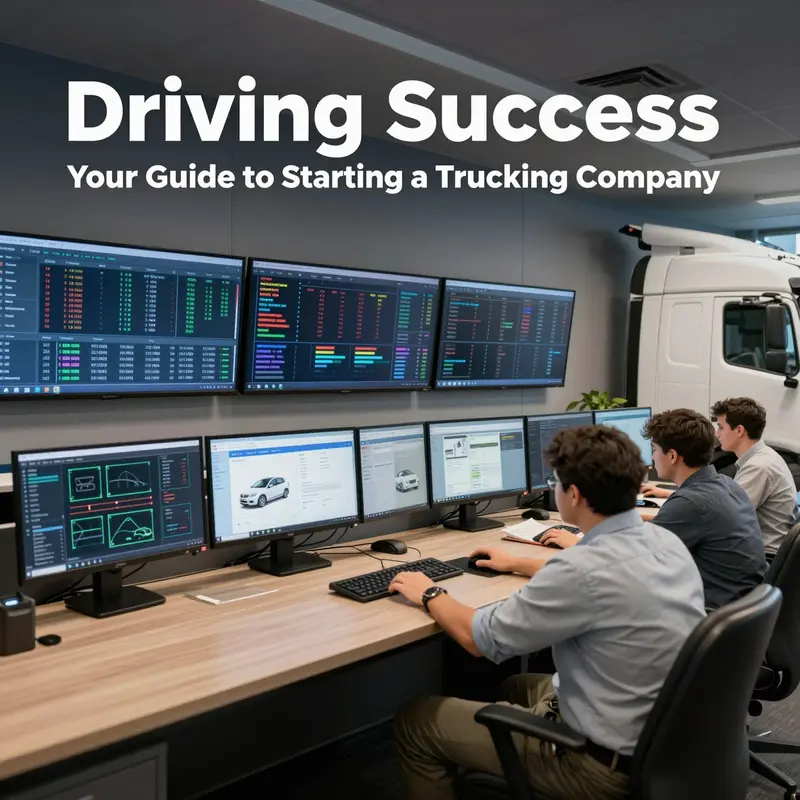
Turning a newly registered trucking entity into a working, reliable operation is a transformation from legal existence to daily discipline. The step from a business license to a functioning fleet hinges on establishing robust operations and a compliance framework that can be scaled as demand grows. This phase is not merely about ticking boxes for regulators; it is about creating predictable processes, clear responsibilities, and documented protections that safeguard drivers, customers, investors, and the company itself. When you invest in these systems early, you turn complexity into clarity and risk into opportunity. You begin to move from relying on improvised routines to operating with repeatable, auditable methods. The result is a business that can absorb additional vehicles, hire more drivers, expand service lines, and weather regulatory fluctuations without collapsing under the weight of its own growth. In practice, this means weaving together concrete procedures for people, vehicles, routes, and records into one cohesive operating fabric.
A durable operational foundation starts with comprehensively designed procedures. Take driver management as a focal point. You need clear hiring criteria, onboarding paths, safety training, and ongoing evaluation. A well-crafted driver handbook becomes the reference through which every employee understands expectations about vehicle maintenance, communication protocols, and daily safety routines. Mandatory instruction in defensive driving, fatigue management, and Hours of Service (HOS) compliance should be embedded in the training approach, not treated as a marginal requirement. Background checks and regular performance reviews are essential, because a fleet’s safety and reliability hinge on the people behind the wheel. When drivers know that the company is serious about safety and development, they become partners in reducing risk rather than pass-through participants in a checklist exercise. The same logic applies to fleet management and maintenance: a preventive maintenance program with a published schedule for inspections, oil changes, tire rotations, and repairs ensures that uptime stays high and breakdowns stay low.
To translate maintenance into measurable results, integrate fleet management software that can track the full maintenance history, monitor vehicle health through telematics, and generate alerts before a part fails. This is not merely a digital convenience; it is a decisive risk-control mechanism. A digitally supported maintenance regime takes the guesswork out of when to service what, and it makes it feasible to budget for parts, labor, and downtime. It also feeds data back into the dispatch system, allowing smarter decisions about assignments based on vehicle readiness. In parallel, the dispatch and scheduling function needs a reliable process that handles load assignments, route optimization, and real-time tracking. The aim is to minimize empty miles, maximize utilization, and keep customers informed about expected delivery windows. Even a lean fleet can benefit from a basic yet disciplined dispatch workflow that uses a shared, up-to-date view of all assets, planned routes, and driver availability. The comfort of a clear schedule reduces miscommunication with customers and lowers the cognitive load on drivers, who can focus on safe operation rather than scrambling to find the next load.
Customer and client relations deserve the same deliberate design. Quoting, contract negotiation, order entry, and billing should flow through defined steps that leave little room for ad hoc improvisation. A Customer Relationship Management (CRM) system is not a luxury; it is a practical tool for sustaining repeat business and managing expectations. The goal is to standardize how you respond to inquiries, how you price services, and how you document commitments. When customers experience consistent, transparent interactions, you earn trust that translates into steadier pipelines of work. The operational backbone then must extend to the documentation and record-keeping that regulatory bodies and auditors will examine. This begins with meticulous driver qualification files (DQFs) that bundle each driver’s application, license, medical certification, background results, and training records. It continues with vehicle inspection reports, maintenance logs, and the critical data from electronic logging devices (ELDs). Insurance policies and proof of payment for those policies are not optional adornments; they are fundamental protections that underwrite the risk your company carries every day.
A formal safety pledge—often captured as a Safety Management Program (SMP)—anchors the compliance architecture. The SMP is not a paper artifact but a living framework that states your safety goals, assigns responsibility, and outlines procedures for incident reporting, safety audits, and driver coaching. It is the centerpiece of your regulatory posture and a powerful indicator to customers and regulators that you are serious about operating above minimum standards. A well-phrased SMP also yields practical payoffs: fewer claims, improved security for drivers, and a stronger rating that can influence insurance costs and competitive positioning. In practical terms, the SMP informs the way you train, the way you investigate near-misses, and the way you measure progress over time. It links back to the core elements of your operational procedures by aligning safety expectations with daily routines, from pre-trip checks to route planning and load securement.
Technology plays a crucial role in turning these plans into reliable performance. Telematics and GPS tracking are more than gadgets; they are the eyes and nerves of a modern fleet. Real-time location data, speed analytics, engine diagnostics, fuel consumption, and driver behavior feeds help you manage risk, optimize routes, and reduce costs. When integrated with dispatch, maintenance, and payroll systems, telematics become a single source of truth that streamlines decision-making. Accurate data makes audits smoother and helps you demonstrate compliance without a mountain of paperwork. At the same time, specialized accounting and payroll software keeps the financial engine of the business humming: invoicing, accounts receivable and payable, payroll processing, tax filings, and comprehensive financial reporting. Digital document management rounds out the triad by securely storing contracts, licenses, permits, and employee records in a way that makes audits faster and less painful.
But systems are only as good as the people who use them. This is where the culture of accountability and continuous improvement comes in. Training and communication should not be one-off events; they should be ongoing, with regular updates in response to new rules or observed performance gaps. Encourage drivers and staff to voice safety concerns and propose improvements. Leverage the data you collect to give constructive feedback rather than punitive appraisal—though clear accountability remains essential. Internal audits then become a proactive discipline: scheduled checks on compliance files, maintenance records, and operational procedures, designed to surface deficiencies before regulators do. When audits are perceived as learning opportunities rather than threats, teams participate more openly, and the organization becomes more resilient. The result is not a rigid bureaucracy but a living, adaptive system that can respond quickly to changes in regulation, market demands, or customer expectations.
In practice, this integrated approach yields tangible benefits. A well-run operation sees improved driver retention because workers know what to expect and feel supported by training and tools. Vehicle downtime drops as preventive maintenance becomes routine rather than reactive. Dispatch becomes more precise, which translates into shorter lead times and more reliable service levels. Customer satisfaction rises as the business communicates more clearly about capabilities, constraints, and delivery windows. The efficiency gains create capacity for growth, which is precisely when a startup business needs to expand its footprint without sacrificing safety or compliance. If the venture plans to broaden into a network freight platform later, these foundational systems will be the platform from which additional capabilities can be layered. In that case, the company will need to ensure IT systems for real-time tracking and transaction recording meet the higher standards required for a platform operator. The transition from single-entity transport to a networked ecosystem becomes a matter of reinforcing the same core constraints—visibility, accountability, and auditable records—with more sophisticated tools and governance.
The practical steps you take to codify this backbone matter as much as the vision you hold for growth. Start by drafting a concise, enforceable driver management policy that outlines recruitment criteria, onboarding checklists, and safety training requirements. Pair this with a fleet maintenance policy that spells out the preventive schedule, the responsibilities of the maintenance team, and the process for logging inspections and repairs. Define a dispatch protocol that clarifies load sequencing, communication channels, and escalation procedures for delays or breakdowns. Then formalize a customer engagement framework that standardizes quotes, contracts, invoicing, and service-level commitments. Finally, assemble a documentation and record-keeping regime that ensures every essential file—DQFs, vehicle inspections, maintenance logs, ELD data, insurance certificates, and incident reports—has a secure, retrievable home. The emphasis throughout should be on clarity, traceability, and consistency. In a fast-moving sector such as trucking, where days can hinge on a single compliance checkpoint, consistency becomes the most valuable asset you own.
As you operationalize these concepts, remember that once you have standardized processes and documentation, you can begin to connect them holistically. A driver qualification file, for example, ties into training and performance metrics while the vehicle inspection and maintenance logs feed into reliability analytics. Telemetry data informs route planning and fuel management, which in turn affects maintenance scheduling and insurance risk calculations. This is not a mosaic of separate systems; it is a single architecture whose parts reinforce one another. Within this architecture, you will likely find opportunities to optimize payload management and storage solutions on the truck to protect cargo and streamline loading. Practical, non-technical steps—like organizing on-board storage and securing tools—play a real role in efficiency and safety. For instance, consider on-truck storage solutions that keep every tool, spare part, and documentation in its place, reducing the time drivers spend searching during inspections or at loading docks. Practical arrangements like these, while seemingly small, accumulate into meaningful gains in uptime and driver morale. When contemplating such arrangements, you might explore resources on practical vehicle organization and payload management, such as the broader library of guides on truck equipment and accessories, including relevant content about truck boxes, which can help you plan how to optimize space with a view to safety and speed of operation. See more on this topic here: truck boxes.
As your operations mature, you may decide to pursue an optional evolution: building a network freight platform. This step would require technical readiness to support real-time tracking, transparent transaction recording, and scalable IT systems. It also invites a new circle of regulatory considerations, including special qualifications and oversight from transport authorities. The potential upside is substantial—greater market access, improved throughput, and the ability to attract shipper clients who prefer digitized, interoperable solutions. Yet the challenges are nontrivial: you must maintain a robust SMP, keep your data secure, and sustain impeccable compliance discipline across a larger network of drivers, vehicles, and partners. The path is not about rushing to a platform; it is about ensuring your foundational systems are robust enough to sustain growth without compromising safety, reliability, or regulatory standing.
In sum, Step 3 is the moment when a trucking startup truly becomes a company. It is where the abstract commitments of registration, permits, and licenses crystallize into disciplined routines, precise data, and an auditable chain of accountability. The aim is to create a operating culture where safety, efficiency, and integrity are intertwined—the default mode of doing business rather than the exception. When you approach operations and compliance as a single, integrated system rather than a string of separate tasks, you set the stage for sustainable growth, better customer relationships, and a resilient organization that can adapt to changes in regulation and market demand alike. The chapter you are building now becomes the spine of everything that follows: a framework that supports scale, a shield against risk, and a clear map for how to respond when the road ahead changes direction. If you keep this in view, your trucking company will not merely exist; it will endure and prosper in a highly competitive, highly regulated industry.
External resource for broader context: https://www.gov.cn
Final thoughts
Launching a trucking company involves a detailed roadmap that extends beyond initial setup; each step plays a pivotal role in your company’s long-term viability. By carefully choosing the right business structure, ensuring thorough registration and compliance, and establishing strong operational systems, you build a foundation for success that can withstand industry challenges. As you embark on this journey, remember that diligence in the early stages will pave the way for future growth and prosperity. Be proactive in adapting to market needs, investing in modern technologies, and ensuring regulatory compliance will only strengthen your enterprise. Ready to hit the road? Your trucking business awaits.