In the bustling world of pizza delivery, the drivers are more than just transporters of delicious food-they are vital to the success and efficiency of the operation. As a business owner in the pizza truck industry, the importance of education for your drivers cannot be overstated. Educated truck drivers are more equipped to handle the challenges of the road, minimizing risks and maximizing safety. Studies show that drivers who undergo proper training are significantly less likely to be involved in accidents. In fact, research indicates that nearly 33% of untrained drivers have experienced at least one traffic incident, highlighting the crucial role that comprehensive education plays in ensuring road safety.
Moreover, proper training increases operational efficiency. A national fast-food chain implemented a ‘Driver Development Program’ offering logistics management courses to its drivers, resulting in a 30% drop in driver turnover and markedly improved delivery efficiency. By investing in driver education, you not only foster a safer working environment but also enhance customer satisfaction through reliable service, thus leading to business growth. As you consider the landscape of your pizza truck business, prioritize driver education; it’s a strategic investment that pays dividends in safety, efficiency, and overall success. Learn more about enhancing your operations and boost your pizza delivery service to new heights!
Essential Skills for Pizza Truck Drivers
Pizza truck drivers not only need to navigate roads but also handle various customer interactions and food safety concerns. Here’s a list of essential skills they need to succeed:
- Driving Skills: Proficient driving ability is paramount, including familiarity with road safety regulations and navigating city traffic accurately.
- Food Safety Knowledge: Understanding proper food handling procedures and safety regulations is crucial to maintain hygiene and ensure customer safety.
- Customer Service Skills: Excellent communication skills to interact positively with customers, ensuring they have a pleasant experience and address any concerns they may have.
- Time Management: The ability to manage schedules effectively to meet delivery deadlines while ensuring prompt service.
- Navigation Skills: Familiarity with GPS tools and local geography helps in finding the fastest routes to customers, minimizing delivery times.
- Problem-Solving Skills: The capability to quickly address and resolve issues, such as unexpected delays or order complications, is essential.
- Communication Skills: Strong verbal communication skills help in relaying messages accurately and keeping customers informed.
- Stress Management: Handling high-pressure situations, especially during busy hours, is essential to maintain composure and efficiency.
These skills not only improve the effectiveness of pizza truck drivers but also enhance the overall service experience for customers. Learn more about driver accessories to keep your pizza truck equipped for success!
Regulatory Requirements for Truck Drivers in the Pizza Industry
When operating in the pizza delivery sector, it’s crucial for business owners to ensure that their truck drivers comply with various regulatory requirements. Below, we outline the key components necessary for maintaining compliance in this niche of the food service industry.
1. Licenses
In the United States, truck drivers are typically required to have a valid Commercial Driver’s License (CDL) if they operate commercial motor vehicles (CMVs) that exceed 26,000 pounds Gross Vehicle Weight Rating (GVWR). For regular pizza delivery vehicles under that weight, a CDL may not be necessary. However, many pizza delivery services opt for extra training for their drivers, especially if they use heavier vehicles like box trucks or refrigerated vans. Learn more about CDL requirements.
2. Health Certifications
All drivers must fulfill the health certification requirements set forth by the Federal Motor Carrier Safety Administration (FMCSA). This includes passing a medical examination conducted by a certified medical examiner, resulting in a Medical Examiner’s Certificate (MEC). This certification ensures that drivers meet the federal physical standards for vision, hearing, and overall health, which is essential for safe driving practices. The MEC must be renewed every two years, or annually if certain medical conditions apply. Read more on medical certifications.
3. Safety Training
Drivers should undergo comprehensive safety training that covers both vehicle handling and food safety. This training is vital not only for compliance with FMCSA regulations but also for the health and safety of food being delivered. Businesses are encouraged to implement training programs that include prevention of accidents, understanding of vehicle specifications, and food safety practices to avoid contamination during transit.
Conclusion
Ensuring that truck drivers in the pizza industry meet the licensing, health, and safety training requirements is essential for regulatory compliance, ultimately helping businesses avoid legal issues and promoting safe operational practices.
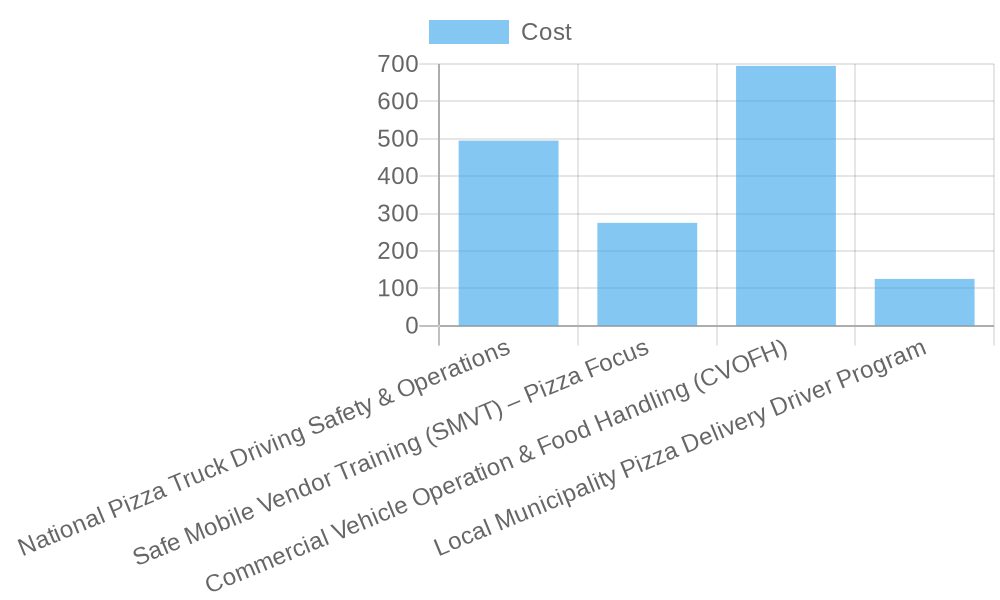
Comparison of Driving Courses for Pizza Truck Operators
To operate a pizza truck efficiently and safely, operators can choose from various specialized driving courses. Here’s a comparison of some relevant courses that cater specifically to pizza delivery operations:
| Course Name | Duration | Cost | Certification Details |
|---|---|---|---|
| National Pizza Truck Driving Safety & Operations | 2 days (16 hours) | $495 | Certified by the National Food Service Safety Council (NFSSC); includes a digital credential; valid for 3 years. |
| Safe Mobile Vendor Training (SMVT) – Pizza Focus | 1 day (8 hours) | $275 | Certificate issued by American Institute of Culinary Safety (AICS); includes a safety compliance badge. |
| Commercial Vehicle Operation & Food Handling (CVOFH) | 3 days (24 hours) | $695 | Accredited by U.S. Department of Transportation (USDOT); offers both DOT-compliant certification and food handler’s permit. |
| Local Municipality Pizza Delivery Driver Program | 1 day (6 hours) | $125 | State-recognized certification; required for operating in urban zones with high traffic density. |
For additional resources on accessories and operational efficiency, learn more about useful accessories and explore van technologies.
Ongoing Training for Truck Drivers
Ongoing training is vital for truck drivers, playing a crucial role in enhancing skills, ensuring regulatory compliance, and adapting to industry changes. In an era where technology and safety regulations evolve rapidly, continuous education allows drivers to remain updated on the best practices for safe driving and operational efficiency.
Importance of Ongoing Training
- Skill Updates: Regular training sessions help drivers enhance their skills related to vehicle control, navigation, and safety protocols. Many training programs today focus on advanced driver assistance systems (ADAS), which are becoming increasingly important for modern trucking operations. Understanding these systems minimizes risk and helps avoid accidents, yielding better outcomes for both drivers and their employers.
- Regulatory Compliance: As regulations governing commercial driving become stricter, it is essential for drivers to stay informed. For instance, a recent update mandated a minimum of 12 hours of annual training focusing on new technologies and safety standards to improve driver performance and reduce accidents. Ongoing training ensures that truck drivers are compliant with the latest regulations, therefore avoiding penalties and legal issues.
- Safety Enhancements: According to the NHTSA, continuous education is linked to lower accident rates and improved driver well-being. Programs that emphasize defensive driving techniques, collision avoidance, and emergency response are essential in minimizing risks on the road.
Relevant Training Topics for the Pizza Business
In the pizza delivery segment, ongoing training can cover a variety of crucial topics, such as:
- Food Safety and Temperature Control: Training ensures drivers understand the importance of maintaining food at safe temperatures, preventing foodborne illnesses. Knowledge about proper use of insulated delivery bags and temperature monitoring is fundamental.
- Route Optimization and Fuel Efficiency: Instruction on using route optimization software helps maximize efficiency. Drivers learn to minimize idle time and fuel consumption, thus contributing to a greener operation while ensuring prompt deliveries.
- Customer Service Training: Effective communication and professionalism form the backbone of customer satisfaction. Training focuses on punctuality, managing delivery routes effectively, and handling customer complaints gracefully.
By investing in ongoing training, pizza businesses can enhance driver proficiency, ensuring safer roads and better customer experiences. For further tips on equipment that could aid in training or delivery efficiency, check out some accessories here.
Benefits of Education for Truck Drivers
Investing in the education of truck drivers is a strategic decision that yields numerous benefits for business owners. Here are some of the key advantages:
1. Increased Safety
Comprehensive education and training programs significantly enhance driver safety. According to a 2023 report by TMC, such training can reduce accident rates by up to 40%. Well-educated drivers are more aware of hazards on the road, leading to improved decision-making and emergency response skills. This not only protects drivers but also minimizes the risk of costly accidents for companies, resulting in lower insurance premiums and legal liabilities (TMC).
2. Better Customer Service
A well-trained driver is synonymous with excellent customer service. Programs that educate drivers on customer interaction techniques lead to increased confidence when handling delivery challenges. Research from the American Trucking Associations (ATA) indicates that fleets with structured training programs experience fewer delivery delays and damage claims, with on-time delivery rates improving by up to 30%. This reliability fosters stronger client retention and bolsters company revenue potential (ATA).
3. Business Growth
When companies invest in ongoing driver education, they not only witness safer driving practices but also improved brand reputation. Educated drivers enhance customer satisfaction, contributing to a measurable uplift in customer loyalty and, ultimately, business growth. The same TMC report noted that companies could see customer satisfaction scores increase by 25% through such investments, positioning them favorably in a competitive market.
In conclusion, providing proper education for truck drivers is not merely a regulatory compliance measure; it’s a catalyst for business success. By prioritizing education, business owners can ensure safer roads, happier customers, and sustainable growth.
Checklist for Hiring Pizza Truck Drivers
Hiring the right drivers for your pizza truck can significantly impact your business’s efficiency and customer satisfaction. Consider the following qualifications and questions during the interview process:
Qualifications to Look For:
- Valid Driver’s License: Ensure that candidates possess a valid driver’s license; a commercial driver’s license (CDL) may be required in some cases.
- Clean Driving Record: Check for a clean driving history to minimize insurance liabilities and ensure road safety.
- Reliable Vehicle: Confirm that the driver has access to a reliable vehicle to make deliveries promptly.
- Comprehensive Insurance: Evaluate if the driver’s vehicle is fully insured, covering any potential incidents during deliveries.
- Customer Service Skills: Look for candidates with a history of delivering quality customer service as positive interaction can enhance customer experience.
- Flexible Availability: Seek drivers who can work various shifts, including evenings and weekends, especially during peak pizza order times.
Interview Questions to Ask:
- Experience: “Can you describe any past experience you’ve had as a delivery driver?”
- Driving Record: “Do you have a clean driving record, and can you provide documentation?”
- Vehicle Condition: “What type of vehicle do you use for deliveries, and is it insured?”
- Availability: “Are you able to work flexible hours, including weekends?”
- Problem Solving: “How would you handle a situation where a delivery is delayed?”
- Customer Interaction: “Can you give an example of a time you provided excellent customer service?”
By ensuring that potential drivers meet these qualifications and by asking these key questions, business owners can secure dependable and skilled drivers for their pizza truck business. For more helpful insights on hiring and vehicle accessories, learn more about driver accessories and various truck products available to enhance your fleet.
When discussing the essential education required for truck drivers, it’s pertinent to consider expert opinions on the matter. As highlighted by the American Trucking Associations,
“Continuing education is not just beneficial-it’s essential. It ensures drivers stay current with safety regulations, new technologies, and best practices, ultimately leading to safer roads and more efficient operations.”
This emphasizes that ongoing education is not merely a recommendation but a necessity for enhancing safety and operational efficiency.
Furthermore, investing in driver education can significantly impact businesses financially by reducing accidents and insurance costs, as noted by a senior fleet safety director from Fleet Owner Magazine:
“Investing in driver education pays off in reduced accidents, lower insurance premiums, and improved fuel economy.”
Such insights underscore the multifaceted importance of educational initiatives for truck drivers in achieving not only personal competence but also broader industry and operational benefits.
Conclusion
In conclusion, becoming a pizza truck driver requires a combination of essential educational qualifications and real-world skills. While formal education isn’t always a prerequisite, most employers prefer candidates who possess at least a high school diploma or equivalent. A valid driver’s license (typically C1 or higher), a clean driving record, and previous driving experience are crucial for ensuring safety and reliability on the road.
Additionally, understanding food safety regulations, handling cash transactions, and effective communication with customers are critical components of the role. This educational foundation doesn’t just equip drivers with the necessary skills but also enhances their credibility in the competitive food truck industry.
If you are enthusiastic about joining this exciting and rapidly growing sector, and you’re ready to take the first steps toward your pizza truck journey, explore our premium pizza trucks available at truckpizza.net. With the right education and tools at your disposal, you’ll be on your way to serving delicious pizzas to happy customers in no time!